🚀 The Future of Marketing: AI, Funnels & The Biggest Myths (w/ Alex Hultgren)
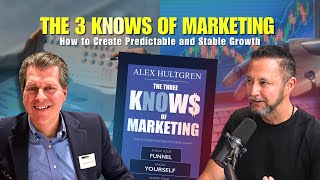
YouTube episode (Game Changers podcast) hosted by Scott Empringham featuring Alex Hultgren, a marketing executive and author. The conversation centers on Hultgren’s new book, The 3 Nos of Marketing (Know your customer, Know yourself, Know your funnel), practical frameworks for small-to-mid sized businesses, and concrete examples from his work at Ford (SYNC launch, promotions, Lincoln Mark LT). The episode also covers RDC (Resonate, Differentiate, Compel) for value propositions, the role and limits of AI in marketing (time-saver for rote tasks, needs supervision), CTAs (recommendation to offer three based on funnel stage), vendor advice for working with large OEMs (patience, local presence), and final actionable guidance to prioritize customer insights and clear value propositions before tactics.
Chapters
Welcome to Game Changers is a podcast where we dive into the strategies, innovations and leaders that are transforming industries. I'm your host Scott Impingham, CEO of Impregnable Media Group where we help OEMs, dealerships and entrepreneurs achieve 100x leads and sales growth through AI powered marketing. Today I am super pumped. We're going to be talking to Alex Holtran, longtime friend. I'm going to be introducing you to him. And also I should mention that this is brought to you by Lead Max and Auto Qualify, our AI powered platforms. They're helping businesses generate and qualify leads with more precision and more scale than ever before. Today, Alex Holgren is the man. I'm thrilled. He is a best selling author, a partner at Chameleon Collective and a marketing powerhouse with over 20 years of experience in B2C and B2B marketing and digital strategy and brand growth. He's helped major brands like Ford. That's where I met him. Walmart. Victory Motorcycles scaled their marketing efforts. He's overseen million dollar, multi million dollar budgets and launch campaigns that drive massive results. He even built forward social media architecture across 23 European markets. So he knows scale, he knows marketing, he knows big business and he knows small business. So if anyone understands the evolution of marketing, it is Alex. By the way, I want to make sure that everybody knows he just released his new book the 3 Nos of Marketing. I powered through it over the weekend. I'm going to dig into it more. It's how to create predictable and stable growth knowing your customer, knowing yourself and knowing your funnel is now available on Amazon. I got a few copies for me and my colleagues and we're going to dive into some of the biggest takeaways in this book and his perspective on the future of marketing. And of course we're going to throw in some controversial questions that may get him thinking in different directions. And also I want to get his perspective on these things. So first things first. Alex, why did you write this book right now? Who's it for?
Absolutely. I appreciate you having me. It's great to see you. We, we have known each other for a few years, but it's great to be able to reconnect in a way that's relevant for both of us. Right?
Absolutely.
It's great question. I know there's no shortage of marketing books out there, but what I was finding in the marketplace was particularly with CEOs of small to midsize business and that's really who this book is designed for. There's so much focus on execution and so Much focus on just the tactics and ROI and getting everything done to optimize your marketing. If you only focus on the science of marketing and not the art of marketing, and it's gotta be a balance between the two, you end up with a lot of direct response campaigns, but they may not ladder up to anything. So the reason I wrote the book is it's not that we can't make our current execution more effective. There's always a way to optimize something. But a lot of companies, particularly small to midsize business, have never really spent the time to do the value proposition right, to really understand their brand. So the first two sections of the book are really about the do you know your customer and do you know yourself? Once you get that right, then you can get into the execution, right? Then all your tactics become infinitely more effective because they're going to ladder up to your brand. So that's really why I wrote the book. It's because as much as we can focus on optimization, as much as digital gives us the ability to get all kinds of great data on what's working, what's not working, ultimately if you don't get your story right in the beginning, none of it will be as effective as it can be. You end up with some form of spray and pray marketing or you know, random acts of marketing or whatever you want to call it.
So I want to dig into that and get right into it because you go right in the book and you start talking about the value proposition. Marketing without a value proposition, without a true value proposition, like you said, a spray and pray you introduce a new acronym, rdc. Can you go into a little bit about what RDC is and why it's so important to the value proposition?
Absolutely. I appreciate you did read the book, that's great. No, so RDC to me is three things. Does it resonate, does it differentiate? And then does it compel someone to action? So it's not just a tagline. Now there are brands that don't need, they don't have an awareness issue like McDonald's can say I'm loving it because everyone kind of knows who McDonald's is. But for a small to mid sized business that doesn't have that level of awareness, your value proposition needs to be something that is very going to clearly articulate how you can solve a customer's problem. That's the first piece. Does it resonate? Right? So if I'm a consumer or if I'm a, you know, tons of your B2B or B2C but if I'm a prospect, do I understand these guys, understand what my issues are and they can solve them. The second piece of it, though, is it differentiate. Because are you solving the problem the way everybody else does, or is there something unique about the way you do it that deserves my attention? Is there something you know about me or something in your process, in your performance, whatever, that'll differentiate you from everyone else who claims to do the same thing you do, and then finally, does it compel you to act? So it can't just be a, oh, that's nice to know. It should be something. It's like, well, that's nice to know because I need to go do that right now. Based on the ways it's coming across, these guys can solve my problem immediately. Let me, you know, let me go take the next step and get a demo of this thing or sign up or buy it or whatever it is. So again, just looking at all the different experiences I've had from a marketing standpoint, I've seen a lot of good taglines. I've seen a lot of companies that have no semblance of any of this. And they really need to get down to what's going to resonate with my customer, what's going to differentiate me, and then what's going to compel my customer to action?
What are the three nos? Stepping back, you approach the book and you call it the three no's of Marketing and give us a quick overview of the three no's and why they're so important for big businesses, small size businesses, and all businesses.
Absolutely. So the three no's are, do you know your customer? Do you know yourself? And then do you know your funnel? I start with the customer because ultimately, as I say in the book too, if you don't have any customers, your business is just a really expensive hobby. That's the nature of things, right? You've got to have customers. So it isn't so much that who do you know you're serving now? But like, is there really a segment you're intentionally going after? Because particularly you get some manufacturing companies that might have three or four or five segments they're serving and do different things, but some of those are more profitable than others. Some take a lot more of your time and effort to try to get the business together. If you're going to try to attract more of one of the segments, who do you really want to go after? And you need to be very clear about that, then from there you go down to your ICP or your Persona or whatever to. To get down to something tangible to understand. I mean, even at Ford Motor Company, you know, we sell hundreds of thousands of vehicles a year. Every vehicle's got an icp. They've got somebody who is your target customer who doesn't actually exist. But it's a makeup of a lot of different attributes, different ways of doing things that will resonate with customers that are actually out there. But it's much easier to deal with, particularly when you're explaining something to, like, an engineering team. Like, if you could personify who you're going after, it makes life a lot easier for everyone because they can all say, oh, yeah, that sounds like, you know, my brother. That sounds like my. My need or something that they can. They can tie their. Their. So do you understand your customer is. But now it's not just a matter of who they are, but, like, how do they think specifically? Can you articulate the problem you solve for them? What are their pain points?
Right.
You've got to really understand what it is that's keeping them up at night in a way that your business can solve for it. So what is that pain point? The other thing that's really critical about understanding your customer is do you know why your customers love you, Your best customers, and do you know why you lose business? So, excuse me, it's very, very easy to just assume people love me for this, that, and the other. But you need to ask them. You need to make sure you are clearly on the same page, because you may find that even though we originally started doing this, they actually love us because this other thing, and that's really what's driving more traffic, more. More customers to us. So figure out why it is your best customers love you. Now, a lot of people do that through surveys and such, but I would say the one thing that a lot of people don't do, because it's a little painful to talk to people who have decided not to do business with you. But do you talk to the customers that left you for whatever reason or the prospects that didn't end up going with you for whatever reason? That's where you can really learn how you can improve your product and your service. You need to go talk to the individuals who you might have been on the final list of prospects. But ultimately they went with somebody else. At Ford, we used to talk to the. We call them escape shoppers, but they ultimately, you know, we were on the list of two or three, but they went with the Chevy or the Toyota or some other product instead, because that's when you learned, hey, was there something about the product that you just didn't resonate? Right. And in the case of automotive, like, is there too much plastic on the interior or the sight line's not good enough? So I didn't feel safe because I didn't have the visibility or it didn't have enough get up and go off the line. Whatever it is your customers are looking for, you can take that data, feed it back to the product team. So whatever the next iteration of the product is, you can deal with that. There are other times when it's what I would call a service issue. And from an automotive standpoint, that's like your dealership experience, right? If they just feel like they got jerked around on price or they weren't getting good service as an oem, I couldn't do anything about that. But at least we could identify. Well, that's where the problem is, right? So we can talk to the dealer and figure out how to solve that problem in the future. But ultimately, there is something that drove them away from choosing you. That's good to know. The other thing is too, like, on, if you look at customers you've had who are no longer doing business with you, they decide to go with somebody else. So somewhere in the ownership process or in whatever, you know, along the line, they've decided that something else is now more attractive. So again, it's tough because they just broke up with you to want to go talk to them. But it's like, where did we go wrong, right? Where do the wheels come off the bus? Because at some point we thought we had you, but we're no longer delivering. So, you know, either something in the market has changed dramatically and you weren't, you know, it didn't seem like a threat. Now it is, or something's gone seriously wrong with how you're conducting products and services in a way that they no longer want to go with you. So either way, you need to figure out what that is. Because if you start losing existing customers, that. That becomes very expensive and not what you want to be doing. I mean, in the same way, too, a lot of times when you bring new customers in, there's so much focus on the top of the funnel. There's so much focus on leads when, hey, but, you know, talking to automotive dealers, right? What's your share of garage? Sure, they drive maybe an F150, but is there a Camry next to them in the garage? Right. Or is there a different product? You could be selling them within the same OEM are they coming in for service? Like, there are so many opportunities with existing customers to increase kind of your footprint in their spend, and are you focusing on that as well, or is it just about volume of leads on the top of the funnel?
Is there one particular thing? So you described a couple of strategies to really get to know your customer. I mentioned two. Two sort of popped into my head. Number one, did you ever find yourself splitting hairs with a brand team on your ideal customer Persona, where they were just mincing words or you felt like you were close enough, or did you was never close enough? Did you ever find yourself sort of challenged to. To hairs on a specific word that was being used to describe an ideal customer? I.
More times than I would like to admit. And oftentimes it's like, you know what it means 85% of the same thing, and you'd rather have that word. That's fine. Right. At the end of the day, that word's not going to show up on one of the categories I can look to differentiate my media by. So it's not that big of a deal. I mean, there are things that you want to fall on the sword for. You know, smart and clever versus savvy. Probably not one of them.
Right, right. And you mentioned in. In the book, you described that when you're knowing your customer, there was psychographics, buying behavior, and a handful of sort of subcategories. Was there ever one that you really gravitated towards, and maybe you mentioned it, which is knowing what problems you solve, like, major, major points they had. But is there any piece of or subcategory that you gravitated towards to really hone in on that and say that's where the gold is?
That's a really interesting question. I would say that I'm going to reframe that slightly, because what I generally would find is what's most valuable is behavioral data. Like, it's really understanding what it is that someone does, not just what they say they're going to do on a survey. So where I would find the real right or the real. The real nugget is, I'll give you an example. I used to work with credit unions. When I was at ucla. I was chairman of the student credit union there. And we had a survey at one point we said, you know, should we be open on Sundays? And 75% of the people came back and said, yeah, absolutely, you should be open on Sundays. It's like, all right, well, maybe we should look at, you know, staffing problems and figure out how we're going to do this. But then I was like, well, wait a minute. Did we ask the right question? The real question we should have asked, and we did this like three weeks later in a different survey was when are you most likely to use the credit Union? And only 4% of the people said Sunday. So it, that's still more, you know, you're getting more attitude than actual behavior, but you're trying to get to what are people really going to do? Not just what they're going to say. Like people are going to say they want everything, but the reality is what are they really going to do? And that's where you need to focus.
It's a really important point. A friend of mine has a couple of body shops. He was just telling me that for years he wasn't open on Saturdays. And then I don't know whether he asked that specific question, but that's a great distinction between what do you think we should do? And when would you actually use a service? Or do you think we should do this? Versus would you use this service on weekends? And he found that he got a nice increase in sales, a big increase in sales when he did open up on Saturdays. No.
That's awesome. I mean. So to get back to the question, though, I would say that when you get into, like, some of the subcategories of different, you know, behaviors or different, different looks at customers, they always come back to is how can I change what I'm going to do with that information based on knowing it. So if it really can't impact my media buy or it can't impact, you know, how I go to market or what I want to focus on, it's probably not as important as you think it is. It's something because there's a lot of data you might have, your customers, that's nice to know and nice to have, but if it's not really actionable, just keep it in that category. Right? Focus on the things that are really going to help you drive the business in how you go to market and what you decide to focus on.
You know, and I appreciate that you make that point in the book that at. And I'm not picking on for it happens at all big companies. But you mentioned it, Ford, a handful of times as we were able to produce more data as the digital marketing teams and the marketing teams could produce more data. We were awash in data. And I believe you said we're washing data but scarce in insight or something like that. Can you elaborate on that kind of challenge? That maybe all marketers face.
No, absolutely. I think one of the biggest challenges that came with with digital marketing and digital media is we suddenly had a lot more data available. And the challenge was, at least in the beginning, and now I'm going back a ways and dating myself. But when there was so much data available, there wasn't a lot of analysis. You just got spreadsheet after spreadsheet after spreadsheet of data and footballs and arrows and circles. But it's like, okay, but what are we going to do with this? There was an example when we had a. It was a tier two advertising campaign in one of our regions on Buy three Get one Free tires. So the challenge with that was it was expensive because, you know, you're paying, it's 25% off, basically. And a lot of times the tire OEMs will offset some of that rebate, but they weren't going to offset the whole thing. So we as a Ford motor company had an expense both in terms of, you know, the rest of the rebate, whatever the factor wouldn't do. And we're advertising like crazy. So at the end of the day, we look at all this different data and you can see that more customers came in because of this promotion. Even some non Ford customers, which is great. But then we got complaints because all the service bays are full now because everyone's getting new tires. So other repair work you would have done, it's probably more lucrative. Wasn't getting done. Even oil changes weren't getting done because we had two weeks of people getting new tires. There wasn't a lot of data on even some of these non regular customers that were different OEM customers. Did we capture the data? Are they coming back for more in the future? So we're looking at all this data and finally I just asked the question, would you recommend we do this again? And I got nothing. It was like, I mean, no idea. Yeah, that was like. That was the whole point of the meeting, right? It's like, okay, it's great to see that we did this, but is it a one and done? Are we gonna go and try something else again? It was our own version of spray and pray marketing kind of, right? It's like, let's do this, let's do that. But it's like, is this a strategy we really want to build on or did we learn that just, you know, the juice wasn't worth the squeeze? Great, great. But it's just, you know, if we don't change X, Y and Z, I wouldn't have done this again. So anyway, again that was the problem when you've got so much data. But what is the real data that's actionable? Because ultimately that's all you should focus on and jettison the rest.
I'm curious, did you do that promotion again?
No, no. We did, yeah. I mean even a little more, you know, frustrating was I never really got an answer to the question because it was like, oh yeah, we'll come back, we'll talk about that next month. But next month we were analyzing a different campaign we had done somewhere else. It never came up again.
I remember that you mentioned that in the book. And so going back to Ford is there you have some great examples of the work you did with Ford. How does a smaller company apply some of the same strategies? Or maybe here's another question too. When you're consulting for midsize or smaller businesses, typically midsize business or whatever it is, are there a couple of go tos you bring from your Ford background and say ah, this is just a nugget, an approach that I used at Ford that all businesses can really make use of something applicable.
I would say that the entire book is really designed to be and that's why I use a mix of Ford and business examples because the fundamentals of marketing are going to be the same. It doesn't matter if you're B2B industrial manufacturing, retail. What I try to outline in the book is something that I mean to be applicable for all because you can't if you the fundamentals. Right. The rest of it doesn't really matter. And now every industry is different. I get that. Right? I mean every industry many of special snowflake and that's fine. And there are always going to be specifics and intricacies of that industry. You do need to know. But the fundamentals that I try to outline in the book are really meant for everybody. So I'll give an example from, from sync. For example, when we launched Sync, we had, it was multimillion dollar campaign and Ford Motor company had never launched anything that wasn't a vehicle before. Right. So SYNC was our, our onboard cutting edge at the time where you could voice control your phone, voice control your music. And we did it in partnership with Microsoft which was important because we didn't really have any street cred in the, in the, you know, small mini electronics world. Right. That just, it wasn't. We did. So we, we had this campaign that ran. Talking with the engineers, they said okay Look, Sync does 17 really cool things and we need to talk about all of them. It's like, well, no, the important thing is you can voice control your phone, which. And again, this is before they had a lot of laws against this, but it was more of a convenience than a legal thing. You could voice control your law, your phone and your music. Never been seen before. You know, GM had OnStar, but it required a separate subscription. And this was. You bring your device and we'll. We'll talk to your device. So the engineers are like, yeah, but there's all this other stuff it does. I'm like, no, I get that. And those are all great surprises of light, nice to have down the road. The thing that's really going to attract somebody, though, is voice control your phone. You can voice control your music. And then sync 2.0 came out, you know, 18 months later. No, it did 25 things. And the dealers are like, oh, we got to talk about. Or the engineers were like, we're going to talk about the eight new things. It's like, no, I mean, yes, again, it's great that we do all this stuff now. But these are the two points that we determined based on talking to customers that would move the needle that someone would actually consider buying a Ford for the first time because this technology existed. And it kind of is nice because the Focus was being, you know, one of the versions of the Focus was coming out at the same time. So it was a great way for a smaller car, more of an entry level car in North America for someone to consider Ford. And there's a cool technology that can get nowhere else. So plus, I think you probably remember we did Doug the spokes puppet. Oh, yeah.
Yeah.
It was really fun, but it was just an opportunity to try something different and new. But the key takeaway there was, yeah, it's Ford Motor Company. And we have, you know, many more zeros than most marketing budgets are, but figuring out what the one or two things that will really make a difference and move the needle with who you're targeting in your messaging. That is true absolutely everywhere.
You know, I'm wondering. This is on my list of questions, but it raises a question. Well, two. Number one is it reminds me a little bit about the ipod. Back in the day, Steve Jobs introduced it by suggesting it was a thousand songs in your pocket. He didn't talk about the memory. He didn't talk about how light it was, the different weight. He pulled it out of that little, that little tiny.
His jeans.
You know that everybody has that little t. Tiny pocket inside the pocket, pulls it out and Says you got a thousand songs here. So understanding, you know, from a marketing perspective that you really want to capture that one big aha. That's going to explain it. To get that point across in the sea of communication, what suggestions do you have for marketers at big companies? Now looking back at the Alex Hulkren's today in those businesses where they have to fight the dealer groups, the marketing, communications, planning, the the engineers, all the other people that are saying they got to talk about all these things, all what advice would you give that marketer? That's the Alex Holcoren in that spot today.
That's a great question. I would say always focus on the benefits, particularly if it's an engineering driven company and I've worked for a lot of different ones. It's easy to get caught up in focusing on the features and a list of all the cool things you do. But connect the dots, explain why that feature will help you as an end user. At the end of the day it's that old adage of people don't buy, they don't drill bit, they want a quarter inch hole, right? So why, you know, that's the feature is a drill bit but what they're really looking for, the benefit is a hole and that's a tangible benefit. Then there's the intangible benefit, right? The underlying benefit which is the hole allows me to hang the shelf my wife has been nagging me about for nine months and now I'm actually getting things done, checking something off the list. Home life gets better, right? So like think about what it is you're actually delivering at the end of the day, the benefit you get and see how you can work that into your communications upstream and make that kind of the platform you work from. That was something I say we probably didn't focus enough on. And again it depends on your. Depends on the nature of things. I mean Ford has a great, great marketing team for a long time but it's still primarily a manufacturing and engineering and finance driven company. Just the nature of things is it's such a big organization. So making sure that you're doing marketing right in a company like that is really, really critical. And again would not be the marketer I am today had I not gone through Ford. But there's always a chance to, to bring in some of the thinking in terms of the end user and the benefits, particularly when you got an engineering driven company because they want to focus on the features.
Love it. I too do everything I can. We have an elite AI marketing coaching and coaching and communications program. I get them focused on the customer as well. And I often get businesses that have designed something, they designed or developed a product, and their core focus is really on themselves. What would you tell a marketer who says, I get all that customer focus stuff, but I really need to focus on my product or myself first?
That is a great question, because I do. I mean, the whole second part of the book is, do you know yourself? The real question, though, is do you know yourself in terms of who you are to your customer? When I look at who am I as a company, what do I do, why do I exist, and how do I present myself? So if you don't have a. So I will answer the specific question you asked in a second. But just to focus on the second part of the book for a minute, I start with, do you have a mission, vision, and core values? And it's not something that's like just on a plaque on the wall somewhere. It's like, why was the company founded? Why does the CEO get out of bed every morning? Does everyone understand the passion they have for trying to move the business forward and what impact you can have on the world in your organization? And if everyone's on the same page that way, you are going to be not unstoppable, but you're definitely going to have an advantage over everybody else. The challenge with only focusing on yourself, though, is how does that relate to your customer and engineering company? Again, I want to. I keep picking on if it's unfair, but like a lot of times, they do develop a fantastic product. But if they didn't have a customer mindset when they went about that, it doesn't matter how efficient they are, how great their processes are, manufacturing capabilities, whatever, it isn't something that's going to necessarily be a success in the marketplace. I worked with a technology company in Silicon Valley a couple years ago, and they kind of had this problem. They developed this device which had three or four different industrial applications. The problem was it didn't do any of them exactly right. It. It kind of worked for all of them, but it wasn't ideal for any of them. So you end up with a product that people like but they don't love because in one application it's too bulky. In one application it draws too much power. So it, it just wasn't. It optimized for one of the four segments they were kind of playing in. So you end up with this product that it's hard to really command a price premium because it doesn't exactly solve the problem they need. So that's the one thing I would say if you're not focused on your customer to start, you can develop something really, really effectively internally. But all market's not necessarily going to be as warm and friendly as you want it to be.
And that, I think you answered that question I was thinking is you do talk about mission statements and core values and how to really bring those to life with your marketing. So what you're suggesting is the reason those are so relevant, if I'm understanding correctly, is that's the second part, which is know yourself your why and how it, how it actually helps you solving problems.
Did I get it?
Did I get about right?
Yeah, absolutely. And particularly how you can uniquely solve the problem. Right? That's, that gets to that piece we talked about with the RDC earlier. Because you want to be able to differentiate yourself, but you got to do it in a way that's relevant to the customer. Nobody's going to care, right? I mean, if you're a Pennsylvania based business for customers in Pennsylvania, that's fantastic, right? People in Oregon probably don't care. So who are you trying to target? So it's not just that you're unique, but you're unique in a way that, that's relevant to the customer, particularly how you can solve their problem. That's when it gets interesting and it doesn't always have to be, you know, you know, it's, it's fundamentally you can go down the list of who, what, why, where, when and how, figure out how you're doing all those areas, then go back and look at what your customer cares about and figure out which ones of those things are going to be relevant to them. So. And sometimes it's just your performance too. I mean, I had an education company I worked with last year and they did training for people taking engineering certification exams. So if you're not familiar with the world of engineering, you know there's a fundamentals of engineering exam and a professional engineering exam. These things are like, it's like the bar exam. They're like eight hours long, 120 questions. This is no fooling exam, right? So you got to prep for, otherwise you're going to have some challenges. So these guys were like the number one test prep company in the world. And their tagline was 93% pass rate. Because the key was they, you know, they had the data to prove it. If you work with them, really, really good chance you're going to ask. So they had great resources and great instructors and everything. But ultimately, if I'm trying to break through to someone considering this. You want to pass this thing first time, 93% pass rate if you go with us. It clearly differentiated them from anybody else in the marketplace. So again. So again, wasn't where we're centered or headquartered. Right. Wasn't how long they've been in business. It was just proof was in the pudding. So that was a fantastic value proposition.
Once you communicate the value proposition and it's starting to resonate with the market, you talk about calls to action. And I understand there could be calls to action in an ad on a website at the end of a speech, at the end of a webinar. And this is something I thought was really interesting. You're suggesting there might be three CTAs, not just one. Now, that flies in the face of so much, so much out. Can you elaborate on that?
Absolutely. The reason I suggest three, which I know, and again, one is better than none. Don't get me wrong, if you don't have any right now, if someone just consumes content and doesn't know what to do next, one is always better than none. The issue is you just don't know where somebody might be in the process at any given point when they're consuming your content. So ideally you would give them three options. One is if they're just kind of still kicking the tires and trying to figure things out, give them more content similar to what you're doing. Also, it's also good that if they're maybe ready to go a little step further towards actual purchase, give them something a little further down the funnel in terms of content. And then always, always, always you want to have the buy now or, you know, schedule an appointment, whatever, depending on the business you're in, that always should be available to them as well. So I'll give you an example. Like when we were looking at, I was at fcsc, which is the customer service division of Ford, and we had a winter tire campaign. So the real high level, just kind of lifestyle content was know, five great winter road trips or something. So that's something you can be consumed when someone's watched that video after three minutes or so. Maybe give them something else like, you know, five best drivable ski resorts. So it's like it's similar content to what they've already consumed, but they're not ready to go any further. The next level down might be a video, like 10 Things to Look for when you're buying snow tires. Or like three things to think about when you, you know, when Timing to buy snow tires, by the way, people start looking for snow tires in August and September. I had no idea until I got. I was thinking like the first snowfall is when everyone's like, I probably should get around to this. But no, people actually start searching for those terms much earlier in the process than I thought. Anyway, that was fun fact. Anyway, so. But then finally too, you always want to say, hey, if you're ready to buy stone tires now, boom, click right here. We can get you set up, get you an appointment at dealership. So because I again, as the person providing the content, don't know where they are in the process, the more options I can give them either again, say where you are, maybe go one level deeper or just go all the way to the end, the better I'm going to have converting them in the long run.
I got you. I got you. This is sort of a question that just popped into my head and I thought this might be interesting. One is, are there any Ford stories that you were thinking about putting into the book? But then last month you said, I can't put that in the book that you could share.
Now, there's probably a reason I didn't go public, right? I mean, I had a great time at Ford. I mean, highs and lows, you know, like in anything, not even marketing related. But for the first time I got there, I remember I was the summer intern of my, my MBA program. It was August 3rd when we were giving our presentation to the executives. And I remember that day because it was the day the Firestone story broke. And from that point forward, it just put us on this path that until Al Malala got there. You know, there was a time, early 2000s, where we lost, I think we lost $7 billion in a quarter. And it was like, it was such a ridiculous number. I couldn't get my head. It was like an imaginary nuns. Like how anywhere else. How are you still in business if that's the case? Right, but. So I went through a period where we probably had a reorg or a layoff about every nine months, and that seemed to last about five years. So the beginning of my, my career at Ford is a little bit, you know, tipsy, turvy.
Welcome to the jungle. Yes, seriously.
But then when Alan Mulally came in, and I will sing Alan's praises all day because I got to experience what true leadership can look like. And the reality is, Al will say this too. When you get to that level in a company that size, you're not really doing a lot of day to day in the business, right. You're managing people and you are being the leader with a vision, and you're communicating that over and over and over again. You get your message, right? And you express the message over and over and over again. And he was fantastic at that. Obviously. Incredibly savvy businessman, did a lot of great things behind the scene. And if you don't, if you've not read copy of it here, American Icon, though, there's a. There's a book by Bryce Hoffman, one of my favorite business books of all time, because he had access to all the executives and kind of saw behind the scenes how that entire transformation happened. With Alan Mulally. Highly recommend that book. If you haven't, if you haven't read it, if you're not a Ford fan, just understanding organizationally what he was able to do and how he accomplished it. Fantastic. Can't say. Can't say enough positive about that. So in terms of other stories, you know, it's. We had some fun times. I mean, bringing up the, the spokes puppet again, right. With, with Doug. I remember we're going to launch that campaign and obviously nothing like that had ever been done before. It was a little crazy. And we got a call from. I forgot who it was in the PR department, and they called my boss, Matt, and said, like, are you, Are you sure this is a deal? You really want to go out there with this, you know, this little orange puppet spokesperson, which is like, it's a puppet. Nobody's going to confuse Doug for what you guys do professionally. Don't worry about it. Right. This is like. But, you know, again, part of the challenge of the big company is they can be a little conservative. Right. So trying to push the envelope of some stuff, it. It's always an uphill battle, Right. That's the nature of things.
Yeah. Now, that brings up one other question. I'm super curious. There might be people watching this, and there's obviously thousands and thousands and thousands of vendors locally, nationally, worldwide. What does a vendor need to know or understand to work with Ford Motor Company? Short term, long term, what advice would you give them? They want to crack into that. They want to get into the business. They want to serve Ford Motor Company. What do they need to know?
The number one thing they're going to need is patience. So there was a time when I, I controlled the, the North American media budget. New vendors had come in, a lot of startups, some new technology, and oftentimes it was probably just another flavor of something we're already doing with Somebody else. But whenever they would come in, I would tell the CEO to always want to fly in and talk. And yeah, I was, I was trying to be as good, but I said, look, first of all, you need to have a local presence in the market. You need to have somebody on the ground in Detroit so that we can take you seriously, that you're not just trying to do all this from Chicago or New York or San Francisco or wherever. So we'll. And again, this, these aren't steadfast rules, just how I saw things, how things really operated there. So you need to have someone there. And this is a media, you know, if it's technology or immediate media potential buy. And it may be a year before you're even considered for an rfp, before you even get invited to the meeting. So that's the nature of things. It might be another six months after that before you're even on a plan. So if you want to do automotive, you need to be in it for the long haul and you need to make the investment. So that's the one thing I would recommend. Again, automotive companies to move quickly on things. And you start talking now on the technology side, like if you want to try and put something in a vehicle, if we don't know who you are, it may be longer than that. Because if you're trying to get into a vehicle program too, the reality is that thing won't be on the road for three to five years. So if you want to play in automotive, you just need to be patient. You have a plan. And I'm saying you can't just, you know, set and forget and come back in five years. You need to be a constant presence. But that would be the piece of advice I would give.
I love that advice and it absolutely rings true because I've been knocking on somebody at WPP's door. Good friend, known him for 20 years, for probably the last two and a half, three years, pretty consistently without being overbearing. And then finally out of the blue, my phone rang or text and he texted me and said, hey, could you jump on a call on Monday? I said yes. So we're talking about a program right now, but it's, it's two and a half years of scheduling meetings. We'd present something and he'd say, hey, it's super interesting, but not right now. Can I get a follow up? And then just being able to weather the storm year after year after year. So patience is really good.
Well, I would say that you got to remember too, this comes down to how, how different are you than anybody else? And sometimes it can be price where you need to be doing something completely different. There was one company, I'll give them complete credit for this. Like we had Home Again. I'm dating myself, right? We spent a lot of money on homepage takeovers with MSN or AOL or Yahoo. And someone would come in with some of their digital media solution and say, look, well we already buy that from them, already buy it from them. And like you're trying to upset the Apple card here. You don't really have anything that unique to offer. So you know, the cost, the switching costs are not worth the end for me to do this because I trust these guys and I know they can perform. So come back with something I haven't seen before. And this, this company in particular did a job because they came back with, okay, look, you're buying all these like column A list homepages, right? What if I gave you the next 20B list homepages? And for the same price as that, I will get you actually probably four times the audience at a slightly lower price across all 20 of these. And because we work with them, you still only have to build the, you know, the ad unit once and know that it will fit on all 20 of these pages. I was like, you know what, you have my attention now because you were actually offering something I've never seen before and I wasn't ever able to buy before as far as I knew. So that was a really interesting conversation. So again, I'm talking in the world of media and things have changed, but that mindset of what's something I can do very differently, that'll still deliver ultimately what they're looking for, which at this point was just eyeballs, but in a way that maybe they've never done before. So that was great.
I love that example. That's, that's a great example. Shifting AI, shifting gears to AI. It's changing the way small businesses and mid sized businesses are going to market. Is AI starting to replace some of the, some of the, some of the work that marketers are doing at big companies that you're seeing and that you're consulting with and if so, how is it changing it and how should people adapt?
I think AI is an amazing set of tools. The technology is such a time saver if you use it correctly. But I think the key to what any company that I'm seeing use AI is, is using it correctly. And right now I don't see a situation where AI is going to really take away anybody's job, except for the things, parts of people's jobs that were pain to do anyway. Right. So a lot of just the rote kind of stuff you had to do previously gets boring pretty quickly.
You.
You don't have to do that anymore. So, I mean, I'll use AI occasionally. Like, hey, look, I've got craft an email for one of my clients. Give me 10 different examples of what this could look like, and then I'll go through and I'll pick out this piece of that one, this piece of that one, this piece of that one. So it saves me a lot of grunt work personally and how I use it. But I'm not going to just take the first thing it produces and send it out as a client because I don't think the quality of what it produces is there yet. And there's a couple reasons for that. One is AI is always trying to find the least objectionable answer it can, which means you're going to get something that's probably pretty vanilla. So I wouldn't use AI for anything truly creative on its own. Like I said, I mean, sometimes if I ask it for five or 10 different options, it's like, oh, you know, I hadn't thought of phrasing it that way. That's actually really interesting. But even though AI is learning how I type and how I write and how I think and how I speak, it's not there yet. So what I say is AI is incredibly helpful with some of just the rote menial tasks that people have to do and including some research. And it can save a lot of time that way. But it's not perfect. I mean, the same way people aren't perfect. Right. I would totally recommend using AI, but somebody needs to still supervise or, you know, go over the output and make sure that it's producing what you want it to produce. I mean, I'll tell you, even like with the book I wrote at one point, I was like, hey, can you go through and just put this in the Chicago style, which is kind of a standard for how you present written materials for, for books. And I can't remember was CAT GPT, but it actually went through and it didn't. It did that, but then it up the chapter bringing in other sources of information. I was like, whoa, no, no, no, no, I don't care. Cite the material. It's not my idea. I didn't do that. Right? So now you got to go through all the other chapters. It's like, well, where else did it do that, right? So, so sometimes, because it's not quite there, it can take more time than it seems. Now, having said that, like, one of the clients I have right now, Drive Centric is great because they have an AI marketing system that can enable anybody's BDC to be tons more effective because it handles a lot of the basic customer communications, like for birthdays and anniversaries and other things where, like, you'd want your sales consultants doing that, but it takes a lot of time and the return on that isn't always clear. Now the AI can do all of that and then actually if someone responds, you can re engage your sales consultants. So by taking care of a lot of that, just kind of basic information, you know, information, understanding, hey, I'd like to see this vehicle. The AI can say, great, we have in stock. And you come by at 2:00 clock on Friday. When someone comes in at 2:00 clock on Friday. Now, your sales consultant didn't have to manage that conversation. They can actually talk to the customer and close the deal. So what I really love about Centric is they're able to really increase the engagement rate of the sales consultants and customers at every dealership.
I love it. So that. That's kind of interesting is, is up the funnel with Auto Qualify, where we're doing Meta Legion and auto qualifying the lead before it gets to the dealer. So then there's a nice handoff and I imagine that's where Drive Centric is really strong at the dealer level.
Absolutely. Yeah. No, it is a nice. Yeah, we should talk about that.
Yeah, yeah, I see.
Right.
When you say this, I go manage. Is there any examples that you could see and you sort of touched on one, how AI has maybe been misused by a CMO or somebody in that chair that is either public or just an anecdotal sort of example of somebody where you think they really misused it or a common mistake that people run into.
Yeah. I had a marketing manager at one of my clients who I said, you know, we need to. We need to come up with responses for this, you know, series of five. He's like, okay, I'm ready to send. I was like, how did you write that? I'm like, did you look at the language? Like, oh, no. Yeah, I just. I put it in chat GPT and put them out on my descent. I was like, no, like, honestly, like, I don't take us the wrong way, but if you ever do that again, you're gone, you're fired. I. You cannot do that. Right. This is not you are completely misunderstanding what this does. I've had other clients too that have wanted to use it from a creative standpoint. It gets kind of that race in the middle again too. It's like, look, there are things AI does really well. But if you're trying to be a little different, right? If you're trying to create something unique, AI is not going to be able to deliver that for you because it's always going to be at least current iterations of AI right in January 2025. It's an amalgamation of everything it can find and it's going to give you the best kind of average of that. Want to be average. If you're trying to differentiate.
Makes sense. Makes sense. I want to talk about for a second and I'm gonna actually come at it from a different, different viewpoint. There's a, there's a conscious that when you are presenting to a big company like a Ford Motor company or GM or any other kind of big company, that there's no brand loyalty.
That it's.
How do I present something as inexpensively as possible? Do you see great pressure from a manufacturing, engineering, financial company just to go with the least expensive option? How do you fight that to get the best option as a CMO at a big company? And what suggestions do you have for vendors who are trying to fight that, those forces? It's kind of a three part question or a big, big, big question. But untangle it any way you like.
No, I get, I get it. So what I would suggest is where we started the conversation actually. If you're a vendor, rdc, right. What do you do? How can you uniquely solve their problem so it doesn't come down to just fighting on price. You're always going to run into procurement organizations somewhere that are designed to always go with the low cost solution. And to some extent that's unavoidable. So you need to be competitive. But if the people who are decision makers understand that you provide something unique or different in a way that the lowest cost maybe doesn't, then you got an opportunity. When I was at ucla, I was involved in student government is going back a ways. But I remember we ran into a problem once because they were going to build a new parking garage, right? Which I was working with facilities and it wasn't. It's not sexy. It's a parking garage, right. But they went with the lowest cost solution. The problem was the people that had done it had never designed a parking garage before. And what they didn't take into account was the SAG that happens when you realize how much cement weighs. So like the clearances they had designed suddenly were like 3 inches less because the stuff is so heavy they're building with. So then they had to retrofit everything, which means your lowest cost solution suddenly became three times the cost of what it should have been because they didn't really know what they were doing. So that was just one of those things where I was like, how do these things happen? They happen in big bureaucracies. Right. My advice would be if you can find someone in the decision making process before it gets to procurement that says we have to go with these guys because of X, Y and Z, and you've articulated why your X, Y and Z is better than everybody else. That is the way you can win. That's the only way you're ever going to be able to get around a race to the bottom on price. Love it.
Back to your book. Same kind of thing. What's one of your favorite stories you told in that book that was like, this is gold. If people understand this concept, this is gold. Like maybe even the cornerstone of the book.
Yeah, that's interesting. I mean, I, I'd already, I really did like the question I thought was one, you know, when I was at the credit union that I think anybody can get a hold of. Right. It's how do you really think about how you answer questions or how you ask questions, rather. Right. For the data you're trying to get to. Because a lot of times marketing research firms. Will this happen to Ford too? Like, all right, we got a survey for our, for our customers. It's 45 questions. I was like, whoa, no, stop, stop, stop. Right. I want, I want four to five questions. I want, I want survey in a 350 box. That's what I'm looking for. Right. Because all this other data is really interesting, but if I'm not going to do anything with it, it's like the digital conversation we had earlier. Right. It's nice to know, but it's not going to affect how I go to market, how I'm going to change the product, how I'm going to change my media buy. I don't need to know. I don't care. It's like not relevant to me. There's all kinds of. No, I can't share that one. I'll talk to you online about one. It was an insight about a customer, that a customer group, a segment that have guests. But the data came back, it was like, oh, all right. This vehicle is really popular with that Group I would not have was never on our radar. But like what can we do with that? And sometimes it's nice to know, but it's like if we actually change this or work out some sort of a loyalty program, referral program, we can probably get more of that segment. So that was, that was interesting. No, it's a good. I feel like I probably already shared some of my favorites.
Perfect. I have a different question then pivoting on the same idea. Was there any one biggest marketing mistake you might have made and how you recovered? Did you recover any kind of juicy where you just, you really thought this was a great idea, you pitched it, you ran with it and it just flopped. And what did you learn from that?
One of the things that was interesting and I don't know if it was much marketing as product was I had to launch the Lincoln Mark lt. So for Lincoln, this was their second iteration of a pickup truck after the Blackwood. And this is going ways but the Lincoln Blackwood, they said they made them all black so they wouldn't sell in the south. They made them all two wheel drive so it wouldn't sell in the north and they overpriced it so it wouldn't sell anywhere. That was perfect. But the Mark LT was actually based on the F150 and that one got put together very, very quickly. I mean I think soup to nuts, about 18 months. So most of the, the changes were a little more superficial to make more luxurious, more sound insulation, better materials, that sort of thing. But it was a capability of a serious truck, the F150. So that was fantastic. We launched that thing. You know, we had this joke that it had more csi, more which is chrome per square inch than the truck on the market. But what we learned was the market initially was really strong, but after those first, you know, call it 5000 trucks, suddenly it wasn't quite there. So the market demand, we just completely miscalculated how popular that truck was going to be. So you know, the first couple months wholesale, it's great. It's going like gangbusters, can't get enough. Then all of a sudden they start to back up the lots and it's like it's a Lincoln. We don't really want to be discounting this thing, but we got to move some metal. So it wasn't so much the communication, it was actually the products product market fit maybe wasn't as broad as what it was. This is interesting too because of how hybrids and obviously the world of EVs and that's continuously changing. But we first launched the Escape hybrid. We thought it would do really well with certain segments and certainly the environmentally conscious people all bought it. But then that's a pretty finite group of consumers. Then though, when gas, and I don't forgot when as high as $5 a gallon, this is back always. But it suddenly spiked tremendously. We sold a ton of hybrids at that point. Because now it becomes a much more logical economic decision to get this huge increase in fuel efficiency given the gas is so expensive. The minute gas went back down to 2 bucks a gallon, sales stopped again. So there's always going to be a group of consumers that are your target. But you got to understand really how big that group is and how many of them there are and how, you know how much you're gonna be able to continue to grow to that group. There's always going to be a larger group too, but they're going to have different things they're looking for. I think that would be the key takeaway. Right. So ultimately, I mean, even like with the Lincoln, the truck, there were still F150 buyers. And we're doing a little bit of, you know, encroachment on, you know, within the same company. But you could get some F150 buyers for a certain price premium, but not a huge price premium. Right. Like for fifteen hundred dollars they might walk up to the Lincoln for four thousand dollars. They're not going to. So you just need to see if you're going to broaden your target audience. It's good to have a target segment, target audience. Understand if that's a finite group though, it's going to take to get to the broader or the next circle because you'll get a lot more volume, but you're going to have probably different drivers to get that.
Which reminds me, we've talked about knowing your customer, we've talked about knowing yourself, and then at the top we talked about knowing your funnel. Tell me a little bit about what marketers need to really understand about the funnel. What are some of the fundamental things they need to understand about their. They need to know about their funnel.
Absolutely. It's some pushback sometimes because you're like, dude, the funnel's dead, man. It's off the flywheel. You know, that's an antiquated model. It has been around a long time. I will grant you that it's a model because the point is there is a linearity to someone's decision making process you just can't get around. Right. You need to be aware of something before you're interested in it. You've got to be interested before you're going to consider something and you're not going to purchase anything you weren't considering. So, like, that isn't ever going to change. The challenge with that is it's assuming everybody's a new customer. It gets back to what we talked about earlier of why are you losing business? Why are you losing customers? There is a tremendous amount of potential money you can make if you just target second purchases. Right. If you just get, like I said, share of garage from an automotive standpoint. Right. What else might we be able to offer this person other than what they've already done with us? There's a tremendous amount you can get through referrals. Word of mouth marketing will always be the most effective way to go. I've had clients before. It's like, don't spend a dime on advertising. We can get there through word of mouth. Like if just figure out what the story is you want to tell. But like, don't put any money in media right now because it's going to fall on deaf ears. You don't need it. Right? Don't. You can grow, you can double your size just through word of mouth. Let's just get and formalize that right through a referral program. And again, customer satisfaction is always a good barometer of are you really pleasing your customers as much as you would need to? Right. Are you getting nines and tens consistently from a customer satisfaction standpoint? Because if you aren't, it's like the escape shopper or the escaped customer. There's probably something you need to work on. And if you can figure that out before they leave, you're in much, much better shape. So the funnel is still critical. But I'd say in addition to keeping track of just. Again, the other thing I would say is too, from a tracking standpoint, make sure you're keeping track of things that are actually driving the business. There's a lot of other things that are nice to have when you think about the funnel. You know, people's opinion of the company or whatever. That's all well and good. I need to know the awareness and interest, though. That's really what's going to drive the business as they move down the funnel. Kind of stick to the four to five key metrics you want and jettison the rest because it becomes a distraction, quite honestly.
Time for a few more questions. You're still okay on time?
I'm good. That's good.
Any sort of trends that you think are just absolute baloney that are just floating around out there that everybody's jumping on, jumping on the latest marketing trend that you just think is something to watch out for, or any trends that you think we should be aware of that people aren't fully taking advantage of.
I'll tell you how I approach these things. And it's often just, I mean, it seems like common sense, but do you remember it wasn't that long ago, probably maybe even two years ago, when NFTs were all the rage, right? And was like, you got to get NFTs is where it's at. I'm like, just take a step back and look at what you're really doing here, right? I mean, if. If you have a work of art that hangs on the wall, whatever, and you got the original, there's only one of those in the world. You can always make a perfect digital copy of something. It's not difficult to do. So to say you have this thing, it only exists, you know, in the cloud somewhere and you may be the only one that can access it, but is it really worth something? Like when, before you start putting a lot of money into this, are people really going to, you know, pay for this long term? Or is this Dutch tulips all over again, right? Or any other Ponzi scheme that's been out there where suddenly it's like, oh, yeah, what were we thinking? So there's just a little common sense and rationality you should always approach whenever you do, whenever you're looking at anything. I remember for years they kept saying, this is the year of mobile. This is the year mobile is going to just skyrocket, right? Like, you got this digital web stuff, but mobile is finally going to take off. It was a year of mobile for seven years until finally it was a year of mobile. And it just took a while for the market penetration to make sense. Where. Yeah, actually now you wouldn't dream of putting a campaign together that didn't have a mobile component, right? Or everything you're doing isn't optimized for mobile because that's where most content is created and consumed these days. So it's stuff like that where sometimes it's just like anytime something seems too good to be true, it probably is. The other thing I would say is think about your business and who you are and who you're trying to target and whether or not it makes sense to really be there from a platform standpoint. I'll give you an example. When I was at fcsd, again, they're a Lot of, you know, parts supplier or parts dealer, you know, parts managers or service managers don't get a lot of their information or they didn't on, you know, on Facebook or digital, digital platforms. So the was like Facebook would keep, come, come to us and say, look, we have more, you know, parts managers and service managers than any other platform. I'm like, yeah, I get that. But they're not on your platform thinking about work, right? They're looking at pictures of their kids or whatever they're doing. Like that's not how they use your platform. So it's not that they're not there, but contextually feeding them an FCSD ad about, you know, guaranteed, whatever. Like it, it's not going to resonate, right? It's probably just going to anger them. So why would you do that? So I'm like, again, based on the customer base we have who. And again, this is going back a little way. It's 2015, they were still reading magazines, right? That was where they were getting their information was print. So if that's where my customer is spending their time and understanding your customer is key, that's where I should be spending my money. If I'm trying to do some advertising or get in front of them, don't put into a platform, it doesn't make any sense. So same way like everyone will come and say, oh, we need a TikTok campaign. It's like really, you sell industrial fan components and a lot of them are operating like in chicken processing plants. Like why on God's green earth would you want a video camera anywhere near these chicken industrial processing plants, right? Like I understand it's all the rage but like just for a second think about who your customer really is and how they spend their time and then what are you going to produce? It'll be, you know, relevant to them in this forum.
So that's a, that's a great point. I, I see that all the time. When they, when somebody come in, they want a tactical execution. They want a TikTok campaign, Instagram campaigner. And like you said, it's a, it's even a better example. They're an industrial grade chicken something something.
Yeah, I mean these things are the refree rich chicken movement start in the first place because of these things existing. Like don't get a camera anywhere near that place, man. Yeah.
I had Bo Smith on the podcast last week and I'm curious, what suggestion, advice, encouragement would you have for Bo to, to be even more aggressive in 2025 to be more competitive and Just even a better partner to Ford in 2025, 2026-27. Not that he's not doing these things, but if you were sitting next to him and he said I here's a million dollars, Alex, what is your best advice that I can, that I can use this year, next year, in two or three years to be better and be a better partner for Ford? What would that be?
I mean, I guess it's really also understanding. So there's two things, right? You understand your customer, Jose, understand your partner there too, right? Do you understand what their objectives and are and, and everyone was. I mean they're always some more cars. Everyone's going to be slightly different, right? So what are they really trying to accomplish in the next three to five years? And as much information as you can, you can figure that out. And then how do you problem for them? How can you help them get there together? If you can find out how to do that effectively, I think you'll, you'll be in good shape.
Should brands just be about social issues to avoid alienating half their audience, or 40 or some, some percent?
I think brands should be authentic. I think we weigh in on something that is a controversial issue or has strong feelings. Either way, if it's not a core to who you are, I don't know that you're adding a lot of value to, to get into the conversation. Because your point, you're probably gonna just alienate half the customer base irrespective. So there are some conversations that are relevant for you and there are some that are not relevant to be a part of you don't wanna be for. We talked about this like in the early days of social media too. Like you don't want to jump into a conversation you weren't invited to be a part of. You don't want to be the person at a cocktail party that walks up was like, hey, what are you guys talking about? That's great. Let me tell you about Ford. You don't want to do that, right? So like nobody, nobody wants to be with that person. They're going to just shut away immediately. So I think that I would hesitate to jump into anything that isn't truly relevant for your business, right? If, if you're a Ford motor company, you have a feeling about cafe, you have a feeling about electric vehicles because it's relevant to who you are, right? There's legislation happening. It's. But, but stick to the issue. Don't you know the how to affect your business that's relevant to your business? Anything that you're probably going to do more harm. And good.
What question didn't I ask you about your book that you're thinking, man, he should have asked me about this because this could really help people.
I really appreciate actually that you took the time to read the book. And I mean, again, it's not. You're very good at what you do. There's a lot of great podcasters out there that for whatever reason, schedule wise, they just don't have time to do it. So I totally get that. So I appreciate that because I thought your questions were insightful. I think that just overall, the key is one, make sure you read the entire book because again, if you want to just jump to section three in tactics, you miss the entire point of why I wrote the book. It's really designed though, for small to midsize business CEOs. That's really the people that I think that maybe have never really had marketing as a discipline or never had to worry about it. And there's a lot of manufacturing and B2B companies that kind of fall into that pattern. They grew to a certain size and then they just plateaued. And the sales team has been doing the same thing they've been doing and it's been great. But to get to the next level, they're going to need to bring marketing into it. And marketing unfortunately still remains widely misunderstood in terms of its true value and impact by a lot of companies. Seems like fluff. It seems interchangeable with advertising and advertising the piece of marketing. But when you get to the strategy of understanding your customer, that's where marketing can really make a difference. And that's what the book's really designed to do.
I love that. And in the book you call it a blueprint and saying like essentially describe it like a playbook and don't skip the first pieces, don't skip the strategy. And I and I share the same thing in my, in my workshops. And it's a thing that people most skip and it's probably one of the biggest fundamental reasons why their marketing misses. They haven't understood their customer, they don't understand themselves and they just get straight to the funnel, the mechanics of the funnel, or the tactics. So I agree a thousand percent.
The other thing I would say is this is a blueprint. And it I kind of outlined in the beginning too. This isn't complicated, just not easy because it's.
What did you actually use a phrase? You said it's simple but it's not easy or something like that.
Yeah, it's Not. And that's. That's exactly right. So it's like the key to good health isn't complicated, right? It. Sleep, diet and exercise, the execution of that really hard. Right. I mean, we all know what we're supposed to do, but actually doing it's different. It's the same thing. The concepts are not hard to grasp, but putting them into practice and doing them is the thing that makes the difference between having an effective marketing department and a killer marketing department. That's what's going to make the difference for you. You got to put this stuff into practice. And again, it's not meant to be complicated. I try to make it as straightforward as possible and as applicable as possible to any kind of business. But you got to do the work. At the end of the day, if you don't do that, it won't make any difference. Love it.
Your final questions and then I'll leave you alone. One question. Is this Alan Mulally? What is your favorite Alan Mulally story, either heard, overheard, or. Or heard through the grapevine? Favorite Alan Mullally story.
I loved when Alan embraced Twitter. You know our mutual friend Scott Monti, right? Scott was running public. Public relations and it was after an auto show and pulled Alan over and he's like, hey, I want to go live with you on Twitter right now. And Alan said, this is. I mean, this is early days. This is like 2000s. Alan's like, great. What's Twitter explains what it is. And Alan literally took customer questions unfiltered on Twitter. And it was phenomenal because again, he was a great leader. But he also understood why it was so important to connect with consumers and let them know you're a real person. Right? That was great. The other thing I remember about Alan though was he was incredibly personable and approachable. And even though, I mean, you know, at my mid management level, I didn't have a lot of direct interaction with him, but there were a couple times when I emailed him about something specific and he wrote back and it was only a sentence or two, but. But it was clearly him. It wasn't some handler. His just the way, you know, I could just tell knowing his. His style, that it was like he would take the time even for a lowly, you know, LL6 to respond to my. My emails. I was like, this guy's the real deal. Just. It's hard not to say anything but positives for Alan. Love that.
Which reminds me of another thing. I'm curious. Favorite story of Matt Van Dyke, because Matt Van Dyke was always that kind of guy for me as well. I would message a number of folks they didn't have time to meet with me. I'd message Matt Van Dyke and say sure, seven o' clock I Ford World Headquarters. See you then. Favorite Matt Van Dyke story.
My favorite Matt story actually was, was probably the thing I mentioned earlier about Doug depal when he got the call from, from pr, like are you sure you want to do that? I mean he stuck to his gun. So Matt was a great leader of our group. I really, really appreciated the, the leadership he had. You know, he's from an age background and you know, it's been time working with, with Jim Farley and Toyota but really embraced Ford. And to your point, I mean he just, he created a really good vibe and was willing to risk at a time when the brand needed to do something different. So he was a great kind of steward for that.
Excellent. Before we break, what's one final piece of advice you have for marketers? Small business marketers, midsize biggest business marketers to really grow and scale their business in 2025.
Understand your customer, understand how you can uniquely solve their problem and then put your marketing plan together. Then get your tactics together. But don't cut out the first part or none of your tactics will ever be as effective as they could be. Here, here.
Where do people find your book the Three Nose of Marketing and how can they connect with you?
Amazon.com is where you can find the book. Just look up the Three Nose of Marketing. I was very fortunate to be on the bestseller list for the first week it was there, which is fantastic. So that's, that's great. And you can find me@ either coversmarketing.com either firc or 1st. I'm also a partner Chameleon Collective, which is a federation of about 40 or 50 of us. So we didn't really talk about my day job. So when I'm not writing books, my day job is I'm a fractional team marketing officer. So I do help companies small and midsize business that really can't afford a strategic marketing leader full time. I can help them out anywhere from 10 to 30 hours a week depending on the needs of the client. So I do that as part of Chameleon Collective. Chameleoncollective.com and we can solve pretty much any more, you know, cmo, CRO or even specific problems too. I mean the way we're organized, there's 40 or 50 of us that are kind of fractional. CMOs, CROs CTOs and then there's another 80 or 90 subject matter experts that are really good in one specific area of marketing. So it allows us as leaders to put together a team to meet whatever the exact needs of a client are. So, you know, I've got one client right now where I brought in a web developer who was redesigning the website, an SEO expert to really help out with some of their, their SEO efforts, an SEM expert, a meta expert, and an analytics person to tie it all together in a dashboard. So and they're all just there temporarily to kind of get rolling and know we'll maintain as long as we can. But we come in to help get a business on track and then in the bail again. So you can find me@chameleoncollective.com or my own individual company is customers first marketing.com.
Which by the way, was a great story in the book that that was available. You went on GoDaddy.com and it was available. Funny, that's how, that's how few people actually focus on customer securing. Scott. Abram.com in every variation. Customer first.com is it customers first.com right?
There you go.
Love it.
Well, this was with an S. You got it. More than one.
Well, Alex, I can't thank you enough for being on the podcast. I always enjoyed working for you on the just as a vendor. I always admired you. I always appreciated you. And you were one of those rare people that always took time for people and ideas and perhaps that's why you've been so successful at your career and Ford and beyond. And I can't thank you enough for being here on the podcast.
It was a great pleasure, Scott, great connecting with you again. I mean, always enjoy talking to you. So thanks so much for having me.
Absolutely. And for anybody else who has got value, make sure you reach out to Alex Holtgren and all the information will have his information in the description below. Make sure you subscribe, leave a review and share this with a friend. Until next time. We'll see you again. Thank you again, Alex.
More from Scott

🔥 PRESSURE IS A PRIVILEGE #PressureIsAPrivilege #LeadershipMindset #MentalToughness


🚨 YOUR NEXT LOCATION WON’T FIX YOUR PROBLEMS #BusinessScaling #MarketingSystems #FranchiseGrowth

🚨 AI CAN ACTUALLY MAKE YOUR MARKETING WORSE #AIMarketing #MarketingStrategy #BusinessGrowth


🔥 STOP RUNNING FROM WHAT’S CHASING YOU #FaceYourFears #KeepGoing #MentalStrength

🎥 STOP EDITING EVERY CLIP YOURSELF #AIVideoEditing #ContentRepurposing #ContentCreation