Get Cannectd EP 2: Dr. Antonello Banchi & Shari B. Kaplan LCSW
Dr. Antonello Banchi explains transcranial magnetic stimulation, a treatment that uses magnetic pulses to rewire the brain. TMS works through neuroplasticity and anti-inflammatory effects, and works for depression, addiction, anxiety, and PTSD. Banchi discusses how TMS pairs with psychotherapy, ketamine, and EMDR for better outcomes.
So the idea of TMS was why don't we use this brain stimulation again, non invasive, just touching the head of patients to restore normal brain activity and see whether patients feel better.
So I just wanted to say good morning and hello and how are you?
I am great, Sherry, how are you? It's great to see you and I'm sorry for all this. It's been out of my control. Let's put it this way. I'm sorry for the changing and changing and changing. Just too many things.
You are such a pure hearted person and there are people like yourself that I get very excited to sit down and speak with. And I really feel like, I feel very blessed that you would join me for a second time because I was technology challenged and I've learned my technology a little bit better. But I enjoy speaking with you and I think you are so knowledgeable and you care so much and I love that and I just love all of it. So I want to say thank you and I want you to know that my patient, who I sent to you, not the older gentleman, but the younger kid, is doing very well, depression wise, but addiction wise. He's not like his addictive behaviors. And I kept telling him we're four weeks in, like now today will be four and a half weeks in. Think he's going to be able to speak to the doctor tomorrow? But if we could nip that in the bud, that would be amazing.
Absolutely. I also know that the first gentleman, he, I mean, he's one of the most interesting and complex people that you know that better than Michelle. But he connected very well with Dr. Moreno, our head of EMS clinics. And I do remember that they connected. Orlando was telling me about it. They had wonderful conversations and sometimes he didn't like some other personalities in the clinic. He liked more Orlando. But. But the point is absolutely, we are setting up a new system in place share just just between eye of the record to make sure that we catch anything that should be tweaked earlier rather than later in every patient with stronger communication on a daily basis so that the technicians can immediately go to Dr. Moreno and me and our medical director and intervene immediately when we need it. So we are.
And that's what I said to them. And I said they have to be able to get you to like just tell them to tell the doctor. So anyway, I'm very excited for him to get that piece tweaked because the other stuff is working along with doing the fitness and the nutrition and the EMDR and all of the experiential work that we're doing. I've even given him like, 25 milligram trophies of ketamine while we're working together, and once a week, and that's pulling all of the work together so beautifully that I'm really excited about the balance of what we're doing. You know, it's like we're hitting, you know, I do a CBDA and THCA tincture, so we're hitting the cannabinoid receptors. We're hitting, you know, the areas that you're hitting with the stimulation. He's getting a little bit of ketamine at the end of the week. That just kind of pulls all the ego state work that we're doing together. And I'm just so excited. Like, two weeks ago, I said to him, you know, we're going into the end of December. And he had told me that if he wasn't feeling better by the end of December, he was going to kill himself. And so I said to him two weeks ago, on Friday, I said, you know, I feel my deadline approaching me very quickly, and I just need to check in with you and see where you're at with things. And he looked at me, Dr. Bonchi, and he said, you have nothing to worry about. For the first time, I have hope. And he said, I can see my life past tomorrow. And this has been such an incredible experience. And I can tell you, I know 100%, hands down, I couldn't have done it without you and your team because the work I do, I know, is really impactful. But when I have someone's brain so stuck, I need that. I need that so desperately. And so I just have to say thank you because, like, we saved this kid's life together. And. And I just. I can't say enough, like, I love this young man like he was my own son in a very therapeutic couple way. But, you know, and. And so thank you. And. And I wouldn't have sent him for TMS had I had not met you in person and had we had not done our interview and really gotten to know you and understanding what was going on. So I'm excited interview today. And I'm also. I wanted to say that I just moved my office back to Mercy Hospital, and I don't know if that's near your clinic, but, you know, if it is, like, that would be really helpful because I do have another woman with infancy trauma that I'm working on, but, like, her brain gets stuck once a month and she does have, like, a lot of trauma symptoms. That I think that she would really benefit from the tms. But I wanted to do a little EMDR with her first before I said, hands down, like, we need to do tms, because I think, like, they need to see that, oh, I can make momentum so that they trust me. And then they go, okay, well, maybe if she says this is going to work, I'm going to try that. So if. I don't know where you are in Miami, but that would be great if I could connect with that clinic down there as well.
Absolutely, Sherry. So we, we moved this week to a better space, which is basically downtown Brickell. So.
So you're closer to me. So we're closer together.
Closer to you. We just. And so. Absolutely. But the story about this young man is incredible, Sherry, because of. It's exactly what we talked about the last time. If. If we did only TMS on this case, no way, nothing, nothing would really change. But when. When we pl. The tiny piece that TMS does, on top of everything that you are doing, you're doing the 90% of it, but is the 10% of TMS that completes the whole picture in this case. It's incredible. And if you remember the studies on even suicidal ideation, there was a beautiful study by Noah Philippe, who's one of the best TMS scientists. Way about there. He showed many years ago, 66%, 66 of his patients, just by doing the depression protocol, they wouldn't think about it anymore. So this is one of those patients. And it's incredible. This is why we, Carolina and I couldn't just stop talking about you. Sherry, everybody loves you.
Thank you. Thank you so much. I really appreciate. Thank you. I feel the same way about you and your team. I really do. So this is what I like to do. I'm going to read your bio and then I'm going to go into asking my questions again. Yes.
Ready?
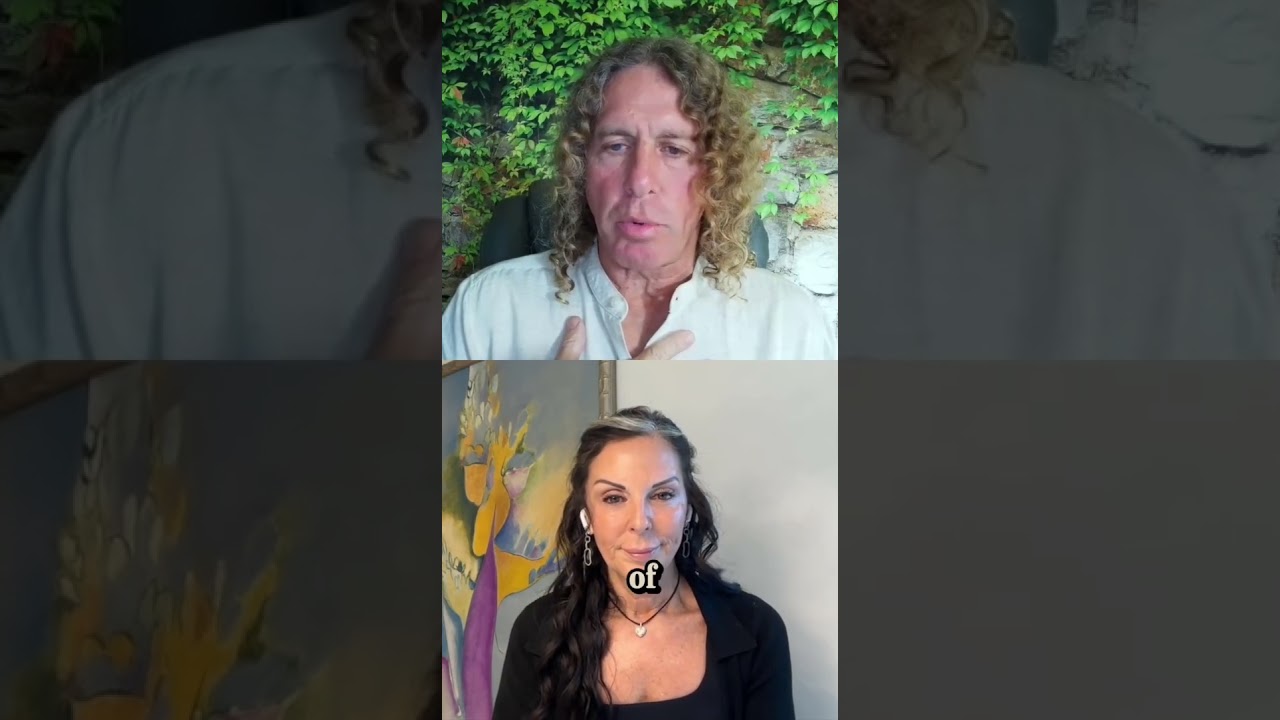
All right, Here we go. Dr. Antonello Banci is a world renowned neurologist and pioneer in brain stimulation therapy. As the president and founder of GIA Healthcare and Brain and Care, he brings over two decades of groundbreaking research experience, including serving as the scientific director at the National Institute of Drug Abuse. His revolutionary research at the University of California, San Francisco led to breakthrough discoveries about how stress and substances affect the brain. In 2013, his team's landmark study in nature opened new doors. In 2013, his team's landmark study in nature opened new doors for using transcranial magnetic stimulation, also known as tms, to treat addictions, leading to the first approved neurobiological treatment for substance use disorders. A member of the National Academy of Medicine, Dr. Banci's work has been featured on major networks, including CNN, BBC, and NPR. Welcome, Dr. Banci. Thank you so much for being here with us today.
My pleasure, Sherry. Thank you for the invitation.
I'm so excited to talk with you. I think our viewers are just going to love the information that you're sharing because of you or a loved one is watching this right now. I think this is really helpful information of key component that can help people shift when they're stuck with different mental health issues. So first let me ask you, like, what drew you to studying and to studying neurology in particular, getting into tms, which is a relatively newer technology and treatment.
So since I was a child, actually, I have always been intrigued and fascinated by behaviors, complex behaviors, depression, anxiety, decision making, why people behave in certain ways. Actually, one of my inspirations in my life to become a physician was my cousin who was in medical school, one of the nicest and smartest people I've ever met. And around the age of 20, he started struggling initially with what people thought was depression, but then it turned out that it was schizophrenia. Seeing him change back in the day I'm talking about many years ago and not having a lot of solutions also was something that deeply affected me. And I just when it was time to become either a neurologist after medical school or a psychiatrist back in the days, I'm Talking about the 90s psychiatry in Italy wasn't biological enough for me. So I went through neurology and neuroscience route to come back at the end of the day toward psychiatry. And I chose dopamine as the molecule that was the kind of the cornerstone of many of my studies for decades to really try to stay in between learning, memory processes, but also addictions, depression. And that was my way basically to become a neurologist with my heart toward complex behaviors in psychiatry. But TMS, to be honest, Sherry, I didn't know anything about TMS until I would say around 2009, 2010. And the study that you mentioned in Nature showing that brain stimulation in rodents would actually reduce their cravings. Their interest, let's put it this way, in cocaine made me think and my team, it was a giant team effort, made us think that brain stimulation instead of trying to find a medication was the way to go to actually help people initially with cocaine addiction. So I was just looking and studying with my team. Okay, what type of brain stimulation could we do? After the Nature paper results and we all agreed on the Simplest on the safest, non invasive, which is transcranial magnetic stimulation. That's how we ended up. I ended up thinking about TMS as a possibility to help people with addiction. And as you said, TMS has been approved in Europe back in 2021 based on the clinical trials that we did for all addictions, which is a major victory for us.
Wow, that really is. So it really is a newer technology. It hasn't been around for that long and just more recently being studied. It's kind of like coming along with the world of AI, right? Yes, but so it's so interesting that we study one molecule as if it acts independently. And you studied a molecule and you move. Moved into something that actually is about processing, which I think you can't look at a molecule without looking at processing, right?
Absolutely correct, Sherry. And that is the strength, that is the strength of tms. Tms in a sense, is the diametrically opposite approach to what we need to do when we have medications. Medications in general have to be as specific as they can be in order to minimize side effects. Right? TMS. The more we study TMS, since 1985, there have been like 20 plus thousand studies. The more we study TMS, the mechanisms of action, the more we realize that it does many, many different things. Anti inflammatory effects, brain plasticity, brain oxygenation, release of dopamine, serotonin, GABA and so on. So TMS is really the opposite of specificity. But probably, as you're mentioning, processes, behaviors, brain networks are controlled and modulated by so many different factors, brain frequency, brain chemistry, that tms, in a sense, like a jack of all trades, touches here and there, this entire very complex system with these many different faces. And this is why TMS is so successful.
So let me ask you, let me ask you a question. Can you just tell us a little bit about TMS and how it works in the brain and body and why it can be effective?
Absolutely. Tms, again, as you mentioned before, is transcranial magnetic stimulation is a type of brain stimulation that was invented in the mid-80s when clinicians such as yourself or me realized that with the traditional medications for depression, only about 35 to 40% of people would feel significant benefits. So back in those days, 40 years ago, the clinicians were looking into science and asked scientists like Dr. Barker, who's a physicist, who invented officially TMS to come up with something else. And the idea of TMS is like the initial idea of TMS was like the pacemaker idea. What does that mean? Is that studies have shown that People with depression. Let's stick to the original discovery of TMS for depression. People with depression have a reduced activity in the frontal cortex, like a heart that beats slower than in controls, less activity in this frontal cortical area. So the idea of TMS was why don't we use this brain stimulation, again, non invasive, just touching the head of patients to restore normal brain activity and see whether patients feel better. That was the original idea of tms and so the pacemaker idea, vice versa. People with anxiety or ocd, for example, or ADD ADHD have increased activity in some other brain regions. One of them is called supplementary motor area, which is down here. And in that case, the idea of TMS developed in these last 40 years would be to slow down excessive brain activity like a heart. Again the analogy with the heart that beats too fast. And the idea would be to slow it down by using a brain frequency of stimulation that can slow down, in that case, excessive brain activity. So that was the original idea of TMS as a pacemaker or a tool to rebalance brain activity. Then as we mentioned before, Sherry, over these last four decades, scientists, many studies have shown that TMS does much more than that. It does produce brain plasticity, basically new brain connections, it has anti inflammatory effects, reduces molecules.
Can you explain neuroplasticity to our viewers and how TMS does that?
Yes. So brain plasticity is a term that we can find on social media everywhere. Like this does brain plasticity, that does brain plasticity. But brain plasticity, to neuroscientists mean creating new brain connections or changes in our brain in terms of brain connections, in terms of memories that last from about half an hour, that's the technical timeline, up to a lifetime, from 30 minutes to a lifetime. That is something that we call as neuroscientists, brain plasticity. Why is that? Because our brain, normally, as you and I are speaking now, communicates within milliseconds. Brain molecules are released, the neurotransmitters, every millisecond a thousand times per second. But we consider brain plasticity when something structured like new brain connections last longer way, way longer than a few seconds or a few milliseconds. So the scientists agree that after half an hour, again up to a lifetime, when we create mem, that is the whole range of brain plasticity. So creating new brain connections that can last potentially for a lifetime.
So this is really exciting because like you and I share a patient and he goes for TMS and then he comes for therapy afterwards. So the value of that sounds like if the TMS machine and where you focus the stimulation will then create neuroplasticity. So that when the patient then goes in for their therapy sessions, and even during, like, one of the things that I had this patient do was visualize himself and what we had been working on in therapy doing the things that would that help him to feel grounded and connected and enjoying himself. And so during the tms, I had him visualize these things, because you and I had spoken about neuroplasticity at one point. And he came out after the first day of doing that, he said to me, he goes, I liked that better than looking at my phone. And he said, I actually felt different right after the treatment doing that. And then we were able to go into therapy and use EMDR and help to change the negative beliefs into the positive beliefs that could match those images. And now I understand even more the neuroplasticity and why that could create a more lasting change than just sitting there and talking.
Absolutely, Sherry. But something that I want to mention. You create brain plasticity when you do therapy with patients, learning, listening, changing behaviors through therapy, which is fundamental, always in combination with tms, as you and I know, because TMS alone wouldn't go far. We all know that. But you create brain plasticity. Your patients listening to you, changing their behaviors, their thoughts, their behavioral strategies. That is, even without tms, pretend TMS didn't exist. You are also creating, every time you have therapy with them, brain plasticity. Now we have the synergy of the brain chemistry changed by tms, plus the brain plasticity, plus you and your amazing work with them. And then we really maximize all the possible tools all at once that surround the patient and make them improve. So there is this beautiful synergy with what you do in terms of creating new sprain connections and new pathways and what TMS can facilitate, like an amplifier, in a sense. That's why it's so beautiful to be able to add TMS to what you are already doing. It doesn't interfere with your work, with the therapist's work, or with the physician's work, but it can simply be like a servant, in a sense, to make your work a little bit easier, which I love.
I love the way you said that, like, to us, as a servant, like I see it as. So you're talking about it can. TMS can aid in neuroplasticity, take inflammation down in the brain, but does it also increase the brain's ability to process differently? How do. Does that work? Does. Is that how it can support. Can you explain that yes, now you.
Are getting into a very cool and new area of tms, the mental performance. One of the oldest questions of TMS is can TMS make people smarter or can tms, let's put it this way simply, can make you perform as a human intellectually from a creativity point of view, from a physical point of view. We have a lot of athletes, superstar athletes we have of many sports. But we have also very creative people, artists, actors, singers and musicians. They come to us to feel better, to be able to be better artists, for example. And we have seen that quite a lot there is an improvement in whichever field of interest of their performance in the majority of people. But the question share which we don't have an objective measure so we don't know are these people performing better? And they say I run faster, I'm stronger, I concentrate more. A gentleman finished an album in 3 weeks after TMS and this person was stuck on it for 19 months. But. But such person had also depression and anxiety and TMS removed, tuned down those symptoms. So the chicken and egg question is we don't know if this person improved his performance and he finished his album because of depression, apathy, lack of energy, trouble concentrating and anxiety were pulling him down. And just by removing those lifting up this weight improved his performance or whether TMS did something on top of it. The problem and Shery, you're touching a very important point about human research. The problem with human research, unlike rodents, pre clinical research, rats and mice and whatnot, is that in people we are very limited in how we can study brain changes. We can use beautiful, we can use quantitative eeg. Fantastic. Now there are new softwares but we cannot get inside a person's head in terms of millisecond. By millisecond, neurotransmitters release chemical changes. So you and I can speculate forever on how does it really work when these people improve their performance, their creativity. We have interior designers say so much better now we have CEOs saying I'm making much better decisions because of TMS. But we have no real physical way to get into people's brain yet and quantify those changes. So it's still kind of a box that we study from the outside with all the limitations. So we don't know exactly all the changes that happen inside the human's brain. But we have to listen to the patients, measure what they say, which is crucially important. As you know, the most important thing at the end of the day, not my measures, but how a patient says I love life now, as opposed to before, or I don't want to drink, I don't want to smoke, etc. But we don't have those measures like we have in preclinical models to be unequivocally able to quantify. These are the changes. A, B, C and D cannot do that yet.
You know, it's kind of like the field of exercise and nutrition, right? Like, I know that food is medicine and we know that exercise is medicine and every time you contract a muscle, it does release certain proteins for your mental health, right? So we know like little things. And I think that I built my practice on reading a lot of different pieces of information that was out there. So I've been practicing for 30 years. So all these different pieces of information and I said, you know what, I'm going to try that with this patient. We're going to try exercising 15 minutes a day, five days a week for six weeks. And let's just see if you get better. And then it's like, let's see if we exercise 15 minutes a day, five days a week for six weeks and then we add in, we're just going eat vegetables, protein, clean food, no processed food, and let's see if the food and the exercise can be medicine. You know, as somebody who's trying to help people heal, I like, I would, I wait for the studies to come out. But the way that we study people and the way that we study things is so primal and primitive and archaic compared to the technology that we have. Like, it's just so insane to me that we have to study one molecule at a time. But that molecule exists in a very complex environment with subtle nuances like that just doesn't logically make sense. So I don't even think the results can be accurate. So until you can actually move a body, study someone's soul, really get in there. I think we're always going to have these wonky results that we go, well, there was a 30% better effect and that's good enough for us to say it's statistically significant. And that's great because then we can all point at something and go, let's try this. But I do think it's a multi layered approach. So if I send one of my patients to your clinic for TMS who has depression or depression and OCD from infancy trauma or early on trauma, which I think most depression comes from this lack of being nurtured and acknowledged, from sadness and fear and disgust in early childhood and throughout our lives. And then we don't understand that that turns to this unspoken hurt and pain and anger that modulates down to shame and guilt and, and OCD and depression. And so, like, I think there's this whole cycle that we miss as clinicians if we don't go back and look at that. But once somebody's stuck, they're stuck. And you're not going to just get out of it alone. So having something like TMS to be able to help move that with good therapy, with nutrition, with exercise, with meditation, with breath work, just sounds like such a wonderful compliment. And like you said that like, it works in an ebb and flow and a synchronicity. And you can still be on medicine, right? People can come on medication.
Absolutely, yes, people. That is the beauty, Sherry, as you and I talk about our common patient. That is the beauty of tms. TMS can let a patient be whatever they are. They go to aa, they go to any type of support group, they do any type of therapy, psychological therapy, emdr, psychoanalysis, they take any medications that their prescribing physician prescribes. Fair game. Then the physician will plug in TMS into this entire picture. And what you were saying before is spot on, Sherry. I could have said it better. The analogy that I love to use. I was told this story by one of my clinicians, was the UK team of cycling, which in history, until many years ago, they had never won one gold medal ever in history. And then a new coach came in and this new coach asked each member of the team, just each one of them, to say, guys, look, all I need you to do is to improve your performance by 1%. To the eight of them. I'm making it up the number, let's say it was eight. And over time, they actually did every element improving by 1%. Guess what? They want more medicine history than anybody else. Many different elements laying together, improving and the outcome. We are the same example. TMS is doing X percent therapy, is doing X percent, managing proper diagnosis and managing medications, diet, exercise. And then it's this plus that plus that plus that and boom, you see transformations in people's lives. But you touched also now, please, you touched also on something that's very important. Because I always say, look, our experience, studies have shown that for depression, anxiety, addictions and so on, TMS has an above 80% success. But people ask me, when is it that it doesn't work? And we are getting back to spirituality. We are getting back to having a sense of purpose. Because a common that we have observed now in many years of tms Even the apparently simplest symptoms and cases of people that have mild depression, mild addiction, mild anxiety. These people have no sense of direction. They cannot find their passions, they cannot find a sense of purpose. They have no connection with themselves, with any entity, whether it's a religion or any type of spirituality. These people are lost, basically. Sherry, those are the toughest patients. That component is extremely important as well, for success.
Yep. I remember back in like 1993, I had a supervisor and I said to her, you know, is it okay that I explore my patients spiritual beliefs? Because that's part of their beliefs. And she had worked at Menninger Clinic when it was out west in the United States. I think it's down in Texas now. But this was when it was out west. And they actually ended up doing a study about spirituality and people who actually have spiritual beliefs versus people who don't, and how mental health wise, they were able to improve significantly faster and more however they measured that. And she said, you're the first clinician that I came across who actually talks about these things. I'm sure there were plenty other ones out west. We were just in New York City, but it was. I just didn't. I've been meditating since I'm 11. And I didn't understand that if you didn't feel safe in the world, just conceptually. And most of us who have had parents weren't perfect parents, and there were things that made us feel unsafe. So if you didn't have a concept of a loving nature, force, life force, what people call God and all different names. But if you didn't believe that there was a loving force in the universe and an intelligence, one that could work for you, with you and through you, that must be very frightening. And it adds another layer of trauma, especially if you learned that there was a cruel or a punishing life force. So I thought it was really important in understanding somebody's trauma or somebody's strengths that it would be really important to address that. I mean, again, I just think that's logical.
You were a pioneer, like we said with Leonardo da Vinci. He was way too ahead of his time. But you were already Jerry. Seriously, you were already spot on. That's exactly what we observed with tms. When does work and when it doesn't work, there is a common thread. Either people for secondary gain, that's another story, don't want to improve because they would lose a lot of attentions and so on, or lack of a sense of belonging, lack of a sense of purpose, lack of passions, goals in life. Those are killers in terms of TMS not being able to do what it's supposed to do.
So, you know, when I think of a sense of belonging, right, I think of original attachment theory. So if you have a secure, loving attachment, that leads to a sense of belonging, which then leads to a sense of worthiness, right? So if you have insecure, anxious or avoidant attachments, then that is going to lead you to a place of not feeling a sense of belonging. And oftentimes, you know, even if your adult self can feel a sense of worthiness, it doesn't really feel real because you don't have it from your original attachments. How can TMS help in the repair process of that initial attachment if it can?
So it goes back to what you mentioned before about your patient. What we have been seeing and many therapists have reported to us because of what TMS does to our brain chemistry and to our brain networks related to depression, attention, anxiety, trauma as well, decision making. Patients are more into working with therapists. They are more aware, which sometimes is very painful. Sherry we have seen patients becoming very aware of their own weaknesses or limitations or things to work on. But in general, so many therapists are telling us, both inside our clinics and out, I can finally connect at a deeper level with this person. He's present, she's present, as opposed to, okay, wait, I just want to. I'm looping with my OCD or my depression, with my anxiety, with my addictions, they are more present. So it's kind of giving you the patient with a little bit more presence, awareness and attention. That is the servant, the butler role, in a sense, to a therapist in these complex cases that TMS can do even practically. You mentioned trauma studies that the BAS. There is more than 20 BAS in the US have TMS. Machines have also shown that PTSD. But the triggers that trigger people with trauma after TMS, they kind of quiet down, they become less relevant, which is the same for triggers of people with addictions. Alcohol, cocaine, you name it. They can see the bar, they can see friends drinking, snorting, whatever. After tms, all these triggers of trauma, of addictions, studies have shown that they just become less relevant to the person. So that's what in general, TMS can do for you as a therapist, for a patient in their path, tuning down the noise, anxiety.
So that makes me think that. Great. That makes me think that the TMS can. Might also be quieting down the limbic system, quieting down the amygdala, being able to let the limbic system and the vestibular system work together so that when you're bringing in information through your eyes, your ears, and your senses after having trauma, that if you have tms, that it allows the brain to unlock out of that fight or flight and stay unlocked. Is that accurate?
That is the idea, and some FMRI studies have looked into that. But again, Sherry, the limitations of human studies so far, you can study oxygen consumption, you can study few things with pet, but, yes, that would be the idea. The amygdala would be less prominent. Fear. Fear, freeze, run. And everything quiets down. Everything becomes more Zen, more silent in a more. More balance.
That's excellent. Wonderful. So can you. Can you tell our viewers some of the misconceptions about TMS and who should. The misconceptions and who shouldn't have tms?
Absolutely, Sherry. The misconception, which is, again, it's nobody's fault, is that TMS is like electroshock. Is tms, like, oh, my God, it's gonna change. My brain is dangerous, and so on. I mean, there is no study so far that have ever shown any danger of TMS. And there is, again, 40 years of data. I do TMS on my head. My son, who had severe anxiety and depression, he's 20, did TMS a lot of trauma in high school for many reasons. He's a transgender kid, and TMS saved his life. So we do TMS on our heads. Step one is not electroshock. It's just touching gently somebody's head. The sensation of TMS is like a AAA battery kind of tapping on your head. So it's this electrical feeling, but is. I mean, usually it's not painful. And the only people so far that cannot do TMS are people that have metal plates in their heads or neck less than, like, 6 to 8 inches from the area stimulation, because those metals could heat up and. And basically create pain. Pain to patients, patients who have brain aneurysms, patients with epilepsy, or patients that are intoxicated, of course, with alcohol or cocaine, because chemical intoxication could trigger seizures, which is one of the rarest side effects, which, I mean, I've never seen in our clinics, but we don't want to trigger too much brain stimulation. And people with epilepsy, they cannot do tms. But there are clinics and studies that have shown that certain frequencies of TMS can help certain forms of epilepsy. So metal plates, alcohol, or drug intoxication, brain aneurysms, those are the only situations where TMS is not indicated. General.
So it's so if you have somebody who has, I'm sorry, if you have somebody who has schizophrenia and they are stabilized enough to be able to interact and, and not have paranoia in the.
Moment, they are, they are potential candidates. There are studies on, on schizophrenia. But it's our job, and that's why we always offer these free conversations with, with potential future patients. It's our job to understand what are the expectations. For example, Sherry, I have people asking, can TMS cure schizophrenia? No, so far, no. But there are studies on auditory hallucinations that can be reduced by TMS in schizophrenic patients. Depression, anxiety, ocd, add, insomnia. These are symptoms in patients with schizophrenia that potentially can be treated with tms. So it's all about, why do you need to do tms? Not I have schizophrenia when I do tms, but I have these symptoms, is there any evidence that TMS could help me independent of schizophrenia, bipolar, depression, this or that? So we try to pull it back to what TMS does. TMS can treat symptoms, and we try to understand with these three consultations whether, as you're saying, a patient could potentially benefit from TMS or whether it would be, you know, not indicated for them.
So when someone has epilepsy, you absolutely cannot do TMS in general, no.
But there are protocols that could be still used in patients with some forms of epilepsy to help them. For example, Sherry, we're getting technical, but the main protocol for anxiety or OCD or ADD is actually on the top of somebody's head, supplementary motor area and the low frequency protocol. That protocol, in theory, again, is going to be the medical director deciding. But in theory, that could be given to a patient. So it has to be on a case by case. There are a few exceptions, even in patients with epilepsy, where some frequencies of TMS could be, could be useful to them.
Well, I imagine, you know, epilepsy comes from different lobes of the brain, right? So you could have epilepsy from your brain stem, you could have it from an injury to your cerebellum, you can have it from the temporal lobe. So I imagine depending on where it's coming from, it would make a difference. And, you know, you just said something that I think that our listeners needed to hear is you said, it's not electric shock treatment, but when you just spoke. Now there's sound frequencies, right? And I think if people understand that our bodies are circuited through sound and you are just activating brain activity with very focused and certain sound frequencies, there doesn't sound anything dangerous about that. And I think with the rise in people understanding sound bowl healings and what have you, you can see the impact that sound has on our bodies, just in relaxing them and making them feel peaceful. That to understand that very concentrated, focused sound frequencies to different parts of our brain is very gentle and activating.
So tms. I'm sorry, Sherry, I was probably. I didn't explain myself for the listeners. TMS is like a tiny, tiny MRI machine, uses magnetism to create small, very focal electrical stimulation, which uses these TMS protocols, the same frequencies as our brain. Basically, we range the frequencies, depending on the disease, from 1 stimulus per second, 1 hertz, to about 50 hertz, 50 stimulus per second. These are all physiological brain frequencies. But you are touching on something that's very important because I also go to yoga and sound frequencies are. At the end of the day, it's all about frequency. Our brain is a giant organ that has different parts with different frequencies. And, well, we are. We are electromagnetic energy and electrochemical energy, because magnetism and electricity in. Nowhere in the universe, as far as we know, can be separated. So it's all energy. TMS is a four. Sound balls is another form. Sound frequencies. We know the effects of sound on our body and on our brain. It's just different approaches getting to the same point, changing our brain frequencies back to what is normal. There are some neuroscientists now that actually call many different diseases brain diseases, brain arrhythmias, comparing again, our brain to a heart. So frequencies. It's all about frequencies.
You know, it's very interesting because we now know about the microbiome, right? Our skin has microbiome, our gut has microbiome, our brain has microbiome. So we have bacteria, bacteria and viruses and fungus all throughout our body. And it's very interesting to think that the TMS would also affect their activity. And I don't know if, like, there's studies out there now, newer studies, where I think they're just starting the studies on different bacteria that can cause Alzheimer's, which makes you wonder how those bacteria would respond to tms. And would that be something worth studying to see if TMS can actually clear out certain toxic bacteria in the brain?
So you are one step ahead, as always. Sherry, I never told you this, we never talked about it, but there was a study a couple of years ago in patients with cocaine addiction, a beautiful study done at University of Florence, and it showed that TMS changed the gut microbiome of these patients. Whether it's because there was a change in these inflammatory molecules, maybe because of brain stimulation that reached the vagal nerve, change in anxiety, change in depression, we don't know. Nobody has a mechanism for that. But gut microbiome, this one study showed that is changed by tms. And there are beautiful studies on Alzheimer's patients early stage showing that when they do TMS for a few months, in this case, they actually have slowing down of progression of Alzheimer's. And maybe because of the anti inflammatory effect, maybe because of brain plasticity, maybe because of the chemical release of many positive substances. But TMS is also used, but nobody knows in Alzheimer's patients to your point, whether the gut microbiome is also changing. But if it changed in patients with cocaine addiction, maybe changing in those patients as well, it should be studied. That's another great point.
I think when you think about electromagnetic stimulation and you think about Alzheimer's, right? So if amyloid plaque is really the brain's way of, it's an antioxidant, right? So your brain is trying to detox. So therefore your glymphatic system might not be detoxing well, so you're overproducing this and then you add magnetic stimulation in there. And you said that there's anti inflammatory benefits, there's neuroplasticity benefits. You can only imagine that it has to affect the glymphatic system somehow. And it just, it becomes very exciting thinking about all the different ways that TMS could potentially affect, not only, you know, stimulating so that people can get unstuck from depression and OCD and anxiety, but that it can actually activate other processes in the brain that might help with our brain health. And I'm so excited to hear what you continue to do with your research as you move forward and the research that's going to come out from around the world. Because this just sounds so very exciting with very little downside, right? Like what are the side effects of tms? Is there, is there a downside?
So the most common side effects we see that in about less than 10% of patients is headaches initially, the first few sessions, probably because of the increase in brain oxygenation and release of all these chemicals. But they usually fade within a few days. Rarely people complain of the sense of discomfort that with this tiny electrical stimulation they feel. Some patients, especially anxious patients, initially feel a little bit anxious or dizzy because of what's happening to my brain. That's normal. But those are usually the side effects that we see. And so it's very minimal compared to other medications or other treatments that's incredible.
Listen, I know that you and I have discussed off camera that there's a difference between healthcare providers who provide tms. And there is a one day training versus the type of training that you do, which I know is. And ongoing training and keeping your team and your staff up to date on protocols and what have you kinds of questions would our viewers want to be asking a healthcare provider, let's say, if they can't go to your clinic and they were going somewhere else, what would be the best questions for them to be asking?
That's a great, great point, Sherry. And I have a lot of people reaching out that I don't want them geographically to, you know, come to us because it would be impossible for them. What I usually would ask is how many patients has your clinic treated? Have you published any studies, any clinical research of any sort? How do you train your technicians? How much experience do they have? What is your success rate? What machines do you use? Do you have navigation systems? Navigation systems for certain types of TMS increase accuracy, precision, meaning success rate by a lot. So these would be the experience. How many cases, success rate? Have you published anything? How do you train your personnel and technicians? And usually the good clinics, they get more excited to explain, they love to tell you how good they are and vice versa. So yeah, that's, that's what I would ask.
That's really helpful. So I know I have to wrap it up here soon and I want to ask you, like, where do you see the field of TMS going over the next five to 10 years? Like, where would you like to see it go? How do you see it, you know, by talking to your colleagues, like, where do you see it evolving to?
So two things, the low hanging fruit Sherry would be that TMS would be available, should be available to everybody. There are studies, cost benefit economics, since 2009, Australia, United States, beautiful studies that have shown that TMS is in general way more cost effective than not doing tms, for example, for depression, which is the biggest thing that has been studied cost wise. So my dream is to see TMS available to everybody and not only to a few people because of certain types of insurances and limitations. And the second direction that TMS is going is the direction of precision. So for the few cases that do not respond to tms, combining TMS with other technologies, imaging, very sophisticated imaging, QEG is going to be, as Stanford does, for example, beautiful studies is going to be probably the answer to the 10, 20% of patients that do not respond to TMS. So ideally TMS has to become a working tool, as successful to as close to 100% as we possibly can. We are above 80 at least in the good clinics. But that's the missing piece. Why doesn't work to some. And those are my two dreams. But first of all, TMS everywhere available to everyone. That is my first dream.
Like to see you collaborate with gastroenterologists and endocrinologists because it sounds like it could be extremely helpful with people who have autoimmune problems and people who have gut microbiome issues concurrent with trauma. And it would be really nice.
I do it a lot here in Italy, where I am right now, where I practice. We do that a lot here. Autoimmune diseases, multiple sclerosis, but other type of inflammatory diseases, diseases, fibromyalgia. We have a lot of those patients here, for example. Absolutely, yes. Sherry, again you hit the nail on the head.
Well, we, we treat a lot of patients who have pain and co occurring depression and trauma. So that just opens my world up there now too, if that's available. So what are, what are the most exciting developments that you, that are coming out with tms, if any, beyond what you've described?
We just had a meeting in Rome, an international meeting with faculty from Harvard from United States about TMS just a few days ago on November 23rd. The most promising part are the inflammatory autoimmune and neurodegenerative diseases. It's still preliminary, but again, strong data on Alzheimer's, on als, multiple sclerosis, Parkinson's disease, the neurodegenerative diseases where there's no treatment that can actually slow them down. So a lot of studies on inflammation, studies on lymphocytes, on blood cells and the effects of tms. So the whole inflammatory inflammasome, as they call it, and autoimmune is probably the next frontier where there's going to be some amazing research and results in the near future, I think.
And Alzheimer's, of course, there's amazing, amazing, absolutely amazing. You know, Dr. Branchi, like I, I adore you, I adore your team. I think that you're doing amazing, amazing work. How can our viewers contact your clinics so that they can get the kind of treatment that some of my patients are getting from your clinics, which I think is phenomenal. What is the best way for people to reach out to you?
So the best way to have these free conversations about tms, they can check on our websites. We are at gia, gia, Miami, gia, Chicago, gia, Beverly Hills, gia, Boca Raton and so on. And just ask for a free consultation and just say I want to have a conversation about TMS and it's either myself in person or one of my super trained team members to just try and answer all the questions that you may have about TMS and so reach out to. To us. I don't remember the phone numbers. I'm terrible. That is why I'm saying we'll make.
Sure that we put it in our comments, you know, underneath the video people about tms.
So absolutely. Thank you.
All right, wonderful. I can't thank you enough for for meeting with me today. I know you're extremely busy. Thank you for making the time with our time difference and everything and I'm very excited about the work that you're doing. I'm excited to hear about the TMS community and thank you so much.
Thank you. Sher, you are the best. You are an angel.
Thank. All righty. I'll see you soon. Thank you so much. Have a wonderful day. Bye bye.
You too. Bye bye.