How to Practice Peace Every Day with Jim Pero of The Inspired Yogi | Get Cannectd

Jim Pero, a yoga instructor and nurse, shares tools like square breathing and body-aware meditation to shift your nervous system out of fight-or-flight. He discusses lowering expectations to reduce upset, confronting fear through visualization, and his 40-year practice of reprogramming the subconscious with affirmations.
Chapters
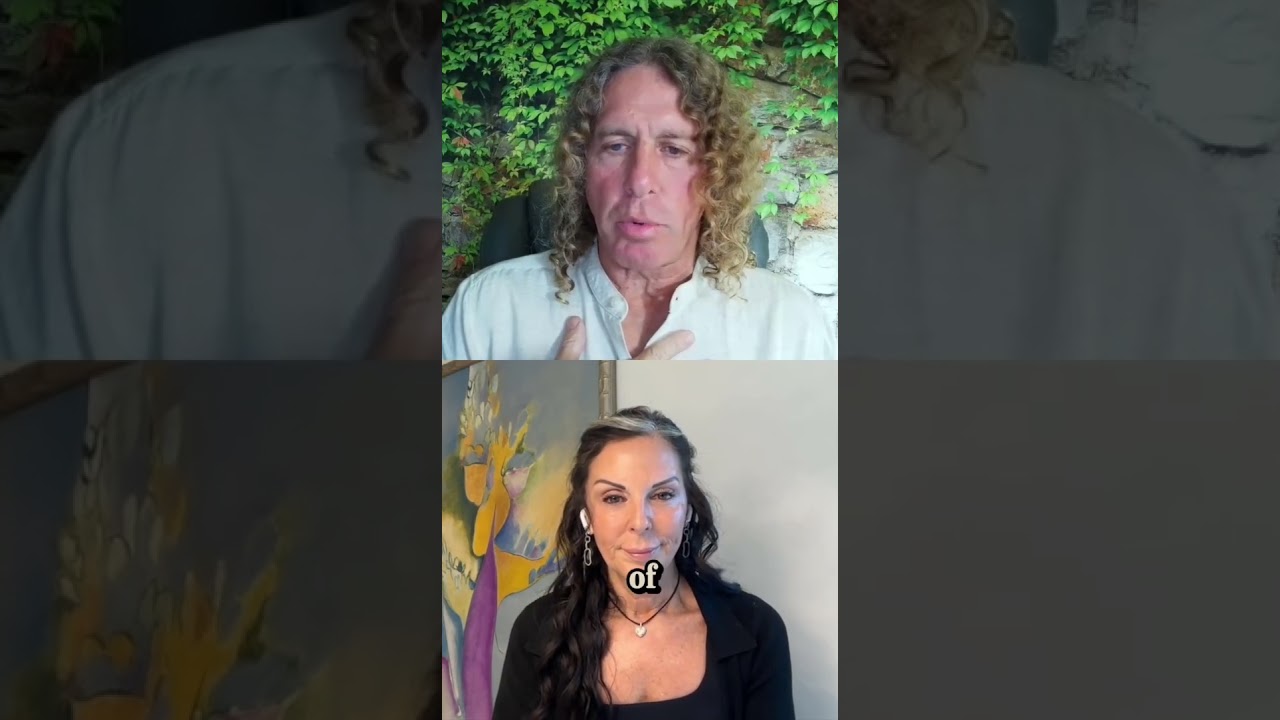
Hi, welcome to Get Connected. I am here with Jim Perot. He is a yoga instructor, a registered nurse, and he is the host of the Inspired Yogi podcast. So I am so excited to have him here today. We have spoken before and I just want to welcome you, Jim, to our podcast.
Well, thank you, Shari. I'm honored to be here.
Well, thank you. Well, I really wanted to talk to you today about not just yoga as a practice, but really how do people take yoga into their daily lives and create a practice of it? What does it mean? And, and all those great topics. So I'm going to dive right in. I want to know what made you go from being a registered nurse to a yogi?
Oh, well, actually, for me, it was the opposite. I started practicing yoga in the late '80s. I didn't go to school to be a nurse until I got into my 50s.
Wow. Yeah. So what type of nursing did you do?
Well, I started off just in a regular unit on a med-surg unit in the hospital. But my passion, even in get in school was to do labor and delivery. I've always loved babies. I've always loved women. I thought it was a good fit. So I applied and I actually was the first male that was accepted on the labor and delivery unit in my hospital. So I was pretty excited about that. So I did labor and delivery for 2 years at my home hospital there. And then COVID hit, things got crazy in the nursing world and the money was really good for travel nurses. So I started travel nursing. Wow.
Did you take your yogi practices into the labor and delivery room with you in your travels? And like, how were you able to, if you were, to bring those 2 disciplines together?
That's a great question. Yeah, absolutely. You know, yoga creates, or at least for me, created a real calmness, really brought peace into my life. And bringing that into a delivery room is great because, you know, women are anxious. A lot of times they're first-time moms. They don't know what's going to happen. You know, they've got all this anxiety and, you know, just being a calm presence there for them, it was really helpful. Also breathing techniques, different positions, knowing the anatomy, knowing how to stretch. Those things really came in handy.
I can tell you having delivered 2 kids and wanting to do it without any medicine, You are not prepared. There was nothing that prepared me for what a contraction is. Yeah. And I mean, I bless every woman on this planet who delivers a child.
Yeah, labor's kind of a light term for the work you have to do.
It doesn't— I think a man must have named that, right? Because a woman would have called it something so different. But how amazing that you were there. I had an incredible woman coaching me during my labor and delivery, and I was very fortunate to have her by my side along with my husband at the time. So, but to have a nurse who actually had that level of awareness to be available to you, I think those women were very fortunate to have you there.
Well, thank you. I appreciate that.
So what made you interested in yoga and, and how you bring it into your daily life?
What made me interested in yoga was really just a curiosity. I'd actually started doing yoga before I knew I was doing yoga. I was reading different books that were teaching breathing exercises and meditation, which are really the heart of yoga. And then I was attending a church, a Unity Church in Southgate, Michigan, and there was a yoga class. And I thought, I'm, I'm curious, I'm going to take the class. And I took my first yoga class, and for the first time in my life, I experienced a deep sense of peace that I never experienced before. And it was interesting because my life, you know, my focus in life was to find peace. I grew up in a pretty tumultuous family life, a lot of fighting and arguing and just, you know, bickering and And it was just awful. You know, I didn't like it. And so—
That's a lot of daily chronic stress that you just becomes your normal.
Yeah. I mean, at 7 years old, I literally put my hand through my bedroom window one night because I was just so sick of my parents fighting every night. And I ran out the front door and I'm like, I'm running away. Yeah. So, so I really looked for peace. I didn't want fighting and all that in my life. I knew that, you know, I was going to do anything I could to be away from it. So I took that yoga, first yoga class, and I'm laying there in Savasana in a deep relaxation, which I'd probably never experienced before. And I was just like, so peaceful. And I said, I knew, I knew it was my path immediately. And that, and I remember looking over at the, uh, some other guys on the mat that were probably my age now, you know, this was back in my late 20s and I'm 62 now. And I'm looking at them with these big old bellies and they're not in very good shape. And I'm like, I'm not going to be that either. So yoga has really helped in both accounts. So yeah.
That's great. So you've been a yoga instructor. You've, I'm sure people have like wanted your counsel on things after classes. You see a lot of people talking to the yoga instructors. So people look to you for wisdom and insight. When people have shared with you their conflicts, their struggles and what have you, how do you use yoga, the principles, some basic tools to help them through those times? Or how do you use them yourself?
Another great question. So that's, it's so multifaceted because there's so many different ways that yoga can help you and different ways to be peaceful. You know, for me, learning breathing techniques that would regulate my nervous system was one of the most important things. Because if your nervous system is not regulated, you're always in a state of fight or flight, or you can actually be the opposite way where you're too deep into relaxation, where you're always in a state of rest and digest. So learning to create a homeostasis with the breath is Really important.
I imagine knowing which one you have.
Yeah, right.
Just being able to— I think so many people don't live in their body to be able to check in with themselves and like, am I tired or am I just— is my body staying in rest and digest in that parasympathetic mode? Right? Yeah. Yeah.
And I'll tell you, I'll be honest with you. That actually happened to me. I was practicing breathwork in a way that made me so relaxed. And I would do it all day long for days that my energy started to dissipate. It was pretty incredible because like my hands and my feet would always be warm because of the relaxation of the arteries and getting that blood flow. I'd literally walk outside in the snow barefoot and just my feet wouldn't even be cold. But I noticed my energy's waning and I was like, I'm just taking this a bit too far, but to go back to your question, there's also like the mental aspect. Like a lot of people are upset because of unmet expectations, you know, and I learned to lower expectations, almost not have— why have expectations? You know, it's like when you come home from work and you have expectations of your spouse, for example, You know, oh, the dishes aren't done. You know, oh, there's no food. And then you're upset and you're angry. It's like, you know, I've been out working all day and I come home. There's, you know, house is a mess. There's no food, you know, and you're upset and you're upset because you have these expectations of things being done. That gets you. That's, that's where your upset comes from, is expectations. So if you don't have expectations and you come home and you just meet life where it's at, okay, this is, this is where it's at for whatever reason. You weren't able to do some of the things that could have been done. No big deal. Does that, does that make sense?
It does, but I've never had the, the, the grace or the glory of being able to come home and expect that, right? But I think that, I think the expectations that, um, I think are healthy expectations are communication.
Yeah.
And how to communicate about those things, or communication and expectation about just healthy boundaries and who someone is in your life and what role or what roles are we playing, as opposed to I did or didn't do something.
Yeah.
Which I guess is really important. I mean, is equally as important because That's all about communication. And if you communicate to your partner, listen, it's been a really hard day. If you come home, like, we really need to do something different for dinner. We need to order in, we need to go out, or let's go to the grocery store together. It's all about that communication. If there are, even if we set our own expectations, like, like I'm cooking and cleaning today, but the kids were Very demanding. This one got sick. But I think that I think I've always questioned that. Should we not have expectations thing? Because there are certain expectations we have. Like I'm gonna get in my car and drive from the studio to my office. I expect everyone to stay in their lane. I'm gonna pay attention, but I expect everybody to. Follow the traffic signals.
But sometimes they don't. And that's, that's my point. You know, if we expect everybody to drive right, then we're likely to possibly get it, have a higher possibility of an accident. Like when I drive, I don't expect anybody to do what they're supposed to. I'm hoping they do. I'm watching. And, and, uh, I just had an example from yesterday. Um, I was driving down a, um, two— we're both driving down a two-lane road. Um, there's a garbage truck in my lane on the right, so I get over to the left where there had been a truck coming up pretty fast, but he wasn't going anywhere because there was a car right next to the garbage truck. But I got over, plenty of room. It's not like I cut him off or anything, and he was upset. So when I got around the garbage truck, he literally took his truck and trailer and moved into my lane 2 feet, like, oh, I'm gonna run you off the road now. And it's like—
Wow.
Did I get upset? Did I let it take away my peace? No, I literally just moved over a little bit, waited till he got done playing his games. And, you know, part— now I have to admit, there's part of me that wants to get upset, that wants to do something, you know, but it's like, for what? Why let that take away my peace? In reality, he didn't do anything but be a jerk, you know? So is there an expectation that he's going to stay in his lane? Yeah, hopefully. But What if he does?
You have to be mindful.
Yeah. Mindful and flexible. You know, the world's— I look at the world as just infinite possibilities. So if there's expectations to be certain things with all these possibilities out there, then it kind of puts life in a box. But if you look at the world as like infinite possibility, then there's no expectations. Anything can happen, right? You can walk out your front door and get mugged. You never know. You just never know what life's going to bring you. So if you're open to infinite possibility, then you don't have those expectations and you're less likely to get upset.
So how do you stay in your mindfulness place where you have awareness, but you're not necessarily going into a level of anxiety or in a fear mode or that fight or flight where like, okay, I'm ready for anything at any time. Like, how do you help people stay in more of a— like, where do you find the balance of I'm going to be present and mindful and aware, and yet I'm not going to get my nervous system to be in fight or flight mode?
I think it comes from a practice of awareness, being present. And being calm, keeping the nervous system regulated.
And so for people who might be watching who don't know what that means, can you share that? What a practice of awareness would be?
Well, it's like, it's like being present, being present to how you feel. Like there's, there's the awareness of where you are, you know, what's going on around you, but there's even a deeper awareness. How aware are you of your breathing? A lot of times we go through the whole day never paying attention to our breath. I'm an unusual odd duck. I mean, I spent years literally paying attention to the way I breathe all day. And that's probably not something most people have done.
Gosh, I think that is so insanely helpful though, right? So obviously I practice mental health all day. And when people, like I could sit And I'll just jump in here and say to you, I remember when I read a book on mindfulness and then saw a lecture from a very famous author who writes on mindfulness. And I remember being in my kitchen and washing the dishes and being like, I feel my feet flat on the floor. I feel my hips stacked on top of my legs. I feel my shoulder blades down and back and my hands with the water, the soap. And I just kept going into every detail. of washing a dish. And I just remember this peace washing over me, and I'm laughing to myself thinking, I can't believe this is working. Like, I have no anxiety. That's why I think that it's so important that people hear the breakdown of what it means to be present and what it means to— what was Eckhart Tolle wrote the book, you know, The Power of Now, right?
Mm-hmm.
But how do you stay in the now? And I think that's what we're talking about is the practice of being in the now, the practice of being present in this moment. And what are the tools that we can share with people? Like, what is a specific breathwork that you like that people could be paying attention to or mindful of their breath? And if they did, they might find that they become less anxious because of the The mental focus as well as the physical act. So do you have a breathwork that maybe you could share with us that could be helpful?
Absolutely. It's gotten really— I learned this breathwork in the '80s, actually, when I was in the Navy. And now it's, it pretty much feels mainstream. I see it all the time. I see a lot of different people talking about it even outside the yoga world. And It's often called square breathing. Are you familiar with that?
Yes.
Okay. Yeah. It's, it's, it's pretty simple. You're just basically paying attention to your inhale, the pause before the exhale, the exhale itself, and then the pause after the exhale before you inhale. And those are like the 4 parts of the square. So as you're breathing in, you're going to find like a natural rhythm. So if you're breathing in, let's say for a count of 4, you breathe in 1, 2, 3, 4, up one side of the box and you're retaining the breath in your body for A count of 4, 1, 2, 3, 4, and then breathing out for that same count, 1, 2, 3, 4, and then retaining the breath out of the body for another count of 4. And then you've completed the square. Now, if you continue to breathe like this with the same duration of the inhale, the pause, the exhale, the other pause, your nervous system comes out of fight or flight or digest and relaxation and goes into a homeostatic or homeostasis. And that regulated nervous system is very calming, very peaceful. And—
So I, I, I like that breathwork now, but I remember when, like years ago, when I first started, that was hard. And I think it was hard because of where my nervous system was and not understanding it. And I just wonder if people who are neurodivergent and Or people who have asthma, or are there certain people who, when you ask them to breathe in and then retain that breath for a count of 4, if that is scary? Like it makes my, it used to make my throat tighten and then I'd be like, I can't do this. I can do in for 4, out for 4. So is there like a progression to that or have you noticed that at all? Or am I just the odd bird here?
No, you're not actually. So if you break down the breath, there's different mechanics to the breath. There's the way you breathe into the ribs or into the belly. Those mechanics spark the sympathetic fight or flight or the parasympathetic relaxation. So if you're breathing into a chest, which I once read that 80% of women breathe, are chest breathers, that's constantly spiking the sympathetic nervous system. If you're breathing into the belly all the time, then that's Spiking the parasympathetic nervous system, right? So you want to breathe with both breathing into the belly first, then allowing the rib cage to fill. And also as you're breathing in and as you're breathing out, that also works with the nervous system. So as you're breathing in, that's increasing your fight or flight sympathetic. As you're breathing out, that's increasing your parasympathetic. So learning to regulate the mechanics And the duration is a good place to start. So a lot of times in yoga, when you lay down on the mat, they have you put your hand on your belly. So you're actually feeling the mechanics of the breath. You're feeling the belly rise as you inhale. You're feeling the air move up into the chest and then reversing as you breathe out. Because a lot of people are totally unaware of how they breathe. I mean, some people actually think the lungs are a muscle that's breathing themselves, which That's not the way it works. It's actually the expansion of the rib cage. It's like taking a balloon in your mouth and sucking in and that balloon blows up. That's what your ribs are doing to the lungs. And also as the diaphragm moves down, as the belly expands outward, the diaphragm creates more of that suction that, that inflates the lungs. So, so yeah, in short, to answer your question, just learning the mechanics, learning to regulate your inhales and exhales to be the same length is a great place to start.
So that seems like that would be great for people who have trauma in the sense, like if you have somebody who's not just teaching you the breathwork, but everything that you just explained and the mechanics of it, because then your mental focus is truly on you as your individual self in the present moment. And I think the, the tricky part comes from Like, that's not the end of the story. That's a really important practice if you're experiencing, if you're trying to overcome your trauma because it gets you present and that's super important. But if you don't go back and do the repair work, you're just constantly bringing yourself back to the moment and you keep getting pulled back to these negative beliefs of I'm not safe or I'm powerless. What do you— has that been your experience?
Yeah, I think a lot of people struggle with safety in that. And most people have a fear of dying, right? I mean, I think that's where the fear, the safety fear comes from. So I think it's an important practice too, to literally get over the fear of dying. And there's lots of practices to help with that. I've been on yoga retreats with gurus that work on that with large groups, and there's a lot of different reactions to that. For example, one practice was to go into deep meditation and then to imagine yourself on like a funeral pyre, and then that gets set aflame and you literally watch yourself burn to death. And experience it, try to experience in the fullest depth as you can.
That sounds like psychedelic medicine. Like people who have a fear of dying and they want to go in and resolve that as part of their journey. And they can experience that, I guess, you know, as Michael Pollan wrote about the death of the ego.
Yeah, psychedelics can definitely help with that. I find it interesting that a lot of people wait to end of life You know, to, to experience, to work on it, you know, because they're so anxious about dying in the, in the latter part of their lives. But why not work on it earlier? Why not work on it in your 20s or 30s and, and get beyond that fear of dying?
You know, I've been very fortunate that I worked with children who had AIDS and cancer in New York City when I was in my 20s. And It really made me reflect and be insightful about like, what are we doing here on this planet? Why am I here? What's going on? And why are these children experiencing such horrific pain and suffering? And then they die. And so I was fortunate enough to have time to reflect because I was there for that process of these children transitioning. And so I've never struggled with the life or death thing because I had so many opportunities to really think it through and see how much love can be available to people. And also, I feel like I have been very privileged. to hear people's spiritual journeys, their belief systems, what have— what has helped them along the way. So I think it's wonderful that there are these yoga retreats. I know we certainly have used ketamine-assisted therapy to help people with end-of-life anxieties and what have you, and it's been extremely helpful.
Yeah.
But to know that people can do these types of experiences and find their peace so that they can enjoy their journey on planet Earth a little bit more, That's nice to know that there are yoga retreats out there.
Yeah. Yeah, there are. And it's, it's interesting to, to delve into why you're afraid of death. You know, sometimes it's, it's because of religious fears, maybe going to hell or, you know, not being in your body, the fear of the unknown. There's, there's lots of reasons people become afraid of death, but I don't think a lot of people really explore it. You know, like really get deep and think about why they're afraid of dying.
I agree with you. I think a lot of people don't. I also think that when you get more comfortable with your life and being in alignment with yourself, whether it's through mindfulness practices, whether it's through doing some repair and healing work that you need to do, but being able to be present for your life and living it in alignment with your values. I think that also takes away from some of that fear of death.
Yeah, it does. I just recalled an amazing book that I read called Black Elk Speaks. It was like a biography on one of the great Indian chiefs back in the day and the way they train their male warriors is every day they would say, today is a great day to die. And that was like their affirmation. That was what they were repeating every day. Today is a great day to die. And I used to have a fear of flying, getting in an airplane, not like gripping the seat tight or anything like that. But I noticed like, you know, I literally had a fear of flying. And after repeating this affirmation for months, maybe even a year, um, Next time I flew on a plane, I was like, great day to die. That fear was just gone, you know, no fear.
That's so interesting because it's kind of opposite of everything that we think about in terms of aligning with what you believe, like knowing what you don't want so that you would know what you want instead. And yet repeating that somehow brought peace. Is incredible. What do you, what do you think that's about?
Um, looking at life differently. I mean, we're all going to die, right? I mean, there's, there's no escaping it and it's coming to terms with it. You know, you're a warrior as an Indian and you're going out to fight in a battle or even to go get your food. There's always a possibility that, that you're going to go. Well, it's a beautiful day. It's a great day to die. You don't want to die. You're hoping that doesn't happen, but if it does, it does. We can't control it. So why, why get anxious about it? Why worry about it? Worry and anxiety are things that take away your peace.
Right. I feel that way about my joy, right? Because I think inner peace is something I've practiced since I was like 11 years old, but I think that your joy, my joy could get stolen by not paying attention to what was really going on and not planning for it. And so I always would, I pause and I ask myself, if I came to this planet to have a hell of a lot of fun and make the world a better place, like better than when I came here, and that's what I'm here for, is to just leave it better than I got here. And I'm supposed to enjoy being here, but I'm supposed to be of service and giving while I'm here. And I think that's very, I think that it's very innate in all of us until other circumstances in our environment gets in our way, right?
Yeah.
So if we came here to have a hell of a lot of fun and make the world a better place, then if I'm starting my day and something has disrupted that peace or that joy, I wanna pause and like reset and be like, okay, what's really going on here? Um, because I don't want to do it that way. And what it— and I think I did something similar. I think when I worked with the kids who were dying, I thought to myself, if when I hit my head on the pillow at night, I want to say that was a good one. That was a good one. Because I didn't know, like sometimes I'd wake up in the morning and somebody would have passed at night.
Mm-hmm.
And it's like, did you say what you wanted to say? Were you the woman or were you the man that you wanted to be that day? And that became really important to me, and it continued to be important to me, especially as really hard times hit and very challenging times hit in my life. And I taught my children the same thing. Like, if they were fighting, I'd be like, hey, hey, and like, is this good for you? Because like, this is the only Saturday we have this week. Like, do we want to enjoy it or do we want to be miserable? And it was really funny how I could get them to pivot really quickly and help resolve a conflict because then they were like, yeah, we need to move on to fun. They wanted their conflict resolved, but everyone's focus was on the same page. And I think teaching that at a very young age probably served them very well.
Well, I'm sure it did. And, uh, what a great mom to have to teach them, you know, because not everybody does, you know.
So yeah, that's great.
But I love that you brought up joy. Joy and happiness are very similar. And I really believe that those are personal choices and that you're making, like, if we're present to the moment, okay, you have everything in the past, you have everything in the future. And right now, right now, right now, right now, right now, these are instant moments that we live in. And every one of those instant moments, You're making a choice how to show up, how to be, how to think, how to feel. And so you have this opportunity to choose happiness, to choose joy, and you can choose to let something else take it from you, but you can also choose that nothing takes it from you.
But isn't that a practice also?
Very much.
Yeah. Right? Because like, to be happy is an emotion and joy Mm-hmm. Is a whole experience of a plethora of emotions, right? But I think it's, you have to have a practice that pulls you to that place. Do you have a specific practice of how you experience your joy?
Yes. Yes. For over 40 years, I read this book 40 years ago and it was talking about how the subconscious works. And it was saying like, if you have a thought in your mind, that's negative, that every time you have this thought, it like goes into this bank of negative thoughts, right? And eventually your subconscious is ruling you. And that's, that's your outlook coming from this negative thought, whatever it is. And it said, you can reprogram your subconscious by every time you have one of these, that negative thought, create 2 opposite thoughts. So that the positive bank on the opposite side starts to increase. And eventually when you overcome those, that negative thinking and you have those positive thoughts, that then your subconscious mind is coming from another place. It's coming from another perspective of positivity and not this negative, negative thoughts. And I've been doing that, like I said, for 40 years. And I'd like to say I never have a negative thought, but it's not true. I always have negative thoughts. But I'm present and aware of most of my thoughts. And when I have a negative thought, I'll start replacing it and I'll say it over and over and over and over, you know, just like I did with it's a great day to die, you know. So I literally found myself in California having a great job, making a lot of money, working in L&D in a hospital that I loved, living on the beach. I mean, literally walk across the street and you're on the beach. But I was experiencing unhappiness. And like, what the heck's this about? And I think it was those random patterns of my subconscious, you know, and I really had to work on, I am happy, you know, and it is that choice. And recently, and then, you know, I really was hoping I wanted to create actually music that had those like affirmations in it of I am happy and stuff like that. And I was having these thoughts over and over and I was going through my Facebook feed and I come across this musician that is creating positive affirmation music exactly like what I wanted to do. And so I started listening to this for the last 3 months and over and over and over again listening to these songs. Why am I so happy? I'm so happy. Why am I so happy? And I've noticed a huge shift in the last 3 months where the amount of happiness, the amount of subconscious happiness has just increased exponentially to the point where it's like, if I start to be a little bit unhappy, it's like, I just let that song play in my head and it takes me right back to that place of joy, of happiness and peace. Very powerful.
It really is. And we learn differently. I think you and I spoke about this once before. It's like we learn differently through sound and music. And also, you know, I think that you can coach yourself into that joy like you're talking about. And I also think just to not give someone false hope, if you have been surviving or you are living in a chronic situation where there is, whether there's a very difficult person in your environment or there's chronic stress in your home, it does make things a lot more challenging because you really do need space from that individual or that type of situation in order for you to get settled back in your central nervous system because we have all these transmitter and receivers that we're pulling that energy in from our environment. And I just think it takes like a very enlightened person to be able to manage staying in an environment like that. So short of that, if you are living in a peaceful environment or living on your own, like I find that I always felt that gratitude was a little too much pressure.
Hmm.
I felt that appreciating was so much easier. And I know it's a subtle nuance, But it's, it's appreciation maybe because there's also an open ah with it. And I think that's an important sound. But I think if I wake up in the morning and I appreciate that I am in a safe place, if I appreciate that I love my home, it's my sacred space. I love the animals that I wake up with. I love, I love feeling the people who are in my environment.
Mm-hmm.
I love the fact that there's food in my refrigerator. Like, I just start appreciating that. That appreciation to me builds my happy really quickly, you know, because— and maybe because I've been a person who has had and gone through hard times and then rebuilt. And so really truly understanding both sides of that coin. When you focus on all of the things that you are experiencing or have. I even think a person who is kind to you on the street, I appreciate that too. And I think that is what gratitude practice is, but gratitude just feels— and I think the word just makes me feel like something or someone is here and I'm down here. Do you know what I mean? Where when I think of appreciation, I feel more— Equal. And again, this is just a— that could be a word game in my head, but I think we all need to figure out what is our thing that we become aware of and we coach ourselves with, because all of these tools of practicing peace by focusing on your breath, by staying present. Um, I also think then there's that other piece of how you were describing that you became aware and started a practice of being happier because of what you focused on.
Yeah, there's another piece that, that goes along with that is not, not arguing, not fighting. I was working a job. I was working for an alarm company doing sales one time and the installation manager come up and got in my face and he's all just barking at me and, you know, I'm listening to him and looking at him and I'm like, in my mind, I'm like, okay, I'm putting on his shoes. I'm trying to understand what's got him so upset. But no matter what he said, no matter what he called me, no matter what he did, I would not fight back. And his, all of a sudden his defenses just came down. He's like, I can't argue with you because you don't fight back. And once his defenses came down, and after he said that, it was kind of cool because then we could have a conversation.
Right.
On an equal term and not, you know, just, I could have easily escalated it, you know, done other things, called him names, blah, blah, blah. But why? What, what does that do? What does that do for my own peace? Nothing. You know, and it was just—
And that's a choice, right? That's a, that's a choice. And it's also a practice. And like you were saying, you have these skills where when someone is attacking you, you're pausing and you're breathing and you're staying present and mindful that I'm I don't want to engage this way. So like, that's, you know, I think that's the practice that I think is so wonderful that you teach and you actually live. Because even in the car, when I'm driving in the car, like, I have to remember that like, these are people driving the car and some people just got diagnosed with breast cancer and someone else's parent just died in the hospital and they're going home to tell their siblings. Like, I think there's so many things happening in the world that somebody who's having a hard day who cuts you off, maybe sometimes they're just really deeply in pain and hurrying to where they're going. And maybe if we started seeing people that way, that could make the world a better place.
Yeah. My wife likes to say hurting people hurt people. And, you know, if you can remember that, it's important because if somebody is trying to get you back or do something to you, you have to understand that somewhere something's going on with them in their life. They're hurting. And then you can have empathy and compassion for them and not be, be the rage, you know, that, that, that can easily rise up to like, oh, look what they did to me, you know? Yeah.
Right. Um, I want to ask you another question before we go, actually, probably 2 more. Is, was there anything about practicing peace that we haven't already spoken about that you wish we would have spoken about?
I think, I think we've talked about breathwork. I think meditation is another important part. I think meditation has actually scientifically been shown to shrink your amygdala, which is that part of your brain that gives the emotional response, especially of anger and things like that. So doing a regular meditation practice, I think, is extremely important. And some people might say, I can't meditate. Don't put pressure on yourself. Just sit down, get comfortable, just focus on your breath. You can even hum and just focus on your humming, or it doesn't matter. Like, you can't try to stop all your thoughts. I think that's a lot of people struggle with that. They think, I can't meditate because I keep having thoughts. That's your mind's a thought generator. It's not designed to stop thinking, you know, it's designed to always think. So be okay with that and just sit and try to be still and maybe just watch your breath move in and out. Maybe don't even call it meditation. You know, some people just call it a sitting practice.
Right.
And that's very important.
Being present, just being present and breathing. And paying attention to like where your body is sitting on the couch or the, or the floor, I think can be a really great place to start.
Yeah. You hit the nail on the head earlier when you talked about doing the dishes and just being present. I mean, a lot of people aren't present to like their feet and their toes, what they're doing, you know, how much stress they're carrying in their shoulders and creating that body awareness is a great practice.
Well, thank you. I really appreciate, like, all that you've shared with us today. You really did a great job at sharing with us how peace is a practice. If there was one thing that every single person on the planet could do to contribute to making the world a better place, knowing that peace is a practice, what is the one thing you would wish for everybody?
To love everybody that you ever look at in your life. Just send them love, whether it's, you know, out loud or just through the eyes or just in your body language. Be more in the present of love and just love other people. No limitations. Just doesn't matter what they are, what they're doing, send them love.
I think that is a great way to end. Jim, really quick, can you just remind everybody your podcast and where they Yeah, the podcast is called The Inspired Yogi.
It was actually created from a psychedelic journey where the psychedelics showed me suffering of other people, and I was trying to figure out what I can do as one individual to alleviate suffering. So I started bringing guests on the podcast that are helping other people. So there's all kinds of different information on it. It's widespread. There's something for everybody in that podcast. It's available on every major podcast app and also on YouTube at The Inspired Yogi.
Wonderful. Thank you so much. And thank you for being with me here today and keep doing your great work. I'm just so excited to know that people like you are out there in the world. So thank you.
Thank you. It was really an honor to be here.