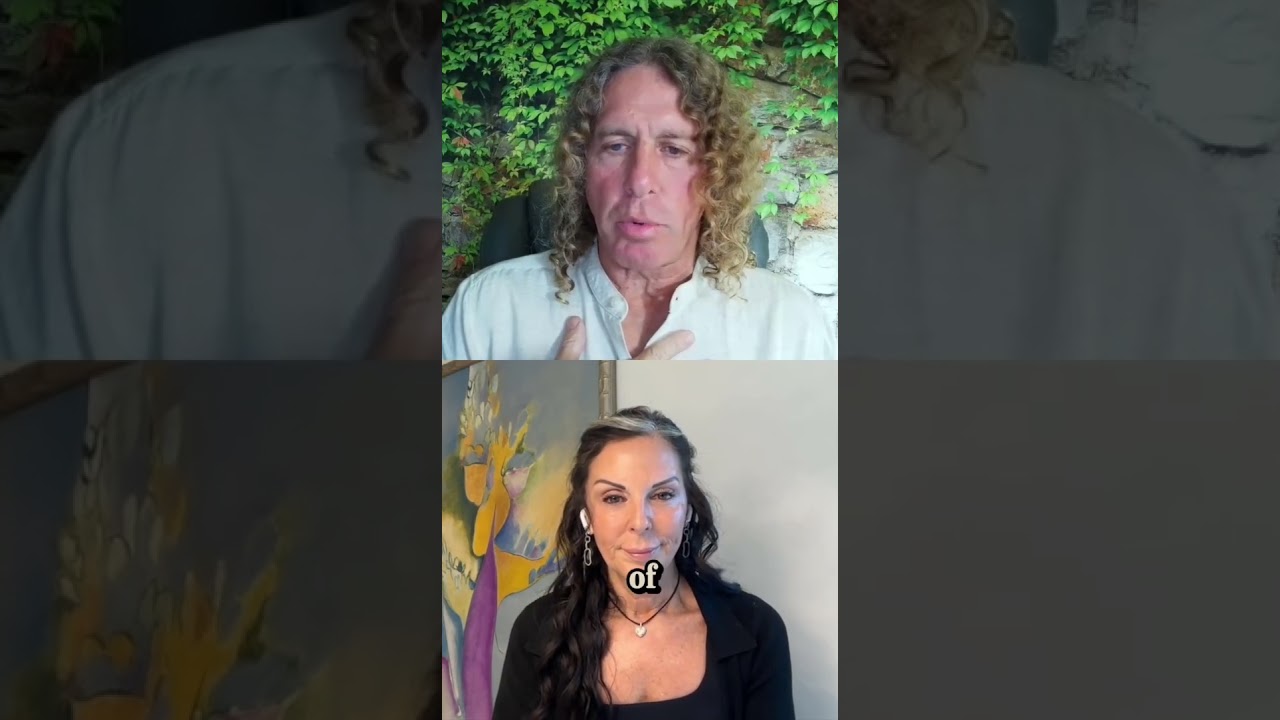
Shari B. Kaplan LCSW & Dr Jeffery Ditzell Share Secrets That Can Transform Your Life.
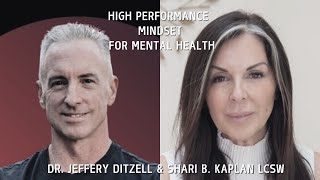
Shari B. Kaplan and Dr. Jeffrey Ditzel discuss his 20+ years in psychiatry, including military service in Iraq and addiction treatment. They cover integrative care through nutrition and exercise, ketamine-assisted therapy protocols (typically six infusions with boosters lasting six to eight weeks), and the emerging role of psychedelics in clinical trials.
Questions this video answers
65 Broadway (across from Wall Street), New York City.
646-751-7908.
OptimizePsych.com.
A series of six infusions.
Roughly six to eight weeks.
Welcome to Get Connected Today. Our guest is Dr. Jeffrey Ditzel, and Dr. Ditzel is the founder and lead psychiatrist at Dr. Jeffrey Ditzel Psychiatry in New York City. He specializes in treatment resistant depression, addiction and substance abuse, ketamine infusion therapy, adult ADHD, anxiety and performance mindset coaching. Dr. Ditzel has led inpatient dual diagnosis units, served as the lead attending in multiple psychiatric ERs, and directed an assisted community treatment team. Beyond his private practice, he has dedicated over 20 years in military service. Welcome, Dr. Ditzel, to GetConnected.
Thank you. Good to see you.
So we have so much to cover in this very short period of time. But first, I wanted to ask you what actually got you into psychiatry.
I guess if you'd asked me what as a child I wanted to do, I would have been a therapist. Actually, I didn't know what a psychiatrist was when I was growing up in upstate New York. So if you'd asked me, I would have probably said, I want to be a therapist. I was always trying to figure out why people did the things that they did and try to anticipate it and learn from it. So I think if I had known then what I know now, I probably would have become a therapist.
But you did go through medical school.
That's true. That's true. So as I went through my education all, it just kind of kept me moving forward. And as I tended to like everything, I could make myself pretty much like any topic. But the topic that I really, really enjoyed and could read on and never tire from was psychiatry. So that's. That's where I ended up, is the thing that I was most passionate about was the thing that I did for a living.
So I saw that you spent 20 years in military service. What brought your interest to the military?
I always liked the military. I didn't know if I wanted to do it full time as a career. So I went into the National Guard after medical school, after going through the first semester. Turns out the military was a very good career path for me. Turned out to give me a lot of great experience. I was the division psychiatrist for all of Iraq while I was there. So it was a very, very meaningful experience to be in Iraq and serve the troops and serve the soldiers.
That sounds like a lot of trauma going on over there. Is that something that you were dealing with on a daily basis?
Yeah, it was, as you can imagine, it was very busy. It was at a time when there were a lot of troop casualties and things like that. A lot of. So it was a fairly intense Experience for a lot of the soldiers, both in combat, but also with what was going on at home.
Must have been really intense for you too. I mean, these are young guys and they're coming off of a battlefield.
Yeah, we had a good team, luckily, very good team. And we did our best to stay open, pretty much 24 7. So when people were coming through, they didn't have to make it with when soldiers were coming through, I should say they didn't have to make a special trip because that's where most of the casualties were at the time when I was in Iraq was through vehicle borne improvised explosive devices. So if you had to make a special trip, there was a good chance that it would put you at danger. So we tried to be there anytime the troops were coming through so they didn't have to make an additional special movement through enemy territory.
Wow. So, like, I'm not familiar with a lot of what happens out on the battlefield in mental health and psychiatry. So what, what does, like, a typical day look like when you're there?
I don't. I don't know if there was a typical day. I mean, there were. There were things happening all the time. There were, as I said, vehicle borne improvised explosive devices that would. Would take out troops. There was. Sometimes there was helicopter crashes. A lot of times I was flying around in an Apache helicopter and they were flying me around Iraq, so I was somewhat safe while I was going to the forward operating bases and making sure that the soldiers were taken care of. So there wasn't really a typical day. It was pretty much in the very austere environment that we had to work in. It was basically just do your best for the troops coming in. And whether it was medicine or therapy or a combination of both, that's what we did.
You said you worked with a great team. So how did you all take care of each other? There's a lot of vicarious trauma going on. There's a lot of, like you said, unsafe situations. Keeping yourself safe. They're not safe. How did you deal with that?
One of the best things about the military is the friendships and the fellowships that you create. Some of the longest relationships that I have or relationships that I formed in the military. So it's definitely a very good sense of esprit de corps and, you know, kind of making sure that the soldier to your right and left is doing okay. So again, we were in a theater of war, so we weren't really. At least I wasn't much for sightseeing or anything like that. So we would Stay pretty much on base unless they need us to fly somewhere and take care of somebody.
So, you know, there's all that camaraderie while you're there and then you come home. And I find that, I mean, we know that one of the most important aspects of mental health is that you have healthy and secure, trusting connections and bonds with people who care about you and who you care about. So here are all these men coming and women coming home from Iraq after being in such a close knit. We have each other back, each other's back situation. Like what happens when you get home? I mean, you were like you said you had that kind of support. You came home as well with all the other soldiers. Like, what's that like?
You know, I, for me personally, it was, gosh, I mean, it's such a different thing for a soldier who's going for, you know, say an 18 month tour or a year long tour. And if they're, they're combat or special forces, they're going to have a much different experience than, you know, a doctor and especially psychiatrists who the military really tries to treat their doctors very well. So for me, gosh, I mean, just the way that I'm built, it was business as usual. I just came back and started in the private practice and I was, I think I was doing hospital work at the time too. So I just went right back to what I know. I mean, the thing that, you know, kept me assured and pretty secure was by that time in my training, I felt that I'd have very, very good training. I felt if I couldn't rely on anything else, I could rely on my training and kind of use the work to create a space where I was pretty certain what was going on, what was going to happen, what I'd be able to do and what shouldn't be done. You have a sense of not only security, but a sense that even in a very different environment, if you can apply your skills and do what you do well, there's a sense of almost like a bubble, you know, that you've created that you can hopefully help people. And that's what we tried to do there. Coming back for me was really just shifting gears and going right back into hospital work and into private practice and also coming back to my family and whatnot, which was, you know, the best thing about all that is coming back to family. I think hopefully our hope was families would stay intact while the soldiers, the service members were away.
Well, that's, it's a lot to go through and I'm Glad you were able to come back and slide back into your life and do well. How did you get into substance abuse and addiction treatment?
Yeah, substance abuse treatment and addiction treatment is, you know, I think, an absolute necessity. If you're going to be in psychiatry, I don't think you have to practice it primarily as your specialty. And I don't actually advertise myself that way just because I don't want to deal exclusively with that. But I think to be a good psychiatrist or therapist, you need to understand addictive processes. And so that's. That's where I went, you know, to follow my training. Addiction medicine, you know, as a field, is very biologically driven. So it made a lot of sense to me. There was a lot of objective data. So to me, it was pretty intriguing in that sense. And I had wonderful mentors. One of my mentors was Mark Gold, who is, I would say, one of the fathers of addiction medicine in this country. Not addiction psychiatry, but addiction medicine. And he, you know, he would teach you. That's kind of how I got into it, is I would follow Dr. Gold through the different clinics that he had and if he would show up and do some work as a resident, actually teach you a great deal. So I just kind of followed Dr. Gold around, and he taught me a great deal. And then when it came time to pursue fellowships, I did a number of fellowships in New York City, tried to follow what one of my friends who was guiding me said, you know, you need to follow your education, go where the best education is. And in his mind, that was trained in New York City. So I came and I began an addiction fellowship. And in the middle of that, I got activated for Iraq. So I went to Iraq, and the good people and doctors over at Beth Israel let me come back and resume my fellowship and even complete another one. So I did a consult liaison or a psychosomatic medicine fellowship, and then actually went back and finished the rest of the fellowship. So it was kind of cool because I could go and do consults in the hospital, and I was kind of a mobile addiction unit. You know, I could go in and detox people and things like that that were fairly medically complex. And then, you know, I took a position as the unit chief for dual diagnosis over at Bellevue Hospital, Famous Hospital. Also very, very good training and had some wonderful colleagues, and then started out in private practice and always had a hospital practice as well.
I feel like my career in New York City, like we were weaving around each other in different parts of New York City.
I would have remembered You. I have a feeling that we spent time somewhere, I would say probably over at Bellevue, I would think, or nyu. But when we were introduced, I was like, gosh, I'm certain I know this person from. From ago. Maybe have that.
Yeah.
As well.
So, you know, back when I started, which was, I guess the very beginning of the 90s, psychiatrists did do therapy in New York City. And that was like. That was so incredible that you could either go to a psychiatrist, a psychologist, or a clinical social worker in New York City and depending on who a person was and what kind of orientation you were looking for. So I was thinking, well, you could do psychiatry, you could do therapy when you first started out. I think we're a similar age, right?
Yeah. Well, I don't know. You certainly look younger than me and more lovely, of course. But, you know, back then you could do both. And throughout my career, I continued to do both because I really. I can't honestly see the utility of the medications without the therapy. They work hand in hand. So in my practice, I will have a few people who do medication checks, but the majority of my clients do the medication management as well as therapy, which, as you know, the medications, they don't cure anything in our field. Not to minimize them for what they do. They can relieve suffering and they can decrease the intensity of symptoms. But the real work is learning how to manage your mind and your thoughts, I think. And, you know, there still are psychiatrists who work that way and do therapy with the medications. But I think just doing med management without it is really a lost opportunity.
I agree. I think that, you know, when I have to send a patient to a psychiatrist, it's because I need a springboard. Like, I need, can you please get this person's body up and running enough so that I can do the work with them? And I think that there are. I mean, obviously there are a few patients, like in terms of diagnoses, that may always need those medications to support their bodies in management. But I think that there are other modalities that are out there that are coming out there that are helpful for a significant amount of people who are out there. So I kind of want to pivot into some of those in different ways that you do help patients. And I kind of want to hit a bunch of them, from nutrition to exercise to. I'm really excited for you to share with us about your mindset work that you do, and then, of course, ketamine assisted therapy. But if you just start out, do you use nutrition and exercise as part of Your counsel and maybe meditation and mindfulness as you're working with patients.
Absolutely. They're the foundations of this practice. You know, there's so much benefit that you can get from a consistent practice of proper nutrition and proper movement, whether, you know, formal weight training or you know, basically just any body movement that you do consistently. And it also serves as a very tangible transformative process because it's obviously physical and you can, if the person is committed to it, they can get a relatively quick transformation which serves as sort of a guide to the mental transformation that they're doing. But as a practice, exercise and nutrition is going to really give you a huge anti anxiety and antidepressant effect that we can parlay into practice of mental management where the resistance then is in actual resistance, like a weight. It's the resistance of the obstacles and the activities that we're doing in the day to day. So it really serves as a very nice tangible model for a client to get their head around. Because what we're trying to do ideally is get them to a place where they can act differently, obviously consistently and basically have a model of approach for the obstacles of life where they're doing things in a way that they're overcoming the obstacles to, you know, make progress towards achievement and attainment. Right. And so if we can demonstrate that physically, then it's a little easier to get your head around it on the day to day mentally and what you're doing.
Absolutely agree with you. When I was going through the end of my therapy process, I trained for the New York City Marathon and I just thought that was such a metaphor for everything in my life, from having a vehicle to release my anger and frustrations and having a way to process things out because I could think while I was bilaterally stimulating my brain, running. And you had to eat healthy, you had to nourish yourself, so you had food and you had to persevere even when your body felt tired. And it was just there were so many things that you needed to do in order to take care of your human, both mentally and physically. And it was just such a significant part of being able to reprocess the information that I was working on as I was going through my own treatments. I just think that exercise and besides, I mean, we know so much more that, you know, if you do moderate exercise for 30 minutes, you're going to build up your endocannabinoid system, right? You're going to create more serotonin every time you flex your muscles, you're going to create the Proteins that allow your body to produce more of the hormones that we need for our mental health. I mean, that's a whole other ball game. But there are so many lessons to be learned about consistency and being consistent and being a person of your word and committed to doing some type of exercise on a regular basis that I think is such a great part of mental health treatment.
It's a great way to. I completely agree. It's a great way to show up for yourself. It's having a practice of anything that you do consistently that, as you said, very eloquently releases your feel good neurochemistry, your norepinephrine, your dopamine, your serotonin, anandamide, oxytocin, endorphins, the whole ball of wax. And what we try to do is give people an alternative to the model of, you know, disease model, where you have some form of illness. And if we do our job right, we get your head above water. What we try to do is extend the scope from a disease model to a performance model because it's essentially the same concepts. You're using the conscious mind to guide the unconscious mind to perform. That's where elite performance lies, is, you know, doing things in an easy, unconscious manner. So what we try to do is teach people how to set up their time intervals of their day so they're showing up for themselves, essentially gain accountability to themselves in these time intervals and then overcome obstacles that they've set ahead of time so they know what they're doing and they don't talk themselves out of it. And then basically hack into your performance neurochemistry, which is the same feel good neurochemistry that the medications, of course, work upon. So if you develop a model and a process where you're engaging obstacles and you can push yourself a little through stressful, momentarily stressful conditions, you can unlock your performance neurochemistry, which also helps make you feel good so you can achieve goals.
And this is all a part of your performance mindset coaching that you do.
Sure is. Yeah. So I was fortunate to meet Lanny Basham as I was kind of on this performance path. And there were a number of great coaches and mentors that I had. One was Steve Kotler, who is part of the Flow Research collective and expanded the work of Mihaly Csikszentmihalyi, who wrote Flow, which are high performance, action and awareness states, you feel your best and perform your best. But along the way, I met Lanny Basham. Lanny's an Olympic gold medalist in international Rifle shooting. And I don't shoot rifle. I. Outside the military or now even inside the military, now that I'm retired. The mindset that he created to perform at the highest level in rifle shooting allowed him to eventually win gold medals. And he developed a performance model that allows you to basically, I guess, make concepts portable and you can deploy them into whatever you're doing as far as a performance activity. And allows you to get your mind in a place where you have the greatest likelihood of performing at an elite level. So it's very interesting. It's a very, very simple, elegant model in its simplicity, which it needs to be for us to use it. Because we can't really use a very complex model with our conscious mind. We just don't have the ramp to do it, the storage or the memory to do it. But by having certain principles, some very basic principles, and then a model to be able to use them when you're facing an obstacle and a system to apply it, you tend to get very, very good results and make progress towards goals. And you get the achievements of that as an external symbol of who you become. Which is basically in therapy, self actualization.
Right, right.
So it's a way to attain which is the greater trophy is who you become in the process that someone capable of doing a thing. And the idea is to, you know, kind of set your life up in this way where you're overcoming these obstacles and making progress towards your goals. In the process of that, you become someone who's capable of doing it. Which is where that deep sense of satisfaction comes from. A life well lived. So that's, in a nutshell, what we try to help people with. And they, you know, they're surprised because they come in and they think, well, I'm going to work with someone. I don't know if I'm going to be able to relate to them. And they have an idea of a psychiatrist anyway from what they've seen in the movies or what their friends or their family's experience has been, which is likely somewhere between Hannibal and who knows what they've digested. Right. But the fact of the matter is, they come into the practice, I think they're pleasantly surprised because they feel well cared for by the team here and, you know, that the story is relatable. And they feel that they can, you know, find something that they can walk away with. And they have skills, you know, to perform in life. Outside of a coach or a therapist.
Or psychiatrist, do you still find that you need your clinical skills to help with some of the patients who are perseverating and ruminating and kind of stuck with unresolved fear and shame and guilt and then use your high performance mindset on top of that.
Yeah, it's not really separate out like that. I mean, of course you use whatever tool you need to get results. So in my mind, it's just like I have an array of different techniques and different skills I can use, and then whatever gives the client the most traction is where we go. So that could include. It could include medications and often does. We try to be judicious in their use and don't try to imply that there's some special combination pills that's going to make you happy, because the opposite of depression is you're not depressed, doesn't mean you're happy. Right. So. But we do give our clients time to think about what would make them happy and sort of process through that and then give them a very practical model to achieve that if they're interested in it.
So what made you bring ketamine assisted therapy into your practice?
Well, so as an addiction psychiatrist by trade, I, you know, basically around 2013, when medical marijuana kind of came on the scene and you could get training to certify people that came across my screen one day and I was like, you know, I really should look into what is being taught and offered here. And I really kind of thought of it from my side of it. I was like, I just want to know what the argument is, you know, so I could counter it if I had to. And much to my chagrin, what I found was wonderful training. I think it was on the Department of Health website. It was like four or six hours of training. And it was great. I mean, it was really good. And I got done. I was like, this completely makes sense to me. Medical marijuana helping move the body towards homeostasis. Right. And there's a whole endocannabinoid system throughout our central nervous system for a reason. But what I found was some really good training and some wonderful application. And so it got me thinking, well, what else have I kind of dismissed that might really be useful? So I started kind of challenging myself. And one of the things that had also come across my screen was I just thought, what's that? I don't know what that is and I don't have time for it. But I started asking questions and kind of challenging myself on these things. And when I went to look for training for ketamine infusion, some of the papers were. There were a lot of. There was a body of work from the National Institute of Mental Health, if I believe that's correct. But there were, like, five researchers that were churning out a lot of different papers on this. And what they found serendipitously is that their soldiers who had received ketamine as an anesthetic, if they had depression or anxiety, their depression, anxiety got better. And so they started to do the research and write the papers. And as I came across this body of knowledge, I was like, wow, this really is something. This is really helping a lot of people. So what I did then is I thought, okay, well, there's got to be training here, right? So I went to probably the same place that I did the medical marijuana training, found there was no training whatsoever because ketamine had been around forever as an anesthetic. So the people who were most comfortable administering that were anesthesiologists. And a lot of the ketamine clinics that came along were run by anesthesiologists and not psychiatrists, such and such. So I was surprised that there wasn't any training. And I actually sought out a very, very good doctor, Dr. Gerald Grass in Florida, who opened up his practice and taught me as a psychiatrist how to administer ketamine infusions at the level of his standard, which is a high standard as an anesthesiologist and pain medicine doctor, who's got a wonderful reputation, just a wonderful human in general. And then I came back to New York City and kind of brought my knowledge and set up a ketamine infusion process that really supports therapy as part of it. And that isn't a clinic per se, but is part of a private practice where the mental health is actually interwoven and built into, obviously, of the treatment. And we seen amazing results for people, people who are treatment defined as treatment resistant, having gone through a number of medication trials and, you know, either having a poor effect or not a full effect worse. Having failed the trial and just kind of losing hope for a number of patients, We've found that the ketamine infusion has been sometimes curative right there. As far as a depressive episode or an anxiety episode, though, the durability of the infusion, we're constantly trying to adjust things so it lasts longer, Lasts roughly somewhere between six or eight weeks before you need a booster. But we've seen sometimes miraculous improvement in as little as one infusion where people came in suicidal and left fine. That doesn't happen all the time. However, most people experience it as you're titrating to a blood level, they feel Kind of buoyed, like they feel it's just easier to begin to do things. And of course, it's the doing things that changes the inputs and outputs in their life. Right. That's what therapy is about. Right. Is we're trying to get people to act consistently differently than they're currently acting to get some better result. So what we find, a lot of our patients, as we begin the first series of six infusions, they just find it easier to begin things that they weren't doing before, having dinner with their family or going to work or whatever. And so, of course, now they're doing things and they're getting a different result in their life, and they feel good about it. So that's the value of ketamine infusion. Often, I think it gets lost in the infusion part and not the therapy part. It's really, you know, leaving the treatment on the table if you don't do the therapy with the infusion, because the infusion makes it possible to change your behavior.
I agree. And, you know, and I think that's such an important part that I think a lot of people are leaving out. It's. You're getting all this neuroplasticity, and if you don't know how to help somebody build a new circuit, then you're just leaving them. Once their mindset does, when the medicine does wear off and their mindset goes back, it's like you're reinforcing the negative or the toxic or the really unhelpful beliefs and behaviors. So without, I think, very talented clinical work with it and mindset work with it and behavioral and the whole integrative package, I think that, you know, sometimes to. And I agree. I've had patients come in who were suicidal or in very dark places, and you've done a really thorough biopsychosocial. You've really gave them good therapy going into it. And that one infusion can be the deal breaker of shifting them to the other side. But then you have to jump right in there and make sure you're following it up with some really good therapy that they call integration right after so that you can solidify that and really help that person capitalize on that treatment. And I have seen people, people with real mental health problems, people with real trauma who didn't have therapy, who. And I don't think coaching does it. I don't think just telling somebody, like, what's your intention? And how are you going to play that out in your life? Like, that's not enough for somebody who has a significant mental health problem. Have you been finding the same thing or do you find that just really basic coaching can help?
Well, I mean it depends on what your intention with coaching is, right? So there's a lot of people who can inform, right. Therapists and teachers and all that stuff. There's the value of coaching, I think properly configured is to help people apply, right? Help people to apply the knowledge. That's why the self help books don't work. Otherwise you just read a self help book and you're going to be well informed. But if you don't know how to apply it in your life, you're going to kind of be a very well informed person who's not applying it, right? So it's going to be a problem. So I think that part of the therapy, properly designed, is to not only give the person, the client a rationale as to why this should work so they understand it, you know, so they, it's not just take my word for it, it's this is why this should work for you. Given, given what's going on. And they might not understand it to the extent that we do with our terminology and all that stuff, but they should have a good working eye understanding of it. And you know, pretty quickly talking to someone if they know what they're talking about, right? If they can explain in a way that resonates with you. But from there I think the key becomes can you implement? And most people don't implement. They want to pay an informational price for a transformative change. And that takes more than just the information. I mean, you do need the information, right? But you also need a few other things. You need confirmation that you're doing it, right, Whatever it is that you're doing, you need expert instruction how to apply it, you need consultation, you need to be able to ask questions. You can't ask that of a book, right? You can't say, hey, so what did you mean by this thing? And then you need repetition, you need consistency. If we can in coaching or therapy provide those aspects, then I think we have a really good chance at making transformative change, which is really what we're trying to do. We're trying to get people to transform themselves, right?
But I look at what you've done and like even when you started talking about your training and how you did a fellowship and you do residencies and you follow people around and you listen to way that, the way that other therapists, doctors speak to their patients, you, you have group supervision, you have individual supervision. There is a Lot of training that goes into being a therapist. Knowing how you feel, knowing how the patient's doing, knowing the subtle nuances of how somebody develops a personality and where things go wonky and. And I feel that. And we're very accountable, right? I mean, if we're not doing something right in our field, we're accountable to a board and we're accountable to each other. I mean, I know I'm licensed in both New York and Florida, and if I had a problem with something that you're doing, I'm accountable to come to you and say, hey, you know, this is what's going on with this patient. And I'm really uncomfortable with the way that you treated them or whatever. Like, I'm responsible as another clinician. And I don't think there's that same level of training and that same level of supervision and that same level of accountability if you're not a licensed clinician. And not that all licensed clinicians are good and not that people, all those people know how to do what you're doing and what I do, which is that whole integrative model and looking at someone's whole life from the time they're in their mother's womb till where they are today, and all their different aspects and being able to put together mindset work on top of other psychotherapy. But I think it is a concern that I have that we're trying to, you know, in the efforts of breaking the stigma of mental health treatment, I'm concerned that we're not being thorough enough, that we're not being responsible enough is probably a better word. We're not being responsible enough in the care and making sure we really are giving the best care and safe care to the patients. And that's my concern, Justin. I mean, we do ketamine assisted therapy at our clinic, too, and have since 2018, and I love it. And I feel that it's a very helpful tool for many, many patients who had a difficult time getting out of a depression or to help somebody with post traumatic stress or chronic pain and breaking the pain sensation loop cycle. But I really find that it could be responsibly done or not so responsibly done. And I just was wondering if you had similar experiences or if you feel that.
Well, I feel very strongly about those. You know, I feel very strongly about what you're saying. Ketamine infusion, you know, is for the way that we offer it. It's part of a private practice, which is different from a clinic, obviously. So nothing against clinics or Any particular person. But having said that, a lot of the clinics are very clinic y and they're often not tied to mental health treatment. Often the psychiatrist or the therapist doesn't even know that their client is going and getting ketamine infusion. More along the lines of a psychedelic tourist, right? They're kind of going and trying something, but the opportunity is lost a lot of times in those situation, situations to do the ketamine assisted therapy, which is the real value. Right. In the client's mind, they're probably thinking that the ketamine itself is the whole thing of value, not realizing it's the ketamine infusion tied to the therapy that promotes behavioral change and makes it easier to change your behavior and begin to do other things. That is the real key. So my concern, when people go to a clinic, usually if they come to this practice, they generally stay unless they move out of, you know, out of the state or whatever, for various reasons. But. And if they come and do ketamine infusion, they generally continue doing ketamine infusion because it's so useful and there's so, so well tolerated and there's so few side effects. But the biggest thing is, should they get results? You know, that's, that's the cool thing. And so, especially during the pandemic, when people had to find other places for treatment, they couldn't necessarily come into the city where we're located. They were unpleasantly surprised by what their care was because they ended up going from, again, a private practice in the relationship that you've already built with your psychiatrist in this case, or the team here in your practice, where you're comfortable with the therapy built into the actual treatment. But if they've gone elsewhere and didn't really understand the distinction between a private practice that offers this, such as yours, and just a clinic where the doctors might not be mental health professionals, then they could think they're getting, you know, they're checking the box and getting the full benefit of ketamine infusion, but getting only a fraction of what could, could be their benefit.
So you mentioned the word psychedelic. And so I was wondering, like, are you familiar with the other psychedelics that people are doing? Are people coming to your clinic saying, I've tried X, Y and Z, and I was wondering how ketamine would work for me. How do you feel about the world of psychedelic medicine and psychiatry? And do you think that it would be helpful for us to have some of these legalized and do see that as something that is possible in the near Future.
Well, I think it's quite possible a lot of these substances are in stage three trials to have them legalized for medicinal use. We can only comment on the ones that are legalized for medicinal use, which is Ketamine infusion has been very, very helpful for a number of people. I mean transformative for some. And of course, things like psilocybin and MDMA that are coming down the pike, that are still in clinical trials are likely to be helpful. There's many people who give their anecdotal experience, clients who come in and say, I've done this thing or that thing, microdose psilocybin, or use cannabis recreationally. And I think their input is valid and we should explore it and listen to it. But along the way, even though these things are medicinally used, you have to have some understanding of them to be able to guide your patient. There's certain times that you definitely don't want to use those substances. Especially when you have people who are potentially psychotic or have problems such as schizophrenia and things like that, or have a predisposition towards it. It can make things a lot worse. I think anytime someone generally finds themselves depersonalized and you got to be very careful if you're going to give them something that gives them an altered view of reality.
I agree, or.
But I think you.
Need to be aware of it 100%. What do you think are the most exciting advancements that we've had over the past five years in psychiatry? And where would you like to see our field move towards?
I mean, personally, I think ketamine infusion was just a godsend. I really see it well tolerated, very safe to use, especially in the dosages that we're using. They can be used at higher dosages for pain management, things like that, usually by pain med doctors or anesthesiologists. But as a modality, that's very, very well tolerated and actually pleasurable in the experience because it's state dependent experience. As you know, if you take time and pay attention to the set and setting, it can be really quite a lovely experience in just getting the infusion, let alone the results that people get, which can be drastic and immediate sometimes. So that's been very exciting to me. And then, you know, of course I'm interested to see how the current psychedelics that are in stage three clinical trials panic. But I've heard a lot of anecdotal evidence from clients or their experience anyway, I don't know if evidence, but their experience of it in microdosing and things like that. The thing that interests me the most though is elite performance is how can you use the same techniques that you would use at a narrower scope in cognitive therapy? How can you broaden that scope and teach people how to manage their minds to unlock elite performance, get their minds to a place where they had the greatest probability of functioning at the highest level. And to be able to describe it so that you can duplicate it so you know what the process was so you can repeat it in other areas of your life, I find that to be endlessly fascinating. That's essentially all I read about or try to figure out is how people who have attained elite levels of performance, what mindset they put together, like the Michael Jordans and the Kobe Bryants, Bruce Lee's and the Muhammad Ali's of the world, the Simone Biles, understand the model. You can see the fingerprints of the model everywhere. So to me, to give people that is, you know, that's invaluable in my mind. People can take that and they feel empowered and they can take it with them. And I always tell them, you know, you're not dependent on me or anybody else. Once you have these skills, they're yours, they're yours for the rest of your life, and you can practice them and keep improving them for the rest of your life. So that's, to me, is very valuable. And I think my clients find it to be the same way because they have a way that they can actually stimulate their own feel good neurochemistry by a pretty, you know, simple process.
When I was in New York City, I worked with neurodevelopmental disorders and neurodegenerative disorders. And then I worked with children and families who had HIV and AIDS and cancer. And I have always taught all my patients how to meditate because I've been meditating since I'm 11. And so I used to do trainings for stress management and, and teaching people how to relax their body and how to stimulate their central nervous system. And I think from working with kids who had autism and down syndrome and what have you, I was always fascinated about how the medical conditions, the neurological conditions were affecting the brain and how teaching them how to breathe and meditate and use music movement could help them function in their lives. Just even from singing a tune to them for them to understand what you were saying, to being able to use music to get them to move their body in a more functional manner. And when I landed up moving to Florida, I landed up working with some athletes who had performance anxiety. So a lot of My visualizations and meditations and mindset like were very helpful to that population. So I'm getting to the part where I think that where mental health needs to keep moving. So I think there's so much that we're not doing in the mental health world that really kind of is a good. What you're doing is part of what I believe is needed to continue to build our mental health back up. And so I think music and movement and different body exercises, specific body exercises, like we know our insular cortex and our lateral high bendula, they have all these receptors and there's ways to stimulate them both nutritionally, both exercise wise. And I think that as we continue to expand this field, I too would like to discover and uncover and work with people who are excited about how do we get not only our mindsets where they need to be, but what we can do physically, nutritionally and mental focus wise to help our bodies and minds and brains stay in better shape and keep moving forward.
One of the best sentiments I think I've ever heard, that's very articulate and of course I agree with you. If we can shift the conversation to mental health and resiliency as opposed to mental illness and start to look at what we're capable of as opposed to what we're not capable of. Right. I think that can really. I think that'll be intriguing to people. I think it'll help a lot of people and I think it puts the ability of the person to heal firmly where it needs to be with them so they feel empowered to do it. And these are very simple practices, a lot of them. Movement and mindfulness as a cognitive tool, not necessarily a spirit, spiritual practice. Right. But learning how to manage your mind and manage your movement, you know, is the way forward. And I hope that we can realize the vision just as you articulate it, because I think that is a worthwhile cause, worthwhile way to go in a good path.
And you, and you really did separate. Like I think in mental health we need to separate out. This is neurological, this is environmental. Like here, this comes from environmental causes. But when something is really off in the body, we just kind of have this umbrella term of mental health. You know, maybe it would be helpful for us to be more specific because then some people do need to. You have to treat something. Right. And sometimes it's just about how do we build your mindset and what went wrong in your environment that got in the way of that and how did it get trapped in your body? And I know, I saw that you did somatic training and what have you, which I think is a really important part of what you do and what I do as well.
Yeah, no, I agree with you. We have to be able to articulate and discern what the different illnesses are or conditions. Right. And what's the difference between the two? Each thing is going to have a different way that you can help it. So I think the better we can describe it and discern it, the better off we are, the better informed our patients are, the better off they are. And to give them a very tangible way to approach these things, I think is a useful tool. So I think it starts with being able to describe things in a way that lets you see where things that could be grouped as could be wildly different. And you need to actually understand it if you're going to help make the situation better.
Yeah. Is there anything else that you think that it would be important for our viewers to know about mental health and about the type of treatment that you do that could be helpful in addition to. Please share with them how to reach you and find you in New York City?
Yeah, we're, we're across from Wall street. We're at 65 Broadway. I don't know the number to the practice because I never call it. So I'm going to look 646-751-7908.
And what is your website?
I think if you type in my name, you'll get there, too. Jeff Ditzel, Psychiatry if I'm right, we just redid the website. Optimizedpsych.com O P T I M I Z E- P S Y C H.com and my good, my good friend Marcus created this beautiful website. And so hopefully people can kind of look at it and enjoy it and see all the different services that we offer. But we offer a number of services, both mental performance as well as therapy, med management, ketamine, infusions, all sorts of goodies. So hopefully that helps.
I love what you do. I love that you are the whole package where you can help somebody not only get their body up and running, if need be with medicines, with infusions, but you have the whole mindset and exercise and all the integrative approaches going along with it. And I'm so proud to be a part of our profession knowing that there are people like you out there and doctors like you out there who are helping our patients. So thank you so much for speaking with me today and I hope to be up there and working with you soon.
I do, too. The pleasure is really mine. Meeting you has been a wonderful experience for me and I love having colleagues that are so thoughtful and knowledgeable and just kind. So anything that I can do for you or any of your people, please let me know. I'm available for you. Always. So great to see you.
Thank you. We would love for you to come down and spend some time with us at our center, at our office and maybe work with some of our patients. We would love that.
Yeah, I'd love to. And again for you, please don't hesitate to contact me anytime, anytime you need anything.
But thank you. There's a lot, a lot of good clips in there that we can use.
That was a fun conversation.
Good, thank you. Me too. You do such great work.
Thank you. Yeah, we, yeah, it's very, very enjoyable and rewarding, honestly. It really is because you know, this type of conversation like we had, when someone walks in and they're expecting it's going to be, you know, very, like I said, somewhere between Frasier and Hannibal, they think it's going to be a very unbelievable experience and there's going to be a three card Monty of pills that's going to fix them. And when you have a conversation like this with people, it takes it from a very passive experience where they kind of expect that you're going to somehow fix them to tools that are put at their disposal and no longer these external variables that they have no control over and to see that dawning realization that they're in control of the process and you're giving them really good technique to actually to achieve these things. You're not just having them figure out out somehow. You know, that's where I get the thank yous that are the real thank yous. I get a thank you because, you know, the position of being a doc and all that stuff. Just a courtesy. But when I get done with one of these conversations about performance mindset and how you leverage your mind and all people stop and they're just like, thank you so much for taking the time to explain that to me and giving me that so I can, I can walk away with it and I've got it to use in my life. So it's a nice way to be in the world, honestly.
I agree. I agree. I really hope that you'll consider getting your Florida license because I really would love the opportunity to have you down here. So when you're here, let me know and when I come up there, I'll certainly let you know. By the way, we are, I believe we are the same age. I'm 58 at the end of December. So we are.
You are. You make 58 look incredible.
Thank you. That's very sweet of you. I appreciate it. Thank you. Have a wonderful day. Bye. Bye.
More from Shari

When Grief Feels Overwhelming: Finding Ground in Nature #mentalhealthawareness