Conversation with Melissa Kwan from eWebinar- The Real Story Behind A Conversation with Melissa Kwan
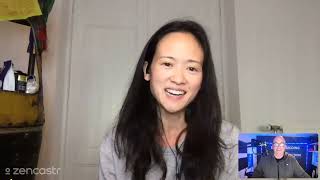
In this interview, host Shaun Whynacht talks with Melissa Kwan, founder of eWebinar, about the fundamental limitations of traditional live webinars and how eWebinar was created to solve them. Melissa explains that live webinars are inherently unscalable because they require a host to be present for every session, leading to repetitive, time‑consuming work and "Zoom fatigue." Drawing on five years of personal frustration running live demos across time zones, she built eWebinar as an automated, evergreen webinar platform that puts the attendee experience first. The platform is designed around the viewer rather than the host, offering features such as an asynchronous chat that lets presenters answer questions later, a rich set of interactive elements (polls, resources, tips) that can be programmed on a timeline, and seamless, brand‑consistent registration embeds. Melissa stresses authenticity, advising users to be transparent about recordings rather than trying to fake a live feel. She offers practical advice for newcomers: start by uploading an existing recording, use tools like Descript for quick edits, and leverage built‑in scripts for polls and data collection. The conversation also highlights the platform’s aesthetic customization, its ability to scale to thousands of attendees, and a forthcoming redesign focused on gamifying the attendee journey to increase engagement and completion rates. A free trial is available at eWebinar.com.
Chapters
Melissa, thank you so much for being on the show today. I want to talk about webinars, right? We're all familiar with webinars, and however, there's a bit of an issue with, with the way that we've been doing them for so long. I'm, I'm not a fan of when people say, well, it's the way that we've always done this. You have changed the game in the world of webinars, in my opinion. Tell me a bit about your experience with webinars and what you think are kind of the downsides to the way that we've been doing them.
Yeah. So first of all, thanks for having me. I mean, webinars are great, right? Like it's, you know, it's the only way to get in front of so many people, so many customers, prospects without leaving your house, hopping on a plane. And that's why we do them. It's essential for business. But the one massive problem is webinars requires someone to be there to run them. So, by nature, they're completely unscalable. So, as we grow our business and as we scale our business, we've got this one method of communication and delivering content, whether it's education or sales content that is so effective. But that's the one thing that's not scalable. So, that's really my experience with it. I've always used webinars. And you know, Uwebinar is my third tech company. I've always used webinars to deliver onboarding sales and training content. And I've always kind of lived, lived with this problem and wish there was a better way.
Yeah, you pretty much call it like Zoom fatigue, right? Is what was in your bio. You know, always having to be there to do live webinars. Now you mentioned you've created eWebinar, eWebinar.com. Why did you create this, this company? What was, what was the need there?
Yeah, so I ran another tech company and a real estate tech company before UWebinar for 5 years. And I ran another one before that, also in real estate. So I live this problem of running repetitive live webinars over and over again for new customers or new users that would come in every day. And no matter how many I did, they were never enough because my customers were also in different time zones. And then when new employees come in, your customers will want you to do it again. And again, and again, and we're not a venture-backed company. I mean, we weren't back then either. So the resources were extremely strapped. Like I was the person that was responsible for all of the sales and the customer success post-sales as well. And then at the same time, I was also nomading, digital nomading around the world. So not only was I doing all of this repetitive live content, I was also doing them on opposite time zones. So I had always envisioned this magical product that would do my job for me, run all these for me while I can go and continue to have fun or just sleep in. Right. Because I think there's still a huge place for live meetings, live content, like just like the conversation that we're having now, and that can't be replaced. But what I was doing was all of that repetitive robotic content. So back then I was thinking, if I'm robotic about this pitch, why can't a robot do my job? Right? So after that company was acquired by another company in 2019, I decided that this was the problem that I wanted to solve because I also realized through my journey that I wasn't the only person that was experiencing this problem. All of my vendor friends were, right? Whether they were in tech or not. They, I mean, anytime you need to repeat a presentation over and over again, repeat a pitch over and over again, you're running into this problem. So, I just wanted to solve this once and for all. And I did look at solutions back then that would do what we're doing now. And of course, things do exist, but they were just not well-built, right? It was not delivered elegantly in a way that I was proud of aligning my brand with. I did use something back then, but I was always a little bit embarrassed to use it. So I decided that this just needed to exist.
Absolutely. Now, I, I've had the privilege of, of being hands-on and in the, the platform, um, and it's far beyond like my experience of, of other ones where you basically are just doing a video replay, uh, of a presentation. You've put added functionality in this that, that I haven't seen anywhere else. Want to talk about what makes your platform unique?
Yeah, I think number one is just really the thought behind the design, right? If you look at a lot of webinar software, we call them live-first. So it's meant for live meetings, live webinars, whether it's one-to-one or one-to-many. So the features are very designed for the host. It's designed for the host to deliver content like screen share, for audio, for optimizing bandwidth for video, and then the Attendee experience kind of falls behind that. And then you will see that a lot of these live-first solutions might have quote unquote an automation feature, but a lot of them is like a hosted video on a gated landing page or something like that. And even though there are some other webinar automation solutions, it just doesn't feel like, and if you've seen them before, you would know what I'm talking about. They're not designed for the attendee experience. Right? Because what the host wants and what the attendee wants are inherently two things. So I'll give you an example, right? If a host is a marketer, I want to sell my product, right? I want all these flashy things. I want to put a buy now button right in your face. I might want a feature that has a fake chat conversation to make you feel like there's urgency so you want to buy. But the attendee wants something that is beautiful, professional, and authentic. So there's a discrepancy there where I want to sell you something and that's my goal. So I'm demanding this from the software provider. And a lot of software providers would think, okay, because you're my customer and paying me, I will build this for you. But that actually hinders the attendee experience, which ultimately is also your customer. I think as a customer-centric organization that we are, What we do is we are not only considerate of our customers. We also think one step beyond that. We think about our customers' customers. What do they want? How do they want to experience not just a webinar, but how do they want to experience an interactive video that they can engage with this year? Like if it was invented today, right? With, you know, now that we're exposed already to Netflix and Disney TV and, and, and, you know, you know, Apple TV and all that stuff, right? Like, how do we want to consume this content? So I think that's number one is we are built and designed for the attendee experience. And I really feel like that's unique to us. But number two is what makes us truly different than any other solution is we have a chat system that allows your attendees to send you chat messages, ask you questions. And if you happen to be there, you can hop in to respond in real time through chat. But if you're sleeping, because sometimes you do that as people are in your webinar, and you wake up in the morning, you can respond to them through email. So in that way, you never miss a question, but more importantly, your prospect and your customer never misses an answer. And this form of asynchronous communication is already very prevalent in our everyday lives. Every website you go to, there is a chat bubble that says, Shaun, can I help you? You know that if you don't get a response right away, you're going to get one in the next few hours or maybe in the next day. And that's okay, right? Because consumers nowadays, they care about authenticity. So as long as you are honest with them about when you're getting back to them, there's never going to be an issue, right? So I think these are really the two things that put us ahead of everyone else. And then of course, there's a lot of other things that we put a lot of time into creating, like the breadth of interactivity, like questions, polls, resources, tips, and all those things that, that you can preprogram as well.
Yeah, that was the element that surprised me was how easy it was from somebody, you know, going in to set up their webinar to add those interactions into, into the whole timeline so that it happens flawlessly on the playback. Now, How much, I guess, research went into what you wanted to have in this? Like, what was the development time of when you said, hey, we're going to take this project on to when you actually launched it out?
Yeah, I mean, I would say it was 5 straight years of just pure frustration. I mean, what is better research than experiencing this yourself, right? I would constantly look for other solutions to solve this problem. I mean, I tried using, you know, YouTube or Wistia or putting it in a knowledge base. But people don't like videos, right? It's great for short-form instructional content, like how do I accomplish X. But when you're delivering a pitch or an onboarding or a piece of educational video, they want to be able to interact and they want to be able to reach out. Otherwise, they're just going to bounce, right? So, I, every time I look for something back then, I just never found something that I loved. And I try, I really did try everything out there. So it wasn't like intentional research, but as soon as I had sold that company, I did do maybe a couple of weeks of just really digging around. Like, are these really all the solutions that are out there? Cause I just couldn't believe it, especially with so many companies focused on solving live broadcast. Right. At that time there was like, you know, StreamYard and, um, you know, Restream and all these, all these like Facebook Live, Instagram Live. Like it was really a thing right on top of Zoom. So all these companies were dumping hundreds of millions of dollars, billions of dollars into solving live broadcast. I just couldn't believe that nobody was solving this major pain point, which is what comes next after the live broadcast, which is how do you automate something? That no longer needs to be live. So I would say definitely 5 years of pure frustration and then no more than 2 weeks of just digging through the internet to make sure that I wasn't missing something. Mm-hmm.
Well, I mean, it surely shows that you've really taken all the pain points that you've experienced and kind of flipped them around and made them a value add in here. Now, here's something that I wanted to ask you, because, you know, a lot of times when it comes to the prerecorded or, you know, evergreen type of webinars. What's your take on trying to make it feel from the presentation side as live as possible? Almost like, hey, we're gonna try to trick you into thinking this is live versus just coming out and letting people know this is a, you know, a recorded webinar.
I mean, I think it all goes back to authenticity, right? Like, if we think about ourselves as consumers, right, a lot of people listening to this is you know, is probably a business owner, um, or run a business or is part of a business. They don't think about themselves as consumers, right? Like, there's such a— I, I call this like a buyer-seller disconnect. So for example, like, if I want to sell you something, I want to withhold information and I want you to come to me. Like, maybe I want you to set up a call or choose a time on my calendar. But when I'm the consumer and I want to buy something, I expect to have all the information out there so I can make a decision, and maybe I will engage with a salesperson, but it's really my call, right? And this is really the same thing as traditional automated webinars, how they've been done before us, is I'm the seller, so I want to trick you into thinking this is live because live is better. If you think I'm here, then I think it's better. But if you put yourself, if you flip that around, if you put yourself in the consumer seat, is that better or not? Like, is being lied to better than having somebody say, hey, this is a recording, but I'm managing my email or managing the chat? Like, and then, you know, because I like to say that people are coming to you to learn, right? They're coming to you to consume that content you're delivering to, and you're creating value for them. They're not coming to you so you personally, Shaun, can deliver this pitch to me. So that's really our stance. And this is why we've intentionally, as we were conceptualizing this product, made a conscious effort to not build features that help people, like help hosts trick consumers. That this is— in all of our material, we even say it's totally okay if in your video you tell your audience that this is recorded, especially if you feel like they're, they're going to feel bad about it, which By the way, they don't. But if you feel like, oh, I don't want them to feel like this live when it's not, then tell them, hey, this is a recorded video, but I'm managing the chat and that's real. So there is a hybrid component. You just have to be honest with your audience. And, you know, we really stand very strongly behind that.
Absolutely. And I believe that as well. I mean, there's been a lot of webinars I've been on where they've come out and said that, you know, this is a recorded version. And it's worked really well. I mean, you're there for the content. You're not there for the trickery that's behind it. Now, with your platform, you've got the different interactions that you can do, like you mentioned, the polls, the chats, the tips, and all that kind of stuff. What kind of tips would you give to somebody who is watching this or listening to this who wants to develop a recorded webinar for how they should plan it, knowing that they could put those things in there? You know, is there a way to really come familiar with what they could do? And then deliver them that way versus trying to just overlay it later and be like, oh shoot, I wish I should have said this differently.
Yeah, I mean, I would say the number one tip is don't overthink it, right? Just get started. Like the quickest way to get started on eWebinar is to upload a previous recording that you already have. So maybe you ran a Zoom webinar last week and you have a recording. Use eWebinar to deliver the replay. And a lot of companies do that because there's still that interactivity. They can still program things and there's still the chat that allows your future attendees to reach out to you, which is hugely valuable. And get a feel for how people interact with it first. It's not going to be perfect when you don't know the platform. And the quickest way to get started is use something you already have. And, you know, on your registration page, you can just even say like, this is a replay. So people know what they're expecting. We have a welcome message. You can say that as well. And then we have a bunch of resources to help you figure out what the best scripts are if you wanted to, you know, tee up a poll. So for example, as you start the webinar, you can say, hey, thanks for coming to my webinar. I'm curious, how did you find us? I mean, that's a great, data collection point to figure out which marketing channel is actually working. So you can imagine if you ran your demo 1,000 times, you're getting really good data on that, right? So we definitely have scripts where you can tee that up. But I would say the biggest tip is don't overthink it, get started, because if you want to be perfect, you're just, you're never gonna automate anything and you're still gonna be doing this yourself. And that's not really the goal. I also have one other tip though, for people who are maybe already recording videos and doing videos for this stuff, there's a solution called Descript, which really will change your life. So it's a super simple way, like, of editing videos. Anyone who does not know how to edit videos can use Descript to, you know, do really basic things like cut things out, trim things, remove filler words. And I would highly recommend that piece of software. Especially for what you're talking about is, oh, what if I said something wrong? Or what if I'm gonna flip this around?
Yeah, a great tip. Great tip. We'll include a link to that as well. One thing that I found was great in the way that you've implemented this was the ability to, you know, get the registration opt-ins and everything on your website with the different ways to share it with the pop-ups on the side, the landing pages. But the thing that really kind of stood out to me from somebody who's been in doing web design for many years was Even when you embed the form in a blog post or whatever, it aesthetically looks great, right? It doesn't look like it's something that's just been embedded in there, right? The ability to, to really match your colors and your scheme, you've done that really well and made it real easy for people to do that. Right.
So, yeah, I mean, it's, again, it's, it's got, everything was designed for the customer. And I don't mean you, but really your customer. So our philosophy is we want our customers to be proud of partnering with us, and the only way we can do that is to make them look good if their customers see that they're using eWebinar.
Yeah, so very easy to, uh, to get started. Uh, you have a free trial on your website, correct?
Yeah, absolutely, just eWebinar.com.
Yeah, excellent. Um, thank you so much. Is there anything that's coming out down the road that, that we might want to, you know, be aware of new features, new functions, or, um, yeah, absolutely.
So, um, we are actually now going through a complete redesign of the attendee experience. Um, we spent the past year just making sure that our platform scales, everything works properly. You can have thousands of people on there. It's not going to break down. And we're finally at the point where we can go back to the attendee experience, which we care about the most, um, to really reinvent it, right, with all interactivity? How do we gamify it? How do we make people feel committed once they're in it? Because the more interactions, the more questions they answer, the more polls they take, the more data you have as the host to apply towards your business and maybe your future webinars. So we are right now reimagining and redesigning an experience that's gonna make attendees even more delighted, but more importantly, making them feel committed to staying till the end.
Excellent. Like I said, it's, um, I haven't seen anything like this, uh, and it's been, you know, it's been the words that have been coming out of my mouth for every client that I'm talking to that is doing webinars or even should be doing webinars. I'm like, you need to check out this platform, um, and thank you so much for, for developing it. From the content community, uh, to you, thank you so much, Shaun.
And actually, you bring up a good point. We do have people saying, hey, I was 'Never able to do a webinar before you guys because I was scared nobody would show up.' And when you automate it, it actually doesn't matter. And that's just a byproduct that we never thought about. But it's cool to hear people say that. Excellent.
So, Melissa, thank you so much.
Thanks so much.
More from Shaun


Julie Vanexan recognizes Shaun Whynacht from Blue Cow Marketing at the Nova Scotia House of Assembly








