Embracing the Digital Shift: Jenny Stiven's Insights on Fandom Marketing and Audience Engagement
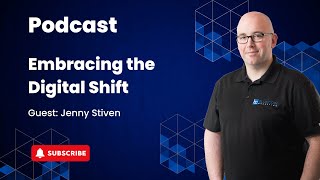
Jenny Stiven, a digital strategist who worked on Buffy, Angel, and other sci-fi properties at Fox, explains how the entertainment industry abandons fans after launch while fans build their own communities. She outlines eight drivers of audience growth, from discovery to newsletters, and warns that AI-generated content backfires when fans detect inauthenticity.
Chapters
Looking for a CRM that's more Canadian than apologizing for apologizing? Meet Client Connector. Imagine HighLevel's genius now with extra Canadian politeness and a dash of maple syrup smoothness, courtesy of Blue Cow Marketing's decade of wizardry in business automation. This is where tech meets Canadian charm. For just $97 a month, you're not buying a system, you're getting a hockey team's worth of support minus the ice. It's all the CRM power you need with the personal touch of your favorite local diner, ready to make your business as smooth as maple and as efficient as a beaver dam, paddle over to clientconnector.app and let's get your business saying sorry for being so awesome.
Jenny, thank you so much for being a guest on this episode today. I'm looking forward to learning more about what you do. I mean, I read through the information you submitted and you seem to have quite a journey in your past of things that you've worked on. And I think we're going to get some great learnings out of today's time together.
I hope so. I love it. Thank you so much for having me.
Excellent. Now, you've had quite an impressive journey from what we think say, as, you know, being a geek and sci-fi enthusiast to now a renowned digital strategist and consultant. Can you share with us like some, some moments or experience that kind of, you know, created this transition into the digital marketing world for you?
Sure. So I went to school for— and nobody in my family was in entertainment— went to school for TV production. And when I got my first job, like we all do, especially in the entertainment industry, you're just taking any job you can get to try to eliminate whatever is not going to work for you. You'll take whatever job you can. And one of the jobs I had was as a production assistant for Mark Goodson Productions, which was a game show. And they did The Price is Right, still do all of that. And their production designer— so this is way back when— was using— sorry about the dog in the background— was using the very first Avid editing. And they were called Video Toaster. And he called me in. And I got to play on the Video Toaster and be on— nobody, I don't know if your audience is sold, but I'm super OG. So I was on CompuServe and Prodigy and Usenet groups. And that I was hooked. That was it. I was like, can I do production on this newfangled online world, this internet thing? And that was a massive turning point. And The biggest thing that worked for me was that I was curious. So I was asking questions all the time about everybody that was around me and what I was doing. And so I got more and more access to things, not because I was trying to get that job or trying to do that, but because I was genuinely curious. And then the next one was when I was at Fox. So, you know, you go through the whole career thing, you go from job to job, you're finding what works for you. And as I'm doing it, of course, I'm getting to to grow my career at the same time that digital and online was growing. So I went through the tech crash of 2000, I went through all of that. And I get to Fox, and I'm in the Fox digital marketing group, which is huge. And someone says, so, you know, we're going to re-release all of these movies like Aliens and Predators, but nobody wants to do it. I'm, and I'm low on the totem pole at this point. And I'm looking around and I'm like, I'll do it. What do you mean nobody wants to do these? And then so they started throwing me all the geek properties. So I got all the sci-fi, I got all, I got Buffy, Angel, Aliens, Predators, I got all of it. And that's how I got to cut my teeth on fandom in digital marketing.
Excellent. Wow. We've kind of had a similar start. You know, I went to school for television production and, you know, yeah, so I went there actually for radio and then I switched to television and more on the technical side. So I was in, you know, mobile production and live events and sports and TV. And, you know, I'm familiar with the Toaster. It was, you know, I got a job at a network here and I was doing the graphics on the news show using the Toaster system that was there.
I love that somebody knows that.
Yeah.
Whenever I tell that story, they all know Avid, but nobody knows Video Toaster.
Yeah.
So I love it.
For sure.
That's awesome.
Excellent. So, I mean, over these two decades, what have you seen in the, I guess, the digital transformation landscape? How has it evolved from the entertainment world and the whole fandom engagement side?
Well, obviously what started— and I'm gonna have to pause because I'm gonna have to let the dog in or he's gonna get really annoyed.
Okay.
Sorry, working from home. So, one of the things that I find to be probably the one of the most exciting. And you talked about this on one of your podcasts about when you're an entrepreneur staying in one with one client or with one corporation, usually you have an expiration date. There's a point at which you need to move on. The thing that's fascinating for me with fandom is that there is no expiration date. Most fans will stay with whatever they are fans of forever. What changes is the entertainment industry and how they are approaching those fans. And probably the number one reason that I left Fox to focus completely on fandom and audience development was that they weren't paying attention to the fans. They were— I'm sure a lot of your audience knows this, but it's called windowing, which is a campaign comes out like Avatar on Netflix, they give it a 3-month marketing campaign, and then they move on. And they don't do any kind of customer relation or fandom relationship building or even sustainability after that. And what I was finding was that while I had these great titles that I got to work on, I'd be developing these relationships and then I'd have to move on from those relationships because we didn't have enough resources. We didn't have enough people that could do community management. That really wasn't a thing when I was first starting. So what I've seen, the huge shift, is fans taking that into their own hands because the entertainment industry wasn't doing it. They created their own Usenet groups, they created Reddit, they, I mean, they created the places to go, whether it was early forums, Usenet groups, AOL chat rooms, and then Reddit. Whatever it was, fans figured it out. And what I realized was it was up to us to shift with the fandom. It is not up to the fans to shift with whatever will-o'-the-wisp industry situation is going on for the entertainment industry, or for publishing, for anything that you're— for sports, for that matter. It's up to us to make that effort. Sports has probably done it better than anybody. I would say that I am a soccer fan, so I would say that there are certain soccer MLS teams who have done a much better job than anybody else has in realizing that the fandom is who they should be going to, not demanding they come to them. And the entertainment industry goes through different periods depending upon who's leading it. We have lots of people out there that are my age, your age, who are geeks, who grew up as geeks, who are running the studios. But as happens, the farther away you get from your fandom, the less You think about them. They're not your priority. They're a ticket, they're money, they're streaming, they're a subscription. They buy your books, but they aren't a person. And even though you have people who are geeks who are in charge who should know better, they forget that you still need to nurture that relationship. And it's up to them, not to the fans, because the fans, they'll do their own thing.
Yeah, absolutely. And then a lot of these franchises, like you think of Star Wars, James Bond, Marvel, like a lot of them that have been around many, many years ago and now they've kind of gotten new legs, new additions, Star Wars being the most common one where it just keeps going and going with Disney taking it on. So now you've got this younger generation coming up and so it's probably like, You've got to appeal to still the old school fans, but then you got the new school fans that are having different needs that are there. That must be quite challenging to connect with both of those.
It is in the sense that, again, I go back to, I mean, you know this as a content marketer, know your audience, right? So the beauty of fandom is the content is the content regardless of whether or not it's a female, male, gender unknown, 30-year-old, 14-year-old, 80-year-old. The stories are still the stories. So what you realize and what Disney hopefully seems to be getting back on track with— they kind of lost their way there a while. I mean, these are— Disney in general is the fandom expert. But they kind of lost it. They were not doing what they should do with building relationships. And what they're finally doing, if we want to use Star Wars as the perfect example, is you've got the young Jedi, you've got the Acolyte, you've got Andor, you've got Ahsoka, you've got Bad Batch, you've got the new movies. What they're doing is they're saying, we acknowledge that there is a broad spectrum and that there's a broad spectrum of storytelling that we need to go after. Marvel probably does it the best, and honestly, I think better than DC and Warner Brothers in the sense that they know that there's different audiences for their different stories. That's a given in comic book industry. You know that, you know that ahead of time. If you're a comic book shop owner, and I work with a lot of them, they know that they have to have very distinctive events marketing for the different audience demographics. Different stories that you have to appeal to different fandoms. The problem gets when you're a small business, if you're an author or you're just starting out or you're trying to get your story out there, that becomes an issue because you are literally fighting against the white noise of massive behemoth industry titans. That are taking up a lot of space and air. And it's, it's hard sometimes for those that are independent authors, independent creators. And right now there seems to be a bit of a Wild West going on. Anybody who knows me, this is kind of the drumbeat that I've been doing for the past year because of post-COVID, because of the strikes. There's a genuine wild independent, independent nature rise of the creators that's going on right now. And it's kind of cool. And what that does is it allows us to appeal to what you just asked about, a really broad spectrum of audience demographics and find where they are and find the content that fits for them.
So, how does a small or medium-sized business who is up against these larger organizations, like how do they How do they compete? How do they keep that sustainability with building those fan bases and those fan relationships? How would you recommend that they do that?
Yeah, it's hard. I mean, the most obvious is social because there is a lot you can do with organic social still. And right now, as opposed to 2 or 3 years ago, even more so, there are— there is a lot more work that you have to put into it as an independent creator or an author. So I'm working with a sci-fi fantasy author right now. It is a full-time job for them. So it's not just about the books that she's writing. She's won awards. She's going up actually for the Chantal Clair Awards in the next week. But she needs to work full-time all the time with the audience that she's building slowly over time. And not everybody has that luxury. You know, you've got a full-time job, you're writing, you're doing whatever you're doing. So usually what you need to do is you just need to find that, that micro group, that micro audience that you know is out there on social who's looking for your content and you start there. I know that isn't— there is no silver bullet. I know that's not what people want to hear, but there really isn't. Not for that particular area of creation. You talk to any YouTube creators, there are no overnight sensations.
Absolutely. So, I mean, in the work that you're doing, like you said, you mentioned you're working with this sci-fi author. What's the scope of the work that you do with somebody of that nature?
So audience development hasn't really changed in the sense of marketing, right? You've got about 8 drivers that are pretty normal that you would go to find your audience. So there's always the discovery period of where is their audience or who are the comps, who is their audience that they're looking for if they don't have one already. And then it's a slow build. It's social, community, influencers, talent, PR, events, paid media, and newsletters, email marketing. Everything old is new again. Email marketing for a long time was not a thing. Now it is again. For my sci-fi fantasy author, she's got 40,000, subs now because we've built this over 3 years. But while that is an impressive number and we're doing several conversations and pitches for her content, it's still a micro-influencer group, right? An influencer audience. So how do you get from that plateau to that next step? Unfortunately, that has a lot to do with paid media, and that's— I mean, still has to do with paid media, and then it has to do with events. With this particular type of fandom, you need to do the glad-handing. You need to get out and build the relationship with that fandom. It's— I'm lucky with her because she loves to go out. She loves to meet fans. I, you know, she's doing 10 events a year now, easy. But sometimes that's not something that comes easily to that creator. And so you have to find something else to do, something else to build them. And that could be an online event. It could be something that makes them more comfortable. It could be that you're developing a bunch of social that doesn't include them. It includes somebody that they work for, or you create content from scratch that's their storyline. So for instance, I'm working with an animator and they have an incredible lineup and what they've done, and they've worked with Crunchyroll and they've done the whole thing. But they're kind of at this plateau where they really want to start their own production company. They want to do their own thing. Well, how do you do that? I mean, that's where you go if you're going to leave the company that's done your support. What do you do next? And again, I hate to tell everybody, it's you got to go to your audience. You have one. So you need to spend the time with them. And what I do then is I hunker down and we do social and meet and greets and we get out there at events. Geek events are huge. And I mean, everybody knows that. But from a marketing standpoint, they always have been. They were just ignored for years. So the small events are just as important as the San Diego Comic-Cons. And you get out there and you meet people and you spend time with them. And I go with them.
Oh, absolutely. How important, or I guess, how do you go about engaging with them online? Are you like, let's use the author example. So you have an author who's writing these sci-fi books and whatever, they can go to the physical events, they can meet the fans that come there. But should they be engaging with them, like, one-to-one online, or is it just putting out online content? What's the best way to do that?
Okay, so there, I hate to say it again, there is no best way because it depends on your creator. It depends on, are they a writer, a director, a producer, an animator? Who are they? What are they comfortable with? And that's part of your discovery process, has to be, Who's their target audience? Where is their audience? What are they comfortable with? And you have to find that common ground. And sometimes you can get them to be online conversing. There's a couple of authors, for instance, that have Facebook groups. Again, everything old is new again. And they're extremely active sci-fi fantasy authors that they are extremely active with everybody within their group. Even if they're famous, they're on there because that's what they want to do. Now, it could be that they have a social media group that is interacting in their voice. But either way, that's— they're active in it. But if you go back to the very beginning historically of their group, it was a slow burn. Not everybody jumps right in to talk with their, their fandoms and who's there and what's going on. I highly recommend it for every single one of my clients, but I also have training where I take them through with a community manager. This is how you do it because you can't burn out. This is not your full-time job. Your full-time job is to create. Or you have a full-time job and you're creating on the side. So we train to show how you can respond and you can set up a pattern so that your fans know to expect you once a week or once a month or whatever it is. And then you post content that way. You're not burning your, your creator, your client out. What you're doing is you're showing them this is how you can do it while you're also learning what are they comfortable with.
And I think there's a lot of parallels between— I mean, if you're listening to this and, and you're thinking, okay, well, this is only for people that are in the sci-fi world, it's— there's a lot of parallels between this and, you know, just if you're running a, you know, let's say a service-based business or a marketing business or anything there where, you know, you're, you're actually building fans with your, your clients if you're doing a great job. And that's kind of, you know, in the process that we look at is the last step is to build that fan base that goes and talks about you and everything. So I think there's a lot you can take from this, but, um like what are some of the, I guess, trends and developments that you see are gonna impact the future of this industry for engagement? What's new that's coming out that's really gonna make it a lot easier?
Well, it's not new, but it's certainly the one thing that's on everybody's mind is AI. So, you know, I think the biggest impact from my point of view is that I'm trying to stay the middle ground on it. I have artists who are clients who are panicked I have authors who are clients who are thinking this is great for editing purposes, but I've got fans who are creating fan art for their fandom that they follow, and that's freaking the actual IP owner out. So that's going to be the big industry shift. And I think from my point of view, what the only thing I'm trying to make sure of is Don't presume that an AI ChatGPT is going to take the place in your relationship building of all of your interactive time with fans. It can, it can help, there's no question. And I don't have— I'm not a purist. I do not have a problem with automation. I don't have a problem because especially if you are, like I said, if you're working full-time, you're writing on the side, or you're an animator, you're just trying to get by, you can't spend the time that you should with fans online. But fans aren't stupid, and there is a— I've noticed almost a cycle of about 2 to 6 weeks when they start to catch on that it's automated content. And once that happens, then you're getting dissed on Reddit. It's an issue. You don't want that. So my biggest recommendation right now to everybody is transparency. If you're using any kind of AI Just let your fans know. Most fandoms right now love the fact that the curtain's been pulled back in The Wizard of Oz and that they can see how it works. They want to know, they love writing, they want to hear about a writing process. They want to— right now I'm working on a fandom for a film that's part of a bigger franchise and they want to know what the director is doing, what is the writer's room like. They, they're dying to know what that is. And, you know, there's arguments about how do I get some of those two actually on the IP side to share some of that information. But fans love that. So don't be afraid to say, hey guys, I've got to go bury myself and write for 6 weeks. I'm just going to be posting content. Please feel free to respond. When I come back, I'll respond. But it's automated for the next 6 weeks. Be honest with your fandom. That's going to be the biggest shift is How do we incorporate AI not just into our lives but into our marketing and into our creation?
It comes down to just being real and authentic, right?
It is something that is remarkably hard to convince the bigger IP owners, streamers, studios, even production houses. It is an argument that I am gobsmacked I am still having 20 years later that this is important and why you need to do it and why you need to be transparent. And, you know, having a conversation where you're both using the same words, but you're on different planets and galaxies, where they're saying, oh, we're going to be authentic. And I'm thinking, that's not authentic. You are, you are actually telling your fans what's going on. It's not going to hurt you to say, hey, this has been delayed. Because the strike delayed us. Everybody's gonna understand that. But I am still shocked when I have to have that argument.
I bet. Jenny, I mean, this has been great, like hearing your story, your journey through the world of fandom and how you help people out. But how do people get in touch with you? How do you work with clients, I guess?
So mostly I get clients through word of mouth, which I know you've talked about on your podcast as well. Um, but if you want to reach me to talk about anything, if you're a fan, reach me on Instagram. I'm @jssstiven on Instagram and on, uh, Twitter, which I will never call X. I am Jenny Stiven. And then on, um, I— Facebook is just for family, but then on TikTok, I'm Geek with Gray Hair. And most of all, for business side, I'm on LinkedIn. I get a lot of a lot of connections and networking. And I am just Jenny Stiven on LinkedIn.
Jenny, thank you so much. We're going to put all those links with the show notes and everything so people can go and get those there. Is there anything you want to add before we—
I just, I, you know what, whatever you're a fan of, support it, please support creators, support independent authors, support independent creators right now. They really need it. And it's, we can all be the fans of Star Wars. But you can also go discover a new sci-fi fantasy. You can discover a new TV show, a new book. Go support your independent bookstores, please.
Thank you so much.
Thank you.
Looking for a CRM that's more Canadian than apologizing for apologizing? Meet Client Connector. Imagine HighLevel's Genius Now with extra Canadian politeness and a dash of maple syrup smoothness, courtesy of Blue Cow Marketing's decade of wizardry in business automation. This is where tech meets Canadian charm. For just $97 a month, you're not buying a system, you're getting a hockey team's worth of support, minus the ice. It's all the CRM power you need with the personal touch of your favorite local diner, ready to make your business as smooth as maple syrup and as efficient as a beaver Ardam, paddle over to clientconnector.app and let's get your business saying sorry for being so awesome!
More from Shaun


Julie Vanexan recognizes Shaun Whynacht from Blue Cow Marketing at the Nova Scotia House of Assembly








