Episode 087 - Why outsourced B2B content creation is required
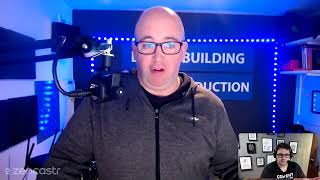
Mark Raffan of Content Callout explains why B2B companies outsource content creation. He contrasts building from social posts upward versus starting with a comprehensive guide and breaking it into smaller pieces. Success depends on identifying cornerstone content around the problems you solve, then matching format to platform and audience.
Chapters
Mark, thank you so much for joining me today on the show. I'm looking forward to talking about this topic about outsourcing content, and that is your area of expertise, and you are a fellow Canadian on the West Coast. Thanks for joining me.
Yeah, you bet, man. Thank you so much for having me.
Excellent, excellent. So a lot of times as a business-to-business type of venture, you know, we know we have to create content, and we also know that Content, great content takes time. Uh, you would even, you would even say it's somewhat of a burden, correct?
It can be if you don't do it the right way. All right.
Oh, the right way. Okay. So that's, that's gonna lead right into this. What in your opinion is the right way to produce content?
A lot of people think of content bottom up instead of top down. So we like to think of content as almost something that becomes self-fulfilling in a way. Some people, when they start the content journey, they figure, well, I need a presence on social, and so I need to start creating social content. So I need to start writing copy for that social, then I need assets to go with that social. And then what they start to realize is, hey, that's a good theme. It's starting to get picked up on. There are people that really like this theme of social posts that I've made on this particular topic. I should write a long-form blog post on that. So they go out and they write a blog post on that, and then they decide, well, I'm getting a little bit of traction there. I should do a video based on that. Then they do a video based on that, and then they're like, wow, I should really write a case study about how this theme could help a potential customer or has helped a potential customer. And then they write a case study based on that. That's what we call bottom-up approach. And that's very burdensome when you think about it. There's a lot of moving pieces to that. You're creating one piece at a time. It comes, becomes very challenging to be able to manage. Instead, what we like to look at is top-down. So first, think of the theme. Think of the thing that you're going to start building content based on. And it could be a problem that your company solves. It could be something that you're passionate about. It could be anything really when you think about it. But start with the long-form pieces of content, the video like we're doing now, the interview, the, um, even a long-form content written piece like a 3,000-4,000 word piece that you want to be a quote-unquote guide, then use that guide to create all of the subsequent smaller pieces— the social snippets, the social copy, the little assets here and there. And that becomes much easier, and you've got a very, very clear through line top to bottom of what your content is. And it becomes much easier to write that social copy, to write that, and to make those social assets once you've got that long-form piece of content instead of the other way around.
That makes complete sense, right? So, like, how would somebody go about identifying then what that long-form piece of content is? Because in your first example of the bottom-up, they did a social post and then, you know, it kind of proved itself. It started to gain traction. They're like, ah, there, there's some traction here. Let's, let's build upon it. How do you identify the other way down as to what should be that main piece?
Yeah, really good question. So I, I think it depends on where you are in your content generation journey. If you're just starting out this process, I first want you to think about what problem does my company solve, or what problems do my company solve? Then start thinking about long-form pieces of content that fit those things. Be very cautious about writing promotional type content. You know, we do this, we do that. I want you to make it more educational, informational, and entertaining when you're writing it, because if you go too hard on the self-promotion, it just becomes you know, sort of the dog and pony show of, hey, this is what we do, and blah, blah, blah. And no one really wants to read that. And also, it's not a shareable piece of content at that point. You want your content to be read, and you also want your content to be shareable. The more eyes that you have on it, the better it is for you. Now, I'm not saying that you can't have multiple calls to action throughout that to say, hey, if you want, for example, Blue Cow to do this work for you, Click here, those kinds of things. You can absolutely do that. But think about what problems your company solves and then write about that problem. Write about how people could solve that problem. Write about how people have failed solving that problem. Give them 7 steps to be able to solve that problem. All of those things come into play when you think of it that way. So first start there. After that, everything becomes easier.
Now, what would you say, I mean, you're obviously in the content world, that's what you do day in and day out. Is there a certain type of content that, that, that currently is performing better, working better, or is it really just, um, depends on the preference of the person that is, is seeing it or hearing it or watching it?
It depends on the platform and it depends on the person. Mm-hmm. And it depends on your customer segment, generally speaking. So it depends on where you're gonna share it and what the intent of that content is. For example, your written content is always gonna do well or should always do well on SEO as long as you have structured that piece of content for that. Your social content will be— the success of your social content will be dependent on the platform that you put it on, but it's also dependent on the type of customer that you're looking for. If you're a B2C company, um, and you make soap, for example, random example, but let's just say you make soap, you prob— your content's probably not going to do very well on LinkedIn. It's going to do very well on Instagram. It's going to do very well on TikTok. But if you make, if you make, um, what we do, right, marketing, that kind of stuff, or you have a software product, or you're in the mining and the metal space, your content's probably not going to do very well on TikTok, for example. It's going to do very well on LinkedIn. So it really depends on what kind of thing you are doing. It really depends on who you are selling that thing to, and it really depends on the platform that you are putting that content on. Now, that's just organic. When we get into the paid kind of stuff, it really depends on another couple of things, but let's— we'll stick with organic for now.
Now, your business model is that you help other businesses with their content, right? It's kind of like that you do the content for them to help promote their business.
Yeah, exactly.
What made you decide to go that route, um, versus just, uh, you know, teaching people to, to do it themselves?
Because people don't do it. We, we thought we were actually going to do the teaching thing for, uh, for quite some time. And what we realized is that it really doesn't matter how much you teach people, the vast majority of people that you teach still are not going to do it. So we decided instead of doing that, why don't we just do it for them? And it came about as a result of me starting another company. I own another company called Negotiations Ninja, which is a negotiation training and coaching business. And we built that business up entirely based on the content and the thought leadership that we had in that space. And we thought, man, if we could do this for one company, I bet we could do it for other companies. So just over 2 years ago, we thought, let's give it a go, let's try it. And here we are 2 and a half years later, and we've successfully done that. And what we realized through the process is that content is the single most powerful piece of marketing that you can do. Now on its own, it's somewhat powerful, but when you add in all of the other types of marketing that you do, it almost becomes an amplifier of all of those things. And it's really important for people to understand that creating the content in and of itself is gonna get you a little bit of the distance, but once you start to layer in PPC and organic search and paid ads and social, that's when you can start to really see the benefits of content because the success of your content is dependent primarily upon two things: the quality of the content, right, but also the eyes on that content. If people don't see, you could have the best piece of content in the world, if no one sees it, it's not going to work.
For sure. Now you're saying we, you know, what size is your team?
We're very small. We're about 5, 6 people, pretty lean. We do a lot of work in the United States, very little work in Canada actually, mainly with B2B SaaS companies and B2B consulting companies.
Okay, okay. So let's talk about, you know, you have a client that is in that space, they call you up and say, hey, we know we need help with our content. What type of approach do you take to that? Like, how do you find out what type of content you're going to create for them?
First, we have to figure out what they do and whether or not they're going to be a good fit and whether or not they have enough money to be able to afford the content that we produce. So once we figure out what they do, we also have to take a catalog of the type of content that they already have and what the goals of that content they want to have, because when we think of sort of the traditional marketing funnel and we think of just breaking into 3 major buckets of awareness, consideration, and intent, if they've, if they're overly indexed on awareness, like they've already got a ton of awareness content, but they're not utilizing it, then we can figure out, okay, now we can utilize that preexisting content that you already have in a different way to really drive that forward, which means the creation focus isn't gonna be on awareness. It's the promotion of the awareness content is gonna be a focus, but the creation focus is gonna be on consideration. Consideration and intent type content and also promoting that kind of stuff. So we really have to take a catalog of sort of where they are. If they're just starting their journey, most likely we're gonna really heavily do a lot of awareness and consideration content because no one knows that this company probably exists. Most likely if they haven't done any kind of content marketing ever, they really probably don't have a marketing program to begin with. And then making sure that we align that also with some paid search and all that kind of stuff is also really, really important. So that's usually the step that we go through, and then we build a content marketing strategy for that company, right? So who are their ideal customer profile? Who are the target buyers within that ideal customer profile? What are the challenges that those people face, etc., etc.? Sort of traditional marketing strategy. And then the content is built based on that information. So for example, if we know that we're trying to reach out to, uh, a healthcare system, mm-hmm, then we know that the target buyer for that healthcare system is the CIO. We think about all the challenges that the CIO may have. In fact, we call some CIOs and say, hey, what are your challenges? Then we write content based on those things.
Excellent. Very thorough approach to everything. Now I'm curious, you mentioned 2 years ago you were doing the Negotiation Ninja stuff and then you decided to move it into this business. How did you grow the business to where you are today? Like what was your approach to launching that?
Yeah, it's all been content. We have a podcast, which is the B2B Marketing Podcast, the B2B Content Marketing Podcast. It's one of the top 10 marketing podcasts in the world as ranked by DVHQ. And the goal was to prove a point really, to make sure that we could keep promoting our business the same way we had done the others. And what we found was with a heavy focus on social and a heavy focus on like good educational and entertaining content, we could really drive a lot of the success of the show. But we were in the same position that a lot of companies find themselves in at the beginning. No one had any idea who we are. We had the luxury of owning another business, but people knew us for that thing in that industry. They had no idea who Content Callout was in this industry. And so it was our job to be able to create a lot of awareness content for that and a lot of consideration content. And we're sort of at that point now in our marketing journey where now we can start creating significantly more intent-type content. And build off of what we've already started.
Interesting. Now let's talk a little bit, let's kind of detour into the, this podcast, you know, top 10 in the world. Uh, with that, what was your focus in getting your podcast to that level? Like, what in your opinion makes a great podcast to, to get it to, to rank so high?
Um, The quality of the guest, I think, is a big piece. The willingness of the guest to give shoutouts on social, that's also a big piece. The ranking of the show, um, wherever that's— it's downloaded. And then just making sure the right people are listening to it. For example, DiviHQ is a content marketing platform, but they're also a well-respected voice in the content marketing world. And making sure those folks got to listen to it was really, really important. Having their founders on our show, for for example, was a big step, making sure that we could do that. And then just making sure that we had loud voices on the show. So people like Robert Rose and Joe Palizzi, like the two godfathers of content marketing, that was really, really important. Getting people like Michael Brennan on the show, getting people like Rishad Tabakawala on the show. Those folks really at the beginning were important to the growth almost immediately. So getting heavy hitters on the show was big. For us.
And then how much promotion of the episodes and the shows do you put behind that? You know, is it, you know, almost like, like a talk show production? Like you have a team of people that are looking for guests and pre-qualifying and pre-interviewing and all that kind of stuff?
Yeah, it's— the pre-qualification process is pretty straightforward because our intake forms, um, are, are pretty well set up. We just use simple Google Forms to be able to do that. But the thing that we do to promote it is just heavy, heavy organic on social and all of our platform. All of our customers are on LinkedIn. So just ensuring that we're doing that to them. And also, like, really the hard grind of sending personal DMs on LinkedIn has actually been really, really successful for us, saying, hey, would you listen to this show? We'd really like some feedback. What do you think? Did you like it? Would you share it with some friends? Those kinds of activities, even though it sounds super labor-intensive, and it is, uh, really does deliver a lot of results.
Now let's— you're in the B2B space, so LinkedIn. What is, is, you know, in your opinion, a huge opportunity for a business-to-business type of, of, of model for using LinkedIn when it comes to content? Is it just, you know, just posting content on there, or there's some little like like tips or tricks or anything like that you can provide?
Yeah, you got to be active. Yes, you have to post. It should be at least twice a week. Your company profile gets significantly less engagement and views than founders' profiles and thought leaders' profiles. So personal profiles tend to do a lot better on LinkedIn than company profiles do. In fact, anywhere from 5 to 10x the reach that a company profile does. And I think that's primarily because two reasons. People trust people. They don't necessarily trust a brand that hasn't got a humanized presence, especially in today's day and age. And also LinkedIn wants to monetize, so they've really driven down the organic reach that a company profile has to force you to put paid dollars behind the promotion of that brand. They haven't done that as much. They have done a little bit. They haven't done it as much with personal profiles. So it, it allows you to have more reach that way. And also the not just posting, but engaging on the comments on your posts and engaging on other people's content is really, really important because the algorithm decides, hey, this person's more active, we're therefore going to favor their posts more. And so we're gonna promote your stuff more and then bring it up more in the algorithm. I think another thing that people think about with LinkedIn is they, they believe that LinkedIn should be, you know, very corporate, very formal, all that kind of stuff. And that's not true. The more humanizing you can make your content, the more entertaining you can make your content, the better it's generally gonna do. Now, there are some things that just aren't gonna translate. On LinkedIn, like if you've got too many personal posts, if you've got videos about you fishing and stuff like that with no context about how it applies to the business world, it's just not going to work. So, but if you do post stuff like that, for example, I saw a post the other day of someone fishing, and then they had this analogy, this long-form analogy of like how business is like fishing, and they went into all the details about you know, what you do to bait the hook, and then what you do in delivering patience, and all that kind of stuff. And it was really well written, it was really well thought out, and it did fantastically well. But that's because the person was able to translate a hobby into an analogy of what business is like. And if you can do stuff like that, you'll do very, very well on LinkedIn.
Excellent. Yeah. And, you know, there's been that, that, you know, the new features that roll out there. I know a lot of clients have had success with their newsletter feature of LinkedIn. A lot of people don't even know it exists. That's there. So, you know, I've had clients that have actually focused all their energy on that versus their own list. And I know it's kind of that kind of jump between do you want to own your list or do you want to have it on a platform, right?
So, I think what a lot of people are especially with a LinkedIn newsletter feature, the thought process is, yes, someone has subscribed to my newsletter and they're getting it to their email, but are they reading it? And there's— we can see open rate and we can see dwell time a little bit, but we may not necessarily be able to see whether or not someone is reading it. So I think this really enables another channel so you can ensure someone is actually reading your content, right?
Yeah, for sure. Now my last question before we wrap up here, uh, and I always like to ask this, especially when, you know, there's a unique business name— Content Callout. Where did that come from?
Uh, I like alliteration, and so the, the whole idea was, well, we want content in the name because we want to rank, and we What are we actually doing? We're, we're calling out the need for content. And so that's where the name came from. Excellent.
Now, where can people find out about you if they're a SaaS business or they, they heard something on here that says, hey, you know what, Mark could really help me out. I need, need what he has.
The best place to reach me is on LinkedIn. So just type my name in LinkedIn. It's Mark Raffan. That's spelled R-A-F-F-A-N. Uh, or you can reach us on our website. At contentcallout.com.
Perfect. Mark, thank you so much for sharing your, your experience and your views on content with us.
Thank you so much for having me. I really appreciate it.
More from Shaun


Julie Vanexan recognizes Shaun Whynacht from Blue Cow Marketing at the Nova Scotia House of Assembly








