How Amy and Tim Built a Million-Dollar Network Marketing Empire (While Balancing Marriage!)
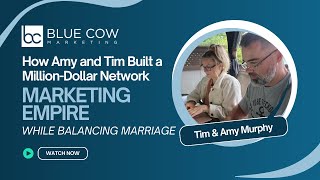
Amy and Tim built a $4.8 million network marketing business over nine years by treating it as a real business, not a hobby. Amy hit the top of her compensation plan in 18 months. They've since joined Farmacy and reached top-5 national ranking within a month.
Chapters
Amy and Tim, I'm so glad that you guys have joined me on this episode. I'm excited to talk about network marketing. And also we're going to dive into, you know, the challenges that come with, you know, a husband and wife working together on a business and some of the successes that you've been able to come up with and work through those. So again, thank you so much for joining us.
Thank you for having us.
Now, as I mentioned, we're going to be talking about network marketing. And before we get into exactly your story, give us a brief overview of what is network marketing for those who may not know.
You want to start?
This is your wheelhouse.
Okay, well, network marketing is basically— I guess you cut out the middleman when it comes to sales and products. So normal supply chains, like sales, uh, chains would be, you know, you have a wholesaler and then people, you know, buy it for this price, upsell, and down the road, down the road, down the road, lots of advertising happens, lots of costs happen before the consumer even gets their product. But when it comes to network marketing, it's basically direct, almost from warehouse to consumer. We are that middle person that's kind of just doing the networking, doing the marketing. We're the sales force behind it, and we deal directly with the company and to bring it to the consumer.
It's also referred to direct sales a lot. Yeah, because of the nature of being direct to the consumer.
Okay. And some people like multi-level marketing, network marketing, direct sales, because we grow teams of people that do the same thing that we do. We grow our teams. So that's—
we basically set up the distribution. So instead of having it in a retail store, we set up distribution through people. So network through the networks, through our networks, growing our network.
Yeah. And as you know, the bigger the network, the, the more strength is there. Let's go back to how you first got involved with network marketing. How did that come about?
Oh, wow. So I was the one that started all of this. So Tim and I have been together for going on 29, 30 years. We've been together for a very long time. And I guess when I was 19 was when I started my very first network marketing company. It was actually Mary Kay was the very first company that I had joined, and I wanted to sell some makeup and kind of just see what it was. I didn't know that it was called direct sales, multi-level marketing, network marketing. I didn't know. I just knew it was Mary Kay makeup. And I bought a kit and I would take the products and share with my mom and my mom's friends and have like little parties. Like I would do all that stuff. And so that was kind of what got me started into it. Was, yeah, when I was 19.
Excellent. Now, at what point in there did you realize this could replace all income from, like, let's say, a job, that it was not just a little side hustle, that it could be a business?
Well, that took about 17 years worth, about 10 different failed companies, because the way— it's funny. So my first part of my network marketing journey was, you know, I would join a company and I would like to use the products. I joined something that I would like and I would just share it with my friends, my family, and I would never really make a lot of money. I would just sort of a little, little side hustle. It was like, oh yeah, I'll make a couple of bucks from this lipstick or this, that it wasn't anything that I ever thought would make a lot of money. But I thought in my mind it was something I could do to just make my own little side cash and things like that. And nothing really happened for 17 years.
Because, because I think you thought direct sales meant direct to you as a consumer.
Funny.
Because, well, you're funny. She does enjoy shopping.
Okay. Yes, as do most women probably watching this. They probably love shopping too. But yeah, so it was just satisfied my shopping needs and I never really thought anything of it. I tried, as I tried different companies as time went on, I tried to feel out what it meant, but I never really had, you know, mentorship or leadership. It was more people would bring you on and you kind of just fend for yourself and nothing really happens. So it came to the point when about 9 years ago, Tim and I were in a position where we were struggling a little bit financially. And Tim actually said to me, he's like, we were trying to think of strategies on how to save ourselves rich, you know, like kind of like help ourselves financially. And he actually said to me, he was like, why don't you stop doing those network marketing things? Like those companies that you're always joining, like you're always spending more than you're making. Like maybe if you don't join them, you just won't spend any money. And I was like, yeah, actually I could probably do that. Maybe if I'm just a customer, I won't be tempted to buy more because it's a bigger discount. Like I started rationalizing, yeah, sure, you know, I, I won't do that. So that was our strategy. We were gonna quit network marketing after 17 years of failure. We were gonna finally call it quits. And then I was looking for a product that I needed because I like to shop and I'm looking for things. And I came across an item that solved a problem I was looking for. Now I had a choice to make to purchase this item. I could be a customer, which is what I agreed upon originally, or I could become a distributor for the company and get it at the cheaper price. We were trying to save money. So I was like, behind his back, I didn't tell him, I decided to join. For the discount because I'd be saving money. I wouldn't be spending as much.
So in retrospect, thinking back, I do realize why you failed at the other companies is because I know it was a joke about direct sales to you, but you thought of joining these companies more as a consumer ultimately to get the discount at the wholesale price than you were actually thinking about being a distributor.
You're right, because here's what happened. That's a fact.
I've been right a couple of times in this marriage.
But no, he's on to something here because what happened was this time around when I was in my last company, when I, when I decided to join, I had to tell him because the visa state was going to come out about a month later. So I had to warn him before it was coming out. I was like, oh, he's going to see that on the visa before he can get to me. I need to get to him first because I didn't want to hear it from him. So I was like, I'm just going to come clean and say, okay, I bought these products, I joined as a distributor, but I'm only for discount. I'm not going to do— I just wanted to pay it off.
And, you know, even if I sold one or two, you know, like, things at the time, it's probably a lie, but she told me she wanted to make enough to break even on her personal sales.
Yeah, just personal items. I just want to buy stuff, and if I sold enough to cover my expenses, then it's like we're even. He can't get angry. I'm not spending more money. This is what my mentality was. We're even. But he, he didn't react that way. He was like, Oh my God, here we go again. I see the writing on the wall. I know what you're up to. I know what you're gonna do. Nobody's gonna believe in you. You've sold everything under the sun. He started laying into me, like making me feel bad. So I naturally, as an Aries, impulsive, fiery, I go back at him. I said, well, actually my friends do trust me. And if I wanna talk to, you know, these products to my friends, I can do that. You can't stop me when I, you know, you can't tell me what to talk to my friends about. So guess what? I wasn't going to build this business, but I'll make you a deal. I'll make you a deal. I will make it in this company. And if I don't, I'll never do another one again.
She did corner me.
It was like heated.
I'll put a little context behind it because we had 2 kids at the time. She was pregnant with her third and she cornered me and said, you can't tell me what to do. I'm going to use this as my social outlet. What do you want me to do, sit at home and do nothing? And I was like, oh man, she's pulling the pregnancy card, she's pulling the isolation card, she's pulling all the cards because he made me mad saying I couldn't do it.
And so I said, I'm going to do this, man. I'm going to do it. I'm going to talk to all my friends and I'm going to do this and you can't stop me. And he was like, fine, just don't talk about it with me. And so he went upstairs. I immediately got on the phone and I just started going, talking to everyone. Many years later, I guess, actually a year.
Well, hence the network marketing. You did it through your network.
I did it through my network. So a year and a half in, I know, a year, a year and a half, I think I was the first person to hit the top of the comp plan in my country. Yeah, year and a half. The very first. And then it was about 2 and a half years I made our first million. So in that time frame, to answer your question, when did you know it was a viable income? Well, it wasn't when I first started. I was fired up to make it work. He triggered me because he didn't say he didn't believe me. You're welcome.
You're on.
Thanks. So, you know, so I ended up making it work and now it's been— it was 9 years. So we were in that company for 9 years and we made about $4.6 million Canadian. $4.6 million was it when we left?
$4.880,000.
$4.8 million. So we made $4.8 million Canadian in over the span of 9 years.
And I only knew that because it was $120,000 less than $5 million.
Yes, he wanted to hit the $5 million. Exactly. He wanted to see that.
Timing wasn't quite right.
We were, we were almost there, but, uh, change of events. And since then, we have decided to leave that company. Um, at the recording of this, it's been a month that we've left that company. We're with a new company now. Uh, I know I promised—
talk about that one though. Before we talk about that one, I have a question for Tim. We're going to follow along this journey. At what point after she got fired up and, and started to make this happen that you, that you realized there was something to this and you wanted to be part of it because you were against it for a long time.
Well, I was definitely resistant, so I dubbed myself the original— one of the original doubting husbands. There's been many throughout this journey, throughout our organization. So she came home, she made her— she made $1,000 for the first month. And I was, you know, I make good money as a crane operator. So I was like, oh, you know, that's cute. I mean, good. No, good for you. No, I didn't belittle her. I said, no, that, that's good, good. Then second month it was 2, and the third month it was 4. Um, I think by the sixth month she made $14,000 a month. And it went from that's cute to, well, you know, you're not really replacing my income here. You know, I always set my income as a standard, which was kind of unfair in any circumstance. And then when she made $14,000 a month, which surpassed mine— mine was around $12,000 at the time— I was like, my excuses turned. Like, if you're a naysayer, you'll always be a naysayer. The excuses just change. So in the beginning it was, that's cute, you know, that's just pocket change, spare money, that's great. And then it turned to, well, how long is this going to last? Oh, that's great money, but where's it coming from and how's it, you know, this— it felt like a match, you know, you light a match and it just— it's on fire and then it just moves its way.
It's not going to last forever.
So, uh, so yeah, that was at the $14,000 mark. And I remember that quite well because we had about $13,000 left to pay on our van, and I knew I had to pay taxes on that, but just for, uh, just for payoff sake, I just paid it off just to— because we could. And it was— it was such a freeing feeling. So that was the turning point for me, is when she started making more money. And then it It continued on, um, and until she was making a— I was around the same— yeah, I was around that mark, around the $14,000-$15,000 mark. Then I just realized that I need to get on board with this. Then I started saying, well, what is it that, you know, what is it that qualifies you in this compensation program to get you this money? What is it that's qualifying you to get the, the Cadillac? Which came a little bit later, um, And once I realized, um, the qualifications, it became almost like a novelty or game in my head. So I was cheering her on for these levels that she had achieved, for these, um, for these income levels. But it really wasn't until she hit the top of the comp plan that I realized I had to get on board. Because with my job, I made $12,000. If I worked hard, I could make $14,000. But when she worked hard, she could grow her income monthly by tens of thousands. There was no limit. The limit was how far are you willing to go? How much time you want to put in? How many people are you willing to talk to and, and create friendships and create, create a network? So that was the long-winded explanation, but that was really what it was from my point of view. And so right around the year and a half, it took me a year and a half to get fully on board. To do this together. But she's always been the, the front person, the, the PR person, the face identified with our company. I was, uh, merely the logistics guy who dealt with all the planning, the, the planes, the trips, uh, the, the maybe the lower level conversations that, um, while Amy dealt with the higher level conversations.
So, so that leads me into, to what, like, what does it take to, to get to this level of success? How much work is it? Because I mean, if you follow what you guys do online, we see the videos stuff. We talk about the products, but there's way more that goes on behind the scenes, right, to, to get this success. For somebody who wants to get into network marketing, maybe aspirational to want to get to this level, what would it take? Like, what, what do you have to do?
You definitely have to have boundaries on your time, because when— to get to the level we're at, you have to have a big team, and a lot of people need you, uh, and, and want your support. So one of the mistakes I made in, uh, my last company was that I was available 24/7. I would be all out because we have people in all different time zones. I would— anything on my phone, I would answer at like 3 in the morning, 4 in the morning.
I was not giving myself my boundaries to my time because BC would be 4 hours behind us, right? And the UK would be 5 hours ahead of us. So with that kind of schedule, you— there literally is no sleep time.
Yeah, I was on call and I made myself available 24/7. And so you definitely have to have boundaries on your time for sure. And then when it comes to your priorities for your daily things like family, working out, exercising, eating well, whatever it is that you value in your, in your life, you need to time block that and make sure you have that time for that. Because I didn't do that either, and I was neglecting my health, neglecting, you know, my kids, my family, everything. I would just push everyone aside and lock myself, you know, in my office or on the couch, like just 24/7, just doing my thing and not breaking free. And that caused some burnout over the years and imbalance. And I have since learned from that, obviously. But it takes your— to answer your question, like, what does it take to get to this level besides the time blocking and, you know, managing your boundaries and stuff like that? Is, well, one, definitely, if you're in a relationship, you definitely have to have communication. Tim and I have— I think one of the— we've lasted for 30 years almost because we do communicate. And even though sometimes communication may look like heated back and forth, not necessarily argument, but heated conversation sometimes because frustrations, emotions come into play. But we're always open. We are always honest, always open. What do you need? What do I need? Whether it's life, business, anything, communication. You need communication with your partner because if they don't understand what you're doing and why, they won't get it. And it will cause a lot of— because in the very beginning when Tim didn't get it, oh man, it was a lot. Like, oh man, it was a lot. And it was like, you don't know what you don't know. You don't know what you don't know. And I probably didn't communicate really a lot of what I was doing because he would say, what are you doing on your phone? I was like, I'm building something great, just trust me. Like, you know, like I wouldn't be actually saying, this is what I'm doing, this is how I'm doing it, and this is what it requires. I didn't really have that open communication. It was more like, just trust me, go watch the kids, feed the kids. It was like heated. We still communicated, but you definitely need communication.
I think from a technical aspect, one of the things that was very handy was linking our calendars together so she knew I was working, when she knew when I had commitments, I could see her commitments in my calendar. So I knew, I knew when she needed me. It wasn't that, because otherwise I don't know how we, how couples get along without a common Google calendar.
So I can see any appointments he puts in. We check our own color codes. Like, we can see that's just where it starts doing. Yeah, that's just start.
Yeah.
But, and definitely, uh, also too, like, don't be afraid to delegate tasks out at this level. Like, um, this time, um, like right now we have team members that are really great that plan events and like they're really organized in certain things. And I have people that are good with social media, so I'm delegating tasks out to people that, so that I can do the things I'm good at, right? And same Tim. Tim knows what he's good at. So in our relationship, he does like a lot of things like booking trips, planning events and doing things like that, talking, you know, answering questions like he minds the chats and answers things. But then like I will do other things like recruiting and onboarding people and, you know, organizing all kinds of other things. Like, there's a— like, we just divide the tasks up between ourselves as what we each do best, and then the rest, other team members that are involved, get involved with some team-type things that we do. Uh, they are very helpful. And then outside people, like, if you need someone once in a while help clean the house, or like, I just had my friend come over today and she helped organize the playroom because I can't get to it, and I was like, I am so busy right now. So, you know, hire some tasks out. You need, you need— and I, I didn't do that last time around.
I was just supposed to say, I think the problem with Amy, she's a high-touch personality, so she has to deal with people on a one-to-one basis a lot. And I think, and she did really well at that at the last company because she, you know, she financially did well, I think. But it caused a lot of burnout. I think what is different this time is that we're starting to learn how to implement systems. Systems, delegations, systems are huge when you want to get to this level of network marketing, because you legitimately have to have more people than you can handle on a person-to-person basis.
So we're talking about a transition here. You've alluded to it earlier on. Yeah, you know, you guys were doing really good with this. You decided to leave that company, and anybody listening, right, why? Like, what? Like, you're doing so well, and there's probably—
oh my God, but you figured it—
you figured out the, the way to build this, and Talk about that shift and what it was like to— like, what were you feeling when you're like, we're going to cut the ties with this to kind of start over? And then how has that success been in a short period of time with this new company?
So it was definitely a risk because my armpits are sweating. I know it was a risk to do what we did. We didn't know what the outcome was going to be. I just knew that it was time to go without getting into any— I don't want to like allude to anything, just it was time to go. And so, um, he didn't feel that way though, we'll be honest. He didn't think it was time to go, but I did.
Well, after 9 years, um, I got built into the system. I was part of the system. I became intertwined with the system, at least emotionally, and who— in, in my personal identity as well.
Identity. So it was like, at first he came, he was a skeptic, and then he kind of supported And it was like, couldn't even get him out of it after.
By the time she was getting her burnout, I was taking over. So I went from like, again, against it, supportive to taking over. And, and then, and to be fair, when I say take it over, she was a builder, but when we get to the level that she achieved, I was able to maintain it.
He was maintaining it.
There's less, there's less work to do if you're, if you're not building, if you're just maintaining, there's less work to do. And I was, I was capable of doing that myself. And I was comfortable and we're making a good paycheck from that. So therefore, being the stereotypical male, you know, minding the finances and stuff, I was okay with everything the way it was. I know I don't want to disturb the waters. I was fine. But that's where it comes to lack of communication. Not like communication. Maybe there was, maybe there was breaking communication because Amy had different thoughts of what she wanted out of her life. And I was okay maintaining status quo with my life. So her decision to leave, uh, with the business, business being in her actual, like, legal name, um, I was more or less pulled out, and we're starting the cycle all over, all over again. I always started off in this new business as the disapproving husband, but my evolution came very quick this time. It didn't take me a year and a half, it took me about a month to get on board because with the sudden jolt of pulling me out of the old one and putting me in a new one. I had to understand her reasoning of why she wanted to make that change. And once I understood those reasons and I understood the new company and how that new company satisfied those reasons, I realized it was never about money at this point. It was more about, I don't know, a simplistic way of saying it, just satisfaction or personal fulfillment.
Yeah, I, I thought that I was going to retire from the industry. I wanted to retire because I was very burnt out and tired and I couldn't find my way back. And so he was going to take over and we were looking at how to make that happen, you know, how we were going to make that happen. I'm going to walk away, I'm going to retire, you just take it over and do whatever you want with it, like we're done. But that very— something happened in a very short amount of time that just flicked the switch in a very, very short span of time, was we were introduced to this other company. And I wasn't even looking for another company, to be honest. I was— I mean, I I always look around at things. People show me things and I see things because I'm in the industry, so people show me stuff. But I really, really was just going to retire because I was tired of it all. And then when I saw this company that we're in now, I was like, oh, I tell him how quickly it switched. Go ahead. It was very quick. It was very quick.
It was so quick. I was actually at the convention of our previous company while this all went down, while I was filming a TV show on location.
So I wasn't even with my family. I wasn't at home. He wasn't at home.
I was in another country.
He was in another country.
And I'm like, Tim, this unfolded, this needs to happen as I was away. Um, I have no regrets now.
Yeah.
But, uh, as you know, in life there's emotional regrets, there's financial regrets.
And, and, uh, I don't think Tim's gonna leave me home by himself ever again. He, he, he makes all these crazy decisions.
Well, that's That's kind of par for the course anyway. I just wasn't expecting this kind of a big decision. This was a— this is an emotional tear. This was a financial tear. This was a tear of all sorts. But no, I should have saw that coming because anytime I leave her to her own devices too long, she starts to go crazy, come up with her own ideas.
Yeah, we'll say that. Yeah.
So for those that are listening that want to either— either they're in some network marketing or they want to get started. What are some things that they can do to set themselves up for success? Obviously, your results are not typical. Like, what can, can the average person that wants to get into this do?
Well, it's funny because we have a big background in what we've done, right? And so the new company we jumped into, we are starting from scratch, from the beginning. We are, we are just like anyone else. We've only been in it for a month. But because we have the systems in place and we have leadership qualities, we know what we're doing. We've brought in a big team already of people from all over. Not, you know, like typically people think that big leaders pull their team over.
It does happen.
It happens that people will go and bring their team and that's how they build so fast. But our team didn't come with us, so we didn't ask them to either. We— they were happy where they're at. We left them where they were at. We built— this was a clean slate. It was a fresh build with, you know, quite humbling. It's very humbling.
Tell them about how We actually had our new company's convention a mere, what, 3 weeks, 2 weeks after the one I was at.
Yeah.
And we got there and we were like at the back of the line. There was no—
I know, because we get special treatment. The other one could be on top of the company. So now at this one, special dinners, special ropes, back of the lineup, special chairs.
Very humbling.
It was a very humbling experience. But so we're building too. But, you know, it was a fresh build with all new people, all new team. And, you know, there was, you know, some trickle over of people from the company have come over, but, you know, on their own will. If they've reached out, that's fine. But we haven't, you know, just done that whole thing where we just bring the team with us. We didn't do that.
Um, well, you can't make people go.
Yeah, you can't do that. We're not about that anyway. That's not who we are. But, um, what was really neat is though, we just got a recognition for our month in, like, so the first month, uh, we're actually number 5 in the whole company already in a month. We jumped to number 5 and we are the number 1 recruiter for the month. So, and we're the fastest growing team right now in Canada, they said. So that was exciting and it's only been a month. So this has been very exciting. So back to your question on what can people do, because I just want to allude to the fact that we are doing what we expect others to do, but we're coming from a place of experience, so we're able to help people a little bit easier. But to do what to do in the beginning, basically make sure you believe in the product. Please believe in the product because that is where you will start to break belief. You cannot promote something you don't believe in. First and foremost, love the products and believe in like know the comp plan, understand the comp plan because that will help you to build properly and know what your goals are and what you're working for. Because if you're blindly just, I want to make money like, but How? Like, if you know how the bonuses are paid out, you'll know what you're striving to do. Like, you'll know better what you're doing. So know the comp plan, know the products, like, believe in them. Believe, believe in the company you're with. Research the company. Like, what company are you looking at? Do you believe what their values, what they stand for? Like, look at, look at who they are and what they sell, what they do. Like, that's very important because you're going to be aligning and partnering with this company. And then also the person that you're, you're being recruited by or you're looking to, like, your partner, like, you're your business associate, I guess you'd say, you know, do you align with that person's values too? Because I know it's, it's a struggle. I've seen team members struggle when they're connected with people like their upline, they do not connect, they're different personalities, and it never goes good. So make sure the person you're signing up with, you really resonate with them. Resonate, good word. With the person you're signing up with, because it's going to be a long, hard journey if you don't.
Absolutely. Now, people can, people can get involved with what you're doing on your website, timandamy.ca. And, uh, there's a button there, it says business opportunity, a great video. You took the whole family on this video shoot, which you said was in Miami.
Yes, we took the family down.
Yeah, we're all in, we're all in. Yes, it really is a family affair when you try to, uh, I almost like compete, uh, when you try to compete in this, this environment. Um, it is a family affair. Your kids— our kids have always, um, in it. Like, they traveled with us, um, they've experienced the good and bad, you know, time away from mom and dad, or, um, but they've always experienced all the good by going on these trips. They've traveled more than most adults, which is what we always wanted for our kids, actually.
What our big dream was, was to travel with our kids. It's all we wanted.
Yeah, absolutely.
We're doing it.
So just before we end, I was just saying, when you're talking what it takes for people—
sorry, delay. We have a little bit of a delay. You might need—
I can hear you.
Oh, there we go. Just— okay.
Uh, what I was going to say is, uh, one of the things Amy's always said for people who come in, uh, is I believe it was you have to decide, commit, and then succeed.
Decide, commit, succeed.
Once you— once you think about all those areas like the product and the people you're joining with and the company you're joining with, like you have to make that decision in your heart where it is that you see yourself, because you can't see yourself in that position. Like, you're, you're just aim— you're just, you're not setting a target to go for. So, yeah, you have to decide where it is you want to be, and then you have to commit to that goal, and then, then you'll succeed.
You'll find the success. Because my difference— a lot of people ask me, what was the difference the first 17 years and then the second half of, you know, my last company and this company? What's the difference? Well, it was the decision, decision to join the last company. I made that decision. It was very clear when I said I'm going to do this. That was the moment, defining moment for me that I said I'm going to do this. And same with the second company, I made the decision to leave and I said I'm doing it again when I didn't think I was going to. But I decided if I do this, I'm going to go all in. I'm not going to just half this. Like, if I made the big decision to leave what we did, I will, I will make it. I'll do it again, I promise. Like, I made that decision and I committed to that. So along with the decision has to come follow is commitment. You got to commit to your decisions. So whether things go bad, because it's always good to— it's easy to be on board with something when things are going good, but to stick through a commitment when things, you know, go up and down, you got to— it's all right. Be committed whether it's good or bad. You work through it, and that's where you'll find your success, is making that decision, sticking and committing and sticking to that commitment, and then success will follow.
Excellent. So just as we wrap up, Um, you want to give a plug for what this company is? I know, Tim, you're wearing the hat, and if you're watching the video—
yeah, I'm always looking for my, my company and logo hats.
Well, thank you. Yeah, we'll give a shout out. We're very proud to be here. It's called Farmacy, and it's brand new in Canada. It's only here for 3 years in Canada, 5 years in the U.S. Uh, it's been in— it's been in the direct sales industry for about 14 years. Currently, they are the number one direct sales in Turkey. It originates from Turkey. It's European standard, high quality products, beauty, wellness, nutrition products. And yeah, we're just happy to be a part of it. There's something for everybody. We like to say it's affordable luxury, so it's luxurious, high-end quality products but for an affordable price.
So what's our website?
Our personal website is timandamy.ca. Double checking. You can find— and we have a lot of, um, we have freebies there too. Like, we've done courses and, and, uh, giveaways and downloadables for free. People can get information there. They can— if you want to join our team, we'd be happy to have you. So you can go to the site.
We are growing rapidly, especially across Canada right now.
Yeah, Canada's booming, booming. So, and we're, we're open in 40 different countries right now. As of right now. So we just opened up in Italy last month, and France is opening in the spring. So we have 40 countries, lots of people from all over. Just get in touch with us and see if we're in your country and we can set you up with a team there. You know, you want to get going.
Well, Tim, Amy, it's been a pleasure. This has been an incredible journey for you guys and what you've shared with us. Thank you so much.
Thank you.
Thank you so much for having us. It was a pleasure.
More from Shaun


Julie Vanexan recognizes Shaun Whynacht from Blue Cow Marketing at the Nova Scotia House of Assembly








