How Businesses Can Use YouTube for Lead Generation | Expert Tips from Nate Woodbury
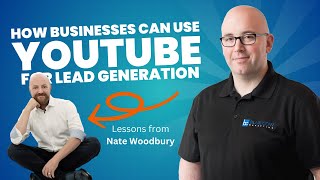
In this interview, host Shaun Whynacht talks with YouTube strategist Nate Woodbury about using YouTube as a lead‑generation channel rather than a pure entertainment platform. Woodbury explains that businesses should focus on search traffic and highly specific, long‑tail question keywords (the "Leaf Strategy") to attract prospects actively looking for expertise. He outlines how to discover those questions using SEMrush’s Keyword Magic Tool, recommends video lengths of 10‑12 minutes for how‑to content, and gives practical production advice—from starting with a phone camera to upgrading to DSLR lighting when feasible. Woodbury stresses the importance of a niche, consistent audience versus a broad, unfocused channel, illustrating the risk with a personal anecdote about a video that attracted the wrong demographic. For upload optimization, he advises using the exact question as the title, aligning on‑video language with that keyword, and crafting a description that serves user experience and calls‑to‑action while avoiding keyword stuffing. Finally, he describes his service offerings: a book ("A Hero’s Guide to Influence on YouTube"), weekly webinars, a done‑for‑you studio service (BeTheHeroStudios.com), and the Leaf Strategy website. The conversation provides a step‑by‑step framework for businesses to turn YouTube into a reliable lead‑generation engine.
Chapters
Nate, thank you so much for joining me on today's episode. I've been looking forward to this because I've been dabbling in YouTube for, for years now. It feels like for years now, and a lot of businesses, professionals I work with have said, you know, I have— I've got YouTube videos online, but nobody really understands how to properly do it, and that's where you come in. Thank you for, for coming on.
Yeah, absolutely happy to be here. The challenge that a lot of business owners have is a lot of the advice that's out there is for a business owner, it's for somebody who wants to turn YouTube into a business. And so if you're going that path, there is a lot of great advice out there, but you actually want to follow a different plan if you have a business outside of YouTube.
Now that's a really interesting point because I think a lot of people don't even think of it that way. So let's kind of define the difference between that. Like, what— like, how can you look at it as YouTube as a business? Is that you generating revenue from YouTube? Is that what you mean?
So you'll still make ad revenue, but that becomes icing on the cake. What's really interesting is YouTube shows us everything in the analytics, and so one thing that you can look at is all the different sources of traffic. There's suggested traffic and browse traffic, where different ways— those are different ways that YouTube can promote you. But there's also search traffic. We use it a lot. I mean, we know about the search engine. Well, if you think about all the different sources of traffic, these are different algorithms backed by AI. So it's, it's, they work really, really well, but these algorithms will try and match your content to the right audience. So if you're an entertaining channel and you want to get as many views as possible and your goal is ad revenue to turn YouTube into a business, then you really need to do the things that are going to appeal to that algorithm. Versus if you're a business, it's really, really valuable to focus on that search because people are searching for your expertise. And instead of just trying to have a video that goes viral and is entertaining and hopefully some of those people will want to become your customers or clients, you can target them specifically. And a comparison that I've, I've made before, you can make $10,000 on a viral type channel if you get a million views, but on a lead generation channel with about 100 views. So whatever path you want to go, if you want to go after the million views or the 100 views, you can get similar results.
That's very interesting. And, you know, I sat in on one of your webinars and we'll get into understanding this as well, but, you know, is it easier for someone who has an existing channel to start to kind of turn it around and do it properly, or should they just really start fresh and go from the ground up? That's, I think, one of those questions that needs to be answered.
Yeah, it's a very important question, and you need to really look at the audience. So if you've got an existing channel, who are the viewers? If you post a video, what type of people are watching that content? And you've got to be really careful of this because the audience can go in a different direction than your target audience of your business. What's great about search is you can find the questions of your target audience, and so when you make content that answers or question, you can naturally build your YouTube channel audience to be the audience of your business. One example I can share of kind of the danger of this— and I produce over 60 different YouTube channels, and this is really the only one that I've made this, this big of a mistake, but it's on my Nate Woodbury channel, and I've since launched a new one actually, and they're both still doing well. But here's what happened on Nate Woodbury, making content about YouTube strategy, about entrepreneurship and whatnot. Then I decided to make a video titled "Why I Hire People in the Philippines." That was a well-liked topic for my audience, but that topic was also very well-liked by people in the Philippines. They loved that I was talking about their country. Many of them wanted me to hire them. So that video actually took off, started getting many tens of thousands of views, eventually hundreds of thousands. So I started making more content about the Philippines when I went there to visit my team You know, I vlogged about it. Well, you know, and eventually that first video got 1.5 million views before I took a step back and I thought, wait a minute, look what's happening here. Now when I post a video about YouTube strategy, my audience doesn't like it. And the algorithm is looking at this interaction saying, you post a video, your audience doesn't like it, don't make content about this anymore. You need to make more Filipino content. And I'm like, oh no. So It's been a really hard journey to wrestle it back and to take down that content that was bringing in the wrong audience. And so I still am launching content on that channel and I am generating leads from it, but I've launched a brand new channel as well just because I want to have a clean channel. And it's in just less than 2 months, that channel is kind of matching the number of views when I post a video on SEO or YouTube SEO or YouTube strategy or whatnot. It's very, very interesting. So hopefully that illustrates a good point for you.
Yeah, so I think what I'm hearing you say is if you have a channel where you're trying to be everything to everybody and on a wide variety of topics, it could actually be hurting you more than actually having a very niche, narrow channel on a specific topic, correct?
Yeah, I mean, if you think about the comparison of an educational channel that's going to generate leads for a business versus an entertaining channel that we just want ad revenue— well, we'll use MrBeast as a great example because he's got 350 million subscribers. He's just following the trends. If he makes a video on a such-and-such challenge and that does well, well then of course he's going to make more of those challenge videos. But if he does something else where it's, um, you know, torture video where he buries himself or whatever, you know, let's say he does a new type of video that doesn't do well That's what he follows is exactly what's doing well. But we're leveraging YouTube differently when we use it for lead generation. We have a business. We have our expertise. We know who our target audience is. We know the people that need our help. And so that's the audience that we need to build and that's it. We don't want to follow the audience because we're not chasing the ad revenue. I mean, we can get 20 views on a video from search and generate a lead from it and generate a sale. So it's a different animal.
Absolutely. Now let's unpack this from the beginning here. You can go ahead and create videos from what you think you should be creating videos on, but your process is different. How do you find out exactly what videos you should be creating? And you touched on this in the webinar that you held, so our listeners don't have the visual side of it, but can you just explain how you go about that initial research to find out what you should be doing?
Absolutely. So the, the webinar you're talking about and the strategy I teach is the Leaf Strategy, and, and I use a tree analogy. So this, this tree analogy, the goal of it is to get you to not focus on the broad topic, that like the trunk of the tree, and and not even narrow it down just a little bit, but to narrow it down a lot, to go out to the leaves on this tree, which represent very, very specific questions. So as you brainstorm ideas, or somebody shares a suggestion, they ask a question, maybe a comment or an email, or a friend, you know, makes a suggestion— these are all great ways to come up with ideas. But just making videos on ideas isn't gonna capture search traffic. What you've got to do to find these leaves is use keyword research tools to find out what are the questions my audience is asking, what spelling, what wording are they using consistently every single month. And this is gonna sound unusual, but the more words in the question, the better. So what I mean, in the old world of website SEO a keyword means like one word, two words, three-word phrase, and you would do all this SEO work to try and rank for that. Well, what I found is if you look at your, your tree, which is your, your niche or your niche of topics, there's thousands of questions that have 8 words or 9 words or 10 words. And what it does when you find a question that's that specific is it allows you to answer and give a much more applicable answer. Like, you're giving way more valuable to— value to them. But here's the other thing: it basically guarantees that you're going to rank at the top of YouTube and Google. So you do this keyword research, you find these questions that are 8 words or more to begin with, and you start to rank at the top of YouTube search immediately and you start to get traffic and you start to build authority in your space with your exact target audience. You start to generate leads and over time as your authority and your momentum increases, you can tone it back, meaning you can go after questions maybe that have 6 words in them or that have a higher search volume and eventually you just dominate the whole tree. You dominate your entire space.
Now, what are some of these tools that you'd recommend for doing that research?
So really, there's, there's one main tool that I use. It's called the Keyword Magic Tool. The website is semrush.com. I do have an affiliate link that will give you a free trial, and that is herokeywordtool.com. The, the reason that I like this tool, uh, and, and if you find another tool, there are some other premium tools out there that might have these features, but Answer the Public is not one of them. Uh, vidIQ is not one of them. TubeBuddy is not one of them. Um, that what the features you need are is can you, uh, differentiate or separate the search results between questions and not questions. So that's important. You need— questions are so helpful. And then can you filter by word count? And does it give you a a wide variety of results. Does the tool actually work to give you a lot of results? So it's, it's not very complicated what I'm looking for, but a lot of the tools aren't built that way to give you like 8-word phrases or 9-word, you know. So that's, that's what the Keyword Magic Tool does. And the crazy thing is, is if we rewind back 6, 7 years ago, maybe 8 years ago, I was using the same strategy, but that tool did not exist. And so I had to jump back and forth to be able to— like, I would use Google's tool and come over to this other tool like Keyword Magic or Keyword Explorer or something like that. And combination of a few tools, it took me a lot of time and effort. It was really hard to replicate it, like to teach other people how to do it. But then I was at an event, there was an exhibitor there, SEMrush, and they said, yeah, we have a new tool in beta that you should probably check out, because I told them what I was doing. I've used that tool ever since. It was a game changer. It makes the work really easy.
Sounds like it. Now, you get your list of questions that you're going to create videos for, you go into produce them. Is there an ideal length of videos? Let's just say if you want to be the expert in a certain field and you're not doing it for entertainment?
Yeah. So longer is better with the caveat that you've got to keep their attention. You want them to watch as long as possible. And so it needs to be interesting. We found the sweet spot to be about 10 to 12 minutes, um, because when you're going really, really specific, then 10 minutes is a good amount of time to, to really give value and answer that question. And it's enough time to build a relationship with them in that video. Uh, we could go into detail if you'd want on Shorts. I'd say stay away from Shorts. They're a waste of time for this approach. And that's going to sound crazy,. But if you're answering one of these questions and after 6 or 7 minutes you feel like I've delivered a really solid answer but I don't have anything more, well then end it there. Like end it at 6 or 7. And it will be very common that you'll have a video that will go 15, 18 minutes and that's fine too if you're really keeping their attention. And just one side comment about the Shorts versus videos and the craze of TikTok and real short content on Instagram. When YouTube separated Shorts from videos, videos actually have been trending longer and longer. If you go look, we'll just use MrBeast again. If you go look at the average length of his videos today and compare that to the average length of his videos 3 years ago, they have doubled in length. And that's something that I've seen uniform across all the channels that I follow, in fact. So it's pretty interesting with the how-to content. We don't need to go 30 or 40 minutes, which is, which is actually quite popular on YouTube in the entertaining side. But yeah, hopefully that, that gave you some good guidelines there.
Absolutely. Now when it comes to production, shooting and stuff like that, any tips around what you should do or what you shouldn't do from a production standpoint?
Yeah, so we've heard the expression that done is better than perfect. So whatever you can Whatever is realistic for you to get started with, even the camera that you have on your phone, it's an amazing, amazing camera. The lighting, the color balance, the zoom capabilities, right? It's HD, it's 4K, whatever. I don't really need to worry about 4K because YouTube doesn't, but start there. Now, you know, people will ask, well, what do I— do I need to worry about lighting? Do I need to worry about audio? Well, yeah. Like face a window, make sure the audio is clear, make sure you're close enough to the microphone, or use a lav if you need to. What about a high-end camera? What about a DSLR or something like that, or mirrorless? We use those when we film. You know, I've got a— this house I'm in right now is not my home, this is my filming studio. It's— and when clients come here, we use DSLR camera because we love to blur the background. It's an awesome look where you can just have the, the person on camera, the subject, be, be crisp and clear. We light them to look like they're in a portrait, so it's, it's just gorgeous, and the background is, is again blurred. But if you were to compare a video that was filmed, just say, on your iPhone versus the fancy setup, like, which one's going to perform better? Maybe the fancy one will perform a little bit better But, but to have that hold you back and say, well, I can't do these if they're not going to be totally professional— it's better to get started and start with what you've got, and you'll start getting results, you'll start generating leads. And down the road, when it makes sense to upgrade, then go for it.
Now, you mentioned in your, your webinar, and this stood out to me, was the fact when you talked about these filming houses was that, you know, especially if you're a professional and you're doing videos for your business, you don't want to be sitting at your desk, right? You mentioned having it in a spot that feels like you're inviting them into your home or into a personal space that way. What's the reason behind that?
Yeah, well, if we think about the viewer's perspective, if we're targeting search traffic, they naturally have their guard up if they think that people are going to sell them something because they just they have a question, they want to know the answer, right? So it's like, what's in it for me? They type in their question, and if they find a business or they find a promo video, they're not interested. They want the answer. So think about the opposite then. If they found you on video and there's your kitchen in the background and you're not saying, hey, this is who I am, this is my company, this is what I sell, you just say, hey, this is the question we're going to answer today, or, you know, today we're going to talk about blank, and it's exactly what they want. They're going to be at ease, they're going to feel comfortable, they're not going to feel sold to because we're not selling them. We just build that relationship because we're giving them what they want. At the end of the video, we'll give them a free gift, right? And, and to get that free gift, go to this link. They know that when they go to your website, they're going to see your logo, they're going to see your brand, they're going to see promo videos They expect to see that, and yet they're choosing to go there. And so that, that's the reason we do that. It's kind of like a two-step approach. Let's build a relationship first before we talk business.
Now you got your video produced, you're going to upload it to YouTube. There's different things you need to consider, obviously thumbnails, uh, descriptions, headlines, um, end cards, like all those type of things. How important— like, I guess, what's the most important thing to focus on once you've uploaded it and now it's ready to go through the steps before you publish.
So the— I'll say the title, but I'll back it up because it's different than, than the strategy that MrBeast would use. He's really good at making compelling titles, but what we're doing so that we can dominate search— and, and let me just say something on the side— dominating search means when people type in these questions or they type in your expertise, your videos rank at the top. Like, that's what this strategy ensures. That's the result. So if that's our goal, then we need to make sure that we do this keyword research to find these, these long specific questions. So when we're uploading the video to YouTube, we put that exact question as the title. And when we film the video, we're naturally going to say all the right things, use all the keywords, right, all the related categories and phrases to that topic, YouTube will automatically transcribe that when we upload the video. So having the title and then the content in alignment, that's the biggest part of SEO. You could leave the description blank, you could leave the keyword field blank, you could not touch anything else, and your video would rank at the top of YouTube. Now, do I recommend having your description blank? No, Some things will just help and will speed it up. The keyword fields, YouTube's admitted, yeah, we don't really pay attention to that anymore because of all these other things and their AI tools, their AI algorithms. So what I use a description for is the user experience. If somebody is going to click on the See More so that they can expand the description, whether on their computer or mobile device, if they're going to go through that effort, because it's kind of hard to find, you have to know, like, where's the description? Oh, there's a little dot there. There's a little arrow button. What are they looking for right now? You might have given them a call to action. Hey, here's my free gift. And so have that front and center. But they might be looking for more information about the, the person in the video, about you, right? So have a, have a bio paragraph in there. Have links to other resources on your website. And then there are strategic things that you can put in there like chapters. Chapters are like timestamped parts of your video and that adds functionality to the video. So we take care of those things. There's obviously strategy with that. I put that big leaf title, that big question in the keyword field and I put some of the related keywords even though it probably doesn't make a difference. Like it can't hurt. What can hurt though is if you keyword stuff and put a lot of unrelated stuff that you hope will get you to rank for, you'll get penalized for that. So yeah, most important thing is put— do the strategy first, do the SEO first, build your video around that SEO work, and then when you put it on YouTube, your, your SEO work is done.
So Nate, let's, let's talk about how you help, help clients. I guess anybody listening to this, it's like, hey, you know, this sounds great. I don't even know how to get started with this keyword research. Is that something that people can hire you to help them with? Um, you know, obviously you, you have people come into your studios if they're, they're local or they can fly in, but, you know, anyone listening around the world, can they hire you or have you have a course on this? Like, how do you, how do you help people?
That's what I'm asking. Yeah, actually several different ways. So I published a lot of this material on YouTube, and so people will learn it from there. I've published a book, it's called A Hero's Guide to Influence on YouTube, and so I This is on Amazon, and I teach my leaf strategy there and how to do this keyword research. But then when people are looking for a done-for-you approach, the service that I offer— I've got— it's me and a team of 35 people, and my role is strategy. So I do the keyword research with my clients. I help them not just pick these, these questions, but when we use this tree analogy, we compare one branch to another and we look at, okay, look at all the questions that are broken down in this category, you know, on this branch, compare it to another one, it's like, wow, one of them is definitely way more my target audience. So I really help them hone in strategically of like, what area do we want to dominate? What's the competition look like? How long is it going to take us to dominate that branch? Meaning some branches might have 5 leaves on it, some branches might have 50 leaves on it. And so we— that's, that's my role, is working out the strategy and the game plan and seeing what's realistic, what, what What's your current business revenue and what do we think we can increase it to, you know, with, with this strategy? And then at my filming houses in Utah and Florida, clients will travel and we'll do all the filming, we do all the editing, we do the thumbnails, and we launch everything for our clients. So, but, but I do have, like, if you want to do DIY, if you want it done for you, we want to work with you with, with what your goals are.
Excellent. And people can find you at BeTheHeroStudios.com.
It's the best way to do it. Yeah. And, and I do a webinar every week, um, and so that might be a place where we could dive into the LEAF strategy. It's about an hour long and you can go to TheLEAFStrategy.com.
That's, that'd be a good place to start. Perfect. Nate, thank you so much for sharing all this, uh, with us today. Uh, this is, this has been great.
Yeah, you're very welcome.
More from Shaun


Julie Vanexan recognizes Shaun Whynacht from Blue Cow Marketing at the Nova Scotia House of Assembly








