How To Increase The Value In Your Business | How to increase the value of your business and product
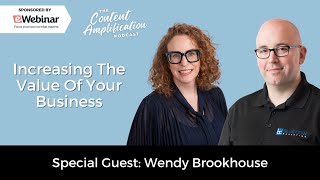
Wendy Brookhouse explains how to build a business that runs without you. The shift from rainmaker to architect, bundling products to simplify sales, and reducing owner reliance can double a company's sale price. Her 10-week BVA program uses surveys and group exercises to measure progress.
Chapters
Okay, so today we're going to be talking about your business and how to increase the value of it, whether you're going to be looking to sell it, which is obviously the best thing. You want to make more money out of that sale. But also, if you're planning to just keep running your business, it's great to have a more valuable business. And Wendy Brookhouse is here from the Business Value Amplifier program run by Blackstar Wealth. Wendy, thank you so much for joining me today.
I am so excited to to be here. It's very timely, Shaun, because the CFIB just did a report last year, late last year, and they surveyed a whole bunch of small and medium-sized businesses, and in the next 10 years, 76% of them want to sell their business.
Wow, there's going to be a lot of movement happening, and, and obviously you're going to want to get the most money out of that business. And, and so that's what we're going to talk about. We're going to talk about some ideas, we're going to talk about the program, that you have. And by the end of this, anyone that is in that mindset will have some ideas and also know how you can help them. So, let's kind of start at the base about what is a business. Let's talk about that. And let's, you know, most people know like, hey, I have a business. But what in essence is the true definition of a business in your mind?
Well, if you think of a business, it's a little bit like a box, right? And you know, clients are coming into the box. You're doing your magic inside the box and out of the end of the box comes cash in the form of profits, right? So obviously, the more clients we can have coming in and then the better that we can do the work in the box, the more profit there will be. And so when we look at a valuable business, Shaun, a valuable business is one who's mastered how the internal workings of that box work in such a way that they're just shooting out tons of cash. And so that's why it's important to work on that piece and look at your business through that lens so that you're making the most profit possible, which means more money in your jeans or a bigger price if you sell.
That makes complete sense. Now, as somebody that's looking to acquire a business, what are they looking for out of that business?
If I were going to acquire a business, what you want is someone that can work without the current owner to some degree, right? See, if you think about that from a perspective of a buyer, a business that you can come in and runs itself so that black box doesn't need the current owner to chew out that money. Well, of course it's worth more. Or you have to figure out how to get the current owner to stay on and continue to run the business. It just adds a lot of complexity. So if you can build a business that is self-managing to some degree, it makes a big difference on the value. But let's put it back to the point of view of, well, what if I don't want to sell? Why do I care if I'm always— if I can have a self-managed company? If you have a self-managed company, you can spend more time in your zone of genius where you have the most fun, where you are the most excellent at what you do, and you'll have more freedom because you can walk away for a week, 2 weeks, take that vacation and not check in, not check your emails every day because that business can function without you. So it's not only profit that increases but freedom that increases.
You know, and another point to that, and this is kind of something that I'm thinking of too, is not only just your vacation, but there are days where you're just, you're just not on, right? And especially if you're, you know, that creative kind of ideas person, maybe you just want to have a day where you don't have to think about the business, just to recharge. And I think that self-managed business is going to be allowing you to do that.
It also gives you space to work on the business. We hear that all the time, Shaun, but if we're in the day-to-day weeds all the time. It's so hard to pull yourself out and give yourself that space you need to think about your business and look at it with a different lens and look forward as opposed— and when I say forward, you know, not to what I have to do next week, but where do I want my business to go in the next few years? And what should I be doing from a product or service perspective next? And if you don't have space to do those thinking, it's really hard to come up and be creative, just like you said.
Now, your program, The Business Value Amplifier, looks at all the different kind of elements of this to help you get more value out of it. You know, if you've got a business where, you know, you've got a couple employees, you're obviously part of that. How do you like— what are some of the things you should start to think about to be like, hey, maybe there's room for improvement here, or maybe I'm too close to this, or I'm too attached to the business?
That's a great, great question. There's a couple of things there is again, What— where do you do the best, right? And so, a lot of times when we start in our business as well, we're the rainmaker, Shaun. We're getting all the money. We're doing all the sales. We're bringing all the money in. And that's fantastic up to a certain point because what's going to happen is you're going to hit your ceiling of complexity, if you will. A Dan Sullivan saying. But it's more like this is the business grows fast and then it plateaus because it's just about you and the sales that you do. And so, there's a number of things you can do to actually start bringing yourself more into an architect role where you're focused on marketing funnels, building the business versus each sale. And so, you know, bring someone to every sales call. Bring one of your employees because they can— then you can naturally maybe close the sale, but then pass that off to someone now the client has already met and you've already imbued them with, hey, they're going to look after you. They understand what you're looking for. Let's do it. The other thing is, and this may be a little counterintuitive, but sell less stuff, right? Because if there's more and more stuff to sell, it's harder for someone other than yourself to understand, oh, well, I can take that and add this and do this and, you know, pull it all together. You know, in the course we're running now, one of the guys says, I have all the ingredients to make a cake. And what I'd like to do is actually have 3 cake recipes instead of all the ingredients on the shelf. And so if you think of it from that perspective, how can you bundle your stuff and have it only as one product versus a whole bunch of options?
And I would think that, you know, if you find it complex to explain it to somebody else that's on your team that you're trying to hand it off, think of how complicated it would be for a potential client to understand what it is that you do.
Absolutely. We kind of have three things that we look at or that we recommend that you evaluate your products by. And that is, are they teachable? Are they valuable and are they scalable? Right? So, let's think about teachable for a second, Shaun. There's a couple elements there. One, you have to be able to teach someone how to sell it. And then, you need to be able to teach someone how to deliver it. And so, knowing that you've got that so crystal clear and mapped out, then it makes it easier also to bring someone else in behind you to do the work.
That makes sense.
Yeah, it's so funny about business. So much of it isn't rocket science. Sometimes, it's just in how it's presented and packaged and then you go, "Oh, I get it now." Right? And it gives you a new lens to look at your business through.
And I think some of this complexity is self-made. Kind of when you think, "Oh, I have to be different." And in that different-making process, you're like, you're overcomplicating the stuff that's there.
Right. And where you want to think about that is, are you making a better mousetrap or are you, you know, bringing in better people, right? Like, so the way I think of it is there's a lot, a lot of people who are doing things that you do and things that I do, Shaun. But the way we do it, and if we are clear about here's how we do it, here's our why we're doing it, and here's the how, that will attract the right client if we're talking the right language. So that's the— we have good marketing will be helpful as well.
Now, I'm in your program. I'm in this cohort of the program. I'm one of those I guess unicorns that are in the program that aren't looking to sell. But what I've found going through this is that there's so much gold in here to just improve my processes. I'm a solo business operator, so I don't have a team, so to speak, that way. But this has allowed me to gain clarity and start to position for how do I make that first hire, then the second hire, and actually build a more efficient business. That's in there. What are some of the other elements that, that, you know, people can really get immense value out of going through this program?
I think it's the lens. You know, I know that I'm taking it up to the 30,000-foot view a little bit, Shaun, but as the person who's sitting there and listening to everyone as they go through the lessons, have a conversation, and, and all the exercises, I'm seeing that the lens that people are looking at their business through is shifting. And what's that doing is it's changing everything for that business owner. You know, when we look at, you know, people who have no employees, there's a couple of them on the, on the course, but they now are looking at, oh, what, what do I really want my next person to do? And it's changing even what they may have in the past tried to— when they bring people on, well, just do this. Well, just— now they're like, oh, okay, I'm gonna get them to do XYZ because that's going to allow me to do more of what I really, really am good at, as opposed to what I think I should do versus what I do. So, I think it's about the lens that you're looking at your business through and looking at it in such different ways. The exercises I find are so clear. Let's just look at one, for example, when we were looking at, hey, looking at your growth potential as a business. So, what are your current product offerings? Who are they offered to? So, we did that analysis. And then the next part we said is, well, what, what, what other products could you be offering? And then we analyzed, are those things going from new products to existing customers, or are you selling your same products to new customers? And then the big one that is the riskiest place of all is if you have a new product with new customers. And so when you analyze where you want to go and what you want to do, you can actually start to see What kind of risk each of those potential offerings has and what is the low-hanging fruit? You know, I think as business owners, sometimes we are very attracted to shiny blingy things. And I think the shiny blingy things are up in that quadrant of new customer, new product, because it's sexy, it's new, it's, uh, oh my God, this is the next best thing versus what if we mine what we already have and make it better and bigger.
And I think a lot of times, especially if you've got many of those different ingredients like you referenced there, just bundling them together makes a new cake. So, it helps you identify that. And I mean, the software that we use in the program does an amazing job of making these exercises and these processes very easy to visualize and get pulled out of you, which I love.
Yeah, and I think what it does too is we, we have a saying, my husband and I, in the business, uh, it makes the little pads really close together, right? So we can actually see very clearly, oh, here's the next step, oh, here's the next step. It's not a big jump, it's just a nice big, a nice little exercise, you know, a nice little mini step away to move forward, you know. And we'll go back to hiring people, like even understanding, oh listen, I have 4 types of delegation and what am I going to delegate and how am I, what level of delegation am I going to employ and how to do that. So, it's very all-inclusive in the sense that it covers a lot of the different factors. But really, a lot of it comes down to mindset.
What is it that you love about this program that you've put together?
What I love about it is that again, starting to look at your business as an asset, right? So you're— and many people, you know, your business is your baby and you started it, you fed it, it's growing and you love it. And you have a huge emotional connection. And that actually is great. And then if we can also apply the lens of, hey, this might be my biggest asset. This might be the thing that's going to fund my retirement. Or it's going to be something that is really important to me. So how do we make it the most valuable thing possible? Because that's going to affect— it has ripples down the road onto your life. And so watching people have epiphany and epiphany light bulb moments every week and then go away and action it has been so rewarding to see these things happening because I know it's going to have great effects, not just in their business, but in their lives.
Mm-hmm. So how long is the program? Let's talk about how it's structured and what's, what's involved in it.
Okay, so it's a 10-week program. We start out with a one-on-one. So it's a very customized session that we do. And in that session, we— you will have done a survey ahead of time. We're actually going to give people an access to that survey ahead now. But what we do is we look at that survey and we, we get a score out of 100 of how your business, how sellable or how valuable your business is.. But if you've done all the numbers, we also have a gauge of here's the initial value that we think your business is. And we also have, hey, if you can get your score to this, this is how valuable your business can be. So there's your carrot, right? We do all of that in the first session. We then have 8 group sessions and we every week we unlock the module. You have some, some like theory to learn and then you have, and that's all delivered in video content, nice short bursts of stuff. It's It's not chapters of reading to do. It's not onerous. It's like 20 minutes maybe. And then, you have the exercises. And what you put into those exercises is what you get out of those exercises. We gather as a group for an hour and we work through those pieces. And I find at a certain point, one, the participants don't feel alone because now they're with a group of people who are on the same journey as them. They're able to teach each other stuff because not everybody's at the same spot on the journey. So they may have tried something already and they can share that wisdom and that is invaluable. We finalize it all on week 10 with another one-on-one session with me where we wrap things up. We also do a little scenario analysis because what we want to do in that last call is actually start to prioritize which activities or which, which actions are you going to take first that will have the biggest impact. So, we start figuring that out for them.
Excellent! I know going through the program, I can vouch for the method of delivering this content and unlocking it every week. I mean, the videos are very concise. They're very to the point and very easy to consume. And the exercises make it a lot easier too. So, coming into those weekly sessions, knowing that everybody's on the same page and you really realize that Hey, you know what? These other businesses are having the same similar questions that I have. So again, you're not alone in this. And, you know, any other online course that anyone has done, you're kind of on your own with it. So it's that accountability piece, which is phenomenal.
There's a couple other pieces inside the course that I think are absolutely phenomenal and invaluable, or in the MasterCard world, priceless. And that is the net promoter score that you are actually able to execute right from the platform. Platform. Shaun, you did a marvelous job on yours. You, you know, you took all the information, you sent out the link, but then you also had it customized that everybody got a thank you gift for filling out the thing. And there was only 2 questions on that, that, on that quiz for every client that you sent it out to. And one was, would you promote this business to someone else? And the second one was, how reliant are you on the business owner for the work you do. And so, that gives everybody some great baselines from which to work on that side. And if you have employees, there's also an employee satisfaction survey that can give you great anonymized data to understand how your workforce is doing.
And I love that. I love the fact that not only is it a theory-based tool but now it's an outward-facing tool that you can send out to your clients. You don't have to go find another system to deliver that. And for me, that exercise alone, I think, was kind of like the eye-opener for me because, you know, for however many years, 20-some years of, or 20-plus, I'm not going to date it, but of being an entrepreneur, I was priding myself on knowing my clients, right? Wanted to know as much about them and build that relationship. And the NPS score of recommending you was great, but there was that other, I think it was reliance score or something like this. It had a number and I was like, ooh, I was in the red. Because almost everybody that answered it, like, knew me. And then as the program went on, I was like, how do I remove myself? Because if I, if I disappeared or went for 3 weeks— the fact that I don't have employees, but, you know, if that was the case, people just wouldn't want to work with anyone else. Right. And that was like, wow, this is a huge eye-opener.
That's where we talked about the Rainmaker moving to the Architect. Yes. And that gives you that baseline score. So now you have the score and can over time continue to administer that same question and see how you're doing.
And there's stats in there about the amount that businesses actually get for selling their business from the ones that are very highly reliant on the owner knowing their clients to ones that know nothing about their clients making so much more.
It's almost double that the offers that are coming in for those types of businesses that have a rainmaker versus an architect, the price is double. So, if that doesn't— that itself is a nice incentive to know that you've doubled the value of your business by building infrastructure that doesn't require you. Absolutely.
So, let's give Joe two pieces of information here. Let's give them information about where to find out about the program, when the next sessions are starting. That is at blackstarwealth.com/bva. Business Value Amplifier. But also, you mentioned that this tool, this, this evaluator that people can get right away.
Absolutely. And that's at blackstarwealth.com/value. It is only a 10-minute questionnaire, but you'll get so much out of it. And once you've done that questionnaire, I will reach out to actually do like a 30-minute review with you to see, just to show you some of the things that you could be working on within that, within your score. And the next cohort, Shaun, is starting in September, so we're encouraging people to sign up now so that we can lock down your place because spaces are limited. We're going to run small cohorts on this. This will not be a 25-person class. We will keep it under 15 people for sure.
Excellent. I can say without a doubt this, this program will give you immense value, far more than what you invest in the program financially.
Awesome. Thank you for having me on the show, Shaun, because I, I feel very strongly that this is something that people need to do, especially if they're in that 76% that want to sell their business in the next 10 years. I feel like it's— if we look at the housing market, it will not be a seller's market if you don't have the best house on the block.
Absolutely. Thank you so much. Thank you.
More from Shaun


Julie Vanexan recognizes Shaun Whynacht from Blue Cow Marketing at the Nova Scotia House of Assembly








