Inside Podcasting Tips with Jeremy Slate
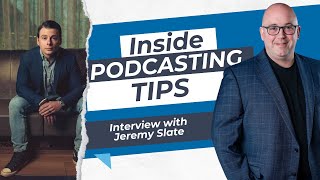
In this interview, host Shaun Whynacht talks with Jeremy Slate, founder of Command Your Brand, about practical podcasting strategies. Jeremy shares his journey from a Roman Empire master’s degree to podcasting in 2014, emphasizing the shift from a small podcast ecosystem to today’s crowded market. He stresses the importance of deeply niching a show, aligning it with a business model, and focusing on the end listener. Episode length should be driven by audience preferences, with polls and surveys guiding decisions. Jeremy explains the growing role of YouTube as a discovery engine, describing how to publish video podcasts, set up playlists, and leverage live streaming for better algorithmic favor. He outlines a modest production setup—Shure SM7B, Focusrite 2i2, Cloudlifter, three‑point lighting, and Krisp.ai for noise removal—showing that high‑quality audio/video is affordable. For guest appearances, he advises targeting the right niche, crafting concise outreach messages, and providing actionable takeaways and a follow‑up tool (e.g., a white‑paper). Command Your Brand originally produced podcasts but now specializes in helping CEOs/founders become compelling guests and matching hosts with guests. Promotion tactics include video SEO (thumbnails, titles under 70 characters), using AI tools like Taj.ai, vidIQ, and vidyo.ai for titles, tags, and short‑form clips, platform‑specific content formatting, YouTube’s promotion tab, and retargeting ads on X. Finally, Jeremy offers a free 7‑page guide on commandyourempire.com covering podcast PR, new media, and actionable resources.
Chapters
Jeremy, thank you so much for being on the show today. I'm excited to talk about podcasts. You're the first guest that we've had that we're actually focusing on podcasts. So welcome.
Hey man, thanks for having me. It's kind of like Inception. It's a podcast about podcasts.
That's right. That's right. Now you, you know, you've been in the podcast world for several years now. Tell us a little bit about your background and where you're at right now.
Sure. So believe it or not, I have my master's in the Roman Empire. So, I do think about the Roman Empire every single day. But I got out of school in 2012, ended up teaching at a Catholic school for a little bit, got really disenchanted with the idea of teaching. And I went through a number of different entrepreneurial things before I arrived at podcasting in 2014. And it's pretty interesting, man. Right out of the gate, I had 10,000 listens to the show. But podcasting was also a lot smaller. There were like 250,000 shows at that point. And there's like 3.5 million now. So it is a dramatic difference. So we had a lot of motion right out of the gate and people started asking for help and it led to me starting my company Command Your Brand in 2016. So we've been in this space for a really long time trying to help podcasters and help guests and then just make better content out there.
Now you mentioned you had this fortunate scenario where you had a great amount of listeners right out of the gate. Is that something that people can expect now or is it, do they have to do something specific to really get a good kickstart? How would you go about that?
[Speaker] So the game has changed dramatically, 'cause the thing I will say is, as I said, the pool was a lot smaller, and it also functioned a lot differently too. iTunes New and Noteworthy isn't as much of a thing now, but it was like a really big thing in 2012 to like 2017, and if you could get enough motion right out of the gate, meaning like enough subscribes and downloads, you would get featured for 8 weeks in New and Noteworthy. So it was like this really great way to get new audience. That isn't really as much of a thing now as it was then. And there's also just a lot more shows. So what I would say that the playbook has changed a lot. The first thing you have to do is really niche down. You have to really be deep in a topic and be willing to be in this for a year or more. I think a lot of people aren't willing to be in it long enough to actually see success. And they try to go too broad, right? Everybody tries to be Joe Rogan and have this show where they sit and just talk about broad topics with their friends, and it doesn't really have benefit to anyone. Like, if you're going to start and you don't have a huge audience, you have to start with something that has a benefit to the end listener.
That makes complete sense, right? So with that, I mean, if somebody is looking to start and, you know, they're going through that process, Um, what would you tell them they need to do? Obviously they, they pick the niche and then how do they figure out what kind of format would work best? Is there a kind of a thought process behind that?
So it depends cuz the, the thing I explain to people is I think oftentimes they try to start a podcast as a business and I think really a podcast should be something that supports your business. I, I think to think you're gonna have the show and get to, you know, the top 1/2 of 1% and sell ads and make all this money off advertising, it's just, it's not how it works for most people. So I think when you look at that, you have to realize where does my podcast fit in my business model? And it's going to have different places for different people. There's some people that will interview their best prospects, right? People they would want to have as clients. And that's a really great way to have a, have a show for them. Trader Joe's does a really great podcast where they actually talk about products and how to get them and what things are in their products and stuff like that. So, and that's not really interview-based, right? It's just a conversation about what we're doing. It could also be, um, like one of my favorite podcasts is a history podcast. It's called Hardcore History. And they take these really deep, broad history topics and he'll do like 2 episodes a year cuz these things are like anywhere from 4 to 8 hours. So it's a really different flow. So to me, if you're gonna find something that benefits your business, you have to number one, think, is this about my customer experience, about my employee experience? And what positioning am I trying to achieve? And I think once you get those things out of the way, you can take a look at your format. I think for most people, interviews are gonna be the right way to go because something that is more, you know, driven by an individual host, it takes a lot of work, you know, writing scripts, putting together structure, you know, there's a lot of editing and things like that. So figure out how it fits in your business, and then when you look at that, you have to say, what do I want somebody to learn from the content I'm creating? 'Cause very often, people don't have the end listener in mind. They have themselves in mind. And when you can say, what do I want somebody to walk away with from the show, you're gonna be in a much, much better position. Mm-hmm.
Now what about length? Is there a guide around that?
I've been back and forth on this because I had read a study a number of years ago that the perfect length is like 29 minutes because it's the average commute that somebody has in a car. And 2020 kind of blew that entire thing up because the podcasting world and listening habits changed dramatically because people maybe they work from home now since then and they're not going back, or maybe people have changed jobs. What I have found is the length is whatever works for you and the people listening to you. My show, and it really depends on the episode, right? If I do a really deep topic, I just did one that was an hour and a half. My typical episode is 35 to 45 minutes. It's not intentionally that way. We just kind of get to the point where it's like we've covered what we need to cover and that's the end of it. For you, the length is whatever's good for the person listening to you and your audience. You know, you can— one of my favorite tools, um, on YouTube is to use the community tab and doing different polls to see like what people like. I find that image polls work better than text polls cuz they kind of take up the whole page on a mobile device. And you can really ask your audience, you know, do you like this length? Do you like that length? Do you like this topic? Do you like that topic? Surveys are really the key to, to having great statistics, but a lot of people Start with what do I want rather than what do the people that should be listening to me want. Mm-hmm.
Now you just mentioned YouTube. Now people listening might be like, well, that's, that's a video format. YouTube now has podcasting abilities in there. Let's talk about that so people can understand what that means.
So it depends on who you're hosting with. So a podcast host is where you put your files, right? It's a place where you put it and then you connect that to Apple Podcasts and Spotify and all these different places. So. The RSS connection is an audio RSS connection where it just pushes it in and it's a static image with audio behind it, which isn't always great for user experience for a viewer on YouTube. But the thing I would say is podcasting is changing a lot and it's really, it's not just audio podcasts now. It's what I like to call new media. So it's this convergence of platforms like YouTube and Rumble and Odyssey and audio podcasts. And it's something really brand new. And I think when you think about YouTube, it's the number 2 search engine in the world. And if you're not, even if it's not your main platform, not being on YouTube and not having the basics in, you're really hurting yourself because discoverability in an audio show, as you mentioned, there's 3.5 million shows out there depending on what platform you ask. It's really hard to get found as an audio show. Its discoverability is actually a lot easier as a video show. You need to be on YouTube for discoverability, but I think people really get tied down in production quality and, and those things like that. Your production quality should be good enough that it has the right aesthetic. Audio quality is vital because if somebody can't listen to you and it's like nails on a chalkboard, then it's over. But it really is about discoverability and giving people the ability to find you on one of the most powerful search engines out there.
Yeah, absolutely. I mean, the visual element. I prefer to watch that, you know, versus just—
I listen on the Apple Podcasts app, man, and I have forever, and people always give me a hard time about it. They're like, how do you do that? The user experience is terrible. And I'm like, it's just always been on my phone.
Yeah, for sure. Now, are there certain platforms out there for hosting your podcast that would allow the video to automatically feed into YouTube, or do you have to download it and upload it to YouTube?
So that I don't know because of the way we've done it. Typically what we do is we build a separate episode for YouTube and we just upload that as videos. We've been live streaming them recently because we found out that YouTube likes things that are live streamed as comparison to things that are just done as premieres or uploaded. They tend to favor things that are live streamed because YouTube's goal is to be on your television. That's what they really want. So they want things that function like TV. I do know Spotify a number of years ago bought Anchor and now it's called Spotify for Podcasters. You can upload video episodes through Spotify and do them that way. I don't know what other platforms have that capability right now. I, I, I am aware that that one does. Okay.
So if you're uploading your video to YouTube, let's walk through your process here. Just upload it as a, as a video. Um, or is there anything special you have to do to indicate that it's a podcast?
There's a, when you have a playlist, you're gonna indicate that that playlist is a podcast. It's literally just a little checkbox when you make the podcast. So, You're going to upload your video. You can't make a playlist until a video is uploaded. Weird thing, but for, for your actual studio.youtube.com account, that's how it works. So you upload your video first. Once your video is published, you can create a playlist, add it to the playlist. If you go in and edit the playlist, you can then signify that that playlist is a podcast. Now, when this feature first came out about a year and a half ago, you could only have one playlist on your podcast, your channel. You can now have multiple podcasts on a channel. You can designate multiple playlists as a podcast.
Oh, excellent. Yeah, definitely worth checking out. Now let's talk a little bit about kind of equipment quality, production quality. Now, if you're watching the video of us talking, obviously your studio setup's better than the room I'm just in, which is just in my home.
I need a new camera though, man. This is just the webcam I'm using here.
So it looks like you got a Shure SM58 or something microphone there.
It's an SM7B.
7. Okay. Um, what I guess, what do you, what do you have for a setup? What do people need, uh, in your opinion?
So I have a really basic setup and it works for me. Um, I know there's people that may do it other ways, you know, maybe they want like a really nice mixer or something like that. I've been very basic forever. I use a, um, I can take my ex— exclude my, excuse my mess here. Um, I can take my camera off. Here. So I use a Focusrite 2i2 interface. Yep. And that interface then runs into what's called a Cloudlifter. I can't really pick that up because it's on the other side of the room, because this mic here doesn't have enough decibels out of the box. So if you get a Cloudlifter, it adds more power to it. So you can basically— otherwise you pick up a lot of room noise and things like that. So the Focusrite 2i2 is an interface that takes and runs this signal to your computer signal, because otherwise a mic like this does not hook directly to your computer. It needs a different piece to do that. So I have the Focusrite, I have the Cloudlifter, I run it with this mic. I also use an app in the background as well, and it's called Crisp.ai. It's a background sound filter, and it gets rid of like any noises maybe if I'm not feeling well and I'm breathing heavy that day, it's going to filter it out. So it handles a lot of background noise. It's also got a really great transcription feature, which I use for a lot of different stuff. In terms of like what I'm using for lighting, I use a 3-light setup. So I have one light there, one light there, and then one light behind me for a headlight. Because what happens is it creates distance between you and the wall behind you. Otherwise you build in what you blend in with the wall. And on days I wear a hat like I am today, I have a small light in the middle that isn't always on and that creates light directly on your face so you don't have a crazy hat shadow. So it's not nuts, but this kit for me, it's under— this mic is pretty expensive. It's like a $400 mic. So my kit's probably around $700, but it creates a really good consistent sound and they're always set up in the studio space. I don't really have to like change stuff.
Excellent. So you, this Krisp.ai, that's running right now. So the audio is running right now. We're hearing. Okay.
Yeah. Yeah. So the original version was, the original version was terrible. Um, and it would turn out, 'cause do you remember, I'm dating myself now, but you may remember this. Do you remember LimeWire?
Yep.
Do you remember how you'd like download a file and it sounded like tin cans banging around?
That's right. Yeah.
So, so the original version of Krisp.ai sounded like that. Then they really worked on their technology over the last few years and about 2 years ago it got outstanding. And I use it on every single interview and it does not affect audio quality. It just backs out, blocks out everything. Because even in my studio space, it's my basement that I basically built into a nice studio space, but it is a basement. So we have a dehumidifier running at all times, different fans running and stuff like that, and you don't pick up any of that.
No, I mean, your audio sounds great. The video looks amazing. Now, we started talking about, have you want to host your own show, create your own show? But when it comes to podcasting and being on other shows, what's some guidance around that as to how to show up as a guest?
Well, I'd say the first thing, once again, this goes back to a lot of what we were talking about, about hosting a show. It's about niches. I think so often people, it's so funny because the balance you have to talk about, and I put it to people like this, is it about vanity, your own vanity, or is it about impact? Because like, oh, I wanna be on this show and that show and this show. And you have to look at how deep is the niche and who do I want to talk to? Because number one, when you're in the right niche, you're going to speak the right language. And number two, you're actually going to have impact. If you're on a podcast with 1,000 of the right people, that's so much more beneficial than, you know, millions of the wrong people, right? I think that's a really important point to make. So I say first and foremost, figure out what your niche is. Second, you have to realize when you're going into an interview, what do I want a listener to walk away with? Because too often it's like, all right, I got this book I want to sell. I'm going to get on and pitch it like it's a ShamWow or something like that. And it really has to be teaching something so that people really have the technology of what you're talking about. Now, when you actually want people to take action after your show, you have to remember that in education there's two parts to it, right? There's a theory of it and the practical of it. So whatever your call to action is should be some sort of tool that helps people to apply the knowledge you gave them in that episode. So for me, it's just a couple-page white paper that really has some great exercises and things like that that helps people to apply of what I've a lot of what I teach around podcasting in a podcast. So those are things that are really vital in terms of reaching out. Email can be a little bit tough because I think a lot of people do these boilerplate reachouts. I've found when you're doing it one-to-one and doing it yourself, it's really, really successful. On X is really good, on Instagram is really good, and you can actually use direct messages there. I found that to be very, very successful. I haven't had as much luck on LinkedIn, and I haven't had as much luck on Facebook, but I found X to be very good and I found Instagram to be very good for direct reachouts. Now, when you're reaching out, keep it to less than a paragraph and remember, like, what do you want the end listener to walk away with? That is the point of why you're reaching out. And if you can keep it to that and if you can keep it to why you're the one to teach them, you're going to have a lot of success with that. Mm-hmm.
Yeah. And I get those, you know, almost every week I'll have somebody reach out and the boilerplate ones that those come through a lot. Right.
And, and it's usually, do they, do they put the right name in 'em? Did they call you somebody else's name or, or put it for show name in there?
Yeah.
Sometimes.
Yeah.
A lot of times it, I got one yesterday that was like, that was like, I really love your show, Pod Save America. I'm like, you do? I don't, I don't have that show.
Yeah. It's AI gone wrong or something there. So you, your company Command Your Brand, you help people get on, get on shows. Talk about that company, where that, that came about and what do you do exactly?
So we actually started as a podcast production company. And, you know, back when we started in 2014, the cost was dramatically different. Technology was dramatically different. But one of the things we did when we launched a brand new podcast for our clients is we put them on other podcasts to tell people about it, right? Like, if it's— it makes sense that you would talk on other podcasts if you had a podcast coming out. It's not like saying— it's not like convince— because podcasting is so interesting, right? You have to people already have to have the listening habit to get others to listen to it. You can't, you can't run a billboard for it. You can't do all these other things for it. It has to be podcast listeners to listen because otherwise you're teaching an old dog new tricks. Um, and what we found is our clients like that more. So we stopped producing podcasts. We focused down on, you know, really helping people become great guests on shows and, you know, helping shows to find great guests. So we've been doing that since 2016 and, uh, we're just focusing on doing a better and better job at that. And, you know, we did start producing podcasts again about 6 months ago just because some of the AI tools have changed costs dramatically where we can do a lot of things that we just could not do. Yes, that's, that's what we do at Command Your Brand. We help people be great guests and help hosts to find great guests as well. And, you know, trying to make the podcast world a better place.
Now, is there a certain type of client that you work best with or you're looking for?
So we typically work with a CEO and founder, and I will tell you why. Um, because they have the company and brand story, so it's gonna make the best fit for podcasts. It doesn't work if you say, so we wanna do podcasts for our company, but here's our head of sales and they're gonna go talk about our company, or here's our director of marketing, unless it's a marketing podcast, then it might make sense. But many times companies will try to do that cuz they see it as just another channel when actually podcasts are about storytelling and about connection, about teaching. So we only work with the CEO and found a CEO or founder. Maybe they're not in the CEO role anymore, but they're still in the founder role of a company. That's, that's typically who we work with.
Okay. That makes complete sense. Now, just before we wrap up, let's talk about how do you promote your podcast? So yeah, let's say you've got a podcast, you're recording the episodes, 20, 30 minutes, whatever the length is. You know, a lot of times people will just like, they share it out on their social channels once and then they move on and wait till the next show comes out. I'm sure there's probably a better way to keep promoting this. What's your, your tips on this and how do you keep getting momentum going with it?
So I would say like number one, um, if it's a video podcast, um, I would say really, really, really learn about video optimization because that is the number one thing. Like having a really good thumbnail, having a title that's under 70, under 70 characters and is really gonna nail somebody. Like those are really, really vital things. Um, oh shoot, apparently Elon Musk just shared me. Um, anyway, sorry, I just got a text message. Um, that's kind of cool. Um, so really focusing on those things are important and there's a couple companies I really like for this. One is called Taj.ai, T-A-J-A.ai. Another one is called, uh, vidIQ, uh, is another really good company. I tend to use both of them because Taj.ai actually writes my titles, descriptions, and tags, and then I can run them through vidIQ to make sure they score well. If you're looking at promoting on other platforms, one of my favorite things is called vidyo.ai and it's V-I-D-Y-O because I guess somebody already owned video.ai. So it's vidyo.ai. Okay. But you can actually upload an entire file or a link to a YouTube video and it'll make the Shorts for you, the Reels for you, and you can kind of customize them to what you're looking for and you can connect your various social platforms to them. And I would say when you're posting content, make sure it's meant for that platform because so many times people will try to post content for the wrong platform and they wonder why it doesn't work. You know, the right type of stories, the right type of reels, the right type of posts. You know, when you're on LinkedIn, guess what? They like things that are more horizontal as opposed to things that are vertical. So understand what the platforms are looking for. The other thing too, um, is I've actually had a lot of success with YouTube's native, um, promotions tab where you can kind of promote to people that have watched your videos with a small ad budget. So that's been really, really successful. Trying to think if there's anything else we do. We do a lot, a lot of retargeting ads on X, cuz you can actually target by like the username. Let's say if you're interviewing that person, you can target their followers and their ad cost has been a lot lower. So that's been good as well. So that's a lot of what we're doing. I'm sure I could, if I had time, dive in and give you even more stuff we're doing, but I think at a high level, that's the stuff we're having the most success with.
Excellent. So you have a special gift here, commandyourempire.com.
Yeah.
We'll share that in there. What, what do people get when they go there?
So if you go over there, it's a little long, it's about 7 pages, but it's all the basic PR things you need to know about podcasting, about new media, about really getting your company out there and creating success. It's also got some really great resources of places you can go to actually start getting PR and get attention for your company. So if you go over there, it's gonna be one of the best uses you can have to learn more about PR, learn more about podcasting, and actually start to take action on it. And it is totally free, so it's commandyourempire.com. I just want people to have more impact out there.
Excellent. Jeremy, thank you so much.
Hey, thank you for having me.
More from Shaun


Julie Vanexan recognizes Shaun Whynacht from Blue Cow Marketing at the Nova Scotia House of Assembly








