Labeling Unveiled Streamlining Business Challenges with PaladinID
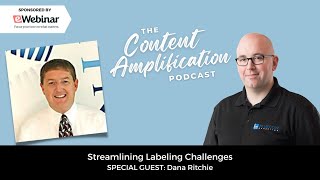
Dana, founder of PaladinID, explains how most businesses overlook the complexity of labeling. He walks through the design process: starting with intended use, then selecting substrates, adhesives, and printing methods. For a Fortune-500 client, PaladinID developed custom outdoor ink that lasts 10-15 years.
Chapters
Dana, thank you so much for joining me on today's episode. You know what, you're the first person that I've talked to in over 100 episodes that is in the industry of labeling. This is very interesting to talk about this because from a marketing standpoint, you know, labeling is presenting your product if you're talking about a product side. But there's way more to labeling, and hopefully in our conversation today, we'll get into all the details of what to consider, what the technology is that's out there, and how to actually choose a company like yours to provide labels. So again, thank you so much for agreeing to do this.
Great, thank you for having me, Shaun.
So let's start with the idea of labels. I mean, most people that are running a business, they think of a label probably as, okay, something I just stick on a product. But labels can be used in many different aspects of a business. What are some of those use cases that you see day in and day out?
Well, the interesting thing about labels is people just typically think of them as stickers and they just identify a product, but really they're the last thing to go on a product before it goes out the door. And it carries all the vital information about what's in the package, especially a barcode on how it's used to track. And, you know, they don't even give it a second thought. Until they don't have them, and then, you know, it's a 5-alarm fire. So it's just an interesting business to get into because there's a lot of things that we have to jump through hoops and, and act very quickly.
Now, what are some of the different types of labels that you and your company have provided for clients?
We, we cover the gamut. We do a lot of paper, which is typically, which would be applied to like a cardboard box, UPS. Every shipping, every shipment from UPS, FedEx has a paper label on the outside. Typically it's 4x6, and we go all the way up to a full polyester, a label that could stand, you know, hundreds of degrees of heat, outdoor humidity, chemical resistance, things like that. So we cover the gamut.
Now, you mentioned things like heat. Now, when you're designing or coming up with a label, or a business thinks they need a label, what are some of the things that they need to consider?
Really, the way the process that I've come up with is we start with the end in mind and work ourselves backwards. So you start with what does the label have to stick to, apply to, how long does it have to last, and then what are the characteristics that have to be on the label? Is it just black and white, or is there color? Do we have to print in color, or can we preprint the color? And then we work ourselves back with even, even as simple as How the labels be applied on the product. Sometimes they're hand-applied, and a lot of times we try to go into a machine-applied application.
Yeah, that makes complete sense. Now, have you seen that a lot of people, you know, either are making mistakes when they're doing their labeling, or they've come to you because something's not working, and you realize they didn't really think through the process?
A lot. That's the calls that we get. Unfortunately, they typically don't call me and say, hey, we love our label supplier, but we want to talk to you. There's usually a problem that they can't solve and they just need to talk to someone who has experience.
And you have a ton of experience. Let's talk about that for a little bit. What brought you into this world of labeling?
I just answered an ad out of college. That was it. I had no idea what labels were or any of this, this, this packaging industry. And I got into it right when the time that it was going into what they call electronic labeling. Before, if you see the— ever see the military on the road, they have these, you know, static messages like this side up or, you know, stay away from fire or whatever. And that's usually put on with spray paint and a stencil. And that's how the labels were done. It was static and the same. Right around the time I get into this, '98, '99, or excuse me, '88, '89, they put the, they put the labels through a printer, an actual label printer that printed variable data. And that was revolutionary. And that's when like Zebra Technologies invented their machine that did on-demand labeling. And that just, the whole thing took off. So I was in the right place at the right time.
And then you've evolved into your business.
Yes.
Let's talk about that. How did that go for you?
Okay. So I worked with 3 other, I worked for 3 other major competitors in the industry. I love the business. And I just loved everything about it and solving problems. And unfortunately, the last company I worked with, we had a disagreement and they, they laid me off. And I said, well, now's the time to go. So I'm going to start my own. And I think it was '98 is when I started the business.
And Paladin ID is the name of the company, paladinid.com. Why that name?
We were trying to come up with a name that was not only relevant but wasn't localized. If we first started out with Northeast Barcode Solutions, and when I hired a branding expert, they said, man, if you ever want to get out of the Northeast, you're kind of, you're kind of stuck. So, uh, you're kind of stuck. So we took a long approach. We come up with Paladin ID, and Paladin ID, a synonym of Paladin ID, is man of the hour. And I thought that fit perfectly because we get the calls that no one else can they call us, they don't call us last, but they call us down the food chain and they say, hey, we need help, can you do it? And I have to jump through hoops. And that's, that's our specialty. So I thought it fit perfectly. And then the, that was Paladin. And then the ID, because we're in the auto ID business, I tacked that onto the back. Um, so Paladin ID.
And how has the business grown for you? How, how has it worked over the years?
It's, it's done very well. We've grown every year. It's, um, basically word of mouth up until I've, I've, uh, just prior to meeting you,. And it's just, it's been very, very good. Now that I'm trying to, you know, grow outside of New England and go across the country, it's exciting to see that the same problems that people have all over and the lack of knowledge that's in the industry to solve the problems.
Now you're no stranger to challenges. You actually embrace challenges. And, you know, when you think of this, and if you're listening to this podcast, You know, when you're working with Dana, it's not like there's a call center of sales reps sitting there in cubicles. They get to work with you and they bring their questions or challenges or problems to you. Why this approach? Why? I mean, this is very unique and this is something that people really value that work with you, but why did you go that way versus, you know, trying to grow with like an outbound sales team?
That's a great question. I, um, I don't know how technical I am as a manager. Um, I, I just, I really like the transaction, the one-on-one. Um, I like to work with people over and over and over, and most of my customers have been with me 20, 25 years. Um, sure, I, I guess I could hire a sales team and go, but I don't know, that's not really what I'm about. Um, I really like the hands-on approach. I like the one-on-one. I know I'll be limited, but that's what makes me happy and what makes the customer happy. And it seems to be working.
What is it about working with the customers, helping them solve the problems that you really enjoy the most?
I think it's just being a help. I've always wanted to help people. I was going to go into the police force because I just had a felt that I had a calling to help people in need, and I transitioned into sales. And this is just a great market that, that people— most people don't know much about it, and they consider me, uh, or people in, in, in this field experts at what they do. So it's, it's just exciting to be wanted, needed, and, and, and really valued.
Mhm. Now I'm sure there's lots of, of, of stories and cases where with clients that you've helped them overcome something. Is there anything that stands out where it's like, you know, you were able to, to overcome something that, that they felt was never going to be solvable. Is there any story like that you could kind of share?
Yeah, I think the, the, the one, uh, application that really set the company on the map was I, I, I came with a, uh, there was a Fortune 500 company and they were printing their labels with an old Markem printer. And a Markem printer printed the color, die-cut, everything. And it was an outdoor label because they're in the electrical appliance business.. And the machine was obsoleted and the label and the ribbons were obsoleted. And they said, we've got 6 months or we're gonna shut down. You know, you've gotta, or they had a year and, and, uh, you've gotta help us solve this. And I said, well, the technology that I do doesn't, doesn't hold up. I mean, we, we don't have fade-resistant inks, you know, for, for 15 years. It doesn't exist. And they said, well, I, I remember the day, like, Today they sat me down and they said, you're the 7th or 8th company that came in and you're gonna solve this. And I looked at them and I said, I said, I'd love to tell you I can, but it doesn't exist. So they said, well, they challenged me. So I went back to one of my vendors who hired a chemist, and it took us about a year to come up with an ink formulation that actually held up in their testing. And it is, it is you know, it was projected to last 10 to 15 years outside and not fade. And I've been 14 years now into this account, and we haven't had any issues with the labels. And it's that— that really was the biggest accomplishment that I've had in business so far.
That's incredible. So I mean, going— I mean, that proves that you're like, you'll go that extra mile and just like never give up with it. Now, that's interesting also about that, the idea of the, you know, the chemist coming up with that ink. Is this an ink that now that you use for, for other jobs as well?
We do, we do. But unfortunately, that market is so niche. There's not many people who need a label to stay outside for 15 years. And I will say that it's the team that I put together. It wasn't, you know, obviously it wasn't my brainpower that did this. I called on the right people and I had a lot of support and a lot of people put a tremendous amount of time and effort into this. And to this day, they're still a viable account. So it's exciting. But yeah, we do use it at other places, but unfortunately, there's not that many people who need, you know, who care to have a label last 15 years outside. And if there are, then we have it.
Absolutely. Now, aside from just labeling products, you know, there's other use cases for, you know, a label, so to speak, inside warehouses as well. Can you speak a little bit about that? Are there use cases that aren't products?
Sure. The, one of the big things we get in is, is, is our warehouse labeling program that when companies put up warehouses, they are labeling the racks, they're labeling the floors, they're labeling the aisles, signage. And basically how that works is they have their database file where they put the file together on, on what they want and the data. They send it to me, I send it to our plant. We automatically run this through our computer system and print the labels and hand them a finished roll. And they just go around and apply the labels to the racks, the floors, the ceilings, whatever. And they've got a fully warehouse set up to be automated through their software and scanners.
Hmm. That's awesome. Now, how is that— how the technology changed over the years? You know, are more people able to print the labels, you know, with the right equipment in their, in their, their business versus having to, you know, have a company print them and ship them to them? Is that something that's more common now?
Yeah, and it's called on-demand printing, and that's the niche that I am in. I supply the printers, labels, and either ink or ribbons on site that you can print variable data. There are some companies who just print or have static, and I furnish those labels. You think of like a mayonnaise jar. That mayonnaise jar has the same label on millions of labels. So that's something that's a separate business that's typically in the retail. We are in the manufacturing sector and where you'd need a lot number, date code, operator, serial number, things like that that would need to be data that's on demand when it's printed, needs to be on the label. In terms of things that are new, there are some new product, new materials that come out, but basically it's been the same. There's been improvements in speed. And a little bit of technology, but, you know, it's still, you know, the best tool to hit a nail or bang a nail is a hammer. It's not a screwdriver, it's not a wrench, and it's a pretty stable business. And, yeah, I don't want to say nothing's evolved or new, but it's not up time.
Absolutely. And I mean, there's no, you know, you're not a stranger to this industry. You've got a ton of experience. If somebody's listening, they need help with their labels, what's the best way, uh, to go about this?
Well, the best way is we just set up a, uh, a thing on our website called the Discovery Call, and it's a 15-minute— we set up 15-minute increments. If you need more, that's great. And it's just a conversation on what you're doing, what you'd like to do, and the problems you face. And most times I can help people, and sometimes I can't, and I try to pass them along to the people that I can if it's not in my wheelhouse. So it's a very easy, no obligation, no heavy sales. It's just we're here to help. We want to be your guide.
More from Shaun


Julie Vanexan recognizes Shaun Whynacht from Blue Cow Marketing at the Nova Scotia House of Assembly








