The CRM Guy Podcast - EP6 - How To Run Effective Events
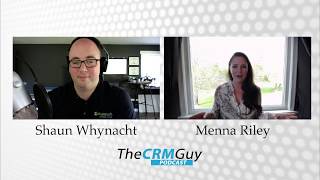
In this episode of the CRM Guy Podcast, host Shaun Whynacht interviews veteran event planner Mena Riley, who has over 20 years of experience running corporate, private, and high‑profile events. Mena shares how strategic events can be a growth engine for small and medium‑sized businesses, emphasizing the need for clear, measurable objectives (SMART goals) and a reverse‑engineered plan that aligns events with business targets. She discusses promotion tactics such as building a strong mailing list, consistent networking, and authentic engagement, and explains why charging for events creates accountability and improves ROI. Mena warns against common productivity traps like endless Pinterest research and highlights the importance of meticulous planning to reduce anxiety. She recounts notable successes, including events for Prime Minister Justin Trudeau and the Halifax Chamber of Commerce’s 800‑person fall dinner, illustrating the impact of organized execution. The conversation culminates with the launch of her Event Planning Boot Camp, a hands‑on training program for SMEs and agencies that want to internalize event planning without hiring a planner. Contact details, website, and final advice on designing inclusive, perspective‑driven experiences round out the episode.
Chapters
Are you ready for change in your business? Sit down, buckle up, we're about to launch. 3, 2, 1, welcome to the CRM Guy Podcast.
So welcome to this episode of the CRM Guy Podcast. I am your host Shaun Whynacht, and on today's episode, while it is a video podcast as well, if you're listening to the audio version on iTunes or wherever you listen to the show, welcome to it. We have a guest today, Mena Riley from menariley.com, uh, is joining us and, uh, everybody can see you now and everybody can hear you now. So tell me a bit about what you do.
Well, hi Shaun, thank you so much for having me. I'm really happy to be here. Um, a little bit about what I do is I've been an event planner, a freelance event planner for over 20 years. So I've run hundreds of events. And kind of the freelance angle allowed me to work with so many different various clients over the years. So I did a little bit of, you know, a lot of corporate work, but a little bit of private work like weddings and surprise parties and stuff like that. But really where I've landed after all that time is, you know, my, my top clients are my corporate clients. That's really where my sweet spot is. So that's where I focus more, focusing all of my business right now.
Excellent. So I guess tell me a bit about where, where you got into this, like why event management, why putting on events, what was it that attracted you to this type of industry?
Well, number one, I think I would have created being an event manager even if it wasn't a job. So, you know, as a kid I was always putting on productions, I was, you know, forcing my sisters into plays for my parents. Like, I was always creating, creating, creating events. And a favorite story I like to tell is my 10th birthday party. I did, I did all the invitations backwards. The theme was backwards, so I did all the invitations backwards, so you had to hold them in the mirror. Everyone had to wear their clothes backwards, and my favorite part was we got to eat cake first. So I think it was just a natural progression. I definitely started off in the PR and communications industry, but it was a very natural progression into the events world for sure.
Now, as a business owner yourself, and then also our audience are small business owners and entrepreneurs, we've all been to events, we've all attended events. Let's talk about how events can actually help you grow your own business?
Well, there are so many people, you know, I'm sure that they have— everyone in business who have either thrown their own event or attended one, they have some observations like, oh my goodness, this is— I am so excited to be here, I can't wait to work with this company more. So some events can make you a better customer, you know, some events can really put you off, some events can be on-brand, off-brand, so really I'm really an event advocate, and I really advocate for using strategic events to grow your business, and there's so many different ways to do that. Yeah, so a top event that people plan and I think they don't know why is the annual Christmas party. They're like, 'Cause we always did it.' That's not a good enough reason. You can still have a Christmas party, but it can be strategic and it can grow your business and you can use You can use it for publicity. You can even just use it for content curation and get some great photos, and then you have some more, you know, marketing materials to use. So there's just so many ways that kind of good events are being wasted, I find, or bad events are being planned. So I definitely advocate for planning. Let's use events as a strategic tool to grow your business, and definitely for entrepreneurs and small to medium-sized businesses.
Now if you wanted to start doing an event for your business, what are some things that you need to consider as a business owner?
Definitely I would say, you know, let's plan objectively, let's set SMART measurable goals and then work back from there. So really if you know, you know, you have a great business plan and you know what your annual, you know, what you're trying to achieve in the next year, like maybe you want to grow your company by 10%, 10 clients in a certain sector, then you can reverse engineer that goal into, you know, why you're using events, how you're using events, and using events to achieve that goal. So that's— it has to be all about being clear about where you want to grow your business.
Okay, yeah, these seem like great ideas. Now, you know, you get your event idea planned out, you know, now it's time to promote it. What are some things that you see work really well with promoting an event and getting people to actually show up?
Oh goodness, now you gave me a tough one. Bums in seats is kind of what we call it. How do you get people to show up? Well, it depends on if you're selling tickets for your event or if it's a private event and it's an invitation-only kind of scenario. Where it comes to ticketing, I think knowing your customers, building a really great mailing list, And I always tell, you know, my fellow business colleagues and friends, if someone drops off your mailing list, good, because they're just not, you know, they're not as engaged. They don't want to hear this, cool, you're making way for more people that do. So don't be frustrated if it's a slow growth, because it's not all about the numbers, it's about the engagement and how much they are like loving your brand and what you're saying. So I definitely have You know, I definitely advocate for a strong mailing list. That way when you do pull the trigger and publish an event, you've got like crazy awesome fans out there. So definitely starting with that, keeping in touch as much as possible, attending events. Like that's one of the things that I've done to grow my whole career is I'm also a networking advocate, as you know from running Leading Ladies Networking, and just being out there and get your face out there and talk to people, just have great genuine conversations, it doesn't even have to be about your business, just show up and be present. And that's a great way to keep using events that maybe you're not running, but using them to grow your business.
You said several things there that really stood out to me. The first one was don't be upset if people don't subscribe to your list. I see a lot of people, especially clients that I work with that fall fall into that same trap where they'll send out an email blast and suddenly people are unsubscribing. They're like, "Oh no, what's going on?" But understanding that they're not that fit is a great thing. One of the things that you said there that stood out was networking, getting out and seeing events. How important is it to not only just the networking side but going out and seeing what other events are doing good and what they're not doing as well?
Absolutely, keeping your finger on the button, there are so, you know, I started Leading Ladies Networking about 7 years ago and it was the only event of its kind, and now it's like the market is getting flooded with all these awesome networking opportunities, and now people are picking and choosing, but the beauty is, you know, there's enough room for everyone at the table, you know, just try it. Because the more you do it, the better you'll get at it. And I know I always say, you know, the ones that I created for Leading Ladies, I tried to make it designed for, you know, like an experience that I personally wanted. I was kind of tired of going to these small talk, tedious networking events, and I wanted it to be fun. And I just, you know, I figured it out and I did grow my mailing list nice and slow and steady. And now I have, you know, I've sold that event every single time, I'm so proud of it, but also the feedback I get is that people come and they're a little bit like, ugh, I'm cringing, I hate networking, and then they walk in the door and they loved it. So it can be fun, that's my number one thing, you can totally have fun, you can totally leave the cringe at home and just show up and actually make genuine connections and that's gonna grow your business, your career, your social circle, everything. It's all upside.
It's all up from here, right? Now, one thing that I want to ask you about because I've encountered this and I know other people who put on events have encountered this when they're trying to get some leads and bring people and put those bums in those seats. When it comes down to whether you charge a ticket price or you put on a free event or what's your pricing strategy, what's your advice to our listeners who maybe wondering what they should do when it comes to whether they charge or not and how much they should charge and why paying for an event may be beneficial?
Well, oh, that's such a great question. I love this. So when I did run a few leading ladies events complimentary, let me just say it was way too much work for that, but I was just testing it out and I found not charging people didn't feel as accountable to show up. So honoring your RSVP, I just wish that was like a popular thing, but it's not. So I did initially test out charging for that event, and that was an option for me just because of how I, I was just trying it out for the first time. So yeah, I had like double the people say they were coming and then only half showed up, and it was still full, but I I really quickly figured out, you know, people aren't going to feel accountable unless there's a little bit of skin in the game, right? So I definitely, you know, that's, that's one of it. And I think it's very unique that I got to choose whether I was going to charge or not. Now it's a rolling business and everything is great and there's so much included in the ticket price. So it definitely is a ticket price. Um, I think it kind of goes back to my previous answer. If you, take a look and start at your objective of what you're trying to do with this event, and then you roll it back and say, okay, we have all of the expenses, we know how much, you know, the venue is going to cost, catering, entertainment, etc. Then you get the bottom line, like, this is how much it's going to cost to do it right. Is it worth that investment for this outcome?
That's great advice. You know what, we're going to take a quick break, and when I come back, because I know there's a there's more great information that you have to share with us. One of the things that we're going to talk about when we come back from the break is some of the lessons you've learned over putting on events. I'm sure there's been some things that you've done and you'll never do again, but then you've also got a really exciting project that we're going to talk about. So we'll be back in just a few moments.
We believe in small business. We believe small businesses are the backbone of strong economies. We believe small businesses are the innovators and the job creators. And we believe small business owners deserve a freaking medal. We believe far, far too many small businesses fail, and we believe it doesn't have to be that way. We believe in hard work. We believe in grit. We believe in tenacity. And we believe in helping those who help themselves.
We believe that cynics should be punched in the nose. The devil doesn't need another advocate. We believe that if they can't say it to your face, they probably shouldn't be saying it at all.
We believe happy-clappy namby-pamby optimism is only useful when united with brutal truth, but we believe high-fives are perfectly acceptable ways of greeting strangers.
We believe ego makes you stupid. We believe fear makes you stupid. We believe stress makes you stupid. And we believe that a fresh new round of that funding can, and sometimes does, make you stupid.
We believe that stupid happens to everyone, but fortunately it's not a permanent condition. We believe that the past does not define who we are today any more than today defines who we will be tomorrow.
We believe culture is created when passionate people pursue a worthy purpose, and we believe we have one. We believe passionate people are willing to do the hard work. Passionate people constantly innovate. Passionate people own their mistakes and share what they've learned. Passionate people see change and challenges as opportunity for growth, and therefore we believe if you're uncomfortable with change and uncertainty, this is not your game.
We believe culture eats strategy for breakfast, and speaking of breakfast, we believe while cereal and soda don't define our culture, Nerf gun battles are and always will be a perfectly acceptable midday activity at the office.
We believe those who do will easily beat those who don't. Therefore, we believe those who do follow up with their customers will win. Those who do automate their business will win. Those who do personalize their messaging will win. Those who do ask for the sale will win.
We believe selling is serving if what you're selling doesn't suck. We believe great products are the most powerful sales rep a business can have. We believe clients can't buy from you if they don't know you exist. And that's why We believe people who do great marketing and have a great product will win every time.
We believe that while sometimes shit happens, all problems are leadership problems.
And speaking of leaders, we believe leaders don't always have all the answers, and that's okay.
We believe leaders should lead from the front.
We believe leaders should always take responsibility even when it isn't their fault.
We believe the best leaders establish vision, multiply people's and deliver results, all while caring more about their team than themselves.
And speaking of caring, we believe there are jerks who just don't care, but they are massively outnumbered by those who do. We care.
We're a software company that cares more about our customers than just the bits and bytes.
We're a software company that cares more about small businesses than giant enterprises.
We're a software company that cares more about changing the world than lining our own pockets.
We're a software company that cares, and we believe that makes all the difference.
All right, welcome back to the show. As you know because you've been listening already, Mena Reilly from MenaReilly.com is our guest, and we talked about what it takes to put on a great event. She gave some great tips. I want to get into more about some real experiences that you've had. So let's first start with some of the stumbling blocks that you may have come up with over the years of doing events that people could take and say, you know what, that's a good point, I'm going to try to avoid that.
Okay, that's a really good question. Number one rabbit hole preventer is don't go on Pinterest because you could just get stuck on there all day and there's a lot of time wasted in planning when you're really just getting lost in Pinterest, which is so easy to do, or give yourself a time limit of I'm going to do 30 minutes of research and then I'm closing that window or that tab on my computer. So the other key thing is the proper prior planning avoids piss poor performance adage. I kind of, you know, I think we all in you know, event, or sorry, entrepreneurship and business and kind of every industry have a little bit of anxiety. Everyone's suffering from it these days. And I get really anxious if I'm going to be late for something or if something, you know, isn't done, like it isn't organized. I get really super anxious. So I kind of have been relying on that through the years to alleviate my anxiety. I have to plan the heck out of everything and envision every different scenario so that when I arrive day of, there is nothing on my mind. So really just like being obsessed with being organized and being obsessed with planning it perfectly, and you've done every possible thing you could, you can arrive comfortable and happy and just like calm, and that's the way you should be at an event that you're running.
All right, so I mean, that all makes sense. I mean, you know, I hate being late for events as well, and, you know, to be able to pull that into making sure that your events are really going really well, that's a really great tip. Now, you've obviously had some great successes over the years. Tell us about, you know, one or two events that really stood out, and why was that such a monumental moment for you in your business?
Well, I've definitely, you know, I've been so lucky to have worked with incredible clients over the years, over 20 years, which is crazy, and you know, I've been lucky enough to work with our Prime Minister Justin Trudeau a couple times on events for him, outstanding fundraisers that really, you know, got them huge results. One of my favourites in recent history was running the Halifax Chamber of Commerce annual fall dinner with over 800 people, and it was a lot of organization. Back to that, there was spreadsheets aplenty, and I'm a spreadsheet nerd, so that's why it worked out great. But working with their team and then seeing the results and then getting the feedback from them, they were like so blown away with how well it went for them, and they kept hearing great feedback. So That just makes me proud that I brought everything to the table. There was nothing I could have done more, and it worked out amazingly for my clients. That makes me so proud, and so it's all worth it at the end of the day.
You can kind of see it in your face, but if you listen to the audio version, you're going to have to go check it out on Facebook and see the glowing reaction that she has when she talks about this. Let's talk about an exciting project that you have on the go. You know, we were waiting to do this show until you got everything in line. Let's— I'll just let you tell us about what it is.
Thank you. Okay, so I'm so excited. I've been kind of working towards this my whole career, but now I'm ready to launch it. It's called Event Planning Boot Camp, and the reason I started it was a lot of people are saying, "No, no, wait, aren't you just, you know, painting yourself out of a job training other people and telling them how to run events, all your secrets of event planning and your method and all your templates?" And I'm like, "No, no, no, no, no." So many businesses, you know, clients that I've worked with over the years, I've heard their feedback, you know, when they call me back again and again and they say, "We tried to do it ourselves and it ended up taking 5 times longer," or, "We never found," the right way to do this. So this system, or this workshop that I've created is specifically to answer all of those questions, and to properly train people that maybe weren't going to hire an event planner and they want to plan it internally, so like small to medium-sized businesses and agencies that rely on their front desk staff, their receptionists, their assistants to plan their events, Those people probably love planning the company events, but they might not have ever been properly trained so that they're maximizing their ROI, making as much money or taking advantage of the content opportunities as they could be, and avoiding the invisible time rabbit hole that we were talking about earlier.
So how do people find out about this if they would like to be part of this boot camp?
Well, they go on my website, MenaRiley.com, and there's a space to sign up right there. It says Event Planning Boot Camp, click to find out more and sign up for our list. So we are already launching, we are already running them, and I can't wait to have everyone taking these. We're going to also work towards doing an online workshop down the road, but I'm just going to be doing it in person. Because again, I'm an advocate of that face-to-face connection, that networking that you get. You just can't get that necessarily in an online workshop, so I really want to keep doing it in person.
Well, it definitely sounds like a product that has a definite need out there, and I think a lot of people, like you said, are going to really love planning their own events and put their own twist on it and have that confidence that they're doing it right.
Exactly, that's the whole thing. I just want to put the right tools in the right hands, and then this ultimately raises the bar for events as a whole industry in our region. Everyone's going to be keeping these things in mind. Everyone's going to be saying, wait, I gotta set a SMART goal instead of a we're doing it because we already did it goal, which is not a goal.
That's right, you know, there's nothing worse than— and I hear it all the time— the 'Well, it's what we've always done' kind of mentality.
Yeah, that'll just kill you. Also, it wastes money and it wastes people's time. People don't have enough time to go to an event that just hasn't been planned the best possible, to the best possible extent. We're all too busy and time is our most valuable commodity, and so if you're going to do an event, you better be doing it right. And one of the main things that I like to say about this workshop is, are you ready to stake your reputation on your next event? Because you're already doing it.
Which seems to be— it's the headline right on your website.
It is.
So aside from your website, how else can people reach you?
Definitely via email. Everything's on my website, obviously, but email is ignite@manoreilly.com, and all of the main social media channels including Facebook, Instagram and Twitter.
Well, Mena, thank you very much for being a part of the podcast and the webcast today. Is there anything else you can leave us with that somebody can just grab a hold of and run with as words of wisdom?
Ooh, I would say, okay, so one of the top things I like to, you know, to tell all of my clients is If you are planning an event, or just even a moment, just make sure you design that experience with other people's perspective in mind, and not just— maybe if you're running an event and there are sponsors, you're just thanking the sponsors at the end of the day. Don't forget you have staff, you have volunteers, you have board of directors, you have potential award winners and finalists, you have students, so just make sure that you're ticking all the boxes when it comes to delivering an experience for your customers, and knowing your customers better will help you design a better experience.
Well said. Thank you, thank you very much for being a part of the show.
Thanks so much for having me, Shaun.
Thanks for listening to the CRM Guy Podcast. We'll see you in our next episode.
More from Shaun


Julie Vanexan recognizes Shaun Whynacht from Blue Cow Marketing at the Nova Scotia House of Assembly








