The NFT Revolution: Understanding NFTs for Creators Beyond the Speculation Market
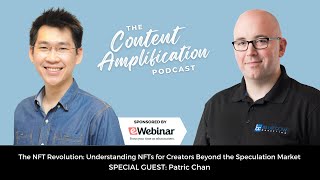
In this interview‑style episode, host Shaun Whynacht talks with NFT specialist Patrick about what NFTs are, why people buy them, and how creators can leverage them beyond pure speculation. Patrick explains the concept of fungibility versus non‑fungibility, uses the Mona Lisa analogy, and describes how blockchain smart contracts certify ownership of digital assets such as images, audio, video, books, podcasts, and membership passes. He outlines three primary buyer motivations—speculation, bragging‑rights, and utility—and argues that creators should focus on the utility angle, turning their content (e.g., ebooks, podcasts, courses) into token‑gated products. The conversation walks through practical steps for minting and selling NFTs: choosing a marketplace (OpenSea, Shopify, VeVe), handling gas fees, deciding between open‑edition and limited‑edition drops, and integrating access via lock‑content, Discord bots, or dApps. Patrick shares user‑experience insights (credit‑card purchases, MetaMask wallets) and warns against common mistakes such as manual batch minting, over‑producing supply, and neglecting royalty settings. He promotes his “NFTs for Creators” workshop, which provides a full A‑to‑Z roadmap—including market timing, pre‑launch campaigns, and post‑launch community building—to help creators launch utility‑focused NFTs while capitalising on the current market dip and early‑adopter advantage.
Chapters
Patrick, so thank you so much for joining me on today's episode. This topic we've not covered in 115 episodes, brand new to us. However, not brand new to you. You're an expert in NFTs and hopefully by the end of the episode, our listeners will have a better understanding not only what they are, but how you can actually use them in your business to grow.
Precisely. And I'm so honored to be here. On your podcast, it is still so, so awesome. I'm so excited to share what I've known about NFTs and how they can be used for marketing, business, and also for creators.
So let's get right into explaining what they are in your own words. What is an NFT and how does it work?
Uh-huh, sure thing. So let's go to the very basic, what is NFTs? And to understand what's NFTs, we got to look at what is non-fungible. And to understand what's non-fungible, we have to look at what is fungible. So let's say I have a $100 bill and I give you the $100 bill, and then you give me your $100 bill. All due, they are the different bills, but the value is in this— is the same value in the market, which means that $100 can buy anything that's worth $100. Same with Bitcoin. If I give you 1 Bitcoin and you give me 1 Bitcoin, it's the same value when we spend that Bitcoin. So that is fungible. Now to understand non-fungible, we want to look at the offline aspect. And the classic example that I've always shared with my students and listeners is that let's take Mona Lisa. Now we all know there's only 1 Mona Lisa which is in the museum. If I'm not mistaken, is in France right now. And you and me could have our own Mona Lisas, which are the replicates. So there are thousands of replicates in the world. Who knows how many replicates are there which look exactly identical as the original one. However, you and me do not own the Mona Lisa. We have Mona Lisas, but we don't own the Mona Lisa. Because the Mona Lisa, it is a non-fungible product in that aspect. Now that is in the offline world. So now let's take that online. How does that work? Well, when it becomes a non-fungible token, it means that there's only one owner towards that digital asset or that digital product. So I know it sounds sort of strange and funny or interesting because how do you own something that can be copy and paste or save as? And this is where we bring into the world of blockchain. So when a digital product, whether it's an image, a JPEG, a video piece like MP4, or an audio piece like MP3, when they are minted— that's the term that they use in the Web3 world— minted. When they are minted to become an NFT, it means that they have now been issued a contract in blockchain, and that contract is called smart contract. So let's say I mint a digital product, say a digital asset such as a JPEG image, and if I send that to you as an NFT, What it is saying is that I'm giving you the ownership of that JPEG, and the world will know it because it's in the blockchain. So there will be a smart contract which authenticates it, saying that, hey, Patrick has given that to you. So let's say if you buy the NFT, which could be a JPEG, it means that you now own it. Now, that will be a lengthier explanation, but I just want to give a full picture of that. So it's not the JPEG image anymore. It is about owning that image. But then in this discussion, we are going to expand so much that is beyond a JPEG.
That's a great explanation of it. Could you essentially have an NFT for, you know, a podcast or, you know, an episode if you want to go that fragmented? Or would you do it as like the whole show, like the whole kind of podcast in itself? How would you, I guess, in the digital business, what are some of the things aside from an image like you use that you could make an NFT for?
Yes, that's a very good question, Shaun. And that is where it gets me so excited with NFT as a platform, as a technology. But before we get into that, let's look back at how all of this sort of gets started so that we can sort of understand this world. You see, I came from the same world as yours, which is digital marketing, online creators, social media, and all this kind of stuff. And I love it. I love all of these funnels, ads, SEO, and so on. But in 2021, I started to explore NFTs. And if I can remember clearly, the first time I heard about it was from Gary Vee. Gary Vee, I think maybe your audience have heard of Gary Vee. I mean, he's pretty famous, especially having a very famous podcast. So he was sharing about his NFT called VeeFriends, and he was selling it for 1 ETH, 1 Ethereum at that moment of time. I think it's 2021, it has been a few years, therefore I cannot recall the exact timeline anymore. But anyway, when I heard about that, uh, 1 Ethereum is about $3,000 or somewhere around there. I was thinking, you know, why would I want to buy that? As in, like, uh, it's $3,000. I mean, 1 Ethereum, the best it could go to maybe 1.5 Ethereum or 1.3 Ethereum. You know, the earning of 30% to 50% doesn't really excite me when I need to risk 1 Ethereum. That's a lot of money in terms of buying something that you're totally unsure of, and I didn't buy. And after that, I was shocked when Veefriends goes up to 8 ETH for 1 Veefriend. So which means whoever who purchased it, let's say it's $3,000, at that time, times 8, that is worth $24,000 for one of that. And then there are other, uh, Veefriends that sells for 20 ETH, 30 ETH, and some insane amount of money. So that really opens up my interest and my world of how this Web3 works, but I don't quite understand how it works here at the moment of time. But I get it, I get it that this is a huge opportunity. So then I start to explore more how NFT actually works, because at that time, at that time, everyone who having the impression is the same as JPEG image, and I have that same assumption as well, right? So my first experience with NFTs was on this mobile platform called VeVe. Vivi sells NFTs, but they sell big brands like NFTs by Marvel, by DC, Superman, Batman, DC. They have Star Wars, they have Disney. Yes, it is shocking, right? Even in 2021, many of these billion-dollar companies are already selling their NFTs. If you think about it, This could not be a fad, F-A-D, because public listed companies are launching their NFTs. Just think about it, their board of directors, their marketing departments, and so on, they wouldn't say, hey, you know what, let's just go ahead and, and sell some NFTs and let's make some millions. No, these are billion-dollar brands and companies. They have done thorough research knowing that this is going to be something bigger than just a JPEG image. So I started buying those NFTs. But before I buy, the most interesting part is that the first time I wanted to buy, I wasn't able to purchase it. Now you'll be wondering, what do you mean by you weren't able to purchase it? So I saw this Captain America NFT. I wanted to show you from here, but somehow I could not load it, so I just want to skip that. And And you have this called drops. Drops will be the time and day it's released for sale. I will be using a lot of layman terms instead of Web3 terms so that everyone can, can follow the flow, so to speak. So there's this drop where you can mint the NFT, which means you can buy the NFT. And when the card opens, when I try to click buy It was sold out within milliseconds. I wasn't able to buy that NFT. And when I work out the math, the company that sells that made millions, as in like $3 to $4 million within milliseconds. And it was shocking because I was thinking, this comic company like Marvel, they weren't even making so much money by selling the comics in split seconds. And yet when they convert that into NFT, they were selling like crazy. So I got into the bandwagon and I started buying the first NFT. And the funniest part is that when I buy this NFT, I can show my wife and I say, hey, you know, check this out, I got this Captain America NFT. And my wife was looking at me like, why? Why would you buy that? I mean, you can see it for free. Technically, it is free, but I said to my wife that I own it right now. Now, that is where my paradigm shift comes in. You see, before I bought my first NFT, I don't get it. I don't get the psychology of it. I don't understand the whole mentality of ownership. So once I purchased it, I became the owner of it. I get it. And here's the craziest part. I start buying more, and I start buying more, and I start buying more. I start collecting all these NFTs from Marvel, from DC, uh, James Bond, and so on. And then I say I gotta stop, you know, because, um, this is crazy, right? This is crazy. So after I've learned that, I wanted to go to the so-called, uh, to the bigger league, to the bigger marketplace, because with VeVe, the NFT is cheap. It's like less than $100 for NFT, and these are all by major brands. So it is less risky because like I said, these are major brands. This is not from individuals. So then I went to this website called OpenSea. This is OpenSea. It's a marketplace for NFTs. You may have heard about OpenSea. Let me just off my phone. OpenSea is the number one marketplace at that moment of time. Today they are still number one, but there are many other marketplaces where you can buy NFTs nowadays. But anyway, I went there and I bought my first NFT in OpenSea because a friend of mine said that, hey, we are selling NFTs based on our digital photography, which is you don't get anything except for the digital photography where you can save as download for free. And my friend sold the first series, 88 of them, all sold out. And I think they made over $100,000 or something like that because apparently Snoop Dogg tweeted about their project and it goes crazy. So when my friend comes to me and say, hey, would you want to buy one? I wasn't too sure should I buy or not, but it's my friend's project and thought like, hey, you know what, I feel like supporting my friend and I bought that. So that was my first NFT. But after buying that, I start to like the NFT with the same mentality that now I own it but it still doesn't give me anything. Now I know there's a lot of questions going on. What's really going on, Patrick? Now the reason why I'm sharing this with you is that I want to get into the customer's psychology. In order for me to sell my own NFTs, I got to be a customer of NFTs to understand why people buy in the first place. Because if I don't do that, regardless of how many books I read or how many podcasts I hear or how many seminars I attend, I would never get it until I've experienced being a customer myself. And after that, after dabbling around— and for the record, I'm not a big NFT collector. No, I'm not those who spend millions or hundreds of thousands of US dollars. I just spend shy of about 5 figures collecting all these NFTs so that I understand the experience. And I can come to the conclusion There are 3 core reasons why someone would actually buy an NFT. There are 3 core reasons. The first one, it is for the speculation opportunity, means buy low, sell high. And at one time it was insane. Like for instance, let's say I bought a Gary Vee's NFT, which is Vframe, for 1 ETH and I sell it off for 8 ETH, I would have made 8x of return. So there's huge opportunity at one time. Or like Donald Trump's NFT, many people— I'm not saying everyone, some may just bought it because they want to support Donald Trump— but many, in my humble opinion, bought it because of the speculation opportunity. You're hoping that, hey, Donald Trump is a global brand. Everybody knows who is Donald Trump. I mean, this is the ex-president of the United States. So if I buy it right now when it's first minted, when it first released, and the price goes up, say an hour later, I'm going to drop it and make some money. So everybody understand this? It's just arbitraging in that sense. That's the first reason. The second reason why someone buys it, it is because of what we call bragging rights. Means that you can show someone that, hey, I own this NFT. Now let me expand this a bit further. In the NFT world, there's a type of collection called PFP. So it's like images that you can use as your avatar, images that you can use as your profile. Two of the most famous ones are CryptoPunks and the ape picture is Bored Ape Yacht Club. And depending on which region you're from, some call it Bored Ape Yacht Club or Yacht Club, doesn't matter English or American. I'm just gonna make sure that my pronunciation is correct. If you own those, like with Twitter, you can actually display that NFT as your profile. Now that becomes a quote-unquote bragging rights, like telling someone that you are that level to spend 6 figures for a JPEG image. And that tells you like, hey, you got to be somebody, right? So you can go around and posting your mansion or your sports car every time, but you can just show your avatar and people know, all right, This guy, you know, he is, he is there, or she is there because he owned a Bored Ape or he owns a CryptoPunk. And this is all bragging rights. Like for instance, I bought Adidas NFT. Now I don't make money from it, but I have my little bragging rights to tell someone, hey, you know what, I have Adidas NFT. Although it doesn't make money, but because I like that brand and I like to brag about saying, hey, you know, I have that NFT and I'll probably just keep it. So all of those are bragging rights that people buy just to let other people know that they are the fans of that brand or they are the fans of that authority figure. Or sometimes it's just to say, hey, I'm really, really rich, I can spend so much money with that. So you'll see like many celebrities at one time, Eminem, Justin Bieber, and so on, they bought a Bored Ape. So it's also a way to flex your muscle and say, hey, you know what, I'm in the trend. Like Jimmy Fallon has an NFT, and this is not cheap NFT, this is NFT that costs 6 figures to own that, like, for a better word, that JPEG image. Now, these are the two core reasons why someone will buy NFT. However, for normal folks, as in like everyone except for being a global influencer or celebrity or billion-dollar brand or big company, we are not able to tap on these two opportunities because, regardless of how famous you and me are, we're just famous in our circle. We are not global brands. We are not Justin Bieber. We are not Sylvester Stallone and all this kind of stuff. So we could not influence the global market in that sense, right? So it's really hard to convince someone and say that, hey, buy my NFT because you can speculate it later on. Because again, the market is not big enough. So these two opportunities, again, the speculation opportunity and the bragging rights opportunity, still remains in the realm for celebrities, billion-dollar brands or big companies, or influencers. And this is where I explore the third reason why someone buys an NFT, and this is where it gets exciting because this is the game, this is the realm that you and me can play at. And the third reason why someone buys an NFT, it is because of the utility for the NFT. Now, what is utility? Utility is basically what is the function of that NFT. So the NFT is no longer a JPEG or a logo to show that you own something, but that NFT represents a certain access to whatever that you want to lock, and that is the utility. And the NFT becomes a token pass. I mean, the term that they use in the Web3 world is called token. A crypto coin, uh, uh, NFT, all of these are considered tokens in that sense. So now Uh, when I saw this opportunity, I was thinking, how about we, we, we turn the NFT into a book? So that's how I got started. And I'm going to address the podcast shortly because it's very, very exciting, and I think that you are getting— you're getting it 100% right here. But let me relate to you how does the utility of it works. I have many of my books available in the bookstores and Amazon. Some of them are best-selling books. I took one of my books called Wake Up Millionaire. I was earning sales from Amazon Kindle, but when I look at the checks, it's $1.99. Sometimes it's $0.99, and then with Amazon cards and so on, it is very minimal income left in terms of the sales revenue. So what if I sell that as an NFT? So I call this NFT book. So just think of it this way: what if you can allow your customer who purchased a digital book to now own the book? Now it sounds crazy when I first think about it, like how do you make someone own a digital book because it's copy and paste, it's transferable, it's deletable, and so on. But if it's NFT, now they own it because now technically he owns the NFT and he can do or she can do anything that they want with that. And with that, they also own the book. So with that premise, my My angle is saying now you can own the book as an NFT, but it goes beyond that because the NFT will also have value. What if the brand increases? Because now you own a part of the brand, and when that happens, you can always sell your NFT and then make back the money. So is it better to buy a book for just the content or buy the NFT book where you have the content of the book and also the ownership of that NFT. Now I'm gonna pause for a while in case there are anything that you want to clarify before I continue jumping into how we can do the same with a podcast.
Yeah, absolutely. And I mean, the explanation has been phenomenal. I've learned so much just from what you've said so far, but the natural question that's in my mind, and I'm sure some of the listeners have here, we use that book example, you know, I create a book and now I'm gonna sell it as an NFT. Can I only sell it once? Like, is there only one owner? Or like once it's sold, I can't do anything with it anymore? How does that work?
[Speaker] Okay, great question. So you can set a limitation for your NFTs. So there are two ways. The latest trend that we're seeing based on today's podcast there's also open edition. Open edition would mean that you can set as many as you want, and it's based on certain duration. So it could be like, uh, we're gonna allow you to mint from today until the next 7 days. So whichever, however units sold, those are the units that are available in the blockchain. So that's the open edition concept. But if you want to keep it simpler Or more straightforward, you could say, Shaun could say, I have my book and my book is called Book ABC, and I'm just gonna sell 100 units, or I'm just gonna sell 1,000 units. So which means technically you will mint 1,000 units of that NFT in the blockchain world. There are many platforms that you can do this. I can go through some technical aspect of it if you want to know more. And then they can go and mint what you have put up in the marketplace. So if all of those are sold out, assuming it's sold out, which means no one can buy anymore unless the person who bought it decided to sell at a secondary market.
Okay.
Yeah.
So how do you— I mean, we'll probably get into this, but naturally I'm thinking, trying to think through in my listeners' minds. So this all sounds great. I would like to do this. How do you go about like minting these NFTs? Like what's the process for me to create an NFT to attach to a product that I have?
Right. So this is more towards the technical aspect of it. There are a few ways to go around this. So I'm going to give the simpler one, actually like the straightforward one for creators, marketers, and business owners, because We are not really getting into the whole Web3 technical stuff. I hope you're okay with that, right? We'll keep it simple in that sense. So let's say you choose a platform. The simpler platform or the one that's famous would be like OpenSea. So I mean, anyone can go to Google and search for OpenSea and set up an account for free. Because OpenSea doesn't have any fee, they call it the gas fee, when you mint an NFT. So let me take a step back because I'm going too fast when I use the word mint. So the word mint would mean that when you create your NFT, so when you put up an NFT, there should be a gas fee, which means that it's going to cost you because you're putting that into the blockchain and it's stamped and say that, hey, this is now available in the blockchain. But OpenSea, it is free. So this is why I say that it's easier to go with OpenSea Of course, there are many other platforms out there which are also free, but again, let's stick to OpenSea. So when you go to OpenSea, you can upload all of your JPEGs. Let's say we're using JPEGs as the NFT and mint them as NFTs. So within OpenSea system, they will have a place or a function called, um, uh, lock content. So at that lock content aspect, you can enter the instruction how to claim the ebook, as in how to download the ebook. So for those who own the NFT, they will be able to see that. If they don't own the NFT, they will not be able to see that. So this is like the simplest version of how to go around that. If you're gonna go to something that's more advanced, there are software like Collabland, and it allows integration with Discord. So if someone owns the NFT— I mean, this is some coding stuff, not advanced coding stuff, but you got to know how to set up the prompts and so on— where you will have a prompt and say, enter your details and then you connect with your wallet, as in your crypto wallet, and then it will check whether you own the NFT or not. And if you do, you'll be able to access that Discord channel that is locked for NFT collectors only. So that will be a bit more advanced. And then there's another one that's even more advanced. It's where you need to get external debt In the Web3 world, we don't call it app, we call it dApp. As in D-A-P-P. D stands for decentralization or decentralized app, where you can set up so that your website, it is protected like a member area. So when they come to your website, they need to connect their wallet in order for you to reveal the locked content. Right, so those are a few ways to go around that.
Interesting. So just thinking, you know, as, as a lot of our listeners are, you know, content creators, that's why they're, they're listening to the show on how to, you know, amplify their content. Maybe they're, they're doing workshops, they've got online courses and things like that. Would that mean you're limiting the NFT to only people who understand how to buy them, or is it Is it easy for somebody who's just getting started to actually make that purchase? Is it very much like an online shopping cart to purchase or do you have to go and register and verify a whole bunch of stuff in the blockchain first?
Another very important question. So I like to start with the book concept because it's the simplest way to understand that. Everyone understands a book and they can relate to it much easier. So we're saying that, hey, instead of buying a digital ebook, you're getting an NFT book, which means you buy the NFT, you get the book, or you buy the book, you get the NFT, depending on which angle you are to go from there. But it's the same stuff, right? It's just positioning. So how convenient it is to sell that. Now, um, what I would suggest is to keep it really simple. And I'm doing the same process as like my market are not Web3 savvy people because I'm in the creator economy as well. I mean, I sell courses, I sell books, I sell coaching program, all of those stuff. So, uh, I totally get it, totally get it where you're coming from. Now, if you are in United States, even platform like Shopify will allow you to sell NFTs. Now that's very, very interesting. It's not open to everyone, it's under beta, which means that if you have a Shopify account, or you can sign up for Shopify for $39 a month or whatever the latest fee is, and you can install one of their app in the marketplace where it allows you to sell NFT right now. So which means you can still sell anything as per usual but now you're selling it through a Shopify store. And with that integration, if I'm not mistaken, the customer will be able to choose by using credit card, which is fiat, or a crypto to purchase it. And if you don't have a Shopify store, you can also allow them to buy directly from OpenSea. So you have your OpenSea landing page And I believe OpenSea will also allow them to use credit card. But if not, it is still convenient because when they click on it, it will ask them to open up an e-wallet account, which is like— the reason why I pause, because I'm trying to find the right words to explain about crypto wallet, just in case if anyone is new towards the crypto wallet. So in the Web3 world, we use a crypto wallet like MetaMask. I'm just going to put the link here, not the link but the name of it, MetaMask. So MetaMask is a crypto wallet. So someone could sign up for MetaMask account for free, and they can buy crypto with credit card in the MetaMask itself. So they can fund their MetaMask with the crypto and use the crypto to buy the NFT.
Okay, interesting. You're piecing it all together. And we're going to talk just before we end the show about your workshop that you have that'll help people kind of bring this all together step by step. Are there some things that people should be aware of, mistakes that they may come up against if they try to just go out after listening to this episode and be like, I'm gonna, I'm gonna try to do this on my own? What should, should, should they try to not do, right? Are there some, some things they should avoid that might put them at risk, or they're not having set up properly?
Well, there could be a few. Uh, when I, when I did it, uh, I tend to do some mistakes as well, so I think it's about, for instance, when I mint my NFTs, when I put it for sale, I was uploading one at a time. So I was thinking like, hey, you know what, I want to sell 1,000 of them. So I was putting like 1, 2, 3, 4, 5, and it's a lot of work. And sometimes you could have some careless mistakes, as in like, you know, we write it wrongly, we put in the wrong collection, and all this kind of stuff. You can actually avoid all that by just saying that, hey, I want to mint 1,000 units of the same NFTs, and then the system will actually do that rather than you splitting into so many of them. That's one thing that I can think of. The second thing is the amount of NFTs that you want to release. My suggestion is that keep it minimal the first time that you're doing it. It's better to have a sold-out collection than focusing on just trying to make money, so to speak, as in trying to sell the NFTs to make money. It is better for you to have, like, for instance, right, maybe you just want to sell like 10 NFTs and have a sold-out experience and get the whole thing moving, rolling, and so on. That would be better than saying, you know what, I'm going to sell 1,000 NFTs, and then you end up selling just 3 of them. It doesn't look that nice on paper, especially if you're a creator, right? And those are a few key points. And sometimes even without utility aspect, you can also achieve success with NFTs. So don't restrict yourself because that you feel that there are many things that are still incomplete, you know. What if I don't do this? I do not know this, and so on. Because I've actually tested and used my daughter's art offline, as she likes to draw, color, and so on, and she's 11 years old. And we turn that into digital art. And when I say we turn it into digital art, it's actually as simple as taking our smartphone and taking picture of that. And my friend was asking, how did you digitalize the art? I said, you know what, just use a smartphone, just take picture, and that's it. It's mind-boggling because they're thinking, what kind of advanced thing that you did? No, there's nothing advanced, it's just a smartphone, guys. We put it out there and of course, with my background, I know some marketing and PR and so on. We managed to sell my daughter's art as NFTs without leveraging on my brand whatsoever in that sense. So it is still possible because my daughter doesn't have my name. I mean, she's not a bestselling author. She's not a speaker. She's none of those. She's just a kid, right? And we're still able to sell that.
Interesting. So another follow-up question, and they just keep coming to me here. So let's say you write a book, you put it up as an NFT, let's say 1,000 units that are there, and it sells out. You can't re-release any more of those units, can you? Is it locked down? You have to create another product, or can you do that?
Okay, so it's up to you whether you want to create a new collection or not. So when I first bought this NFT, when I— so I'm trying to relate back to my own experience so that we can understand this in a more lively way. So when I first bought the NFT, I bought a Batman NFT, a Captain America NFT. When I first bought the Batman NFT, I was looking at it, they say it's unique, there's only like 2,000 pieces. I was thinking, right, why not the company just sell another 2,000 copies? What do you mean by limit, right? Because it is within your control, you can do anything you want with it. And as time goes by, I start to understand it's the same as demand and supply. So if they create many of the Batman series consistently, it means that the original holder will not be too pleased about it because it means that there's no scarcity for it anymore. So you get to balance it to make sure that you are not oversupplying it, but at the same time you gotta have it sufficient for you to create your own community because you need to have many NFT collectors in order for you to build the wave, so to speak. So my suggestion is always this: you can launch your first book as NFT. Let's say, example, for discussion's sake, let's say 1,000 limitation, 1,000 NFT books for one title. And if that becomes successful, well, there's no stopping you to have another book where you can have a different limitation again. Now keep in mind that this is considered the NFT book. You can also sell the book as it is continually because it could be like two different businesses. So, it's not saying that, "Hey, you know, I'm not allowed to sell the book anymore." In my case, I pull down all my books in Amazon because I do not want to violate Amazon's terms and conditions, just in case, because Amazon has all kinds of terms and conditions like, you know, if you're selling on our platform, you should not be selling elsewhere, and all this kind of stuff. I don't really go through all of those, but to keep it safe, I say that, you know what, I'm not selling it there anymore.
Interesting. There's a lot to think about and a lot to unpack with this. Now, yeah, so I mentioned, you know, briefly your creator's workshop. Let's talk about that. What is it? And I'm assuming it's, you know, if you're really serious about learning more about NFTs and how to use them as a content creator, this workshop is perfect for you. Let's talk briefly about what it is and what you get out of it.
Sure thing. So after I have launched my own NFTs and have my first hit success, many of my customers start asking me like, how do you do this? And some of them are creators or aspiring creators because many of them were following me with digital marketing, internet marketing, affiliate marketing, and so on. And they see me doing this drastic jump, so to speak, because I was going out there and putting my name to say, hey, I'm doing NFTs right now. I'm going to the Web3 world. And they started asking me, so I said to them that, hey, you can also get onto this trend right now because there are people who would buy NFTs for the utility of it. And if it's challenging for you to think of what kind of utility that you can create, then just do a book because everybody understands what's a book. Even your neighbor understands a book. And now is the best time because all these big companies, major brands, billion-dollar brands— Marvel, DC, and the latest one, Starbucks, Ticketmaster— I mean, the list goes on. Nike, Adidas, and so on. Which means that they are now onboarding hundreds of millions of people into the Web3 world right now. Like, for instance, Starbucks launched Starbucks Odyssey. And they even mentioned their digital asset as NFTs. So some companies, they don't call it NFT because they like to stay away from that jargon, but Starbucks called them NFT, which means someone who is not exposed to NFT in his or her entire life, it is now seeing Starbucks, the drink that they drink every week, is launching an NFT. So when all of this is happening, it means that many people who doesn't know anything about NFTs starts buying NFTs. And if we go out there and say, hey, if you buy NFT and you get courses, you get seminars, it's hard for people to relate with, but a book, they get it. So NFTs for Creators Workshop was created to help those who wants to sell NFTs with utility, mainly with a book, which means that if you have a book, this is ideal for you. Now, if you don't have a book, well, you can create a book and do the same. And we walk through from A to Z. Basically, there are campaigns on how you do this. There is a campaign where you, you got to get started and then launch it, and then there's pre-launch, and everything else is covered from A to Z. And this actually includes all the technicality of it, like how do I mint an NFT, how do I use OpenSea, and so on.
It sounds like a perfect workshop for anyone who's creating content and wants to get started with this. Patrick, thank you so much for this. With the URL to get to that workshop is the one you gave me, correct?
Yeah, we can include that URL.
Webpageurl.com/Shaun Whynacht would also be in the show notes if you want to check that out. Um, anything else you want to add, uh, to the end of this?
Um, I think the only thing that I would say is that if you're an aspiring creator or you are a creator right now, you have to do this right now, as in like understand how NFT works and launch your own NFTs. Like I said, um, this is a short window of opportunity Not because that you cannot sell anymore in the future. In fact, there will be more people buying that later on, but then they will be familiar with it, as in like it's going to be more competitive. So now would be the best time because people know about it, but they still haven't buy. This is the time that you want. You don't want to get in when people are already familiar with it and purchase. Um, to relate to that, I used to teach about mobile apps as well, like how to build mobile apps. And made a killing on Apple Store and Android and so on. And when we do it, it was so easy to get thousands of downloads because we're doing those simple games, you know, those jumping games, like really, really basic apps, compass, content apps, basic games, and we were crushing it. And if we were to do it today, anyway, I'm out of the whole mobile app business because it's so competitive. There's no way how I can get near that anymore without having a full-fledged team of developers and designers because the demand is this level right now. So when we start many, many, many years ago, jumping games was novel. Now nobody's gonna download and play stupid jumping games anymore, right? It has to connect to so many different things, power up, power down, all this kind of stuff. But at that time At that time, it was hot because iPhones were there, smartphones were there. So, this is what I'm trying to say. I'm trying to relate to the same thing. We want to get in when people are aware of it, but they haven't got into it yet.
I think we're at that point where you want to be that early adopter and get in there so that when the marketplace— when the consumers are taking that leap in to start buying, you're already there. You're not then having to get up to speed at the same time they are.
Yeah. And just to add on this, like at this moment of time as we're doing this podcast and I'm enjoying this discussion a lot, the NFT market has dropped, as in like the value of NFTs has dropped drastically, badly. And that's where people are, you know, they shy away from NFTs. But I tell them, hey, you don't get it. The speculating market is down, but the creator economy, it is sunny every day. Nobody cares about that because people are not buying to sell, people are buying for the utility. One of my favorite authors of all time is Tim Ferriss. 4-Hour Workweek, and I observed him. And did you know that Tim Ferriss launched his NFT project, I think was last year, and that's like a winter period for NFT world, NFT land, that is winter. And he launched it, and his NFT project is called The Legend of Cockpunch. Nothing to do with 4-Hour Workweek, it's totally something else, something artistic that he wants to do. Within days, I think he generated over $5 million equivalent to Ethereum at that moment of time and sold out his entire collection of 5,555 NFTs. Now that is insane because like I said, it is winter season, but it doesn't matter because it's in the creator economy, right? He has his way of marketing. There are people following his post and everything else, and he launched it. And it's so successful. And I start to work out the math of it. I was thinking, all right, so Tim Ferriss, yes, he does make millions from his books, his podcast, and so on, but I don't think he was able to make millions, $5.5 million, in several days. Just try to comprehend that. Now, I'm not saying that you or me or everyone listening here are Tim Ferriss or Gary Vee,, but it's your own scale. Let's say if you're making $100K or you're making $1 million or making $10K, it doesn't matter. But if you compare that, that significant amount may took you 6 months or a year, or this can happen in a single week when it's done properly. That's what I'm trying to relate. And with Tim Ferriss project— oh, by the way, I didn't even have the time to touch about royalty. From NFTs. So with Tim Ferriss' project, because he becomes so successful, every day there are always sales. If it's not every day, every week there are sales on the secondary market. And each time there is a sale going on, he takes a cut from it for the royalty of that. That builds into the true passive income nature. With the books, there's passive income if the books continue to sell, right? But in this case, whenever someone buys and sells his NFTs, he's also getting a cut. Isn't that insane? Which means he's making passive income every single day.
That's great. Yeah, the bottom line is this: you're already creating content, get it in as an NFT so that you're there. Yes, the opportunity is hot. And yeah, Patrick and his workshop will help you get you across the finish line from A to Z. Check out the workshop link with the show notes. It's webpagurl.com/Shaun. It'll all be there. Patrick, thank you so much for sharing this wealth of knowledge with us today.
Thank you, sir. Thank you very much.
More from Shaun


Julie Vanexan recognizes Shaun Whynacht from Blue Cow Marketing at the Nova Scotia House of Assembly








