There is a better way to market
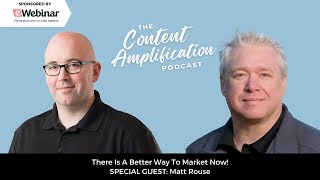
In this interview, Shaun Whynacht talks with marketer Matt Rouse about why many small businesses suffer from complacency and outdated processes, emphasizing the need to document and regularly review workflows. Rouse explains that traditional text‑and‑image social media posts no longer drive growth; instead, the shift is toward peer‑generated vertical video (which he calls “Peer‑tainment”). He outlines the three platform‑driven metrics that determine distribution—audience retention, watch time, and session time—and how AI curates content that meets these goals. The conversation moves to practical AI applications: generative tools that create stock images, video edits, subtitles, and even language‑specific copy; custom scripts for converting Canadian to U.S. spelling; and AI‑assisted summarization of complex press releases. Rouse differentiates between embedding‑based chatbots (which retrieve predefined data) and training‑based models (which learn from supplied documents) and shows how these can power customer‑service bots. He also discusses the emerging landscape of artificial general intelligence (AGI), its open‑source availability, and its potential to automate end‑to‑end video production tasks. Finally, Rouse promotes his books on Peer‑tainment, his agency Hook Digital Marketing (Canada and U.S.), and offers concrete steps for businesses to adopt these strategies, including using AI‑driven tools to generate content, edit concisely, and leverage affiliate revenue.
Chapters
Matt, thank you so much for joining me on the show today. I'm excited about this because you're the first guest that literally is probably about 30-45 minutes down the road from me. So, that's pretty exciting that we're actually that close and in the same province.
We're in the neighborhood.
That's right. That's right. Two marketers having a chat here. You have an impressive history and background in marketing, digital, tech, and everything. Been through your website. And you wrote several different books. And we're going to talk on a couple of those topics here today. And then, we're going to touch on a very relevant topic, AI, a little bit later on in the show. So Matt, I want to talk first about your thoughts around people becoming complacent, old habits, and how that's actually impacting their small business. One of the phrases I hear all the time being in rural Nova Scotia is, 'What's the way I've always done this? Why should I change?' What's your view on, on this and how it's actually negatively impacting businesses?
Yeah, well, it's a massive negative impact, and a lot of times the person who is the owner of the business or the manager of the business is so busy that they are unaware of the problems that are happening. And I think the first biggest problem is that in a business, the idea is let's figure out how to do this thing, right? So whatever it is we're going to do, it doesn't matter what industry it is. As soon as we've figured out how to do it, the next step is document the process, right? So we want to make that process, you know, if we haven't documented it, I mean, you should be documenting your processes, right? But you document the process or you have someone in the organization who knows how to do it and they have a system. And once you have the system, our brains are, you know, have evolved to be lazy, right? Because we want to conserve that energy. We don't want to be spending our time thinking up new ways to solve the same problem. And that's a problem because things change over time, right? The actual title of my previous book is How We've Always Done It, and There was— there's, there's a little story in the book there where, you know, one of the staff members was spending about a dozen hours a week posting to sites for social media, getting zero engagement. Right. So they were spending almost a quarter of their entire salary and all of their, you know, work and resources to something that had absolutely no benefit whatsoever. And that happens all over the place, right? Another thing that happens is if there's no review of the processes, then there's no reason to update those processes, and you don't know if they're still valuable or not, right? The other thing is updating our knowledge and You know, as somebody who graduated high school in 1990, I'm sure that the education system is a lot different now in high school than it was when I went to school, obviously. But, uh, and again, the example that I used from the book is a conversation between a parent and a child, a real one that a friend of mine had with their own child, about how come they're watching Jurassic Park and the dinosaurs don't have any feathers on them. And it turns out actually at the time when they made Jurassic Park, they knew the person that they had talked to, the paleontologist, knew that dinosaurs actually had feathers, but it was not common knowledge. And they were— the studio was worried that if they had feathered dinosaurs, people wouldn't recognize them. So they went with the non-feathered dinosaurs. But in school now, they teach that dinosaurs had feathers, right? They're basically just giant birds, right? They're like giant lizard birds kind of thing. I'm not a paleontologist. Don't quote me on that. But apparently dinosaurs have feathers. So anyways, when it comes to your business, updating your knowledge matters, right? And there's something about that that's really interesting and very relevant right now. And that is that the way that current marketing, especially in the social media world, has changed is that they don't use the same KPIs and the same metrics that we used to. But everybody out there is still telling you, you got to get that engagement, tell people to smash that like button, you know. Um, but that's not what makes your content spread anymore. So if you don't update your knowledge then you're going to keep doing the same thing and getting less and less benefit over time until it's worthless.
Absolutely. And Matt, you got, you got me and you got everyone else on the edge of the seat and you say update your knowledge and that's not the what, what works now. What is working now? What, what is going to get that, you know, move that needle for us?
Well, I mean, there's a few things and so it really depends what your goal is. But if you talk to 99% of business owners, it's lead generation. Right? Everybody wants more leads, leads, leads, leads. But they're all posting on kind of what I would now call traditional social media, which is your kind of image and text-based media. That's Facebook, you know, Instagram, Twitter, these places where they've always been posting. And so they keep posting, thinking that they're going to reach new people somehow. When they're absolutely not going to reach any new people. The chance of you putting a business or, you know, profit-related or lead generation-related post on, you know, with an image and some text on Facebook and getting someone new to see it is almost zero. Even if it does actually get some spread to it, the chance of it going like, as people quote, viral, is zero. Because the algorithm knows it and it says, we're not going to spread this any farther because we want you to spend money to spread this farther because you're a business and you have money and we want your advertising dollars, right?
Absolutely.
Now, there's sections of these platforms that do have reach, right? What everybody calls reach, which is reaching new people. And that's your vertical video side of it. And the vertical video portions of these apps, as well as other video apps, which is your YouTube, YouTube Shorts, video from Pinterest. Um, Pinterest actually upcoming player again right now, by the way. Um, your video and stuff on apps like Snapchat and Discord, and then you've got streaming apps, Twitch, Amazon Live, kind of regular YouTube, and the TikTok and all these places that have kind of peer-generated video content. I've kind of— I didn't have a term for what these are, and that's how I came up with the idea for my new book, which is called Peer-tainment, because it's peer-generated entertainment. And I know, and I've had a few people point this out, and I understand that previous image and text were also pure generated, but they didn't have the same goal. And that's what kind of brings this around to your original question is how are they different? And you know, where, what is effective now? And these pure-tainment networks, they have 3 things that they're trying to get from you. And if you align your goals for your business with the goals of the platform and the goals of the person who is going to watch your video. Those have to be in alignment. And what you're trying to get is audience retention is number one. Audience retention is how long does the person consume your content for. So if it's— if you had like this podcast, let's say it comes out to 30 minutes Somebody listens to it for 15 minutes, that's a 50% audience retention. And then it averages that the more people. So, you know, if 2 people watch it for 30 minutes, 2 people watch it for 15 minutes, you know, it's still 50%, right? Actually, that would be 75%, but we'll do the math later. Okay, so you've got audience retention. The other one is called watch time. And watch time is different than retention. It's not how long people have watched your content. It is the total amount of time spent watching your content. So if 2 people watched your video of this show for 30 minutes each, you would have an hour of watch time. And then the third one is session time, which is if they watched your content, did they watch any more of your content? Or if they listen to your podcast, did they listen to more episodes of your show? So you need to optimize for those 3 things: audience retention, watch time, and session time. And the reason you need to optimize for those is that there's an AI that's looking at those statistics and it's saying, wow, people like to watch your entire video or most of your video, and they watch other videos that you've made. So we're going to spread that to more people who are demographically similar to these people, or people who watch videos that are in a similar style or a similar topic. And just like everybody talks about all the generative AIs right now, like ChatGPT, and everybody's all crazy about it, you know, and Bard and all the things— these systems are all managed by AIs. The AI has goals. It's been told these are the things. If this happens, Spread this to more people. So if you want your content to spread, that's what you got to do.
It's very interesting. You basically, you got to play by their rules.
You have to play by their rules because they hold the purse strings, right? Yeah.
And then I'm pretty sure there's people that are listening right now and they're like, oh, like I have to do video.
You don't have to do video.
I mean, it's going to, going to help. To get it out there. And in a lot of times, you know, we're seeing less and less posts where, you know, there's links out to outside websites and things like that because it's going against what they want, right?
That's right. You're going to— if you're trying to make people leave the platform, that goes against the idea of watch time and session time, right? That's where advertising comes in. So your advertising is kind of twofold. One side of your advertising is I'm going to pay to get the distribution that I need to reach more people. And the other side is I'm going to use paid advertising as an off-ramp from my content or other people's content to what I want them to do. Right. So you could pay to get distribution, have them watch your content, and we'll get back to that in a second. You pay for distribution, have them watch your content or listen to it, whatever the case may be. And then when you pay the platform to have people leave the platform, that's what they want, right? They want your money because they want to make sure that you get a conversion when somebody pays, right? So if you pay for ads, they want that person to go buy your thing because that makes you buy more ads, right? And that's how they make money. So if we go back to it for a second, if you're going to distribute content and pay for that distribution, you still need to follow those 3 rules. You still need to say, how can I get people to keep watching my ad as long as possible? How can I get them to watch it more often? And how can I get as many people to watch it as I can? And then you will have success with your advertising, just like you would with your traditional content. And this works for everything, okay? Like your podcast, you put a little introduction right at the start. Yep. And you talk about what's going to be in the episode. Why do you do that? Because you want people to keep their attention, right? Yeah. And I mean, there's, there's lots of tricks of the trade and stuff that people talk about, you know, like open cognitive loops is something people talk about all the time. There's different terms for it, but that's like, you know, at the end of this, I'm going to tell you a little bit more about you know, how you could use entertainment for lead generation. So now people want to, you know, like the cliffhanger ending, right? They need to see what happens, so they're gonna listen longer, right? And I will tell you that at the end, by the way.
Excellent. So you mentioned there, and even before we hit record, how you've been using AI, and obviously when you go to your website, your book on peer attainment, you've got an AI chatbot on that site that's there. How do you feel AI is going to change, enhance, hurt, I guess, whatever you want to use out there, the current landscape for businesses and their marketing?
Well, so there's kind of a short-term view and a long-term view. The short-term view is you better get on board now because the people who are using it are going to be so much more productive and get so much better results that they will like massively outpace all the competitors who are not using it. And of course, that's not every single industry, but it's the majority, like industries you wouldn't even think of, right? Over the long term, you just think about simple things like incremental improvement. Right? So if I'm gonna try and learn a new thing, right, like I was, I was deep into like learning stuff about blockchain and Web3 last year. I wanted to learn everything about it, so I did something every single day for 100 days. I would sign up for something or read an article or watch a video or whatever it is, right, every single day. And in 90 days I was giving presentations about it because I knew more than almost everybody around me knew about that thing. AI, I work with it every single day. Every day. I worked on an hour this morning with my AI, right? And the— there's two things that are going to massively disrupt marketing. And the first thing is the generative AI process. It has already done it. So if I can't find a stock photo, I make one, right? If I need a video or something like certain types of video transitions, if I need an SRT file to upload with a video that has the closed captioning, I just upload it into Runway and I hit the button and I go back to it half an hour later and the file is generated, right? If I have a video that's in this format we're at right now while we're recording 16:9, I can take this entire video, put it into an AI called Munch. Munch will cut it to 9 by 16, subtitle it, tell me what tags to use, tell me what hashtags to use, give me a Twitter post to go along with it and subtitle it with and generate the SRT file. It does it all automatically. Mm-hmm. I was doing that in my agency and taking you know, 8 to 10 hours to cut up an hour of video and get it all done. And now we do it in 30 minutes. So compare an agency that's still doing it where it takes 10 hours and another agency who's doing it where it takes 30 minutes and multiply that by a year. So it's hundreds and hundreds and hundreds of thousands of hours just for one task, right? Mm-hmm. We write a post. For a client who— they have two websites because they sell in Canada and they sell on a separate website in the United States. So I use the AI to help me write a Canadian to United States spelling translator, which is honestly one of the most pain-in-the-ass things to do before, right? Because we write something, there's different words are spelled differently and there's different slang between the United States and Canada, right? And you don't want to use Canadian spelling in the US, it's— people get less offended in Canada if you use US spelling because they're kind of used to it, right, from all the US media. But the other way around, people will like post on your stuff, they'll be like, you spelled neighborhood wrong, you know, there's no U in color, right? So anyways, I wrote this little translator with— it's, it's just a GPT Turbo API and a little bit of script that goes with it, and you could paste in the blog for one site. It'll convert it to US or, or Canadian English depending upon what you started with, and we can post one to each site. I had to go summarize a press release. I was sending out a press release for a clinic that does this amazing thing for cancer testing called functional profiling. They can actually double the survival rates of people by getting them the right treatment for cancers. They did a press release about their study, this 20-year study that they did. I don't understand anything about oncology, okay? I don't know what the words are. I don't know what any of the drugs are. I don't know anything. So I needed to write a summary for this very complicated press release. Instead of writing it, I used the AI to write me a prompt for an AI that would summarize it properly. And then I used that to summarize the press release and then I had them double-check it and they said it's perfect. So, I mean, these are things that would have taken, like I said, hours before, and now we're doing them in minutes, right? Yeah. And, you know, and not only are we using the available tools, we're using those tools to write the tools we're going to repeatedly use. So internally, I've got all these tools that we're building up in my agency And then if I have somebody come on board who's, you know, a new staff member or a contractor or something, I say, hey, I need you to handle this thing. When you need to convert this from Canadian English into US English, just go use this tool.
That makes sense. The sky's the limit what we can do.
It is. So the other thing, the other thing is, is a little more complex and It's called AGI, right? Which is artificial general intelligence. GPT is an LLM, it's called a large language model. And what it is is basically a really fancy version of predictive text, right? It was taught to predict some text and then they use bigger models and put some more complexity to it. And they did that over and over. And that's how you get up to like GPT-4 now that can do amazing things, right? It could even, you know, your image generators are kind of the same thing. They're predictive text except with images, right? And it depends how they're trained. And there's a bunch of stuff in there that we don't really have the time to get into, right? But an AGI is a task model. So the goal of an AGI is how do I complete this task? Not only does it remember how to complete the task, it iterates by itself to figure out how to better do the task the next time. And it can also take that model to something it deems as a similar task and use what it learned from one task to learn how to do another task. And so what they've done is they've combined this with the generative, uh, AIs like ChatGPT and Stable Diffusion or Midjourney and these type of things. And now you can give it a task. You can say, I want you to go search all the YouTube channels related to this topic, find the most popular videos, take all the screenshots, generate a thumbnail that, or 3 thumbnail designs that look similar, and write me a script with time codes of what we should make our videos, you know, what the narration and everything for our video should be to compete with these other videos. And you can let it go and do its thing and, you know, go to bed and get up in the morning and you have a video script and 3 thumbnails ready to go so you can start recording it. Right. And it could go do those processes on its own by itself. Now, is this technology readily available to To us now, you can install it on your laptop today. It's open source. Excellent. I mean, you got to know how to use Python, but, you know, so you might need a developer. But I mean, it is available. And I mean, the idea that somebody like, we need to ban AI, like, it's that those days are over, right? Like, it's open source, it's on separate computers now. There's no way that you can ever block it. You can't ban it. And you can use the system to build the system itself better. So, I mean, it's just there's no way to get rid of it. It's the genie's out of the box unless you kill all electronics in the world. It's done right. You can install an AGI on your phone with Linux.
So that's crazy. So I want to talk a bit about, you know, using AI in, you know, let's say the chatbot type of method, because I notice you have one on your website and, you know, people over the years have, you know, had chatbots, so to speak. How has AI leveled this up and made this more useful than just, you know, you have to go in and put all the questions and possible answers into the system?
So there's two things that you can use with the chatbot. And I'm using a system called Embedding on the PureTainment website. And if you use that chatbot and you ask it a question, like who was the editor of the book, it'll tell you about Alicia Quinn and she's the editor and that she lives off-grid in Nova Scotia and she has two dogs and, you know, but it's just pulling that from a list of data points that I gave it. So embedding in an AI is essentially, it's just gonna regurgitate the information you told it to tell people, right? But it can understand like a difference between who edited the book, Who was the editor? Was Alicia your editor? All of these questions, it understands what you're trying to get at and it can pull the right information and contextually give that to you. The other option's called training. And training is when you're giving data to the AI model itself that it's going to learn from and extrapolate from. And you're not telling it repeat this if somebody asks something about this topic, You're saying, here's all the data, use it as part of the model when you generate your output. So training would be something like what I'm working on right now. There is a piece of software that I use in development that has terrible documentation. It's really hard to find kind of bits of code for it, which makes me feel like I shouldn't be using it, but anyway, that's not important. What I've done is I've gotten all the official documentation, uploaded them to a database system called Pinecone, which is a vector-based database, which if you're interested in that thing, you can go look it up. If you're not, you don't need to know. And that trains the AI. So now when I ask it questions, it gives me the current version answers because ChatGPT Even GPT-4 was only trained up to like 2022 or halfway through 2021, I think it is. So any changes that have been made to the programming system since then are not reflected. But now that I've trained it, it pulls from the latest data first and it integrates that into its knowledge. So it will write code from that it was originally trained from, but it also will modify it with the changes that have been made since then and then generate appropriate code for me to use in my program. But you can also do it for training models, like everything from your customer service database can be put into the training model. And then when people ask it questions about your product or service, like, when I push the power button, nothing happens, and it can search that training data you gave it and say, What model do you have? And you can be like, okay, it's a 1234. And it says on the 1234, if you would like to reset the system, pull out the plug for 10 seconds, put the plug back in, hold the power button down for 3 seconds. Right. Because it's trained on your customer service data.
It's brilliant. It's brilliant. Now, you mentioned that, you know, by the end of the episode, you talk about entertainment. And how to use that in your marketing?
Absolutely.
Let's do it.
So I think that there is— and I should preface it a little bit— this is not a new idea, right? It's been around for a long time. But what there hasn't been is kind of anyone looking at kind of a business proof of concept and saying this can work for anybody, right? It was all like, wow, that, that was a one-off that, you know, Somebody made the Squatty Potty video and they made $1 million or whatever, right? Which was actually Derral Eves, the YouTube guy who wrote the YouTube Formula book, which is brilliant. But there's a company who's, you know, kind of coincidentally one of Derral Eves' clients of his mastermind group. They refurbish office furniture, which is probably the most boring thing that that you can imagine, right? Right. Nobody is going to go on YouTube unless they're refurbishing their own office furniture, which doesn't help that business any, right? Nobody's going to watch videos about refurbishing office furniture. So what they did is they said, okay, what are the things in an office that people actually care about, right? That has something to do with furniture. Their most popular video I believe it has 2.4 million views. I'd have to go back and check it again. It's about how to hide the cables on your desk. So it's about kind of desk cable organization. They have links in the description that go to affiliate Amazon products, so you can get all the products that they used in the video and the cable wraps and all the things that they use to tidy up the desk and the little box that they put underneath their monitors, you can slide your laptop under it and all that stuff. None of those are their own products. But between the revenue that they get from the ads that show before and during their videos and all the affiliate revenue they get, they're making $30,000 a month. That's insane. And they used to spend $60,000 a month on on ads. So now not only are they not spending any money on ads, they're making $30K back on their organic, and they have 10 times their business. So their business now does about $12 million a year. So if you want to spread your message, get your business out to people, get paid while you do it, and improve your business. Those are the 4 things that you can do by having an excellent kind of pure-tainment-focused strategy. And it, just like you were saying, where people are like, uh, now I gotta do video— well, now you have AI tools. They will take your blog or whatever it is, they'll give you the ideas of what to write, they will take your blog or your script, right, and turn it into a script. You can use the— for titling, SRT files to get the closed captioning done. All of these tasks that used to be a huge pain in the ass are all automated now. You can even use them to automate picking out stock footage. One thing I would consider though is that editing is probably one of the least talked about but the most important things around it. So you have to edit to be very concise. And if you're not concise, then you get people drop off because they get bored. And when they drop off, you lose audience retention. And when you lose audience retention, your stuff doesn't get distributed. So you have to edit to be very concise. There's a million videos about editing. I would suggest watching a channel on YouTube called Film Booth. It's exceptional channel to learn about editing. I also have some ways that you can learn storytelling, especially for very short stories like TikTok and YouTube Shorts and Reels, using some formats like fast fiction. And I talk about those in the Puretainment book also.
Excellent. So where can people get these books?
It's on Amazon everywhere in the world, hardcover and in Kindle. And you can also go to peertainment.com and chat with our chatbot, or have it write your next blog or your next video for you. And if you want a really simple prompt, you can do— go to peertainment.com, it's P-E-E-R and then Tainment, just like entertainment. There's a little chatbot button in the bottom right corner, and type in 'You are a' and then whatever your title is. So Let's say you're a plumber, right? You go to the chatbot, you type in, you are a professional plumber. You are going to write about— and then think about a problem that your clients have, right? And type that in. You are going to write about what to do if your sink is plugged with kitchen scraps. Hit enter and it will write an article about it for you. And you can say, convert this into a post for Facebook, and it will put it into a Facebook post for you. Then you can say rewrite this as a video script that is no longer than 60 seconds, and there's your TikTok script. You want to try it out, save yourself some time, or give it to whoever handles your, you know, your social media or whatever it is that they do for you and have them try it out. Believe me, the worst thing that'll happen is you'll get some good ideas.
Absolutely. Now, before we close up here, somebody's listening and says, you know what, this Matt guy, he's amazing. I think he could really help my business. You have a digital marketing company called Hook, hookdm.ca. Quickly give a 1-minute kind of talk on what you do, who you work with, and how you can help them.
Sure. So we actually run two marketing agencies. We run Hook Digital Marketing Canada and Hook Digital Marketing in the United States. We don't have a specific niche or anything like that. Our goal is to try and determine what your business needs, what's the best way we can achieve it, and what are you going to need to make that happen. And then we can provide some of those services, but we can also farm out other services or, you know, refer you to people who could do those things for you. But the best bet is just go to— you can actually go to matthewrousse.com, and that'll give you links to not only the books but also both the agencies. And if you have a company who sells in Canada and the United States, that is probably the closest thing to you know, a niche for us because our business was founded in the United States where I lived for 20 years. And but we also have the Canadian side where I live in Nova Scotia, and I'm originally a Canadian as well. And my wife's from the United States and, and she runs a flower farm. Oh, which is fun because I get to live on a flower farm with a bunch of chickens and stuff.
You got— you're living the life, hey? That's right, Nova Scotia on the flower farm. So Matt, thank you so much for, for sharing this wisdom. I know there's so many things in, in the playback I'm going to be writing down, uh, the tools, the books and everything.
Thanks, Shaun. You have to send me your address and I'll ship you over a book.
Awesome, sounds great.
All right.
More from Shaun


Julie Vanexan recognizes Shaun Whynacht from Blue Cow Marketing at the Nova Scotia House of Assembly








