Unleashing the Power of Your Message
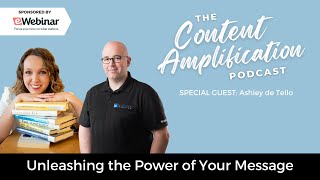
In this interview, host Shaun Whynacht talks with Ashley, founder of Dayteo Publishing, about how entrepreneurs can transform the valuable messages and experiences they hold into books that serve as powerful marketing and credibility tools. Ashley explains why physical books remain vital in a digital world, describing them as modern business cards that establish authority. She outlines the initial steps for aspiring authors—brainstorming ideas, using mind‑mapping tools, and treating the book as a product that requires market research, keyword analysis, and a solid outline. Ashley introduces her "5 phases of profitable publishing": writing, editing, publishing, marketing, and expansion, emphasizing that publishing is only the start and that books can be leveraged to generate courses, consulting, speaking gigs, and further titles. She discusses what makes a good business book—solving a specific audience problem and speaking directly to readers. The conversation also covers the role of AI and ghostwriting, noting both the risks of low‑quality output and the benefits of using AI as a drafting aid, while stressing that AI cannot convey a unique personal story. Ashley describes the services her company offers, including retreats, manuscript reviews, ghostwriting, and an upcoming course, and shares her personal writing routine. Finally, she reveals her upcoming memoir‑business hybrid, "Hope Unleashed," about finding hope after her husband's accident, illustrating the personal motivation behind sharing a message.
Chapters
Ashley, thank you so much for being on the show today. I am excited about what you're going to bring to our audience.
Oh, thank you so much for having me. I'm very excited.
Now, the topic that you're an expert in, um, and that I'm— like I mentioned, I'm excited to have because in 111 shows we have not talked about this or anyone that can help with this. Um, a lot of people, they have great messages inside, right? They have a great story to tell. They've got a ton of experience, But that's where it ends, right? They're just stuck. They can't get it out. And that's where you help people in what you do, right?
Yes.
Excellent. So let's talk about that. Let's talk about the importance of how you can leverage that message that you have deep inside you as a business owner, somebody who has been, you know, through something in your life. You've got experience. How can that help you get that out? Like, what is the importance of getting that out there?
I think there are so many benefits to it. And, you know, I help people with both, like, the content marketing side of things, but also with books. And there's something about sitting down and trying to put your ideas into words that gives them greater clarity and power, that the very act of writing makes everything else you do better. And for some people, they are, you know, they are natural writers and they do like to sit down and write. But most business owners, even if they do like to write, they don't have the time to do that. And so I love to help people, you know, sit down with them and, and talk through their ideas and extract all those things that are in their mind and help outline it and put systems behind it and different methods and kind of just take what's in their head and make it clearer on the page than it was even in their mind. And I love that moment when they see it written down and they're like, yes, that's it. That's what I've been trying to say. This is what has been stuck inside me. And there it is. And it's even more powerful when it's on the page.
Absolutely. I mean, there's so much just in what you just said that I want to unpack here. The first thing I want to touch on is, is books, right? I mean, you've got them behind you. Those that are watching this can see that. You know, we're in a digital world. Are books still a really relevant way to promote yourself and get your message out there, or should it be electronic? What's your take on that?
Yeah, I— short answer, yes, very important. Long answer is I used to think that, yeah, ebooks are like the new thing and off we go to the races, everything should just be ebooks. But actually, it's only about 12% of all books sold are ebooks. And a huge percentage— I'm not going to misquote it, so it's just a big percentage— are still paperback and hardcover books. And people like that tactile nature of having a book in their hands. And for business owners, who, you know, is primarily who I help, it is the new business card. And it's the fastest way to establish yourself as an authority in the field. This is like have literally written the book on your topic. And, um, I know, you know, I help a lot of people who like to speak at conferences and present their business and all those different things, and they can take their book with them and sell it there at the conference. And also it just adds this level of credibility to what you do when you can say, hey, I've got the book. Whether you sell it or not, it, it gives a lot of credence to what you do.
For sure. I mean, I've been in digital marketing for 20 years and I may have bought 1 or 2 digital books. I have never read them, but I've got a ton of physical books. So I can attest to that. That is a very, very true thing that is still relevant that way, right? You just love to hold those books. Now, if somebody's listening to this and they're like, you know what, they feel deep inside, yeah, like I have a story to tell. But they're like, I just, I'm not good at writing. Um, I don't know where to start. Um, obviously we're going to give you some information at the end of the show of how to contact you, but where should somebody start to just to start to think, yes, I want to move forward? What's that first step they need to do?
That first step, that's a really good question because everybody kind of comes to the writing process differently, but I just love I tell people just to throw up on the page, like to brainstorm, and that you just want to get all of your ideas out there. And there, there are great tools if you want to do it online, um, like Whimsical and all these mind mapping tools that you can use to just start throwing ideas out there. And I think many of them use AI as well that you're like, oh, I have this idea. And it will suggest like, oh, do you want to talk about that? Do you want to add this to it? Um, and you can also just do it on a piece of paper and start start writing out all your ideas of everything that you would ever want to put into a book. And most people, they'll be like, oh yes, I want to write a book. And then they start into this process and they're like, I have 20 books that I need to write. And so that is also a part of the process is figuring out what you're going to say in this one book because you bring so much to the table. There's this wealth of knowledge, especially business owners who have learned so much through their experience and are often, you know, in this position of helping people and solving problems. They have so much that they've learned through the years. And so a lot will spill out. And so there's that part of it of just getting all the ideas out there. And I also, again, with that business mindset, it's you want to look at your book as a product. You are creating a product that you are going to sell, and you would approach that product with the same research and development as you would any other product that you would create. And so you want to look at, well, what are people looking for? Who's my audience? What are, like, the keywords that are related to my topic? And go into this whole research process to find out, you know, one, is there a market for what I want to put out there? And two, how can I speak to those people? You know, I've helped authors who— they've written a book and then they realize, oh, this is like a huge thing in my industry right now, and I haven't spoken to that at all. And look at all these keywords that people are searching for on Google and Amazon and different places. Let's, let's write a whole chapter about that in my book. Fits in perfectly. And so it helps you to kind of inform what you're going to write about. And so the research process can take— you need to give it at least a month to research and then go into the outlining process. And I am a very big fan of outlining. If you can get a good outline in place, the writing is like a piece of cake. The outlining is like the meat of the time that you need to put into it.
Yeah, and I mean, business owners, they're used to planning things. I mean, if you're, you know, if you're in retail, you're planning sales, you're planning promotions. If you're, you know, a professional speaker, you're planning presentations, you're doing that. It's probably a very similar type of process as you plan it first and then you, you know, you start to build it out from there, right?
Yeah, it's a very similar process. And I love— that's one of the reasons why I love working with business owners is that they understand when they approach the writing process, they're approaching it as a business person with that mindset, and they understand the, the meaning behind it. And I really push, um, the, the idea of profitable publishing because anybody can put a book out there. In fact, I saw a statistic the other day that every 45 minutes a new business book is published on Amazon, and that's just business books, like, not including all the other things. And so you have a lot of competition, and so you have to approach it with this strategic, how am I going to get this out there? How am I going to stand above everybody else and market?
For sure. Now, I mean, this is probably a very preference-based question here, but in your opinion, what makes a good business book?
That's a very good question. I think one of the main things that I'm always taking my clients back to is this book isn't about you. I mean, it may be about you literally or about your business, but it's not for you. That you are trying to solve a problem. Somebody has a pain point or something that they want to achieve or overcome or whatever it might be, and your book is the solution to that. And so how do you speak to those people? You really need to understand your audience. The best books, that I've, you know, helped people write and also just read myself are the ones that really understand their audience and that aren't speaking down to them, but are speaking to them and almost walking with them and showing them like, here's what you need, here are the solutions to your problems.
Yeah, that makes complete sense. Now you mentioned about like that stat about every 45 minutes a new business book is coming out and that kind of, kind of makes me wonder. And you mentioned or alluded to AI earlier on. You know, a lot of people before, you know, they've used like ghostwriters, people wrote for them. Now a lot of people are using AI and writing, you know, chapters, if not full books. You see a lot of stuff advertised, hey, write your full book with ChatGPT. How much of an impact do you think this is going to have? Is it going to dilute the quality of the book industry? Is it actually a good thing? Um, and I'm sure there's a right and wrong way to utilize it. What's your opinion on where AI is coming into that space right now?
Yeah, I think there's both positive and negative with AI, and it all comes down to how we're using it. And I definitely think there will be people who don't use it the right way, and it will dilute the market, as you were saying, and take away some of the quality. But I mean, there are already so many books on Amazon that are very poorly written that, like, we've already got a bunch of bad quality stuff out there. This will just add to it. Um, but it will also give people who, who can offer high quality just more of a boost. And, you know, I've played around with AI and I've, you know, I have a friend who does, she's written, like, she wrote a, I think she said it was like a 7,500-word book. And I was like, well, I've written articles that are longer than that. So I don't know if you can count it as a book, but, um, yeah, like chapters and things like that that you can add to it. What I found though is One, AI doesn't know how to speak to humans. It's really good at regurgitating information and kind of copying different styles and things like that. But I always have to go back in and edit anything that AI generates for me so that it's, you know, especially with content marketing, you want those like choppy sentences and phrases and paragraphs that aren't too long and things like that of like, no, AI's just like throwing these like huge paragraphs at me that we need to dissect the information and it's very repetitive, all the different, you know, played with ChatGPT and Bard and a couple others of just like, they're very repetitive. So you've got to go in and fix all those things. Um, and what AI can never do is tell your story. No matter what is out on the internet, if you like, if that's something inside of you that you've never shared anywhere, it's very difficult impossible for AI to, to tell your story because they're— it's unique to you. And that is— we're wired for story. And so the thing that makes you most powerful is the thing that AI cannot copy. And so the people who have powerful stories to tell and the lessons attached to them are going to have a huge advantage on AI. And it's a great tool. And, you know, I think we're all still learning how to use it. It's a great tool to, um, make the process go faster. Um, but I don't know, what's your opinion on it?
Well, I mean, the biggest fear that, that— not that I have this, but what I'm hearing is that like AI is going to take over, right? Like it's making everybody obsolete kind of thing, which is not true. Um, I, I think this tool, and that is what it is, is a tool. It is something that, that you work in parallel with. Uh, you know, the way that I look at it is you never have to start with a blank page again, right? Like, I utilize it to generate ideas, right? Um, you know, a lot of times I'm making presentations and doing webinars, and I'm like, you know, come up with 5 unique angles for this topic that would be, you know, Um, you know, catchy or something like this. And just the ideas that it throws back at me, I'm like, I kind of like that. Let's, let's riff off of that. And then I'll take it and, and write with it and run with it. Right. So, you know, it's just like having, you know, another team member there that, um, you can throw an idea at and be like, hey, what do you think? Give me something back. Right. And I think that's the, the kind of mindset that you need to have with it. Um, it is not, you know, it is not something you're going to be like, hey, write me a 20-page book. Or 20-chapter book on this topic, and then you can go to the coffee shop and come back and it's done. It's not going to happen. Yeah, right. So I like where it's at and I like where it's going. And I think that those that adopt it and use it can, you know, they do it the right way, will find themselves in a better place with it.
Yeah. Yeah, I agree 100%. I like how you said that it's a, it's a tool that we work with in parallel.
For sure. Now, let's say, you know, you're going through this process, whether, whether somebody's working with you as, you know, as a publisher that can help them do that, or they're doing it on their own. They've got this book, they've written it, they, you know, maybe they've got it printed, self-published, or whatever. It doesn't end there, right? Like, what is next? Like, you got this book and, you know, maybe you're gonna like throw it up on your website and try to sell some copies, but how do you make the most of this?
Yeah, that is a great question. Well, in that I have so many people who will bring me their manuscript and be like, I wrote a book and now I'm going to be a millionaire or bestseller at least. And I always kind of have to— I feel bad to bring their expectations down just a little bit of like, okay, so I promote the 5 phases of profitable publishing. And so it's writing, editing, publishing, publishing, marketing, and then expansion. And so when they bring me their book, I'm like, oh, you just finished phase 1. There's a whole process to the editing and then getting it published and doing it well. But then after that, yeah, how do you make the most of it with— and so that's where marketing and this idea of expansion comes in. There's so many different ways to market a book. And I mean, we could talk about that for a long time, about all the different types of marketing that you can do. But the expansion part of it is, you know, building a business off the back of your book, or building a course that— any type of next thing of like, if they've read the book, what do they do next? Do they go to your website? Do they hire you as a consultant? Do they— you know, I've had clients who charge high, high consulting fees, and if their book brings them just one lead that follows through, they— their book is very profitable. And, um, but also people who are like, okay, you've read the book, now take the course, and here's the link, like, you know, at the end of the book, a link to the course or whatever it might be. And then getting speaking engagements and being paid to speak or being given permission to take your books to your event and sell there. And if you already have a business, that's one thing. Or if you don't have a business, you know, starting a website, starting a blog, building out these different things behind it and having the book be the foundation that you can build on to expand. And for some people, that just means writing more books. Um, I focus mostly on nonfiction with business. Um, but anytime anybody's like, oh, you do publishing, I have a book and it's a fiction book. And I'm like, well, it's not really my specialty, but I'm starting to build that out and have, you know, people on my team who are more experts in fiction. But for them, it's helping them get that business mindset. So I've kind of given myself this thing in my head where I'm like, I'm helping entrepreneurs become authors and authors to become entrepreneurs to show them that business mindset that you need to have and that it's not just one book. You've got to do another book and another book and keep putting products out there that people are going to want to buy. And so, I don't know. Does that answer your question?
Absolutely. And I think what you're saying when you mentioned about your book as a product, you know, it can be, you know, this pillar kind of foundation around what your business is built around. I mean, what comes to mind to me is, you know, StoryBrand, Donald Miller. Like, like he has this framework, this program where he teaches story. He's got a book named StoryBrand. You can, you know, you can take an online course on it, you can become certified in it, and it's all based around that kind of thing. So it has these many spin-offs behind it, right? Um, you know, he goes out and speaks on it. So it's, it's this— if it's done really well, like, it's almost like the foundation of a house. If you spend the amount of time to engineer it properly, no matter what you build on it, it's going to stand the test of time and it's gonna, you know, it's gonna serve you for a long, long-running period with that, right? So, um, that's excellent. Now, your company, um, and let me make sure I get this right, is it Datelo? Is that how you say it? Uh, what was that?
De Teo.
The L is like Y. I completely butchered that.
That was— I am sorry. Everybody does.
I said it phonetically when I was reading it there. But, um, so working with a publishing company like yourself, um, those who obviously listen to this right now understand that you help people. It's not like I have to come with a written book to to you and say, here, publish this, right? I can come with like, I know something's inside, help, right? That kind of idea. Let's talk a bit more about what you do and how you help people get from like zero to hero along the way.
Yeah, so I do have a lot of people come to me just with their manuscript, but that's how I started out, and I was just like, there, there are so many issues that they've run into and obstacles that have led them to spend a lot of time writing a book that still needs a lot of work. And so I wanted to take it that step back and say, let me help you with the writing process. And so we do retreats and help people with, you know, the writing process during those retreats. And I have like the archives from those retreats up on my website that people are welcome to purchase, but it's— I'm also leaning more towards creating a course for people that I can walk them through it, because up until now it's just been me holding people's hands and walking them through step by step. And so much of it I just repeat over and over again of like, oh, I taught this to the last person I talked to, and I could have just let them watch a video. Um, but for now I'm building that course out and still doing a lot of the handholding and walking people through that process. And it is this, I just read, I haven't read the book, um, but I read about the ghostwriting of the book, um, Spare, the memoir book by Prince, what's his name? Is that Harry?
Harry?
Yeah. Prince Harry. Um, and The ghostwriter also wrote the book for a tennis player, Federer. I can't— Roger. Yeah. And he said that it was like 230 hours of psychoanalysis sitting down with him. And I'm not quite that intense, but that's, you know, the level that you can go to of really sitting down and talking with the person and getting all their ideas and working on outlines and pulling in resources and doing research, and it's a very collaborative process. And if you don't want to write the book yourself, then, you know, we can ghostwrite it for you. There's also, um, they basically call it just speaking your book. So if you get an outline in place and then you know enough about the outline that you can just look at it and then speak what it is that is written there and add in more detail and all those different things, and you can use different transcription services like Otter, or I mean, there's a million out there that will just transcribe it as you're speaking it. And then that is, once you've finished speaking it, that's your first draft of your manuscript. And you obviously have to go back and do lots of editing and different things. And that's an option. And a lot of people that I talk to, they— and this is what I have to do, because even though I'm helping people all the time with their books, I want to write my own books. And I have to sneak a time in there somewhere. And so I just wake up early every morning and work for 45 minutes to an hour on my book. And it's so hard to stop when I'm like, okay, now I have to get my day started because I want to just keep writing. But I've talked to a lot of people that that's what been, you know, what they did is just, you know, wake up an extra half hour, hour early every day and jump into writing your book and working on it and having You know, the step-by-step process of like, okay, once I finish this, I know what the next thing is I need to do. Um, which is, I think, one of the most helpful things I can provide to people, um, if they are wanting to write it on their own, is to just show them this timeline of like, do this first, then do this, then do this. Um, so that they always know that they are being productive and that they're on track for producing something of quality.
Absolutely. And it was, uh, I don't know what year it was. It was, it was well over 10 years ago. I was attending a conference in Arizona and there was somebody there that helps people self-publish and I was speaking with them and I've always wanted to write a book up until that point and never did. I'm like, it's too big of a project, right? You didn't want to take that on. And they told me like, come up with the outline, like 20 kind of like problems that your audience might have and take yourself once a week to a coffee shop and send yourself an email as if you were giving that person the advice and the help on that topic, and then send it to yourself, put it in a folder, and after 20 weeks you have 20 chapters of your book. Uh, and that's what I did, uh, and that was a way to, to chunk it up and make it very easy to, to digest it and, and go along that path. And that, that process worked for me. Yeah, I did it.
So it's like, have you heard the Shel Silverstein poem about, oh, The Girl Who Ate the Whale?
No.
No. I love Shel Silverstein. My kids love it. And it's a little girl who's just tiny, and she tells everybody that she's going to eat a whale. And they're like, you can't do it. But she just starts in at the tail and takes little bites and chews like a good girl should. And in 89 years, she ate the whale because she said she would. And that's kind of how a book can feel sometimes of just like, it's this ginormous thing, how am I ever going to do it? But if you just break it down in those bite-sized pieces and work through it little by little, eventually it'll be done and it makes it not so overwhelming and it won't take 89 years either.
No, for sure. So how can people find out about what you do? Where can they find you online? What's your process of working? Working with you? Is there an application?
Uh, yeah, so my website is just dayteopublishing.com. Teo is like hello but with a T. Um, and they can contact me there. You can also just email me at ashley@dayteopublishing.com. I'm also on like Facebook and Instagram and LinkedIn and different places, but email's the easiest.. And then if you do have a manuscript already, there is a place on daytayopublishing.com where you can submit your manuscript, and I provide what's called a manuscript review where I'll read your entire book and then write up this report going over, you know, summary and the major issues, the minor issues, and then based off of what I see in your book, give you a quote for, you know, what it would take to do the editing, publishing, marketing, all those different things. Um, and then if you want to do help with, with the actual writing process, then the best thing would be just to contact me directly and say, hey, I want to write a book, help.
Excellent. Now, last question. What is the next book you are writing yourself?
Oh, right now I'm working on a book, uh, about hope. It's tentatively called Hope Unleashed, and it's part memoir and part just talking about what hope is and how to apply it and understand, you know, why we need it, um, based off of my husband was in this terrible accident about 5 years ago, and hope got me through it. And so it's what I learned through that process. So it's something I've wanted to write for a really long time, but I'm usually much more on the business side of things. And this, I was like, no, it's time. It's one of those things. I remember having this moment where I was like, I cannot die with this message inside of me. And, and I think that a lot of us feel that way of just like, there's so much inside of us, kind of going back to what we were talking at the beginning of like, We have these stories and these messages that we need to share, and they cannot die with us. It's a way to leave a legacy and make an impact in the world that is very powerful when you take the time to put it down on paper.
Absolutely. Well, I wish you all the luck with that book.
Thank you.
Thank you so much for speaking with us about publishing books and all the kind of insight that you've given us that, you know, I'm sure there's been inspiration that has, has come across our listeners that are like, I'm doing this, and I'm gonna, I'm gonna publish my book this year, kind of thing.
Yes, do it! You can do it. Thank you so much for having me on.
Thank you.
More from Shaun


Julie Vanexan recognizes Shaun Whynacht from Blue Cow Marketing at the Nova Scotia House of Assembly








