Unlock New Business Opportunities Through Podcast Guesting!
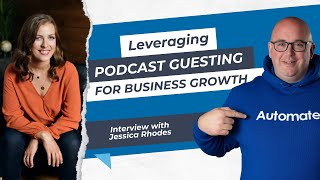
In this interview, host Shaun Whynacht talks with Jessica Rhodes, founder of Interview Connections, about using podcast guest appearances as a strategic networking and business‑development tool. Jessica explains why the podcast host is often a valuable connection, how to prepare for guest spots (creating a one‑sheet, bio, topic ideas, and pre‑written questions), and how to balance delivering value with subtle promotion. She shares tactics for building relationships before and after recordings, such as connecting on LinkedIn, pre‑calls, and follow‑up collaborations. The conversation covers selecting the right shows based on target audience versus niche competition, technical best‑practices for audio/video quality, and treating each episode as a long‑lasting content asset with evergreen calls‑to‑action and URL management. Jessica also outlines the evolution of the podcast‑booking industry, the differentiation of her high‑end agency (full‑time staff, client experience), and offers practical advice for newcomers, emphasizing a long‑term commitment to see measurable ROI. The episode concludes with a call‑to‑action directing listeners to interviewconnections.com.
Chapters
Jessica, thank you so much for being here today because we're going to be talking about podcasting and that is your wheelhouse.
Yes, it is. Thanks for having me.
Now, when we booked this episode, I was coming up with, you know, what can we kind of approach with this? And, you know, the networking side of podcasting is something that you do very well. You help your clients do that and that's where I'm hoping we can go today. So the idea of podcast guesting as a networking opportunity, explain that to our audience. What, what is that?
Yeah, this is something that is overlooked so much in podcast guesting and podcasting because when we first think about podcasts, you know, we think about the opportunity to broadcast our message. We know that when we— this episode gets published, there's going to be a lot of people listening to it. So that's often what people think of first. It's like, how big is audience? What's the reach? How many people are going to hear it? But what a lot of business owners who are using podcasts to market their business don't realize is the host of the show that interviews you is a business owner. That's a fellow entrepreneur who has your target market, which means they're a very valuable person to build a relationship with. And podcast hosts also tend to be, you know, sometimes extroverted people. They're, they're creating a show, which they're the type of person that likes to create things, are involved in events and summits, and they're, they're act like that's just the type of person that they are. So a lot of times podcast hosts often have other things going on. I've seen clients— my business partner actually was on a podcast where the host of the show also writes a Forbes.com column and turned her podcast episode into a written article. So now my business partner's featured on Forbes.com because of a connection with the host of the show. So you never know what these podcast hosts are connected to, connected with, who they could introduce you to. So rather than just saying like, what's reach and who is going to hear the episode, really focus on who the host of the show is because so much can come out of that. I've seen clients get such amazing returns on their investment in podcast guesting just through the host relationship, not even through, you know, listeners that reached out and became clients.
Mhm. Now, when you're working with clients that are looking to be a guest on a podcast, do you find that most of them have already done podcasting with their own show first, or are they doing the guesting thing first? Is there a better way to approach Most of our clients have—
don't have their own show. You know, it's not 100%, but most people that are attracted to being a guest, uh, at least through our service, is that they're like, I want to use podcasts, but I just— and I've thought about starting my own show, but it just feels like a lot of work, or I don't know how to start, I don't know what to call it, like, how do I produce it, how do I do that thing? But then they're like, but I could just be interviewed. I could just show up and be interviewed. That feels easier. And so that's always my recommendation too, is that even if you do want to start your own podcast, just go be a guest. Like, get used talking into a microphone. You know, you've been doing the show for years. I've been doing podcasting and podcast guesting for years. First time I put a microphone in front of my face, I felt really awkward. I'm like, oh, like, how do I do this? And so get— like, work through those awkward nerves. Like, get on a couple small podcasts. Like, build up your experience creating content into a microphone before creating your own podcast.
Absolutely. Now, when you're going to become a guest, you know, maybe you're new to this, listening to this episode, and you're like, this sounds great, like I can, I can be asked questions, I can answer this. How do you go about starting that? Do you, do you come up with a, you know, a talk that you're going to talk about, or you're just like, hey, I want to be on your show, ask me anything kind of thing?
Yeah, well, the ask me anything, a lot of people think it's more helpful. They're like, I want to just give the host freedom to ask anything. And it's nice to give that caveat, but what you're really doing is giving the host a lot of extra work to figure out what to ask you and what your topics are. So I— when I started Interview Connections, we were the first podcast booking agency, so nobody else was booking interviews on podcasts. I really had to create everything and the whole model. And one of the things that I created was a podcast one sheet, um, because when I was pitching— my dad was my first client, actually— when I was pitching my dad to podcast hosts as a guest— he's a business coach— I realized they all needed the same thing. They all needed a bio that they could read as an introduction, so like a 250-word bio written in third person. They all wanted some ideas of topics, like kind of some broader topics where we could go. And then they wanted some questions, like verbatim written first-person questions that they could read as if they came up with it on their own. And that makes their job easier, and it also sets the guest up for success. Because if you're using podcast guesting to grow your business, you want to be interviewed about topics that your target audience is interested in. Like, I could go be interviewed on podcasts about how I have backyard chickens— that's not going to do anything for my business because my target audience doesn't really care about that topic. So you want your topics and your interviews to be focused, to be relevant to your audience. So give the host some suggestions, but you know, you could say, you can ask me anything. Like, we can take this conversation in whichever way it's most valuable to your audience.
Mhm. Now, you, you mentioned earlier on that, you know, being a guest means the host is potentially a business owner, um, and, you know, they may need your service. They know other business owners. What about your time in the show? How do we generate leads without coming on the show and making it seem like I'm just here to sell myself. Yeah, what are some strategies around that?
It's definitely— it's a dance, it's an art. You don't— and it's a kind of a spectrum. Like, you don't want to be on the one side of the spectrum, the pendulum all the way swinging to I'm just here to get leads and sales. That's so important to not be super salesy. But you also don't want to not talk about your business at all because then you're like— I love sales. I believe that sales is a service. When you're selling something to the right market, you're giving them a service that they need. Um, so you want to find that balance where you're making it visible, like how you help people, but you're not being super salesy. And the best way to do that is to provide value, educate, inform, support what you're saying with stories that demonstrate the type of work that you, that you do. And, you know, whenever I'm interviewed on a podcast, it's so meta because we're being interviewed about being interviewed. So I do like to also point back to, like, pull back the curtain on what I do. Like, I'm answering all your questions, I'm giving as much value, and I am saying, like, this is how I started. Give people a background. Oh wow, she started this in 2013. Like, you can share stories and give information in a way that doesn't feel super salesy, but the listeners can pick up on the fact that, oh, this is what she does. Okay, she books people. Like, I'm not being salesy, but I'm sharing stories that let the listeners know that, like, you know, if they want to be interviewed on podcast, they can come talk to me. But I'm going to educate and inform as much as I can. So you have to find that balance.
Absolutely. And I mean, the— we all know that in marketing, stories are a great way to, to connect with the audience. And just for those listening, how we came to be in this episode, I would I was familiar with what you were doing. I, you know, I had signed up for some webinars in the past where you help people with, with, you know, getting on, on shows. And then your business is, again, you book people on, on shows. And somebody, I think, from your team reached out to me with you as a potential guest. And, you know, we connected on LinkedIn. You know, I have some automation that goes out. We emailed back and forth, which comes to the relationship side of that guest-host element. Talk about the importance and some tips on building that relationship before and after the actual recording. Well, how do you help people with that?
Yeah, absolutely. I mean, we give a lot of different— like, I can give a lot of different tips on things that you can do, and I also give that caveat of like, you don't have to do everything, because the last thing I want you to feel is like, oh, this is so much, I don't have time for it, and it overwhelms me. So, you know, kind of take, take it bits and pieces. But a couple things that you can do is, you know, get connected with the host on LinkedIn. That's That's number one, because now once you're connected on social media, you'll stay kind of on each other's feeds, you're on each other's radar. It's not just this like, we did an interview once and then I never saw them again or heard from them again outside of some email in my inbox from whatever date. So get, get connected on social media. Um, a lot of hosts do a pre-call, some don't. I'm, I'm fine with either one. I'm very go with the flow, like however the host runs their show is perfect. Like we went right into a podcast interview together. I did a pre-call earlier this week where I was able to talk with the host a totally separate call just to kind of establish what we were going to talk about, and then we scheduled the recording to happen next month. So kind of go with the flow of how the host likes to run their show and respond, you know, respond to how they want to lead things. Like, you've got some great reminders set up that feel very like you sent them manually, and I'm like, oh, this is great, like, I'm looking forward to it. Um, so the host can actually, you know, play a really nice active role in nurturing that relationship. And then on the actual interview, like, you don't need to force— I, I joke, I call it like a love connection. Like, you need to— you don't need to force a love connection. There's going to be podcast hosts that there's just an instant, like, we are so synergistic, like, energy, personality, everything. There's going to be some where it's like, this was great, and like, we'll see you when you see you. Like, just respond and know that you don't have to force like a best friend relationship with every interview. But as long as you're very mindful of like the connection with that host when you feel like there's something there, like keep going with it, nurture that relationship, see if they want to do anything else. Like I brought a podcast host to do a guest training for my clients because I saw that his expertise was super relevant. So I was like, thanks for having me on your show. Do you want to come do a training for my clients? And he got 2 sales out of it. 2 of my clients became his client. It was just a great, a great partnership, a great way to collaborate and give value to each other.
Absolutely. Now what do you think makes a great guest appearance?
So what makes a great guest appearance is, you know, we talked a little bit about sharing stories. So a guest that's willing to share as much value as possible, share stories. Um, I have to mention like the tactics of it, like having a good microphone, having good sound quality. A lot of podcasts are video now, so like showing up with good lighting, you'll look professional, you got a nice background. Because a lot of business owners, like, they don't know their way around a microphone. They've got like a messy office behind them, and that just doesn't make you look good, that's not reflecting your brand correctly. So having a nice setup and really doing podcasts as much as you can to get practice, because you don't have to be a perfect guest the first time, but like listen back to your interviews, hear your stories, really work to hone your messaging so that when you're delivering stories, you're answering questions, you're coming up with metaphors and analogies that help the listeners really understand what you're talking about. And then just having a good conversation. A lot of business owners who are speakers go into podcast guesting because they're like, this is perfect, but then they railroad the whole conversation and they never let the host get a word in. It's a conversation, so don't just do all the talking.
I've seen many podcasts where the, uh, the guest was, was in their bedroom, right? Because that's— they have a desk there, right?
Yeah. Yeah. You gotta get creative. Like, not everyone's gonna have like a beautiful separate office But use a green screen, you know, Zoom, the technology has improved tremendously over the years. Like find a way to make it so people don't feel like they're in your bedroom or like in the corner of your kitchen.
Like, absolutely. So, so you guys, Interview Connections, help clients get booked on other podcasts. How do you approach what types of shows you look for to put somebody on? Because I mean, maybe somebody's thinking, you know, I'll use an example of myself. You know, I'm in the marketing automation space. So I'm, you know, you may think those are the type of podcasts I need to be on, which doesn't necessarily, you know, I'm not looking for other marketing automation podcasts. Let's talk about that so people can understand the idea of niche smaller market podcasts and how that can actually be better than going into the competitive market of the space you're in?
Yeah, absolutely. Well, it all starts with what does success look like for you with podcast guesting? That's always my first question with a business owner that wants to be on podcasts, and they're like, what types of shows? Well, what do you want to get out of the strategy? What does success look like for you? So, um, one client that we signed on, like, his goal was thought leadership content. He's like, I want to do podcast interviews so I have content to use on my platform. I'm like, perfect. So there's actually— we can think about, well, what do you want that content to be about? And then whatever show is going to be interviewing him about the topics that he wants content about is fair game because that is the goal. That's what he wants to get out of it. For other clients, it's SEO. They just want to increase their domain authority. They want to have a bigger footprint online. So any podcast where their topic is obviously relevant, but that has a high domain authority, so the backlink is really good for their SEO. Uh, for a lot of people, it's, you know, leads, clients, like they want to get in front of a target audience that's going to become a client. So then it's what types of shows is your target market listening to? So for you being in marketing automation, other marketing automation podcasts, like, may or may not be the right fit. But like, who's your target audience? Who's that ideal client? They're probably not other marketing automation experts because that's why they're hiring you. So like, what types of business owners are they? What are their other interests, pain points, um, things that they want to learn about? And then you being a guest on podcast where that target market is hanging out— I mean, marketing is all about figuring out where is your audience and go get in front of them where they already are.
Absolutely. Now, when it comes to content, this is one thing that I've done in the past with clients to get them an understanding of what they're putting out there is breaking things into assets and moments. So assets being courses, blogs, podcasts. Moments are those quick little social posts and things like that. With the podcast being an asset, which means it's got a longer shelf life, it's going to sit around. Uh, how does that, that play into that long-term business development strategy? And what do you need to think about when you're showing up knowing that this may be sitting around and accessible for years to come?
Yeah, I'm so glad that you brought that up, and I love the way that you explain that. I hadn't heard it explained that, like moments and assets, because it's true, you know, you can make an Instagram story, but that's, that's like a 24-hour piece of content. Um, podcasts are, you know, have a very long shelf life. So some of the big things you want to remember when you're podcast guesting is The con— the call to action should be evergreen. So while you may do podcast guesting to promote a book launch, to promote a specific product launch, just know that people can still listen to that episode long after the launch. So making sure that whatever you're talking about could make sense regardless of when a listener happens to download the episode. If you're going to give a call to action to a specific landing page, be on top of like redirecting those URLs if your strategy changes. If you don't have that landing page anymore, you don't want broken links out there. So it's not super time— you don't want anything in your podcast interviews to be too super time sensitive, uh, because people could listen to it whenever.
Yeah, that makes complete sense. And a lot of people don't even think about when they change that URL to do the redirects that are on there. Well, what, what do you think makes, um, I guess I'm not gonna say a great call to action, but a strategy of, you know, should you just have a URL that use for it, and you can always change the content that's on there. So no matter when they go to it, it will actually live and grow with you over the years. Yeah. Is that a good approach?
Yeah, absolutely. And I, I just went back and looked at— so we have lots of clients who have seen a return on investment through more leads and sales to their, you know, to their business. And I looked at what all of their CTAs were like, and I listened to the part of the interview where they gave their call to action, and I saw something that was relatively similar throughout them— different business industries, types, sizes, clientele— and they they all led people to their website. Like, that was pretty much a common theme of leading them right to that main website. And from there, they have a place they can convert leads on the website. They have an opt-in box on the website. They have a place where people can easily book a call. Um, they can say, okay, you know, you can also connect with me on LinkedIn. But it was a very, like, low pressure— this is where you— because usually the call to action is like, how can people find you online? So they all answer that question pretty directly. Like, you can find me on my website. And then you can connect with me on LinkedIn and then on the website they could get a freebie. So that was the common thread that I saw with most of the clients that we have that have seen a really great ROI through leads to the, you know, traffic to their website. But of course, we also see people that do really well with like having a specific landing page, like our client Dr. Jolie Hamilton sends people to joliequiz.com where they can take a quiz and see if they're a right fit for the type of, you know, relationship stuff that she does. So you can play with it. Test it. Do a whole bunch of interviews with one type of CTA, see what the traffic is, see what the conversion is, and then test something else if it's not up to your standard.
Great tips. I got one last question before we talk about your business. What advice do you give someone who's thinking of starting to become a guest on a podcast? What would be the, the first step they need to do?
Yeah, so do it long-term. Like, set the expectation and the vision that this is a long-term strategy because a lot of people, they're going to start it and they say, I'm going to test it test it out for a month. You just start and say, I'm going to test this out for a year, I'm going to do this for a year. You really do need that runway. So that, like, my biggest tip is to set the standard for yourself that this is going to be something that you do for at least a year. That's where you're actually going to see the growth and the results and the success that you're looking for.
Awesome, awesome. So let's, let's shift here in the last little bit about interview connections. Tell me about the, the business. How did this start? Obviously you had a passion for podcasting.
Yeah, well, I started— I became an entrepreneur because I wanted to be a stay-at-home mom. That was really the motivation, is I was a new mom. I had been working at a nonprofit, you know, low salary, working long hours. And so I definitely wanted a lifestyle change to be home with my baby. And my dad, who's a business coach and started his online business in the early 2000s, told me that virtual assistants are business owners. They have their own business. They clients. So I actually started out as a virtual assistant. My dad was my first client. He referred a couple of his business owner friends to me, and that's how I got started. I started booking my dad on podcasts and then my other clients. And looking around, there were no other podcast booking companies. Nobody was offering that as a service. So saw the opportunity to create the first ever podcast booking agency, and we launched in September 2013, so 11 years ago.
Wow. And what— how has the, the journey and evolution been? Have you seen, you know, changes in technology? How's AI played into this? Um, obviously there's, there's a lot of people kind of spawning up and doing this type of thing.
Oh my God, it's been such a roller coaster and such a journey. You know, in the early days, for the first couple years, I had zero competition. Like, it was green pasture. Like, we were the only game in town. And then my first several competitors were kind of— it felt like carbon copies. Like, they just kind of created the same thing with a different name. Um, but then, like you AI, really like kind of the, you know, 11 years, the second half of this decade plus that we've been around has been more of the like SaaS service providers that have come up as well. So now there's this range of booking agencies that you can hire, anywhere from just like real cheap kind of VA-run booking companies to high-end agencies like ours. And now there's this like separate industry which is the SaaS, like the matchmaker sites where you kind of list yourself and automatically like can connect with people directly without having somebody that's actually pitching you. So I've seen the industry totally grow, totally expand, and it's been really, really cool, exciting, and, uh, sometimes challenging. But, uh, it's definitely grown a ton.
Now, with anything, there's value in quality. You said you're a high-end booking agency. What makes a booking agency quality in your opinion? What do you do that above those people that are just, you know, hiring a VA to do it?
It? Yeah, I mean, for us, like, there's this metaphor that I heard a coach say once. There's the— do you have the steak and the sizzle? And a lot of companies have the sizzle, like it's great sales, great marketing, great website, like all of that. But the steak behind that sizzle is who's actually delivering the service. We have full-time employees with benefits, a 4-day work week. We invest a ton actually behind the scenes, which is kind of rare in online businesses because it's so easy to put up a great website and have great marketing and sell something that a lot of people want but then running a company with employees, with team, like all that goes into that to have an excellent client experience is— that's really, I think, what makes something high-end is there's actually stake behind the sizzle. Um, so that's, that's what I would say. And I could obviously go on and sell our service, but it's just having the stake behind the sizzle is the— is what sets us apart.
Excellent. All right, so for those listening, this is the part where we talked about the the, the call to action. Jessica, how can people find out about you and get in contact with you?
Yeah, so I'm going to recommend that you go to interviewconnections.com. That has been our home base on the web for 11 years, and it is the best place to go if you're interested in learning more about getting on podcasts, scheduling a call, or any of the above. Interviewconnections.com is where you should head Jessica, thank you very much.
You've given us a wealth of knowledge in this podcast guesting world.
Thank you.
More from Shaun


Julie Vanexan recognizes Shaun Whynacht from Blue Cow Marketing at the Nova Scotia House of Assembly








