Unlocking Emotional Connections: Why Your Customers Really Buy
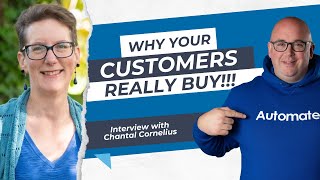
In this interview, host Shaun Whynacht talks with marketing consultant Chantal Cornelius about the emotional drivers behind why customers purchase, especially in service‑based businesses. Chantal shares her journey from leaving a corporate role to founding Apple Tree Marketing in 2000 and reflects on 24 years of experience. She explains that modern customers choose providers based on how they feel, not just on product features, and that businesses must shift from a self‑focused, USP‑centric mindset to a customer‑emotion‑focused one. Over nine years, Chantal has researched the emotions clients want to experience, identifying five "standout" emotional strategies. The most emphasized is the "Certainty" strategy, which centers on delivering clarity and confidence, making clients feel safe and secure. She outlines practical actions: directly talk to customers (phone, Zoom, in‑person) and ask how they feel after a session; capture emotion‑laden language (e.g., safe, cared for, inspired) and weave it into marketing copy, sales scripts, and delivery. She warns against the common pitfall where sales promises don’t align with delivery, causing a disconnect. Retention tactics discussed include asking for referrals, sending handwritten Christmas cards, and using personalized postcards to maintain a human touch. Finally, Chantal recommends Asana as a visual project‑management tool that gives her a sense of achievement through its colorful, animated task completion. The conversation blends personal anecdotes, research findings, and actionable advice for business owners seeking to build stronger, emotion‑driven customer relationships.
Chapters
Thank you so much for joining me on this episode. Today we're going to be diving into the emotional reasons why people buy. I mean, I know myself, whenever I'm, I'm feeling down, my coping mechanism is, is to buy things and go shopping. Uh, I don't know why, um, but, but I buy things when, when I'm feeling kind of emotional distress and things like that. So, um, that's what we're going to dive into.
We are. Yeah, sounds great.
So before we get into that, I like to ask guests, where are you located? Because we have guests all over the world. Where, where's your home base?
I am in the UK. I am about 20 miles south of Oxford. That's the usual landmark I give. So down in the south of the country.
Excellent, excellent. Yeah, we get a lot of, a lot of guests from all over the place. So I like to ask that question, kind of anchors, anchors where, where our listeners can, can can relate because we have listeners from different areas too. So now your business is Apple Tree Marketing and you started that in 2000.
Yeah.
How did that come about? Take me through that journey of that business coming to fruition.
It came about because I'd been working for a couple of other businesses for a few years and it turns out I'm not very good at working for other people. I'm much happier being my own boss. And I actually had, there was somebody that at the company where I was working, they didn't really want a marketing manager, which is what I was trying to be. And I had a friend there who left and set up his own business. And I kept meeting other people who'd set up their own businesses. And one day, actually my boss had been off, off sick for some time and he, he hadn't given me any work to do. Nobody seemed interested in what poor little old me was doing. So I thought, right, I'm gonna go and do my own thing. And, and I did. And actually, it's a bit mean because the day my boss came back to work, I handed in my letter of resignation and said, sorry, you obviously don't need me around here. I am leaving. And so I did. I went off and set up my own business. And that was, that was 24 years ago now. Wow.
How's it, how have those 24 years been?
They have been amazing. They— I can't believe it's 24. That's just ridiculous. They have been amazing. There have been some serious ups and downs. After the first 7 years, I had a serious down. I got quite ill because I was working too hard and burnt out. But I learned, I learned my lesson and I watch out for the red flags now of working too hard and knowing when to stop. Mostly there have been I don't know how many recessions we've had during that time. We've had that whole COVID pandemic. That was entertaining. But on the whole, yeah, best decision I ever made was to set up on my own. So yeah, really pleased I did it and I'm gonna keep going for as long as people keep interviewing me on podcasts and turning up and saying, hello, can you do some marketing for me or can you advise us on what marketing to do? So yeah, we'll just keep going.
Excellent. That's what we're gonna do here today.
Mm-hmm.
Now we know that, that in order to grow a business, you know, you need clients, you need customers, and, you know, to get lasting clients and customers, it's all about the relationship and building that connection with them. Tell me from your point of view why that is important and what type of connection should you be looking to build?
It's important because whatever business you provide, you have competitors. And if I listened to one of your previous podcasts, Shaun, and you were talking about the experience that you had with a bank and the bank, I think, pretty much ignored you and didn't treat you like a nice customer and didn't leave you with a warm fuzzy feeling or even a feeling that they cared. So you left and you probably didn't warn the bank that you were going to leave. You probably just left and went to another bank. This happens a lot. There have been studies that show that when people aren't happy with a supplier, they don't tell them that they're leaving, they just leave. And the majority of them leave because they don't feel looked after. They feel like the business that they're working with just doesn't care about them. So for our businesses to survive and thrive, we have to build relationships with our, with our clients. I actually specialize in working with service businesses, and for them it's even more important because you're not selling, you know, We're not selling mugs. You know, I've got two here on my desk. I have a green one and a blue one, and it's very transactional. Do I prefer green or blue? It's very different when you're selling a service. It's about working with another person. Even if it's a big company, there will be a relationship there because we need to trust the person that we're going to be buying from regardless of what we're actually buying. But it's their expertise, their experience. So we have to build up strong relationship with them. We have to trust them and build up a good connection with them before we part with our money.
Absolutely. I mean, just like any, any personal relationship, you know, when you think of your friends, right, you have a connection with them. So, so, I mean, you, you've kind of got this battle going on now with people trying to, you know, automate things and put in different elements of, you know, I need to keep nurturing my list and my clients and all this and using tools because, quite frankly, we, we don't have unlimited amounts of time., and, you know, things are getting more expensive. You know, what are, what are some ways or some things that business owners can do right now to start to think about or audit those relationships and really identify, some things that they can address right now?
What I would recommend they do to start with, and this is, this is something that not enough of us do, but it's actually talk to your customers, ask them what they want. The research that I've been doing for the last 9 years is all about the emotions behind why people buy. So it's about how customers want to feel. Now, this is a bit of a mindset shift because a lot of the time we're thinking, oh, it's about me, I'm the business owner, I'm the hero of this story. No, we're not. The customers and the clients are the heroes because without them we don't have a business. So the first point is start talking to your customers. And when I say talk to them, I mean actually talk to them. Don't send them an email saying, 'How do you feel?' Pick up the phone, arrange a Zoom call with them, go and see them, go and have time with them. And the question to ask is, 'How do you feel when you work with me?' Or, 'How do you feel at the end of a coaching or consulting session?' And what they'll often do is go, 'Oh, Shaun, I love working with you. You're amazing.' That's nice to hear, but what we're looking for is the emotion. So they might be saying things like, Oh, I feel safe. I feel, I feel, I feel cared for. I feel looked after. Or they might say, I feel inspired and motivated. I feel challenged and encouraged. So those are the words that we need to listen out for because those are the emotions. That's, that's explaining how the client feels when they work with you. And that's what's really key. Now, we can't make anybody feel anything. I can't make you feel happy. I can do silly stuff and I can tell jokes and you might laugh and you might feel happy, but I can't make you feel anything. It's about understanding how the customers want to feel and then doing whatever we can through our sales, our marketing, our content, our delivery to allow them, to help them to feel that. And when a customer feels how they want to feel as a result of working with us, that's when you get that really cool connection, that really strong relationship. And that's when they love you and they stay with you forever.
Absolutely. And I think just hearing you say that, you know, those pieces of information that you hear when you get out and start talking to your customers and they say those words like, I feel safe and I feel comfortable, you know, you can move that information higher up in the funnel side of running ads. Like, you know, do you feel unsafe and uncomfortable in, you know, your current blank is.
I asked one of my clients as part of the research, I've had conversations with all of them and I said to one one day, what do you actually, what do you get from working with me? And she said, I get clarity and confidence. And I was a bit surprised by this. I'm a marketing consultant. I mentor clients. I tell them what marketing to do. I run workshops. I speak about marketing. And she didn't even mention marketing. So I dug a bit deeper and said, okay, what do you mean by this? And she said, you give me the clarity of what my marketing message is and then you give me the confidence to deliver it. So I now use words like clarity and confidence in my sales and marketing. When a potential client says, oh, what will I get from working with you? I start talking about clarity and confidence and I watch them kind of light up and go, that's exactly what I want. Which is great. And the next stage is then delivering that. Because if you just sell a particular service and then you don't deliver on it, there's gonna be an issue. So I then have to keep delivering that clarity and confidence.
Let's talk into, you know, because you do in the service-based business, that's a lot of the type of clients that I work with too, more in the financial space. So let's use your clarity and confidence example. So you've identified this, you know, it comes some keywords on your website. So people go there, you know, and they, let's say they book consult with you or whatever the funnel is that's there. How do you take those feelings you've identified and bring that into the sales process so that when they decide to actually buy, they have those emotions that they're buying on those emotions?
How do you do that? I do that in a very clever way. I've created— well, I've identified 5 different strategies. I call them the standout strategies. And there are 5 different ways in which clients want to feel. And the one that I've been talking about, which is all about clarity and confidence, is the strategy that I call Certainty. So it starts with businesses identifying which of these 5 is the right one for them. There's a free test that you can take on my website. You can go and have a play with it. Each strategy then comes with a list of words, language, emotions, feelings So, and those are the words to use throughout your sales and marketing. The strategy of certainty that I use for my business, it's about being a safe pair of hands. There are lots of other words as well as clarity and confidence. There are words like safety and security and literally safe pair of hands. When I'm speaking to a potential client, I will be saying to them things like, when you work with me, I will be a safe pair of hands for you. You can phone me. Whenever you want. I had a client phone me this morning. I wasn't even in the office. I was out for a walk and he phoned and said, can I just run something past you? I've got this idea, but can I just check with you? And he just wanted me to kind of hold his hand and go, yeah, it's okay to do this. So when you know which is the right strategy for your business, then you can use that language in your marketing, your sales, your content. And when you use it, the clients hear it We actually make the majority of our decisions emotionally and subconsciously. We don't know we're doing it. It's like when you walk into a room and you make a really quick decision about whether or not you want to go and talk to somebody. This is your brain working behind the scenes underground doing its own thing, and we do it with buying decisions. So if you use the correct language that you think your client wants to hear, it's a really lovely way of their brain will go, oh, okay. Yeah, she's telling me that I'm gonna be safe and looked after. Oh, I want that. And then the rational side of the brain goes, oh, I'm hearing safety. Yes, great, fabulous. We'll work with her.
That's great. Now, you know, this is what we want people to do. Why do you think people do like, why don't businesses do this more often? Like what's holding them back? Is it just that they haven't thought of this or it's hard? Like what are some of the things that not every business is out there and be like, oh yeah, I'm just, I'm gonna put the emotions in my sales process and in all my marketing.
It's mostly because they haven't read my new book yet, but that's because it hasn't yet been published. It's on its way. I think what happens is, and I hear this a lot, I hear people say they're new to business and they say things like, oh, you have to make all the mistakes yourself, don't you? And you have to try all the different marketing and figure out what works. And you have to have a USP and a niche, or a niche, as you say on your side of the pond. And I say, no, you don't. You know, it's not about spending the first 3 years of your business making mistakes and trying to figure it out on your own. It's about learning from people who know. The work that I've been doing and the research is, is very new. Nobody else is doing it. And it came about because I was looking at people trying to use USPs, unique selling propositions, and everybody's saying the same thing. So, you know, you put a room, you put a bunch of coaches in a room and they will all tell you how they're different and they will all say the same thing. And it's all about them. It's all about them trying to sell to people. It's not about the customer. There's, there needs to be a big shift in really listening to what our customers want. I remember when I first learned about marketing, there's a definition of marketing, which is you, it's something like you identify a gap in the market, you create a product, and then you persuade people to buy it. That's all about the company doing their work. It's not about saying to customers, what do you actually want? And we need, we just, we need more of that. And I don't know why people don't do it, but they will do because they'll hear this podcast and then they'll go and do it.
Hopefully. So, you know, back to the USP and the way that things were always done. You know, one of the lines that being in a small town that I hear all the time, that kind of, because a pet peeve to mine is, well, that's the way we've always done it. I don't like that. But has there been a shift in the consumer base that people are demanding this type of relationship now? Because the model before must have worked. Or is it not working anymore or you're kind of at a limiting amount?
There are quite a few factors involved. I think a big part of it is that customers are becoming much more demanding. They are now telling us what they want, whereas in the past it was like, oh well, I can buy this, this or this. Okay, I'll have that one. Whereas now they're coming and going, well, I don't want any of that. I want something different and I'll work with the company that can tailor it and create it for me. So I think, I think that is, that is a big shift. I think also the market has just become, in whatever industry you're in, the market is saturated. I'm, I'm one of millions of marketing consultants. There are in this country, in the UK, there's something like 95% of the businesses are micro businesses, small businesses, 1, 2, 3 people. There is now so much choice and so many people setting up businesses. That as consumers we have a much bigger choice, which means as suppliers we have to really listen to the customers and go, okay, what do you actually want? Because if I just go, right, you can have this or this, if I don't change any of that, then the customers, they're not even going to look at, look at what I'm selling because they're going to, well, I don't want either of those. I'll go to somebody else who can create something brand new. So quite a few factors at play.
Now we, we've talked about, you know, how do you, how do you market your business, which is more on the acquisition side of finding clients. So you have clients. When it comes to retention, how does that, that customer relationship look? Is it the same as from the sales and marketing side, or, you know, do you have to have different skills for that after?
I, I would say it's the same, particularly around the emotions and how the customers want to feel. I see too often businesses promoting their service on a particular strategy and they bring in new clients, but they then don't deliver on what they promised. I use certainty as the strategy in my business. So if I'm promoting my business on certainty and I'm saying, right, you're going to feel safe and secure and I'm not going to confuse you with marketing jargon and clients go, yay, great, love it, buy in, book me to to do whatever. If I then go and deliver a workshop, when I start firing jargon at them about SEO and this, that, and the other, and I confuse them, they're going to go, hang on, but that's not what we're paid for. That's not what you promised us. And I do see this often in particularly in larger businesses where the sales and marketing departments aren't necessarily talking to the delivery teams. So they're bringing in all these new clients, but then the delivery, the customer service lot, they're delivering something completely different. And often it's because they haven't, there isn't a strategy that overarches the entire business or the different teams aren't talking to each other. Absolutely.
Especially if you're in more of a technical type of business where your salespeople are trained in that emotional connection and then the people that implement it are, they're technical, right? They're technicians, they're software people, right? And there's a disconnect in that. You know, I, I shared the story on one of the previous episodes about the bank. One of the other episodes, I talked about a disconnect in a buying of a vehicle where the sales process was you made you feel like everybody was there to celebrate you and your new vehicle. And then, they introduced you to the service department and it was very cold and disconnected. You came back next week to pick something up and the salesperson walked right past you like you didn't exist. Right. So you lose that sense of feeling.
And it's that sense of disconnect that's, you know, if somebody has sold you a service that you're buying because it makes you feel special, the minute they stop doing something to make you feel special, you're gonna go and you're gonna tell everybody, do you know what they did? You know how I felt when? So yeah, it's really, really, really important to make sure that the What you sell is then what you deliver therein.
So that's one thing there is what you're selling is what you deliver, you know, making sure that the handoff between, you know, different team members or different departments is as parallel and consistent as possible. What are some other kind of mistakes that businesses make that are hurting this relationship that you've seen?
Oh, what else are they doing? What else are they doing? I often see businesses trying too hard to hit sales targets and bring in new customers when there's an awful lot more they could be doing to look after their existing customers and sell more to them. It's, it's, I don't know why, maybe it's that this is the way we've always done it around here. Issue that there's always, there's always this drive of, oh, I've got to bring in new clients. Yeah, okay, but what about the existing ones? And it's not just about going to the existing ones and saying, what more do you want? Is there anything else we can do? It's also about going to them and saying, who else do you know who wants some of this? I've just spent the last 2 months on a bit of a concerted sales push for my business. And the way it's worked is I, I wrote down a list of about 40 to 50 clients, past clients, contacts I know, and I got on the phone and I've made something like 160 phone calls in the last couple of months. And I've been phoning them up saying, who else do you know? Who can you recommend me to? And it's working beautifully. Yeah, because people are saying, oh yeah, talk to so-and-so. Some of those people have also go, gone, well, I need some help too. I haven't actually asked them if they want anything more from me. I decided not to. I decided to focus on asking for referrals. But because I've just asked for referrals, some of them have gone, oh, what about me? I want some too. So I think, I think a lot of businesses, we forget our customers. We go off running around looking for new ones when actually, no, focus, focus on your existing ones. And there's a lot you can do. I'm I'm not a huge fan of Christmas. I go skiing at Christmas. However, I did— it's early November when we're recording this, and I have just bought Christmas cards to send to all of my favorite clients. And I buy them this early because then I've got them, and I, from the middle of November, I will sit down in the evening in front of the fire and the TV, and I will handwrite messages in every single one of them to say, thanks for your support this year, or hope your broken leg is mended, or hope the dog is okay. And it just— I get messages of thanks for my Christmas cards, and it's just something really simple to send out to say, hey, how you doing?
We share very— well, I wouldn't say similar, an exact view on cards. You know, I love Christmas, but, you know, I could send out, you know, 500 cards. But what I do is I buy, you know, a pack of 48, and I pick the clients I want to send it to. And I make sure that I'm like, like you, I'm writing a message about something I know about them, something that we've done over the last year. And when I receive actual cards, I actually have a— I was a guest on another podcast, and I received a handwritten card in the mail that she actually wrote on. And I get cards on holidays and I'll look and I'm like, they just mass printed signatures on the cards. And I'm like, just throw it in another pile. I don't feel like they actually knew that was coming to me. There was no connection. That piece of paper or card stock doesn't have a connection to me.
Yeah, that's it. I also, on my desk, I have a collection of postcards. I don't know where they've all come— I buy postcards when I go on holiday. And I go, go places. And so I've got them there. And every time I've spoken to somebody who's recommended me to somebody else, I send them a card. I've sent a whole bunch out recently as well where I've spoken to people and they said, oh, I can't think of anyone right now, but I'll have a think about it. I've sent them a card to know, thank you for thinking about me. And again, I'm getting messages back from people going, that's really kind. Thank you for the, thank you for the postcard. So yeah, anyone who, who prints signatures Oh no, don't even, don't waste your money on a card with a printed signature in it. Spend some time. I also have a gorgeous fountain pen and I write with turquoise ink. So that again, it's just that little personal touch. Yes, it takes longer and it builds the stronger relationship that means people are gonna remember you and recommend you and keep coming back.
So really important. Well, there's absolutely no doubt in my mind that anybody that works with you will get tremendous value in, in being able to understand what emotions they can bring into their buying cycle, into their marketing. Tell our listeners how you, you work with clients and, and, and how they can get started with that.
Okay, they'll also get Christmas cards. So have a look at my website, which is appletreeuk.com. There's lots of information on there. If you go to the Take the Test page, you can go and see the free test that will help you work out which is the right strategy for you. Follow the instructions, fill it in, and I send out a report that gives you a whole load of information on the language to use for that particular strategy. There's also masses of information on that website. I've been writing email newsletters and blogs for decades, so there's a whole load of free, free material on there. So yeah, go to the website and find me on LinkedIn as well. There aren't very many people called Chantal Cornelius on this planet. I think I'm the only one in the UK with my spelling, so hunt me out there. Come and say hello and just ask what I can do to help. Excellent.
Now, Chantal, I want to ask— I'm starting to ask guests this as a very last question before we end. Is there a favorite tool, software that you use running your business that you could tell our listeners about that you, you know, if you didn't have it, you would feel that being missed?
Oh, favorite tool. I'd quite like to say my partner because he's really helpful, but you can't get him online. He's only here. He's my sounding board. I think the one that's jumping to mind is a system called Asana, which is A-S-A-N-A, and my, my VA got me onto it a few years ago. It's a project management system, and I use, I use the freebie. I am very visual. I like colors, so everything is color-coded. Each client has a different color. You can put funky little icons and pictures on each one. So it gives me my to-do list and I can, I can scan down it. I do a kind of a 5-minute planning session every morning and then at the end of the day as well. And I can just scan down that list and go, oh look, that's what I've got to do. And that's, I know, if it's all blue, then it's all marketing for my business. But if it's all multicolored, it's, it's client work. And what I really love about it is when you tick the completed box, it whooshes from one side of the screen to the other with a little unicorn with a funky colored tail. You get silly pictures. So that's, that's the one for me. Asana project, project management system.
Really cool. Excellent. And that whoosh effect, how does that make you feel?
Oh, it makes me smile actually. It makes me, it gives me a sense of achievement because it's it's better than just going, oh yeah, tick the box. There's something visual that goes, oh look, there she goes. She's, she's off. It makes me, makes me feel like I've achieved something. I feel very proud of myself.
Excellent. Well, thank you so much for sharing all this knowledge about emotions and, and marketing and, and why people buy today.
You're very welcome. Thank you for having me. Great to talk to you.
All right, take care.
Bye.
More from Shaun


Julie Vanexan recognizes Shaun Whynacht from Blue Cow Marketing at the Nova Scotia House of Assembly








