Webinar: how to develop your ideal customer experience Original | Inspire Great Customer Experiences
Shaun Whynacht shows small-business owners how to map their customer journey and plug three critical leaks: before capturing a lead, between lead and sale, and after the sale. He walks through a three-phase model (Attraction, Selling, Wowing) with concrete tactics like seven touchpoints for nurturing and handwritten thank-you notes to turn customers into referrals.
Chapters
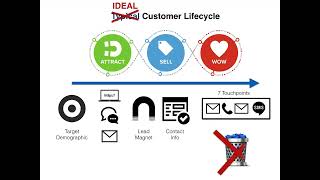
Hi and welcome to this webinar. This webinar is all about the experience and talking about your clients, your small business clients, your prospects, those people who come in contact with you. What is their experience like and how can you leverage experiential marketing, digital marketing, and the whole gamut of tools that are available to you to not only create a better experience but also build a lasting relationship with those prospects and those clients and grow your business ultimately. So throughout this webinar, we're going to be talking about a lot of different things. We're going to be talking about what's happening right now. We're going to show you some strategies. I'm going to actually pinpoint some of the problems that most likely you have in your business, some of which you're aware about, but some you may not be aware of. And that's what the purpose of this webinar is. So I urge you to stick through the whole webinar, watch the whole thing, take down some notes, because that's the best way to learn is take down some notes, and then there's an opportunity for you to ask questions at the end. So how about we just get started? What I want to talk to you about first is what we call the typical customer life cycle. This is what's happening all the time. This is happening in businesses that you visit. This is maybe even happening in your business. And I could probably, if I was a betting person, would almost bet that it probably is. So we look at this here on the screen. We've got on the left side where people are finding you— your website, through chatting, through email. That's the typical marketing that's going on. And we want to move people from left to right through to becoming a customer, you know, creating those sales, generating those offers, and having them be a purchasing customer. So consider on the left side of the screen The prospects, people who haven't done business with you, and on the right side, your customers. So this is the typical customer life cycle. So let's say that in order to generate sales, you spend about $1,000 in advertising, and the process of doing this takes about 10 hours of time to do that, okay? So within spending that $1,000 and this 10 hours of time, you generate 100 leads, okay? Now we've kept the numbers very simple just for the reason of easy math in this presentation. So 100 leads from this, and of those 100 leads, you generate 10 new customers. Now if you're a math whiz and you did great in high school math, you would know that that's a 10% conversion, right? Converting 10 customers from 100 leads, okay? Now what if I could tell you, you could double your sales, right? What if you want to double your sales? I'm pretty sure you do. I know I would. And I actually was able to, in my first year of using this type of marketing, was able to double my sales. And, and there's a testimonial online about that, and you can look at that later on if you want. But it is possible to double your sales. So when we look at this typical customer life cycle, if we're going to double our sales, what would you say would be the way to do it? Most people would say we need to 2x that opening amount, so we're going to put in $2,000 or 20 hours of time to get that, right? And if we did that, it should give us 2 times the lead, 200 leads, and in fact then give us 20 customers. But there is a better way to grow sales without doubling everything. Believe it or not, there is a better way to grow your sales without doubling everything, and the key is this: lost traffic. And I can guarantee right now that probably while you're watching this webinar, you are having people come to your website and you're losing traffic. Let me explain what that means. So you got people that come to your website You got people who are talking about you, doing chats, maybe it's even web chats, or they're sending you messages, or there's email that's happening there. Okay, at this point, when people are coming to your website— that's the easiest one to mention— you are losing traffic. Traffic is bouncing off of those channels and going into the forbidden trash can, so to speak. Okay, now What we tend to do is we tend to focus on our sales and those hot leads, okay? So we tend to look at those people who make it past that trash can and they are coming into the sales process. We focus all of our time on chasing the ones who have the red flag on them. They're the ones that are the hot leads. They're the ones that are most likely to close, okay? And I'm sure you can relate to that. I was guilty of this, you know, when I first started my business way back when. It's natural for you to want to go after the golden goose, slay the big mastodon that's out there. That's what we are programmed to do. But the problem with this is we're also losing leads at this point. People who have said, you know what, I'm interested in what you do, I'm interested in the solution or product that you sell, but not right now. Okay? This is maybe something that's coming up down the road. This is an opportunity for you to claim and stay in touch with these lost leads. Okay? And even though somebody has said, you know what, they've contacted you, you maybe even sent them a quote, but they haven't purchased from you. It's our natural instinct to say, you know what, It's just a bad lead, right? It's just, it doesn't, it's, they're not my typical perfect customers, so we're not going to spend a lot of energy on them. Well, the problem is, is that we may follow up with them one time, maybe two times, but on average, that's really it. Okay, most people, most small businesses stop following up with prospects in their sales process after 2 times. If they don't reply, they don't get the sale, they give up, they move on. Okay, that's a problem because most deals are closed, you know, at least between the 6th and 7th contact point. Now you will have the exception of people who come into the picture and that you sell them right away. You know, those are the diamonds in the rough, They don't always happen that way, but most sales are closed after the 6th and 7th follow-up. All right, so where is the last place that you are losing traffic? Right here, customers. Why are you losing customers? It's maybe because as soon as you sell them, you kind of forget about them. If you've ever experienced this, when you've purchased a major product, maybe it's a vehicle, maybe it's a home. You know, the only time you ever hear from a car salesman after you buy the car, other than when you first get it, is maybe 3, 4 years down the road when they feel that that vehicle is probably time for you to renew. And then they get all touchy-feely and nice to you, and they send you offers, and they send you phone calls because they want you to come back. Now think about this. At that point, if you were starting to think about buying a new vehicle, if you didn't hear from them, and there were other vehicles out there, other competition, you would start to shop around. But if you had a great experience throughout the entire life cycle of dealing with that dealership, dealing with that sales representative, they're not just a salesperson to you, right? They're a friend. They're somebody who has been in your life throughout the entire lifespan of owning that vehicle, right? Maybe they're sending you Christmas cards, maybe they're just calling it randomly and checking in, seeing if there's anything they can do, right? That's where the power is. And I ask you this question: 65% of customers leave a business because of what? Indifference. There really isn't one exact reason. Okay, it's just because they forgot about them. It didn't make an impact in their life. They were indifferent about them or the next person. So you need to stand out, you need to be different. Okay, so let's look at that, take a look at the typical life cycle, and let's give you the ideal customer life cycle. So we break it into 3 areas. We've got our attraction phase, We've got our selling phase, and we've got what we call our wowing phase, okay? And stick with me and I'll explain this in more detail. So in the attraction phase, we look at our target demographic. This is who are we trying to attract? And this can be who are we trying to attract to our business, or it could be a certain product or service, 'cause you may be in a business where you have a product that works great for the 25 to 40-year-old, category, and maybe you also have a product that works great for 65 to retirement, or 65 to the end, so to speak. You know, it could be different. Or maybe you've got a product that's geared towards men, and maybe you've got a product that's geared towards women. Each of those products or services may have a different target demographic. So that's one of the things that we look at first, is identifying what we call our avatar. Who are we trying to reach out to? And then once we do that, what can we offer them? What type of lead magnet could we give them, entice them to get them into our sales funnel, or what I'm more, uh, am apt to call and like to call our nurture journey? All right, so once we attract them, we need to figure out what is going to be the bait. What is it that they're thinking? What problem do they have that your product or service could overcome. And I'm sure you've done this before. You've gone to a website, you've seen a great lead magnet. Maybe it was a coupon, an ebook, a video series, a free trial. It doesn't matter what it is, but you gave that company your contact information. That is your lead capture. And then this is where the power starts to happen. Once we give that information, then we're starting to get nurtured. Maybe it's an email that happens right away, gives you more information. It doesn't sell, it gives you more information. Show an invested interest in helping that person give or get a small win. It can be an email, and the sequence can be different for every business. Maybe it's a phone call in the middle there somewhere, you know, another follow-up email, maybe a text message. But ultimately, what you're trying to do is you're trying to take somebody along this customer journey. And you're trying to make sure that you stay in touch, you provide value, you get them to like, trust, and really want to learn more about what you're doing. And when we look at that nurture sequence, there's those 7 touchpoints. You only see 4 on the screen, but we can do it through email several times. Maybe it's direct mail, maybe something goes out in the mail, but you're making sure that you are touching people, contacting them, providing additional value, additional education, at least 7 times, okay? And the reason you do this is you're avoiding those lost leads. Okay, so when somebody goes through that initial nurture sequence and maybe it's not right for them, you know, the time's not right, we don't want to just give up on them. What we then do is we utilize a process called long-term nurture, and this is reaching out to them in a not-so-frequent amount of time. Maybe this long-term nurture spans an entire year, 2 years. It depends on your customer's life cycle and how long you want to stay in touch with them. Okay, but most likely you're in touch with them more so from the initial lead generation side and then initial opt-in. And then if they don't buy along the way, then we go into that long-term nurture. Makes sense? Perfect. Okay, now let's look at our customers. When you get a new customer, and I see this all the time, I've experienced this all the time, and most importantly, and I admit this, I was guilty of this when I first started my business. You know, trying to slay that dragon, trying to make that big sale, and as soon as you do it, you kinda have that bit of relief, like, ah, finally I can stop eating Kraft Dinner and I can pay the bills, yes! You know what? And then you're on to the next dragon. But the problem is, these customers need to be wowed. And we need to wow them. And by wowing them, I mean we need to show them love. We need to show them that we really care, we really cherish them. And I don't mean be fake about it. I mean, be sincere. And we need to stay in touch with them. We need to tell them how much this relationship means. And I show this icon on here with email. I show this one here by direct mail. I am a huge fan of sending a thank you note. I'm a huge fan of touching something that you are sending out to this customer. There is nothing more insincere than myself receiving a Christmas card in the mail from a company that has printed their signatures on that card. And that is why I made the decision when I started my business almost 8 years ago that when I send Christmas cards, I don't care how long it takes me, I don't care how many I want to send, I will write something in each and every one of them that is unique to that relationship with that customer. And I will handwrite it and I will send it out. I will never print a signature, and I urge you to do the same thing as well. Okay, and if you say, you know what, I have like 3,000 customers, you know what, you don't need to send a Christmas card to 3,000 customers. Pick and choose 100, pick and choose 50, but make it the best damn 50 you could ever do, and I guarantee it'll stand out. Okay, so our new customer wowing, we're going to stay in touch with them, we're going to keep communicating with them, we are giving them ongoing Communication. We are giving them added value. If they bought a product or service, give them tips on how to do it. Give them tips on showing them how to make it better. Here's another story. I had a heat pump put in my office, and this company came— fantastic company, fantastic local company, actually lives up the road from where my home office is. They came down, they did a fantastic job installing it. Now, I was working at the time in the office. I just let them do their thing. And at the end they're like, here's the remote, you know, you press this, da da da da da, show me this remote. Off they went. Well, I wasn't in the mindset to pay attention to that. Now what they could have done is they could have followed up after. They could have had a video tutorial that they created. They could have done it with their iPhone shooting the remote saying, hey, we just installed your heat pump yesterday. I know you probably were busy. Here's a video outlining all the great features that you can do with this and how to do it on your remote. That would have provided added value. That would have wowed me. Okay, so I have a question for you. Are you ready for this? You've got 3 people, okay, 3 customers. Each of these customers equal a set amount of money, okay? You're going to make a customer value out of these people. Now, if you had the right tools and you had the right process— you know, just because you own a hammer doesn't make you a carpenter. Keep that in mind. You can buy all the tools that you want online. You can buy email marketing software, you can buy social media marketing software, But if you don't understand the process to utilize these tools, you wouldn't have the success. Okay, so I'm just going to go back and show you this here. I'm just going to show you this question here. If you had the right tools and the process, and you could take these 3 customers and you could turn them in the money and avoid those lost leads and you can do that automatically, would you do it? I think you would. So let's talk about the tools in the process. So like I mentioned there in that ideal customer lifecycle, the attraction phase, we look at who that target is. You know, who are you targeting for your products and services? Who are they? What are their age, ranges? Are they male, female? What are they interested in? Because I ask you this, and I ask people this all the time, and this is usually the first question that comes out in any one of our consultations: tell me about who your customers are. And I would say almost 70% of the answers I initially get are, well, everyone. Well, the reality is that if you sell to everyone You ultimately, you sell to no one, because it's impossible to target— go back here— it's impossible to target individual people if you sell to everyone. And why is this important? It's important because In order to get your messaging right, in order to run your ads properly, you need to speak to some of the pain points. You need to speak to some of the questions that are in the heads of the prospects you are marketing to. The people who will ultimately open up their wallet and buy your product and service have questions. They have things in their lives that they need fixing, and you have the solution. You need to speak to them directly, so you need to target them., and it may mean that you have 10 different target demographics, all with different questions, and that's fantastic. If you can get to that point, your marketing is a piece of cake, but it's when you generalize that is extremely hard to market and advertise. Okay, so once we do that, we look at the attraction phase. What's gonna make your offer your product and service stand out? I mean, this picture represents it really well. You got a ton of these gray cars, you got this nice green one. What makes you different? And there's so much advertising going on in this world. You know, people are buying things to get by it. PVRs to skip commercials. You got social media and you're able to target people very specifically. And if you get the great chance of being able to run social media advertising, Google Ads, you know, targeted ads, banner ads, whatever it is, and you don't understand how to properly target, you're wasting money. But once you understand how to target and then you understand what questions do these target demographic individuals have that I can speak to in my ad copy, you're making it a lot easier for them to to speak up, notice your ad, and want to opt in. And that's the third phase of the attraction part, collecting leads. Now we do this through things like capture forms, and I show you a couple here on the screen, right? Sign up in a second, get free account, subscribe to our daily newsletter. You know, these are all opt-ins. And when you think of some of the major brands out there that are doing it really well. You got Michaels, the crafting store. They always have an active coupon and you can go to their website and opt in to get it. That's a great way to get you on the list and they email you the next one as soon as you use it. They're staying in touch. They're keeping you engaged. You can do this in your business. You just need to think about what is it of value that I could give away that the person would say, you know what? I'd have to be a complete idiot not to opt in and get this. And I give this example. Let's say you are in the mindset of putting in a pool, whether it's above ground or below ground or in-ground, whatever you want to call it. But you have talked with your family that, you know what, hey, next summer we should look at getting a pool. Well, just because you started to think about that there's a part of your brain called the reticular activator that is now subconsciously on the alert for things around pools. So you're online, you see stuff, right? You see things about other people's pools and where they got it, and you're starting to look around, you see all these ads showing up. So you go and you check out one local provider's website, you get there, and on the home page, there it is. The golden goose, the opt-in. And beside it, it says, download our free guide to everything you need to know before making an informed pool purchasing decision. Let me repeat that: everything you need to know before making an informed pool purchasing decision. A couple key things in there. Everything you need to know. Do I know everything, right? The fear of missing out, the FOMO— the FOMO, sorry. People fear that there's something they don't know, and if they don't know it, they're going to waste money. So that's key there. And to make an informed purchasing decision. You want to make an informed purchasing decision. You want to be the smart one. This opportunity will guarantee this company that somebody will opt in if they are subconsciously or consciously in the market for wanting a pool. So they give their email address, it downloads the report, it sends to them, you know. And we can talk about, you know, in a whole different webinar about what to put in those kind of things, but that's not what the purpose of this is. But the purpose is you need to get their information. And next, it wouldn't be proper for that company to then say, hey, here's our sale, you know, call us if you need us, kind of thing. No, what they're going to do is they're going to build upon that. They're going to work on the point of being informed, providing value. So they're going to reach out and they're going to give more information. You know, I know there's a lot of providers out there that sell pools, and you could buy it, you can do it yourself, and if you're capable of doing that, great. But I just want to show you in a couple of seconds of our video of us doing a pool install and what we do to ensure that this pool is going to last forever for your family. It's a long-term investment. It's not cheap, but you want to make sure that it's around for a long time, and you're the one that's providing your family with that value. Okay, click here to watch one of our install videos. You're gonna watch it, darn right you are, right? This is where you're providing that value. Now behind the scenes, when we talk about the process, once you opt them in, there's something happening in the back end that most consumers and even most businesses that are in that B2B market don't know what's happening. Okay, it's called a funnel, and every marketing person, every company that does marketing well has a marketing funnel. And there's tons of them out there. Here's just a screenshot I got when I Googled marketing funnel images. Okay, so we look at the marketing funnel. I'm gonna break it down here in really 4 steps, 4 basic steps. You've got awareness. This is where somebody becomes aware of either your business or your solution to a problem. And it can be done through social media, blog posts. It's a great way to get your name out there. But becoming aware of what you're doing, it's called the awareness phase. And it's the top of the funnel, right? And I don't think I need to explain what a funnel is. We all know the shape of it and what the purpose is— leads in the top, sales at the bottom, that kind of thing. So awareness is the first step. So once they're aware of you, then they move into the consideration phase. This is where they're now on the verge of making a purchase decision. And now they need to figure out, well, who am I going to buy this product or service from? So they're moving into consideration phase. And when we get into doing our consulting and our training with our clients, we break this down very granular. And we have different parts of the marketing campaign that speaks to those different things. And you need to talk about different things through each of these. So awareness, and then consideration. And then it's recommendation. This is where a lot of what we call social currency comes into play. Once somebody says, you know what, hey, we should get a pool— we're gonna use the pool as an example here— we should get a pool, your wife says that, your kids say it, whatever it is, okay. So you're in that awareness phase, you're looking around, you're going to check out some things. And then you go to that website, you download that free guide, you start to read it, you're considering it. You know what, these guys really know what they're doing. They're sending me some videos, they're educating me, and want to make sure that, that I know what I'm getting myself into. So what's the consideration? Okay, perfect. I think these would be the great option, the great business to do it. Now we're going to go into that recommendation phase. What are you going to do? Well, like most people, you're going to ask people you know, hey, we're thinking of getting a pool and I've been doing a lot of research and I've been looking at this pool company here in town. What do you know about them? Or I go online and I look at some reviews, right? Now, if you were taking a trip and you were looking at a different resort or a bunch of resorts and you went to their websites, they're all going to sound fantastic. They're all going to sound like the best possible experience ever. But if you've ever traveled before, you're going to check out TripAdvisor. You want to see the words of people who have been there and done it before. That's why online reviews are huge. And that's why social media is huge for your business. You need to be getting recommendations, you need to be getting testimonials because your clients, your prospects, your future customers, whatever you want to call them, are going to be looking for this. And then once they buy, you've got the purchase process. Okay, so that is a basic marketing funnel. Now we've worked with clients, we've developed marketing funnels where they've been more in-depth, but for most small businesses, these are those 4 steps. I want to give you some examples here. So let's look at the awareness phase. So here's a local meat company here in the area that I'm in. You know, awareness— where can people see them? All right, so we got their logo. We see that all the time. There's their store in the bottom left. On the right-hand side, we got a local radio station. If you can't— you can't tell from this picture if you're not aware of it, but on that back window says Jimmy Dogs. That is a product of this Meadowbrook Meat Market, okay? And they are a sponsor of this, and this cruiser's out all summer, and they're a major sponsor. So you're always hearing the name. People are becoming aware of it, okay? So that's when they're in that awareness phase. And now they're in the consideration phase. So they go to Google, where to buy fresh meat in Kentville. They know it's the area we're in. Here's the Google searches. As you can see what shows up here, number 2, Meadowbrook Meat Market. All right, showing up on the screen now. There's another one that comes up above it, but that's okay. Okay, it's okay if you're not number 1 that's on there. But this is the consideration phase right here. So I'm going to check it out. I'm going to check out their website. But I'm also going to check out their social media. I'm going to come here and what's it going to tell me? Well, when I come to the page and I want to check it out, I want to see some other stuff that's coming out. Myself, I'd click like and I'd become a fan of their page. But then I'm going to start to look around. Oh, very responsive to messages. I know if I want to message them with a question, they're going to reply pretty promptly. They're very responsive. Then I'm going to look down here and I'm going to look at the reviews. 4.8 out of 5. Well, you might be saying, well, if they're that great, why aren't they 5 out of 5? Well, not everyone's gonna be 5 out of 5. You can't please everyone, but 4.8 is pretty darn good. So I'm gonna go check out the reviews. So it's going to show me here, you got 5 stars, 47, 4 stars, 6, 3 stars, 2. And then on the right-hand side, you're going to see some of the reviews. Some of the stuff that's said here: the quality and service, not to mention the roasted pigs and salad, yeah, but the quality and the service, some key things that people are saying. The products are so fresh. These are great, right? So this is that recommendation phase when people are starting to figure out what other people have had for an experience with these potential customers or companies that they want to do business with. But we know that the grass is not always green. There's some negative stuff. We're going to check those out too, right? So I looked at those 3s that were there. Well, people clicked the 3, but they didn't give any description. So really Maybe they're 3, maybe they don't give 5s. You know, some people just don't give 5s, right? They give a 3, and the 3 might be the best that they would give, and that's okay. All right, so we're going to come back to the recommendation phase. We're going to look at that number 1, so that, that Wild Mountain Farm. Okay, and we did a Wild Mountain Farm review plus review on Google, and this came up here. We've got a Yelp review. We're going to check it out. And there it is right there. We're also going to see that on the right-hand side, reviews— be the first to review. Nobody has reviewed them on Google, you know, and, you know, maybe not, maybe that's okay. They're not, they're not on Google that much. As I can see right above that, it says claim this business. They haven't claimed their spot, so they haven't been actively promoting the Google reviews, but at least they're on Yelp, right? So I can kind of check that out. But when it comes to looking at the recommendation phase, and I go back to the Facebook page of Meadowbrook, which to me is, as of right now, my number one choice when I'm looking for fresh meat. You know, they're in the community, they're sponsoring events, there's great reviews and everything. What am I looking at next? Social currency. Facebook's great because when you log in, it'll tell you what other friends do you have who like this page. As I can see here, Rob Graves and 9 other friends like this page. When I click on it, it comes in here and it shows me who they are, okay? So I see Kyla here, you know, she's in the agricultural market, I know her, I'm gonna ask her a question. So I'm gonna click on her and I'm gonna ask her a question. I'm gonna go into Facebook, I'm gonna do a Facebook Messenger. Hi Kyla, I trust your input and advice. I'm considering getting some fresh meat for my family from a local provider. What are your thoughts on Meadowbrook Meat Market? Okay, so I'm sending a question. I know she likes the page. I know she's aware of them. Most likely she's probably bought products from them. Okay, so what's my preference? Is it going to be the, the Wild Mountain Farms or it's going to be Meadowbrook Meat Market? Okay, if you followed along and you've looked at this and, and saw what I saw, you're probably going to check out Meadowbrook Meat Market first. Okay, that's what I would do. And probably that's what most people would do. Now we get to that purchase phase. What do we want to do? We want to make it easy, easy to do, we need to deliver on all expectations. And it needs to become an experience. Now you might be listening to this saying, you know what, I don't sell a physical product, I don't have a retail outlet, I'm a service provider. You know, I do mortgages, I do financial, I'm a life coach, you know, I'm a chiropractor, whatever it is, right? But the purchase phase needs to be easy. There is nothing, nothing worse than going and getting a service or a product and the way to pay is extremely hard and painful. I'll give you an example. I needed to get some printing done for an online course that I'm doing where I actually send out a binder to our, our coaching clients. And I decided that I wanted to go to a local printer. And I went in, I actually was able to send the files, which was— that was good. And I went in to pick it up, and I had my little son with me in my arms, and I went in, I had my credit card in hand to pay for it. You know what they said? Sorry, we don't take credit card. It's either cash or check. Well, I don't carry checks. I don't use checks. It's the digital age, you know, email transfer or credit card or debit, right? They didn't do any of those. So I had to leave, walk 2 blocks to a bank, take out the cash, walk all the way back and pay for it and get it, okay? It wasn't easy. And I'll be honest with you, I probably won't do business with them again just for that reason. Okay, so it needs to deliver on expectations. What expectations are you setting? Now, if that pool company has been emailing and showing you their quality installs, and then you actually buy from them and they come out and the install is crap, right? Their equipment's breaking down, they don't care about what they're doing. It's broken that expectations. You need to deliver on the expectations you set in that recommendation, in that consideration, in that awareness phase. And it needs to become an experience. I'll give you another example of an experience. I had some trees that were a chance of falling on our office here, on our property this year. And I hired a company to come out. It was actually a second company because the first company backed out because they were too scared to cut it down. But the second company came out. They're very well experienced. They were older guys to cut down the trees, and they had this big lift to go up and cut them. Well, before he started, once he got here, and he's like, you know what, when we're done, if you want to go check out your neighborhood, I'll take you up in this lift so you can look around. I opted not to. I, you know, we've got a drone here, I can see what our area looks like. But still, he made it an experience. Because for most people, they've never seen their property from that angle, it would be cool to go up, it became an experience. You need to provide value to get value. And when you're looking at what can you give away for free, the best thing you can give away for free is your best stuff. Now you might be saying, Shaun, you know what, I can't give away the farm. No, no, you can't, but you can give away awesome value. And when you give away awesome value, it doesn't look like you're standing there handing out your hand wanting money. You want to truly help your customers achieve the goal they want to achieve. And when you do that, you're going to get value. So now we look at the selling phase. Okay, let's break this down in 3 areas. When we're selling, we are educating first, where they're going to do offer, and then we're going to close. Okay, so educate, key word in here. We are educating, we are not pitching. So when somebody opts in to our lead magnet, we need to educate, we need to give them more. Teach, teach, teach, not sell, sell, sell. Once you understand that, you've got a winning combination. In order to do that, you need to understand what do your prospects care about. Is it price, right? Are they shopping around on price? Are they shopping around on convenience? Are they shopping around You know, or do they have an urgent problem? Like, what do they care about at that time when they come and find you? And when you know what they care about, you can then make the offer. So when we look at these stages, the awareness, consideration, recommendation, and purchase, we need to figure out what makes sense for your business to put that offer in there. And you can have different offers for different transition periods. You know, when it's, when it's an awareness phase and somebody's becoming aware, maybe there's an offer for a free educational webinar just like the one you're doing right now, right? You may have become aware of what, who we are, what I'm doing, uh, you know, the marketing that I provide to our clients. And you're like, you know what, I'm going to opt in for this webinar. I'm going to check it out. I'm gonna learn something out of this. This is great, win-win, right? And then it could go in the consideration phase. Maybe there's an offer down the road after consideration phase to buy a small-dollar offer, right? A small-dollar product. We call it a tripwire. And this is used to make somebody convert from a prospect to a customer, okay? And they don't always have to follow these 4 steps in linear sequence. You know, somebody can go from that awareness phase to purchasing, being a customer, and skip consideration, recommendation. But the reason you need all 4 in here is because you need to make sure that if they don't buy on the first offer, they could buy on the second offer, and they still don't, then they buy on the third offer and they go into long-term nurture like we talked about early on in this presentation. Now when we talk about offers, what types of offers could you do? And there's There's hundreds of ones. So we just picked out a couple here to show you. We can do the money off, right? You can offer an amount off, for example, $10 off your next purchase, especially if you're doing a retail, and a lot of these are based around retail. Percentage off, you can offer percentage off, 25% off your next offer. Free shipping, 30% off shoppers spend more per order, sorry, 30% of shoppers spend more per order when free shipping is included. If you are in the business that needs to rely on shipping, listen up. This part is for you. Shipping is the number one reason people do not complete their transaction online. They will go and they will put stuff into the cart, and they will get to the end, and they will calculate the shipping, and they'll be like, holy crap, it costs too much to get this. I'm just gonna go find it locally somewhere else. If you can find a way even if to put it into your margins, to eat the shipping yourself, include it in there for free, great. Now, if you've got a certain threshold of products that you're selling that, you know, you can't eat that shipping cost until you sell at least this much in that transaction, that's great too, because then you can say, you know, Amazon's fantastic at this, spend another $12.32 and get free shipping. I guarantee people will buy more than $12.32 to get that free shipping. They would rather spend the money on the products for themselves than give it to you to ship it. Okay, 85% of consumers rate free shipping as the number one purchase incentive. If you promote it, whether it's all the time or a special offer, a special weekend free shipping, 24-hour free shipping, whatever it is, it's a number one incentive. 61% of consumers will cancel their order if free shipping is not Offered exactly what I told you right there. Free shipping, number one reason. And if you don't offer your buyer what they want, there is always a danger that someone else will offer them free shipping. 47% of all online orders include free shipping, and I can guarantee this is going to rise up. The evangelist. You know, these are the people, these are the people who love what you do. They tell everybody what you do. They buy from you all the time. Reward your loyal following fans and customers by giving them a special coupon with a significant discount as a thank you, right? Maybe you're a service provider and people frequently come back to you. They get a prime rate. You know, you look at the major hardware outlet stores like the Home Depots and, you know, the Kents and all that kind of stuff, and the Lowe's contractors who come back all the time get better rates on stuff. Those are the evangelists. A pre-launch— if you're launching a product or service You can promote that product by giving a limited quantity away or sell for a limited number at a discount. For example, the first 10 customers get 50% off. This is a pre-launch. Upsell and cross-sell discounts. You can give customers an incentive to buy additional products or a complementary product by giving them a coupon code in an email following their initial order. Okay. Then the close. The close is when you make that pitch, when you make that offer to buy, right? You've overcome all the obstacles, you've got them to like, know, and trust you. You are the logical choice. Now you just ask for the sale. If you've done a great job before that, it is going to be easy to have somebody choose you and buy from you. And keeping in mind, this is not just an exchange of money. You are establishing a relationship. You're establishing a relationship. When we look at those stages here, the awareness, consideration, recommendation, and purchase, there's a couple other that I want to tell you about. Satisfaction, loyalty, and advocacy. You want people to be satisfied, you want people to remain satisfied, you want them to be loyal to you, you want to be the person or business of choice for whatever it is that you do. And when anybody that they come in contact with has the problem that you solve, that you have solved for them, they will tell them, and they will become your advocate. We call it the referral handoff, and we look at the different stages here. We look at that awareness, that consideration, that recommendation, and that purchase. That purchase is the customer handoff point. This is where you are handing off the customer to kind of go out on their own, and you're starting to go from acquiring that customer to developing that customer. It's just like life coaching, you need to develop them and help them understand the satisfaction, enjoy the satisfaction. You know, if you bought a hot tub, the company that sells you the hot tub should be in touch with you, telling you ways you can enjoy it even more, how to host a hot tub party. You know, holidays are coming up, we've got, you know, top 5 ways to do certain things and theme your hot tub parties around this, enjoy it even more. Have you considered a moonlight dip in your hot tub, right? These are just things that come to mind while I'm doing this presentation. So you need to develop that customer. So they go through satisfaction, they get into loyalty, they become an advocate, and then they go into referral. And the referral handoff, this is where they say, hey, you know what, Shaun? I'm going to recommend Sally. Sally's got a new business. Sally needs help understanding and building her customer marketing funnel. I told her about you. I told her, told her what you did for us and the great success we've had. I'm going to tell her to get in contact with you. Okay, they're handing off this person to us, where we are then going through the awareness consideration. It is an ongoing loop. And if you do a fantastic job of these stages, every new customer, every satisfied customer that you have, you're building this momentum, this wheel that's turning. You see the power in this? I hope you do. Because there's ultimately 3 ways to grow your business. When we look at number 2 here, increasing the frequency of purchases. Okay. And when we look at this, and I'll explain the other two here, but we're going to focus on number two. But there's three ways to grow your business. You can increase the number of units sold. So when somebody buys something, maybe you want to throw on, you know, hey, if you buy two more, you get it at this discount. So you're selling more, right? You're selling more, you're making more money. Increasing the frequencies of the purchase, so more often do they come back. And if you're in a service-based business and it's relying on appointments, you know, if it's a massage, a haircut, what you wanna do is you wanna book that next appointment before they leave the appointment they're finishing. You want them to commit to coming back, increase that frequency. And then number 1, the most cost-effective, or costly way, sorry I'm missing the word here, but the most costly way to grow your business and difficult is increasing that number of customers. Because number 2 and 3, people already know, like, and trust you. Number 1, they don't. You need to go through that awareness, consideration, and build that relationship. So number 2, this is where we're getting into that wowing phase. And again, breaking down into 3 areas. We deliver and wow, we offer more, and we get referrals. So delivering and wow. So think about this, and I'll ask you this question. How could you wow for $5? If you could only spend $5 on a client, on a new customer, to wow them, how could you do that? Think about it. And then, how can you make it personal? One interesting thing that I've heard, um, Not that it's hearsay, it actually was a company that did this, but when they sent out their invoices, what they did is they put a $2 lottery scratch ticket in with the invoice. Okay? It was different. Like, people didn't do that. And they got a lot of social press for that. Because some people, you know, maybe they didn't win, but some people won more than $5, some people won a couple hundred bucks, whatever it was, but it was a unique approach to it. And can you make it personal? I was doing this a while back when I had a new customer, and I would send them a card, and I would send them a gift card for a local coffee chain that they could go to, that I knew that there'd be one in their area. But the whole idea was I wanted them to take themselves out for coffee and think about their business and stop working in their business and start to work on their business. But spend that half hour to an hour sitting in that coffee shop with that coffee and writing down 3 things that they were going to commit to doing in the next 60 days to better their business. And I'd send that out to every customer that we had. And that's what I did. I mean, it was a $5 gift card and the cost of a stamp, so a little more than $5, but I made it personal. And then can you offer more? Here's the best example of this. When you look at the big kahuna in doing this, it's McDonald's. You've got cross-selling. Cross-selling is, hey, you know, you bought this product,
More from Shaun


Julie Vanexan recognizes Shaun Whynacht from Blue Cow Marketing at the Nova Scotia House of Assembly








