What can I expect for ROI on Social Media?
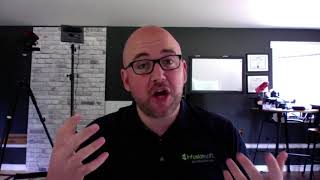
In this unscripted video, Shaun Whynacht of Blue Cow Marketing answers a client’s question about realistic ROI expectations from social media. He explains that organic reach alone is insufficient; a strategic mix of consistent, valuable content and paid Facebook advertising is needed to build awareness and generate leads. Shaun outlines a step‑by‑step funnel: create a well‑populated Facebook page, run low‑budget local ads to grow likes, offer a multi‑format lead magnet (ebook, audio, video series) via a Facebook lead‑gen form, capture contact data in Infusionsoft (now Keap), and nurture prospects with a sequence of three educational pieces before requesting a sales call. He stresses the importance of split‑testing ads (running ~10 variations, pausing under‑performers) and tracking concrete metrics—ad spend, leads, conversion rate, and customer lifetime value—to calculate ROI and scale spend predictably. Shaun also argues that businesses must embrace rich media (video, audio) as the future of content consumption, otherwise they risk falling behind. The video concludes with a call to action to contact Blue Cow Marketing for personalized help.
Chapters
Hey everyone, it's Shaun Whynacht here with Blue Cow Marketing. Now this video, I didn't plan out to do this, but I just finished writing an email and I thought, hey, you know what? I could probably tell this story here in video format and throw it up on social media and on LinkedIn because I'm sure people would find this content interesting. So I was just asked by a client who I'm working with who is looking to get their name out in their local area. And we very new to social media, really has no online presence, but looking to get started with it. And they asked me in the email, you know, what should I expect out of social media? How should I use it to get my name out there? And what should I expect for a return on that investment? So this was a fairly loaded question. This was something that, you know, it's really hard to answer. It's really hard to say, oh yeah, if you do this, this, and this, you will make this many fans and you will get this many clients and so forth, because number one, we are dealing with people. We are dealing with people. People are unpredictable, and you don't know until you start to do something if it's going to work. So one of the other things that I mentioned in there was that when you look at using social media, the days of organic reach, the days of just creating a page, posting on it, you know, frequently and rapidly is going to give you a big return because now we're looking over quality over quantity. So what we need to do is we need to look at our social presence as a place to make awareness. So you create a new Facebook page and you start to say, hey, I got a Facebook page, come check it out, I'm awesome, right? So people are going to go over to your Facebook page and what are they going to do? They're going to look around. So first things first is If there's no content there, basically they're walking into an empty room, so they don't know what it's all about. So if they have a good relationship with you, they're probably gonna give you a courtesy like, and they're gonna do that. But if they're just a prospect or somebody that you wanna do business with, you need to make sure that there's content on there that's of value, 'cause they're gonna scroll through it, and they're gonna take a look and see, okay, well, what type of content would I see coming into my newsfeed? Why would I want to click like on this page? And that's the thing you need to consider is, you need to beef up that page. You need to put consistent content on there. So even if you've got 5 likes or 500 likes, you still need to take the initiative to put content, share links, be yourself in your Facebook page, because that's going to build that value in there. And then once that, that content has started to curate and go through there, now we can start to promote the page. And that's where we use the whole, Facebook ads pay-to-play type platform is we can then go ahead and we could do, you know, even a dollar a day method where you're promoting to a local audience just to kind of get that awareness out there and get those likes. You will get likes from that, but if you keep building and putting on great content, then it's going to stay there, right? Because you're going to keep those people engaged, and when they like, they comment, and they share, then that's when the organic side starts to kick in., but you're still going to need to have a portion of your marketing budget geared towards using the Facebook ad system to build that interest. And then the next step is giving what we call a lead magnet. This is something of value that people are going to opt in for. And when you think of this, one of the biggest things that I see from a mistake of people trying to do it themselves is they generate the lead magnet. Okay? So whether it's an ebook, video series, an audio program, whatever it is, they create this thing that they're going to give away, which is fantastic. Good on you for creating that. And they throw it up there and they get people to opt in. And that's about as far as it goes, right? Maybe they've got a CRM in place. You know, hopefully they're using one like Infusionsoft. Infusionsoft right here. Everything's reversed on the camera right there. Infusionsoft. And that, you know, they deliver upon it and they follow up. Okay, great. Perfect. But then there's no other nurture. So what I want to do is talk to you about what I'm working on right now for my own business. So we're just in the process of releasing a new book, my third book that I had written. This is called The Small Business Guide to Digital Marketing Volume 1, and we're talking all about customer journey and customer experience. So the book right now is at the printers. It's being, um, the first proof is being printed, and then we're going to print some physical copies. So what I'm doing is taking that, I'm also creating an ebook copy. So it's just a PDF copy that's going to be my lead magnet. So I'm going to be running some Facebook ads to get people to opt in to get that lead magnet. And I'm being completely transparent here as to what I'm doing. So I'm going to then take that lead magnet, that PDF book, right? 30, I think 36 pages, right? It's not a huge book, but it just talks about that single topic, which is positioned exactly with the type of clients that I want to do business with. We are hired to help people build out their customer journey and their customer experience using technology. So that's exactly what this book is about. So I've got the book written. I'm gonna be recording the book into an audiobook format, and that'll come into play here in a second. So I'll be doing that. So now when somebody opts in through the Facebook lead gen option, they're gonna then be posed with the question, "Would you like us to text you a copy of the book right now?" And they'll put in their phone number. So now I've got a phone number on file. So my Infusionsoft system will kick in, it will deliver the ebook by email, but it will also give them the option to download the audio files, to have the audiobook format. So if you want to take it on the road, if you're going on a road trip, then you can listen to it in the car, on your iPad when you're working out, okay? So that's the other thing, is the audio files is the second part. And then from there, it's gonna follow up the next day, and I'm gonna be creating a video series to talk more, specifically about the different steps in the customer journey. And the reason that I'm doing this is for one, I wanna provide more value. I wanna provide at least 3 pieces of content. If you see one of my videos last week where I talked about giving away at least 3 pieces of content before you even ask somebody for any type of sale or commitment to go to the next step, this is absolutely crucial. So I wanna make sure they're getting 3 pieces of valuable content, and that's in that, that follow-up sequence, there's gonna be 3 different videos educating about those different areas of the customer life cycle. So all that in mind, if you just look at what type of content have I just given away? Well, I've given away an ebook, right? So now it's something that they can read. I then give them options for audio files. So now it's something they can listen to. And now there's a video series that comes after, so something that they can watch. Read, listen, watch, touching all the different ways that I can get the message across. Because you don't know who it is that is consuming your content, whether they're going to get all the content from reading that ebook, whether they're even going to read it, or maybe they just want to listen to audio, or maybe they prefer watching video. But the reason for that is it's creating familiarity between who I am to them. I'm building that connection. So then down the road, Once that video series and education series is done, I'm gonna ask the question. I'm gonna say, hey, you know what? I would love to get on the phone and talk to you more about your business, okay? And the reason for this is it is absolutely impossible, 100%, no matter what people tell you, it is absolutely impossible in the consulting and marketing business to sell something to somebody that's very personalized very customized, like our consulting services and our marketing services, if we do not know 100% what problems that business is facing. And we can ask as many surveys and fill out as many forms online, give away tons of books, we just don't know until we talk to them. So that is key. That is absolutely key. The idea of everything that we've done on social media, given away in free content, Educated is not just to show that we know what we're talking about, but it is to get you, the consumer, or our prospect to become aware of these type of things in their business. So as they're consuming it, and I'm talking about the content about, you know, building that customer journey and walking your customers through that pathway like I'm just explaining right now, they're going to start to think about that in their own business. And now they're going to say, that's exactly what I need. And now two things could possibly happen here. They can take all that content that I've created, all that education that I've just given them, and go off on their own, put it together, and try to do it on them, do it themselves, right? Which is 100% fantastic. If you can do that, fantastic. You don't have to help or pay anybody to do it for you. But there's going to be people out there who are going to be like, you know what, that's exactly what I need. I really don't know how to do it, so I'm gonna need to get somebody to help me with it. So who are they gonna think of? They're most likely gonna think of the business and the expert and the person who has walked them through that journey, who's told them exactly, these are the things you need to have in place. Now, my job, once I'm hired one-on-one with a business, is to do it very specifically to their business. Everything that I talk about, everything that you talk about in the social realm, in videos, in content that you're throwing out on YouTube, is very general-based. It's very theory-based. It is about the one-to-all type of thing. But when you work one-on-one with a client, you're working with them. This is where the specifics come into play. And that is why having a consultant is extremely important in any type of marketing. Because they can help you take the ideas, the strategies, the philosophies that they teach and that are out there and the technologies that are out there and wrap them all into one great package and talk about specifics and actually give you a tangible product. So coming back to the reason why I shot this video here, and that's why I'm not doing it in the studio, I just hit up the, the Loom recorder here on my browser and did it. Was because I just finished that email talking about this and how key it is. So if you're gonna get into doing social media, there's no reason why anyone should be able to, or even have the right to say that you will get X amount of return by doing this, this, and this. Okay? Even when you're doing any kind of Facebook ads, it's the reason why we do split tests. We run at least 10 different ads in any type of Facebook ad set is because there's gonna be one really good racehorse in there that's gonna be just killing it and crushing the competition of the other 9 ads that you're running. So you run about 10 and you turn off all the low-performing ones. And then you got that one and then you can, can go with it. And the more that you run that ad, you're gonna start to see that you tweak things and you'll see, okay, if I spend $500 on this ad, I'm getting 50 leads., and then I'm calling those leads, and then I'm converting maybe 5 of them, right? And then I take that value of what those customers are, and we can say, okay, for $500, we were able to get 5 customers, and each customer is worth $1,000, so that's $5,000. And then you can do that math. Once you know that process, once you know all your conversion metrics, and it is repeatable, and it's showing that it's been repeatable, then you can put more fuel in that fire. You can drop that, or Drive up that $500 to $1,000, maybe $2,000, if you can fulfill that type of need and that type of leads that are coming through. That is the only way to get any kind of predictable ROI on social media and running those ads. But that being said, you should never just drop doing social media. Social media is all about building your brand. It's all about awareness. And the more that you do it, the more you will see eventually over time, people will start to see, people will start to notice, people will start to catch on. And even though they're not liking, commenting, or sharing, doesn't mean that people aren't seeing it, hearing it, telling people about it offline. So your social media is absolutely crucial in your marketing. And when we look at the future, if we look at where we're going to be going, I can without a shadow of a doubt tell you that those businesses who are uncomfortable, do not wanna do social media, do not wanna do video, do not wanna do audio, are gonna fall behind. Blogs are great, but I think the days are going fast where people are going to be reading blog content. It's much easier to hit play on a video and listen to somebody talk and tell their content because that's where we're at today. And I don't know where we're gonna be at in 2 years, but right now we're in the rich media phase. People wanna see you and hear you. They very rarely have the time first, but wanna sit down and read about you. So that's my comments for today. I've got about 9 minutes here from when I'm recording this video. Gotta take my dog, get his nails trimmed. So thank you very much for watching this. And again, if you have any questions, Go to our Facebook page, facebook.com/bluecowmarketing, or if you're watching this on LinkedIn, message me. I don't care how you do it. Check us out, bluecowmarketing.ca. But by all means, let's have a conversation. I can't help you until I know what help you need.
More from Shaun


Julie Vanexan recognizes Shaun Whynacht from Blue Cow Marketing at the Nova Scotia House of Assembly








