Your Brand is a Person, Not an Ad: Build Community and Win on Social
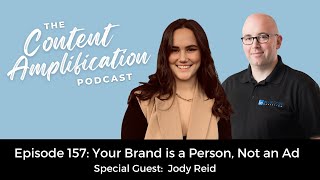
In this 40‑minute YouTube interview, host Shaun Whynacht talks with Jodi Reed, founder of JR Marketing and former Blue Cow Marketing co‑host, about the state of social media in 2025 and how businesses can succeed. Jodi shares her journey from employee to entrepreneur, emphasizing the need to unlearn polished, highly‑produced content in favor of authentic, raw video that resonates with audiences. She argues that community‑building, not pure sales, is the key differentiator, illustrating the point with a Nova Scotia restaurant campaign that sparked massive organic engagement. The conversation covers the double‑edged nature of AI—its ability to generate captions and scripts when used thoughtfully, versus the risk of lazy, fully automated content that erodes credibility. Jodi offers platform‑specific advice, calling Facebook undervalued for local B2C, TikTok/Instagram essential for younger demographics, LinkedIn underrated for B2B, and dismissing Twitter/X as low‑value. She explains how she extracts brand values and voice through conversational discovery, often using ChatGPT prompts. Content strategy is presented as a mix of polished and authentic posts, guided by trial‑and‑error analytics and brand persona. Posting frequency recommendations include daily engagement (stories, comments, DMs) and at least three feed posts per week, with a ceiling of five to avoid diminishing returns. Service models are customized: full‑service for hands‑off clients, hybrid for those who prefer to handle engagement, and advice on outsourcing time‑intensive tasks. Automation is welcomed for basic DM replies but discouraged for personalized comment replies. Security best practices include two‑factor authentication, trusted access, and vigilance against phishing, with suggestions for local cybersecurity resources. Finally, Jodi reflects on 2021, urging a focus on short‑form video, and pitches JR Marketing’s “calming the chaos” tagline, highlighting social media management and paid advertising services across Canada and the U.S.
Chapters
So today's guest is someone who, well, not just a social media marketing professional, but also a familiar voice. And for those longtime listeners here on the podcast, you may know who this is. Jodi Reed, who started working with us here at Blue Cow Marketing and has been a co-host for some of the earlier episodes, is back with us today. And since leaving working with us, she went out on her own and created JR Marketing. She's worked with brands like Pete's Frutti, Valley Credit Union, helping them navigate the strategy, content, and that ever-changing world of social media that we all either love or hate. We're going to dive into that in just a few minutes. Now, what I've always admired about Jodi is her curiosity. She's called herself a forever student, which is exactly the kind of mindset that you need when algorithms, platforms, and trends shift almost daily. So today we're going to catch up on her journey and explore what social media in 2025 really means for your business. Jodi, welcome back. That's great. I haven't been able to say that to any other guests. Welcome back.
Thanks so much for having me, Shaun. It's awesome to be back. I always love my time on that Amplification. It was always great.
Yeah, yeah. We've had some interesting guests and interesting conversations over those years and episodes. Oh, definitely. So now you're out on your own, JR Marketing. Before we dive into the questions a bit deeper, how does it feel to run your own business?
It's both the most amazing, fun thing I've ever done and the most stressful. Um, and I wouldn't trade it for the world. Um, you know, it's, it's so much different than being an employee. And I had a great mentor, obviously yourself, my early years of my career, um, to kind of show me what it looks like to be a business owner and, uh, the the, the joys and, and the hardships of it. And yeah, I, I love it. And honestly, if it weren't for my experience working so closely with a business owner, I probably would have never have even had it in my mind that it was doable. So I owe a lot to Blue Cow Marketing, that's for sure.
Well, thank you. Such kind words. So you dove into social media as a specialty, and here we are in 2025, and, you know, and social media looks completely different now than it did even years ago. And you call yourself a forever student in marketing. What's the biggest thing that you've had to unlearn because of the change that you may have, you know, brought forward with you?
I think for most marketers, people who have been in the game for a little while, the number one thing you have to unlearn when it comes to social media is that audiences are shifting towards more authentic, engaging content as opposed to polished, professional-looking content. So, you know, in the past little bit, especially with Reels, and short-form video taking precedence in the social media world, people don't want, you know, videos that have been edited and, you know, shot super professionally with, you know, all these effects and, you know, the fine-tuning to it. It's just not what performs the best anymore. And of course, you know, within reason, there's certain industries where that might be a little bit different and there's always, you know, room for a little bit of a mix of, of you know, super polished versus the kind of, uh, lower effort authentic content. But, um, that in particular has been a big shift, especially for people like myself who really love the, you know, sit, sit down interview style, more kind of YouTube side of content and editing. It's, it's a big shift to make.
Absolutely. And, and I think for anyone listening that, that was held up on that fact of I don't have the skills to, to make this polished content, this is probably good news to hear because now we could just turn on our cameras, shoot it, upload it, maybe just trim the ends a little bit. But, and that content is actually going to work better from what you said.
And I mean, within reason, right? Like there's definitely always a middle ground because some people will take that and then you see like, like videos that are posted that are really rough and you're like, okay, that's not what I meant. I still love to see some B-roll over it and, you know, some people talking, you still want to have a mic. So it's, it's clear enough to hear for certain content. But, you know, especially if you're, you know, a service provider and you are the face of your business, to flip around and take a quick selfie video, especially on stories, or even, you know, add a little bit of music to it, a trending audio, maybe throw in a couple trends here and there, like you really can get some awesome results on social media by being more authentic.
Mhm. And there are apps and tools that make this a lot easier, and I'm sure we'll get into that as we go through this episode, correct?
Absolutely. Yeah. And honestly, with that route, I actually take a little bit of a, a simpler approach, and I'll get into why, uh, later. But, um, yeah, there's, there's a lot of different tools out there now that can make your life easier when it comes to social media. Mhm.
So with the evolution of social media, I mean, it's been around for a while, Is social media still about both community? Is that what you want to do? Is you want to focus on, and how can I build that community around an audience? Or should you just look at it as another sales channel? Like, I just, I need to go on there just to sell my services and all that.
I think what makes people stand out now is that they focus on the community aspect of it. So I think a lot of businesses are taking the approach of looking at it as it's just another sales channel. But the businesses that actually do well and get sales from social media are focused on the community building. And I'll give you a perfect example. We had a client of mine, Halls Harbour Restaurant. They— we did a video for them. Are you really Nova Scotian if— and, you know, if you haven't, whatever, if you haven't, whatever. And we have, I think, a combined— it's, you know, 10,000 to 15,000 followers on both Facebook and Instagram combined. And that video organically had, you know, I think 200,000 views and hundreds and hundreds of comments because we're talking about being Nova Scotian. Is that necessarily 100% tied back to the restaurant itself? Not necessarily, but, you know, we threw in the lobster, we threw in, you know, if you haven't been to Halls Harbour, that kind of idea. So they're still, still relevant to the business. It's still getting people's eyes on the business. But it's talking about community. Everybody was talking about what it means to be Nova Scotian and how, oh, you know, the tartan mug and drinking tea and, you know, all that stuff. It's, it's, those are the posts that perform best for pretty much every business that you can think of is the community building side of things.
And I think a word that stands out in that is relatability. Can people relate to the content? Can they, can they attach themselves to that? And those community-based posts and content where especially people that are away that are from that area where that business is, right? It's a piece of home, right? It's a piece of way to, to be connected.
100%. And I mean, I always say to my clients, at the end of the day, social media is a social networking app. It's about staying in touch with people. And so when somebody chooses to follow you, they're choosing to stay in touch with you. So don't be the person that is constantly shoving sales down their throat and your products and whatever. That's not why they followed you. They want to know about your brand as if it's a person, right? So person isn't just one-sided. It's not, you know, a simple, this is what I sell, this is what I do. It's, this is who I am, you know, to take that approach and not just be, you know, one of those other businesses that are constantly posting ads. We see so many ads in a day. We are so numb to it. Like be the, the real authentic brand because that's how you stand out now.
Now we're in a world of AI. It's, it's everywhere. It seems like it's everywhere and it's baked into almost every platform. In your opinion, in your experience, is this making things better for businesses, especially from the social side, or is it just adding noise because there's so much AI content that's just cluttering up those platforms now?
It's both. Because it's all in how you use it. I know me personally, and I think people will have different opinions on it, but me personally and working in this world, I can so clearly see when videos have been AI edited or the captions, like the classic caption we can all joke about, ChatGPT, you see the long dashes and stuff just doesn't— so I think there's a lazy way to use AI in social media that contributes to the noisiness, and that's all it does. It makes it a noisier platform, and it's not focusing on bringing value. It's not really strategic in the way that people have used it in their brand. But of course, then there's the brighter side of it. If you give ChatGPT the right prompts, you can get some really beautiful captions, and ChatGPT can word what you're trying to say in a much more eloquent way than we can. But it's still your thoughts, you know, it's still your opinions. Same with scripts for videos or even video topics. There's all kinds of ways that you can use AI to have a better approach to social media and get better results. But it's when you use it the lazy way that it's just noise and that's all it is. Mm-hmm.
I mean, I'll raise my hand. I'm guilty. I'm guilty of doing that, mainly, mainly because I like playing with different platforms and seeing what it puts out there. And you know what, when I look at my business, you know, a lot of it doesn't come from, from social media. I use some of the platforms like Facebook and Instagram just to play. LinkedIn is my platform. And that's what I love about that. So let's talk about being playful here. You know, chasing different trends, TikTok trends, Instagram Reels. How do you decide what's worth jumping on versus what's or it's just going to provide a distraction? Because you hear of, you know, see these trends happening and businesses may be like, I need to do that because I need to get that exposure like everyone else.
Well, I think it all depends on what your goals are as a business and who your business is. So I always go back to your brand persona, like who is your brand? What type of person are they? A lot of these trends that we're seeing are a little bit on the edgier side. So a lot of them I don't even, you know, mention to any of my clients or think about doing because I know that that, that alone, you know, it's not a good fit for a certain client because it's a little too edgy or cheeky or whatever you want to call it. It's really just what aligns with the brand values. And I'm all about jumping on trends. I think a lot of people, oh, it's all about creativity. And, you know, I'm not like that. I don't just follow what other people do. Well, you're missing out on results because of it. It's great to be creative and try and be creative within those trends. Like, you don't want to see the exact same video with the exact same words over and over again. That's not really what I view as a trend. I see it as, you know, taking something that's gone and blown up and applying that to your business in a creative way. So there's still creativity within trends, um, but not everyone's going to fit, right? So it's just all about coming back to who your brand is what their values are and what you're trying to accomplish, you know, in your brand. And I think that friends are a great way to do that.
So I'm going to jump a little off the script of questions that we have gone through here because you said something there that kind of sparked a follow-up question. You know, the brand value and the voice of the brand. When you work with a client, how do you like— is that one of the initial things you do and how do you start to pull that out of a client so they understand, well, this is my brand value, this is my voice?
Well, I, uh, I like to take the approach of a conversation because that's the best way that you can get any information out of a business owner in, in about their business. Because just when they say simple things about, you know, it's really important to me that my clients feel comfortable around me and they feel like they can tell me anything, okay, so, you know, trustworthiness, that's a big piece of you know, what we want to communicate, that, you know, approachability, the comfort. That alone, you know, that one sentence tells me a lot about what I need to do on the social media side of things, right? Which, you know, might not be intuitive to some people, but it really is that simple. I just think it's, it's really a conversation. And you can— I know it sounds silly, but if, if you're managing your own social media, you can have that conversation with yourself or with ChatGPT, you know, tell ChatGPT, you know, the simple prompt of, hey, listen, I'm trying to come up with a stronger brand voice and brand identity. Ask me some questions and talk to me and I'll answer these questions and we can figure it out together. It really is that simple with ChatGPT. And I mean, you can, you can find all kinds of prompts online to help you find your brand voice and brand identity. But really, if you don't have that already, I don't, I wouldn't recommend going forward and anywhere else in your marketing efforts because you really need to have that nailed down before you do anything.
And you mentioned ChatGPT. It's an amazing copilot, you know, partner in your marketing. And, you know, with their voice mode, you can do that conversation just with voice, you know, on your computer, on mobile app. I've done quite a bit of conversations while driving with it. And then by the time I got home, you know, we had fleshed out the entire idea. Right within the application. So, you know, there's really no excuse these days to hone in your brand. Now, this is like the Ford-Dodge conversation for a lot of people, those truck people that are there. But in your opinion, what platforms do you think are overvalued? People are just kind of put more focus on that when it really, you know, it's a dying trend. And which one is really you should look at because it's underrated right now and it's really going to give you more exposure or, you know, more results.
Now I have a bit of a different, not as straightforward answer to this question because I do really think it depends on the business because there's different kind of types of people that are on different platforms. And, you know, for example, for a lot of the businesses that I work with, being in Nova Scotia and working with local businesses, Facebook is the best platform to be on, and I personally don't love Facebook, but it, it really does get results because a lot of, um, you know, especially if we're looking at women in, um, you know, the kind of 40 to 60 range, a really good amount of those local women are on Facebook, and that's where they're, you know, they're on there morning, day, and night. They're, uh, you know, looking up— that's where a lot of people do their brand research now, as opposed to just going to Google. And websites. Like, it really is— Facebook has really become super important for a lot of local brands in the Nova Scotia area. But if you're, you know, an Etsy shop owner and, uh, you know, you're targeting, um, you know, 20 to 30-year-old women who really like trendy interior design I'm not going to point you to Facebook, right? Like, I'm going to say TikTok and Instagram are, you know, really where you're, you're probably going to thrive. But it also depends on what, you know, geographical area are we, you know, talking America and Canada, because anything beyond that, I can't really tell you much. So it just really depends. But when it comes to what's overvalued for me and, you know, really since I've I've been doing this, I've never found that Twitter or X now has gotten much, much value for any of my clients. So that's something that I can actually say at this point now. I don't manage any Twitter or X accounts. We've put our budget elsewhere. And underrated would definitely be LinkedIn for B2B. I think it's often one that goes, you know, people see it as well, if I'm looking for a job as an individual, that's where where I go, but it's so much more than that. And to be honest, I don't, um, I don't spend too much time in that world because I tend to work with more B2C businesses. But for B2B, if anybody comes to me looking for advice, that's the first thing I say: always go to LinkedIn. And I always like to give a little shout out to Pinterest because I do think that there's still a lot of value for that in like interior designers and home builders and Uh, if you're a product-based business, sometimes that can be a great place to be, but not for everyone.
Great insight. Let's shift over to content and creativity. Uh, and how do we, we look at this? Now you've done everything from graphic design to strategy and, you know, putting all this content together. So how do you balance that between, you know, with, with an account between polished brand content that is designed with the, the rise of the raw, you know, phone shot posts and things that people seem to love, which more of the, the authentic kind of feel, you know, do you go all one way or do you do a mix of both? How do you figure that out?
It's always a mix for me. But I will say again, this will probably get old, but it depends on the business, right? So I like to, to say marketing is a game of trial and error. So you try it all, you catch, you know, you're recording your analytics and seeing what's performing best. And then you tend to go heavier on that route and a little lighter on the other route. But I still think it's great to have a mix because with social media, like, you got to keep it fresh, you got to keep it exciting, you got to have new stuff here, you know, being done every month to make sure that you're staying relevant, right? But I think, you know, certain industries, for example, one of my pet peeves is if you see a super high-end restaurant, for example, and they have super low-quality content that simply doesn't match, you know, and again comes back to that brand persona. If your brand persona is high-end luxurious, you can't, you know, get away with the, you know, ma and pa's restaurant content. It just doesn't work. So that's the biggest thing is what aligns with your brand and then go from there. And with a high-end restaurant, of course, you can still kind of play with it a little bit, you know, with doing, you know, just some quick selfie style content. Talking to the, to the, the camera, even if it's the chef in the kitchen, that could be something that could be fun. That's a little lower effort, not a big production or anything like that, but still can, you know, we can, we can keep that elevated as he's talking. Maybe we do some B-roll over it of the dishes that he's talking about. Like there's all kinds of mixes that you can do, but I think at the end of the day, you got to look at, you know, your brand persona and what aligns with that. Because if you're high-end, your content should not constantly be low-end. And if you're a mom-and-pop shop, don't spend, you know, $5,000 doing a huge production once a month when that's the majority of your marketing budget. Like, there's no need, right? It's all about, uh, it's all about finding that balance. But I think we can lean on, uh, the kind of more raw I don't want to say raw because we still need to polish it off a little bit, but the more authentic kind of iPhone shot content, we can do a lot with that, uh, that can perform really well. And that wasn't always the case. So I think we can definitely take advantage of that, um, in, in 2025 in social media.
You know, and the quality of the, you know, what you're carrying in your pocket is far superior to a lot of other cameras that people would have had. Um, now I want to ask you this one around consistency because for years, this has always been the question, and I'm sure you still get asked that, you know, how many posts should I be doing a week? When's the best time to post? How many? What time of day? All that kind of stuff. And I know there's been shifts in AI and algorithms and all that kind of stuff. What would you tell somebody who came to you and said, how many times should I post every week and when should I post?
Mm-hmm. I'd say minimum. So let me back up.
Depends on the business, right?
Yeah, I'm gonna try not to say that, but I think every account should be active daily.
Okay.
And when I say that, I mean commenting, uh, answering DMs and posting stories. That doesn't change for any business because again, like as a business, a brand on social media, you should think about it as your brand is a person and your brand checks social media in the morning while they have their cup of coffee the same as you do. Or, you know, they do a quick scroll at lunch, you know, to interact with the people that they follow and, you know, that they want to stay in touch with on social media. Think about it like that. And I mean, we can group that into one daily check-in just for the sake of time where, you know, you put a story, what's going on in the brand today, you answer a couple comments and maybe you respond to some DMs. So that I will say, be consistent with that. In terms of posting to the newsfeed, I like to see at least 3 posts a week. You know, and that can be a mix of, you know, static, you know, some carousel posts, and there should definitely be a Reel or 2 in there. So that's kind of a very general, broad, broad kind of guideline to the frequency. Obviously, the more that you post, the more opportunity you have to talk to people. But I really don't get into packages more than 4 or 5 posts a week just because I don't think that there's a huge jump in value from, you know, 4 posts to 7 posts versus that there is in 2 posts to 4 or 5 posts.
Absolutely. Now, I'm sure anyone listening that, that isn't tuned into social media all the time may be freaked out by what you just said of like, like, how am I gonna find time to do this? You know, every single day. It's not my jam. I don't enjoy that kind of stuff, but I know I need to be there. You know, working with someone like you, you know, is there a blend there where, you know, you could create the content and then the client can go do the commenting? Like, is it, is there a team aspect to that where, where it will work for both where they don't have to do the heavy lifting, but they can do more of the conversational engagement, right?
Yeah, so I kind of take a very customized approach. Nothing that I do is standard. I, I have a chat with a client and then we figure out what's the best route going forward. Because for some clients, they don't want to even look at anything social media, and it's like, okay, great, I got the package for you, I'll do everything. For some clients, it's like, I really struggle with the post coming up with ideas side of things and the, you know, actual techie side of things, right? So then, you know, we have a package for them. But, you know, I think the easier part of social media management is the engagement. It's, you know, 15 minutes a day. And I know everybody can at least find 15 minutes a day because I know you're scrolling for at least 15 minutes a day. So instead, you know, hop over to your business account. Look at a couple stories, you know, answer a few, look at some comments and answer a couple, like a couple posts, comment. That's it. You can set a timer for 10 minutes, you know, the same that we all come into the office and we sit down and we check our email. Just tack the social media onto your checking your email, and it can be a lot simpler than, than it needs to be. But in terms of the actual creating content, that can be a super time-consuming process. I totally get that. Um, but you know, using tools like AI to help you come up with some ideas, or honestly hiring it out, that's the way that I see it. And I might be a little biased, but, um, for me, the, the, my social media, you know, outsourcing thing was the, uh, bookkeeping side of things. I was, you know, brand new in my business and, you know, started looking up, okay, I'm going to do it myself, like I can totally do this. And I, you know, looked up a couple words and went on, you know, Government of Canada website, I'm like, no, I can't. I immediately just find somebody and, and, and, uh, I need, I need somebody to take care of this for me because the time, the effort, the expertise that it all takes, I just don't want to deal with it. And I really think that's how you grow your business is by those components of your business that you don't like that are time-consuming for you to do and you don't have the expertise, hire them out. Like just get it off your plate, right?
Yeah. No productivity hack here. Not to— this isn't as a joke, but you're probably in the bathroom 15 minutes a day, right? You got your phone with you. Like you sitting on that toilet instead of scrolling through your personal Facebook, look at your business account, start commenting, right? You've got the time.
Know where you are when you leave the comment. Yeah.
I wouldn't do a Facebook Live there, but, um, maybe skip that one. Yeah, that's right. Now the human factor. You know, automation, it's my jam. There's so much out there. You can automate a lot of stuff, but where do you think automation should not play a role in social media? And I think you've kind of answered this already, but I want you to reiterate from your opinion, what should you not automate?
I think people will have different opinions on this, and so I'll give you mine. I cringe when I see comment replies or, um, you know, DM responses that are so blatantly automated that it hurts you a little bit. Now I wanna say I set up DM replies on all of my accounts, but that's like for the basic questions, right? Mm-hmm. So you give a little bit of information, but if it's a more in-depth question, then you come through and you answer it, you know, when you're in your 15 minutes on the toilet checking your DMs, right? Yep. So I totally believe in DM automatic DM replies if it's, you know, you have a basic one, but then if it's a more complicated question, you go and you you know, you respond to that, or if they're saying something nice about your business or a complaint about your business, they're not matched with these, you know, cringy automatic replies. You know, same with comments. I like to keep comments a little more personal because I just, again, I always come back, your brand is a person. And imagine if you commented on your friend's photo and they gave the same reply to every single person, how cringy that would feel. You'd never want to comment again. Like, that feels weird, right? Takes the community building, you know, side of social media, which we went over is what makes you stand out. It completely ruins that by automating those types of things.
It's very similar to my thought process on holiday cards, where companies just print the signatures and everybody gets the same one. I strongly believe if you really care about the people you're sending it to, take the time to write a personalized message in every one. That's there, right? If it becomes too unmanageable, you've done too much, right? So, um, it's there. So let's talk about the, the risks, future thinking. How do you, how do you think about the future? What do you think is the biggest social media risk businesses aren't talking about right now?
Well, there's obviously the risk of, um, not— of just simply not using it or not using it correctly and the, the loss and opportunity there. But I think you could say that about really any, you know, any selling channel or sales channel, right? So I would say the, the biggest thing is the blind trust in like easy and lazy AI solutions and AI tools for social media. I just think honestly, I, in my opinion, I think if that's the only thing you're going to do on social media is those, you know, blatant DM replies or comment replies, like blatantly AI or auto-generated, you know, AI-edited videos that are kind of awkward or not really cut right because no human went through and edited it after, you know, AI carousel posts that, you know, another marketing company did the exact same one, you know, multiple times. Like, that is the biggest risk because you're worse off doing that than not doing it at all, in my opinion. That that can actually tarnish how you look, especially if you're in an industry like me. Like, imagine if a marketing company who's talking about doing your social media did that. That could actually have a worse— that could have a very negative impact on my sales as opposed to a positive impact, you know. Like, it's, um, it's a risk in, in, you know, actually taking credibility away from a business, um, and doing things like that, as opposed to, um, what you're trying to do, which is obviously get some some traction on social media.
Absolutely. And there's another risk out there that I want to dive into just briefly. It's the security of your account, right? There's a lot of— there's a— there's been a huge increase of these messages that come through, especially when you have a business account that says you're breaching Facebook policies or Meta policies, click here to see why, which are really phishing attempts to gain access to your account. So if you ever receive those, they're not legit. And if you click that link, there's a serious risk that your account's going to be taken over. How do you, how do you combat working with clients' accounts where, you know, making sure they have two-factor authentication and stuff like that in place? And is there a way that they can share access to their account with you without giving out their, their password themselves?
Mm-hmm. So with Instagram, unfortunately, there's not. So that is, is, you know, simply a trust-based, you know, feature. Make sure the person that you're working with you really trust. And honestly, with a lot of my clients, because I tend to attract more the, the business owners that are so overwhelmed, they just want it all taken off their plate and they don't want to check it. They don't want to do anything because we've taken that approach. Most of the time, two-factor authentication is set up to my number to make things easier. So I don't, I don't really have a ton of good advice in that area other than if you hire somebody that you can trust, it makes your life so much easier. Like, you know, the majority of my clients do. I just say to them, any email, just forward it to me and I'll tell you if it's legit when it's relevant to, you know, the social media side of things. And I'll tell you what, I don't think I've seen a single real email that any of my clients have ever been worried about. Pretty much most of the time you can assume that it's a scam. But there's been some very realistic looking ones lately that it's, it's scary for sure. So really just make sure, you know, I know it's a pain in the butt, but with Facebook where it's tied to your personal account, like change your personal password, you know, many times and make sure it's complicated. And I know it's a pain, but when it recommends that strong password, do it. You know, I also, you know, it's worth having a conversation and doing some free seminars as a business owner with some local, you know, cybersecurity places. There's a really good one, Adaptive Office Solutions around here. They do free cybersecurity webinars and, you know, kind of workshop. And oh my God, he just has so many— Matthew McGee is his name— he has so many amazing tips and, you you know, advice to keep your account secure, not just on the social side, but you know, if you use Google Workspace or, you know, Office 365, all of those, there's some really good advice in there. So, you know, it's the same as you wanna stay up to date on what's happening in social media, stay up to date on what's happening in the world of cybersecurity 'cause that can ruin your day really quick if you don't.
Yeah, it's only gonna get harder too as things progress with AI and these deepfakes and all that stuff. Oh my gosh. So let's hop in a time machine for a second. If you could go back to 2021, look at your 2021 version of yourself, what's one piece of advice about social media that you would tell yourself now?
Double down on video, short-form video, like really start learning the, the tools and some cool shots and, you know, getting some of the, the cool equipment for, um, you know, the short-form style video because that's, that's the most valuable piece of content nowadays and work on being more concise in scripting because attention spans just downhill, right? Like, we've— I went from most of my packages including, you know, maybe it would be like a up to a 3-minute video each week, and now it's, it's usually somewhere between 5 and 30 seconds each video.
It's crazy. It's crazy. Where we're at. Oh yeah. Where we are. Yeah, for sure. All right. So as we close, JR Marketing, let's give a pitch here. Tell our listeners how people can work with you, where they can find you, all that stuff.
Yeah, for sure. So I'd say, you know, my, my tagline is calming the chaos. And that's because I worked with a, a business owner. It was her lifelong dream to open a business. She did it in retirement. She was super stressed out. She just had this ball of chaos around her. At our first meeting. Had our meeting, implemented our strategy. It was, you know, 6 months later at one of our, our monthly check-ins, she came to me and she said, Jodi, I just can't tell you how much I appreciate you being the calm amongst the chaos. And so I clocked that as a tagline really quick because I loved it. But that to me is really what it's all about, giving business owners back their time so they can focus on what they do best, on why they started their business, because we all have a love for what we do. We all have a reason for why we started it. And with being a business owner, a lot of times there's just so much that gets in the way and that makes us forget that. So I like to give people back their time, you know, manage their marketing strategy, let them, you know, get back to what they do best. So that's really what I'm all about. So if you're, you're somebody who has, is really feeling that right now, that there's just so much going on, you just want to get some stuff off your plate, come to me. I would love to chat about what it can look like to, to take some stuff off your plate in the digital marketing space. You know, like we talked about today, I do specialize in social media management. We do some paid advertising on social media as well. And that's really our bread and butter. We love it so you don't have to.
And you don't only just work with Nova Scotia businesses, correct? No.
So Canada-wide, and we have worked with some American businesses in the past as well.
Perfect. Well, thank you so much for this wealth of, of wisdom you shared over the last 40 minutes with us.
Awesome. Thanks so much for having me, Shaun. I appreciate it.
More from Shaun


Julie Vanexan recognizes Shaun Whynacht from Blue Cow Marketing at the Nova Scotia House of Assembly








