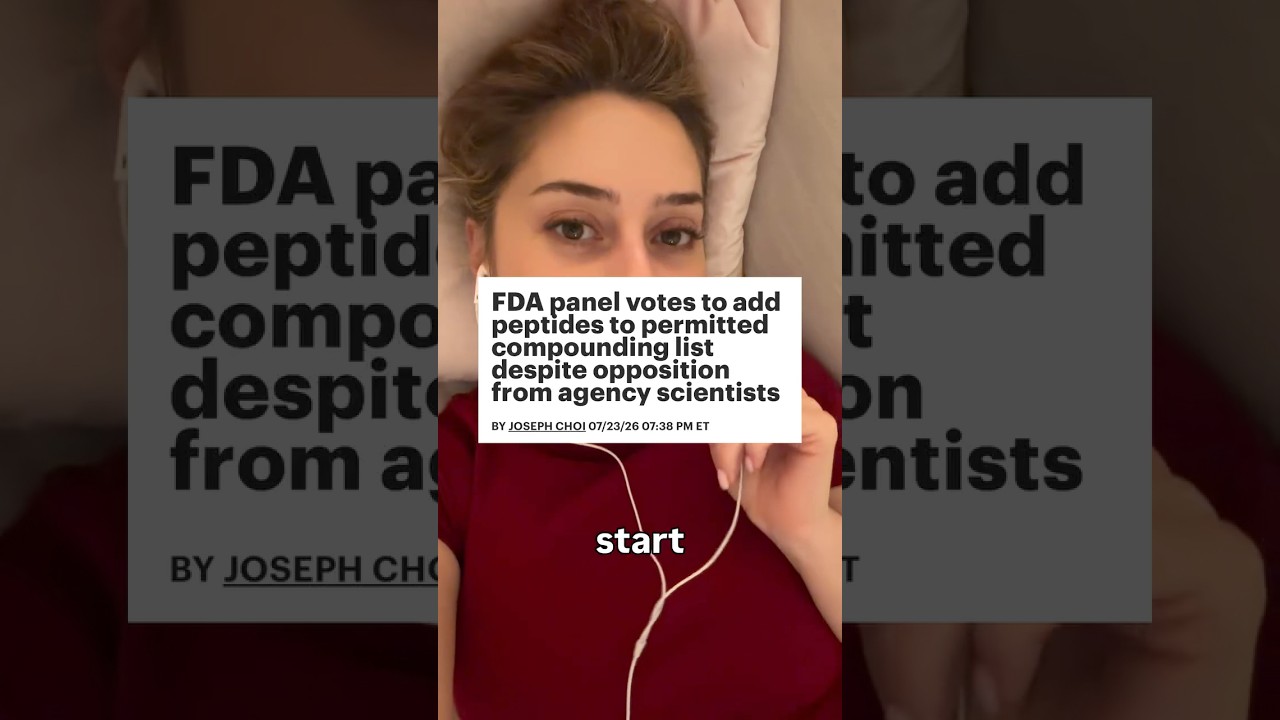
Dermatologist Shereene Idriss explains the FDA's decision to let pharmacies compound peptides. Gray-market peptides tested positive for arsenic and lead while missing the active ingredient entirely. The easier access could discourage pharmaceutical companies from funding long-term safety studies.
You think you won your bet against Big Pharma because now the FDA is going to approve peptides being made by compounding pharmacies. And in one way you did win that bet. And congratulations to you because the peptides you're about to start buying are more likely to be made in a regulated facility instead of coming from the gray market where they could be contaminated with, I don't know, arsenic.
There is zero ipomurelin in it, um, 0% detected. What they have detected is arsenic and lead. The lab can't identify what it is, they just know it's not ipomarelin, which is what we thought we were buying.
But here is where you are potentially losing, and I'm not paid by Big Pharma, but the reason pharmaceutical companies spend billions of dollars researching drugs is because if they discover something new, they can patent it and eventually make a killing off of you. And if anyone now can already make and sell a peptide, why would a pharmaceutical company spend billions of dollars proving that it is safe for the next 10 or 20 years? They are never going to do that. So you may have just gained a product that is manufactured just more safely, but what you have lost is something so much bigger— the long-term studies, the that will tell us whether or not peptides are actually safe to use for years to come. And that is the trade-off that no one is talking about. So maybe we had the question wrong all along and we were challenging whether or not Big Pharma wins or loses, but maybe we should have been asking the question of who is ultimately going to pay the price to find out what is actually safe for us.