How a Dermatologist Decides Between Lasers & Skincare for Dark Spots, Redness, and Texture

Dr. Shereene Idriss breaks down how dermatologists choose between lasers and skincare for dark spots, redness, and texture by sorting concerns into three lanes: brown (pigmentation), red (vascular), and water (texture). For spots, she recommends picosecond lasers for melasma and topical blockers like kojic acid and hydroquinone. For texture, lasers like fractional Fraxel achieve in months what retinoids would take years.
Chapters
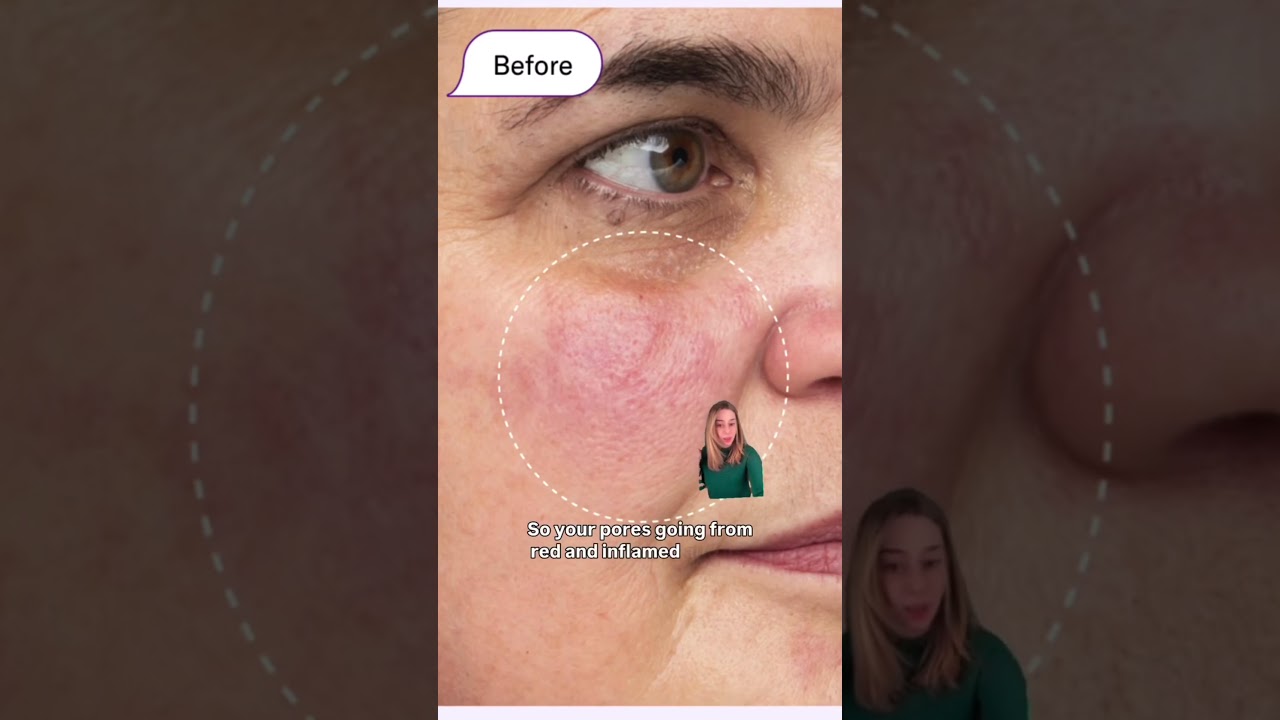
What if I told you guys that every single laser in my office and in this country can do one of 3 things? Either they can target red, brown, or water, and that's it. So when someone's trying to sell you a package worth thousands of dollars for a laser treatment, that's the question you need to be asking. Which one of the 3 is it targeting? But the most important question, which we're going to help address today, is could that tiny bottle of skincare do the exact same things and save me all this money? Because what it costs, maybe maximum the price of dinner. I'm Dr. Shereen Idriss. Welcome to my YouTube channel. This is Pillow Talk Derm. We do this every Saturday morning at 10 AM. I see patients 5 days a week in my office. I also have a skincare brand called Dr. Idriss. But today we're going to talk about where you need to skip, what you need to do, and where you can save your money. Because there are truly 3 lanes. The first being brown spots, and I'm talking about pigmentation, sun damage, melasma. Acne marks that are dark and brown, anything that falls in the brown pigmented category. The second is anything that's redness related. Do we have an inflamed skin barrier? Do we have— are we rosacea prone? Do we break out in addition, or are we somebody who just flushes easily and has broken capillaries on our face? And the third is the person who has textural issues, whether it is acne scars, surgical scars, things that are popping in, or even things that are popping out. We're going to address these 3 different lanes in this video, and I'm also going to be talking about their skincare alternatives. So let's jump in, starting with brown discoloration. Now, there are different types of things that can cause brown discoloration in your skin: sunspots, hyperpigmentation from acne marks, even medical conditions like melasma, right? All of these things are going to cause an unevenness in your skin color that can make you look older and more tired in a much faster way. But the treatments when it comes to lasers vary. And there's one condition specifically where I'm really conservative about laser treatments. So the first thing you want to think of when you're thinking of brown spots and lasers is, are we trying to do spot treatment or are we trying to do field treatment? Spot treatment is when you're trying to hit every individual spot that you can point out. So like, I have one brown spot here, I have one brown spot here. I just need a spot treatment. But if you have brown noise in the background, right through patches and sun damage, you may want to consider a field treatment. Lasers that are spot treatment lasers are lasers like an Alex laser. If you're looking for a field treatment, there are things like Fraxel 1927 that can absolutely help with the overall surface of your skin. It is a fractionated device, but it is essentially creating diffuse damage so that your skin can heal over it. There are other lasers that you can also look into that helps with the field, like the Permea. which is a baby version of the 1927 Fraxel. But last, there's also a subtype of lasers called the picosecond lasers, which are basically going to shatter pigment with speed rather than with heat. Now, for all sorts of brown spots, either one of these 3 treatments could work, except for with melasma. If you have melasma, I would really be more on the— err on the conservative side, and I would probably not pick The first 2 types of lasers, and I would go more for a picosecond laser. However, you're going to need a bunch of treatments. When I say a bunch, I'm talking about over 10, 12 different treatments in order to get to a baseline. And it still doesn't replace your skincare routine because your skincare routine is like your diet, right? You can go and get liposuction and suck the fat out of the bejesus out of you. But if you're not on a healthy skincare routine, if you're not on a healthy diet and you go back to McDonald's, that fat is going to come back. So think of liposuction like the laser treatment and think of your skincare routine like your diet. If you don't like the liposuction analogy, I'm sorry, but think of it like brushing your teeth and going to the dentist. Your dental cleaning is the laser treatment, but brushing your teeth every single day is your skincare routine. Which leads me to what should we actually buy then? So obviously the number one tier of products are things that you're going to look for are things that are blocking how pigment is made and not just working on the pigment that's already on the surface of your skin. So I'm talking about kojic acid, arbutin, licorice root, niacinamide, even tranexamic acid. And full disclosure, I have my skincare brand. I'm going to be putting my brand alongside other brands so you guys have options, and I'll tag even more in the description box below. But this is where the Major Fade Hyper Serum is a powerhouse because it has arbutin, licorice root, niacinamide. It even has diglycosyl gallic acid, which helps to minimize the redness when it first appears, and that eventually turns into the brown spots. But the thing I love the most about this is that it gives your skin an illuminating effect, so you look like you've used a highlighter. Obsessed. So it hydrates and it brightens and illuminates all in one. The second products that you can kind of think of are like the single ingredient products. So like The Inkey List, right? This one has an arbutin serum, and I think it has a tranexamic acid serum, and you can basically buy 2, 3, 4, 5 of them to create your own concoction, but the steps are going to be longer and ultimately the price tag does add up. However, I will link them below. The third option is this one, for example, by Murad. This is the Murad Dark Spot Correcting Serum. It has glycolic acid in it, which is an exfoliating acid. So you want to be careful though using this in the morning because I do not believe in exfoliating in the morning. I think it should be reserved for the nighttime, but it is married to tranexamic acid plus 4-ethylresorcinol to help brighten. So I will link these products below. It is a very lightweight serum if you don't want something too thick or too heavy. Now, if you are looking for vitamin C, because we have all been told that vitamin C is the holy grail, vitamin C alone is not going to do it. But you want to know, that's where I mean, if you follow, you know, that's where I stand. You want to marry vitamin C to other actives. And I believe this so much so that I took my own vitamin C moisturizer and reformulated it this year. And added glutathione to my active serum. In addition, it does have ceramides, it does have peptides, and it does have 4-butyl resorcinol, which is another brightening agent that has also been proven to really help brighten your skin. So it's a beautiful gel moisturizer that sits really nicely under makeup. And when you pair it with the Hyper Serum, at least for me, it really does not pill. It's a beautiful reformulation and I have been, needless to say, obsessed. But if you're looking for classic vitamin Cs, there are tried and trues like SkinCeuticals C Ferulic, which recently lost its patent. So you're probably going to be— I think there has been changes already to the formula there, and that is a pure ascorbic acid. So the vitamin C is already active. If you're looking for something slightly less in your budget, I would say Paula's Choice C15 is one that you can also look at. There are other alternatives as well that I will link below. And last, when you're thinking of pigment, you're thinking of exfoliation products, things that are going to get rid of the noise on the surface of your skin. And that is why I created the Flash Mask, which has glycolic acid at 15% with lactic acid to brighten. But it also has tranexamic acid because on its own, tranexamic acid doesn't work great topically. So when you marry it to an exfoliating acid, you're really improving its chances of brightening. So this is a mask. If you are not a mask lover, First Aid Beauty over here has glycolic acid and lactic acid, but there's no tranexamic acid in here, but this will still help to exfoliate. And of course, the OG tried and true L'Oréal 10% Glycolic Acid Lift. These, by the way, are pads. And I didn't show you guys this texture, but this is a pink mask serum. Like, it looks like a gel that you should wash off. Okay. And then there's a 4th tier of products that are not sold over the counter, they're prescription. And I'm talking about hydroquinone, which is the gold standard, but you cannot be on it long term. You have to take breaks when you're on hydroquinone. So 2 months on, 2 months off, especially if you have melasma. And of course, a retinoid, whether it is an over-the-counter retinoid, which we'll hit on in a minute, or tretinoin. And last, there's also an oral medication known as oral tranexamic acid, which I've never tried because I've been so dedicated to my skincare. But part of me is— and we could talk about this in another video— flirting with the idea of going on an oral tranexamic acid before I enter my mid-40s and have to consider some sort of hormone replacement therapy, because that does wake up your melasma. All right. So let's go back. So we talked about pigment. Let's talk now about redness, which is the second lane. We're going to hit on the laser treatment of choice for redness. But before I do, there are 3 categories of people when it comes to redness. And it's so important that you figure yourself out because they're not all treated equally. The first category is that person who has an inflamed barrier with like really stingy skin, skin, or it blotches or it itches after applying products and they hate half their routine. The second category of redness are the ones who flush easily, but the ones who also break out occasionally with little pustules, rosacea-prone, oily, bumpy skin alongside the red. And the third category is the one who flushes easily, but they're not oily, they don't break out, and they end up getting tiny little broken capillaries, or it's always really red around the sides of their noses. And this is something that they are constantly living with and struggling with. Now, the gold standard laser for redness is the VBeam. V for vascular, beam for laser beam. It is the name that everyone uses to describe the pulsed dye laser. And this is one of my favorite, most underestimated lasers in practice, but it doesn't work for everyone because if you have an inflamed barrier, you're not going to be that person who needs this series of this laser. Because as much as I wish that one treatment could cure you, it doesn't cure you and it doesn't do it in one treatment. You need several treatments. It's really almost like a subscription and it's helping you live your life over time, minimizing the impact of the redness that shows up on your face. So if you have an inflamed skin barrier, the goal is not to do the laser, but to really pare down your routine and find soothing, calming products. And if you're somebody who has rosacea and you have acne-prone skin and you flush easily, the Vbeam can absolutely help with the redness component of your rosacea. But if you're breaking out, it's not going to help with the breakouts. And if you're somebody who is constantly flushing and you have broken capillaries, but you're not dealing with acne, This is the treatment for you because no skincare is ever going to collapse a broken blood vessel. And you're going to have to, if it bothers you, be on top of your treatments. So what I normally tell my patients is do a treatment once a month for anywhere from 4 to 6 months. And then hopefully we stop and see, because if you've already noticed improvements and you notice improvements in a stepwise fashion, you flush less, the baseline redness gets less, eventually you look less red. That's sort of how it appears. We then figure out what is the maintenance schedule. Is it once a year? Is it once every 6 months? It really is person dependent. But you would have saved yourselves a lot of headaches because skincare alone cannot collapse blood vessels. But if you have an inflamed barrier, right, let's talk skincare because skincare can make a big difference. And this is why I created the Calm Back Cream. So you want to look for products with Colloidal oatmeal, centella asiatica, ceramides, panthenol, and the goal is really to really subtract and then repair. So we're subtracting everything using a product, maybe one or two, and that's it, and focusing on repair. And this is my solution to that. It is a nighttime treatment. I like to use this only at night, especially in the winter when the winter and the cold air is harsh, and I use it all over my face. I literally just douse myself in it. And in the morning, I wake up and I wash with water, and really it does help to restore my skin overnight. Do I use this in the morning? Not so much because it's not necessarily the best product under makeup, but it does really work in terms of helping to really get your skin back on track. If I'm in the morning trying to keep my skin calm and soothed, I love this guy. I've been talking about the Aveeno Calm and Restore for over, I don't even know, 6, 7 years on social. They've never even approached me to sponsor me, but I'm absolutely obsessed with them. It's such an easy product to use in the morning and it does help to calm your skin down. Cicaplast B5, I think I had done versions of this with face basting. It's nice. It can be sometimes a little bit thick. So if you are oily and inflamed, you might not love this one. You'll prefer probably this one. But this is a daytime alternative as well because it has vitamin B5 as well as ceramides to help calm your skin barrier down. And of course, we have our diaper rash cream. So when all else fails and you just need to layer yourself like a magnolia cupcake, you can put zinc oxide on your face to help to restore your skin's integrity and to calm it back down. And then you can maintain it with this, which is much more cosmetically elegant. So your partner is not like, what the hell? Or you're not dirtying your bedsheets, which has been something that you guys have messaged me about over the years. So that is what you can really do for the inflamed barrier. Now, If you are somebody who has redness and you're acne-prone, then I love azelaic acid. And that's why I created the Left on Red Reducer Serum, because this is for the acne-prone rosacea human. It's an azelaic acid complex that has 5% free azelaic acid and 5% of an azelaic acid derivative. I will link below my azelaic acid video from last week so you guys can go in for the deep dive, because I also found An oldie but goodie, which is not what the label says it is. This is not a topical 10% azelaic acid. Now we know. And if you don't know what I'm talking about, I will link the video. I don't need to show you guys the formulation of that product because I'm really annoyed at how they did that without ever educating the consumer or talking to you guys about it. Although kudos for addressing the label. And so there you have it. That is how you address the redness, which leads me now to texture. I'm just gonna lay it out there, just tell you guys the truth up front, because no skincare is ever going to replace what a laser can do for your texture. It just cannot compete because a texture can create a difference basically over 3 months, and that very drastic difference that would require your skincare anywhere from 2 to 3 years to create that same difference. And this is something that even if I did have a retinoid to sell I would never say that a retinoid is a laser in a bottle because it's not. The lasers really do help to jumpstart things. It's creating microscopic injury in your skin. It is helping your body to repair itself in terms of creating damage so that it can repair itself. And this is something that skincare doesn't do. So you cannot compare them as apples to apples because they're not. And so if you are looking for lasers to help to resurface your skin, fractionated lasers like the Fraxel 1550 can help with the surface of your skin. You're also looking at basic microneedling, especially over 40. I noticed it makes a big difference with texture. Doing it on a regular basis, like once a quarter, can also be very helpful. There's also microneedling with radio frequency heat that can also help with texture as well. And then you have ablative lasers that basically get rid of the top layer of your skin. Sounds dramatic. Some are more dramatic than others, but we're talking about like an erbium laser and even a CO2. Laser. But if we have texture from acne but we're still actively breaking out, I don't recommend a laser treatment until you get your breakouts under control because there's no point. You're like a sinking ship, and why am I getting the water out on one side when I still haven't patched the hole on the other? So this leads me to skincare, and the closest things that you will ever get to this but will never ever be the same as a laser are retinoids, the tried and true vitamin A. They're my favorite group of skincare products because those are the ones that have the most data behind them. Now, of course, you can get a prescription like this one. This is like Altrino, which is also tretinoin, but a lot of people cannot necessarily tolerate prescriptions. And when it comes to retinoids, it is all about consistency over intensity. I want you to get something in over the course of the week versus just doing something once, blowing your face up and then doing it once every week or once every other week. So for me, when I am thinking of retinoids that I find most of my patients can tolerate, I love hydroxypinacolone retinoate, which is the basically the ester form of retinoic acid. It is available in Skin Rocks. It is a beautiful product, and HPR is one of those derivatives that really makes a big difference and also helps with the quality of your skin. Without inflaming or irritating your skin, and it is effective. But if you want a retinol because that's what you know, I love my girl Shani. Shani Darden has her Retinol Reform 1% encapsulated retinol, which is a beautiful retinol product as well that can also help to smooth the look of fine lines. I do think it's important that you guys understand with retinoids, you want to know the percentage of the type of retinoid that you're using And of course, the type of retinoid that you're using so that you can understand what it is that you are getting from that product. And in terms of texture, the other category that helps are chemical exfoliants over time. Time being a longer thing, okay? Because you're not going to just buff your way to smoothness with a chemical exfoliant. But you can go back to the ones I talked about earlier, like my flash mask, L'Oréal glycolic acid. All of these things are going to help to exfoliate the surface of your skin. There you have it. I hope you guys found this video helpful because it's not about asking me, is this laser worth it anymore? It's really about understanding what of the 3 is this laser targeting and can I get the results through my skincare? Because if you're not on the skincare that's complementary to the laser treatment that you're receiving, that laser treatment is kind of useless. It really is. And so you really want to make sure that what you're doing at home is complementing that work. And I hope you guys found this video helpful. Let me know in the comments which lane you fall into. Is it red, brown, or water for texture? And I'm curious to hear your thoughts. Otherwise, I will see you guys next week.
More from Shereene









3 Ways I Prevent Post-Menopause Skin Issues + What Really Helps Elasticity After 50