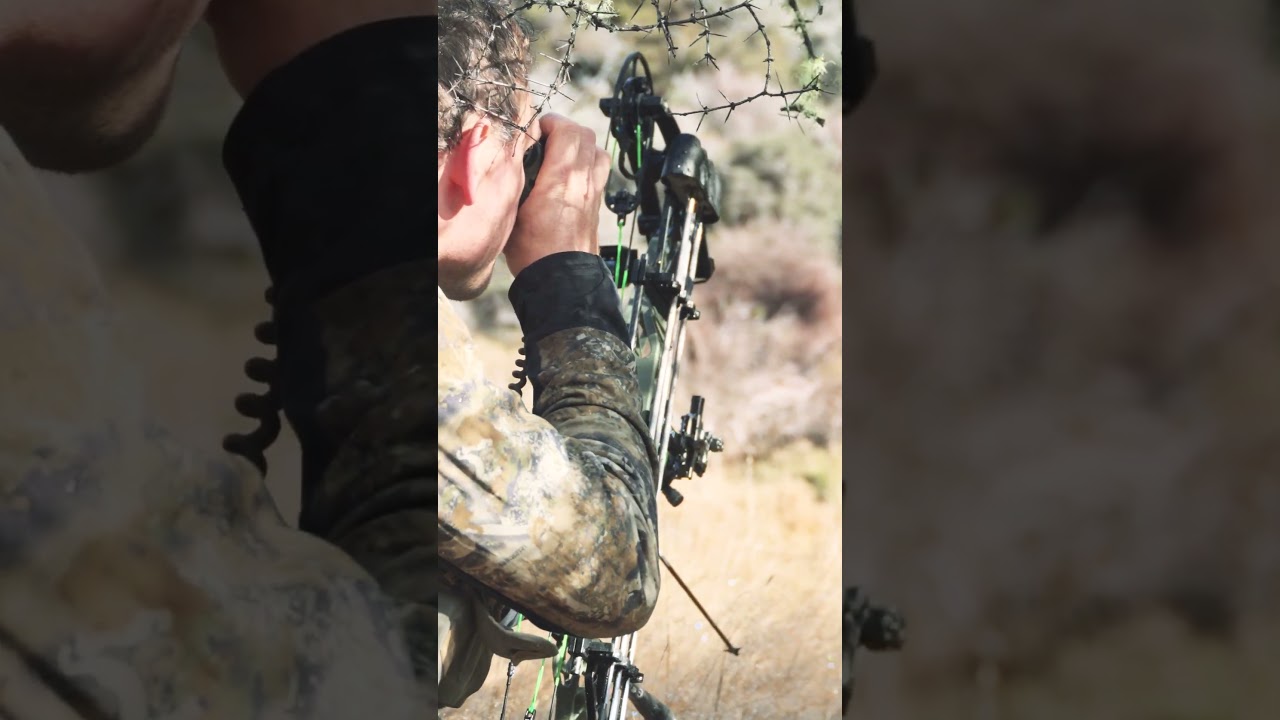
Video demo by Darrin Christenberry of the 2020 Elite REZULT bow and its new "set" tuning technology. Christenberry gives exact shooter/bow measurements (draw length 30.25", peak draw 64.5 lb, holding weight 15.4 lb), enters three arrows into the Archer's Advantage spine-calculator (420, 380, 325 spine results: 420=weak, 380=optimal, 325=stiff), and then demonstrates stepwise adjustments of the REZULT set system to correct a knock-right tear until achieving tight group ("bullet hole") tuning without a bow press.
Questions this video answers
30.25 inches
64.5 pounds
15.4 pounds
420 = weak; 380 = optimal; 325 = stiff
Chapters
I also want to give you some information about the setup I'm actually shooting right now. The bow measures 30 and a quarter inches in draw length. It's pulling 64.5 pounds of draw weight and it's holding 15.4 pounds of holding weight. I also took the three arrows that I've been talking about and entered all of them into archer's advantage. Archer's advantage, for those of you that, that don't know, is a computer program that you can populate the fields with some very technical information. And you can change vane size to nock size for every arrow manufacturer out there. You can play with arrow length, point weight. You can actually build your arrow setup. Match it to your bow and it'll tell you where you fall, whether it's a properly spined arrow, if it's too stiff, if it's too weak. And my 420 I suspected came up as weak. No. My 380 showed to be the optimal spine. And my 325 showed to be stiff. And that's what I've had to do to get these to tune out of a two track. Stiffer arrow seem to tune better. The three tracks a little different animal. So we'll see how it reacts to these arrows. I'm gonna shoot the 421st. And I'm anticipating a knock right tear because that's what I typically got with this and was not able to get the tune I wanted out of a two track. That's not right. That's the typical tear I get out of a 420. Now we can skip the 380 and just go to the stiffer arrow because it's going to be opposite ends of the spectrum. So we'll see what the 325 does. And this reads as stiff on the archer's advantage chart. That's nearly perfect. So we'll mark these two. That's hole number one. And it's only about, I'm going to say about three, eight of an inch, knock right tear. This is hole number two. We'll make an adjustment to the set system. And remember, this is an arrow that I haven't been able to tune. I haven't been able to get even. Put this in my quiver. So now what I'm going to do, I've got knock right tears. So if I'm trying to tune this 420, I want to go right here to my locking screw in the back. Loosen that tail. Right is clockwise. So a little bit goes a long way. So we're going to go about a quarter turn. There's a quarter turn to the right. Lock that screw back down. Go down here to the bottom. Same thing. Tail right to the right. So we're going to loosen that screw. And I'm going to go a quarter turn to the right, which is really close to about right there. Lock that back down. Let's see what that does. Same arrow, same distance, with just a quarter turn in the set system. That's better still. Just a touch to the right. We'll shoot the stiffer arrow now. And as we work this system, to work that knock right, tear out. It should take our arrows that tune better or our stiffer arrows and move them knock left. So we should start seeing that as we adjust that set system. Sure enough, we'll mark this hole as number three and number four. And you can see the impact point is to the right. And now I'm taking my stiff rail and moving it to the left. So we'll make one more small adjustment on the set. And I should be able to get this 420 to tune. So again, we're still just a little bit. Knock right. Gonna loosen it. Tail right is clockwise. We won't go quite a quarter turn this time because it moved quite a bit. We'll go about an eighth of a turn. Lock it down. Same thing on the bottom. Loosen it up. Not as strong as I thought I was. Tail right is clockwise. So we're going to go about an eighth of a turn on the bottom again, Lock that screw back down. And let's see what we've got. This barrel, hole number five. There it is. Just that simple. Absolutely perfect. Bullet hole. Hole number one. Hole number two. Hole number three. Just a little bit better. Number four. This is where I talked about the point heading to the right and the fletch going to the left a little bit. And hole number five. Perfection. That should show you how simple this system actually is. It is the set system simplified, exact two tuning. And it's giving me more setup options, which is going to give you more setup options. It's very simple to work with. No bow press needed. You don't even have to leave the line to make all these adjustments. And I'm taking arrows that I haven't been able to shoot before and put them back into a potential setup. So new for 2020. Lots of technology, lots of exciting stuff. Do me a favor. Go to your local dealer, grab one of these new bows, put them in your hands, and test this set system out for yourself. It's simple, it's exact and it's going to change the way you see target. Archery from elite exclusively from elite archery, new for 2020 is a set technology.