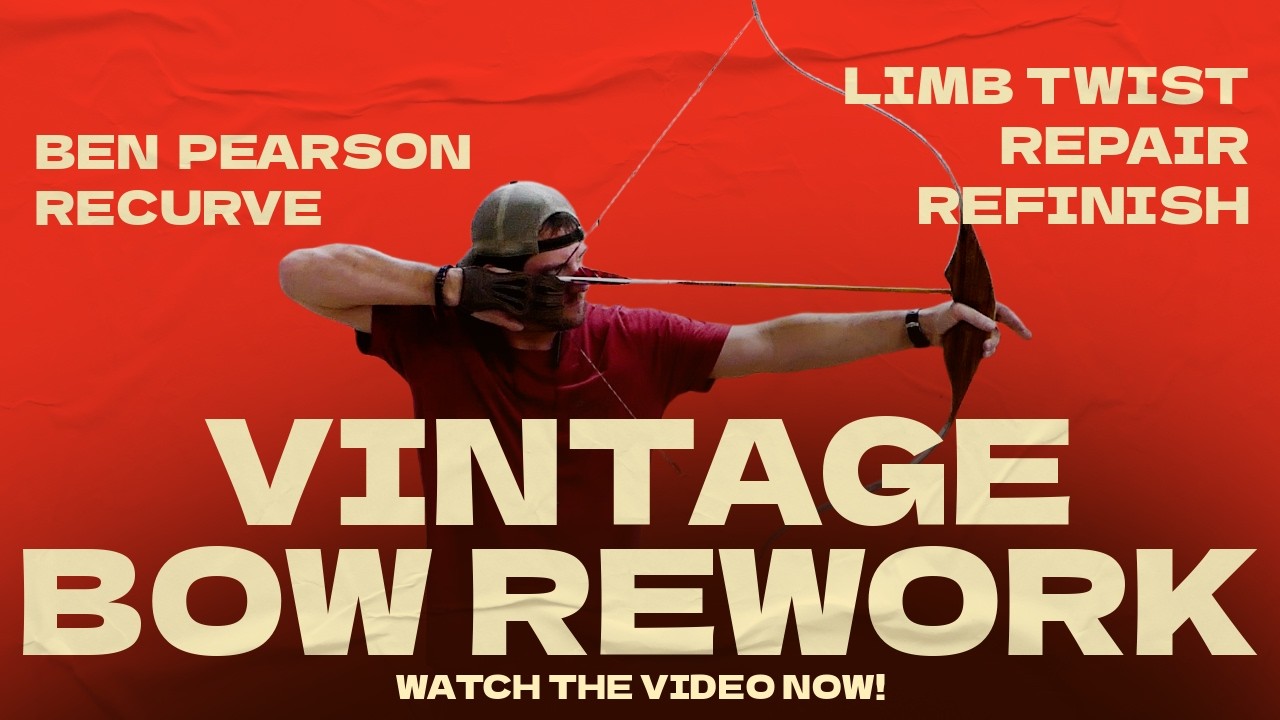
Choose bow length by measuring your draw length to avoid stacking, where the limbs bend too much at full draw. Overdrawing a bow can delaminate and break it; a 58" AMO bow fits a 27" draw, while a 68" AMO handles up to 32". Hunters can tolerate slight stacking on the last half-inch, but target archers need smooth draw throughout.
Questions this video answers
Hook a tape measure on the end of your finger and measure along your arm back to the ball/socket of your shoulder.
A 58" AMO bow built for a 27" draw (later overdrawn and delaminated).
About four and a half years.
A 68" AMO bow (speaker said it will accommodate draws all the way up to 32").
53 pounds at 28 inches.
Chapters
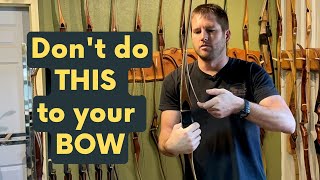
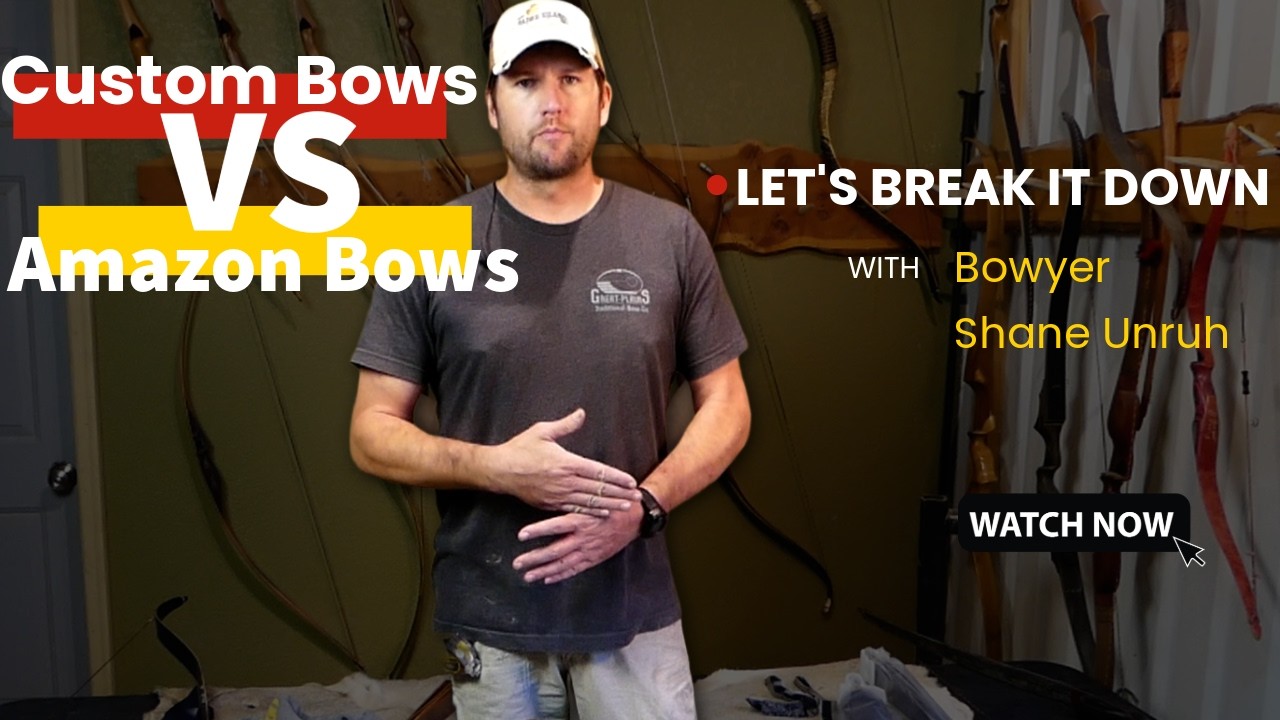
If you're buying a new bow or you're buying a traditional bow for the first time, and you wonder, how long a bow should I get or how short a bow should I get? There are several important tips and parameters that you need to go off of to find the length of your bow. What's going to work for you? One of the first things you need to know is how long your personal draw length is. So if you don't have a bow accessible to you, a good way to measure that, that it's going to get you close, is get a tape measure. Hook the tape measure on the end of your finger and pull the tape meas your back along your arm to the ball of your shoulder. There's going to be an indentation here where the ball socket of your shoulder is. That's going to be pretty close to what your draw length is. If you don't have a way to measure it. Once you know what that's measuring, you can then choose the length of your bow. So when choosing the length of your bow, there's several things you need to consider. And I'm going to talk about stacking to begin with. Stacking is when you're drawing the bow and it's smooth all the way back on your draw, it's gaining the inches that the profile of the limb is allowing it to gain the poundage. Suddenly you feel an exponential increase of weight on your draw. So you're drawing, you're drawing, you're drawing. All of a sudden you hit a wall and then it gets really heavy and stiff to pull. That's stacking. When you hit that wall, you know you've maxed out the bow limbs. You do not want to overdraw a bow. This is about a four and a half year old bow. This bow was built for a customer with a 27 inch draw. It's 58 inches long. That's the amo. So we measured along the lineal profile of the bow. He wanted a little shorter bow to get into hunting situations. Ground blinds, treestands. He sold this bow to another guy. Now, this guy had quite a bit longer draw than the original fella. And so he shot it for, I don't know how long he shot it. It was overdrawn. If you look at the limbs here, you can see you've got crazing. You got crazing in the finish and the glass. And that's these perpendicular lines in the limb of the bow. That is a very good indication that this bow, it's been drawn too Long for the length of the bow and it was stacking really badly. This bow delaminated, it broke, it came apart. And now we can tell that this is not a craftsmanship defect. How do we know that? Because it broke right in the middle of a lamination right along there and the glass didn't shear off. We didn't have a failure in the craftsmanship of the bow. The bow actually delammed and broke the wood. And you can see that there's a lot of wood stuck to the back of that glass. So that means it just, it couldn't handle it. After a while of being overdrawn, it just gave up. Said, I can't do this anymore. That's a little bit of an extreme example. Sometimes you can get away with overdrawing a bow for years and years and nothing happens. Sometimes you can't. Just depends on what you're shooting. If you're shooting too light of an arrow or something and you're overdrawing a bow, it's probably going to fail after a certain amount of time. This one lasted for four and a half years. So this bow here is 68 inch AMO American Archery standard of measuring bows. Of course, it's not quite that long when it's strung from tip to tip. This bow will accommodate draws all the way up to 32 inches. Now this is a little heavier bow, not too heavy. It's 53 pounds at 28 inches. You could draw this bow all the way up to 31, 32 inches and you wouldn't feel that exponential weight increase that stacking. So it's going to be smooth all the way back. This is a 40 pound 58 inch bow. Now this is a short little bow and I can draw this bow. And when I'm drawing, I could draw it to right here, it's smooth, smooth to about right here. And then I feel that weight increase. Just a bunch of pounds suddenly are added to that bow and it, it's stacking on me because it's, it's, I have a 29 inch draw. This bow is only 58 inches long, so it's too short for my draw length. Now what happens when you have a bow that's too long for you? So there's a couple things that happens. So if you're not using up the limb, say you say you have a 27 inch draw and you're shooting this bow here, you're shooting a 68 inch longbow, but you only have a 27 inch draw. Now there's some guys that, that they like that because they just want it super smooth. However, there are several detriments to that. One thing is, is at the bottom of the string stroke, when this string hits your brace height, you want there to be enough tension on these limbs that's left for it to stay under tension so it doesn't get a lot of horizontal vibration. So we've talked about a short bow and overdrawing and what happens when you overdraw a bow. Now we're going to talk about what if you buy a bow or get a bow that's too long for you. Now, there are some guys that purposely do that. They just want. They just want it to be super, super smooth back to their draw, and they don't care about anything else but how smooth their draw is. But there are several things that are cons to a bow that's too long for you. One thing is, when your bow set at correct brace height, you still want enough tension on these limbs to keep that bow from having too much vibration or horizontal torque. Horizontal vibration. When you're not. When, when you're shooting a bow that's a little bit too long for you, and you have a really long bow and you don't use all the limbs up at the bottom of the stroke, you're probably going to have more vibration for sure if your brace height is set too low. If your brace height is set really, really low like on a longbow, you're also going to get more arm slap from the strings. It's critical to have that proper brace height. And I favor a little higher brace height than what is typically done because of keeping that tension on the limbs and keeping that string away from my arm. That's just my opinion on it. That's what I favor. I think it's better. Also, if it's too long for you, sometimes it can have more hand shock because you're not using up the whole limb. And so that limb just sits there and vibrates after the shot. Now, if you're the type of fellow that doesn't care about those things I talked about, about maybe hitting your arm a little bit more or more hand shock or more vibration, and you simply want a smoother draw, then by all means get a longbow. So now I want to talk a little bit about people that purposely buy bows that do stack. They want to maximize the full limb. Now, when I say purposely buy bows that stack, I don't mean that bows that are stacking the last 4 inches of your draw, we've already covered that. That's very, very harmful to a bow. I'm talking about when they stack the last inch or inch and a half. Some guys just don't mind that. They'll buy that bow and. And they just want to max out the limb. Now, if you're hunting, I like to have a bow that at my draw is stacking, maybe like a half inch. And the reason for that is I want the shortest possible bow. That'll open up so many more possibilities. In ground blinds and freestands, you can get in tighter spaces. So I want to feel that stacking on the last half inch or so. If you're just a 3D archer, a target shooter, you want a bow that does not stack whatsoever. When you draw your bow, you want to be able to all the way smooth. But then to test it, you go ahead and overdraw it. Go ahead and overdraw it, and you should have about an inch and a half or two inches before you feel the stacking. That way you know it's perfectly smooth all the way back. That's usually what 3D guys use or target archers. If you have questions about the bow that you're purchasing, you need to talk to the bowyer or the manufacturer. And here's the reason is because they know their bow and bow limb profile has so much more to do with draw length, with stacking, with how the bow performs than actual species of wood or what's in the core of the bow. The manufacturer of your bow or your bowyer, he's going to know how that bow performs at what draw lengths. And it's not going to be a thing where you have to figure out, do I want Pacific U? Pacific U is going to change everything in the boat or bamboo that's going to change all my stacking. It has way more to do with the limb profile, the shape of the limb of the bow that you're buying. That's very, very important. And if you have any questions about Great plains bows, call up to the shop, call my cell, my cell number is on the answering machine, or text me, and we can help you find the absolute perfect fit when it comes to bow length according to your draw. Thanks for watching.