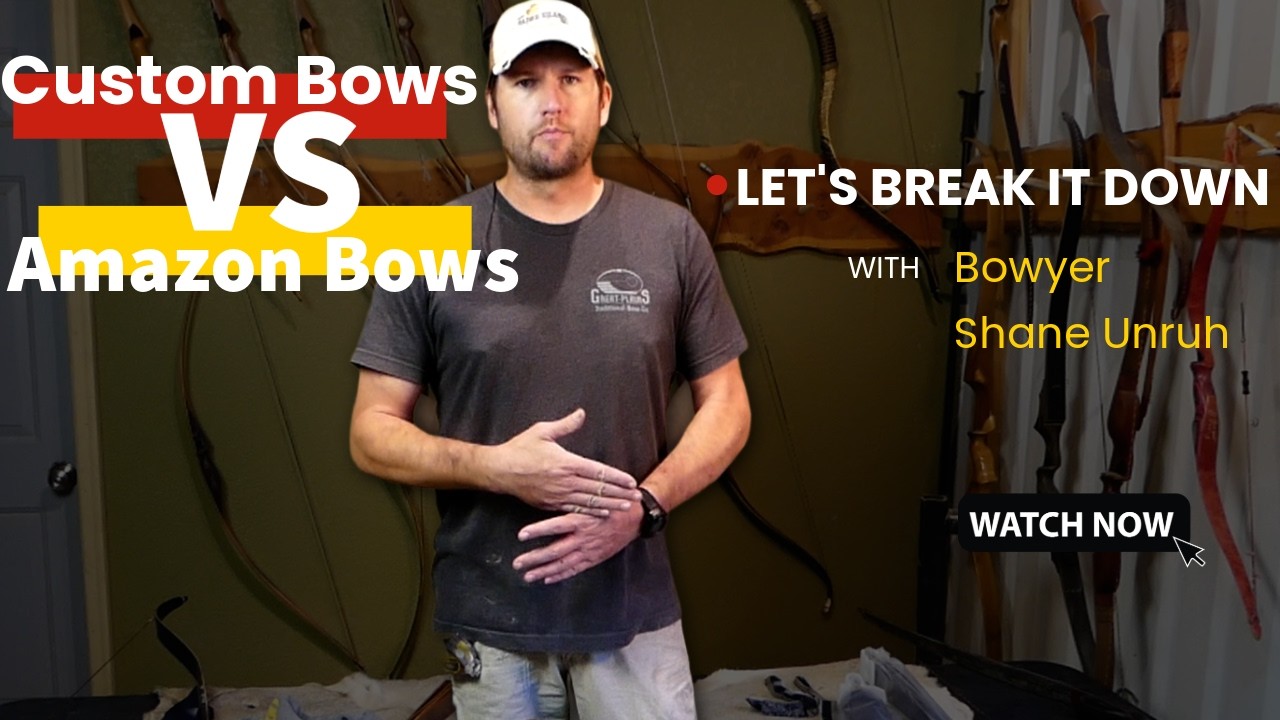
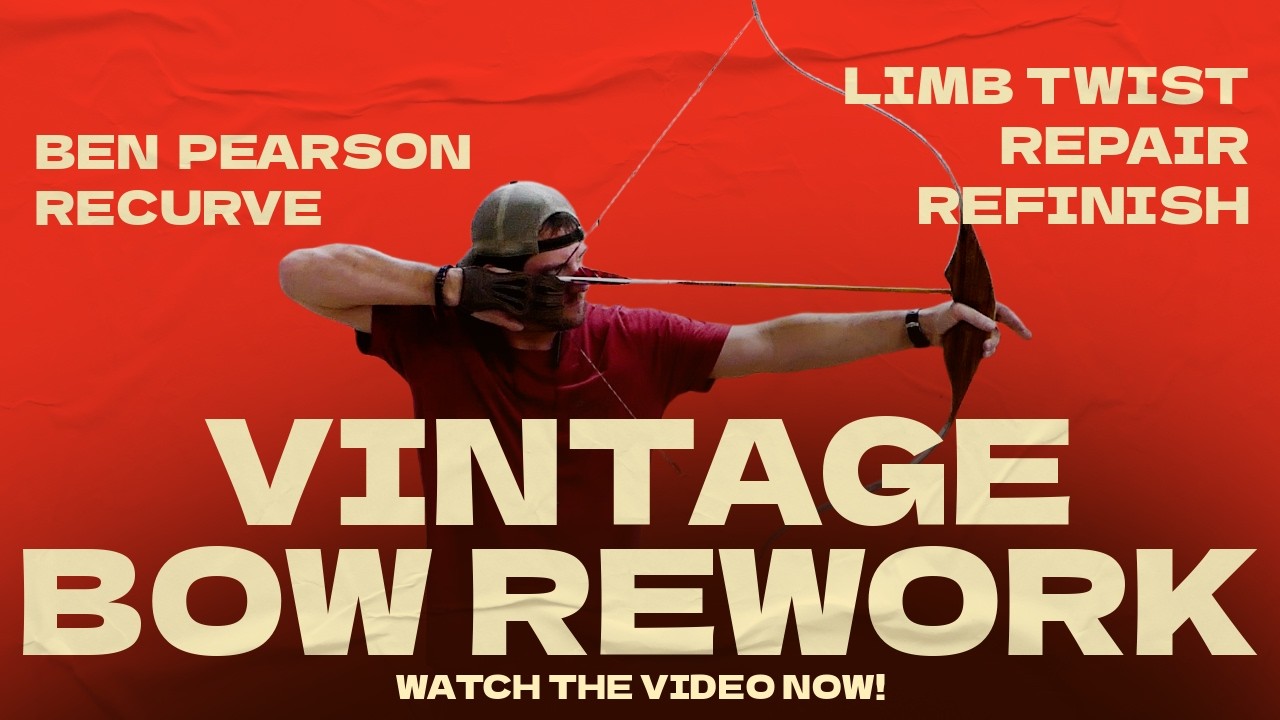
In this instructional video, a bowyer demonstrates and explains the technique of canting a bow—tilting it sideways rather than holding it vertically—and why it is prominently used in the archery scenes of the film The Odyssey, especially by Matt Damon. He outlines several practical benefits of canting: allowing the bow to clear obstacles in tight hunting situations, opening the sight window for a clearer view of the target, and aligning the arrow’s flight path by compensating for the archer’s paradox. The bowyer details the importance of proper arrow spine selection, especially on bows without a built‑in shelf, and how a weaker spine helps the arrow flex around the shaft when canting. He notes that the film used real bows (no CGI), so canting was necessary to achieve accurate shots. The video includes a live demonstration comparing vertical and canted shots, showing the dramatic improvement in arrow placement when canting. Additional points cover equipment considerations such as the presence of a shelf, the use of a shooting glove, and how canting helps keep the arrow on the hand or shelf.
Chapters
Hey guys, so I don't know how many of you all watched the movie The Odyssey, but in that movie, in the shooting scenes, in the archery scenes when they're shooting the bows, if you're paying attention, you'll notice that the archers are canting their bow. Now for those of you that don't know, when you cant a bow, when a lot of people shoot a bow, they'll hold it vertical like this, But you'll see a lot of people canting it, and in the movie The Odyssey, you could see most predominantly they're canting it. And in the final scene, when Matt Damon is attacking the suitors, he's really canting it. Now, canting the bow gives you a lot of benefits. It's, it's been done for centuries, and it does give you a lot of advantages. I'll just name off a few of those. For For one thing, when you're in a tight— in a hunting situation or a ground blind or somewhere and you cant your bow, what you're doing is essentially is if you've got trees coming in here or grass or something, when you cant that, you're shortening that bow up. You can move it out of the way of tree limbs and stuff like that, get it out of the way. That's one thing that helps. It also opens up your sight window. When you're looking vertically at a bow, and you're looking at your target and you're shooting. I shoot off the left side, I'm right-handed. You can shoot the bow like this off the left or the right side, but because I'm right-handed, I shoot off the left side. Now, if I were to shoot like this, you can see that my sight is kind of hindered by the shaft of the bow, the bow itself, the grip, the handle, the riser. So if I cant it though, what happens? It opens that up. It opens my sight picture up. And then suddenly, I can really see my target good. So that's another benefit. Okay, now here's a very important one also. On a bow like this, where there's no shelf cut into it, you can see my arrow. It's off to the side. It's shooting off to the side. Way off to the side. Now, how do we solve something like this if you don't have a shelf? Well, generally, when an arrow comes out of a bow, It does something called the archer's paradox, and that's when the arrow, the spine, the first thrust of the bowstring pushes on that spine of that arrow and actually bends it. I'll show you what I mean here. So when that arrow leaves the bow, the first impact that it does is it goes like this. It puts a big bow or bend in that arrow, and then the arrow goes this way, and then it goes this way, and then it goes this way. And eventually, because of the fletchings and a properly tuned arrow, that arrow will straighten out and it'll fly like a laser. Perfectly straight. Every single arrow does this. It does not matter how well tuned your arrow is. Every arrow shot out of a traditional bow or compound bow experiences the archer's paradox. So, so let's say I was shooting it left-handed and I was shooting off the right side of the bow. Well, then the first flex would be this way, and then it would do its thing and then eventually straighten out and fly straight. So on a bow like this, Well, you have no shelf. The spine of the arrow, which the spine is the strength of the shaft of the arrow, the actual strength, it's very critical. It's very important on tuning your arrow because if you have a super stiff spined arrow and you shoot it out of this bow and it can't flex, then it's going to want to really just shoot off to the left if I'm shooting this right-handed because it's going to— it's not going to flex. around the shaft of the bow. It has to flex around that. So that's why it's so important to spine your arrows correctly. Generally, you need to go for a bit of a weaker spine on bows that do not have a shelf cut into the bow. Okay, so that's why it's so important to spine your arrows correctly for a bow because of the archer's paradox. And obviously, the higher poundage the bow, the more it's going to want to bend the shaft of the arrow. And the stiffer the shaft of the arrow needs to be, the stiffer the spine needs to be. With a bow like this, they're a little more difficult to tune because you have to— you have no shelf. They're not a center shot bow. You are flexing around the shaft of the bow. Okay, so another reason that canting is so beneficial is that it brings your bow into alignment. So for instance, if I were to shoot this bow and hold my bow perfectly vertical, that arrow, even if I have a properly spined arrow, even if it's properly spined, it's going to want to go to the left. Or if I was right-handed, it's going to want to go to the right because it has to flex around the shaft of the bow. Now with a properly spined arrow, You can minimize that quite a bit. You can get it to where it straightens out. It still affects it no matter what. It still affects it a little bit. Now, but if I cant it, well, guess what that does? That brings my arrow back into alignment. So I can— all I have to do is cant the bow and then shoot, and I can basically aim right down the shaft of the arrow where I'm looking, and it's going to go right into the target. But if I were to do that holding it vertical, it wouldn't. It would shoot off to the left. So that's another benefit of canting your bow. So when you're watching that film in The Odyssey and you notice that Matt Damon is canting his bow, he's basically bringing that into alignment. For sure on a bow like this, he's bringing that into alignment because all the arrows shot in that movie Were truly shot out of bows. Christopher Nolan does not use CGI, so they truly were shot out of real bows. So in order for him to actually make that shot in the crossed axes there, he had to cant that and bring it into alignment. He probably could have done it if he would have practiced. I don't know how many takes it would have taken if he would have just sat there with the bow vertical and just shot and shot and shot, but he would have literally had to move that In his sight line, he'd have had to be doing this right here. He'd have had to move over here and shoot like this until he got it right. But instead, all he had to do, you'll notice he canted it very aggressively like this. I'm going to shoot a couple arrows here for you, and I'm going to show you the difference it makes versus canting versus non-canting on a bow like this. Okay, finally found my shooting glove. Now, there's just a couple more points I wanted to talk about as far as the benefits of canting. One of those is that it's simply your arrow will stay on your shelf or your hand much better. Now you notice I'm wearing a glove, and that is because I'm not— I don't shoot— I'm not a self-bowyer, I'm a laminated bowyer, and so pretty much all my bows have shelves in them. Now this particular one doesn't, but I haven't— I'm not super familiar with shooting bows without shelves. So because I'm not, I just prefer to have a glove on so that way in case the fletchings are Anything coming across my hand, they don't scrape me or cut me or anything like that. That's why I have a glove on. You don't have to wear a glove. A lot of guys don't. A lot of guys that are used to shooting off their hand never wear gloves. They know how to do it. They know how to angle their hand and the arrow. But canting also, obviously, it keeps that arrow on your hand or shelf a whole bunch better, and it makes a huge difference versus if you're vertical, you know, and you draw, you know, that can happen. That can want to come off. You know, you're trying to struggle with it to come off. But if you simply cant it, it doesn't even try to come off. It just stays on your hand real nice. Alright, so now we're going to shoot the bow. And I switched out my arrows here. I had some other ones here, but I think these work a little better. The spine is a little bit better. First shot we're going to do is vertical and see what happens. Woo! So that shot clear off to the left. Now I'm going to cant the bow, and you can see it immediately brings it to the right. Now that wasn't a very good shot, but it's night and day difference from holding it vertical on this style of bow. Let's try again. Brought it into the right some more. And continue to the right. Now that's consistent. That's not exactly in the center of the target, but that's not the point of this. The point I was trying to show is what canting does for you and why they used it in the Odyssey movie, is when they cant that bow, you can make those shots. There's so many good benefits. Opens the sight window, brings that arrow into alignment, almost makes it into a center shot bow. Of course, your spine is very critical on your arrow. It has to flex around the shaft. of the bow. But the archer's paradox is something you always have to keep in mind when you're tuning your arrows to your bow so you get that proper spine. But then when you cant it, you can bring that into alignment, move this out of your sight vision, and suddenly you can be nailing that spot on the target. Thanks for watching.