This is an informal how-to/explainer video from Great Plains Traditional Bow Company describing their standardized color schemes for bows. The speaker defines each named scheme (e.g., Rio Bravo, Kiowa, Cazador, Palo Duro, Eldorado, Red River Gray, Blackhawk, Rio Lobo, Osagian) by its typical wood species, core/glass choices, accents, and model-specific variations (one-piece B, 3-piece Swift, longbow, recurve). The video also contrasts stock/show bows versus standard schemes, notes material behavior (e.g., Osage darkening with light/exposure), and gives contact/social media information for orders and questions.
Chapters
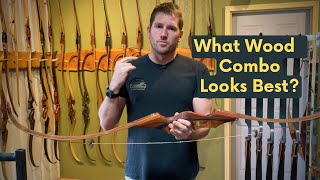
What's up, guys? Today we're going to talk about the Great Plains color schemes. We're kind of a little bit different than other bow companies in that we have standardized color schemes. There are some others that have that like we do. A lot of people will think that, say, for instance, the Rio Bravo, they think that that is a bow in itself. The real Bravo is not a bow in itself. It is a color scheme. You can get it straight across. In all of our bows you can get the real Bravo. You can get the Blackhawk, the Red, River Gray, the Cazador, Eldorado, Palo Duro. All of those are color schemes. This is a Rio Bravo B model, one piece recurve. So Rio Bravo always means bacote. That's the main wood that's going to be used in it. Bacoti. This one always is going to have the black cap made of FR4 bacote limbs, bacote grip. And then it's going to have yellow accents. So that's your standard typical real Bravo color scheme. We build show bows or in stock bows that are not our typical color schemes. A lot of times on in stock bows, we'll just put together collars that we think look great together and knock them out. This is a swift long curve. And it's got walnut limbs with a curly maple riser. This is a pretty simple bow to build because there's no glue ups in the riser. So a bow like this we can build fairly quickly. So we'll do a run of these. We'll put them on the in stock site. And we'll just simply call this maple and walnut swift long curve. It doesn't have one of our standardized color schemes to it. Also, if we're doing something really special like buckeye bows, burled bows, show bows, we don't throw a color scheme on them and name them something like the Apache or the, you know, Oseiji and something like that. If we make it out of buckeye burl, we'll just write on the limb somewhere. Buckeye burl, 3P Swift. The Kiowa always comes in this color. A rosewood of some kind. Usually it's more of the the brown or medium brown tones. So you're going to have grenadillo or Chechen mainly. Either one of those two is going to be in the riser. It's going to have black glass with a bamboo core. And it's going to have that red lamination stripe through it that's made out of red. Dymalux. We can do upgrades to the Kiowa for a little bit extra. Still not as much as a fully custom bow. You know, just to make it economical, we can add some different colors in here for the customer. We've done a lot of Kiowas where we actually use clear glass even and put some pretty veneers under there. Still call it a Kiowa mainly because it has the straight glue up. There's no curved radiused profiles in the riser. Glue up. The cazador is going to be rosewood in the riser. The rosewood family covers a lot of different species. You got the Honduras rosewood I believe Chechen's a rosewood, Brazilian rosewood. You got granadillosa rosewood. A lot of those are in the rosewood family. So it's going to be a rosewood riser. And then on the Cazador you got a choice. If you're going to get the standard cazador colors, you got a choice of giant moso bamboo or dirty bamboo, limcorz and veneers or pacific yew. That's the Cazador. Now the Palo duro in the three piece swift, it's gonna have either walnut or mesquite limbs and a solid cocobolo riser. This is a three piece swift. It's got stippling on the on the riser. It's got a little deer head carved in it. Fantastic bow. This particular bow comes with two sets of limbs and it is for sale. So this would be our Palo duro scheme in the 3P Swift. Now the Palo Duro in the One Piece B model is a little bit different still. Same wood species but it's just a little different layout. I'll show you that. Mainly these color schemes pertain to the same species in the bow. Just different mix ups. So here you've got a Palo duro one piece B model and you can see once again cocobolo rizer. This particular one has an FR4 cap and walnut limbs. Still the same wood species. Cocobolo, either walnut or mesquite limbs and there's some black FR4 in it just like there was a three piece Swift. Now an Eldorado in a three piece bow is always going to be rosewood, Palo Amarillo and FR4 with black glass limbs in the recurves. Now in the longbows it's a little bit different. The eldorado in the recurve is yellow tones. The Eldorado in the longbow is red tones. You still got your cocobolo. You still got your black glass but you can see there's red laminations in there. All of the bows at Great Plains were named after either John Wayne movies or rivers and canyons in Texas. So there's a rich history there of the bow names at Great Plains Bow company because this company originated in Texas. The Red river gray is always going to be a gray wood. We're either going to use pressure dyed maple like in this one, or we're going to use gray Dymolux in the riser. Your limbs are always going to be clear glass with spectra ply cores and veneers underneath the glass. And then it'll always have red access. So the accent. Sorry. So the Red River Gray is going to look pretty much like this. There's variations a little bit straight across the board. It's going to actually be the color red and gray. The Great Plainsman is going to have cocobolo and rosewood handle. It's going to have either red elm or cedar veneers. That's a typical Great Plainsman right there. The Blackhawk will have bacoti wood in it and the veneers and the riser with black and red accents. And that's straight across the board. Recurves or longbows. The Blackhawk is going to look like this. We do have a new color scheme that we just came up with last year. The Rio Lobo has a solid FR4 riser with black glass and a bamboo core. This bow is incredibly stable because you got a little more mass in it. Where typically a swift, long curve weighs about a pound and a half. This is about two and a quarter to two and a half pounds because you've got all that FR4 in the riser making up the mast. So what that does is that makes an incredibly stable, consistent bow. It's. It's very. It's totally shock free and consistent on the shots, shot after shot. There's some other color schemes that I didn't talk about simply because I don't have those in stock. One of my favorites is the Texas Hunter, which. That one has mesquite limbs. The Osagian. Let's start with the longbow. It's. It's a. It's got a bamboo core and it's got Osage veneers and it's got Osage and cocobolo grip and then it's got Osage and cocobolo accents. Now there are some guys that really, really get down to the basics and they want a solid Osage orange that goes by hedge apple bodark. It's got a lot of history behind it. The Plains Indians used Osage in their bows quite a bit. Also, the self bowyers use Osage a lot in their self bows. It's a great wood to chase the grain with a draw knife. It's a fantastic wood. It's very, very snappy. If you put it in a bow, it performs a lot better with a bamboo core. However, we do build solid Osage bows with, with an Osage core, Osage veneers, and you know, the cocobolo accents. For the guys that want to just go back to the heritage of it and the roots of it and have solid Osage, we do that. It doesn't perform quite as well as using a bamboo core, but it's a drop dead gorgeous look. One thing about Osage that I'll just mention here briefly is that it will darken over time. Within about five years, it. It loses its bright yellow color and turns kind of a, I would say a medium brown depending on the species. Also, depending on where you store your bow, if you have your bow sitting in front of a window with a lot of light shining on it, it's going to darken much, much faster than if you have it back in a closet somewhere in a climate controlled environment out of direct sunlight, it's going to maintain its golden color for a lot longer. The Osagian is a very popular color scheme at Great Plains, which is why I do not have one in stock because they sell right away. If you guys want to reach out to us, we're on Instagram, we're on Facebook, we're trying to grow our YouTube channel. Really, really excited about it. Please go on there. Please subscribe so you can message us on any of the social media platforms. You can call my cell number. It's on the website. Give us a call at the shop. We'd be glad to help you find a bow or even just talk to you about traditional archery and help you learn how to choose which arrows you want to shoot, which bow you want to shoot, anything you need. Thanks for watching.