Passing on the Great Plains Tradition
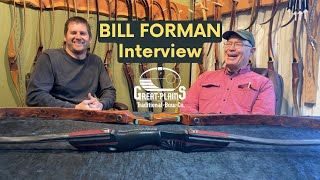
Bill Foreman, a cabinetmaker turned bow builder, scaled his custom archery business from 100 bows in year one to 900 per year within three years, working with exotic woods and hitting 99.9% perfection standards. His wife Linda handled production while he focused on craftsmanship and youth outreach through camps. He's now passing the company to his son Shane.
Chapters
The Kansas kid took it over. Things have to move on.
Yeah.
And you're doing a great job and it's going to continue on.
Today we have an exciting opportunity here. I have with me Bill Foreman. He is the fellow that started Great Plains Boat Company back in 1989. He is the original Great Plainsman. Bill, how did you get in to building custom boats?
Well, it started off as a hobby in the middle 80s up buying a bow kit and playing around with it for several years until I sort of knew what I was doing or thought I did anyway. Where I live, I was a builder and cabinet maker, contractor. And we lived and died with the oil field. And I really got tired of doing that and I wanted to get into something else. And I'd always been a bow shooter of some sort and decided to move on into something else. And I just got an opportunity to build some bows and become a little bit efficient at it. And by luck or faith or whatever, I got in contact with Three Rivers Archery. And through a little negotiating stuff, we got in with them as our distributor and started selling our boats in Three Rivers. And that worked really well for us and put us on the national map real quick. So we just worked from there, doing shows during the course of a year and advertising and hoping for the best, trying to improve the product.
Oh, yeah.
And that's what you nearly always have to do, is always you're on the. On the order of trying to improve everything all the time. So that's what we did. And it was a slow process. It took a lot of years to get to a point where we thought we were pretty solid. And I know the owner of Three Rivers at the time said, you gotta be patient. It's gonna take you four or five years to get going. And I said, well, I think I can do it in two or three. Well, that took four or five or eight or nine. We spread out from there and developed a line of bows. I always wanted to not just have one or two bows, but to develop a large line of bows which would ensure more sales. Because we didn't want a guy owning one of our bows, we wanted to own several of our bows. You can't make a business out of it. If you're gonna sell 100 bows a year, you improve things and make it better and come up with innovative ideas.
So when you started, you built. I imagine you built a bow for yourself. You said, hey, this is cool. And so how did that process work? You started, and then did somebody else want a bow? How did you start when you realized, hey, this could be a viable business option.
Well, I built my first couple of bows, which were. I've still got them. They're pretty scary. But I played around a couple years before I had any bows for anyone. Probably gave a couple of them away and did that deal for a while where we just. I just built some bows and I can't even remember selling it yet. Then it got to a point to where I had some designs out there that were pretty good for the time I thought I could step into the business. And I remember contacting Three Rivers and talking to the owner and he told me to ship some bows to him so he could look at them. And on the phone he said, well, I need what you have, but who are you? And I said, well, I'm nobody in the bow business. I'm a builder, cabinet maker, wannabe bow builder. And so I said, okay, I'll ship you something. So I got off the phone and thought about that for a minute. And of course he was in Fort Wayne, Indiana, I'm in Pampa, Texas. And I called him back up, said, steve, I'm not going to ship you any bows. I'm going to see you Monday morning. So I drove to Fort Wayne and we worked on working out a deal. And that's what we did.
We're going to do this face to.
Face, face to face. And it worked. And so we got going. We worked pretty hard at it for a year or so. And then we found out they let us know we needed to do the international bow hunting trade show, the world show, if we really wanted to grow. So we did that. And he said, be when you go there because there's everyone from all over the world. And it was very exciting, very exciting to see everyone that you'd already always heard about. And really they were no different than you were. They were just. Their business had grown over the years, whether it was Bear Archery or PSE or Martin Archery. You know, we were one of the, maybe a couple of only custom bow companies there. So we moved quite a few bows the first year there, really. And oh yeah, we did and had a great time. We had a couple of customers in from Europe that came by and one fellow from Italy, Joe Nota, Joe Nota's Archery. And he was quite the character. He tried to, at first, tried to act real sophisticated and real cool, but he was a fun guy. And he wore his suit the first day, the second day he noticed that I wasn't watching suit guy. And he come in and his buckskins and we had a good time, to say the least. But it progressed. And we started a lot of summer shows and of course advertising and word of mouth. How do you got to grow it? And of course I pushed it real hard and tried to do my best to stay up and improve things. Make better bows.
Oh yeah.
And pretty bows. You know, you can make a bow that shoots great, but if it's not good looking, people don't want it. They don't want it. They want to look good in the woods.
You gotta have that fit and finish with the performance.
Right.
So when you got in it, it was of an era where you were coming out of. There was a lot of production companies and they were building quite a few, but they were all kind of the same. A lot of maple risers, collared glass. And so you got in at kind of the right time. Of course, Black Widow, they started in 1957, so they were kind of doing it, but you kind of were on the innovation, innovative side of building a high performance bow, but also one using exotic woods. Really pretty. So it was a good time to get into it because you were offering the customers, the industry, something that wasn't the production line. Maple riser, colored glass. So that was a. Wouldn't you say that was a pretty good time to get in it? In the time of archery in the.
World, it was in 1970 when the compound bowl was invented, traditional archery just flattened out. There really wasn't much of it left. That went on for about 17 or 18 years. And traditional archery started coming back. And I know Black Widow had always been there. And so they had a name and they had sold to Kent Beck. Ken is a great guy. He marketed Widow really well. And they came on real strong because people knew who they were already. I kind of followed his lead and what he was doing. You know, we weren't the only person using exotic woods that was already on the go. Very expensive stuff. And you gotta learn to work with it. It's different than your basic old maples and osage and things like that. It can mess up on you real quick.
Oh yeah. Wood that won't release its moisture releases it unst. So you came from construction, cabinet building, general woodworking, carpentry. What did it mean to you? How did you feel when all of a sudden you realized, hey, I get to build both for a living?
Yeah, well, it was more fun than you can imagine and a lot of work. But we had. Me and my wife had fell into something that was just a great adventure and that's How I explained it, it was a great adventure. We got to travel around and go to show, meet a lot of people. A lot of Europeans, Africans, and people from all over the world. We were sending them everywhere, and we look forward to doing that. Every spring and summer, we travel to different shows around the country. A lot of the same people be at every show. So we look forward to meeting friends at these shows. It was a tremendous amount of work. Oh, yeah, you'd build boats, try to get ready for a show up to the last minute and jump in your vehicles, drive all night, get to a show, do the show all weekend and leave and drive all night to get home and go back to work as soon as you could.
People tend to look at the price of these custom bows and they say, well, you should be making money hand over fist. But when you make these bows by hand, every one of them custom tuned and tillered and carved by hand, you work for every dollar that you get.
It's a very slow and tedious process. You do develop systems while you're building, while you get better at it. You get quick, but you only get so quick on this stuff. The bows have to be 99.9% perfect. And if they're not, it's not gonna work. They gotta shoot great and look great. Once in a while. Things happen where you've got to redo one or replace one. It's very, very rare. But it just happens because you're dealing with nature's products, natural products, and nature's products really does tricks on you Once in a while, as far as the adventure of it and the greatness of it, we could. I tell people, I couldn't have had any more fun or more of a better adventure in my life than what I did there. Because I've always been a builder and fall into something like this where you were, you know, I would finish up a new kitchen for somebody and yeah, it would look great and everything. And one of those doors would open and close. That was really exciting. That was it. You sit there and look at it, give it that. Oh, yeah.
Well, yeah. A cabinet's never had to throw a projectile at 200ft.
But a bow. But a bow, you pick a bow up and, man, that thing flies. And it's great, you know, and it's just. I feel it. I've seen so many guys, so many people that never shot a bow. They'll come to these shows and maybe 20 years old, they may be 60 years old, and they'll pick up a bow and you'll show them how to shoot it and they shoot that first arrow and they see that there and you just see their eyes pop open and you just see them go, wow. You know, and they're hooked right off the bat.
That's a rewarding feeling.
And my wife became a very good shop. She really enjoyed it. She was always somewhat of an athlete and it's a good stress buster. My wife was an 8th grade math teacher.
Yeah, Linda, Bill's wife, was heavily involved in the bow company. She did. Didn't she do all the graphics? She did all the writing on the bows.
Yeah, she did that.
Well, you did some of that too.
She retired from the teaching business and went to work for me. Yeah, we'd grown so much that she had enough teaching and she. And work for me.
But didn't she sew on all the handles? Pretty much.
Oh, sewed all the handles. Did some of the finish work, Ground thousands of laminations.
Oh, yeah. She was a huge part of.
Did all the packaging.
Did she do the secretarial work?
The secretarial work. She relieved me a lot of that. Where I can stay in the shop. But one day she came in from teaching school and she had group 8th grade boys that were driving her and every other teacher nuts. She walked in the shop with this look on her face that you don't want him to say anything to her.
Bill fades away.
Yeah. And all I did was see her grab her bow and a handful of hairs and a plastic cup. She walked out of the shop, put that cup up on a target, backed off about 15, 16 yards and she looked at that cup, she'd go, johnny, shoo. Shane, shoo. She stacked those arrows in that cup. Just like that. Walked back into my office with just a little smile on her face, went home and I said, why don't you take that bow to school? We'll put some blunts on those arrows and straighten those kids out real quick.
Yeah, but she didn't actually do it, did she?
No. Just a thought. Just a thought.
So the thought that counts.
Yeah.
That's pretty cool. I know she was very involved in the bow company and you gotta have that. I mean, my wife's very involved with the boat company now. And if you don't have a strong woman standing behind you.
Right.
I mean, it really makes a difference.
Absolutely. Yeah, absolutely.
Throughout the years you started this and you're a hunter, right?
Right.
So you used your bows to hunt big game animals, small game animals. Did you use your boats right away after you started building to hunt or when did you get into hunting and, and have you taken quite a few animals with Great Plains boats?
Yeah, I started hunting right away. I mean I hunted a little bit with bows prior to that, but not a lot. But yeah, I did get into it pretty heavy for a long time and I. Yeah and just enjoyable thing, you know, it's not that you're gonna get.
Something all the time, it's bow hunting.
But you, but you do, you know, you run into a lot of situations that are very exciting, you know and it wouldn't happen if you were gun hunting.
Cause you're getting close.
You're getting close. You're right on top of things. And those deer win most of the time. You know, their senses are so good that you.
Yeah, yeah.
Great, great fun.
And Linda, she hunts, she hunts, she hunted. She seen a boar she. Or a pig she killed here.
Yeah.
Was that, was that an old picture or was that a.
Well, let's see.
Did she kill one recently?
She's not recently. She, she hunted with me a lot. We hunted. Did a lot of pig hunting down in the Texas hill country. She shot a lot of pigs out there and I shot several myself. She shot deer?
Yeah. Do you have a favorite experience with your bows, with the Great Plains bow hunting experience that, that you can remember?
Well, I' several. I've not killed any gigantic super trophy deer. I've shot a lot of small bucks and a lot of does. We like does in our freezer.
Yeah.
Shot a lot of pigs. We've shot turkeys, a couple of porcupines. We had orders from the rancher to take them out if they show up. But yeah, bow hunting is a great, great fun, great experience. I've been out doing five or six degrees outside, which is too cold.
So would you prefer to hunt with your recurve or your longbow? As far as you personally, what do you prefer to hunt with?
I personally hunt with recurve most of the time. And it's just kind of what I grew up with.
Carbon arrows or wood?
I've used them all. Yeah, I've used them all.
Would you prefer a two blade broadhead maybe or what's your favorite broadhead?
Yeah, I'll tell you. Lately I've been shooting a three bladed broadhead.
Okay.
But that all these, most all these broadheads work really well. Yeah, they're good and sharp. If you put it in the right place, it's going to do the job.
So have you been shooting the Woodsman Windsor Woodsman three blade?
Yeah, I have, I have. That's what I've shot a lot of. And it works. Works great.
That's a good broadhead.
Yeah.
I know when you started, you probably built, would you say 50 to 100 bows a year?
Oh, I think first year I probably built 100 bows. And we moved up pretty quick. Pretty quick.
Yeah.
I think within about four years, we were building about 300 bows a year.
Yeah. You told me at one point that you had three years in a row where you built 900 bows every year.
900 bows.
And at that point, did you. How many employees did you have?
I had me and three guys and my wife.
So five all together.
Yeah.
And that would have been the biggest production that you ever experienced with great plains.
Right. We were building not only great plains bows and shipping a lot of them over in Europe. We were building the Three Rivers, Tommy Hawk. We built that for about 12 or 13 years.
Yeah.
And so we had a lot of. A lot of sales there.
Yeah. And you built. I remember one time you told me that you. You did a run on the Tomahawks, a 200 boat run. And you did it in. Didn't you tell me you did it in two months?
Nine weeks. Nine weeks.
Nine weeks.
215 bows in nine weeks.
Oh, man.
And we were.
By hand.
Well, yeah, by hand. Just to say, same process, just very, you know, everybody clicking along very, very smoothly. And we were really, really tired of longbows. Time we got through with that, we didn't want to look at another longbow for a while. They were selling them faster than we could build them. And it did cool off after a while.
So, yeah, everything kind of runs its course. But yeah, you know, the tomahawk is still a fantastic bow. And they still sell them?
Oh, yeah.
Still a great, great limb profile.
Yeah.
Very fast, very smooth. How many exotic w do you think you were using?
Probably 10 or 12.
10 or 12?
Yeah. Not more than that. You get too much stuff and it just gets too confusing. Yeah, there's no need. There's many. There's hundreds of different types of rosewoods throughout the world.
Rosewoods? Yeah.
And most of them are really good looking and strong. And you just have to pick out a few use them domestic woods that we use, you know, maple and osage and really that curly maple.
Yeah. In your opinion and experience, if you were going to build the best performing, let's just say recurve, what would you put in the limbs?
Well, of course, I pretty well quit before some of this carbon came in. We did do a lot of carbon cores in These bows prior to that, I think it makes the limb a little more stable, but it's not that much.
Makes the little horizontal staple.
Right. It's very little. You know, some of the best, I think woods out there to use are of course yew wood and bamboo hard to beat. But I tell you, good old American maple is so springy and so flexible.
Very fast.
It shoots as good as anything out there.
Yeah, I would agree with that.
Osage is a good longbow wood. It shoots good. It tends to be a little slower. Yeah, but it shoots good.
It's a little thumpy. It is because it's kind of of. It's pretty hard and dense and it can add a little more hand shock. Say you were building the longbow for yourself. Would you use different for performance, different lin course than you would a recurve?
Not necessarily, but I think in longbow I always preferred bamboo. And you would. Yeah, because they really work great in longbow.
Yeah, that's what I feel.
You can't beat it. I mean, it is what it is. Woods have not changed on planet earth in a long time. And archery's been going on long enough that most of this stuff has been discovered. There's not a whole lot different things you can do outside of coming up with man made materials like carbon. Yeah, the foam core. Foam core thing, I never did do that. Didn't interest me at the time. I don't know if it's how good it is or isn't. I think I use them in a lot of target bows. Fetus style bows.
Yeah. We do use foam on some of ours now. It does have some good properties, but it's not something that's going to make or break a bow. Whether you use it or you don't. I didn't know back in the day all your bows pretty much came with sealskin rest.
Not all of them.
Not all of them.
It was temporary. There wasn't that much of it available.
You got it. It was legal for a while there when you had it. What year did they ban that?
I'm not sure. It was probably from somewhere 15, 18 years ago.
Oh yeah, it's been a while.
It's been a good while. Because we were up in Alaska talking to a supplier mine out of Anchorage. Some of the local native started doing some underground supplying with that stuff, which was illegal. The federals caught him and they outlawed him. And he became unavailable after that. The only people that could harvest it up there were the natives. Natives, yeah, that's it.
Passing on the sport of archery is hugely important and it's always been important to you. And you were involved in several kids events. It was mainly recurves that you built for kids. You went to the Kicking Bear event.
Kicking Bear.
Can you tell us about that a little bit?
Kicking Kicking Bear is a Christian oriented summer camp, summer recreation thing we have every year at our church and a lot of churches throughout the country. One of the main things we have in it is an archery 3D shoot for all the kids and a lot of other recreation they have in there, plus some worship services. We got to build some youth bows and give them away at the Kicking Bear camp for a couple of years. And kids really like them. I tried to convince the guy that was really running it. He. He provided them with some little compound bows. Where's the words kind of argued back and forth. Which one was the best? I'm pretty sure I was right. But. But anyway, yeah, that's a great camp. And your kids ever get a chance.
To go to one?
They need to.
Yeah. Passing the tradition and the legacy on of the bows is very important. It's a family sport. You can get your kids out and enjoy nature. If they don't like to hunt, they can target you.
A lot of people that like to target you.
I see who families on the range from the 4 year olds to the 60 year olds and they all, they all got a bow in their hands. It's an awesome family sport to get into.
Right.
We've talked a little bit on our channel about our different color combinations and the names of our color combinations. Some people get it confused thinking that our color combination names are actually the bow series which we explained that in other videos. But so you know, you named most of the bows in Great Plains. How did you come up with the names for the Great Plains bows?
Well, when you start something like that, it's just like cars or anything else. They have to have a name. And so when I started up, first thing you naturally look at are the native American names, you know. And of course those are all taken up. What do you do? We first started using names from different things around our area where we live. Like the Palo Duro Canyon. We had a Palo Duro. We had a Red river and a Wolf Creek Estacado from the Milano. Estacado.
Yeah.
And those types of names. And after a while we used them all up.
Yeah.
And we had to come up with something else and you know, you boss. What do we do? So of course being an old John Wayne fan and who isn't you know, so well, we'll name them after John Wayne movies.
There you go.
And I got some eyebrows raised over that one. But hey, you know, we got a Rio Bravo and an Eldorado. And of course, we already had Red river, so that really went over good. Really went over good. You know, and European guys really like that, you know, anything western or Texas is a big deal in Europe.
Yeah. Those bow names will never change. We'll keep those till the end of the company. We've tried to pass on the legacy with our real low boat. It's an all black bow. Then we've got our Wichita, which is kind of a double purpose. I don't know that I'm extremely partial to the city, Wichita and Kansas, but Wichita was an Indian tribe, so we're kind of keeping that same tradition as we go along. I just was curious about your thoughts on how Shane has been doing with the company and how you feel about all that.
Well, you, you know, we were always hoping. While I had it, my plans when I started was to build it and sell it someday. Really didn't know if I'd be able to do that or not. It's hard to sell a small business sometimes, but it's a specialty business. And being a specialty business, it's really hard to sell something like that.
It's a niche market.
And so I really had kind of forgotten. And three years before Shane bought it, he came by my shop and fell in love, I guess. And he told me there he's gonna buy it someday. And I said, well, you come back when you.
When you have the money.
When you have the money, you come back. Yeah, that's right. And so about three years later, he calls me back up and said, do you remember me? And I really didn't. But after I thought about it, talked to him, I go, you know, I do remember you coming by here. Anyway, he was interested in still buying it, and we talked about it and worked out a deal and he bought it. It was about time for me to step away. I was getting old and beat up and we needed some new young blood in there. So Shane took it over and he's done a great. He's got the talent to do it and he's a terrific worker. And that's what you gotta have. You gotta have a desire to do this stuff and to work hard and love it. If you don't love it, you're just not gonna do any good at it. And if that's bow business or any other business, you've gotta like what you're doing to be good at it. And I know he does. And he's done a terrific job and will continue, I'm sure.
I know when I took it over, I had no reputation. You had a reputation as a fantastic bowyar that you had established, and you had maintained that reputation for years and years. And people knew Bill forman, and they had confidence. Well, here comes this guy from Kansas. Kansas kid. He's nobody we're gonna have to see. Well, can this guy do any good? Is he gonna destroy this company? Is he gonna. Is his quality any good? And so that takes years.
Does. Takes time.
It probably took me, I'm gonna say, six years of just building bows.
To.
To create confidence in my customers.
Right. Doesn't happen overnight.
No. Bill's here. He. He comes up to see me. What would you say, three, three, four times a year?
Yeah. Yeah. A little closer if you would have.
Moved a little closer. Yeah. Too far away. And, you know, he spends a day with me and makes sure I'm on track.
That's right.
Keeps me in line. Shane, you doing right. And today he's actually gonna work in the shop a bit. He's gonna. He's gonna build up a set of limbs. Thought this was a perfect opportunity. Josh is going to be here. Bill's here to sit down and just interview him on the legacy of the great plainsman. We hope to continue the tradition and the legacy of great plains traditional bow company. And it's all made possible by you guys buying our bows and keeping us in business. Thank you all for watching.
We need background music. Yeah.
More from Pro




Choosing a Traditional Bow for Beginners | Custom or Amazon? | Which is Right for you?
Vintage Bow Restoration | Ben Pearson BP-H52 | Very Twisted Limb, Bad Finish, Holes in Riser

