S.E.T. Technology & Tuning Your Arrows
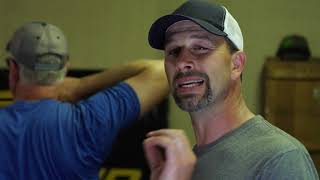
Nathan and Darren demonstrate S.E.T. technology for tuning arrows, using paper tests at 6 feet to 20 yards to align broadhead and fletched arrow impacts. They show how small fractional S.E.T. adjustments stack shots tighter than traditional press and shim methods, and stress tuning with your actual gear.
Questions this video answers
About 6 feet from the paper.
They step back to ~12–15 feet and also test at 20 yards (and mention 40 for magnification).
About a half turn of the S.E.T. adjustment.
An eighth (1/8) of a turn on one end (top or bottom cam) was used as a fine tweak.
20,000ths of an inch.
Chapters
Sometimes you move your sight the wrong way.
Ta da. I gotta quit after that one.
Yep.
I have to limit how much I practice because I run out of arrows in a day's time. You can piece that together, surely. We've been talking today about set technology, tuning the arrows, reading the paper tear, how a bear shaft acts, how a fletcher acts. We're going to show you some examples of what we've been talking about. We've also got references up here of what the paper tears should and shouldn't look like. We're going to start at probably six foot from the paper and shoot a flat shaft. And then we'll eventually end up back at 20 yards. I'm shooting a result a target setup. Nathan's got a cure. Hunting setup. Same technology in both bows. But we're going to show you the importance of making sure it's correct and what you can look for and probably give you a good explanation of what you might find. So I'm about 6 foot from the paper. I'm going to shoot a flex shaft and see what kind of tear we get.
So it's really important to do this at multiple distances when you're paper tuning because up here, close at six feet, this is where most people probably do their paper tuning. And as you can see, that's a pretty good looking hole. I don't know how much adjusting we'll have to do on the bow to get that tear and to get that fletched arrow and the bear shaft hitting together. But that's a pretty good looking hole, Darren. That's what I mean.
Yeah. Most cases, you know, your dealer, yourself, whoever's tuning your bow, they've done their job at this point, you know, hey, I've got you there. You can shoot 5, 6, 8, 10 arrows if you want. If you repeat that same hole, you're going to say that's probably good enough. We've taken the steps today. I actually put some foot powder spray on that arrow to make sure I had no fletching contact on my blade. I'm shooting a fixed launcher blade. And then I also on my bear shaft that I'm going to be playing with, I actually had wraps of electrical tape around it to simulate the weight of the fletching. But shooting through some paper and doing some testing, we were finding out that with the powder test, my fletched arrow was riding the the blade all the way to the knock end. So I was getting some blade contact off this tape getting an inconsistent tear through paper. So I stripped the tape off. I've Got good clearance now on everything and I'll be able to get this thing squared away pretty quick.
Yeah. So I've got a cure here and I follow a air arrest. I've powdered this before to make sure that clearance is good. Those are all little details that will make a big difference when you're doing any of this tuning and testing. And another thing that I need to definitely say at this point in time, this is my hunting setup. I am not going to be using my quiver on this when I'm hunting this year. This is set up for whitetail. This is how I'm tuning it. If I was going out west where I'm running around with my quiver on my bow all the time, you have got to tune. I can't stress the importance of it. You've got to tune it with everything on it that you plan on using. Because if you're not doing that, you're adding some weight to the bow that could cause an induced torque from something in your shot. Every little thing makes a big difference. So you have to test it the way you plan on using it. Same thing with the target bow. You can't do this test with a little short stabilizer on the bow and then throw a 30 incher on there and expect it to do the same thing. It's not going to react the same. So you have to shoot it with the equipment that you're planning on using. And this is just a fletched arrow. Same basic test. I'm six feet here from the paper and we're going to launch one all.
The way down to your release. If you're shooting a handheld to practice with, hopefully that's what you plan on hunting with. If you're going to tune your bow with your wrist strap hunting release, make sure you're shooting that when you're in the stand.
So that's four fletched arrow and it looks like it's a really pretty hole there. And Darren, your hole, I mean that, that arrowhole looks good.
It really does. I mean, to a trained eye you're like, well, that's really close, if not perfect. But having the set technology, being able to go back to 20 yards and checking these, you can really find out quickly how perfect it actually is.
And I mean, obviously of all the tears you see up here on the paper, you would. First thing you'd say is, well, boom. That's it. That's what it shows. That's what the book shows. That's what you're looking for. So that's pretty much what we got right here at 6ft. Let's go ahead and step back to say 12 or even 15ft and see what kind of results we get. Because something you learn over the years is obviously the further you get back, the more it's going to reveal. And the more distance we can put in this paper test, it actually might show you more of what you're going to see out of a bear shaft. So that's what we're looking for here.
Is we're about 12ft here, I'd say.
Yeah, something like that. I think that's what we'd measured out earlier.
Not bad.
A little bit of a tear, but you can tell that there's a difference in that. Six, six feet different tear or six foot shot in this 12.
If I was at my local shop tuning my bow or setting it up and I just shot close to the paper, I would have said, hey, I've got this thing, let's go. Yeah, you know, I go to 20 yards, sight in and broadhead and find out it's hitting 8 inches to the right. Well, how's that possible? You know, we talked, you know, before, easy fix, screw on, a mechanical screw on, you know, any kind of a mechanical head and it'll solve your issue. But for a guy that wants to shoot a fixed blade head or have.
To shoot a fixed blade head.
Yeah, or have to in certain states.
Yeah, Some states you have to use a fixed blade head. And something that I've heard from countless people in the past, I've said these things myself. Once upon a time was, you know, maybe I went to a different type of broadhead Once upon a time. I had a fixed blade that shot really good. And I thought, okay, well that's a good head. And then I, maybe I switched up to a different brand. And then all of a sudden they're not hitting very good. And I think, well, you know, these broadheads, they don't shoot anywhere as close as good as to my other ones. But the reality is it's probably more of a tuning issue than it is the broadhead issue. Now, don't get me wrong, I can't overstate how important it is for the broadheads to be straight, how important it is for your arrows to be straight, the, you know, dynamic spine, all that sort of stuff. But a lot of times it comes right back to tuning the bow.
That's a fact.
So let's give this a whirl with some bear shafts.
Let's do it.
So Darren's going to shoot a fletched arrow And a bear shaft. And we're going to see how they hit and we'll be able. We should be able to correlate that to the paper tear that we just got. He was getting a left tear through paper. So I fully expect the bear shaft to shoot to the right. But we'll find out exactly what it does. Again, this is not something that you need to be worried about. Where the fletched arrow actually hits in relationship to the dot. You're just trying to marry these two together. So it's more about just this relationship. Not at all anything about, oh, well, that hit a little low or hit a little high. We don't want to move anything because it needs to stay. That's your control, basically, is your sight and everything at the moment. You want to keep that the same. Any experiment has to have a control. Unfortunately, we're the uncontrollable things here that make mistakes. So that's where we got to be honest.
Okay. That did exactly what it should do. As we step back on the paper, we could see starting to tear a little tail, knock left. And it's exactly what I got. My Fletchaft is 6 o', clock, 10 area probably. But my bear shaft is 5 inches to the right. Knock left. Leaving the bow corrects impacts to the right. Nathan's wasn't as bad as what my paper tears were. So I don't expect his arrows to hit as far apart as mine did. He's left edge there and it's not super important. These don't have to slam together be Siamese twins at all. They just don't have to be. We're looking to keep them in half three quarter, one inch group. We get them that close, you should see some really good results in it. His are slamming together.
Bear shaft hit really good. So I wouldn't expect this broadhead to be too far off at this moment. I don't want to shoot the same spot and run my arrows here. So I'll shoot the low left dot.
His are really close. So like he said, the broadhead in theory, if his bear shaft and his sledge shaft are hitting that close to each other, the blades on this broadhead shouldn't deter this arrow much at all. Pretty close. Just a little farther left of what the first two were. So let's go take a look.
Yeah. Well, that's really good.
Now, for me, this is pretty dramatic from what this was telling me. You know, when I shot this first hole here, I'm thinking and that's pretty good. But as we Step back. We saw a little bit knock left, which is not too bad. But at 20 yards, that's a huge difference, you know, so you don't want to take for granted, you know, hey, my bow's tuned. And then you go to sight in, check your groups, and find out that your arrows won't play against each other.
If my bear shaft had looked like this, this broadhead may have completely missed the target. Because the broadhead amplifies that. That left hair that you got right here, it would really amplify that movement. So it would be. It would be way over there. Worse than what this? This is just a fill point. So with mine, you can see they were actually really close. The bear shaft is a little bit left of the fletch, but not much. It's pretty close. But then what we see with this arrow is it shoots a little bit further left where this is still in the white. This is just out of the white. Am I concerned about that? I can probably get it better. I really can. I'll make adjustments. So what this is telling me like he was. You're getting left, so a left tear through paper. So that means that it's going to go to right. I'm probably getting a little bit right. Because I don't know if you noticed that on that second shot over there through the paper, it was ever so slightly just to the right. So that means that the bear shaft is going to hit to the left of the fletch.
It's leaving the bow knock right. It'll straighten up and hit to the left. That's exactly right here.
Right. So I can probably make a little adjustment and get that out. But all in all, I wouldn't be too disappointed with that in general. But this is just 20 yards.
You're right. Right.
So if we were to step back to 40, this is magnified even worse. So can I make it better? Sure, let's do it. It's set technology. Why not?
Easy enough. So now that we've seen what happened down range, obviously with set technology, we've got it spelled out right here. We showed you how to read the tear. We explained what kind of tear we were getting. I'm getting tail left. Obviously, my bear shaft shows it's quite a bit tail left. So when you loosen your locking screw, which I already have here on the back of the riser, tail left is counterclockwise 5 inches or so. I'm going to go a half a turn, see what that does. And I'm going to do it on both Ends.
So, you know, I get that question a lot about how much do you move it in relationship to the paper tear that you're getting? And what I found with that is that makes a lot of difference in how far you're standing from that paper. Okay, so if you're at 6ft from the paper or 8ft from the paper and you shoot through and you get a half inch tear to the left, that's probably about a half turn. Now, if you were at 15ft shooting through the paper, a half tears or a half turn is going to be a lot more than that. So that's kind of my guidelines on how much to move it. At least with these models, that's what I found. I'm not saying that's the way it's always going to be, but at the moment, with these bows, that's a pretty good starting point.
Now, I anticipate this to not move the fletch shaft quite as much as it does the bear shaft, but it should change the impact a little bit. If I can make two consistent shots here, we'll see what that half turn did.
So maybe the reason, too, why this is important for target archery. Because I hear people say, well, just because it tunes really well doesn't mean it's going to be really forgiving. So that is true. Just because it does tune really good doesn't mean it's going to be really forgiving. But the funny thing is, almost every bow that I've had that shot really good would do this. So I can speak for several top professional shooters that use this exact method when they're tuning their bows. And they'll all tell you that if it will do this, it shoots really good. That may not be where they use it. They might actually find a little bit more forgiveness with, say, a touch high left or a touch high right or whatever. But that probably has more to do with their shooting style and their personal shot than it does the actual tune of the bow. So, again, these are just tools in your toolbox to be able to make these things work. My broadhead impact was just a slight bit to the left, so that means I'm getting a little bit of a right tear. I'm gonna go an eighth of a turn. And here's the thing. I'm only going to go an eighth of a turn on the top.
That's why I was getting ready to.
See I'm not even going to touch the bottom because it was so close.
That's what I was going to ask you with as minute as that was, should you do top and bottom right?
I think when it's that close, you can. I mean, I'm only moving an eighth of a turn, so it's not going to hurt anything. And another thing you could do at this point actually is you can take an eyeball test and look down your cams and see which one is leaning maybe harder than the other. Now, I don't want to get too technical with it here because you just want to. If you stay along this blueprint, you can't hardly mess this up. But you could determine which end you wanted to move. If one cam was leaning harder than the other, you might want to move the opposite one. Whatever, whichever one you want to match the other cam. Like if you needed to get further with with more left tear to make it work, I need right. So that would mean whichever cam is leaning hardest to the left, I would want to move the other one. And I'm thinking it's the bottom at the moment. So I'm going to move it just about an eighth of a turn.
I think one thing you'll find as you play with this is, and what's impressed me most about set technology is the responsiveness. I know in the past when we've done shimming, change things around on a bow, go to the press, move the shims, come back, may not change your impacts, may not change a whole lot. The set technology is so responsive to really fine movements. I mean, I moved mine a half a turn and it dramatically changed where that bear shaft hit with the bear shaft or bear shaft hit with the fletch shaft. So Nathan made a small adjustment. You'll probably be able to see, you know, you'll be able to tell a difference. And that's what's really cool about the set is it's really responsive. You can instantly see your results. Pretty good.
I think it hit the arrow.
It's pretty good. Now for the broadhead. So the first time he shot this, because of his knock right tear, he got just a little bit of a left impact. So he made an eighth of a turn adjustment on the bottom cam, which should clean that up and probably put this broad head in the white down there. I would say really close. You can see here on mine height is still really good. Moving that a half turn changed my fletched impact more than I anticipated. I didn't think it would move it that much, but you can see it also narrowed that gap quite a bit. So I'll go back and make another adjustment, shoot these two arrows over and See if we can get them even closer.
And mine really didn't change that much. I only made 8th of a turn on one end to see if it would make much difference. But it did make a little bit of difference. I was outside of the white. I'm actually touching white now, where this one is here. I mean, again, those arrows are three quarters of an inch difference in where they're located on the target.
And it's okay to do this multiple times, you know, if you're just not certain. Did I move a little bit? Be honest with yourself, you know, let yourself be true to what you're doing and do it multiple times. Collect that data, law of averages, you know, you can get it perfect. It may take more than one or two rounds.
Yeah, well, it's a tinker's dream.
Perfect. Yes. I'm going to go ahead and go about another half turn on mine. Still getting bear shaft impacting to the right. So knock left tear. I'm gonna go about another half turn here. Worst case scenario, it goes too far and we have to move it back a little bit.
Yeah, I mean, that's the great thing about it. It's not like you gotta go to the press over and over and over again, you know, to try and get this right. It's an Allen wrench adjustment with a screw. I mean, it's so simple, so easy. You just.
I did move my sights a little bit to try to keep this toward the middle of the target.
Sometimes you move your sight the wrong way.
That's another half turn.
Yeah, it will make a difference. It's super responsive. You know what's funny? Years ago, I was shooting with a friend of mine from Canada, Demar Trillis, and he was telling me he had moved a spacer 20,000ths and it cleaned up his whole tune. And I thought, man, 20,000ths, are you kidding me? A 20,000th spacer cleaned up the whole tune. I kind of questioned him. I don't question that anymore. 20,000ths makes a huge difference.
Huge difference. I believe that. Got my bear shaft hitting left of my fletch shaft. So one full revolution is too much. I probably need to go back and take a quarter out now because now I'm getting what would be a knock right tear leaving my bow, bear shaft impacting left.
And by the way, I made another eighth turn of adjustment.
That's a pretty good shot.
Bottom.
An eighth more added.
Yes. An eighth more like trying to move.
The broadhead to the right.
Gotcha. I was getting a left or a right tear. So, yeah.
This is a. This is his bear shaft again. It should hit really close with his flat shaft.
You know, my grip wasn't just perfect on that, though. I could feel that before I shot.
It looks like that bear shaft impacted a little bit right of the flex shaft.
And I don't know if it hit that arrow and then did that or if it just slapped that arrow. But I can tell you my grip wasn't just perfect. I could feel a little something in there. And it will make a huge difference on that.
And this will be again. You know, you don't have to do it on the first take. You don't have to do it on the first. First arrow. You may want to do this 4, 5, 6, 8, 10 times if you want to make sure you've got it perfect. Almost same spot.
Yep.
Another half turn in mine. You can see move my fletch shaft to the left. Actually move my bear shaft to the left. So now I'm getting a knock right tear coming out of my bow. It's correcting and impacting left. So I've gone too far. So I'll go back and probably take a quarter turn out of that and see if we can't get these two arrows to stack.
Mine's about the same. I'm actually going to try it again just to make sure I got the exact thing that I'm seeing here and that I didn't influence something. I know I didn't make the greatest shot on this one. Question occasionally that comes up. Why do you shoot your fletched arrow first before you shoot your bear shaft? You could shoot either way. It doesn't really matter which order you shoot them in. All that matters is you just pay attention to where they're hitting in relationship to each other and make adjustments. But something we haven't mentioned, Darren, is you have to when you're shooting a bear shaft because you don't have a cock feather or an odd feather up or down. You have to index that arrow. You do not want to shoot that arrow, you know.
180 flip flop.
Yeah, 180 exactly. You don't want to shoot at 180 flip flop. You want to shoot it the exact same way every time. That goes back to dynamic spine. So you have something that's constant over and over again. Laguna teal is pretty on that result. Boom. That's pretty close there.
That sounds pretty close right there. Just imagine if I'd have had to go to the bow press every time, pop my axles, pull my cams, Strings, cables out. Count my shims, measure my shims, add 10,000ths or 20,000ths for each time we've done this. You know, this would turn into a multi, multi hour process where we've done it in a matter of minutes and moved quite a bit. You know, I had a big impact on the bear shaft. Took it closer then too far. And now I've got these arrows really close. And again, we can stand here and do this over and over till we get them as absolute close as we want. But you can tell how easy, how quick these adjustments can be made. Not a whole lot's changing on yours.
I didn't change it.
That's right, you didn't make any adjustments.
I almost made it a change.
That's a good thing.
But I wanted to see if it was me that last round or if it is the bow. I'm really happy with both of those two shots. Those were really good. I did shoot my bear shaft first that time. So we'll see where this broad head goes.
And I know I'm not aiming absolutely perfect, not firing dead center every shot. And you're going to get a little variance down there. So it's okay not to be perfect every single time. Just continue to search for the correct results. That looks like money.
That's what I thought. I think I induced the last problems.
I would call yours perfect.
Yeah, I'd say good enough. Something too, to keep in mind that may or may not happen when you're shooting bear shaft arrows. Now, you can see that these two hit very close to each other. But this one didn't go into the target perfectly straight. Now, obviously if I go further back, if this isn't telling, just perfectly straight into the target. Depending on what your target is too, the material that you're using in the target. If you're shooting a bag target, you'll get a lot of inconsistencies in just the way the arrow hits the target, because the material will cause the arrow to do this or that to track funny once it hits the target. But if it's soft foam like this is, it should track pretty much the way the arrow hits the target. So you can see that this didn't track perfect, but it tracked good enough that the fletching was in control of the broadhead and it was doing well here. So if I step back another 20 yards, well, this probably is going to be a lot further off than what it is here. But that being said, this fletching's already got control of everything by that point. So there is a limit to how far you want to go with this bear shaft tune test. And 20 yards is a really good distance to do this technically. Probably, what, five yards out of the bow, four yards out of the bow. The fletching pretty much has control of the arrow. So you're just minimizing the effects when you're doing this.
And that's something I want to touch on, too. You know, what's the right setup? What's the right combination? The analogy that I like to use is if you have a great big airplane, it's not going to have little bitty wings. There's no way it's going to stabilize. And if you've got a little bitty airplane, there's no reason it should have great big wings. So you want to have enough fletching to control that as it's leaving the bow to do its job and stabilize. But if you get too big, it acts like a parachute, slows it down. If you get too small, it takes it too long to correct, and then you get these crazy inconsistencies. So having good equipment, checking all the boxes, making sure your broadheads are spinning good, making sure your arrows are spinning good, taking the time to tune these. You know, the final results or final test for me is going to be to go shoot through paper again at 6ft and 12ft and see if I've corrected this paper tear to a perfect bullet hole.
And the final test for me is shooting a critter at long range or even up close. You're ready, because I want to see some. I want to see some brown go down with that right there.
Yep. So you can see we made a dramatic improvement in my impacts. If these were stacked on top, they're really half shaft of each other. They're really, really close. And this up and down. I don't worry about that. That's probably my aim. But I'm going to go to the paper now. Shoot one like six foot. Shoot one like 12 foot. See what kind of tear we get.
I mean, when you're target shooting, what matters is what you can do over and over, what you can repeat. Oh, yeah, that's. That's a nice hole. Yeah.
Little hole. Three little fletch cuts.
Yeah. Again, you know, what your dealer might say or anybody might say, that's a. That's a good hole because it is a good hole. I was just thinking about the holes you shot previously, like that one in relationship to that one, and that still might have a little bit of right in it. But what you're trying to do is get all those combined together and make it work. What's best for you, all your arrows, making sure every arrow does the same thing over and over.
Yeah. And it's quick, easy adjustments for very quick, easy results. You can see how quick, you know, a quarter turn, half turn, how far it moved the fletcher and the bear shaft. So this technology is super responsive. You can be as technical and you can micro tune as much as you want. If you want to spend minutes getting it perfect, or if you want to spend hours making sure it's absolutely perfect, you have the tools right here at your fingertips.
More from Pro




Choosing a Traditional Bow for Beginners | Custom or Amazon? | Which is Right for you?
Vintage Bow Restoration | Ben Pearson BP-H52 | Very Twisted Limb, Bad Finish, Holes in Riser

