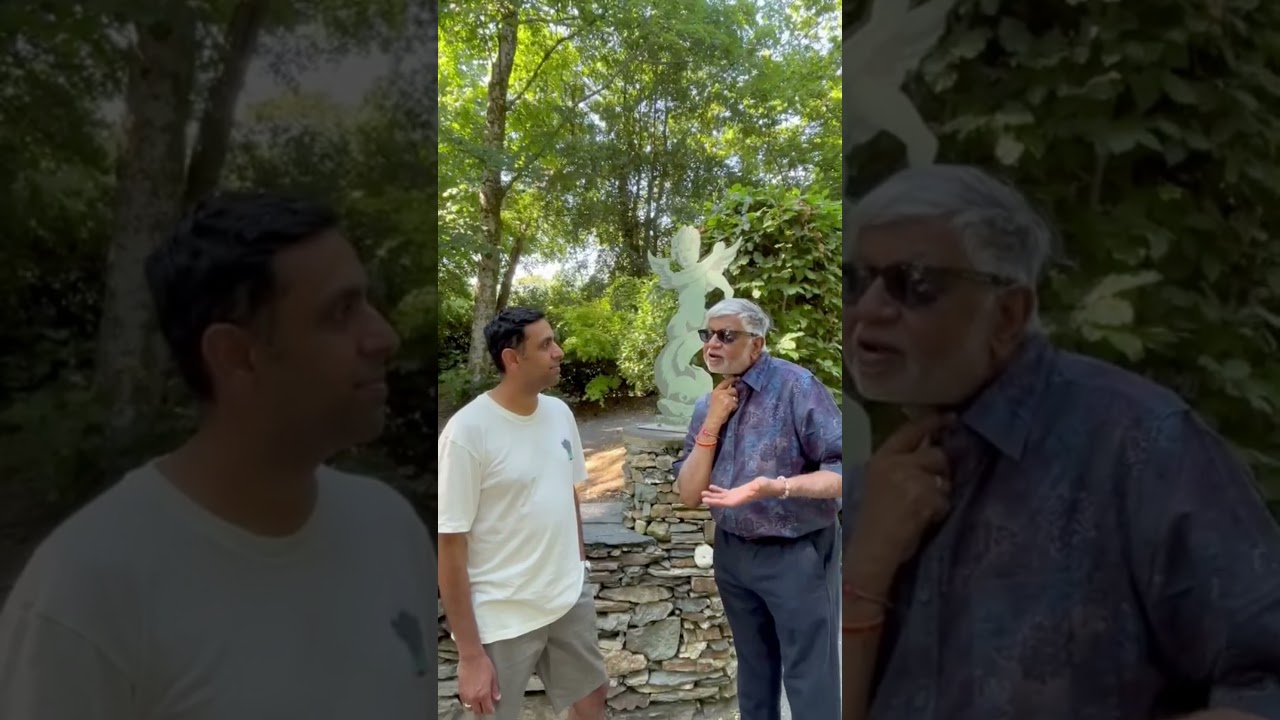
In this live‑talk segment, two audience members— a practicing doctor (Speaker A) and a volunteer (Speaker B)—offer heartfelt commendations to Shrenik Sir, the founder of the nonprofit Sound of Silence. Speaker A praises Shrenik’s extraordinary courage after a total laryngectomy, noting the medical trauma of losing the voice box and the subsequent years of voice‑training, and highlights two core messages from Shrenik’s speech: (1) the importance of flexibility in life, likened to water flowing around obstacles, and (2) the “no‑complaint box,” a personal discipline to refrain from complaining. Speaker B reflects on his own visit to the Sound of Silence office, compares Shrenik’s journey to well‑known figures who overcame loss of voice—Les Brown, Stephen Hawking, and cartoonist Dilbert—emphasizing that Shrenik has forged a unique voice without relying on assistive gadgets. He also mentions his intent to volunteer, his positive experience contacting the organization, and his admiration for the impact Shrenik’s work has on patients, families, and the broader community. The segment is a blend of medical empathy, philosophical encouragement, and testimonial of community engagement.
Chapters
So thank you so much, Abhijit, Premraj, and thank you so much, sir, for that wonderful presentation. And I think I'm more enamored by your— the courage of your journey, because I'm a doctor, practicing doctor, and I've seen people undergoing this surgery when the larynx is removed. First and foremost, when they hear that they have cancer, that itself kills them. द नाम से ही आधी तो जान पूरी, आधी क्या पूरी जान निकल जाती है। उसके बाद में जब वो सर्जरी के बारे में बताते हैं, when the ENT surgeon discloses to them or the onco surgeon discloses to them that you will be may not be able to talk later on, that is another very very painful experience. You know there are some people who lose their voice after stroke and they regain their voice because they still have the larynx with them. They have to only do exercise with the with the with the speech therapist. and they regain their voice to a certain extent. But what you have undergone is like amazing because your full larynx has been removed, and after that to go for the training of voice, and for after that to train the whole world. What I understand is you are, I think, 24 or 25 years after the surgery, am I right?
Yeah.
So that itself is very, very inspiring. And the 2 things that you told, I really liked. One is flexibility in life. Flexibility is such an important thing. It's like water, you know, wherever it goes, you know. Water के सामने अगर कोई पत्थर आ गया, कोई bolster आ गया, कोई mountain आ गया, वो डरता नहीं है। He just goes around it, above it, below it, above it. And that flexibility, I think, is a very, very major thing in getting well after cancer or getting well after anything. And the second thing which I loved about your speech was the no complain box. That is so important. And I'm telling everybody that from today onwards. I'm going to see to it that I'm going to become aware that before I open my mouth to complain about something, I'm going to remember Shrenik sir, and I'm going to not open my mouth and not complain. Thank you so much for that. And amazing and standing ovation to you, sir, for the work that you're doing, for the message that you're spreading, and for the encouragement that you're giving to the whole world, to the patients, to the unborn child, what you have brought. And you're doing it from a place of space inside your heart of service to mankind. So thank you so very much. I really bow down to you and I salute you for what you're doing, sir. Thank you very much.
Shrenik sir, I have been impressed by you even before. I think I visited your office in, uh, in, um, Bawai. I went up on the— I went and met the lady there. I also saw the classes that you run. And, uh, when I think of you, I remember 2 or 3 people, um, you know, whenever I've seen them. Les Brown, you know, the famous Les Brown. So he had lost his voice and how he also reinvented himself. But he didn't have, you know, he wasn't in the situation in which you are, and yet you have gone so far to become an influencer. Of course, he's also an influencer. Now he is actually on his last few days. And even then, I mean, I find that inspiration every day he is speaking, even though he knows only he has a few days left. I remember also Stephen Hawking, but he did not— although he succeeded so much as a scientist, he did not have— and he had a lot more encouragement— he did not have— he has not reached, I think, this level of acceptance which you have. And the third person whom I remember is Dilbert. Dilbert, the, the cartoonist. Very few people know that he, he has also had the same position and he doesn't have his voice, but his voice comes out through his cartoons still. But you have not, you have not taken the support of, you know, all those gadgets and, you know, like the cartoons which Dilbert still comes, we still see them though he has no voice. But you have found your own voice in your own way. So it is very, uh, It's very inspiring, and that's why I came to Sound of Silence. And my, my intention was actually to— I, when I moved to Chandavilli, it was in fact I had come there to explore volunteering with you, but I only met, I think, the lady there. I forget her name. And somehow that did not happen because I, you know, I volunteered with Udaan, which is not very far from where you are. So yeah, I was, you know, I was impressed by the people. I got a good response when I called Sound of Silence, actually, which I didn't get from other NGOs. So I visited your office. So I am—