3 of the challenges that women face when it comes to body positivity and weight.
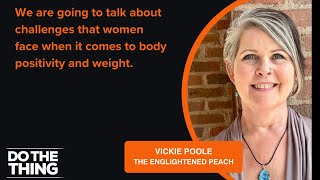
A recorded community-member spotlight where host Stacey Lauren interviews Vicki Poole (health coach, hypnotherapist, founder of The Enlightened Peach) about common challenges women face around body positivity and weight. Core themes: (1) societal and media pressures that distort beauty standards and cause body dysmorphia; (2) escaping the diet/crash-diet mentality by learning to listen to and test what your body needs (food journaling, mindful pauses, symptom reintroduction experiments); (3) cultivating self-acceptance, small incremental habit changes (the "1%"/compound effect), and using practical measures (clothing fit vs. scale) to track progress. The conversation mixes personal anecdotes, client vignettes, and concrete coaching practices; it ends with an invitation to Vicki’s program and contact link.
Questions this video answers
calendly.com/theenlightenedpeach (30-minute meeting option)
Today's Dream, Tomorrow's Reality — available on Castbox, Spotify, Amazon, and iTunes
Chapters
Guys. So welcome to the community member spotlight, slash expert. Amazing moment, which is really great when we have our community members that we're able to bring on who are experts in the field that so many people struggle with. And I have Vicki Poole with me, and so many of you know her and love her in the group because she started her podcast with do the Thing, Today's Dream, Tomorrow's Reality. And so we've been kind of following her story. We actually were both on each other's podcast. Podcast. We had so much fun doing that. And the thing I love about your podcast so much is the. I mean, I love so much about it, but I also love the unedited part of it because it just shows just the real and the rawness, you know, of it. And she's also the founder of the Enlightened Peach and has a coaching program and is also a hypnotherapist. There's, like, so many things about you that I like. I'm, like, in love with. And we've been really. Honestly, it kind of happened serendipitously. Where I like, this is. Ever since the Get Fit Challenge, this has been something that comes up a lot. Sorry, my alerts are not happy right now, but I thought I'd. No, it's on. Do not disturb. Okay.
Well, it might be mine. I don't know.
I don't know. It's okay.
I couldn't tell you how to get them off there.
We're going with it.
Yeah.
Is during the Get Fit Challenge, so many people struggle with body positivity and weight and. And it happens. I mean, it's like, happens in life, and you happen to be an expert in this field, so it's just perfect opportunity for you to come on and talk to everyone about the challenges that people face and maybe how we can work through them.
Okay.
So welcome. Yay.
Well, thank you so much again for having me on here. Always enjoy the heck out of our conversations. It's always fun and enlightening in its own way. I always come off with whether I'm interviewing you or you're interviewing me. I always find some epiphany afterwards. Like I said. Wow. I didn't think about that. So it's. It's amazing. It's amazing.
Oh, so good. I love that.
So one of the things that I wanted to talk about, as you said, you alluded to the body positivity, and that's really important to me because I spent majority of my life, my adult life, especially overweight, not wanting to be seen not wanting to. I mean, the. The pictures that I have that I've shared with people are not even my largest size because once I got to a certain size, I avoided being in pictures or I stood behind people strategically so that I didn't show, you know, and a lot of people do that. And one of the things that has amazed me in. In my. In my work as the amount of people that are even really thin, we think it's just a heavyset person that does that. But a lot of thin people do as well because, you know, especially in certain industries because they're held to a standard that is. And unavailable to most people. And I think one of the things that's perpetuated a lot of this is the. The. The way everybody has all these filters. And if you look like in the magazines and stuff, most of the pictures, I would say 99 of the pictures that they're showing of these beautiful women are altered. The pictures are not the unfiltered un. You know, just the raw them. It is always filtered. And it reminds me of. There was years ago I heard this quote where Cindy Crawford was asked by a news reporter and said, what do you want? What can you tell women who want to look like you when they get up in the morning? And she said, well, I'd like to look like me when I get up in the morning, too. I don't. This takes a lot of work. Yeah. And I think a lot of times we forget that. That and those that don't know. I'm actually a hairstylist as well. And I'll have people that will pick out pictures of these gorgeous women and this hair and all this stuff. And maybe they don't even have that kind of hair. But what they'll do is they'll say, I want my hair to look like that all the time. And I said, but remember, that picture was an instant. It didn't have to look like that in five minutes because some of those things defy gravity, defy all kinds of nature. And so it's like, that's unrealistic, too. And so I think that one. The thing that I love to do is to help women to find the beauty in themselves. And. And I'll say, I had a client. This has been a few years ago. And when I first started working with her, she was really wanting to lose a lot of weight, and she was feeling very insecure. And as we started doing the stuff, I come to find out that she didn't like herself at all. And so one of her chores you know, her task that she was supposed to do for the week was to be able to look in the mirror and say, I love you. And she couldn't even do it when it first started. It was something that she had to, we had to do some work to get her to the place where she could say I love you.
Yeah, it's true. Right. Like, it's similar to the Cindy Crawford thing. It's like these people that we idolize, Right. Like, have the, you know, like, have this. When they're able to just kind of like, open themselves up, it is freeing.
You know, for sure it is. But you know what happens, too, is that the opposite happens. A lot of times. They'll show up as themselves, and then they'll get blasted by social media and they'll get blasted on the news stations and in the magazines and stuff that they've let them stuff go. They didn't do this. They didn't do that. Which also reinforces that we have to be on point. We have to be, you know, all up and done all the time. And, and so that's, that's a very dangerous place to, to live. Yeah. And I think that's where a lot of people come up with this body misfort, this four. How do you say it?
Dysmorphia.
That's it, Dysmorphia. You know, but, you know, there, there are people that I know, I've seen that I would aspire to look like that and find out that they didn't like the way they looked at all. Yeah. And so, and, and one of the things that I, I, I bring up with a lot of my clients, too, is, you know, when you're, when you, A lot of what we're looking at is the beauty industry, we're looking at the stars and the models and how they look. And, and then we go to the, the stores and we look on the clothing rack and we have to figure out, are we a 12 or are we a 14? Or we. What, what, what's our size? Right. And I can't remember the time frame. I wish I had looked it up before we got on, but I didn't. But there was a time in history where that didn't happen because there were tailors and there wasn't this commercial clothing industry like it is. So you had a tailor that came to you, measured your body, and they made the clothes to fit you. And then over time, a lot of these clothing people started thinking, well, maybe we could mass produce this stuff and, and that we could make More money that way. So then they started having to create sizes. So then people had to go to the clothing stores and they had to figure out how to fit their body into a size that didn't fit them. And so I think as we've gotten so far away from, you know, treating the body as it's a gift and it's, you know, it's something special and we've started looking at, you know, we have to fit into this box, so to speak.
Yeah, it's so true. And I'm seeing some of the comments and it reminds me of what you were just saying with the, the self love earlier. With the, I'm trying to be a better version of me as I get older. I exercise and have this upper belly that won't go away, little wrinkles. It's hard to accept seeing yourself older when you feel young. And you were saying earlier about that like self love, right? And be able to look in the mirror and say that you love yourself is like probably one of the most important things you can do to really kind of own who you are and be able to. I love what you said earlier. Finding the beauty in themselves.
Yeah, yeah. Because the, the, and one of the things too is that, you know, because I said there was three, three things that I, I help women with, right? One of them is to get away from the diet mentality. And because all of this stuff perpetuates that crash diet mentality. And so when you're falling prey to that, you, you fluctuate so much. And that's what I've been doing my whole life, is I would lose the weight, gain the weight, lose the weight, gain the weight. So yo, yo dieting. And so I would feel really confident when I got thinner. But because people would say something or I would look in the mirror and I didn't look like I did when I had lost that weight, I would start getting very, very self conscious. And then I would, I would start hiding myself and then I would just keep putting on weight. The more I hid, the more weight I put on. And so I help people get away from that because there's ways to eat healthy for your body without going on all these crazy fad diets. Because diets don't work. I mean, if they did, there would be five books in the, in the section for diets instead of millions. I mean, you go on Amazon and you look up weight loss or diets and I mean there's page after page after page of all these diets that say they're the One. And so we have to learn to listen to our bodies. And that's one of the things I help clients with too, is when you can listen to your body. And because not everybody's supposed to be a size 2, not everybody's supposed to be a size 6, a 10 12, you know, there's a lot of different sizes of people and that's fine. You know, you can be beautiful in that. And another thing that I help people with is to stop criticizing where they are. And because that is important, you can learn to embrace and love where you are right now and still see that you want to make changes. It's not a lot of times people think if I embrace where I am, then I'm saying I don't want to lose weight, I don't want to, to look better, be firmer or, you know, whatever it may be. But you're not saying that you cannot. You know, we've, I think we've talked about this and other things before. Is that where your tension goes? That's what happens. Right. So the more you condemn your body, the more you chastise yourself or what you're doing or whatever, the more that kind of feeling and stuff is going to happen with your body. And the more you are talking to yourself and chastising yourself, the more people you're going to connect with that are going to do the same thing for you.
Yeah, yeah. Because you're putting that out and then.
Because you're putting that out. And if you can't love yourself and your body, then you're not going to get people around you who will do it for you. You have to do it first.
Totally. So no dieting. We're stopping that. And then we're embracing where we are. We're stop. We're not going to condemn our bodies anymore.
Right. And there's like, I have a client right now who she, she wants to lose weight, but she also has a desire to be more healthy because she lost her father to diabetes after 2amp mutations and now she's pre diabetic. And so she doesn't want that to be her path. And so she has a huge why. And so I think what it comes down to is when you want to have a different body, a different physique or a different health, there has to be a reason other than I want to look better when I go to this party in order for it to be something sustainable. So I help you figure out what's the best for your body by teaching you how to listen to your body. And learn what it really needs so that you can be healthy. It doesn't mean you're going to get down to this little tiny size that you may think you want to be. Yeah. Because I think where we've fallen really in a bad place with the diet mentality is that we start thinking that when you look at the scales of what they say you're supposed to weigh for your height, that elusiveness day, then that most of the time that's not relevant to you because not everybody that's 50 years old, that's five two, is supposed to weigh 120 pounds. You know, it's. It's not. It's not feasible that every person should. Should be there. And I know they give you a little bit of a. Parameters, but there's the. How long it's been that they had these same guidelines. They don't change. Yeah. So it's, It's. It's amazing, right? Yeah.
But kind of like what you were saying earlier with the. The Cindy Crawford example, you know, we have this, like, idolized kind of like, version of what we're supposed to look like, and then we're striving for it, which is why we're on this roller coaster, you know, and then shaming ourselves in the process. And so no wonder why. Yeah, it's not working because then we're, like, going through the cycle and then we're attracting like. Attracts like. So we're attracting that in us.
Yeah. And. And the, and the people that meet us mirror what we think of ourselves. So that makes us feel even worse because we don't really look at it as a mirror. We look at it as their opinion. And it's, it's, you know, it's valid.
Totally, you know, totally get it. Yeah, yeah.
Yeah. So it, It's. It's a very difficult place. And the one thing that I really love to help women with, besides the others, is that to give themselves grace for what they have done. Because I don't know if you've ever read the book by Jeff Olson and it's called the Slight Edge.
Oh, no.
Okay. It's kind of like the. There's another one called the Compound effect, and I can't remember the author of that one, so it's a similar thing. But the thing is, if you make a 1% change every day, whether you're doing something that's not good for you.
Yeah.
Or you're doing something that is good for you, it, over time, makes this huge leap in one place or the other.
Yeah. And as you're talking, I had. This is screaming right now. So we did a thing in the singles group on Monday night, and we did a group zoom, because we're not. We're doing a challenge right now in that group. And one of the members, Fern, actually had said, hey, can we dare each other? While there's no challenge going on, I'm like, oh, let's just do a group zoom. And it was crazy. You're actually going to probably meet some of these people because, like, now we went from, like. And this is where the compound thing comes from. We went from, like, just saying hi to a stranger, being hard right to. To now, like, in the zoom, they're daring each other to go on people's podcasts and to do comedy and to ask someone what kind of car they are, just to, like, talk. To talk to someone that you don't know. And, like, all these things. And it shows how, like, over time, when you do things that are. Whether it's out of your comfort zone or whether it's for your body and for your health, like, it really does. Even if it's just, like, a little thing, you don't even notice, it literally. Does it compound?
It does. And, you know, one of the things that's funny, it's not really funny, but I did a master class yesterday, and it was all about sweet deception and how sugar is hidden in our food and all these different things. And one of the things that I shared in there was my journey, because I even forget, too, because sometimes I will chastise myself and I catch myself because, you know, I. I've still got a tummy. I've still got, you know, I got flabby arms, you know, and so I will start saying, well, you need to do this, you need to do that. But when I was creating my slides, I found some of my heavy pictures and I put them up. And so one of the things that I was sharing with them was that we need to be able to have a parameter that we look at, you know, periodically so we can see how far we've come. And so it was eye opening for me to see those pictures of me and people that have known me for a long time, even when I was really heavy like that, they don't remember me being that heavy unless you show them a picture, you know, because it becomes out of our minds. Yeah, yeah, yeah.
You don't. You forget your growth.
Yeah, yeah, yeah. And so one of the things I do with some of my clients that are the. The long, you know, like, A six month client or a year long client is have this guideline, this, not really a guideline, but this, this document that they fill out and it le, it checkers all levels of your life, the different areas of your life, the four areas, and they have to rate where they are. And there's like 99 questions. I know it sounds like a lot, but there's 99 questions on there. And then each quarter we will go and do. She'll, they'll do the, the form again because it's those little 1% changes that we don't see. But when you look every quarter and you fill it out again, it's like, oh my gosh, I can't believe that I've moved, you know, this much and this amount of time. And so it, it. And I, I don't have my clients way because. Do you even know where the, the, the body weight scale came from?
No.
Okay. Well, it started because people, you know, they used to have to weigh their cattle and everything. Right. And so someone like a, I think it was a, if I'm remembering right, it was a pharmacist or it was a drug company. They decided that it would be a good idea to put a scale in the drugstore and have people weigh on the scale. And so nobody had home scales. It was just, you went there if you wanted to weigh. And so they started trying to sell their, their theory of your body weight, their theory of all these things, the parameters that they had. And so they decided that now this is just the pharmaceutical company and stuff like this. This is where it all came from. They decided that, that they needed to have people measure themselves all the time so that they could basically sell them something. And then they produced this mass bathroom scale so that people could have scales in their home. But it was really only created so that they could sell us something. Wow. And so there's really, I mean, if you weigh yourself in the morning and you weigh yourself in the evening, it just depends on what you've eaten during the day, but you can, there can be a five pound difference from morning till night. And you know, because some things kind of leave your body faster than other things. And you know, you can have weight from water and all kinds of things. And so I tell my clients to pick out and if, if they've been heavy for a long time, they always have thin stuff in their closet.
Right.
You know, you don't get rid of all your clothes, you just hang on to them. Because I'm going to get into that one day and So I tell them to get something that maybe is a one or two sizes smaller than what they are then and periodically try that on. And that's their. Their measurement of am I getting to the size that I want to be? And that is a much more realistic way of doing it. Because the weight is irrelevant.
Right.
It's how your weight's distributed, where it's, you know, you. You can be getting smaller in girth, but still have a heavier weight.
Yeah. So you're getting. You're not worrying about weighing yourself, but you're getting something that's maybe a couple size smaller. So then you're able to see, like, how things are going. It just makes me think, because there's times when I'm not weighing myself and then I'm wearing leggings all the time, and then I go to put my jeans. I'm like, what happened? Like, I don't even know what happened.
Yeah.
So like, using your clothing as a measure to.
Yeah, yeah.
And then also not getting, like, obsessive over the weight. I wanted to mention something because I know people, we're in both groups right now, streaming, and then also on YouTube. And there's something really important about what you said earlier. There's so many things that are important, but, like, something that's standing out because right now, you know, it's like having people see the thing that you struggle with is the thing that you can help people with. Because, like, who would you rather learn from? Would you rather learn from someone that hasn't been in any. Any pain at all and they can't relate to you, or would you rather learn someone that has lost all of this weight and that has learned to live life in this way? And so the fact that you still, like, even when you're doing the slides, you felt it and you acknowledged it, that just shows, like, you are literally living in your purpose right now. And that's how you're able to help impact people. Because you've tapped into something that, like, was a pain and now you're able to help people on the other side of it.
Yeah. And I still help me by. By recognizing my journey actually helps me to see, well, I am doing good, even though sometimes I feel like I shouldn't be struggling with this. You know, I teach this, but, you know, we're human. And so there are times that I. I struggle too.
Yeah.
I have come tremendously in a different place than where I used to be. My first diet I ever went on, I was in the third grade. If that tells you Anything. And I wasn't heavy. I was only, you know, in the third grade. But. And the more times you go on a strict diet, the slower your metabolism, metabol metabolism gets and the more you feel out of sorts with your body. Because, for instance, you know, when babies are little, they cry when they're hungry, they cry to be changed and everything. But we start off right away trying to get them on a schedule of what to eat and when to eat because that's convenient for us. And so then as they get out of that stage and they're little toddlers, we do the same thing. You know, it's, it's noon, it's time to eat lunch, you know, and you know, you've got to eat this or you don't get anything until dinner. And, and if we would let them just say I'm not hungry. And you say, okay, baby, you go ahead and play. I'm going to put your dish in the, in the, a refrigerator. And when you're hungry, then you will, we'll heat it up. And then they would still be able to listen to their bodies and know because they know when they're hungry. I mean, hell, they won't starve to death. You know, they'll just come in when they're hungry and you feed them and then they may not need so much.
And no wonder why we're struggling. We've been literally trained since we have.
Since we were little. And then when you get in school, everything's a bell.
Ding, ding.
Okay, it's time to go eat. So it's the Pavlov's dog. You know when they taught the dogs how to that to salivate with the sound of a bell. Yeah, it's the same thing. We've been taught that there's certain times that we're supposed to eat and our stomach will growl and everything in response to that stimuli. And so I play a lot with intermittent fasting just to see does my body say it's hungry at this time? Is it really hungry? And, and I, I'll play with that a little bit. Just experiment. Because I think if we can look at it as, let's just learn to listen to our bodies and make it a game. You know, let, let me eat this right now and let me journal about it. And let's just see. Did that really give me energy or did it make me really tired? And then you kind of log it. So you know, well, I ate that. It made me tired. Let's see what will give me energy. And so when you start Looking at food as a fun way to see what works for your body. It doesn't feel like you're depriving yourself of anything. Does that make sense?
It totally does. Yeah. I'm just sitting with it for a minute because it's like just really tapping into when your body's actually hungry versus what your mind is saying about it, you know? Yeah, I'd love to know more about that. Like, listening to your body and how you help your clients really do that. So then they know when they're just mindlessly snacking or when they're actually. Because I like this idea of, like, no dieting. Right. But then I'm going to McDonald's then, like.
Well, I will say that when I first started saying, I'm not going to diet anymore, I can eat anything I want, I gained weight to start with, I will say, because it was like, I've been in such a famine of food for such a long time that all of a sudden it's like, you open the floodgates. It's like, I can eat anything. Oh, the heavens have opened up. And, you know. Yeah. But if you can, once you get past that window and you're. You. You listen to your body, and the way you listen to your body is like, somebody just posted something about journaling. And so if every time you eat, you only eat if you're hungry. And then you make sure that you journal what you ate. And then for the next two days, try to not do something very different for the next two days. Because when we eat something, sometimes our body does not register it and digest it and do all of its stuff for two days. So you can have bloating right away when you eat something, but it could be from something you ate the day before. You know, so, like, I. There are people that I take through a food cleanse where they. They're. They go off all the known allergens, and they eat clean for a week, and then they start putting foods back in. And when they start putting the foods back in, they add a food. Like, let's say the. They're going to add in gluten, let's say. And so they don't eat. Add anything new in for two days. Yeah, and then they have a reaction. Then they have to clean again, and then they don't add that back in until later on. They try it one more time. But if you were to add something one day, and then you wait, you didn't feel anything, so the next day you ate more. Then if you were a little Bit sensitive. It's going to go crazy on you.
Totally. Okay. I think this is actually this next comment. I want to put it up here because I think this is really common and easy to throw everything out the window. Like right if you're stressed or you're exhausted or you just need a minute. Like how do you still kind of feed into this idea of non emotional eating and stress eating and all of that stuff?
Well, there's. It depends on the person too, because everybody's different. But one of the things that you can do is that before you eat food, like I. I've had times in my life where I would just to distract myself from something because I'm working on something and it's a little harder than I thought it was. And it's like, oh, what can I go eat? And you know, and I would go eat to distract myself. Sometimes it was, you know, emotions and sometimes it was that and hell, sometimes it was just from boredom. But I would find myself standing in front of the refrigerator. So if you ever find that you're standing in front of the refrigerator or in front of the pantry and you're trying to figure out what you want, you're probably not hungry. It's probably something else you're trying to fill. And so that's when you just kind of step back from it. You get a glass of water, you drink some water, make sure you're not dehydrated. And then you just think, what was it that made me think I needed to get up and go and look like in the instance I just told you it was because I was doing something difficult. So then in that instance I would say, well, I was trying to distract myself from something. So I'm gonna drink my water and then I'm gonna go sit down and see if I can find a way to make it work or I'll call somebody or I'll just give myself permission to just walk away for now. And when it comes to emotions and I talked about a little bit about cravings and stuff and I'll mention that in just a minute. So don't let me forget. I wanted to make sure I didn't forget. But when it comes to emotions and it's stress, things like that, it can be where if you can just find a way to sit down and I know it takes a lot of forethought and so it's not something that's going to happen immediately, but it's that 1% every day. So if you're in the middle of rabbitly Eating and you think, wait a minute, I was supposed to think, why am I eating this if I'm not hungry? Let me stop, take a few deep breaths, right? Relax, calm my body down and then see if I still want to eat. And if I do, go ahead and eat. But we, if we are in the stressed state. Yeah, yeah. It's a pattern interrupt. Plus, if you, when you. One of the things I would suggest to anybody that's watching or listening to, when you sit down to eat your food, no matter what it is, whether it's a dessert that you feel like you're not supposed to get, whatever it is, before you eat anything, you take a minute and you take some deep breaths, three or four, and just breathe them out and just relax. Because most of the time we're in a stressed state. And when our body's in a stressed state, it stops all digestive flowing. All the juices do not flow. It puts all the energy on your arms and your legs so that you can flee whatever this saber toothed tiger that's hunting you up. Right?
Yeah.
And so you want to, if you're eating in a stress state, then you're not going to get the nutritional benefit and you're going to have stomach issues. Whether it's bloating, flatulence or stomach cramps, you're going to have something because your digestive juices that take care of your food were not there. And so if every single time you eat, you would do that, you, you breathe and you relax. That's nice, isn't it?
Really nice.
Yeah. Yeah. But, yeah, but when you, when you can get yourself into a relaxed state, then you will get more benefits from whatever it is that you're choosing to eat. And there are a lot of rules of thumb about what to eat and what not to eat. And what I typically say is that you can really eat anything that you want, but it depends on what your goals are. If you have a medical thing that you are wanting to make sure that that doesn't happen to you, that may be something that's prevalent in your family, then you might want to, you know, look at things a little bit more. But, you know, the, the thing is, is if you will relax before you eat and you make sure that you almost become a food snob so you taste something and if it tastes amazing, then go ahead and eat it. But if it tastes like, well, I thought it was going to be better than this. And what we typically do, especially if you've been a dieter, is that you think, well, I Don't know when I'll get to eat this again. And so you eat it anyway. And so only eat things that taste as good as you think they're going to taste. And I say, for me and a lot of my clients, I say eat the colors of the rainbow because that's going to help your body and stay as far away from all of the processed foods as you possibly can. And I know that's not possible for a lot of people, but the chemicals that are in the foods have a lot to do with our digestion and what we feel. And part of the class that I did last night, I talked about five different ingredients that are substitutes for sugar. And. And off the top of my head, I don't remember what they are, but I've got the slide. But there was one of them that. It even caused vomiting, it caused dizziness. It could affect your liver and your kidneys. And just this one ingredient that's just a substitute for sugar, right? So it's. It's important to. To look at that, too. And so, like I say, if you. If you want to eat potato chips, you can have potato chips. But look at the bag. There is. There is a bag that says potatoes and salt. Eat those. And so you can find the less chemical alternative if you choose to eat something that's processed.
I love. There's so much about this that I think is so great. And one. One of the things is, like, you're teaching us to kind of take more intentional time before we eat, and then even while we're eating. And then I'm just like, what does that translate to? It's like, oh, that even translates to reaction time when you're upset, right? You're getting your programming, your brain to, like, do this thing which is just pausing before you do something, which anytime you can do that, that is a gift. And so I think that's a really great. I'm going to start doing that tomorrow, just generally, because I think, like, the more we can take those, like, moments of just, like, pleasure and, you know, I think we're just remembering ourselves more and, like, what we care about with our body and the nourishment that we're putting into it, and whether that's like eating or just being outside for a minute. I mean, have you been outside sometimes and you're so busy and focused on whatever, you might miss something beautiful, right? Because in your moment, and it's like just having that moment of going, I'm going outside, and then, okay, let me breathe. I just think that that flexing the muscle of that is exciting to me just from food, but also from like, what else that can lead to too.
Oh, yeah, yeah. Well, almost all of the things, if you're doing them, they filter out in other parts of your life.
Yeah.
Because when you gain control over your habits, then, you know, you can translate that into the habits that you may have around your business or maybe around, you know, what, what you do in your off time. Maybe it's how you are with your family. Because we work, there are 90% of what we do is habitual. And so anything you can do to kind of change those habits is really good. And I, you know, I. One of the things that I do with helping my clients with habits is breaking. Breaking them down to see what the habits are. And most of the time. Well, not most of the time. A lot of the times I use hypnosis to help them to get past that. So it's almost like you can, you can do it in six months by doing these little gradual things, or you can do it in a month or three sessions or whatever it is. Depends on the person to just completely eliminate a habit that they don't want. But we don't eliminate something without putting something in. So it's not that you suddenly don't eat this, it's that you don't eat that. But now you do this in its place.
Totally. Okay, I want to go back to the hypnosis, but I first wanted to just respond to see if you could respond to this one. The I need to lose 70, 80 pounds. And I go to the gym and get stressed and don't know what to exercise or to eat. So I go for lunch and ice cream from a nap.
So that's pretty typical. I will say maybe it would be better for you to forego the gym and do something different. The best exercise you can do is the one you're going to do. And so for me, a lot of times, especially when I was a lot heavier, the worst thing for me was to go into the gym where people, the women that were in there were. Looked like they were models and they were always strutting and all this stuff. And it just made me feel so inadequate. And I still, like, I have a confession to make. I joined the gym a year ago because a new gym opened up in my area. Do you know when I went the first time? This past Saturday. Saturday, yeah. Yeah. Because it just wasn't convenient and it was intimidating. So let me, let me tell you the story real quick. And it doesn't say what their name is, does it? But I'm talking to you and to everybody else. But I was. I was at this place in my life. So just imagine I. I go to my sister's house, and we had just gotten our. My daughter and her granddaughter on the bus that morning, and she had taken pictures, and it was great. And so I'm looking at these pictures, and I looked at my. At her. My. My sister's phone, and there was a person in this picture. And I said, who is that? And my sister looked at me. She said, what do you mean? I said, who is that? She said, vicki, you're kidding, right? And I said, no, who is that? She said, that's you. But it wasn't front. It was like kind of to the side a little bit. And this person was huge. I said, oh, my God. Do I look like that? And my sister said, it's just the way you're standing. I said, if I can stand anyway and look like that, there's a problem. So I decided that day that I was going to do something. And so you know how it is when the universe sends you something as soon as you make a decision, right? So then I look at the newspaper that day, and there was this little. Little advertisement for a walk on Thanksgiving Day. And this was early spring, and so it was a half marathon and a marathon. And I thought, that's what I'll do. I'll do that. That'll force me to do something. So at that time, when I went to go see about all this stuff, I couldn't walk from one mailbox to the next without getting winded. And I would just be like. And I'd have to stand and get myself together to do another one. But I couldn't go more than two before I had to go back. I just couldn't do it. I didn't have the wind, I didn't have the energy, nothing. So I go to this meeting, and they're up there, and they're talking, and they say, you can walk if you want, or you can run enough. Okay, walk. That's good, because I'll have to walk. And they said that it was 13.2 miles or 13.1. I don't even know. And at that time, it was like I went, you know, holy. I don't know if I can do this. But I signed up anyway, and I started walking and I started training. So by time I got to Thanksgiving, I was. I was walking four miles a day and 13 on Sunday.
Wow.
And I trained. I Lost a ton of weight. But then one of the things I'm wanting to stress is because I was doing this for a thing and I hadn't made it a lifestyle, because walking 13 miles on Sundays, I probably would not do that for the rest of my life. Right?
Totally.
So once I did the walk, I reverted back to all my old behaviors, stopped doing so much, started putting the weight on because I didn't learn anything about my food. I didn't learn anything about my body. I was just doing this. And I'm telling you this because it's easy to try to overdo, to get bigger, faster results.
Yeah.
But if you'll just make a decision and I don't know, I know you said you needed to lose 70 or 80 pounds, and I was probably about there. 75, 80 pounds was what I needed to lose at that time. And so if you can. And I don't know where in the world you are, but if you could walk in your house or walk outside and notice the clouds and notice the birds and notice things and just give yourself like a time, like in the beginning, it may be, this is as far as I can walk, and then I gotta go walk back. But if you'll do that 1% every day and you'll start challenging yourself just a little bit. Yeah. And the thing that I really want to stress is that don't promise you're going to do something and don't do it. So if you that. Because that's what we do a lot of times. I'm going to go to the gym five days a week.
Totally.
No, I'm gonna walk five miles every single day. No. So just make a decision. And like I was telling, I had a meeting with a client before this, and one of the things I told her was if you say you're gonna go for a walk, I don't care if you put on your tennis shoes and you walk out the door, down the steps and then turn around and come back, you've made the effort to at least go. And then you continue to do that, and then you'll be able to go further and further and further. And it's that 1% every day, but it's giving yourself a celebration for all the little steps that you do.
Yeah, I love that. I just think it's so great because it's so easy, like you said, to shame ourselves, to say, like, oh, I'm not going to do it today. And then if you just even say, I'm going to walk for five minutes, most of the Time when you're walking five minutes, you're already moving, and you're going to probably walk for longer. So I think, I think that's such good encouragement. We talked about cravings, right? Because we were saying the cravings will be stopped by the pausing. I just wanted to follow up on that.
Yes. And. And there is a. There's a thing called the polarity of food.
Okay.
So it's like, you know, if you may have been in a situation where you ate something really salty and then you craved something sweet, or vice versa, you ate something sweet and then you crave something salty. And that's because our body naturally is trying to balance things out. So there are expansive foods and blissful foods. I think that's the way it is. And so certain foods, if you're in, like, if you're eating too much red meat, that kind of stuff, then you're going to start craving sweets just to kind of balance out more. So if you're eating a lot, a lot of sweets or alcohol, then you're maybe start craving salty foods because you're. It's trying to balance. But the same thing goes with activities. We have expansive foods or it's expansive and contractive. Sorry. So contractive foods are not foods, but activities are things like not getting enough sleep, working too hard, and those kinds of things that, you know, really stress you out. And then the, the blissful activities are things like meditating and walking and being in nature and that kind of thing. So sometimes if you find yourself where maybe you're. You're craving foods that are like the. Put meat on your bones, you know, the meat, the. The, let's see, meat, salt, those things. If you find yourself craving those things, then it may be just your body's way of wanting to balance out your activities. So maybe you can meditate, go for a walk, do those things. So there. And I'll go into a lot of this actual material in that class that I did last night. So anybody that is on here and they want a recording of it, I did save a recording and I gave the people that had registered and wasn't able to be there, I've given them a recording and it's on YouTube right now, but it's a private recording. So anybody that wants a recording of that, I'll be more than happy to share that with you. You can just let Stacy know. And, and then I'll be glad to send that out. But it explains it a lot more than what I've done right here. Yeah. Because I spent a Good bit of time talking about that. And then because, like I said, a lot of times, we're not craving foods for just for food's sake. We're craving it for something else. I've got two examples. Let me just share real quick. There was a time in my life that I was married and I was very, very unhappy. And every day on my way home from work, I would stop by Burger King and I would get a Whopper Meal, fries and a Coke. Sometimes I'd order two meals and I would eat them on the way home. And to come to find out, when I became more enlightened and more aware, it was because I was wanting to feel supported. I was wanting to be grounded. There was things that were missing in my life, and I was looking for food to fill it. Okay. And then there was another time that I was raising a grand, a little girl, and I kept having to take her to. I was her foster, and I was having to take her to her birth mother. And I loved this little girl so, so much. And when I would take her to her mother, her birth mother, she would hug me and she'd say, I want to stay with you. I want to stay with you. And it broke my heart. And I couldn't just grab her up and jump in the car and run. I would have went to jail. So I had to leave her. So on my way home, every single time I did that, I would stop by Dunkin Donuts, and I would get one or three donuts, and I would wolf them down in the car because I just dropped off the sweet thing in my life. And so I was looking for something to feel that. So a lot of times our cravings are not coming from.
Right.
The food. That's coming from an emotion that.
Yeah, right now. Because, like, I'm like. I'm like. So, like, I want to just love on my body, you know, Like.
Yeah, yeah, yeah.
Desire to just, like, love myself. Right now, it's like. It's like inside of me. Oh, a lot of people are asking for the copy. So is it okay? Because you're in both groups, so if you guys want the recording, just comment and then you can follow up with them off of the comment. That'll be good in terms of them. And then you. You also coach people, right? And you do the hypnotherapy. So do you want to share how they can reach out to you for that as well? Because I saw a lot of comments on that. Like, whatever it is, we want it.
I have a program right now that it's called Body Beautiful and it is taking us into the steps of learning to listen to our body and learning to see where our cravings come from and actually getting rid of the diet and learning what's beautiful about where we are. It's amazing. And if you want to talk to me about the, the program, you can reach out to me. I have a calendar link. So it's calendly.com forward/the enlightened peach. Or is. Wait a minute. No, I think it's just Vicki Poole. Hold on, hold on, hold on. I'll tell you, hold on.
Let me.
Look real quick and I will tell you. Oh, my goodness, you would think I would know that, but I have too many things. Yes, let me see. Calendly. No, it is the Enlightened Peach. So you go to that and then there's a 30 minute meeting that you can get and then I can kind of just talk to you and find out what it is that you're wanting to do. And if that program is the right fit for you, then, you know, I'll tell you all about it. And if it's not, and there's something else that I have, I'll tell you about that. But I won't really try to sell you anything unless it looks like it's a. It's a good fit.
I love that.
Yeah.
And we vouch for Vicki. Vicki. He's amazing. You guys know, after just watching this, I'm like, where do I sign up?
Well, you know, the funny thing is I struggled with my, like I said, my weight my whole life. And that's how I got involved in health coaching. To start with was just all I wanted to do was help me and I'm all or nothing. So, like I went to, I did a half marathon to start moving my body. I paid a ton of money just to get health coaching for me because I thought if I sign up to be a health coach, then, then I'll do this, you know, because I have to do classes and all this. And, and I really struggled with doing it as a health coach because I'm also a life coach and a trans master transformational coach. And so I avoided doing the weight part for a very, very long time because I kept thinking, well, I'm supposed to be perfect for me to transform other people, right? Because that's what I saw on social media was the people that were telling you how to lose weight were the ones that were at the gym four or five times a week and they were all muscles and they Were thin. And so I thought that's what I had to be. And so I finally. I had a coach that said, wait a minute. All you need to do is tell them what your journey's been and it'll be fine. And so once I embrace that, it's like, okay, I don't have to be perfect. I don't have to be this skinny person. I don't have to be at what they say is my ideal weight. You know, even if I still would like to take off a few pounds, you know, that's okay. And so that's when I decided, okay, I'm all in. And I want to be able to make more changes. That's why I got my hypnotherapy certifications, because it was like, I wanted to do just a little bit more.
I love it. And I just really want you guys to hear this because it is literally the fact of the thing that you struggle with is the thing you can. You can help people with. And I talk about this a lot because there was one of the challenges when people were, like, struggling to get out of the house. And I don't think people realize people that are doing stuff, they don't always want to get out of the house either, but they force themselves. And so I posted one, one time, and I was like, I don't want to get off my couch most of the time. I literally have to, like, force myself to do it. But once I'm out, I'm fine. I have an event. This is happening right now. I have an event I'm going to this weekend, leaving tomorrow in the morning. I'm still not packed yet, and I don't want to go. I, like, really. I keep trying to talk because it's in New Orleans. I'm like, I just don't want to go. I keep trying to talk myself out of it, and it's going to be great. It's just that I'm going to be around all these, you know, and I'm an introvert, and it's like being around all these people, and I'm like. But once I go, I'm fine. And I think people don't. And Saddam do the thing right. So that's my thing. That's hard. I have to literally push myself to get up and out and be able to do it. And that's how I'm able to help people do the thing, because it's really a struggle. But once I'm out, I'm fine, you know, Anyway, I just think this is important. For people to realize, like this is where you are able to make transformations and help people because you are, you are literally like helping people with the thing that you have figured out how to help yourself with, you know?
Yeah. And you don't have to be. Have it all figured out.
Yeah.
And you don't have to be perfect with it. So that to me was very eye opening. You don't have to wait till you've gotten everything solved because really probably you'll never will. So it's, it's definitely an amazing journey.
So good. Well, thank you so much for coming on and thank you guys. It was so fun doing this with you, Vicki, and then with everyone in the community. It's been so fun. I love this way that we're able to, to just connect everyone together through this special place and time, you know, and definitely we'll put the. Vicki will reach out to the people that put it in the comments that you guys want the copy. So she'll message you directly. But the calendar link is the one if you want to actually book a call with her. Do you want to say it one more time and then I'll.
Yes, it is. Calendly.com the Enlightened Pete and then there's. Right now there's only one option. I took the other options away. For now it's just a 30 minute call.
So.
Good.
And listen to her podcast. You want to tell me your podcast name too?
Yes. Today's dream, Tomorrow's reality. And it's on call, Cast and Spotify, Amazon and itunes. And you know, and I, I'm constantly getting people reaching out to me and me reaching out to others. And so anybody that has a really good story that they want to tell, because my, my podcast is all about people's stories of where they came from and how they've come to the new place, saying, I wouldn't change a thing because that's what made me who I am. And I've even had a few people that have said they would not change a thing. It was the best thing that ever happened to them. And, and that's a, that's a pretty powerful thing to think about. Some tragic thing that happened in your life.
Yeah, it's incredible. Well, thank you. And for the listeners, do the thing. Don't wait for opportunity. Create it.
Create it. Yes.
Thank you. Bye, you guys.
More from Stacey

From 262 Women to 8 Million Media Impressions: Deborah Drummond Built a Global Women’s Movement


From Notes App to Published Author: Avery Brenna Crumrine on Turning Intention Into Action


How Stacey Lauren's Billion Dollar Impact Marketplace Will Raise Billions for Charities and Causes

What Happened When Allison Maslan of the Pinnacle Global Network Ran a Challenge with Stacey Lauren




Leaders Share How Stacey Lauren Sparks Action, Clarity, and High-Impact Collaboration

Sandi Masori Announced as Emcee | The Billion Dollar Impact Event Returns to San Diego