Alex Sheen on How to Keep Promises That Change Lives
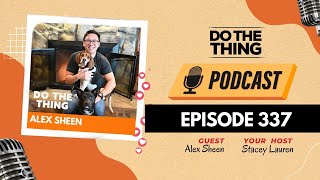
Transcript of a Do the Thing podcast interview (host Stacey Lauren) with Alex Sheen about his "Because I Said I Would" movement. Covers the eulogy origin of the promise card, viral growth, shift toward resiliency skills and mental-health programming, building a grief-focused retreat/camp, outreach in schools and prisons, fundraising/operational considerations, and calls for volunteers and partnerships.
Chapters
Hey, everyone. Welcome to the do the Thing podcast. This is your host, Stacy Lauren. Well, you guys, these are the moments that I just am so excited that I like to do the Thing because that's how I get to meet the coolest people in the world. And so I got lucky enough where actually, it's so funny because my birthday's coming up now. And so last year around my birthday, my boyfriend surprised me and had a seat. Alex Sheen, who I'm sure most of you guys know, is an internationally acclaimed TEDx speaker, author, all the things. He travels the world, basically, and moves people with his message, because I said I would. And since then, he's built this amazing retreat center and is helping kids and families overcome grief through this amazing space that he's created and worked through. And so when I got to meet him, I just was blown away with his generosity and. And relatability and vulnerability in the way that he shows up. And so I am so excited you guys get to meet him on this interview. So I am welcoming Alex to the show. Hey, Alex.
Thank you for having me, Stacey. I really appreciate the opportunity to come chat and even our time back, not only around your birthday, but my birthday was two days ago. I just turned 40. Right. So very excited for that. I got some cake in the fridge out there, but thanks again for the time. Yeah.
Happy birthday. Pretty. That's a good one. You got the. The decades are always the fun ones, right?
Oh, it's a privilege to get old. That's what I say.
There's so much here that I'm so excited to explore because you have all these different transitions that you've gone through in your life where with the popularity that everything got, with the work that you've been doing. And we'll get some context and I'll have you share your story, but I just feel like I want to start here. It's the popularity of everything that you were doing. It almost led you into then finding what your real purpose is with what you're doing now, because you hit this level of, oh, my gosh, everybody knows what I'm doing. This is what's happening. And then you got to tap into, well, this is actually what really matters.
Yeah. Yeah. And for me, that journey was really with the loss of my dad, mentioning some of that context. My father was a man of his word. If he said he was going to be there for you, he showed up. And unfortunately, my father would be diagnosed with stage four small cell lung cancer. Because I said I would is the title of his EULOGY And I introduced the thought of that promise card at his funeral. Just a one stamp piece of paper. It says, because they said I would on the front and the back. There's nothing else. You write a promise on the card, you give it to the person you're making that commitment to tell them, I'm going to fulfill that promise and when I do, I earn this card back. It's my property, I'm coming back for it. When you earn it back, you keep it as a reminder that you're a person who. Of your work. So when this went viral through social media, specifically Reddit, was where it blew up first. For a while, that's what people thought we were about. Oh, some kind of speech or something, an inspirational talk or a promise card. Maybe it was an art project or something. Understandably, people are just kind of seeing this from the outside and that's what they thought it was. It was about promises, it was about a card, it was about some guy chatting. But really what it is, is about not the promises that people wrote, but it was about the resiliency skills, the mental health habits it takes to keep that promise. Because what I would notice, Stacey, is a lot of these people would not keep these promises. And of course, there was things like quitting smoking, losing weight, even things like return the library book, some, some stuff even on that lower scale, like the library example. But then people would write things like, I will not kill myself. Right? And, and.
And all of a sudden then it's not like, oh, how many cards can we distribute or how many speeches can we give or Good Morning America or some kind of nonsense. It's like, no, we need to help these people develop the skillset to accomplish that promise, to face life's adversities. So when you say that thought of started as kind of one ish thing and it morphed a little bit, that's the transition that I felt when would make the most impact as a charity.
So kind of walk us through that process of you decided to name the eulogy that and then you kind of went on that journey with that. What did that look like for you?
Yeah, yeah. So I had given some speeches at work that my stepmom knew about. Just like, I don't know, it was part of my job. I give a talk at a conference or something and we're talking 50 people. Not a large scale thing. But she's like, well, someone has to say something at the funeral. And you're the only person in our family who does anything like that. So would you mind? And of course, I want to pay homage to my father. The problem is a couple fold. The first is that I'm a crybaby, right? If there's a recording, there's one person happened to have a cell phone that just pulled it out, recorded that day, the eulogy. And make them Laugh, make them cry is a type of speaker. That is the thing they bring keynotes in for. In the beginning, though, I'm just giving my dad's eulogy. I don't know what's gonna. I'm not even trying to go viral or I'm saying goodbye to my dad, but I cry so much that I remember in the parking lot, I literally just like, we're gonna get it all now. We're gonna say all the saddest things, all the things he's never gonna see. All the things that you regretted that you should have done as his son. You just, like, pour it out, right? Because we gotta go into that room, hold it together for seven minutes, and try to make my family members and his friends feel any sort of closure in the loss of my dad. So that was one thing that was kind of playing behind the scenes. That specific day is like, I'm a crybaby. And I don't know if I could be on stage doing these things. But the second part is the words. Because. Because I said I would. Like a lot of people would assume, which is fine. They would think, oh, that's. He must have said that. He must have said, I. I'm doing this. It's a tough day. I don't. It doesn't matter. Thought I'm doing this because I said I would. My dad never, ever said that. Even. I can't recall one time, even something close to that. What he did do, though, was he would say, because your mom said she would do this because you're. You said you were gonna. My dad was kind of the classic angry Asian immigrant dad. And he had very high standards. So he was upset because he did the things he said he was gonna do, but it seemed like no one else did. And he could not, for the life of him, understand why this was. His life was tough in certain ways. So the thought of, I don't like this, or I don't wanna do this, that doesn't equate to inaction. To him, it's like, you're tired. Well, then do it. Tired. I don't know what to tell you. And I'm not saying we all need to have that kind of attitude, because it's like yeah, let's enjoy life, son. What are we even here for? Kind of thing. But you can understand where. Yeah, that could get frustrating if you always show up, you're early, you're on time, you're prepared and other people aren't. Do that for a few decades and see how it wears you down. But of course, I wanted his eulogy to be positive, and so I just changed that phrasing to. Because I said I would, and introduce the cars.
And so what do you think helps someone with that resiliency to follow through on the promises they keep?
Yeah, there's. There's a lot of different elements, but I'll actually go to something that they taught us in, I don't know, seventh grade or something. They taught us about law of averages, right? They taught us about the bell curve, standard normal distribution or whatever kind of phrase. And really to say when you're measuring the population of something, let's say newborn baby weights or the height of a person, or incomes gonna fall on a bell curve, there's gonna be a lot of people in the middle. Then you have exceptions on either side, right? So why do I mention this? When it comes to resiliency skills and mental health habits, let's say deep breathing exercises, it's gonna work for a lot of people. That's why they say it. That's why they've studied it. For some people, though, it's not gonna work at all, right? It's just like for some reason, they're just an exception to the average. And then for other people, who's going to change their entire life, it's like, that's the thing. Here's the thing. How would I know where you are on that curve, right? A team of scientists couldn't tell you that. You would have to be your own experiment. You would have to try talk therapy, deep breathing exercises, time management strategies, accountability, best practice. You have to be your own experiment and have the patience to realize that even if it worked for a lot of people, you may not be a lot of people. So I would say that that's one of the most important, like almost requisites to a growth mindset, to a resilient mind, is trial and error when it comes to these strategies.
And so something that you're doing now is you decided to start this camp, our property that you built. And so I'm curious what that transition was like. So now you ended up, for anyone that doesn't know, he ended up doing TEDx talks and speaking all around the world on this message because I said I would. People are sending him these promise cards in droves. And then all of a sudden now you're like, okay, now what's next? What does that look like?
Yeah. So when it comes to our charity and the thought of resiliency skills and mental health habits, we would start doing that inside of schools. Particularly. We have high school chapters. So they do, let's say one a workshop on stress management, then another one on the four types of self control, and then another one on accountability, whatever it is. So we do that in high schools and we also do that in prisons, mostly male medium security prisons throughout the United States. But then the next piece of that is just recognizing that resiliency skills and mental health habits kind of apply to a lot of things, because schools, prisons, grieving families, we could all use resiliency skills. Obviously, specializing it to the different demographics and areas makes sense. But by and large, most people haven't been taught resiliency skills. They accidentally learn them from a good parent, from perhaps a coach or they, they went through a leadership development program or had a therapist. But it's not like it's in the K through 12 or even college education system. So programmatically none of us are learning these things. And so we kind of start at this sort of 101ish area that, that turned out to be the best place to start. But the problem and challenge with this program inside of schools and prisons where we started was that donations were hard to come by. People understood its value, but they're like, well, these are just some lesson plans. And it's just you've got some staff members helping lead, train the trainer, this and that. And the reality of the cost to execute this program and to help these folks really wasn't matching. And so to me, the unfortunate part of charity is that no matter how effective or honestly ineffective, it doesn't matter. That's not really what gets donations. Effectiveness isn't entirely what drives people to give, which again, that's suboptimal. That's not a good thing. It should be the most, the one that has the most results. And I'm not even saying that we have the best result in the world. That's what should get the funding. Unfortunately, what gets the funding is things that people emotionally understand or almost logistically and financially understand. And so two parts of that is that people give local and then they act local. Right? So when we look at why start camp, it's like, well, if I create this regional hub, then people around that area are going to be like, yeah, we're going to help that because that's us. We're here. We're not this thing. Cards around the world, chapters randomly in different cities or whatever. Schools, prisons, I don't know those people. We create something that's more centralized. That local region would be like, I like that. And the second part is that the physical nature of camp, people just understand. They're like, yeah, that comes with expenses. They understand this is going to make a difference. So I try to find something that was more financially sustainable because I've given 8 million or whatever dollars to the charity and I'll give another 8 or 20 or it doesn't matter. But it's not enough. Like, it's not enough. One person cannot cover the amount of pain and suffering in this world. So we have to create things that are repeatable, things that people understand, people want to give to. But those are kind of the operational, business side reasons of things, which unfortunately is a part of what you have to do with charity. The other, more important part of this answer is the variable of time. So, Stacy, let's look at the.
From the moment a child is born to when they turn 18. Okay, show me any point in their lives where they spend three days, two weeks, something like a longer period of time. We'll give it a week, week or more. Where do they spend that much time at any point? School. Well, we're already in schools. Maybe grandma's house. I can't start programs at grandma's house. Inpatient hospitalization.
And then you're about to run out of answers, Right? Camp is one of those answers. If real change takes time and practice and everything, then you need more time with the kids. Culturally, the only place that some kid is going to go to and spend time, that kind of time, weaker weeks, is camp. So that's the other reason. So I, I know it's kind of hopping around a little bit, but we're, we're trying to create equation that not only makes a real impact, but actually is financially sustainable. And these are all things that all charities have to think through.
Wow. Yeah. And so something else you mentioned to me when we were in San Diego is in terms of the people that are coming to the camp and the families that you're serving. It was really, I just left there feeling so moved by the impact that, that you're making on the generations. Right. By helping people that have just overcome a loss in their life and then kind of working them through the grief steps. And I thought maybe we could talk more about what that's been like, yeah.
If you walk down the street, talk to some randos, right? And just ask people what was the worst day of your entire life? It's probably gonna be the day someone passed, right. However, the sun is going to set on us all. It's kind of strange that we live in such a death avoidance society when that fact is, cannot be escaped. Right. We need to be able to get through these challenges and not just because of a general feeling of of course, sadness, depression. People shouldn't have to suffer like this in general. But on top of that is it actually causes other issues. If you look at this seven year longitudinal study published by the American, the Journal of American Psychology, I can never get these names right, but they did a study on kids that lost a parent or sibling before they turned 18 and they measured two groups. Kids who've lost someone, kids who haven't. So parent or sibling, they've lost. The cases of post traumatic stress disorder, substance abuse disorder, bipolar disorder, suicidal ideation. Some of these columns in the comparison, it's not like, oh, it's a 20% increase, which would be a lot. Okay, I'm saying it's like in some of these bars is a thousand percent increase, 500% increase. Wild. A child is not equipped to deal with this type of loss and especially when they witness the person passing away in person. Okay, so certainly we want to help kids, but how are you and I any different? Maybe that the challenges as adults, yes, we get some resiliency skills, we get some perspective. Right. We understand few things, but it is still creating that next level of humanitarian issue. And again, substance abuse, depression, suicide, things like that. So I guess the first thing to mention in grief is to say it is a, it is a real issue. It's a real humanitarian issue that's hard to deal with and so certainly can get into more about grief journey and habits and tactics, perspectives that help. But I think we gotta start with the fact that, yeah, it's heavy and it needs help and support and we actually don't talk about it that much. We kind of just sweep it under the rug. There's some families who literally will not speak the name. It's almost a rule that we don't say that name because none of us can hear it anymore because it's so heavy. And me, I talk about my dad every day and I do cry. And that's the other piece that you were kind of alluding to. It's like, what is the journey? Well, it's not five phases and some of Those things that we heard in a movie, it's like, yeah, I cry and I don't have to be ashamed about that. That's how I know it meant something. The measure really is, am I leading a productive life? It doesn't matter that occasionally I feel that emotional weight. Can I handle it in a productive way and not necessarily get over it? I think, can I carry the grief with me in a manner that makes me a better person? Because I appreciate life more, that learns the lessons that my dad taught me and tries to live, that tries to make him proud in some productive way that would be good for me or other people, you know what I'm saying? I don't want to forget him. I don't want to get over it. I don't have to do those things. I just need to be healthy and productive. And if I'm sad once in a while, I don't know, that's life. It's going to be all right.
Yeah. I think the thing that was really also just so. I don't know what the word is, but exciting. I don't know if exciting is the right word. So my heart centered mission is having people understand that whenever you're going through something, whether it's grief, a transition or a goal, that you have to join a group that has the same kind of goal or interest or bond. And then you get to have this space for open vulnerability, shared comfort, shared support. And so, and that's what I believe you're now doing with this camp, right, Is you're taking these people that have these individual grief journeys in many cases, and whether it's the same family unit or whether it's a bunch of different families or if it's just kids and you're putting them together in this space and now for the first time in their life, maybe some of them are feeling seen because no one, when they talk to people outside of that environment, they can't even possibly understand what they've been through. And so it's almost like the safe haven of support to push people through this process.
Yeah, yeah, I'll share in an anonymous fashion. One of the adult. We have an adult bereavement retreat. This couple gets in a fight. They've been together for a long time and one of the people, they leave the house, they go home, right? So they've broken up. That person ends their own life. This person, a surviving person, is not allowed to go to the funeral. The family won't allow them to go. They're not able to grieve they are made to feel that it was their fault. That kind of weight is so heavy. And so even doing something like a candle vigil, we do a memorial, these little pieces where they can finally say something out loud. And even when you have, and most of us do have the opportunity to say goodbye, so to speak at a funeral. So it's not like, oh, we're done here, like it's over. It's like, no, maybe there's another step to the conversation I want to have with other people or after one year anniversary or now that I've person has a child. How do. There's just knowing that you're not alone is very important to a tribal species survival. And I mean that in almost like a pack of wolves type of way. We will not survive without each other. That is not only physically, but emotionally as well. So a lot of people look for, especially TED talky type of people, like, oh, these silver bullets, should you take cold plunges? Or like there's all kinds of weird questions you get, but some of it's just super basic, which is we weren't meant to be alone. Just be around people who are pursuing the same goal. It doesn't have to be that creative. I wish I had new stuff for you, but how about diet, sleep and exercise? Find an accountability support group. Let's start with that. Yeah. And then maybe we can do a cold flourish or whatever. I don't know. That makes you happy. I love what you said about joining a group, sharing those best practices, not feeling alone and getting a rhythm on your commitment, getting every month, every week, what have you. I'm pursuing something here.
Yeah, it's so funny. So I'll share with you. So I have. I'm game. I don't know if you can see my shirt, but that's the do the thing formula. It came from my podcast, actually. I had after, I think the 80th episode was when the formula started to kind of like become clear on what helps people out, actually take action, do the thing, move past their mental baggage. And actually you just name all the pieces. So it was funny. That's why I'm mentioning it. It's like the. I was identify the why, whereas we hear Simon Sinek talking about that. Right. But when you put it in a group, when you declare why you want to do something and it's in a group, that's what's really special. And then there's M is mindset, G is goals, A is accountability. The M in game is my people. And that's not Your friends and family and regular support network that's with people with a common goal. And then the A is accountability and E is educate. And educate is both educating yourself, but also educating others, which is where the contribution comes in. But that's been what your camp is. Is actually that's a blend of everything together. So I started running these challenges. That's when I noticed the group was the most important thing. And so, yeah, so that's where now I have this comfort circle framework. I just had an event, so I have it printed. Yeah, I don't know if I showed it to you. So there's the horse part of it, which is where you're in the grief. I mean, for some people, depending on where they are in the comfort circle and what their goal is. So if we're talking about people that want to be online, the horse is the lurker or whatever, but when we're talking about grief specifically, the horse is like, I can't even speak. This was just so hard. I don't even know what I'm going to do. And so, yeah, so what happens is with most people when they have a support group, they can't ever get them out of the horse because the support group sort of keeps them down. Sometimes not down, but it can sometimes almost lead to trauma bonding or a lot of that kind of woe is me. Right. But what you.
Yeah, negative self labeling too is like, is. Is certainly the challenges that people face are real. And so even if there's. It is a disability, the loss of a loved one, being a widow, whatever it might be, that's a real thing. But just negative self labelings and just identifying your entire personality around a hardship or challenge is probably no way to live. So I get what you're saying. When there can be support groups that are sort of enabling this thought of like, the challenge that we have is only limitation.
And there's a space for that. We need that. Right. We need to just be like, okay, I just want to scream and be completely miserable because this was so hard. Right. But then whether it's a challenge or a group or a camp and you have a goal now, you get to all work towards something, which is where then you get to almost move through that whole process. And so that's why when I talk about groups and challenges and joining things, it's like, now how do we get them past the next step? Okay, I'm ready now. Now I want to find my voice right now. Maybe for some people, they might stay there, never move on to Share your voice. But for other people, they. We just were talking right before we got on about podcast, so we can go into that. But then they might be ready to share their voice about what just happened, because maybe you will help someone else with you being able to tell them what happened with your story. Right. And then I have other layers, which is monetizing, whether it's through a nonprofit or through making money, creating a movement and then global reach. But the point is, is your camp is a symbol of that to me, because you're creating this space where you're supporting each other and then you're achieving goals in this container.
Yeah, I think. I mean, I think we live such individual lives. Right. And it's not like that's new or social media or whatever. It's like, oh, but I'm just gonna go to work, take care of kids. There's not a lot of time just laying around to join groups. And so even that limitation alone is understandable of why some people don't do it. But we could make that same excuse for again, not getting good enough sleep, not exercising that we've got to carve out time for things that are known to work. And I do think that support groups have great function.
Yeah. Well, I would love to talk about what we were talking about right before we started, where I mentioned I have a bunch of people that have helped start podcasts and potentially have you go into this unofficial podcast circuit and then you had an idea. Do you want to talk about that for a minute?
Yeah. So, because I said I would. When we talk about the beginning of things going viral and just a flashback to that, I had 12 number one front page posts on Reddit that was just like, it was just started. Sing and Steve Harvey show and Today Show, Good Morning America, blah, blah, blah. Over time, especially in the early days, there was just this thought of I was going to be a reality TV show that different production studios would come to me and be like, these stories of your supporters, promises are crazy. You should go see, visit that. Do they make the promise? Did they break the promise? They give them tips or whatever, and then that's the formula for every episode. In fact, they were so pumped about it that they were literally, when I said, no, this is a charity. We're going to help people in this different way. They were like, well, how about you just sell me the stories? They literally told me, they give me $1,000 for every story that they would use. And I was like, we're not. That's not. I mean, even think about myself at that time, it's like, you give me all the money in the world. I'm not here to make money off the fact that my dad died. Everybody makes their own decisions. So I'm not trying to be judged to other things. Just saying, this is my path. I can't do that. And I'm not going to take these people who are victims of sexual violence and people who have lost loved ones, all kinds of hardships and poverty. I'm not going to say sell that. So with that, though, at the same time, there was a reason people were reaching out to us, because these stories are some of the wildest things. And it's not just because it's connected to us, but those promise cards we've distributed 15.5 million of them, and even that volume alone will triple cost. Some things that not only people want to hear because of emotional entertainment, which, again, that's not on purpose, but also the resiliency perspectives that come with those stories. Right. What did you do? What did you think? What worked for you? What didn't? What's your favorite quote? How does that drive you? What changed all that stuff? Right. So we actually do have a podcast and go to our website because of stewardway.org the podcast, and check that out. Actually, I'm going to double check. Is that the. The URL? So we did a limited series, and yeah, it's slash the podcast, and that's great. But the work of our charity in actual schools and prisons, this camp, you could say you could do both, but eventually you only have resources. You gotta pick a horse and ride it type of thing. So we really focus on programming instead of that outreach and stories and series and stuff like that. However, jumping on someone else's podcast is relatively easy as we're just demonstrating right now. And so I would love to share some of the perspectives that are coming from all these folks and things that we've written about in our book and all that. But what you were alluding to was the connection of podcasts and camp. So we've had folks do yoga retreats and this thought of people who write books. I've written a book. And it's like, oh, should we do a retreat of that? And Stacy and I were just talking about, should we do a podcaster retreat where it's like we just share our storytelling best practices, because obviously they benefit the charity. The better we get at. It was still always stuff to learn here, but there's a production studio called Evergreen, and they make a bunch of podcasts and Stuff. They made our stuff. But the only reason I mentioned them is that they're considering building a podcast studio, our camp, just as a donation to us, kind of to help the families actually record memorial messages and stories of the person they lost and stuff like that. So I don't know, I think it would be a fun idea for those type of content creators of sorts to share storytelling best practices and to do that at camp. Because our 92 acre property is not a youth camp. It's kind of bougie. It used to be a winery and event venue, resort cabin business. So we have hot tubs and a three tier seater sauna and all these things for the grieving families to enjoy. But the thought of a podcast retreat is interesting.
Yeah, I 100% want to do this.
And my daughter graduates this month and so my Auntie Nestor is coming. Yeah. So I'm like, okay, tell me in the fall I could get the people there. Tell me how much you ought to charge. It could all go to your charity.
I'm a charity.
Yeah. So it's like this is my goal right now. This is what I'm doing, is everything's sort of evolved. So I don't remember what I told you, but I just became a charity auctioneer. Yeah. And so then I realized, oh, my gosh. My challenges are also the most amazing fundraising tool. And so now I'm mixing philanthropy with goals, connection, collective action. And so this all ties. It ties in. Oh, and then yesterday I went to my podcast platform founder, I'm actually an investor, and his saying it's Callcast. It's amazing. It's how I helped hundreds of people start podcasts through that platform. He has a new platform, though, it's called Clubcast, where he's helping the Boys and Girls Clubs kids start podcasts. And so when I was talking to him yesterday, he came to San Diego, I was like, oh my gosh, I want to do a fundraising challenge where kids are finding their voice through podcasting. And so that just planted. And I don't know what's there, but I'm just saying it all out loud so I don't forget. But the point is, is, yeah, I think this would be really cool. I know a lot of people that would be super interested. And then all the money could go to.
Because I said, obviously the mission of the charity has nothing to do with corporate treats or weddings or anything like that, but we do those things. Why? Because it just raises money for the charity. You rent the place for a wedding, you rent it for A retreat, corporate retreat, podcast retreat, yoga retreat, whatever. It's like that funding is the reason why no grieving family pays to be in any of our programming. I assure you it's not cheap. We hire a private chef, cook for them, the mental health therapist fees and all that kind of stuff. It stacks up immediately. But we're able to do that because of the generosity of not only our donors, but people who make business decisions, which is like, I think this would be a cool place to have our corporate retreat or podcast retreat. And then this one just happens to have a little additional Venn diagram, obviously because of the storytelling nature of what a podcast is. And then a lot of content creators are looking for outlets to say, hey, I reached this level, or I'm trying to get to that next spot. And when I get there, try to reflect on that old quote. With great power comes great responsibility. If we reach this level of influencing others, are we using it to help cost? And I'm not even talking about it because, et cetera, we're like, forget about us for a second. Whatever charity that podcaster loves, what do you support? 75.1% of all Americans do not volunteer a single hour in an entire year, according to the Bureau of Labor Statistics. So being that fundraising volunteer can mean so much for the charities you care about. So I think there's just a lot of fun connections between us and then this idea.
Yeah, well, cool. Well, you'll be hearing from me.
Sounds good. Well, tell us, what is your number one piece of advice for people on doing the thing?
Well, I'm going to go back to the old man. I'm going to go back to my dad. And this isn't easy, what I'm about to say, but I think is a psychological switch, that or philosophical, whatever, just an attitude towards life that can be helpful. If we were to go back to my dad and the fact that he just showed up, he was reliable and he could just grind things out, it was really the antithesis of the question I'm asked the most often, which is, how do I get motivated? How do I get motivated to do the thing to whatever they're talking about? And I actually think that my dad did not have a relationship with motivation, did not have an addiction to it, didn't need it. I want to go to my son's lacrosse game after a 12 hour shift. I don't want to go. Doesn't matter, right. Whether I'm motivated or not. That's not a question my dad asks himself. It's like, did I Say I was going to do this or not. Is this the right thing to do or not? That's the question. And whether I'm tired or I feel like it is secondary to that. So I think as Americans and just human beings, we are addicted to motivation. We say it's a requisite to action. And whether I'm tired or I feel like it is secondary to that. So I think as Americans and just human beings, we are addicted to motivation. We say it's a requisite to action. But the people that I've noticed, resilient folks who set Guinness Book of World Records serve our country for 30 years, amazing teachers in inner city schools that can be challenged. These people who but the people that I've noticed, resilient folks who've set Guinness Book of World Records served just grind it out. They don't have the relationship with motivation that most people are looking for. And so I would kind of check that addiction a little bit. And addiction is too heavy of a word sometimes. But I'm trying to disassociate from motivation a lot. Not entirely that's impossible and probably not even a dead life to live. But as much as reasonable, what should I just gonna do it? Because our country for 30 years, amazing teachers in inner city schools that can be challenged. These people who just grind it out, they don't have the relationship with motivation that most people are looking for. And so I would kind of check that addiction a little bit. And addiction is too heavy of a word sometimes this is the right thing to do. That is the answer, not how I'm feeling.
Wow. Please share with everyone where they can learn about you and keep up with your journey and what you're doing at the camp too.
Yeah, for the folks who are listening that maybe host a podcast or know folks who do. Our charity has programs in schools, we have programs in in prisons. We help. But I'm trying to disassociate from motivation a lot. Not entirely that's impossible and probably not even a dead life to live. But as much as reasonable, what should I just going to do it? Because grieving families, we work a lot with charity partners and nonprofits, resiliency skills and mental health habits. Any of these things are ringing a bell to you. If you'd like to chat and share stories and perspectives in these areas, I'd love to to consider coming on. But as it relates to the charity, we're looking for remote volunteers. If you're interested in volunteering for the charity or even coming to camp. And I don't know, help me cut this. This is the right thing to do. That is the answer, not how I'm feeling.
Wow. Please share with everyone where they can learn about you and keep up with your journey.
Grass. It takes three and a half days to cut the grass. It's not a joke. So we could use all kinds of volunteer help. Also fundraising and that good stuff. And so there's a number of ways to get involved. Go to because I said I would org check all of that out. But my real call to action is always going to probably remain the same. Is like, yeah, whether the charity succeeds, changes the world or fails later this year, you don't really have to worry.
About and what you're doing at the camp too.
Yeah. For the folks who are listening that maybe host a podcast or know folks who do. Our charity has programs in schools. We have programs in prisons. We have about too much. That's my job. I just ask you to reflect on your own resiliency, your own promises. Take them one step at a time to become a stronger version of yourself. I am absolutely certain that it is possible. Our website also includes a lot of videos and habits and tactics. Everything's freely available because of the generosity of our donors. There's no paywall or whatever. But think about that promise to your physical health and mental health and focus on that grieving families. We work a lot with charity partners and nonprofits. Resiliency skills and mental health habits. Any of these things are ringing a bell to you. If you'd like to chat, share stories and perspectives in these areas, that's all I could really want.
Thank you so much for coming on. This has been amazing. Getting a chance to do this with you.
Awesome. Thank you, Stacey.
And thanks you guys for listening. Do the thing. Don't wait for opportunity. Create it. Hey guys, have you checked out my Facebook group yet? Go to do the thing.
Collaboration.com Areas I'd love to consider coming on, but as it relates to the charity, we're looking for remote volunteers. If you're interested in volunteering for the charity or even coming to camp and I don't know, help me cut this grass. It takes three and a half days to cut the grass. It's not a joke. So we can use all kinds of volunteer help. Also fundraising and that good stuff. And so there's a number of ways to get involved. Go to because I said I would org check all of that out. But my real call to action is always going to probably remain the same. Is like, yeah. Whether charity succeeds changes the world. Or fails later this year. You don't really have to worry about that too much. That's my job. I just ask you to reflect on your own resiliency, your own promises. Take them one step at a time to become a stronger version of yourself. I am absolutely certain that it is possible. Our website also includes a lot of videos and habits and tactics. Everything's freely available because of the generosity of our donors. There's no paywall or whatever. But think about that promise to your physical health and mental health and focus on that. That's all I could really want.
Thank you so much for coming on. This has been amazing. Getting a chance to do this with you.
Awesome. Thank you, Stacey.
And thanks, you guys for listening. Do the thing. Don't wait for opportunity. Create it. Hey, guys, have you checked out my Facebook group yet? Go to dothethingcollaboration. Com.
More from Stacey

From 262 Women to 8 Million Media Impressions: Deborah Drummond Built a Global Women’s Movement


From Notes App to Published Author: Avery Brenna Crumrine on Turning Intention Into Action


How Stacey Lauren's Billion Dollar Impact Marketplace Will Raise Billions for Charities and Causes

What Happened When Allison Maslan of the Pinnacle Global Network Ran a Challenge with Stacey Lauren




Leaders Share How Stacey Lauren Sparks Action, Clarity, and High-Impact Collaboration

Sandi Masori Announced as Emcee | The Billion Dollar Impact Event Returns to San Diego