Deborah Everson Survived and Thrived: Redefine Success After a Business Exit
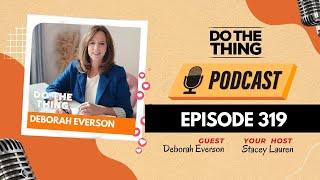
Deborah Everson sold her family hardware store after transforming it with classes and home decor. She spent two years preparing for the sale, then faced unexpected grief after the exit. Now she coaches retail owners on planning ahead to preserve value and community when they leave.
Questions this video answers
September 2023.
48 years old.
About 56 years.
About 5,000 people.
Chapters
Hey, everyone. Welcome to the do the Thing podcast. This is your host, Stacy Lauren. Well, you guys, I am so excited because I met my next guest through a community that I recently joined called the Whisper Collective, where it's all about women who have exited their businesses and are kind of now on the new venture in their life. And what was so cool is she ended up joining my find your Voice challenge. So we started to connect on a lot of different areas. And I just love getting to talk to people that have gone through similar things. And this is actually one of the areas that I don't get to talk to as many people about is what happens after the exit and what that actually does and what it could actually, I want to say open up for you, but it doesn't start as an opening up sometimes because you're. You're going through a process. And so I'm so excited to dive in with her, what that process was like and also how she built her business and what she's doing now. So I am welcoming Deborah to the show.
Hey, Deborah. Hi, Stacy. Thank you so much for having me on. And I love what you said about we don't get to talk to a lot of people about what it's like to exit and then after. Because it feels like you're almost in a special club, you go through this process and you. For us, we couldn't really tell anybody about it while we were going through because of the NDAs that we signed. And then afterward, everybody just said, oh, so now you're retired? Well, Stacy, I was 48 years old when we sold our store. I'm going, I'm too young to retire. So now what do I do?
Yeah, you're so right. Because you're right. There's that whole silent period where you can't really talk to anyone about the actual process of you even exiting. Right. Cause you don't want employees to know and clients and things like that. And you can't really tell anyone that you might not know what will happen by telling them.
And then.
Then what happens, though, is you exit and automatically think that you're now free. Right. And don't understand when there's some kind of an identity loss. Right. And so it's really hard. So I. I actually had this for myself where I couldn't really talk to a lot of people about it because they couldn't understand. So if I was even having a bad day. Cause I lost all the people that were around me, it's like, what are you talking about? You just got all this money, why aren't you happy?
Exactly. And you feel almost guilty because here you've gotten all this money and they think you're super rich now. And it is a hab happy time. It's happy. And you're celebrating that you built this business and you were able to successfully transition. But then you feel bad because, well, now what am I supposed to do with my life and who am I now and what do I do next? And there's all of these other emotions and then you kind of feel bad that. But aren't I supposed to be happy? This was part of the plan. This was part, you know, what we wanted to do. And so it is. There's just such a wave of emotions that take place that you really can't almost prepare somebody for it because everybody will deal with it a little bit differently. And especially if you can't tell anyone you're going through the process. So that's why we wanted to get into exit planning and being able to help other business owners through the process. Just so at least you can know. Okay, you may experience these things. Of course everybody's going to process it a little bit different, but at least helping them kind of start preparing for life after the sale.
I think that's so important and I don't think people talk about it enough because you don't really know what you're going to. You just are so focused on trying to sell. Right. That you don't even know what your emotional kind of response will be. And I was really lucky at the time. After my exit, my coach that I was working with told me not to start a new business for a year, which was really good because I think if I would have, I was looking at even investing a lot of money into figuring out doing this ready to make alcohol brand. And thank goodness I didn't. Because you could be reactive, right? Because you're trying to overcome all of that noise that's in your head from when you're running the business and you don't realize when it's gone. Now all of a sudden you're left with yourself sometimes for the first time in years. Because when you're owning a business that you're building to exit, you're putting out fires, you're dealing with constant people. It's this whole thing.
Yeah. And I totally agree. So just to give you a little background, so I ended up marrying into the HARDW business. So I was actually working as an IT project manager, making a six figure salary. And two years after our marriage, my husband Came to me, he's like, could you come be our project manager? And I'm like, okay. But our store wasn't doing well. And he's like, can you help us create a plan to turn it around? I mean, we were two years from having to close our doors. And so I came in, I left my six figure job to make $12 an hour at our hardware store. But those are sacrifices as business owners, I'm sure you understand that we make. But then going through that whole process of turning it around, going through Covid and then having somebody approach us about buying our store, realizing we weren't ready, then talking about those conversations. We were family owned. It had been in his family for 56 years. How do we start thinking about our exit? Going through that process, getting ready, hiring a broker, firing the broker in the same month, then deciding I was going to broker our deal. So. So then going through that whole process, you're so focused on all the things that when you end up selling, you're kind of like. And I got real. We got really good advice as well. Stacy. We had a couple that had kind of gone through the same. And they said because my husband grew up in the business, he said, I really say recommend that you take a year off, Take a year off, grieve process. And so we did, we did the same. We took a year off, we traveled and just got to know each other outside of the store because we were owner operated. So the store literally ran our lives.
Wow. Yeah, I love hearing you say that because I don't think enough people talk about this part. And just so you guys know if you're listening and maybe you don't have your business yet or you have a business and you haven't sold yet, I want you to understand that this actually is with any kind of transition, this same kind of language that we're talking about right now is when you're going through a transition, whether it's you're changing your job, or you're going from a job to opening a business, or you're changing careers, or you've gotten divorced and you're restarting in life, or your kids have left the home and now you're an empty nest, you're having to find your identity again and really figure out who you are. Because all the things that you knew before are now, I don't want to say gone, but it's not there. Right? And I'm imagining that's what you guys went through too, where it's like you're living breathing with the ups with the downs with COVID And then all of a sudden, you hit that height of, okay, we're selling it, and then it sells. And now it's like, who am I? What am I here for? What is my purpose? Because you're so busy building that now it's like, okay, now there's me here, right?
Well, and understanding now because I knew my relationship with my husband, how it related to the store and to the business. And so now what does our relationship look like? And so I love that you brought up that transition can happen no matter whether you're exiting a business, you're transitioning a job that affects your personal relationships too. How are you now interacting as a couple after your kids have left the home or after you've one or both of you have transitioned from a job or retired or anything like that? So you're also re figuring out how do we relate together as a couple? And we've since we found our rhythm and realized it really actually wasn't that different. It's just that we no longer have that store as the barrier or the thing that we're focused around. But it's just interesting on how all of the different dynamics when you're talking about transition, the things that come up.
Yeah, I'd love to talk about that. So redefining your relationship now, right. And taking the business out of it, how did that. It sounds like you guys traveled together, got to know each other again. What kind of really helped you the most with that?
I think it was just really. Well, one of the. Is that we're very good at communicating anyways, but just taking time to process through that and communicate. Here's how I'm feeling. We realize now that as we're stepping into this new business, so when we had our storm, we would joke that I was front of the house, he was back of the house. So he did all the financial stuff stuff. He did a lot of inventory things, ordering, that kind of stuff. And I did all of our human resource type stuff, all of our chamber meetings events, all of those things. Well, now guess what? I still do all the front of the house stuff. I'm going on podcasts. I do speaking events. I was just at a speaking event Friday and Monday, and he was there in the background doing the videotaping. Even today, getting ready for this, he's getting the mic set up, so. And then when we work with people, he's looking at the financials. So we realized that we actually still have that. It just looks a little bit different. But it just took us a minute to kind of figure out what it is that we're doing and then how do we do it? So it was kind of fun to see that we still are very similar. We're still doing the same things. Just we no longer have. It's not revolved around the store.
Yeah, I love that. I actually this is something I have a wealth experiment program where I really help people tap into. Actually, I learned this from that Coach I mentioned, Dr. Any case, it's called Life Assets and it's. I really help people work through what those things are that you're good at. And then you get to apply it to everything else that you're doing. And it sounds like that's what you've really done. Right. You've been able to really identify what your zone of genius is. He's been able to really identify his zone of genius. And now what can't you do now with those skills?
Right, Exactly. I totally agree on just we each kind of figured out, but then embracing it, except so we got to do that at the start, embracing our differences and also what was complementary. And so then now as we move into this new phase, we're able to do that as well. So just understanding what our differences are and then where we're complementary and embracing those, not only in ourselves, but then in each other and acknowledging it and accepting it.
So I'd love to hear when you mentioned having come into this business a few years after you guys had. Was it after you met. Married. Okay. After you were married, and then you took the store from. I want to say, devastation. Right. To being able to scale it. What was that like? How did you do it? Is there any kind of secret nuggets that you can help us with?
Yeah. So what happened was I say God has a great sense of humor because I always said that I hated retail and I'm not handy. And then I married into the hardware business and then my husband asked me to come work for them. But the good thing about that was is I then was able to take a look at it from a customer's perspective because I was not so ingrained into the business that had, like I said, had been in his family for 50 plus years. And so I was able to take a holistic global view and approach to what is the experience that we want our customer to have in even before they reach our door. What do we want them to experience through our social media, through our website, and then even driving into our location. We also created a customer survey. So I had an employee who was getting his master's degree. And I said, would you want to get some credits and help us create a customer survey? Which was perfect for what he was doing. So utilizing our employees as well and. And bringing them in. We did a customer survey, got our feedback. Some of it was good, some of it was really hard to take. But being willing to have those hard conversations with our customers and then taking that feedback and being able to incorporate that into our store. So we ended up completely remodeling our store. We did a store reset and then we did a remodel at the same time. And we ended up. So our community is really more of a. Became an affluent community. And so we created a beautiful boutique style hardware store. So as you walked in, we had these really pretty concrete floors, edison bulbs. We created a paint counter where people could come and sit and we could do classes. It was very family oriented since we were family owned. So we started incorporating kids classes and just started diversifying our revenue stream. And through incorporating classes, we added home decor. So we were a hardware store that had home decor. And just really creating a different environment, making it very welcoming and just inviting the community to come into our space. And doing those things really helped change. Because my goal was to change the community's perspective. They thought we were dated, we were overpriced, we weren't very welcoming. And those things were very easy to change as far as making the changes themselves. But then continuing to show up and offering those things and inviting the community into our space. It then became going from being their last resort to now being their first choice. Wow. Yeah. And it was fun. It was so fun.
Well, it sounds like it was a store, but it was. It's almost like what I do online, which is so funny. It's like you're creating this energy and the excitement because you're getting people excited about what they're doing and you have all these common goals that are inside the store. From painting classes to kids, adults, and all the thing. And so because you're bringing all this energy and now they're all buying from you.
Right, right, right, exactly. And they knew we were consistently there. So they knew we were open Sunday to Saturday. They knew our hours. So they knew that if I needed a last minute birthday gift, they could come in for a last minute birthday gift. We wanted to be almost a destination spot or when hockey moms would come in and get their kids hockey skates sharpened when they were roaming around the store. There was something now there for them with having the home Decor. So Maybe it was 650 to get your kids ice skates sharpened, but now you're looking at a $30 home decor piece. So now I went from a $6.50 sale to now I've added an additional $30 onto that sale. So it seems like these simple changes, but they ended up having a bigger effect. But it also made for a fun place for people to want to come and shop.
Wow. Okay, so you built it up, then Covid happens.
Right.
And maybe just talk a little bit about that and how you were able to then build it back up, it sounds like, to be able to sell it too.
So the good thing was we were considered an essential business. So thankfully, we had done the remodel. We had already been reengaging with the community, so they thought of us to come to. So Covid happened, and we were ready. We were ready for all that extra business. So now people are at home looking at their closet, going, I need to paint my closet because I'm going stir crazy. We were one of the few places they could come to and shop. And so now our business has doubled overnight, essentially. Then the only other hardware store in town decides they're closing. So now I have Covid business. Now we're the only hardware store in town. So our business just kept growing and growing. It was wonderful and overwhelming at the same time. And so that's when somebody approached us about purchasing our store.
Oh, wow. They approached you?
Yeah.
Oh, my gosh. That's so cool.
And as we looked at what they were wanting to do, it didn't really meet our values, and they weren't matching up to our vision. But also, we realized we weren't ready. We didn't have a good handle on our inventory. We didn't have a good handle on some other things.
And.
And so we said, okay, if we do this, if we do decide to sell, what would that really look like? And so we started working with our distributor, we started working with our attorney, saying, what would it look like? What would we. And our cpa, what will we need to do to get ready to sell? And that was a two year process.
Oh, wow.
Yeah. So when people think about exiting their business, when we talk to people, they're like, oh, well, I want to close in three months. You can, but you're not going to get the value out of your business. It honestly, it takes a good two to five years of planning to really be ready to exit. Maybe you have that experience too.
Oh, gosh, yeah. Such good advice. Yeah, it's really good advice. Yeah, we were in like. So I actually was married too and we actually opened the business together. And he also was back end financial workers compared to. And then I was front end sales recruiting operations. So it's funny how similar our stories are, except we did not have the communication you guys did. We ended up getting divorced. And then we kept, we tried to keep it open together, running it together for a few years and it did not work because I thought since I do front end, heated back end, I thought we'd be okay. But when you get divorced, the trust that you have with each other is gone. And so it no longer worked because everything started bleeding into each other. And so we had tried to sell it actually a few times and both times it was going through. But then we had a lawsuit happen one time that stopped it. And then the second time was Covid. And so then by the time we got our business back up after Covid, I was done. I just couldn't, I couldn't do it anymore. And so I ended up asking. I wanted to try to buy him out. It didn't work out. So then he ended up buying me out. And so I didn't get the sexy exit that I wanted. But long story short is, yes, that was our biggest problem was we were family owned, we had 60 employees, everything was so just actually it reminds me of what I'm doing now, where I want to go so fast that it's so hard to clean up everything behind you. And that's what you really have your stuff cleaned up, right. And your SOPs and your processes and all the systems really clear for someone. So it could be like, here you go, take this thing. Right? And that's why it really is a couple year process. Unless you're working with someone like you. It sounds like, and I recommend that for anyone is like, don't wait till you're ready to sell. Do it right away. Do it as you're building the business. Because if you could already be knowing what you're going to need for the exit, then all of a sudden it's going to be a lot easier when it comes to that time.
Exactly. I couldn't agree with you more. Actually. We just talked to a young man, I was at Retail day at the capitol at our state capitol yesterday and talked to a young man that's building a business and he's already has his ideal, what would my exit look like? And he's working backwards. And I'm like, that is so smart. Is because once you get that business going it just starts going and you're now focused on your day to day, you're in green. For us, the business kind of ran us instead of us running the business. And so it wasn't until we really purposed ourselves to start preparing for what would an exit look like and then preparing our in laws too. Because my father in law is in his 80s and his idea of retirement was working till he could physically work no longer. And so helping my in laws through the process. And so it just takes time. And like I said, you can do a quick exit, but then you don't necessarily get the value, especially when you have worked so hard in your business for your business, for your employees, you're just not getting that value that you potentially could if you give yourself some time. So yeah, I think like you said, start with the end in mind and then work your way backwards is such good advice.
Yeah. And then it sounds like when you guys exited, you got really good advice from that couple that shared the experience, similar to my advice, which was great, which was take that year to get to know yourself, what you're doing, give yourself time to grieve. And it sounds crazy for those of you that are listening that have not exited yet, but it's like think about it again, going back to transition. Anytime you're going through a major transition, whether it's good or bad, you're grieving for the thing that was there. And especially from a business perspective, I mean every waking moment is really on helping that business because we are. I don't want to say it's brainwashing, but for me, I was so committed to just keeping all these employees working, helping my customers. I was a staffing company for us, really get the best people for their jobs. I was brainwashed is the word that keeps coming up. So I'm just saying it, but that that was what was powering me to just think about it. And I'm imagining you're a community hub right in the center of everybody's lives with how it sounds like you built that business. So it was really similar in that way.
Right. And it is it then all of a sudden it because like I said, I married into the hardware business. So I had no idea that this, how much ingrained of my identity it would become. Until you start building these relationships and these connections and that you're responsible for somebody's livelihood and you have people in the community coming to you for sponsorships and different things that are happening and advice and you're always being asked for something and then you leave, you exit, and now no one needs you for anything. I felt very devalued and it was nobody's fault. It was just now I'm no longer needed by anybody for anything. I went from. I'm trying to keep the business going. We're trying to keep a good front, trying to make sure that business as usual is going. I'm trying to host events before we're selling, trying to make sure I have enough inventory, all of these things and work on selling the business. You're going through this super intense process. And we literally, we handed them the keys, they signed the papers and they started doing business. So they didn't even need us. The organization we sold it to was larger. So they had their own POS system. They brought in employees that worked with our employees. And so we were done nothing. And so you go from this really intense emotions and all these experiences and then to nothing. And you're going to, well, what am I supposed to do now? Where is my value? Nobody's asking me for anything. And that was hard. That was really hard for me because we had really built our name up even in the hardware industry. And I kind of maybe arrogantly thought that people in the hardware industry would be reaching out. No, they just all assumed that we sold and we're retired because most people that do in our industry are in their 60s, 70s, 80s, they are retired. I was a little bit different situation. And so it was like, well, now what? And I realized that I had to take the initiative then to re engage with people to find my value again.
Wow. You just so perfectly said what that felt like for me too. Because that's kind of what I was saying with the fires. But I couldn't say what you said and thank you so much because you just gave what that feeling is words where it's like you are so needed, Everyone wants you. It's fires, this, that all these things. And then all of a sudden the exit happens and there's no noise. It's all gone. And now all of a sudden you're like, what in the world? And even my employees, I had employees for 18 years that we raised from babies. Really. And we got to help them with their babies. We did photo shoots even as the anyways the whole thing. Because a lot of them had babies at the same time. So we had this fun little. So they're part of our whole family going to our birthday party, the whole thing. And then nobody cares anymore. And I'm like, was I just a paycheck? I just didn't even understand it.
Oh my gosh, I totally can relate because I'm going here. We were members of our chamber, we were just super involved and ingrained in our community. And I'm going, oh, so now nobody cares. It was like, oh, don't let the door hit you in the butt on the way out. And I know that's not how they felt. But the other thing though is it made me think about people that are retired or retiring, that that must be something that they're experienced. So you've worked for an organization, a company for 10, 15, 20, 30, 40, 50 years, whatever, and then all of a sudden you retire and now no one's asking you for anything. And the reason why I bring that up is because what we would see in the store is people would retire and they'd get old. And that was part of the reason why my father in law didn't want to retire. Because he was afraid that, that if he retired he would just wither up and kind of die and we would see them age very quickly. And now I can understand and I have empathy for that because once you retire, then what's your value? No one's asking you for anything anymore. And you've given essentially your life to a business, to an organization, to a company, and now no one's asking you for anything. Wow.
It really kind of ties in to why I care so much now about what I'm doing. Because it's almost taking away all the layers of who we think we need to be, what people can say when we show up certain ways and being able to take all that mask off and being who you are. And I'm realizing, yeah, it's so interesting. This is so good. It's good because like I think I mentioned before we talked, I haven't really gotten to talk about this stuff. So it pulls out different parts of your story that you're like, oh, that's why I'm doing this. Because I used to care so much about what people thought. Not so much from a fear place, but from just, I don't know, people pleasing or whatever. I felt like this whole other thing was coming up. And what I realized after the business exit was no one cares. Not no one cares about me, but they don't care about all the things that I think that are important. And I think that's what it was.
Yeah, yeah, exactly. And now nobody cares. And it does sometimes feel like that nobody cares about you because your identity or mine, I speak for myself. My identity was so wrapped up, up in the business and what I did for the community or what I did for the business and what I did for others. And now that's no longer there. And so you almost do take it personally that, well, nobody cares about me. Nobody cares about what we did, how we changed the industry, how we changed, how people showed up, our business owners showed up for their customers. So what was it all for?
That's exactly what it is.
Yeah. Yeah.
You trade your. I don't wanna say you trade your life for the business, but you trade a lot because you're constantly trying to drive it forward. Thank you so much, by the way. I feel like, oh, my gosh, I can't wait to listen back to this because I feel like so many things just got activated by this conversation. I'd love to talk about what you're doing now, and it sounds like you're helping people now with it. It's a thing, right? Where the thing that was hard for you, then you get to learn it and now you get to do it. Is that what your focus is now? Or do you have other things you're doing?
So that's our goal. That's our passion. So as we were going through the process, yes, our distributor had kind of a business development person that helped us maybe more with the financial piece of it, but we didn't have anybody walk us through, really, the holistic approach. Like everything that happens with an exit. A lot of it, yes, we did right. But we just happened to kind of do it, do it right. And so our passion is to really be able to help people understand or at least start thinking about and preparing their exit. And we decided to focus on retail. And in September 2023, we got our exit planning certification. So we are actual certified planning exit advisors. And what was good about that? Number one, it helped us process our exit, and number two, it helped us to see the things that we actually did right. And then things that maybe we would do differently. But then it also gives us extra tools and add to our toolbox to be able to help other people exit. But we decided to focus on retail because what I noticed. And now I just got sworn in last night as a city council member. Again. Wow. But what I noticed is that in these smaller communities, when a retail location closes, it doesn't open again. That affects. We have a town of about 5,000 people. That affects us as a community. And so when a business closes, especially a hardware store, when they close, that affects a community. And so my passion is, how do we help you exit and exit well, so that not only does your legacy continue, but that your community continues to thrive. We want. I mean, there are probably about 60% of retailers are probably at that baby boomer age where they're ready or at least thinking about exiting their business. What happens when those businesses close? A retailer has spent their whole lives building up their business, being a part of the community, and if it just closes now, what? And so one of our main goals when we had the hardware store, especially knowing we were the only hardware store, was that we would sell it to a company, an organization that could keep it a hardware store for years to come because we knew our community needed a hardware store. And so that's really where our passion is. And what I found is, yes, I do enjoy coaching, but I think what's happening is I'm doing more speaking and talking to retailers about, first of all, let's get your value up. How can you get your value up so that you actually have something to sell? And then let's start thinking about what's your vision for who would be your ideal buyer? And then what would you like to see happen after you exit your business? And so that is really, honestly, that's my newfound passion, is to help owners exit and exit well, and also be advocate, I guess, for their community by keeping their business open. A lot of times. Well, I'm sure you've heard the statistics that 70% of businesses that come up for sale don't close only. I mean, we are a rare success story that we were able to successfully close. And so I've been trying to work with different community advocacy groups that work with small businesses. And how do we partner together to start, even doing seminars, workshops, things that start helping owners to think about exiting. Because the broader picture is that your store closing, your business closing affects your community. And we wanna keep those communities thriving and going. And you get to be a part of that by exiting well, instead of just getting frustrated, upset, and just closing your doors. So helping people understand the value of their business, helping them increase the value of their business. And then let's start talking about who your ideal buyer is. And then what does life look like after the sale? Wow. I hope that helps.
Oh, my gosh. Yeah, it's huge. I think it's so good for people listening too, because no matter where you're, you get to see what you actually need to do. Right. To be able to take the steps.
So.
Oh, my gosh. Okay, the time is here. Deborah, I would love to hear what is your number one piece of advice for People on doing the thing, do.
The thing, do it, do it. I think we get so into our heads. So one of the things I love, I am so passionate about events and I brought into our store in person events. And for 2025, that is now the thing that is being talked about for retailers is in person events. People want to connect with people again and they want to be in person together building those relationships. And so when I started doing events at the store, it was huge for me to put myself out there and advertise, we're going to have an event. This is what's going to happen. I was so scared that no one would show up or it would fail. I wouldn't get the registration right. I wouldn't do this. But you know what? I did it. I moved forward and some of our events were a complete flop. But most of our events went off without a hitch. They were wonderful. They ended up some of them being repeat events, but it was because I had to put myself out there. And we are so afraid of looking dumb, of embarrassing ourselves. And what will people think of me? People are honestly so gracious. They just admire you that you did it. And so when I think about doing the thing, and this is what I love about what you're doing, is it's just helping people value themselves enough to just do it, to put themselves out there and be okay with whatever the results are. Some of those things are going to be wildly successful and some of them maybe won't go so well, but you're doing it. You're valuing your voice. That's the number one thing. Value your voice. This is such a thing that I've been learning this year. And I love about what you're doing and why I signed up or that do the thing, find your voice was, yeah, I can speak about a lot of things, but what I realized is I wasn't valuing my voice. And so doing the thing gives you an opportunity to value your voice.
Wow. Oh, my gosh. And how do you help someone? You mentioned that fear, right, of showing up and the fear of looking dumb. And so many people are trapped by that. What advice would you have for someone that's stuck there? How do you help them push past that?
So I had actually a really good example of this. So I have a friend who was looking at applying for an executive level position in the corporate world and she's like, I don't know, should I apply for this? And so what we did is we walked through the position. I said, okay, so out of Each of the qualifications, where do you fit? How much of each of these qualifications do you meet? So we walked through all of that and I'm like, okay, so overall, how do you feel you fit in to meeting these qualifications? She goes, oh, at least 75%. And I go, then go for it, just do it. Because the worst that they can do is say no and not interview you. And this is a thing for women too, is a lot of times we try to meet 100% of the qualifications for something before we put ourselves out there. So just walking through that, okay, so if I'm looking to do this thing, what would be the worst case scenario that would happen? Well, they won't interview me. Well, that's okay. But at least you've given it a shot, you've put yourself out. What's the best case scenario? They hire you and now you've just doubled your salary because now you're in the income range that you were looking for anyways. So walking through that process of putting yourself out there and saying, okay, well what's the worst thing that could happen? What's the best thing that could happen? And most of the time it's somewhere in between.
And please share where people can find you and how they can start to work with you if they are wanting to.
Yeah, so we're@everson retail.com and they can find me on Everson Retail, consulting on Facebook, I'm on LinkedIn. So we've got all the socials. I'm even on TikTok. I'm trying TikTok.
And who's the ideal person? What phase are they in right now? When should they reach out to you?
So there's a couple of things I'm always open for. Speaking engagements and talking about creating exceptional customer experiences, helping people exit their business, turning obstacles into opportunities. But also if somebody is in that two to five year range and you're even thinking about what would exiting my business look like, that's the person I want to talk to. And you're in retail and that you are saying, what would exiting look like? You don't have to necessarily be ready. That doesn't mean you're going to exit tomorrow. But you're thinking and you realize you don't have a plan. Let's start talking and helping you get a plan.
Wow, thank you so much. This has been so incredible doing this with you.
Thank you. I could talk to you forever. I mean, it's so fun.
I know. My brain's, I'm like, oh, I can't wait. And I mentioned this to you guys, too, because different people that you get to talk to bring out different sides of your story that maybe you forget about. Right. And that's what's so important about being able to have these conversations, because it opens up different parts of who you are, who you've been. So then you kind of get to go where you're going, right?
Yeah, exactly.
Thanks for listening. Go to do the thing. Collaboration.com. this is where we are all collaborating, doing podcast swaps, Facebook lives, all kinds of fun stuff. And do the Thing. Don't wait for opportunity, Create it.
More from Stacey

From 262 Women to 8 Million Media Impressions: Deborah Drummond Built a Global Women’s Movement


From Notes App to Published Author: Avery Brenna Crumrine on Turning Intention Into Action


How Stacey Lauren's Billion Dollar Impact Marketplace Will Raise Billions for Charities and Causes

What Happened When Allison Maslan of the Pinnacle Global Network Ran a Challenge with Stacey Lauren




Leaders Share How Stacey Lauren Sparks Action, Clarity, and High-Impact Collaboration

Sandi Masori Announced as Emcee | The Billion Dollar Impact Event Returns to San Diego