Do The Thing Expert Panel- Collaboration Network
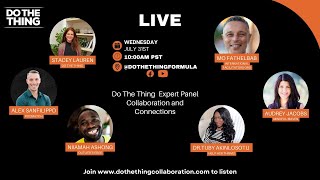
Stacey Lauren hosts a panel with five collaboration experts: Audrey, Mo Fathelbab, Alex Sanfilippo, Niama Shang, and Dr. Tubia Sotu. They break down how to build communities around a shared problem, design repeatable events, create safe spaces, and use accountability to keep people showing up. The panel gives live feedback on real projects like the Entrepreneurs Gone Wild retreat and Becoming Enough group, with concrete steps like starting smaller, curating speakers by theme, and tracking who refers new members.
Chapters
We are live on YouTube. All right, so, hey, you guys, we are going on live on Facebook right now, if it works. Yes, it works.
Yay.
That's always fun. So. All right, so welcome to the do the Thing podcast. My name is Stacy Lauren and I am the host. And I have brought together an incredible expert panel today. I can't even tell you how I am excited to do this with you guys, because.
Whenever I'm doing something new, I always like to bring people around it because it brings just like this energy and this aliveness around the new thing. And I recently started the do the Thing collaboration network group and I was like, well, who would be good to come on this expert panel so I could talk about the group and talk about the things that would be fun for people to do in the group. And I have all these ideas with hot seats and networking parties and bonus offers back and forth and all these things. And I literally picked every single person that is like, different in their own way, but an expert in their own way. And so I'm so excited to be here with you guys and I'm so excited to see you guys in the comments. Really excited to have you guys joining us. So amazing. And I wanted to go ahead and start off and have each of you just introduce yourself, tell us who you are, why you're excited to be here for collaborations, and then we'll. We'll get started. I do hear some background noise. I'm not sure which one that is. It might be me. Let me see. Let me just make sure it's not mine. But let's go ahead and start. Everyone, maybe everyone mute besides the person talking, and we'll figure out where it's coming from. But we'll start with Audrey, if that's okay. Just basically just saying who you are and. Yeah. What you do and all the fun stuff there.
Great. Thank you so much, Stacey, for bringing together such wonderful people. And so I live in San Diego. I've been here over 35 years. And I've always been involved in creating community around different ideas. And I've been building tribes for many, many years. Everything from related to issues related to the homeless, to the arts community to politics.
And over time.
The network that I built was so diverse. The opportunity came to me to volunteer to be the organizer for TEDX San Diego, which is one of the oldest TEDx franchises in the world and one of the most prestigious. And it's an incredible opportunity where every year I'm able to find and I again focus in my community in San Diego, people that have incredible ideas we're sharing that are really more than anything actions worth taking. And the way I go about it is tapping into this community or network I built to find people who themselves have their own network. So it's a network effect, not only where we'll put them on the global TEDx stage for their talk to go live, but also to really bring their community together. So when we have these big TED TEDx shows, which, Stacy, you're going to be in our TEDx Women Moxie show August 28th, we have an audience full of diverse communities coming together to celebrate diversity of ideas.
So good. Yeah, I'm so glad. And it's so, it's so exciting to have you here too right now. And just you guys know Audrey has an amazing TEDx talk where she talks about also just even matchmaking and just the connections that people in that way. And so I definitely encourage you guys to watch that as well. And Mo, we'd love to have you introduce yourself too.
Thank you, Stacey. Great to be with you and great to be with you all. So I gosh, I'll go back to my first job out of college. I was executive director of the Entrepreneurs Organization. And back then to be a member you had to be under 40 and have a million dollar business. I worked there for seven years. I fell in love with these things that we call forums, which is a peer group of roughly eight people that meet in a confidential, trusting, safe environment where they could share anything and everything. And quickly that became my favorite part of my job, launching these groups and helping them become the best that they can be. And in 97 I started my first business following my heart and really doing this work that I love so much. The latest business is International Facilitators Organization. And basically we train facilitators and certify them to be able to carry out this peer group work in many, many organizations. And we're truly global. We have our next certification class starting tonight and we have a guy coming from Israel, a woman coming from Taiwan, two women from Canada, one from Spain, and the rest are from the U.S. but we're building a global organization to really put something on the map here that will change people's lives.
So amazing. And just so everyone knows, like when you're building community, creating a safe space is like the key to be able to let people be seen, be heard, be able to share and really activate your voice in those conversations. And that's what I love about what you've created, is basically helping people create that Safe space. And I mentioned it right before we went live, but I just signed up for your November to become a facilitator. So I'm glad to have you.
Thank you. Thank you. Yes.
So excited. And Alex, if you want to share.
Yeah, sure. Hey, everybody. Alex Sanflippo here, first and foremost, honored to be here. Love everything Stacy does do. The thing has just been. Has been growing, evolving, changing, but, like, has just some of the best engagement. So I've seen it help a lot of people, myself included. I've learned a lot from it. So, Stacy, thank you so much for sharing the stage. Some true experts here. So I'm honored to be in the room again. Alex Sanflippo. My company is called podmatch.com it's a service that automatically connects podcast guests and podcast hosts for interviews. I always like to say it works kind of like a dating app, but instead of connecting for dates, it connects you for podcast interviews. The idea is, can we streamline all the administration between so you can just focus on doing the craft right? Having the interview, the guest and the host, being together in the room and really serving listeners together. That's what our hearts desire is for this thing. So super thankful to be here again. Thank you.
Yeah, thank you so much. And just, you guys know what's so great with Alex is because people in my community are using PodMatch, and what it does is because he makes it so easy for you to find guests and for you to find podcasts to go on, you're able to, like, stay in momentum with the things that you're doing because you're not painfully, like, seeking out people. And so I love that for you because you're actually helping people do the thing right by creating that for them. So it's so good. And Niyama, so excited to have you back again. We were just talking right before. Niama's been on, I think, three expert panels for this, and you always have great insight and expertise with it too. So, yeah, I'd love to have you share about you.
Well, Stacy, just thanks for keeping invite me here. I always have a great time getting to meet the people that you bring in your world. And you're amazing at curating amazing conversations and amazing people. And so it's really an honor and pleasure to be here. Hi, everyone. My name is Niama Shang, the founder of Outliers Edge. And what we do here is we help people leverage what makes them different to make their biggest difference in the world. We do that by facilitating one conversation at a time with People so that they can come in and take the things about themselves that are like extraordinary and bring them out into the world in a constructive, structured and repeatable way. So that continues to grow out. So we work with different leaders and entrepreneurs to really hone in on what that truth is for them and to do that and to bring it out in a way that's like both courageous and like and consistent.
So good. So glad to have you here. Amazing. And Dr. Tubi, I'm so excited. Have a go ahead and introduce yourself everyone.
Hi guys. I'm Dr. Tubia Sotu and I only put a business strategist there because that's one of my roles. But I have above only leadership. As one of my companies I have help her thrive. And I also have an event company called Finer Details Luxury Events. So you can see I wear many hats. But one of the reasons I chose the title business strategist is because I really do help entrepreneurs to scale and streamline operations through systems, strategy and sales and strategy, not just business, but strategy for themselves. I really like to prioritize mental well being. I think that's something that sets a, sets me apart from everybody is that I really focus on like setting your boundaries, you know, setting priorities, prioritizing and planning so that the business owner entrepreneur doesn't just give up on their dreams and burnout. So I combine all of that, but I put that in the forefront of my passion is like helping business owners to be able to be their best self and perform at their highest, highest level while they're, while they're juggling many things in, in their life and their business. So I like to focus on the whole entrepreneur. So that is what I do. And I also have a community of women that I help but I also help everybody to scale their businesses as well. So that's what I bring to the table.
So good. And I actually. So Dr. TV and I are in each other's worlds where I helped her build her community and then I went to her event to help me develop my system. So I've been able to like see real time what, what everything that she's been doing is and it's, it's amazing from both the system side and then also the collaborations side that's being built. I'd love to start off and thank you so much you guys for being here and thank you guys in the comments and I see you on Facebook too. Just wanted to. Oh wow, Fern, I can't believe you made it. That's amazing. So good. And Neil, good to See you and Thompson and Jamie, so excited. Feel free to hop over to YouTube if you guys want. It might be easier for us to see you, but I'll still check in with you over there. And so let's start off with just collaborations, right? So I started this new community. It's only been a few months ago and it's already like amazing where people are already like doing stuff together. They're going on each other's podcasts, they're going in each other's communities, they're already joint venturing. Dr. Chibe, I think you even started a speaking masterclass now through, through the aliveness of everything. And so let's just kind of start off about what would be just some fun things to do in a space like that where everyone's getting together for collaborations. And that was my point, right? Of like I build my program, right now I'm doing a wealth experiment. I didn't want people that were going to like join my wealth experiment program who were not focused on collaborations. I didn't want just people that wanted money. I wanted to come from a place of like working together and partnerships. And so I'd love to just maybe hear if you have some thoughts on what could be fun to do in a space with people who are there to collaborate, grow their business, not do it alone, do it with other people. So feel free to just. We'll see how it works. I'll call on you if you want, but we'll see if we want a popcorn style if that, if that actually works for us.
Alex, I'll have you go first. I feel it.
Okay.
Yeah.
I didn't want to just jump right in, but I do have a thought on this. One of the things that I learned long ago about community, especially when it's full of like minded individuals, it's to find a common problem to solve together. And doesn't mean to start a business together. It just means for sake of being able to work together to see where you all fit in to problem solve together. One of the great examples this is some of like the biggest colleges, universities in the world, right? Like they have like these, these studies they go do which ends up changing, like in often ways, like medical fields, it changes business. Like the idea that people have changes because of some sort of group project. And so I find finding a common thing to be able to, I say things, it could be anything, right? But something that everyone can kind of work together on, contribute a little bit. Because each of us, like even this panel here, we all have very different Skills which I love seeing. Again, totally honored even be here. I would bring something different to the table than you, Stacy, or to you, Audrey. And we, but we, if we were solving a common problem on like how do we make, I don't know, how do we make social media more. More impactful for people to leave more of a lasting impression? Right. Like we could probably come up with something interesting. It's not necessarily shaping our business, but tells me, oh, Audrey thinks a little different than me, but in this way I bet there's something there that we could collaborate on. So I find some. Finding some sort of common problem to, to come up with a solution for even just for the sake of creativity, seems to go a really long way.
Love that. So, so good and so important. And I like to always, whenever I'm building a community, I like it to be for like a common goal, a common purpose. Like, not so everyone says, like, oh, do an SEO friendly thing so your algorithm will pick it up. You know, for me, I'm like, let's just start small and think of a common goal. But I love it from the lens of like, now that we have the goal now, let's think of a problem. You know, like I'm thinking right now, like off the top of my head, I'm like, oh my gosh, wouldn't it be fun to do something on AI and how that's taking away or giving, you know, like the. Both the good and the bad of it and like how. How many conversations could come from that anyway? There's like a million things. But no, that's so good, Alex. Thank you.
Thank you. I had a question. So is the, is the question you're asking for in general or a specific in person gathering or it doesn't matter how the people gather?
Yeah, I love your clarification. Let's talk about it from an online space. But then if it feel alive for you to talk about in person, that's good too.
Okay. Whether it's online or in person, kind of playing off of Alex's idea in terms of quote unquote, solving a problem. In my TEDx talk about being a super connector and a master matchmaker, what I say is I ask every person, where are you in your life and where do you want to be and who do you need to meet to be there? So I would actually part of the gathering, I would have this more towards an end of the gathering where people actually go around and say specifically what do they need right now? Like this morning, I need a new.
For my consultant Business, a new liability insurance company. Right. Like, everybody has something on the top of their list that I need someone who knows how to do this, who knows it. And that allows people to literally right there, tap in and network and help one another. That's one thing I would do more towards the end of the gathering, towards the beginning of the gathering, to set the tone of tapping in a little bit into origin story and vulnerability and connecting deeply is. I would have people go around and say, and again, I'm all focused on connections, on people, is tell us a story of someone in your life who helped you out, who helped you like, took you in, guided you, made connections for you there, whether it was a teacher, a colleague, a friend, a stranger, someone, a customer, but that, that person and how they really helped you in terms of.
Building out where, who you are and what you do today. And that helps set the tone of a, of gratitude that I'm grateful this person. And also sets the tone of the idea that this is why we're here, is we're here to connect deeply as humans and to help each other thrive and strive.
So good. Yeah, so, so good. And can you guys feel free to put in the comments for those of you that feel comfortable doing that? Is what do you need? Is there something that you need that could support you and then feel free to see what people are saying and like, support each other? And I love that for a gathering and being able to even just do a zoom meetup and having that be part of the conversation. And then the other thing too, by saying, like, who in your life has done that for you? I think you're almost like training people, you know, on what they can do for other people. Because what I've noticed is a lot of people don't know how to collaborate and they don't know, like, like, it's, it's different and it's weird, you know, like, because it's not like the norm in a lot of situations, depending on where you are. And so, yeah, I love that for so many, so many reasons. Dr. Tootie?
Yeah, I love this topic. And I just want to bring up, like, we're talking about collaboration and like, we have an event coming up, the Speak to Scale Masterclass, and you would think that you would want to collaborate with someone different in people's mind. Always think like, oh, they're doing the same thing as me. I don't know if I should collaborate. And. And I looked at, you know, the two people, me and Dr. Michelle, and then I said, who else could add value to this for the customer, for the people coming. So we reach out and we get, you know, Corey on there. And even though he's also into speaking, instead of looking at. At is looking at it like, wow, bringing in someone that does similar thing. It's like, no, this is making it more powerful collaboration because you're, you're now offering something that you have to look at what you don't offer, even though you're in the same niche and say, well, someone's bringing more experience, someone's bringing more value to this. So this is going to make this experience so much better for the people attending this event. And so I think that that's, to me, that's like, really cool for collaboration. It's not only collaborating with people that do something different than you, but you can also collaborate in the same niche and just looking at what strengths they bring, but you don't bring what, you know, what different viewpoint. And I remember sending an email and say, hey, you bring a different perspective, you know, And I said, I looked at what we were bringing and I said, we would love to have a different perspective on this. And so that's, to me, that's so powerful to say. You can come in your same niche understanding what individual strengths are and what they bring to the table and give the whole experience. Like the clients are like, wow, this is awesome. So everybody's a speaker, everybody's into business, but we're all coming from a different angle. Like, I'm coming from how to scale your business through speaking. Dr. Michelle's coming from storytelling and, you know, really being transformation in your speaking. And Corey is going to come from, like, how to get on stages and, and how to, you know, get into a book. So even though we're all talking about speaking, we're coming from different angles. And so you can still look and say, what does this person bring on the same topic? What does this person bring and what does this person bring? And how can we all collaborate together to make this experience awesome for the people attending?
So good. I'm curious, what did you do to identify, like, the skills?
Did you.
Was it just like a straight up, like, kind of like list that you did to figure out what you brought, what Dr. Michelle brought, and that when Corey brought and then you were able to speak to it from that lens?
Yeah, because when we were planning, I was like, me and Dr. Michelle like, let's do this. And I'm like, okay, we didn't want to cross over. And we're like, okay, why don't you Focus on transformational speaking and this and I'll focus on speaking for your business and scaling. And then I looked at it and I go, well, there's still something missing and who could bring a different perspective? And I looked at what Dr. Michelle was bringing, what I was bringing. Oh, we need like another perspective of how to get on different stages and how to be in a collaboration book. And, and I just remembered, you know, you bringing Corey on to you. Thanks for your collaboration opportunities. And I remembered that he gave us his email and I said, you know what, he would be a perfect person to ask because he brings a different perspective. And now I'm looking at Alex and I'm like, oh, he would have been perfect too. And so I might reach out behind this too. But, you know, it's just about looking at what, what do each person bring? Everybody can't bring everything. You know what I mean? I'm, I'm a superpower in this. She's a superpower in this, He's a superpower in this. And then if we make, if we merge that together. Oh my gosh, that's amazing.
So good. Yeah. And you're making me realize too. So with Corey, for those of you that don't know him, he's that speaker guy is what he's known as, but he helps people. He has a blue talks speaking stage and he's done a lot of amazing things for the do the Thing community. And it's so I think it's also that, right. It's like finding people that are coming from that servant leader. So when he comes in, it's like always and kind of like you, Alex, whenever you've come into the community and then, you know, every time you guys come in, it's like just like a hundred percent value. Value, value. Right. And it's really being able to align yourself with those, with those people. Yeah, I really, I really like that Mo.
Well, first of all, I love this conversation and I love the question. You know, at the core of building the peer groups is really creating trust. And the way we do that is by having opportunities for people to share openly, meaningfully. You know, the more vulnerable you are, the more people connect to you at a very human level. But I heard your question to be more about fun, how can we inject some fun into it? And I think that's really important because, you know, if you know somebody's wounds, that's the deep stuff. But if you also know the fun side, now you kind of have a full spectrum relationship. I call it. You Know them from end to end. And you know, just a simple question that I like to ask groups is to share something mischievous they've done. And you cannot imagine how much chuckle and fun and laughing people have just answering that question. And so I'm not going to share mine with you, but I'll just tell you, I was suspended twice from high school, but I'm not ready to go public with anything beyond that.
That is so fun. I love that. What a great way to bring in just like a whole nother layer and for you to get to know someone in a. In a different way. I love that. So good. Oh my gosh. So fun, you guys and Niyama.
Yeah, like, I'm enjoying this question and the responses that I hear. What's playing out for me right now is something I'm playing with his games. I've really found, like, like the. The structure of a game to just be really, just open and like the invitation to try something different to Alex, you're talking about having like, that. That common problem to be solved. I feel like work when I'm collaborating people and coming up with different ways to say, like, how can we structure a game that gets people the end result that they're looking for? Maybe also teaches them what they need to learn through the process, but they're not thinking about, like, how do I. Stacey, I think you do this so well. You don't call it a game, but, like, you create, like, challenges and opportunities and you're like, hey, for this group, this period of time, we're trying to get to this end result, and the collaboration naturally extends from there. One of the things that I'm starting to play with here is I've typically built these games kind of on an individual basis, but now I'm looking into how can we, like, team people up and start to structure these games in a way where they also get a small group experience and can build with like, get that. But basically multiple levels of connection throughout it and deepening of relationships in there. And I think, like, there's just an opportunity for the collaborations to, like, help reveal more about what you. What you excel in, while at the same time, like, just. Just not having to think about what it is that you're doing while actually getting it done.
So good. Yeah. And I love that. Just really the reason why I started with the fun piece is because I think so many people are, like, trapped, you know, in their, like, computer and their hole and their own, like, vacuum. Right. And I don't think they realize so many people don't realize how much fun you can have when you're able to play with other people and you're able to do things like this or do dares like I do in my groups and I even played a tag game in there once and it's just like, it's like, how do you bring in the fun? And so I love that you all saw that. And then even with some of these just deeper questions of being able to open people up, right. And I think another beautiful part of that is really having that private space. So then people are having that freedom, that flexibility to be more of themselves and show that. So that way they're able to, to come from this place of just like true.
Ultimate. I hate using the word authenticity, but it feels like I have to use it authenticity and the real version of themselves. So. So anyway, yeah, thank you so much you guys. I'd love to play with one of our people that are here. So we have sue, who is the founder of Entrepreneurs Gone Wild. So sue has a retreat center in, it's called Idyllwild woods and it's going to be amazing. So she basically has this whole retreat center where she's taking you back into nature, right, as an entrepreneur, which is hence the Entrepreneurs Gone Wild. But her background is she's also got a writing business and so she helps like people optimize and automate. And actually Alex and I have a friend Deidre who is the founder of Cap show, who does automating. It's amazing. It pulls your like live or this video or anything that you're doing and it automates all these different things. And so sue helps facilitate a lot of like these back end things that can save people time. And so she's now creating a community that not only helps people who are entrepreneurs go back into nature, but she's also helping automate and give people more time with the things that they're doing. And so she said she'd love to connect with people who'd like to be founding friends. I love that of the retreat center we're building either as investors, first guests or donors. So I'd love to hear maybe what kind of suggestions we have for sue and feel free if you guys are in the comments, share your suggestions and things that, that you would like and that you have ideas for either people now. So this is what it where it's fun, right? I want to go higher in my mind, in my mind I'm like, who are people that we, you know, that, that she should connect with or things or programs or organizations or wherever we want to take this. I'm just kind of curious if you guys have any initial thoughts for Sue.
I'd love to know where it is. Geography matters.
Yeah. So, okay. It's in. Sue's gonna kill me because I've been there physically, but I'm almost positive in South Carolina. It's, like, right on the border. I think of North Carolina and South Carolina, but feel free to comment, sue, because I'm pretty sure that's where it is. So. Yeah, but it's like. So it's. It's got, like, this beautiful river, and, like, everywhere I went, pretty much it's like another, like, oh, my gosh, that's there. You know, like, it's just one of those things. And she's. I think she's gonn building geodesic domes out there and using it just as a pure, just fun playground for entrepreneurs to kind of reset, recharge, but then also maybe even doing writing retreats and some different kind of retreats there.
Sounds amazing. Can she share the link?
Oh, yeah, yeah. Share the link, Sue. Oh, northeast Tennessee. I was totally off. I was totally lost a few borders down.
You were in the right country. That's got to be worth something, right?
It's so sad because I physically have been there, but it was like I was in another state and then I drove over. So it's like one of those things where I was, like, driving through anyway. I won't make excuses, but, yeah, feel free to share. Yeah, anything. And then. Yeah, sue, share your link so everyone can see your. Yeah. What you've got going on there. So, yeah. Oh, Jackson said, sounds amazing. Investors and donors love learning and seeing the depth of the infrastructure and team involved. That's a really great idea, having them come to the retreat center and being able to see what's there.
I would suggest.
One of my favorite books is called Steal like an Artist, which mostly pictures, which you can read while going to the bathroom. But really what it is is there are no new ideas, but you just need to go out and see what else exists and then tweak it for your own.
So.
So if she hasn't done a competitive analysis yet of other entrepreneur retreat centers, I would just look and see what else they've done and then tweak it for herself. But absolutely, with something like that that's so visceral and people. She needs to have a gathering where there's people want to come out and they value what they pay for, that there is someone or an experience they want to have. But then the intention, very clearly, the intention of the gathering is this is a gathering to have to identify our founding members and that people know that they're coming out. They're paying for the experience, but they know that they're going to come out either interested or not interested in being a founding member. So it's about researching what else has been done. Having an event that is very, very intentional on the outcome is identifying that people want to be founding members. And then be very clear all throughout. What is the value of being a founding member? That's what you can learn from these other retreat centers is what value do they get so that you're very clear about the value and very clear at the end about what they ask. So the. Again, very clear intention. Do your research, do your homework, be prepared, have a gathering. And so at the end, people are very clear. Are they in, are they out?
Love that. So good. And Dr. TV.
Yeah. I just love the name Entrepreneurs Gone Wild. And I think as entrepreneurs, when we pick names, there's a meaning behind that. Immediately when I heard that, because, you know, in my study, we talked about reducing burnout and how you build resilience. One of the major themes was about outdoors. And that's one of the strategies I put in there was like, even in personal life, when you can go outdoors and when you can even open the blinds and look at the light and go to mountains or whatever, and what that does for your body and your. Your stress levels, I just, as soon as I saw that, I was so interested because I know that entrepreneurs have a lot of stress and to be able to focus on Entrepreneurs Gone Wild, I thought that that was so intriguing. I would love to bring people, you know, my business owners there to have a retreat to release stress and come back and be the best, best versions of themselves. So I don't know what the full purpose is, but that's what I'm thinking in my head of what is the purpose? And why does she call it that? And I think maybe just even talking about that, I think would draw the founding members to her because people that are passionate about. Why did you call it that and what is your purpose for this retreat? Because as entrepreneurs, we work so hard. We're always focused on, you know, the goals and the business and stuff. But for you to take that and say, we're gonna go wild into the jungle or whatever we're gonna be at, it's like shifting the focus. You know what I mean? And I love the play on putting that together. And the title is Entrepreneurs and Gone Wild, which means there's two. There's two sides. And you don't always have to focus on the entrepreneur side. Then you can focus on this side, which will do what, in turn, re. Energize us so that we can focus more on this side. So I don't know if that's part of her thing. I'm just thinking that's what I see when I see the title, and I would love to have some more explanation on it, but I would think that that's an awesome idea to really focus on a retreat center that would focus on entrepreneurs being able to immerse themselves in the wild and in nature and really what that does for your stress levels and for just resetting yourself. I think it's powerful.
Yeah, it's interesting because it kind of shows, like, as you're building something, more things come alive. When she first created this retreat center, she thought it was going to be really just for, like, people like us, right then going to the retreat center, which it still is, you know, and having their own event there. But what ended up happening through her community is she realized people don't just want to do, like, masterminds, they want to learn how to, you know, like, what is that thing with the jelly? Like, jam jelly or make jelly. I don't know what it's called, but, like, you know, they want to learn how to, like, go in the tractor, and they want to learn, like, all these, like, different things. And so that was something that came up. But her background was she was like that computer person, never going outside. She read Trevor's. Trevor Blake's book, and then I think it's three simple things. And then she ended up going outside more. And it's exciting. Now she's going to interview him on her.
Her.
In her community, which has kind of like full circle. But, yeah, no, I love these ideas. These are so. These are so good. And sue, feel free to. Oh, good canning and homesteading skills.
Thank you for saving me there.
Oh, can I jump in here? Yeah, I would love to. Yeah.
Yeah, I'm gonna make this applicable for really anybody who. Who's with us today. First off, love the name of it. Love what you got going on. One of the things I realized really early on with podmatch is what brought us the most recognition, and it wasn't what the software does. It was two people having a meaningful experience together and then going on to do something else. So what I mean by that is, for many people, a podcast interview. If you are not like media trained, haven't been on TV dozens of times, right. A podcast interview for two people is a meaningful experience. And so what I found is the real power behind what we do is we help foster meaningful experience. A podcast interview, typically done remote is pretty low level when you compare it to something like entrepreneur's gone wild, like full on in nature, right? Because I always use the example of like you don't forget who you went on a whitewater adventure with, right? When you live in Jacksonville, Florida where everything's flat. We don't have whitewater adventures here. Right. But anytime I've been, I can remember anyone I've ever been with because that was a meaningful experience. And the basis of all relationship is on the foundation of meaningful experience. And while I was listening, I just wrote down these other things I think that really apply to this whole idea. And I promise this is is related. I'll get all tied all together in a second here. But consistency, transparency and positivity. If you can find a way to bring people together consistently while they're in nature, right? And as long as you can have transparent moments that are focused on a positive mindset so it doesn't go super negative all the time, right? Business is hard, that's okay. But focus on the positive, focus on the wins. When you can bring that together and then create a meaningful experience for those people, they're going to go home saying, that's the place where I got to meet Mo. I met Mo in nature, right? And we went on this adventure together and he saved my life by pulling me back into the white water or into the raft and saved me from the whitewater, right? Like that meaningful experience is so important. So the better we can get at fostering that type of thing as a business, as an organization, as a nonprofit, whatever it is, the better we can get at making those experiences. The person never forgets where they were and who they met at that moment. Again, tying it back to what we've done in our business. People to this day, years later, like Man Pod Match brought me to the business I have now. We didn't help with their business at all. They met somebody who they built that meaningful experience with and they went on to do really great things together. So I encourage you think about that's what you're really selling. You're selling the opportunity to create this new foundation of potential collaborations and really just leveling up a mindset with other like minded individuals in one of the best places on earth, which is nature.
Wow. So good. And it Actually reminds me of what I was saying right before we went live is because with Audrey, I'm going to be speaking at the TEDx event that she's organizing, and I decided to research peer networks, and that's how I ended up meeting Mo. So it's like I always will look at Audrey and say, you're how I met Mo. And now I'm going to be, you know, part of Mo's organization, you know.
With one of those.
So it's just interesting how that works. Right, so forever. That's, like embedded. So that's such a good point. Is you, like, remember where something was birthed from, you know?
Yes. And thank you again, Audrey.
So good.
Okay, do you guys have anything else to add about Sue? And again, I love. I love where this is expanding. And I feel like we're modeling right now. What I really want to do in this community is just bring people in and then talk about different people and their businesses and then it's relevant for everyone. Right. Because we're starting to be able to, like, see it. Oh, how can I apply this to mine as we're going through different people? So, yeah, thanks for playing this with me.
So anything else on Sue? I've got one more for us if you guys want.
Okay.
So we have Ann Marie. She has a Facebook group. It's a community called Becoming Enough. She's a teacher, and so she's doing this just basically during the summer and then continue it on during the school year. But basically the community is going to be for women who feel unseen, unappreciated, have no voice. And her secret, the secret sauce is they are already enough. They just have to see it in themselves. How does she move this idea forward or who do you think would be good for her to collaborate with or their organizations or thoughts or even maybe there's something new. I've learned recently from my mentor, Eileen Wilder, which has been really fun. It's called a tuck in offer, where you. She like, tucked my. One of my offers into her black card mastermind, and basically that's now exposing me to a whole. A whole nother love, you know, a whole nother person. And so it could be any of those ideas from, like, people she could, like, gift things to, people she could connect with or just organizations or anything that comes up for you right now would be great.
So, Stacy, one of the things that come in here, it's less of a specific idea, but it actually kind of speaks to like, the tuck in offer here, which is when I think about collaborations and the difference between like, collaborations that have like, continued to grow versus, like a thing I did. You know, one of the things that come in has been like, how do you continue to have that? How do you continue to make it keep adding value or keep going from there? So like, when I hear the tuck in element, it's, you're coming in. And every person that goes into this person's program now has an opportunity to potentially collaborate or be able to see with you. So I'll be thinking about that. I think, I think a lot of times people reach out for collaboration with me. It's a lot of one off, you know, and I think that they're missing one of the bigger opportunities that. That that comes along with it. So I would be looking at this here in the space of like being able to be seen here whether you're reaching out to organizations, like, because all. Everything works, you know, like, if you, if you come in with an awesome mission and, you know, great energy and Alex, you're saying positivity beforehand. You can bring in collaborators, you can find people to come and collaborate with. My. The question I would have is like, what kind of things would you want to build behind? Like to continue making sure that after that one off thing, you can continue bringing people into each other's world. So, so I'll start with that here. Like, I can bring in some more examples and such and if there's any other feedback that comes in, I'm happy to expand on it. But I do think there's an element of like, I see collaborations as being a little bit too narrow. Like, Stacey, this is our third time collaborating with each other. You know, we're continuing to do it. This has become a series. There's this ongoing thing such that like, if you invite me to anything I know about and if you're doing something, I'm sharing it out there proactively because there's something. This is more fidelity to it than just the one off.
Yeah, actually I'm remembering now, you're the one that I think even gave me the words co creating because, like, as we collaborate.
Oh, you brought it in.
And I actually, I use that a lot now, which is funny now that I think about it. Yeah, so true. So good. Okay. And Mo, thanks, Nyan.
Yeah, I mean, so this sounds very similar to a lot of the peer group work that we've done. And you know, in the very beginning, one of the key things is to agree to some guidelines for how the group's going to operate, agree to what it means to have a safe environment so that everybody feels safe and able to be open and really speak their truth. And then the rhythm. So typically these groups meet monthly, and having that monthly rhythm, you know, ensures exactly what we just heard in terms of their commitment to one another and keeping the dialogue and. And the connection going.
I love that. Yeah, definitely. The consistency is really speaking to me. And it sort of gives you that way of just knowing what to expect. Right. So you're not having to think about what's going on. And Dr. Tuvi.
Yeah. I just wanted a little bit of clarity on Anne's target. Is she targeting teachers or is this in general? Because as soon as she said, I.
Like to say she's a teacher because that gives a lens of like what she's been doing. Because I love. Well, you know, you were a former teacher. It's like once you are. Once you have that in your background and then you get to like, explode it in the world, it's like so amazing. That's what I love about helping teachers, because there's like so much there that they have, you know, that then gets to be gifted, you know, and so that's where I mentioned it. But no, she's more open to everyone.
Okay. The only reason I ask is because, you know, like, right now my. I'm working on a teacher workbook. And as soon as she said teachers, because I'm going into school districts and doing conferences, I was like, oh, maybe I can collaborate with her. But I wasn't sure what she was doing. So I don't know if it was just for educators or if it was just in general. So I think that she can. Teaching.
She said teaching has many transferable skills. Oh, that's right. She also started her podcast with me.
Yeah, yeah, I know. That's why I'm here. I know that's why teachers. It's so funny because I actually started another Facebook group because Stacy loves us to have Facebook groups, but I haven't invited anyone in there yet. But it's called Teachers Teacher Six Figure side Hustle. Because I know that teachers and that's where I came from. And the reason why I love speaking and the reason why we have so many skill set. And so I know that teachers are such a target because Target market because we are just teaching out of passion and love for. For educating. But we have so much skill sets that I think we're some often overlooked. And so that when she said teacher, my mind just went to that because I was like, oh, teachers have so many skills. But I'd love to talk to her more just to see exactly where she's, where she's focusing. And yeah, she says teaching has been good to me. Yeah. So.
So actually why don't you go on her podcast and then that'll give you guys a way to connect and then. And then that. That actually would be perfect.
Yeah. Yeah.
Is she trying to create like a online forum? Is this trying to be a side hustle? Is she trying to make money off of this? Do you what's.
Yeah, I think eventually the goal would be money. Yeah. And like a business, to have it be a business and maybe I'm not speaking for, but potentially take over the teaching. But it's a way to get started, essentially.
What's the value proposition for the, the customer?
So it's starting with the community and then the clarity is going to probably come in there. But she did say. Let's see. I think she said it better than I did if I can find it.
Oh.
It also touches on unlearning limited. She wants to help people, like, unlearn their limiting beliefs and reimagine their life. Oh, creating a community for this year and then become a business in one to two years. Thanks, Emery.
Okay. Okay.
So from like the gathering place and like people that maybe could either add value, get value people, she could either, you know, gift things or whatever's coming up, but just wanted to give some more clarity there.
Yeah. I mean, again, I go back to steal like an artist.
The idea of looking to see.
What are like coaching programs that do small group coaching, you know, with like, you know, five to 10 women over, like, you know, three month process, look to see what exists that she can tweak that. That has this lens about being seen and overcoming, you know, whatever it is, issues of common issues of like lack and.
Isolation and a bunch, you know, whatever those common issues are. But again, I would just look at, find a couple of goals of where she wants to be, find somebody who's already done it and built it, and then start tweaking it to where she is. And maybe just start then with conversations.
Guided conversations that talk about.
The, the, the obstacles that we put in front of ourselves. But it'd be very clear maybe what, what she can do is actually, if she wants to build this out as a business is actually engage people in being beta testers, where with these guided conversations of, you know, these are the questions we're asking. What you know, what questions do you want to discuss and what you know, and actually help them, actually help develop this coaching program with. So people have a sense of ownership and they're getting something out of it. So they're not paying to be part of it, but they're helping to help create it.
Love that. Yeah. And they're part of the process. Getting more skin in it. Yeah, I feel more like part of something, really. In the belonging that comes with that. Yeah, I love that. So good. Thank you. Anyone else? Anything?
Yeah, I'm gonna jump in here real quick. There's an old proverb that says even a fool is considered wise for if they keep their mouth shut. I was gonna say kind of what Mo said, but nowhere near as good. So, Mo, thank you for not letting me talk first, making me sound like an expert. But really important. Something I just want to re highlight that Mo said is it needs to be a place where people feel safe. Right. Like, that was just so key that Mo said that much more beautifully than I can. If you missed it, go back and relish true, true brilliance. But that's important, right? There's gotta be a constant, consistent meet. But it's gotta be a safe space. And they have to know that, like, if they're gonna open up, this isn't gonna get aired everywhere. Right. Like, it's gotta. They have to know that this stays here. So something else I'll add to this.
For me, accountability is huge in my life. Every week I give a report to people in my life about how I'm doing in seven different areas. It goes from, like, personal to fun, to work all through these things. And I just find accountability to be key. And I think if you can incorporate that from day one in the community aspect of like, hey, what is the group holding you accountable for? Is it a. Is it a limiting belief you need to overcome? Is it taking the first step to announce something? It doesn't have to be giant, just like small steps on a weekly or monthly basis then people would report on. I think if you just facilitate accountability alone and do it really well, like, that can go a really long way for people because then they are saying, oh, I'm going to meet with Mo this week. So I told Mo I was going to do this last week. So I need to finish it, right? Like, I need to get it done. And I've seen that for myself time and time again. Sunday morning when I'm sitting on that report, sometimes might stay up a little later than I need to to finish something because I'm like, I told everyone I was going to get this done, I better get it done. If not they're the people in my life that will say, hey, man, what's going on? You're not staying true to the commitment that you made. Not to beat me up, but I just think it's so important to consider that as well.
So good. So good. Oh, nyama.
Yeah.
Like, there's something that's coming to me right here, and I'm thinking about you, Ann Maria, with everything here, which is we're talking about collaboration here today. And the question that's going to my mind is like, to what end are you looking to collaborate? There's a lot of different opportunities, a lot of different options. So in this case here, are you looking to collaborate? Like, first, I would spend some time seeing, like, what's the goal that you have in mind with the question that was put into this space right here? I don't think we know, like, the specific goal. Like, are we helping you to get more people in? Are we helping you to make a business out of it? Like, what. What are you looking to leverage collaboration for? I think that, like, and Audrey, you said right at the very beginning, like, what is it that you want? You know, and that, like, being able to know that that connection there really a helps us out as collaborators with you and helps other people know where to come in. But I also think it also gives you some space to say, where do I want to, like, what do I want to, like, invest in?
Right.
Am I looking for people to, for example, say, I want to get 10 collaborators who each have their own networks of women who are already used to having, like, powerful conversations but may not feel seen, or maybe they're executive women in this space, so on and so forth. It gives you a chance to, like, be able to bring in and say, like, who are, like, in what spaces? In which way do I want to have these kind of the collaborations there? And then what I would also say is just, like, just to make that kind of tangible, Choose a, like, find. Choose a number, 5, 10, whatever it is, and then come in and see, like, what would. How can you create? Stacey, I was thinking about what you said with the tuck in offer. Like, what's an offer? Or what's a. What's a. What's a. What's an offer? What's a value add that you can bring with those collaborators so that it's like, it just makes sense, you know, it's like, it, like, what do they get through collaboration with you on it? All right, cool. Henry, I'm seeing your comment this year. All right, cool. Yeah, because, like, because like. Like, yeah, bring it is where I'll go with it. Looks like you got. Looks what. You got what you needed from that. Thanks.
Yeah.
And I think.
Thank you. And I think that brings up a good point. So in my mind, like, whenever I'm looking at building a community or creating value for people, I'm always seeing, like, the whole kind of, like, picture. Right. Like, I even think about, let's say someone is focused on productivity. Like, a lot of people will then just collaborate with people that straight up do productivity. But it could be. Or maybe you're going to collaborate with the person that created the disc assessment, you know, because that's. Or like strength finders or like, in different pockets. So I'd love to see if you guys have any thoughts on just kind of like big pockets, big associations of people. So for anyone that's wanting to do something in their business, regardless of what it is, they're like, immediately having some kind of starting ground for who they're able to connect with and who they're able to collaborate with. And just curious if you guys have anything coming to mind for that. That too.
I. I definitely think that whenever you first start, whatever you represent is what the world sees. And, like, I'm still, honestly, the only thing I hear when I. When I hear Anne Marie, she's a teacher, so I'm still trying to figure out what she actually does. Like, what is. Because, like, for instance, I just had someone connect me with three people this week, never asked them to, and they were like, oh, Dr. Tebe's into women empowerment. Oh, she loves to. And it's like, how do they know that? I didn't even tell them that. It's just what they saw. Right. And so I think whatever we represent out there is what helps people to help us connect and collaborate. And I think that. And I'm not sure. And I could, you know, probably need to go on Anne Marie's page to see if she shared her story, to see what. What is she actually saying? Because I think sometimes we're making collaboration harder than it is. Sometimes it's just. Just us being out there and speaking our truth and speaking what we do and what we represent, and people automatically go, oh, you guys would make like, you've done it to me. Stacy, many times I want to introduce you to this person, and this person is like, oh, I know that. You know, and then you're like, on things like this, and you're like, hearing what someone does or stands for, and you're like, oh, that would Be an awesome collaboration that we could do. But I think sometimes when we're like not clear.
On what we do or like, you know, questions like what do you do? What are you trying to get out of this? When question there's too many questions. I think we don't know how to collaborate because I still don't know how to collaborate. Like right now the first thing I thought was like, oh, I'm. I'm going into. School's about to start. Tomorrow's my son's first day. I'm going into tons of school districts this, this week or next week with, you know, with my dissertation and just helping teachers and stuff. And immediately when you said teacher because you keep saying teacher every time. So I automatically think she's helping teachers.
Right.
So I need to know what she does and what she represents. And sometimes we attach ourselves to our role like our a work role. But it looks like she's. She's looking more beyond being a teacher, which a lot of times that's why teachers go out and do all this stuff is because there's a lot they have in them. But if all we ever hear is she's a teacher, she's a teacher, she's a teacher. I don't know how to collaborate with her because I'm. I'm trying to collaborate with her in the education field. And someone else even put there, oh, I'd love to go in there. I'm in the education field. So they're also thinking education when they hear her. Right. So what does I need me. I need some more clarity. Yeah. Yeah. I need clarity on what does Anne Marie's community.
Yeah.
What is the purpose and what is she looking for?
I think what you are showing me too. And thank you. Yeah. I think when you guys do your. Your interview that'll help that part of it. But I think what. And it's really helpful to. For me to see. So when I do do these kind of like hot seat kind of things, these ideas, I have to probably bring the person on so then it'll help us help them more. So that's actually. This is really helpful just generally. But. But what I wanted to just add is Dr. TD, what you just showed is like how powerful you noticing the things you're doing are like you mentioning like I'm going to school districts now. Like, okay, I'm gonna talk to teachers. Like I'm thinking of. Of Alex who's another community we're building Mom's meadow. And well that would be so cool for her to like Connect with school districts. You know, as she's taking her kids to school and be like, oh, by the way, I've just started this new community. It's actually helping people again. I'm team changing the topic because I think we're, we're trying to generalize right now, but her community is really about helping kids get off of tech and play more with like real stuff. And so what you're showing me is like, and I think showing everyone is how important this idea is of noticing what is in your life already and what you're already doing and then how you can connect that dot with the things that you're, you're doing. And Alex, I think I saw your, your hand raised.
Yeah, you know me, I can't help myself. As you know, Stacy, I'm logging off in a moment here, which I'm sorry I couldn't be around the entire time, but this has been a real, a real gift. I did want to go back. This collaboration idea.
I'll quickly share my story with collaboration. When I first started PodMatch, I started getting a lot of opportunity. A lot of people wanted to collaborate, a lot of people wanting to like chat about it and stuff. And I got the point where it was kind of like, like the conversations were having a lot. So I was like, let me put them all in one day this week and see what happens. So I was like, I'll save them till Friday and I'll do them all on Friday. I had 25 back to back calls, which I never recommend. I'm from a sales background, so I was like, I can do this. But it was all day and I remember leaving and I'm big time extrovert. I get usually energized by chatting with people. I was completely drained, just exhausted. At the end of the day I was supposed to be meeting up with friends and I, for the first time in my life was like, I really just don't want to go. And what I've realized through that is that collaboration without action is only conversation. And I found that I was just having conversations with people. There was no direction, there was no clear directive as to where it is that we wanted to go with it. And so since then what I've done is I've honed in my own collaboration requirements. I don't know what to call it, that's what I'll call it. But basically here's what I'm looking for and I send people to this before we're able to get on a call because I want to See, okay, are we just collaborating in general, or is there something specific that fits what me, like, what I'm looking for, my team's looking for, or that will really serve our community. And so I don't get on calls just to have a conversation, see where it goes. I try to avoid them. I don't do that to be rude. I just know that I can't serve the people I'm supposed to serve if I'm always just having conversation with people that maybe don't fit the way I'm really showing up. And I know I'm about to leave, but I want to. I don't mean to, like, drop a bomb at everybody, but that's really my thought on this whole idea of collaboration.
Love it. Love it. Alex. Thank you.
Yeah.
Dr. Tooby said, you got to have a mission, you got to have a purpose and be clear and agree upon it.
I love that. And please send that doc if you're open to it, Alex, I would love to see it. Yeah. Thanks for joining, too. I appreciate it. Bye.
All right, everybody, thank you so much. This is an incredible panel. Again, honored to be here. Take care, everybody.
Thank you.
So good. Because Dr. TV and I were sending messages about this same exact thing this morning is sometimes as you put yourself out there, and that's kind of the situation we're both in right now. Everyone wants to collaborate with us. That's like the future problem of, you know, putting yourself. And so there is, like, some decision criteria that you're wanting to do. But I love this lens of, like, this is actually specifically what I'm looking for. And so. Yeah, I'd love to hear you add on that, too.
Yeah, I. I love what he said, and I'm gonna. I feel bad that he said it right before he left, but I was just like, that's the whole point. It's like, I'm someone like that, too. It's like, okay, we are so busy. We all want to collaborate, but what is the purpose of this meeting? Right? And then, like, even when I reached out to Corey, I was straight to the point. I got a response in, like, two emails. It's like, hey, I met you on Stacy's thing. I'm doing this thing. I'm. You bring a different perspective. I'm looking for this, this, and that. Straight to the point, right? And just like, I'm looking to collaborate because of this. And he knew the purpose. He knew what it is. What. You know, we went into logistics, and in, like, four emails, everything, you know, two to three emails Few clarifying questions, the dates, this and that we were set, you know, because there's a purpose to the reason I'm reaching out for this collaboration. Right. And I have looked, and I think that you bring a perspective that me and Dr. Michelle don't bring. I'd love for you to be a judge on our speaker competition. I'd love for you to bring the perspective of this. And I brought out what I felt were his strengths and what our strengths was. I put it in the email and I showed him how the collaboration would work. And I was like, you're gonna. Me and Dr. Michelle are focusing on this. I would love to bring you in to focus on this. And he's like, oh, where's it at? What's the dates? And it was like. Like, it was like, oh, that's awesome, because I'm highlighting. Why is this collaboration. Collaboration important, right? So just people just saying, hey, let's collaborate. And then you're like, okay, we'll collaborate for what? What, you know, what's the purpose? What do you bring? What do I bring? Yeah. I think we need to think this through, you know, think it through before you ask for collaboration and say, you know, what is it that they bring to the table? And remember that people always like for you to know about what they do do and what they bring in before you ask them stuff. You know what I mean? So don't, you know, you, you know, like I said this week, someone said, hey, Dr. Chibi's into this and that. Why does she know that? She follows me. She sees my emails, something she didn't just randomly put me out there. And immediately when I saw there, and these are big people she connected me with, they were like, hey, this person's also into women, transformation, empowerment, blah, blah, blah. And. But if I, if, if I. If she didn't say that, it probably go into my not so important list. I needed to know what was the purpose of this connection and what was. And I'm not trying to be, you know, like, Adam dropped the bomb. So we're allowed to say this, right? But it's the truth. Everybody's busy, right? Everybody wants collaboration, but there needs to be the purpose of this collaboration to the forefront and say, I'm collaborating because I want to reach out for collaboration. Because this. I realize that you bring this, I bring this. And I think that this would be an awesome opportunity.
I love that. And that actually kind of goes back to mo what you do with your spaces, right? It's creating, like, the rules for engagement. You know, and, and being able to, to show it in that way. And I really, I really love this idea of using that in the community, so that way everyone's clear on, on what they're doing. I'd love to hear if you have anything to add on that topic, just based on your experience too.
You know, one thing I would say that maybe hasn't come out in this conversation is that, you know, these collaboration groups. I'll use that terminology for the sake of this conversation. It's not a transactional relationship. It's.
It's.
It's a. It's a relationship that can take years to build. And so, you know, in the beginning, maybe you have a very specific need, but the more you get connected and the more you become actual, you know, real, real friends, the more you could help each other with all sorts of things, and then it's even more meaningful and more powerful.
Forum members have helped me and called me to check on me and, and, you know, just whenever something comes up, it's not just the meeting. It's not just, oh, you wanted help with your accounting.
It's.
It's holistic.
So good. So good. All right, we have one more person just to look at. So Paul said, looking for about 25 top influencers. I feel like this is a good example because, you know, when you're working with an influencer, you're collaborating. Right. So who have a unique offer in the marketplace for my public Speak and Prosper summit coming up later this year. Curious if you guys have any thoughts, thoughts on that and ways that he could partner with different people or.
Talk to the influencers that are able to bring it into the summit. Totally putting you on the spot.
As.
As do the thing. Style does.
Niyama, if you want to start. I'm feeling it from you.
Sorry, I think I'm, I think I was muted.
Okay, perfect.
That. Right? So. So, yeah. So I think if I'm getting you right, the question here is you're looking to get 25 different influencers in, and you're saying, like, how do I, how do I actually. How do I actually go about and do this right now? My, my thing here becomes you have the words who have a unique offer in a marketplace. And my question for you would be, what's your unique offer for the people who come onto the summit? Right. And to play in that place. And all this kind of wraps itself down into what's the clarity of the comp. Of, of why you're coming together, what's in it for them? How do you want to like establish the, the things they come for. The five day virtual summit that I'm seeing here, what is it, what is it that those top influencers are bringing in and what are your asks of them along the way? That's like, that's, that's where, that's where it starts for me around there. And oftentimes with these things, like, it's really about like you can, you can get two or three, maybe five different of these top influencers start. And if the offer is good, if the relationship's good, they have other people in their world that they are collaborating and you get to enter into their networks and so on and so forth. So it isn't necessarily about trying to find 25 different people. It might just be, how do I find 10amazing, awesome people, Create an amazing relationship with them. Like, show up as a great collaborator, show up as someone where they would want to have an ongoing relationship beyond the summit and so forth, and deal with such in a way that, you know, a few of them make a suggestion of one or a few other people that they, that they know to continue growing. And underneath that there, like I'm gonna, I'm playing with this element of like, what's the system that you have underneath it here? Which is like, that does take curation. It takes intentionality to, to do it. Some, sometimes people will be, be generous and just, just offer. But there's something about coming in and having the conversation, creating it, creating the offer in a place and then asking the question, like, who else do you know who would be, who would be either great for this summit, could be, use a lot of support or visibility, so on and so forth, and grow it out from there. Let me know, let me know if I got the question right in terms of like the support that you're looking for with this year. But that's the lens that I'm taking when it comes to collaboration for now.
So good. I'm like so excited. I can't wait to listen back to this because like, like again, whenever I'm doing something new, by me being able to bring a group of experts together, it helps me like realize the ideas so much faster and how I can create this in the community. And I feel like from each of you, like, I now have like a framework for collaboration for a hot seat where like they're gonna have to fill out this document before they even start, you know, like what they're looking for and then what help they want to, to do it. And then of course, the mischievous question that we'll have to ask them and there's like a piece of each of these elements from everything you guys said that's now going to be able to, to be able to be in this space that I'm excited about and oh, Paul did say yes, that was a great way to put it. Niyama. So, so good.
I have more of a clarification question what Paul is asking.
Is he trying to get help to identify these 25 influencers or is he trying. He wants advice on how to recruit 25 influencers to pay for a five day virtual summit. What, what is the ask? And because he just put on there no money, I assume it is. You know the question is, is this something he's done before?
If he's listening, I want him to respond. Is it, is this retreat some of one. Is he looking basically for 25 customers who are going to pay for this retreat?
Yeah, yeah. Let's see. He says looking for founders, innovators, thought leaders. So I do know he's a best selling author. He helps people create books and then also speaking and, and then I actually, I want him to at some point because he does a really good job doing tours for his books. You know like going on a book, what is that called? A book reading kind of thing where he goes all around the country and people do that. But he does says he needs initial help in doing this as far as attracting them.
So, so he's. So he's not done this virtual summit before?
Right.
Okay, so he has no testimonials. So is he trying to take what he's learned and, and then be able to teach others from his experience?
I think he's just wanting to curate a space where he's bringing people together for the virtual summit and then for them to get exposure. But then by them all being together they're like cross promoting each other.
Yeah, this is definitely your. What you, what you do well, so he's not charging people to be part of the summit.
He said the summit is all figured out. Are you charged? Like charging. You mean people to come or people to see speak?
Oh, he said it's the people. Okay.
I don't think he's charging them. I think he's doing it just to be able to create the space for people to connect.
If this is the first time he's doing it, five days is. Nobody has five days. That's, I mean, you know, with all due respect, that's very ambitious. I would start with a one day.
I love this.
Or even four, four hours and get people to come, get excited that they want to do more five days when you have never done it before and you have no testimonials. Again, if he wants to build up a summit series again, I would try to attract, ask people if they want to be part of building something. People like to have a sense of ownership. Do they want to be one of the founding members to design the summit series and help develop what's going to be the most valuable outcome and value of everybody's time? So I wouldn't start with five days or maybe one day. I would say maybe half day and invite people to the conversation to help design this about how do we collaborate, how do we help one another thrive and learn from one another and actually have a very clear agenda of what are the specific things they're going to be discussing and helping what, what he'll share and what everybody else can either ask questions or share their expertise.
I love that and I love the word design. Oh my gosh. Designing. We're co creating and then we're designing it together. So cool. Thank you so much. And Dr. TB.
Yeah, I just wanted to say I did a virtual summit last year. My first virtual summit. It was called the Self Care Self Care Celebrate. The theme was called Celebrate Yourself. It was a Self Care summit. It was October because with Self Care Month I had about five speakers and about 100 and some people that joined and it was like a, a half day summit and it actually went very well. And the reason I'm saying that is because I chose the theme. I reached out to the people that I felt would. Since it was a women's Self Care summit, I reached out to medical doctor. I had a medical doctor on there, I had a global leader on there. I had, you know, author, I had a skincare person, whatever. I had like different types of people that could talk on different topics. And I told them. Well, I didn't tell. I mean told them. Sounds kind of mean. But I would love you to speak on this topic because this is your expertise. So it wasn't just everybody on the same topic. I had the medical doctor talking about women's health, going for physical checkups, going for that, had the author talking about your story within and like, you know, looking at yourself and loving yourself in the mirror and all that stuff. I had the skincare person talking about, you know, your skin and all that. I spoke on just resilience and whatever. I mean, everybody spoke on something different. But the theme was the same. It was called Self Care Summit, Celebrate Yourself. I Did the opening message. I talked about why women have to celebrate themselves. And everybody knew that the theme and kind of brought their theme into the summit, but came with their own different expertise. And it was a very successful summit. So the reason I'm saying is you as the person kind of has to plan that summit. What is the theme? And who are the people that would fit into. Like, who. Who do you think you can talk to about this one, this one, this one. And then reach out and you can have a VA do this for you where you, like, look into Instagram or whatever and start looking at who are the top people in this field. In this field. In this field. And then you can send a letter, just say, hey, I'm doing this thing. I see that you do this. And I would love to see if you'd be interested in being a panelist in our summit, you know, being an expert speaker or something. It's really not that difficult. It's just about coming up with a theme and then reaching out to people. And okay, so he says this is five influencers a day. Yeah. So. And then once you bring the influence, I mean, he's calling influencers. But once you have your. Just like this five people, right. Once you have your summit panel, they invite people.
And so, like the ultimate business launch. I just did that. You were on there. I had the ladies all invite 20 people. I told them they had to invite 20 people each. Of course I invited people, but. And I actually had a place where it said on the form who referred you. I was able to keep track of who was to Referring. Referring and who was bringing people in. So in a summit, it's actually easier because it's not just you inviting people. Every single speaker is inviting people. And then you're doing the general inviting. So it's not. It's not really difficult to fill the room.
Yeah. And it's so good because you're like really deciding who's there. It kind of reminds me, Audrey, of like with the TEDx event. Like, the theme is moxie. And then each speaker is its own unique thing. That leads me to want to ask you guys, because I'm even thinking about the TEDx event. I mean, 500 tickets and you've already sold like 400 or something. It's like. And it wasn't even. I don't even think they've been on sale for like a week or so. Like, what, like, how do you do that? Like, what's the.
How does that even happen? Because I'm like, I was so Fast. I was thinking it was going to take a while and then all of a sudden you're like, oh, we only have 100 tickets left.
I think is exactly what to be said is that, you know, you. We've asked each of our speakers, we have 10 speakers to invite their communities and those that has helped sell the tickets also. You know, again, TEDx San Diego has been around since 2010, so it already has a following. But it really is. Each show is related those is to those speakers. So as much as what this guy Paul's trying to do is, you know, creating community, I do think that Tuvi's approach is more strategic if you want to get people. Because if you have people that have a following and they invite their people, it really does help. But that's how we really help sell the TEDx tickets is because each of the speakers has. We've given them the marketing for them to share. We said, we basically we've actually packaged the marketing for them to share on all their socials, LinkedIn, Instagram, etc. So you have to make it easy for them to share and it consistent look and feel. And so, you know, but the danger would be is make sure it isn't just.
A gathering where people are talking at the audience.
Right.
It has to be a collaboration and not a collaboration, a conversation where that person maybe talks for five minutes and then it's live Q A. Sam is live Q A.
So. Okay. Yeah. So good. Oh my gosh. All right. I would love to hear you guys share just your best piece of advice for people or whatever is coming alive for you after this conversation. And like maybe let me reword the question. So I want. What do I really want to know? I really want to know either something that's really helped you, you know, kind of like be where you are right now in the lens of collaborations and building relationships or just some kind of like just parting advice that you have for people or you can combine it whichever way feels better for you.
I can go listen. I think what's really helped me is I've been fortunate to be with the right people. And so, you know, through this incredible work, my network has been CEOs and entrepreneurs and they're just very good people to be connected to. And I think that's really helped in terms of something that's just helped me in my own journey and being the best version of myself. You know, I took a positive psychology course through Wharton and I learned so much.
Many incredible techniques, resiliency for mental well being for you Know, making sure you put your oxygen mask on first before taking care of someone else. Gratitude, practice. So many things that have just uplifted me every single day. And so there are so many good books on positive psychology. I'm not going to recommend a specific one, but if, you know, if you haven't read one of them, I would say any one of them will do because they've got some amazing, amazing tips and tricks to help you be the best version of yourself.
I was curious also, if your book, if that, like, let's say someone's on a part of a forum or. But if they're wanting to like, create that mindset, would your book be good for them? Maybe we can mention that here.
My first book. Yes. My first one forum, the Secret Advantage of Successful Leaders is all about how to build a peer group from the ground up. And it's got. Literally, it's how to.
So good. I love that.
Yes. Thank you for asking.
And Yama.
Sure.
I'm happy to go. Audrey, I also saw you had your microphone undone, so if you. If there's something that's present for you, I'm happy to get to you. Okay. All right, cool. You know, I think, I think I'll leave my, my comment here in the context of this conversation. And I think that the thing that's flown for me is like, if you want to be, like, be in great collaboration, be a great collaborator. And I think, I think, like, I think. And like, there's ongoing threads here around, like, what does it take to be a great collaborator? One of them is just like the transactional versus relational. Relational. Like, Mo brought that in here. Like, look to build an actual relationship.
Recognize that there's so much more that can come from it if you do it. Dr. Toobie, you've been really clear on, like, be specific.
Let them know exactly how they're going to fit in. What is it specifically in there? That to me is being a great collaborator. It's a great opportunity that comes in. Stacy, you asked earlier, what's a place where people can go and find different people to come in? I'm like, the collaboration network. It's right here. It's right here. The thing might come. Are you being a great collaborator? Since that every single person in this group is. How can I get involved with what you're doing doing?
Right.
Like, like, that's a really interesting question. Like, we want to go out to like, like, like the biggest, like, names and all that stuff, but we have people right around us. That's a really great Opportunity for us to, like, get the foundations of it together. Like, like, for me, I'm like, how do we build a system of collaboration so that it can continue to grow so you can continue to build? Audrey, you just mentioned that, like, TEDx San Diego has been in for 10 years. There's systems there. And you also said something, I think that that hits me as words of being a great collaborator, which is like, you did the work for so many of the people there. You're like, here goes the materials. This is what it is. We've done the branding. Like, here goes how to share it out there. It becomes an easy yes or much easier yes to be able to come in and join in what is being done, as opposed. I guess I'll put it in this place, places where I get collaboration requests, where it's just like, no one really knows what's going on. No one really has a thing that they really want to get done. They just know that if they collaborate, something could happen. And maybe like, this would be the magic jackpot one. It's like, I think I should take this thing seriously and, and really show up and say, like, this is what it means to be in partnership. This is what it means to be in collaboration. This is what it means to be a co creator with me and go with that. So that's, that's where I would come in with it. Have fun for sure. And like, have like, the best fun, you know, like, like make it, like, make it awesome and like, and come, like. I just feel there's a lot that can come from that.
So good. Oh, my gosh. I'm like, I'm like wanting to do a challenge around this. After the TEDx talk. I'm waiting till September. Audrey.
Okay, I'm gonna take the fun out of it. Sorry. Okay, so collaborating ideas is great, but if you're going to go into business with someone, all right, absolutely, 100% trust no one. You have to get a partnership agreement. I don't care how long you've known this person or if it's a relative, whatever. Also listen to your gut. If there is an ick, there's the ick factor. If you feel like someone is a little bit of a narcissist and they are questioning your input or your contribution or starting to gaslight you or put you down, whatever. As you start collaborating, they're like, oh, they're so amazing. I really need their name on this. Or I really want to work with them. Listen to your gut. If someone is messing with your head, get out, get out fast. And if you're going to do business with someone, doesn't matter, get a small business attorney. Always, always, always have a client track anything that, that can relate to money. I don't care what it is, you will get screwed. You will have pain if you don't do this. I'm speaking from experience.
That's it.
I'm so glad, I'm so glad you shared that because yeah, it's so easy to have the, the good side of it, but to know when to get out is just as important as being able to know when to get in. You know, so, so good. And for those of you do and do the thing, we do have an attorney that we recommend. Just so you guys know, if you want her info, I can send it to you. So thanks Audrey. And Mo, did you.
I was gonna say with a buy sell agreement. So I love what Audrey says but you know, getting out of a partnership in advance needs a buy sell agreement of here's how it's gonna go. Otherwise there's no agreement.
It's like a prenup for business.
Yes.
So good. And Dr. TV.
Yeah. That I'm happy you said that Audrey, because it's, it's the truth about it. I remember when I did my last thing, I sent one of the people that were, we said, thought we were. I'm not saying we're not friends but I send like a 11 page contract. She's like what the heck? But it was just to protect us and you know, everything like that. But I wanted to say before that that I heard see a lot of comments about relational and transactional and I wanted to just give this analogy about the fact that, you know, it's just like, like when you first start dating versus a marriage, when you first start dating someone, like, especially if you're coming out of a bad relationship or you know what I mean, you have trauma or whatever, you're a little bit guarded and anyone coming to you that says hey, I want to be a relationship with you, you're kind of looking and seeing okay, what do they, what do they add to my life and what do they want from me? And things like that. When you get into a marriage and a committed marriage, we know that people say 50, 50, but it's not 50, 50. I've been married for 17, eight going on 18 years. There's times where it's 80, 20. There's times where it's whatever, you know that that person has your back, you know that there's love. It's no longer, like, transact, you know, transactional, whatever, but you're a little bit guard in the beginning. And I'm bringing this up for collaboration because sometimes you collaborate with people that you've already had a relationship with that's different. It's like, hey, we know we have each other's back. Like, Dr. Michelle and I, it was like, quick. But somebody reached out to me the other day, said, hey, I would love to collaborate with you. And then she tells me what she wants me to do and what she wants from me. And I told her, I said, collaboration. A collaboration benefits both parties. Okay? When you're coming to a collaboration, you can't just tell me that you want to offer me something. And I said, oh, I don't need that. And she goes, oh, that. I guess that's not a priority. And I said, no, it is a priority, but you need to ask me what I want. If you want to collaborate with me at this time. What I want is if we want to collaborate, I want. Would like this in exchange for this. Now, there's not a relationship there for her to just come in and say what she's going to give me and what I'm going to give her, because we haven't built that trust. We haven't built that relationship. But once, if. If it was relationship built on, like a marriage, like you said, like, we've been together for a while. I know your strengths, I know your weaknesses. I know that you're not going to, you know, hurt me or whatever, then I can collaborate much easier. But if you're coming to me just because you met me somewhere and you're like, hey. And then if you're trying to, you know, so that's why I want people to think about when you say relational sometimes that, you know, people have been like, she said, in situations where the antennas are up and you're like, are you trying to be relational with me just to get something for me or, you know, so you have to be very authentic and very real and don't try to just come in and be all relational. You know? How do you like it when you find out someone wants to be your friend? I met someone, someone one time, and I thought they wanted to be my friend. And I was doing all this and I was excited just to find out all she wanted to do was like, sell me something. You know what I mean? And so that wasn't. I would I rather just not if you. That's all. If that's all you want, that's just me I rather just know I don't want to invest in this. Like, oh, I thought I just met someone. We could be friends. We have so much in common. Just to find out that the only thing you wanted was this. So we had to be very careful. And some people have been burnt. So you have to be very careful in this collaboration play. Are you coming from a relational and do you have the right to come from a relational place? And if it's, if it's. If. If you don't know someone and you're introduced from someone else, I feel like you just get to the point, you're nice about it, but it's like, hey, everybody knows what the reason I'm asking, I saw that you have these skills. I would love to bring you on if you're open to it. What's your fee, whatever. And I never expect someone to do stuff for free, you know, I ask because if they want to do for free, they'll say so. And so that's just my rule. And so I don't want people to think like. And there's people pleasers out there too, that feel, yeah, this is a very difficult thing for them. And then they get, you know, to the wall. They don't know how to say no and all that. So it's a very interesting thing that you have to maneuver.
Yeah, I'm laughing because you, you are very clear with me that you do not want it for free when I'm like giving some something for your community. So it's good. Well, thank you so much, guys. This has been amazing. I, like, literally have like created a challenge from this and now also a framework for the community. And that was what my goal is. And I'm so thankful for you guys joining us. Really appreciate you coming on and doing this. And I feel like by seeing these different examples, it really helped bring the specific. Specificity. The specificity, whatever the word is, you know, what I'm trying to say and the questions to be able to really create the space for anyone to be.
Able to do that.
So I'm seeing a lot more fun stuff like this in the community. So I am super grateful for each of you. Any parting, like little piece you want to just add on of excitement before we say goodbye.
I would say if it isn't fun.
Yes.
Why do it?
Yes. Thank you. That's a great way to end.
All right, you guys do the thing. Don't wait for opportunity. Create it. I will give you all their info in the show notes and make sure you guys know how to contact everybody that was part of this. Thank you so much, you guys.
Thank you.
Thank you so much.
More from Stacey

From 262 Women to 8 Million Media Impressions: Deborah Drummond Built a Global Women’s Movement


From Notes App to Published Author: Avery Brenna Crumrine on Turning Intention Into Action


How Stacey Lauren's Billion Dollar Impact Marketplace Will Raise Billions for Charities and Causes

What Happened When Allison Maslan of the Pinnacle Global Network Ran a Challenge with Stacey Lauren




Leaders Share How Stacey Lauren Sparks Action, Clarity, and High-Impact Collaboration

Sandi Masori Announced as Emcee | The Billion Dollar Impact Event Returns to San Diego