Episode 10 - Anastasia Vladychynska A Ukrainian Entrepreneur Who Fought Fears To Help Other Women
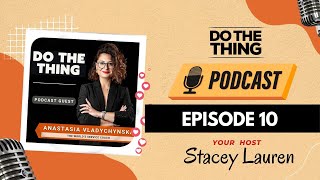
This podcast episode (Do the Thing, Episode 10) interviews Anastasia Vladychynska, a Ukrainian customer-experience consultant with ~15 years' experience who woke to explosions on February 24 and fled Ukraine. After relocating in Europe (mentions Italy), Anastasia organized a Facebook group of about 130 displaced Ukrainian women and coordinates temporary housing, job leads (remote roles and professional placements), mental-health support (group calls, donated therapy), and an SOS fund raised via paid webinars. She emphasizes day-by-day coping, community mutual aid, cultural humor as resilience, and requests listeners offer remote jobs, housing, pro-bono time, or hire her for CX workshops. Contact cues given: Vladucinska.com and Facebook/LinkedIn pages under her name.
Questions this video answers
February 24.
About 130 women.
About 15 years.
About 10 kg in 10 days.
A Facebook group.
Chapters
I do really believe 100% from every part of me that everyone has the capacity to be able to do the.
Things that they want and not to.
Be held back by the mental baggage.
That'S in our head that we want to push through.
Welcome to the do the Thing podcast. In each episode, we get down and personal with people who go after the things they want to make all their wildest dreams come true. Join us as we unveil and dissect a formula for what it takes to do the thing. Here is your host, Stacy Lauren.
Hey, everyone. Welcome to the do the Thing podcast. I'm your host, Stacy Lauren. When I first started this podcast, I knew I was going to be interviewing really cool and amazing people doing extraordinary things. People that run businesses, people that exited businesses, started nonprofits, traveled the world, maybe got into new relationships by Doing the Thing. I never imagined I'd be interviewing someone that literally fled a country because of a war and is now helping people do the same. Today's guest really proves that resilience lives in everyone. She built an incredibly impressive career as a customer experience consultant serving clients worldwide. Little did she know she would use these same service centric skills to help women fleeing from perilous conditions. One grand morning, our guests woke up in Ukraine only to learn that life as she knew it no longer existed. She fled to safety with just a suitcase, but soon discovered so many others needed assistance. Escaping through networking, dedication, and plenty of grit, she's helping over 130 women leave Ukraine and find shelter and jobs. Her ability to pivot 180 degrees and transfer her skills during times of war is nothing short of remarkable. It's my honor to introduce Anastasia.
Hi, Anastasia. Hi, Stacy.
I am so glad to have you here. I can't even tell you, once I heard about you and your story and what you're up to, I just couldn't wait to be able to talk to you.
Thank you so much for inviting me. I just, you know, it's another thing. I don't feel like I'm doing something extraordinary, but. Yeah, but thanks. Yeah, I would love to hear a.
Little bit about you and what you're up to and whatever you're open to sharing.
Yeah, yeah. So I'm customer experience consultant and I've been working in this for what, like 15 years, working with huge brands and, you know, owning my own agency and speaking in New York City, Brussels, London, India. And then.
On February 24, all of that has stopped because I woke up.
In Ukraine from explosions and I was actually on my business trip. I was all ready to go into a workshop for my customer, but then my dad called me and he said, anastasia, the war has started. And you know, since then I was in the western part of Ukraine, which is supposed to be safer.
But still, you know, you have to be running to the bomb shelter or to the bathroom because the sirens go off every two, three hours. So then I fled Ukraine and right now I'm in Europe.
And it just turns out that now I'm helping 130 girlfriends of mine.
Because they're also somewhere in Europe, stranded. They need a place to live, need a place to work.
Need support. So, you know, customer experience consultant turned women helper.
I guess I am just in awe of just everything that you've been going through. I mean, last month basically everything has just completely shifted.
Oh yeah. Oh yeah. And when you say everything, it's everything. You know, you lose your house, you lose your house, you lose your friends, you lose your job, you lose your, even the sense of identity because it is so linked with what you do, right. And who you are and your name. And for me it's even my brand because, you know.
And then you just end up with one suitcase in the middle of Europe.
Counting on the grace of your friends who can host you.
So it's just, yeah, it's a very weird place to be. I am finally seeing something good out of it and, and you know, three weeks have passed so I can finally sit down and see something bright and not just a big black hole before you. So, yeah, I want to definitely dive.
Into what you're doing now to help the 130 friends. But I wanted to talk more about what was going on at the time that you left. When did you know something was really going wrong?
We would have all the information about Russian troops being gathered around the borders of Ukraine and that's been for several months. Right. But nobody thought it would have been such a massive invasion. We thought he was just, you know, playing with us or that if they innovate it would just be in the eastern part of Ukraine, which unfortunately we've had the conflict for eight years over there already. And yeah, and we were almost used to it. So nobody thought it would be so massive. I had a gut feeling for some reason that I had to pack. Not my usual carry on, you know, the usual carry on you would take for one two day business trip. I had a gut feeling that I have to pack a bigger suitcase. Like, you know, like a usual luggage you will take with you for like 10 days. And.
So we used to have the feeling that something was off for several months, you know, before it all started. But nobody could have believed it would be so massive. It would have been like a whole scale war. So, yeah, the feeling of something is wrong has been there for several months. But then on the day when I woke up from explosions, it's weird how your mind plays with you. It almost tells you this isn't possible. Like, I thought it was fireworks, okay. And you'd be laughing, but people do weird stuff. Like, I woke up, I heard those explosions. That's cold. He says, you know, in the stage of the war has started, you have to get into a car and come closer to the Polish border. And I said, dad, but I have to go and do the workshop. So I actually, you know, stood up, put on my makeup, my clothes, and I was all ready to go to do a workshop. Then some of my girlfriends, they started things like washing their hair or baked. So it's just weird how your mind plays tricks with you. You have to be pecking and leaving like right away, but your mind is telling you everything is fine. You know, this can be true.
Yeah, yeah.
You were almost just kind of acting as if doing your normal things while this is happening. And I feel like that's just a coping strategy, right?
It could be, but it's also a trap. You probably have heard when people are on, when the buildings are on fire and if the fire is at night, people are not leaving their homes, they're not escaping because they think their mind tells them it's impossible. So they stay and then they die there. So I think that's something else. I. Yeah, I'm not a therapist, so I wouldn't want to show any kind of knowledge there. But yeah, something weird. I think your mind freezes. That's probably the explanation of it. Your mind freezes because it's a stress.
Yeah. I was wondering, you mentioned the gut feeling about packing that bag, which is amazing to me that you had that. What did that, what did that feel like? And how did you, how did you trust it?
You know, it's actually, I. I don't know why. I have this weird gift of.
Feeling inside when something is wrong. For example, you know, it's. It could be I could feel it in different situations. Like sometimes I would have a potential. A call with a potential client and you know, inside I would feel so bad that I would even ask the potential client to stop this conversation because, like, I can handle it. Okay. And. And then I wouldn't know what's going on. But then somebody from the company of that person would tell me, anastasia, he or she is just an awful person. So. So I do. I do have those feelings from somewhere. And it's funny because right on. On the New Year's Eve, I had a very bad feeling inside. And I was sharing with my husband saying, you know, something is wrong. I feel. I feel super. And I was trying to tie it up to several facts. And, you know, there's always something going on in your life that you could say, okay, that's probably it. Right. But no, it was still there all the time. All the time. Yeah. Right. On the New Year's Eve. And it started, and it was over only when the war started, which is weird. Again, wow.
It's like you have this knowing inside you. I wonder where that comes from.
I really have no idea. And before, I wouldn't pay attention to it, you know, I thought it was just something wrong with me. But maybe it's because I work with. Well, I don't know, because maybe it's because I work with people and I always work with people. So it's. I read people.
Not with my mind, but on the level of feelings and empathy. If you could have, like 35 people in the workshop in the first 10 minutes, I will. I will tell you right away. I will look at the people and tell you right away who is not. Who is sabotaging, who is, you know, who is not on track. So it could be because of my work, you know, always work with people.
Yeah. And all the experiences that you have with that.
And then I was wondering, so the day the explosions happened and you had that gut feeling and you had your bag packed, was that the day that you had worked on leaving or was there, like, how did you know you had to leave? And what was your first step in that?
Yeah, I didn't leave that day.
I only left from the place where I was on the business trip. I left to the city called Lviv. My parents are there, and it's in the western part of Ukraine. So I went there and stayed there for a week because everybody thought this would be over in a week.
Okay.
So it was. It was kind of just. Just, I don't know, like, waiting mode, survival mode.
And then my dad told me that you have to leave because you're completely inefficient. And I really was. I was shaking like a leaf. You know, I couldn't eat. I felt like vomiting all the time because of the stress. I lost 10kg in 10 days. I was completely inefficient and then I was scared all the time. And because you're, you know, you're sleeping in your clothes because when the sirens go off, you have to drop your bag with documents and run to the basement. Either to the basement or to the bomb shelter or to the bathroom if you don't have time. Okay, so. And you're like on and off all the time. All the time, all the time. So my dad was telling me you have to leave somewhere to the safe place and try to see what you can create there. Which to me sounded super weird because my mind was not on the create mode at all. It still isn't, but I see what he meant. Because here, you know, when you're in the safe place, your, your basic need is filled. So now you can go into the different step of, okay, what can I do now? How can I be helpful now? However, there are still people who are, you know, so many of my friends are still in Ukraine and they're volunteering and helping. I really no idea where they get the power from, seriously, but they do.
Yeah. That's one of the things I was just thinking about you before we, before we got to. Before when I heard your story initially was how do you get that courage while you're in the middle of this.
To then be able to have that strength to actually even think that you're helping others? You know, like to have that be something that you're planning on doing?
You know, there is an interesting cultural aspect about Ukrainians. We are like bees or maybe like ants. You know.
When there is a threat, we get together and we forget all the conflicts that we probably, you know, used to have between each other, and we just, we help, like, we volunteer, we help. A friend of mine, one of those 130 girlfriends, she, she was already in western part of Ukraine, but her car was in Kiev. Okay. In the capital. And I'm originally from. I mean, I've lived and worked in Kiev. So she, she actually posted on Facebook, she said if somebody needs a car to flee Kiev, because it was very hard to flee by train, almost impossible. There were so many people in there. She says, you know, I will tell you where the keys are. Just go pick up the car and drive. So she actually gave her car to complete strangers, but she helped evacuate the whole family.
Wow.
So, yeah, Ukrainians are like this.
When there is a threat, we just, we become so much stronger. You know, we come together and we become super strong. And then, and then again we are right here. It's somebody invading Our homes. So it's not like, you know, so we have the whole moral right and just to be brave, to be. To be ready to fight. Right.
So I'm imagining when you were in the middle of it and you're, you know, you had mentioned with vomiting and sleeping clothes, running into the basement and things like that. I'm just imagining how scary. And that's not even a strong enough word. That had to be for you. What fears came up for you during that time?
Well, I had. Yeah, when I analyzed, I had a major fear that a bomb would. Fell into. Would fall into. Into our house. So that was the major, major fear I had all the time. So, you know, I would wake up my mom. At that time, my mom had a broken leg, so it was a whole adventure to get her to the basement. But I was very persistent because I had this. It was. It was just a, you know, numbing feeling. And so this was. This was the worst. And then especially when you heard that there were bombings there and there and rockets, you know, coming to. Falling into residential area. That was my biggest fear. And then, yes, you're. You're. You're scared all the freaking time. Like, you can't even relax. You're so tensed. And I would. I had to take pills to relax myself because it's like, it's impossible. Your body is all almost, like, frozen. You can't even breathe normally.
And that's what I was wondering, too, is how did you. How did you talk yourself through it?
I don't think I was. I was successful in that, Stacy, being. Being raw with you.
You know, you can't talk yourself out of it.
You know, you tell yourself, okay, I have to eat right now. And you eat even though you don't want to eat. You take that apple and try, you know, or a piece of banana and then just squeeze it into yourself. But.
I can tell you that, you know, you were like, you were scared all the time, and then something magical you told yourself, and, boom, you're all ready to go. No, there wasn't a time like that at all. The only thing that helped was actually when we got together in the kitchen when there were no sirens and no alarms and when we sat down and had coffee with my family.
And just talking. And maybe sometimes even when you saw on the news, you would see some funny memes and you would laugh at those. That was healing as, you know, we.
Sort of talked briefly about this being a podcast about doing the thing, and it's the. I mean, you're on the ultimate spectrum of doing the thing where, you know, you're able to actually do it during something like this. And hearing you talk is just fascinating to me. Keeping it fun is one of the formula pieces of doing the thing. And just that you're able to do it during this, you know, and kind of just finding that through that is unbelievable to me. How did you. I'm trying to think of the right question to ask for that because that's, that's, that is beyond anything that I could have imagined. Was that the finding the humor in it, you know what I mean? Like not in this, but in the moment.
Was it just purely, just that this is what I can do, is I'm able to laugh or was there something that you had to say to yourself to be able to let your guard down?
You know, you don't even analyze that. You just, you, you're stuck to the news all the time, right? You're, you're looking at the news feed and then, and then somebody would put something like, you probably saw those farmers stealing, stealing the tanks, Russian tanks. So you see that, you know, the farmer using a tractor to steal a Russian tank and you just laugh, right? Because it's hilarious.
So that. Or for example, when. Because some of my clients. Oh, actually lots of them.
Lots of my previous clients in Ukraine, male would be fighting right now, right? So when they heard that I have this group of 130 girlfriends, they were like, Anastasia, we heard you had this group. Do you by chance have any single friends too? And you know, and it was such a dark moment. I remember it was, you know, the news was horrible that day. When they said it, I posted in another group for the girls. I said, girls, you know what? I think I have an interesting request from the military boys. And they were laughing and some of them were like, Anastasia, we never knew you could do that.
So yeah. And then immediately you could see the whole news feed was just brightened. And again, there's something about Ukrainians. I wrote this article when the COVID when the pandemic started.
Ukrainians use humor all the time.
In the most horrible situation. We always find a good part. Okay, so even, even now when I have calls, because we have two general calls with my girlfriends a week. One is, there's a beautiful friend of mine, she is a top rater, New York therapist and she's donating her time to do healing sessions for us. So that's one of them. And then another one is just, you know, morning coffee whenever they are somewhere where they can have coffee. So Every time you would ask them, how are you? You know, how are you doing? And then they will tell you horrible stories, just completely heartbreaking stories of how they fled Ukraine with their kids, knowing nothing where they're gonna go or where they will live or sleep. And then by the end of the story, they would always, you know, make it. Make fun. Make a joke about something, you know. So this is. This is. Yeah, this is the Ukrainian trade as well. Something cultural.
Yeah, I love that.
And then it sounds like from hearing you talk, that the other thing that you've done really well at, and this is another kind of piece of the formula that I've noticed for doing the thing, is not looking too far in the future. You're just focused on what's next. And I liked the way that you talked about having the point where once your basic needs were met and you felt that's when you were able to almost hear what your dad said, you know, about. See what you can create. Because you were. You were kind of just focused on, you know, what's next and not going 10 steps, like, ahead. Do you think that's pretty accurate?
I think. Yes, definitely. Because we. Even in the beginning, not. Not. Not today, but I'd say up to a week ago, we had a rule with the girls that we don't talk about tomorrow. So we only talked about today. So when somebody said, I'm so, you know, I'm so afraid about tomorrow. What am I going to eat, where I'm going to sleep, where am I going to work? We had, like, a ban on that question. So we only could talk about today. Do you have a place to sleep today? Yes. Okay, good. That's enough now, do you have money for today?
Yes.
Good. That's enough. Tomorrow, call me if you don't have the money I'm going to send you if you don't, you know. So, yeah, you only can take it day by day. And simple things like, did you brush your teeth today? It's funny, because even your mind is under such a stress. I really had hard time remembering whether I did brush my teeth today or I didn't. Did I wash my face today or I didn't, you know, so you start with concentrating on those little things like, go brush your teeth, go brush your hair, get out of bed. But there's also one piece, Stacy, that I thought was very important and still is. In such traumatic experiences, you need somebody to tell you what to do. You almost need somebody to tell you what to do. My dad was the one, right? He told Me to leave now. Right now, I'm talking to some of my friends who are still in Ukraine in awful conditions. They're in the basement for 14 days or for 15. No gas, no heating. Some of them don't even have food anymore. And when you tell them, you know, there's. There's going to be grand corridor, please leave. They're not leaving. So it's almost like in those traumatic experiences, you need somebody to. To actually, like, come and drag you physically drag you physically out of bed. And I know that some people are trying to be polite and to give space to that person, but I personally think this is not a good. A good situation where the. Where you have to give space. My best friends during this time were those who said, anastasia, I'm calling now. I'm coming now. I've arranged a speech for you to do in Mexico. Like, you know, you will not even believe this. Stacy, a person I saw once in my life on Zoom is arranging for me to do a speech from Mexico, and he has already gathered 100 people, and they all are donating some money to my cause for the girlfriend. I didn't ask him to do this because I didn't have. I didn't have any emotional or physical power to even think about this. Right. So in those traumatic experiences, I think, like, I don't know, at least for me, you need somebody to be very direct with you. And the time with my girlfriends, I don't go. Go around telling them, you know, if you need something, call me. No, I ask direct questions. Do you have place to stay for tonight? Do you have food? Do you have. I don't know if you have it as a piece of. Of your formula, but that's something I'm experiencing for sure. Mentor a friend. Yeah, but you need somebody. And then if your friends are going through something like this, then don't be just like, you know, I hope you're doing fine.
I'd love you to share more about what you're doing now. And what would you like people to know about what you're doing now?
I'll say, that's so funny, what I'm doing now because I've always. I've always told my husband, I wish I had girlfriends in my life because, you know, I was overworked. I work hard, and because of that, I never had time to go out for coffee with my girlfriends. It was only coffee with clients, dinners with clients, you know, lunches with clients. So I was always complaining that I don't have girlfriends in my life. And so now I don't have. I don't have a lack of girlfriends anymore.
How it all happened. When I fled Ukraine.
I started texting some of my former clients and former students because I taught at the business school. And I would ask them, where you are now? Do you have a place to live? Do you have any means?
You know, first girlfriend was like, I'm in Croatia. Now I only have my hotel paid for two nights and I can go back and stay with my ex husband, but he has a different family now, so there is no way.
So I would of course, do what, like pay for her hotel. Right. Then there was another friend and another friend. So in the beginning there was just. There were 10 of us. And then more and more people who knew me personally, who know me personally, have realized that I'm doing accommodations, helping with accommodations and jobs and mental support, emotional support. So they have started asking me for some more help. More help. So now I have this group of 130 girls that I am. I'm not helping each one of them anymore because now they are also helping each other. That's good news. Okay. But I'm kind of like creating them and.
Helping them with the place to live, looking for jobs for them. Because these women are well educated, you know, former HRDs, marketing, these. And I, you know, I want them to have good jobs and not just go and clean somebody. Somebody's apartments because they need to survive, you know, so, yeah, that's what I'm doing. And then people started asking me if they could donate some money. And I personally.
Don'T feel good accepting somebody's money. And then it's just, to me, that doesn't feel good. Okay. So I started sharing my expertise, everything on client retention, cash, customer experience. I'm doing webinars now. And some people come, some people just pay it on them and come. But even if they don't come to the webinar live, I do send them a recording. So I feel like, you know, I earned, I earned this money. And this money comes as, becomes an SOS fund for my girlfriends. So when they need something, you know, I would pass it over to them. Yeah.
That's unbelievable. So you're basically treating your business knowledge and experience and in turn then helping this group of women.
Yeah, but that's what I know how to do. You know, I've always done webinars. Just that I never, I would have never thought that I would use it to such a course. Yeah.
So when they're coming to you, they're. They're Just, they pretty much have just fled Ukraine. And then they're kind of going through that similar thing where they're getting their basic needs met. And then they're like, okay, now what am I going to do? Is that kind of.
All of them are in different stages. So some of them are only thinking about leaving and they need help. Like, for example, they would be asked, they would be saying, we want to leave, but we don't know which country to. So and Poland now is just overloaded with Ukrainians. So we would say, okay, you know, girls, what do you say about Romania? Romania is still. It doesn't have so many people in. Okay, so then we would find them a place to live. So some of them are already living in Europe for two weeks, and some of them already have their kids at schools. Right?
But now there is a new wave because we were looking for some temporary accommodations for two weeks, for example, and not everybody can host you more than two weeks. So now they are looking for something permanent. And I am really afraid of that wave because permanent means that they would need to pay for their. To rent their apartments, right? And renting an apartment in Europe is always around €1,000, €1,200amonth. So, you know, I'm really. I'm scared of that wave now because it's not like paying for two or three nights more. It's big thing. So, yeah, everybody is on different level. Some women.
Can share, you know, which. Where they took the language courses for free, you know, what to do, what not to do in the country where they are now, because we have people almost everywhere in Europe now, seriously, almost every country. So now they are also helping each other, which is good because I wouldn't have been able to handle 130. What I do want to do, though, I do want to start collecting their stories and to write a book, because their stories are heartbreaking, horrible, but also very inspiring at the same time.
I was wondering about that too, actually. I have a few of a few things. One was, it sounds like you're building this unbelievable community of women that are now, like, you've created it in a way that not only are you helping lead the way, but you're helping them support each other.
How do you think you did that? So.
At least from what people and clients have always been telling me, they always tell me that I'm inspiring them to be better. And so what we do with companies, we do service transformations. Okay? So we actually, we take one company and we help it to become what I call truly service company, right? That means changing people as well. Because I don't believe the company change. People change in the company. Right. So I've always had this inspiring people to do better, you know, treat each other better. Treat. Because I'm talking about service, right? So I'm. I'm. That's everything I am. I am service.
You know, Anastasia equals service. That's how people heard about me and knew me. So number one, I think that they just, you know, they wanted somebody who can inspire them in such an awful situation. And they've always remembered me being such a person. So I think memory told them to come back, to come to Anastasia. And then, you know, that it just, again, a nice comparison with ants. Ants, when they travel, they meet the same ants that have the same pheromones as they do. So I think that you just click with the person, with people who are, you know, who are the same by values, who are the same by their notions of good and bad. Right. So I already had this community. It's just that now they're all connected and they're all together. And I have to tell you, after our calls and Saturdays, I don't even say anything, Okay. I just ask them questions. But then after the call, they will be like, anastasia, this was the best call ever. I feel like I want to live again. And I'll be like, okay, but this is totally not me. It's the community. You're right, Stace. It's about the community now, not about me at all. Wow.
Yeah. And that is another formula is the community. And being around. It's kind of around being around like minded people, but also that support system, you know, of accountability because you're almost. You're each seeing that the other can do it, you know, which is then potentially giving them the hope that they need.
Yes. How do you think, how are you.
Finding hope through all of this?
Definitely helping somebody else helps. It gives you a purpose. I remember the first days I was. I felt like winning because they keep sending you those harder and harder tasks. You know, four women, six kids and two cats need a place to leave, to live. Yeah. When? Tonight. Where? Budapest. Okay, let's do this. You know, so I felt by the end of the day, I felt accomplished because I could help. You know, five women, six women, ten women, doesn't matter. So that really helped. That gave me power also what I realized for myself at least, you know, I'm in Italy now, and before my husband and I would come to Italy only for a vacation or shopping. Okay, now I'm shopping. In the supermarket.
Grocery, supermarket. And I'm counting my euros because, you know, I'm on a very. On a safe mode. Of course. So.
But even now, when we went out and I said to my husband, I said, you know what? I really want to go into Italian coffee shop, sit outside on the sun and have my cappuccino so that I feel like life could still become normal.
So little things like that, even though you come, you know, you have to overcome so much guilt inside because you're thinking, okay, I'm sitting here in the beautiful place sipping my cappuccino while my friends are, you know. And then three dots, because you have all those thoughts. But at the same time, these little things, they do bring me back to life. They almost tell me, you know, life will get normal at some point.
Yeah, it's so true. It's those moments.
Right. But it's like those are the moments you need to keep to make you be able to do what you're doing. Because that's what's giving you the hope, is you seeing that there is a way to find normal, even in the middle of, you know, all of this.
Yes, exactly. And then what do you think about.
The women that you're seeing? Like, what's. Because you mentioned their stories and how they went through just the heartbreak and then finding hope through it. What are you. What are you thinking is helping them?
You know what? I will probably tell you after I do those interviews with them, separately with each of them.
Because that's a very good question. That's actually a very good question. And then so just imagine that the majority of them have their husbands back in Ukraine. So it's them and the kids. I really.
I have.
I have seriously have no idea what gives them hope. So, yeah. Need to do this once again when I do those interviews.
Yeah, I would love to. And I'm just making an assumption, but I'm thinking it's you and the community that you're. That you're building because they're getting to see.
They're getting to see. Like, it's almost like that hug around them, you know, and that you care. And then the group that you're building, you know, is there. Sure. That'll be one of the things I'm.
Thinking you'll discover for sure.
Yeah.
What's been the most surprising thing for you through all of this?
Oh, I definitely know. I definitely know. So the most surprising thing for me now is. And I'm going to do, like a whole speech on that.
Seriously.
Because I feel it so deep. When you lose everything. And when I say everything, I mean everything. Okay, again. Your apartment, your clothes, your furniture, your loved stilettos, your food, everything. Your money, your job. When you lose everything, the only thing that stays is your network, the people you know. Okay? And the people who really care about you. Now, why they care, that's a huge question. Because I'm so surprised how the international community just opened their arms to my girlfriends, my friends, and they accept them in their homes. They share their meals, they share their beds, apartments, clothes, you know, money. It's just, to me, that's the most surprising thing. Now, on the downside, the most surprising thing is also that some of the friends that you trusted and you thought you could definitely rely on those people, for some reason, they have closed up and they, you know, they write you things like, as I told you, I hope you're safe. You know, I hope you're safe. Let me know if you need anything. This is. This is the worst. By the way, guys, if you're listening to this, this is the worst phrase you can tell to somebody who is. Who is going through trauma, because, no, they are not fine. And yes, they need help. Okay? So, yeah, so it's the most surprising in two ways. One, like, seriously, Stacy, people I've seen only once on Zoom in my whole life could be doing more for me than the friends I've known for six years.
I think the words, you know, war splits everything into black and white, really, and it strips off our souls. If you had a good soul, you become so much better. If you had a bad soul, you become ugly. I'm sorry to say that, but that's how, you know, war doesn't. It doesn't tolerate any pretense. You are what you are. You don't have time to be politically correct, polite, nice, super extra nice. You don't have a time to think what that person is going to think about me when I tell this or that you don't care, because it's a question of life or death, black or white. It's a question of, are you a friend? If now you immediately become an enemy. There's, you know, there are no gray zones in war. You either help today, you know, if my friend doesn't have a place to stay tonight, I'm not going to tell her. I'm going to pray for you.
I'll send him money to pay for the hotel. Right. So is this. Yeah, this has been the most surprising, this. And then also I, you know, I never thought that your whole life could be distilled down into one folder with documents.
You know, you think you have something. You think you own three houses, you think you own beautiful purses and clothes. And that is so freaking important, what you wear today so that people look at you and think, oh, my gosh, she's probably earning well because she looks, you know, expensive.
And then when you flee, you pick up that expensive purse, you look at it and you think, I'm gonna. I'm gonna take. Kid, take this expensive purse. Because if I'm out of money, I'll. I'll sell it, and it will give me, you know, one month of existence. So everything that used to be important becomes 100% unimportant. I'm not trying to say that people should immediately stop buying nice things, stop buying art, stop buying, you know, beautiful clothes. No, we need that in our lives. It's just that.
It's just that sometimes we come to the point where we are bored with life, right? It's a routine. It's a routine of having your morning coffee with your avocado toast. It's a routine of driving your BMW to a place of work. It's a routine to step into a beautiful office with a beautiful view. And, you know, and I can go on and on and on. And at some point you become bored. Like, I was. Like, at some point I was bored as well. Seriously, I didn't like anything. Didn't like the food. I didn't like the restaurants, didn't like the food. I was picky. I was frustrated from little things.
But what I'm trying to say now is, you know, enjoy the routine. Be thankful for the same freaking avocado toast.
What do you think has been the hardest part for you?
The hardest part was realizing that I'm a weak woman. And that's something else.
You know.
For women who.
Are strong, who are professionals, who know that, you know.
I can always find a way. I can always find business, right?
For those strong women. Wake up. You know, when you wake up once and you are deprived of everything, that's a very hard place to be. And.
I said somewhere already that.
All the feminist talk stops at war because you can have those, you know, beautiful, deep down discussions about the beauty of feminism and equal rights and all of it and how, you know, women have to be strong and blah, blah. But when the war comes.
You just want to become a little, little girl, hide somewhere under the bed and have strong men somewhere out there fighting for you and taking care of you. This is something that is super hard for me, personally, because.
You know, I'm used to controlling things. I'm used to, you know, if I do this, if I work harder, I will get this. If I don't work, you know, just simple equations. You do this. You get this Here. None of that works here. You just have to rely on people around you, and you can't. Like, they tell you, you have to control your life and to control the next step and be strong.
Well, all those rules don't work at war. Seriously, they just. They don't work. Somebody was laughing.
On Facebook. Somebody said, some. Some. Some of my friends were saying, okay, coaches, so now we are all out of the comfort zone. Comfort zone. What's next? And it's a. Yeah, it's a funny joke. But seriously, nothing. Nothing works. Yeah. Is that.
How are you communicating with the women? Is it. Is it through Facebook?
It's Facebook.
It's Facebook. I've created that group. Not. You know, I always said, I will not have another Facebook group because everybody seems to be having a Facebook group now. Right. But I just needed one place for them to be all together so that I don't have 300 messages. You know, it's much easier to post something in that group when you have 130 women, and then they catch it and everybody sees it. So that's why.
Yeah, yeah. No, I think it's a great way to maximize your time and then also create that supportive community within the group, too. So how can the people listening support what you're doing and be able to help?
So we have several things. Number one, we are looking for jobs. So if you have any remote positions that, you know, usually it would be marketing, digital marketing, virtual assistants. Yes. But just know that these women are way more, you know, qualified than a va. But still, they would be eager to do that because there's, you know, they need something. So if you have any open remote positions, do let me know. I answer to all the requests. Even if we are not friends. I do enter all the requests on Facebook. That's the easiest for me because the group is on Facebook. That's why I'm there. You know, 24 to 7. That if you feel like you would get value from those webinars that I'm doing on anything related to client experience and client retention, then I also have it on my Facebook page. I have it on my website.
That as well. And then I don't know if you. You know, if you feel like you have. You could jump on a call with us and do something on the call. And support us just with your time. That's also the most supportive, of course, for each woman individually. It will be a place to, you know, a permanent place to live and a permanent job. That's the best. Because then we know that you. Okay, this woman is safe. She has a place to live and she has a job now. She could be completely on her own with some, you know, with some calls and checking on her. So that's the best, best, best, best, best, best part. Everything else I do understand is temporary. It's a temporary shot that. Well, you know, that will keep them for some time. But I'd say, you know, we are grateful for everything. Seriously. It's not like we're going to be saying this we need and that we don't need.
Yeah.
And so if they want to be.
Able to help, then they're able to just reach out to you on Facebook and then basically say, I would like to help with the place to live or with the talk or with getting. Oh, getting someone to work, you know, through the digital marketing or using your service, you know, like using something you provide, which then will then support the group.
Yeah, yeah. I myself am looking for international clients on, you know, customer experience, customer service workshops, because.
Yeah, because that all has stopped for me as well.
Yeah.
Okay.
Yeah, that's wonderful to be able to hopefully spread that message.
The other thing, I wanted to just.
Mention that I liked what you said because I think a lot of times when people are in the middle of crisis, it's hard to ask yourself questions. And you had mentioned that, what can I do to help? What do I do now? And then what your dad said, it was almost like he planted the seed. See what you can create. And I just wanted to mention that I really liked that concept because it almost stops you in your tracks and it gets you out of that mode of crisis. I'm thinking.
Yeah, you need to do something and to talk to somebody to get your mind off the news for at least some time. Because if you don't, then you'll find yourself just scrolling, scrolling, scrolling the news.
Is there anything that I have not asked you that you wish I asked you?
Oh, no, Stacey. I think that's already plenty for people who have never experienced war. Because really, that's a lot to process. And.
I don't have an expectation or bitterness around you all. People don't know what we are going through. No, no, not at all. I believe that everybody has to be impactful where they are. Okay. And it doesn't matter where you are. But you know, just make sure that you're creating something, you're impacting something or somebody. So. But I understand that for us, it was a huge shock, right? So I'm not expecting people to understand what we are going through at all. And I wish nobody would know what that is. Okay. I am already thankful for all the beautiful support that we are getting internationally, for real. So this is already plenty for us, and this is already plenty for people who have never experienced this. And there's a lot to process, I'm sure. And just, you know, if I could help somebody today to, you know, rethink their routine, rethink their notion of what's important and what isn't, then, you know, then I'm happy already. Thank you so much.
And then I have one more question. So if you only had one piece of advice to give people on doing the thing either in crisis or out of crisis, what would. What would that be?
I'd say close your eyes and do the little micro nano step. But do it even if it means brushing your teeth. Because when. You know, I do remember there was one day on Sunday, I woke up and I was in bed completely. Like, I couldn't. I didn't want. I was weeping and I didn't want to get out of my bed for the whole day. And I know that there will be time like this, and that's also fine. But if you are in that bed and you think, okay, I don't want to get out. Okay, can you at least get up, make yourself some tea and then you can go back to bed, but just get yourself some tea, for example. That's already a little, you know, a little, little, little, little action. And don't expect too much of yourself on such days. You know, we're going. When you're going through major stress because especially if you're a person like, like lots of Ukrainian women are, we are doers, so we are actually being harsh on ourselves that, you know, a day has passed and we haven't done anything and we haven't been efficient.
Just be busy on yourself in such days and in such times.
That's beautiful.
That's beautiful. Yeah.
If you want to share your website and your Facebook page and how people can find you, that would be amazing.
The hard thing is my second name. It's almost every letter of the Alphabet, so it's not going to be easy. But.
But It's. It's Vladucinska. Vladicenska.com Anastasia Vladucinska on Facebook, LinkedIn, and then on IG I am. I go under the World Service coach because that's what I feel like I've been teaching the world and I continue to well, I can't thank you enough.
For joining me today and I just am floored with you and everything you have been doing and I'm grateful to have had this time with you.
Thank you Stacy. I appreciate this and I appreciate any opportunity to spread the word of what is really going on and if it could help somebody listening, then it's great.
Thanks for listening to the do the Thing podcast. We hope you enjoyed the show, but even more, we hope you'll be inspired to do the Thing. Do you have a burning question on Doing the Thing that you'd like answered? How about an inspiring do the Thing story of your own that you'd like to share? We'd love to hear all about it. Just leave us a voice message at dothething callcast co or email us at hello do the Thing Find podcast. Com.
More from Stacey

From 262 Women to 8 Million Media Impressions: Deborah Drummond Built a Global Women’s Movement


From Notes App to Published Author: Avery Brenna Crumrine on Turning Intention Into Action


How Stacey Lauren's Billion Dollar Impact Marketplace Will Raise Billions for Charities and Causes

What Happened When Allison Maslan of the Pinnacle Global Network Ran a Challenge with Stacey Lauren




Leaders Share How Stacey Lauren Sparks Action, Clarity, and High-Impact Collaboration

Sandi Masori Announced as Emcee | The Billion Dollar Impact Event Returns to San Diego