Episode 11 - Lisa D'Acquisto On Following Her Servant's Heart And Steadfast Determination
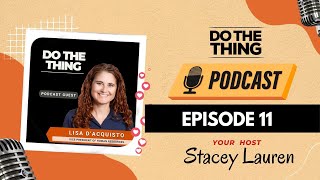
Transcript of Episode 11 of the Do the Thing podcast (host Stacey Lauren) featuring guest Lisa D'Acquisto. The conversation covers Lisa’s personal background (rural childhood, family hardship), her accidental career path into human resources, her servant mindset and leadership approach, a ‘formula’ for overcoming adversity and achieving goals (surroundings, education, wanting it, humility/surrender, curiosity), and Lisa’s early experience and risk-aware approach to cryptocurrency investing. The episode ends with contact info and a call for listener stories.
Chapters
I do really believe 100% from every part of me that everyone has the capacity to be able to do the things that they want and not to be held back by the mental baggage that's in our head that we want to push through.
Welcome to the do the Thing podcast. In each episode, we get down and personal with people who go after the things they want to make all their wildest dreams come true. Join us as we unveil and dissect a formula for what it takes to do the thing. Here is your host, Stacy Lauren.
Hey, everyone. Welcome to the do the Thing podcast. This is Stacy Lauren. I'm so glad you guys are here today. I have an amazing guest with us. Lisa d' Acquisto is here with me. We met years ago. Our kids were in elementary school together, and it's so cool when you have an opportunity to meet someone through your kids that you normally might not have met before. We connected and realized we have the same passion for hr and she's at the top level of human resources, and it's such an interesting way to know the world through human resources because of the amount of patience, acceptance, and everything else that you need in order to be able to handle a multitude of people and everything that they have going. And we just got to see each other recently. I also learned she's been messing around with crypto a little bit. And I was like, oh, my gosh. Between your HR experience and crypto, I have to have you on this podcast. And I think that's what's been so cool about this, is that I'm not even intentionally looking for people to interview. They're just sort of coming to me. And, you know, I didn't even think about it when we first got together until we started talking, and I was like, wow, it'd be great to be able to interview you and hear more about your story. So love to hear. Have you guys join and listen in and.
Hey, Lisa. Hi, Stacey. Good morning.
How are you?
I'm doing fantastic. Thank you so much.
To get us started, do you mind just kind of sharing about your background and more about you?
Yeah, absolutely. So it's funny how you mentioned kind of being the VP of hr. I actually fell into this career, but absolutely love it. Absolutely. Very thankful how the world works in magnificent ways and kind of gets you on the path that you need to be. And then once you're on that path, things kind of come to you. Right. And just kind of fall into place. Just. Just as you mentioned, and getting people falling into your life as interviews for this podcast. Sometimes the world just worked magically like that. And it worked that way in careers as well. So I am one of nine children, so I have eight brothers, believe it or not, I am the only doll. And my undergraduate degree is actually in criminology. I briefly worked at a district attorney's office in welfare and fraud in kind of being an investigator and researching their claims. Realized very quickly that that was not for me and ended up at a staffing agency saying, this is what I'm good at, this is what I like, this is what I enjoy. And that recruiter got me connected working at a pension fund, administering a retirement plan, realized how much I loved it and could pour my heart and passion and. And still be able to help other people instead of it being helping people through the criminal justice system and helping people through the employee benefits in HR vertical. And then grew my career from there. And now I'm overseeing all things HR at a wonderful organization and, you know, improving people's lives through it.
That's so awesome that how one thing leads to another and then you're able to get into this place where now you're able to impact people based on all of your experiences that you've had.
Absolutely. You know, so funny because when we. I'm a child of the 70s, so I was born in the 70s in a rural America. And you know, as a kid, you don't think human resources as a career or even as some of these other professions of the career. For me it was more like, you know, you're a firefighter, you're a nurse, you're a doctor, you're a lawyer, those kind of traditional roles. And I just had such a heart and passion for people that I wanted to right the wrong and just help people. And for whatever reason, I was gravitated to the justice system and I realized that you can have that same heart and passion through even the medical system, nursing. But there's so many ways that you can help people. And human resources was just that one thing that really caught my heart, caught my attention. And being able to help grow in people through their careers is really a magnificent talent and a magnificent thing to do. So.
Loving every minute of it. Yeah.
So for people that don't know what. Can you explain what human resources is and what your day to day kind of role is with the company you're at now?
Yeah, absolutely. So a lot of times people think human resources is kind of the policy police or the hiring and firing folks. While that is an aspect of our job, we Do a lot of professional development. We are helping to mentor, coach, grow, employee. We have that eye for people's talents and strength and being able to help them utilize those strengths. So we are helping people through leave of absences and they could get a diagnosis, you know, cancer or something a little bit happier, like pregnancy or something of that nature. You're helping them through leave of absence and sometimes their delicate medical situation, you're helping them through their benefit. So medical, dental, vision, retirement planning, helping them plan and prepare for retirement. So that, you know, financial, health, wellness program, you know, so your physical, emotional, financial, wellness, leadership development, training, employee relations. So sometimes you have an employee that's not performing well or struggling. So partnering, trying to help get that employee on the right path. And then of course, just payroll and hiring and onboarding employees, restructuring, workforce planning, all of those items.
Yeah.
There's so much involved that I don't think people realize the role that, how. And how integral it is, you know, in the person's life. Right. Because we spend 80, what, 80% of our lives at work.
Yeah.
And the fact that you have that integral role, you know, it's. You're almost a part of, or you are just a part of their entire life, you know, and being able to help make it a positive experience for them, you know, which then leads into everything else in their families and their home and what their impact is with the company and things like that.
Exactly. And I think people, you know, HR has been hr, but it's really being a resource to the human being at work. Right. So think people resource, you know, worker resource, team team resource. So it's really being a resource to the employees, to the business, to the managers and really solving problems. Right. So, you know, if your business is growing, what kind of talent do you need to help get you to where you need to be as a business? So being that strategic business partner with the different leaders.
Yeah.
So how do you think you manage it all? You know, by hearing so many people, like having so many people under your wing that you're basically, you know, responsible for their, I don't want to say their happiness, but their, their well being, you know, how does, how does that work for you?
Yeah, it's challenging. I wish I could say that I had a magical wand that I could just wave and it would just, you know, this is the one solution. And if you do this one solution, it makes everything better. It really is understanding what the challenges are at every organization. But often it's training the trainers, it's having awareness. Employees are not coming to join an organization because of HR or leaving an organization because of hr. They're joining their team, they're joining their manager, they're joining the overall culture. Well, we all are part of that culture. You could go work for an organization that has the most amazing benefits package. Right. They're paying you good wage. Let's say your medical insurance is 100% paid. You don't pay anything for your medical insurance. But if your boss is kind of on the crappy side and doesn't treat you with dignity and respect, you are not going to stay in that organization because of your relationship with your leader or lack of leadership that you're getting from your immediate supervisor. There's really a multifaceted approach and having that sense of community where people feel like they belong and they want to be part of that community and they want to see that community grow and involve continually to grow and evolve in a positive direction.
I just absolutely love how you explain that because I think that's so. That's so powerful to be able to do that. And then they feel like they're part of something bigger.
Right.
Which is then what keeps them motivated to stay there and then. Yeah. And grow too. Which I know you mentioned is one of your big goals also.
Absolutely.
I wanted to ask. I have a few more questions about that, but before we get into those, I wanted to ask you. You mentioned your heart and passion for people and it sort of started with your. The criminal justice and then the welfare fraud and things like that. And then getting into HR sort of lean directly into that. I wanted to ask more about where that comes from because I know, I mean, in order for you, I mean, that's probably why you were able to get to the top of the HR field, because of that heart and passion. If you didn't, you know, I don't think you'd be in the same. I mean, again, I'm making an assumption, but I'm imagining that's what makes you so good at what you do. So I'm just wonder, where do you think that that came from?
Yeah, it's a great question and I have to do some reflecting. I have a servant heart. I love serving and making other people's lives better and that gives me a lot of reward. So I've been that way ever since I was a kid. I identified that early on. If you ask me as a 9 year old or a 15 year old, you know, do you want to be a VP of hr? I would have said no because I didn't Have a true understanding of what it was. I wanted to help others. And I think that just stems from how I was born, how I was hardwired, the environmental influence of my childhood. And I wanted, I was laser focused on getting into the criminal justice system and helping victims. And maybe it was because there was aspects of my childhood in which I personally was a victim. And so being able to be a voice, be an advocate and help somebody that needed that voice was important for me. Unfortunately, when I got there, and I got there very quickly, I was in my early to mid-20s. And while I was extremely mature for my age and experienced an incredible amount of life by that time I struggled, I struggled emotionally in that work environment. I wanted to be an investigator, I wanted to advocate for victims, I wanted to see justice for the wrong in the world. But as I started to work in that environment, I realized how depressing it really is. It is very tough work. And there are good people and bad people everywhere you go in every environment. And even in the criminal justice system, there's some corrupt, cold hearted people that are in the criminal justice system for just their paychecks. They have lost that passion. I also underestimated how much just the welfare fraud vertical. You get exposure going into people's homes and you're seeing abuse, you're seeing neglect, you're having to call cps, you're having to get family Supportive services and other agencies involved because the care is not there. And that really, really pulled on my heartstrings. I, I remember being the tough, the tough like I'm, you know, kind of, that I'm a tough girl. I, I can, I can hang out with the guy. I, you know, cannot show emotion, get through the work day as if nothing happened, drive even all the way home, get to my apartment, close my bedroom door and completely melt and just cry and cry and cry for a good 20, 30 minutes until no more tears left in me to cry. And that was a very awakening moment for me that even being raised in a, you know, on a cattle ranch in a tough, you know, cowgirl up environment, surrounded by testosterone of eight brothers, you know, at the end of the day, I had a very compassionate heart and it made my heart ache so bad. And within a matter of, you know, a couple of months, I had a very come to Jesus moment with myself of I had overcame so much adversity. Many people told me, you can't do it, Lisa, you can't do it. What are you, 105 pounds? You're so tiny. You can't do it, you can't do it. I was determined to prove people that I could. And I did. And I got there, I got my degree. Here I am in this impossible role and I'm on top of this mountain proving to the world that I could do it. And I was miserable, absolutely miserable. And I was kind of like, okay. While I was determined to prove everybody that I can do that, this is not what I expected. Do I want to do that?
So kind of doing that self reflection, I'm in my 20s. Do I want to do this for the next 40 years? Can I do this for the next four decades? And I have that aha moment of I don't even know that I can do this for the next four years. I don't even know that I can do that for the next four months. And I had finally started to build relationships with my peers. Definitely feeling being the female, being the youngest one on my team. You know, it was, it took a lot of courage for me to go to the these peers and, you know, older men and older women and ask them, like, how do you do that? How are you coping with all of the stuff that comes with the territory? So, you know, hearing from my peers, oh, I'm on antidepressants. Oh, that person is an alcoholic. Oh, that person's in a rock band. So hearing all of these stories and realizing that people's hearts just became very hard and very numb and there was a true compassion fatigue and I didn't want to turn into them. And so having that moment of, okay, I proved to everybody, I proved to my parents, I've gotten here and I don't want to be here. I made that very tough decision to step out in faith, to tell my parents that I got this degree and went through all this. Now, keep in mind, I am the first person in my family to get a four year degree. There was a big deal, big deal in my family to get a four year degree. But tell them I got to this point and I'm miserable and I'm not happy was tough. It was really tough to just call my parents and say, I'm miserable while I can do this, I don't want to do that. I don't know that I can really do this without it transforming me into something I didn't want to become. So I knew I wasn't married at the time. I was still single. I was still living in my college apartment, my expenses, for the most part, I hadn't bought that new car that I was really wanting to buy. So hadn't fully got into my new lifestyle. And that was my time to.
Say, you know what, I don't want to do this. I thought I wanted to do this, but I don't want to do that. And I ended up, like I said, at a staffing agency. I told them I was honest, I was transparent. I told them all of my strengths and weaknesses. I told them all the aspects. I love the computer. There's a lot of office work. In being a welfare fraud investigator, I was really good at computers, really good at doing the non field work, investigation. I grew quite terrified of going into people's homes and investigating in a home. But I had some really mad office goals. I worked part time throughout college. I was even an office manager for a very small company that had just a handful of employees. And I took some tests. She had me take a typing test, which is laughable now because nobody does typing tests now. But I took a typing test, I took a Word, Excel, PowerPoint, maybe even an access test, and I blew them out of the water. And so that recruiter really saw, she had a lot of wisdom in herself. She saw me for what I was, she saw the potential. And she was able to connect me with a business owner. He owned a pension firm and he administered retirement plans. And he was really looking for somebody that he could mold, he could teach, he could train. But they needed to have both analytical skills, strong computer and analytical skill, as well as people skills, and not be terrified to sit in front of his clients, which were largely doctors and dentists, and be able to talk retirement plan, be able to have the strategic mind to say, here's your doctor and dentist practice. We've taken these employees, we've analyzed this data, and we think this type of retirement plan is best for your, your organization. So being able to take the data in, synthesize that data, and then come back to that doctor or dentist and present to them their, their options, right? Or as an existing client and be able to talk to them about the performance of their plan. What can they do to be that consultant, have that analytical. Run the plan, administer the plan, do all the compliance of the plan, but also have that consultative personality. I'm thinking to myself, well, shoot, these doctors and dentists are not that intimidating. You know, they're not going to chase me, shoot me with a gun, right? Attack me, physically assault me, you know, spit on me, or, or verbally assault me. So I'm thinking, well, this is a walk in the park. I can, I can do this right? Prior to me Majority of his employees were more actuarial and they would be this giant ball of nerves and absolutely terrified of sitting in front of doctors and dentists. What that experience showed me is how important it is to identify talent and transferable skills and individuals and how talented I was and how much value I could bring to other organization. While I was a pension administrator and I was helping doctors and dentists help their employees save and prepare for retirement, I also got to see the value of improving people's lives in being a resource for them, which really was just kind of a stepping stone into that HR career. Now I'm that recruiter, right? I'm that recruiter that is seeing employees and interviewing employees and seeing their talent and identifying their soft skills, but also seeing their hard skills. What are their KSAs, their knowledge, skills and ability do they have in certain roles that are easily transferable into another role or another organization? I know that's a long answer to your question.
I love everything that you just said and I think it speaks so much to how we can evolve through the experiences that we have and the opportunities that come across, you know, where sometimes they're so hard to get through. The word you use that was so like, it still gives me chills. Is that melting? I had an experience like that in college. I thought I wanted to be a psychologist and I worked for a suicide hotline, you know, and I could not even go home at night. You made it home. But I just felt everybody and what they worried about them and all of that. And so I realized that wasn't what I wanted to do for my purpose, but it just shows me just how amazing it is to be able to like, have those experiences and then to not, like, just stay and do it. You know, you looked above yourself and saw the people that were in that role, you know, maybe longer than you, that should have had better coping mechanisms, you know, but. But they didn't. And it's funny because I'd been as, you know, I. My business was a staffing company. And so I'd been in the HR field for a long time also. And I kind of looked at it for staffing was it was so easy to make yourself hard end, you know, because of so much experience and exposure that you have to have with people. And it is that fine. It's always that balance to be able to keep your heart open, you know. And it sounds like we have a very similar. I think that's why we've connected so well. We have very similar, like, mindset with that. It's being able to experience all the stuff that you are with the people that you're working with now, but also being able to keep your heart open and, and be able to take all that in. So. Yeah, I just loved how you were able to explain that because every experience you go through, you know, is for the next. Is for something. I mean, it could be for what you're doing now, but it also is that learning that you're getting from that experience helps you get to where you're going next, you know.
Agreed, Agreed.
I was wondering and share whatever you're open to sharing, but you mentioned like, being a victim of what you. When you were getting into that criminal justice side of things. And I do think, like, whatever you're open to sharing is great because I do think it helps people to hear the things that actually kind of get you to the point of where you are. And then also you mentioned the cattle ranch too, and I just. If you don't mind just sharing a little bit about that also.
Yeah, yeah, absolutely. So fortunately or unfortunately, depends on the perspective. I spent the first 12 or 13 years of my life on a cattle ranch and it was absolutely amazing. My parents had built a beautiful home. We had all the animals that you can imagine. The goat, chicken, sheep. We even had doves, horses, cows, they just, you know, we had a thriving large garden. Being able to walk out into my backyard and pick a tomato and eat it like an apple with was a common thing early in my childhood, as well as having my own pony and just being able to go out and saddle up my little Shetland pony and go for a ride. So I would say the first, probably eight years is very much a fairy tale of a childhood. It was a lot of work. We hardly watched tv. We, we got to go outside and just play and work at the same time, get our hands dirty. The reason why I share share like 8 or 9 years old is my parents did end up getting divorced and so my dad ended up having an affair on my mom with somebody else who ultimately became my stepmom. And that was very, very, I guess traumatic is probably the right word, but very, you know, life altering as it related to my childhood. So as an 8 year old, my parents divorced and they both remarried. And as a result of that, within probably a month and a half to two months, I had gained six stepbrothers, so the family of three children. And then I had gained three more boys on each side. So my stepdad had three boys and I had another three boys on my stepmom's side. I mentioned the victim because my stepmom was a drug addict. She was very much figuring out on how she could game the system. She personally frauded welfare, she frauded unemployment and disability. And she was of the mindset of if she could sue somebody, she would kind of trying to get something for nothing type of mindset. There were definitely times that she could have worked and she would not work. She would much rather stay at home and not work.
She was not a homemaker in terms of raising the family. She was definitely.
A victim of her addiction to drugs. As a result, I had to grow up very fast. I don't know very many nine year olds that was cooking dinner for their family. And as a nine year old, the extent of the amount of cooking I knew how to cook was hamburgers, hot dogs, spaghetti tacos. So we ate a lot of the same things over and over. But we also were kind of put in this tailspin of extreme poverty from the time of that nine, 10 year old, that three year span to about 12 or 13 when I ended up moving to the Sacramento area to live with my mom and my stepdad. We were in. I mean, there were some years I went a winter without a jacket. How many people know a child that went an entire winter without a jacket? You have very limited clothes. There were times I would open up the fridge and there'll be nothing but condiments in there, beer and condiments. And you're like, I need food. I would eat bread with a slice of cheese in it. Like literally just cheese sandwiches. That would be some of the things that we would eat. I would be the first one up to take a shower because I didn't know if the power was going to go out, if the propane was going to go out and if I was going to be able to take a hot shower. There would be days and weeks at a time where our phone would be turned off and we would have to wait until the next paycheck for that bill to get paid for the phone to be turned back on. So without going into too grueling detail, the house that we were living in was also falling apart. It was a single wide mobile home that you could literally see daylight in the floor to get down to the bottom. There was mold. It was not the most livable condition. The lifestyle that somebody that is a drug addict bring into the family. And the people that, that she associated with, that her friend and her friend kid that came over, are not exactly the people that you want to have your children. Associated with. So again, probably another topic for another day, but definitely a situation that I wanted out of and I was determined to get out of. I would. I was determined to be a survivor and not a victim. And I knew even as a 9, 10, 11, 12 year old that one of the ways to get out of those circumstances was to get a degree and get a good paying job. So I would not. So I would have the financial independence to be able to live a little bit different lifestyle from there. 12, 13, I moved up to Sacramento, lived in greater Sacramento. It was definitely a culture shock for me, but it was also a blessing at the same time to go from country style living where you had horses in your life every single day, but also poverty to not necessarily having horses in your backyard, living in suburbia, but you know, your friends are driving Beamers and Mercedes and Corvettes and you know, they have every name brand vehicle or name brand car, I'm sorry, name brand clothes to support kind of that, you know, upper middle class lifestyle. I had to overcome, you know, feeling like I wasn't worthy to even be a friend to some of these people. I know that sounds so odd, but it was something I struggled with. It probably took me a good year or two. I was probably a sophomore in high school before I really felt like I belonged in this new environment and that I was worthy enough to even have friends in this environment. Yeah, that's.
That's unbelievable on being that because that concept of you use the word worthy in my mind, for me it's always been not good enough for certain things, you know, and I think it's probably similar. But. Yeah. How did you, how did you get yourself through that? How were you able to make that shift?
Yeah, so fortunately my mom got me into a church and so I was part of a youth group. And I was also fortunate enough that I had somebody to kind of put their foot down around, you know, the music, the shows, kind of what I associated with, what I was surrounding with coming from that environment. I was definitely a tomboy. I swore and used a lot of profanity. So I also had to learn how to be a lady, how to be respectful, how to watch my language. But the other thing that I think was helpful, so in addition to the church, what was helpful was just reading PMA books so they would get a book. I read how to Win Friends and influence People as a sophomore in high school because that was something that my parents gave me to read. I couldn't quote you the book. Now in my 40s, I should probably dust that off in a year, read it. But, you know, giving me some more perspective and reading those books in kind of associating myself in that Christian community was incredibly helpful. And it kind of got me through that, and it gave me some energy and spark and passion that I really needed to rise above that as well. And then as a byproduct, I started developing close relationships with my friend. And I started realizing that everybody has insecurities. They're just insecure about something else. So while I may not have felt like I was good enough or rich enough or too poor or I wasn't worthy enough, they felt differently. They had, you know, I was 5, 3 and 105 pounds and, you know, this head full of hair where maybe they had body images. Right. And so as I started making these funds, I realized that I had value that I could bring to them. And they didn't really care that I wasn't wearing, you know, the real fund, didn't care that I wasn't wearing the name brand clothes or that my parents didn't have a bunch of money. They were going through their own struggles and they needed a friend just as much as I needed a friend, if not more so. It was really just kind of getting exposed to different perspectives and some adult risk, whether that was from my parents or through my church family.
Yeah, that's. That's incredible. And then you're almost like pre screening out your friends because if they're only wanting you for certain things, then you know, you wouldn't want them anyway.
And the funny thing is I am still friends with some of these friends. So I have a friend that I still talk to. We've been friends since the fourth grade, and she was my cattle ranch fund. And I have a friend that I. I've been friends with in the eighth grade when I moved up to Sacramento. So, you know, even to this day, I talk to her on a regular basis. She. She and I have recently been talking because her daughter is horse crazy and she was raised in the city and she's like, Lisa, I know nothing about horses. Help me. You know, it's those friends. I'd rather have a couple handful of few friends in high school and still be friends with them today than have 20 or 30 friends. And I still have that same perspective even now is having really good quality friends is, even if they're small in number, is better in my perspective than having 30, 40, 50 friend and not having a deep connection with them.
I was wanting to ask you also, you mentioned you wanted to Be a survivor, not a victim. So that's like the ultimate in do the thing. Right. It's you growing up with this experience and then you realizing, you know, you don't want that because.
Right.
Because as we grow up and as we have our kids, it's like we're either raising them to want to do the thing that we're doing or to not want to do the thing. One of the two, you know, from our. You mentioned the environmental influences that we go through. So anyway, I was just wondering because as you. I think I kind of mentioned with the podcast, what I'm doing is I'm uncovering a formula on how people do the thing, you know, and so I was just wondering if anything comes to mind that you did. I know you mentioned going to college and then you mentioned reading the book how to Win Friends and Influence People. So those are two do the thing, you know, things is educating yourself. But I was just wondering if there was anything else that maybe we should talk about where you were able to come out of that survivor. Like being a survivor, not a victim.
Yeah. Yeah. I think it really boils down to you have to want it and you have to make that decision. As a parent, myself, for my children, there's a lot of things I want for them. And I can lead them to water. Right, you can lead a horse to water. But at the end of the day, that horse has to make that decision to drink. I can't force them to drink. So I think every individual at all ages, child, adult, right. You have to want it. You have to want it yourself.
You have to make that decision. Where parents come in is being able to make that choice maybe a little bit more fruitful or giving them the tool. I was bound and determined to be a survivor no matter what. No matter what. I had made that decision. I had had it with some of my circumstances. But how I was going to be a survivor may not have been the most graceful thing if I didn't have the people and the tools around me. So, you know, I could have been a quote, unquote survivor, but in a completely different profession, in a completely different circumstance than I am today. And I think it's. It's having the exposure to be around people to just care enough about me to give me little nuggets of wisdom along the way. Does that make sense?
Oh, it does, yeah. And it's helping me see your formula. So I'm going to read back what I've been kind of noting down, what I think your formula is. So you could tell me how I, how I'm doing, but basically, because this, these are things that are coming up with every interview I do. So I'm loving when I get to see like parallels, but if I'm missing anything, let me know. Surrounding yourself with people that are like minded or that are embodying the things that you want to embody basically would be one. Another one I mentioned earlier, which is educating yourself through books, education, people, mentors, it sounds, and I think you even did it in the opposite at the, at the, that one job you had, you know, because you were trying to learn from them. But then since you weren't able to learn, you're like, forget this, this isn't, this isn't my thing. So, yeah, so that was the other one. And then the wanting it. I'm trying to decide what that goes under because I have something in there that it's like, what is my why? You know, and creating a compelling vision for yourself, that's kind of a common thread for people. I mean, I think it kind of goes there, but I might want to, based on you saying you have to want it for yourself. I think I might add that to that, to that specific piece of the formula.
Yeah, I agree with everything that you're saying. I had to go through a humbling process. You mentioned vision. I was determined, determined to be in the criminal justice system. I had a goal, I had a plan, I achieved that goal, I got there, I ended up being miserable. And it was a very.
Humbling experience for me. And I think it was also a soul searching experience where I caution people and maybe this is the spiritual side of me. Stacey, I was so driven and whatnot that I didn't make room for spiritual influences to guide. I guess what I'm trying to say is I had this grandiose plan, right? I created it, I got there, I'm 20 something and.
I made it right. And then I was miserable. But as soon as I humbled myself and surrendered and literally got on my knees and prayed to the Lord, the plan that God had for my life was so much better, so much greater and so much easier. And I say easy with the caveat of it wasn't all roses and sunshine in a gold paved road. So I definitely had adversity, I definitely had struggle. It took me years to.
Rebuild my career to the income level that I had previously. So. But humbling and surrendering and praying and saying.
God, open that door and whatever opens, I'm going to take that step of faith and go through that Door was really key for me. Really key. I would have never in a million years thought I would love my job as much as I love it. And HL was never even on my radar. Wasn't even on my radar. And.
I can't even tell you how happy I am in this role and so thankful that I was redirected this direction. And honestly I don't even know that HR is the end of the journey for me. I see myself in other roles and capacity and actually evolving beyond this career vertical as well. So I do think there needs to be some humbleness. And while there's, there is value into writing goals and having a game plan, I think there's values in being open and receptive to multiple perspectives and being willing to accept people's wisdom and hearing other people's advice and not being narrow minded. I look back in my childhood and I made the decision to go into criminal justice as a nine year old old and I didn't know anything as a nine year old, you know what I mean? And I didn't allow anything else better to get into my lane of sight. That makes sense.
Oh yeah, no, it definitely does. And I, I love that you that you shared that because surrender is actually something that just came out on an interview I did a few weeks ago with someone who I'm in a mastermind with and she was saying, and it's funny, I don't even know. I didn't, I didn't grab it the time that she heard it, but I really grabbed it when we did the podcast interview. But anyway she was saying that the people there was, one of the guys in our mastermind had said that how he went to massive success with his business was by that surrender aspect and a couple other people that he knows that actually have $50 million businesses like even bigger than his. Also that's when they finally were able to, to get into their full light was when they, they added that surrender piece. So I, I love that you, that you shared that and then I like that that I didn't connect that either with that open mindedness, you know, and just not being so like hyper focused on one thing. You're even now like you're at the top of your level, you know, of, of hr, you know, which I mean is one of the hardest I think for personal experience hardest things to do, you know, is, is HR and, and you're still keeping your mind open and I think that's amazing.
Thank you.
Yeah. So, okay, we talked. So yes, we added another piece to the formula so do you think, do you think that that covers that? Then would be the surrounding yourself with the like minded people, you wanting it, adding to that compelling vision, educating yourself and surrender, being humble and surrendered. Do you think that there's anything else that, that you would consider in doing the thing?
Yeah, I think the other thing is being curious and I'm not trying to overly complicate the formula because it really is very simple. In my HR lens, the people that really succeed are those that have that growth mindset, but they're curious, they have this natural curiosity and they are naturally asking questions. If not out loud, they're asking those questions in their head.
Why? Why are we doing it that way? What do I need to know? They're not questioning from a lens of skepticism, but they're questioning to constantly gain understanding and what is their why? That can be that fuel for what they're doing as well.
Yeah, I absolutely love that. I think that's a really good, I think that's a really good piece for sure. I'm sitting here just processing it right now. It's really good. Okay, cool. Well, so thank you for that. And I wanted to also ask, you mentioned overcoming adversity and you went through the adversity that you overcame and I wanted to make sure that we dive through that. What has been like, do you think the hardest thing for you and is there anything that we didn't talk about that you wanted to add on that side of things?
Yeah, I don't know. You know, when you asked the question, the first thing that came to mind, like what is the hardest thing to overcome? For me, it's battling your own mind. You are the hardest thing to overcome. The other people, the environment, the circumstances, the, the. I, I mean, I think, you know, looking at my whole life. So is it, is it confidence? Is it self doubt? Is it. I think that you are your worst critic and I, I think that you are the hardest thing to overcome. You know, getting confident in your mind, being okay with, with mistakes and not living in the past, being here and present and focusing on the future and focusing on being resilient. You get knocked down, getting back up and doing it again and going at it. The hardest thing I feel like to overcome is yourself. Really, Truly. We all have problems. Regardless of social or economic, regardless of culture, regardless of, you know, gender. Some of the wealthiest people have some of the biggest problem. We all have challenges, we all have problem. And when it comes to overcoming it, it's, it's overcoming yourself.
Yeah, that is so well said. I know. One of the things I've noticed, the way you put it is actually so succinct. I actually realized since the mindset is something that keeps coming up also during the interviews and how important that is to have the right mindset. So I started. Now I've got an interview set up for people that are like, experts at getting your mind right, you know, and PhD doctors and different kinds of people, like holistic psychologists. I'm interviewing her next week, so I'm excited to kind of add into this next. This next level for sure. So hearing you say that is. Wow, that's really definitely the right path to go. Okay, so I wanted to also talk to you about crypto. We're totally changing gears here.
Because I think in order, like, you know, I got it and we talked about this, but I got into the stock market and I got into crypto a few years ago, and it was such a great decision for me. But I think that it's such a great. From what I've heard from other people who are like, why would you do that? And that's so risky and scary and, you know, and all this stuff and. But I think it's such a great example of doing the thing right, because the same people that will say that to me also will drop a hundred dollars on something random. You know what I mean? And so I'm just like, well, if you're. But then they also are like, you know, how did you get. How did you get so successful with. And all these things?
But.
But yet not willing to try it, you know, and fine, if you don't have any interest in it, but if it's something that you're, like, going to say, oh, I wish I could do that, then I think that, you know, I think those are the people that I want to speak to. And I'm not. This isn't going to be like, oh, everyone do crypto. Like, this is. That's not what this is about. It's about doing the thing right. And that's, to me, what crypto represents.
So. Yeah.
Do you mind just sharing a little bit about your experience with that and what it took for you to get into it and whatever. You're open to sharing there, too.
Sure, absolutely. So my first experience with crypto was when one of our friends, we. We weren't friends initially. We became friends. Our kids were in baseball together. He bought a house on our street. So, Stacey, you know, the neighborhood that I live in. So he bought a house down the street, paid cash for it. I Want to say this was probably 2017, 2018, and my mind was blown because he was, you know, a customer service representative or a claims examiner for a local insurance company here in the San Diego area. How did this guy, this guy walked down in just pay cash for this house he shared with me, that he had done it through crypto and that he invested in Bitcoin before it took off in 2017 and Ethereum and some other coin. And while I didn't jump on it initially, to really embrace and dive in at it was a huge seed that was planted. And then over the years, it kept getting watered. More and more people were talking about it. And these were people that were everyday average people. They were not necessarily highly educated from a college traditional standpoint. So they also were not investment gurus and they also weren't wealthy. So previously my exposure to somebody, you know, that had gained wealth from the stock market had some wealth, came from more of an affluent family. They had money in the savings, they were highly educated, where crypto was a way for the average person to kind of get invested. Now, keep in mind, Stacey, I remember the days where you couldn't even open a stock account unless you had a thousand dollars to start up, right? So this is before the days of apps and. And you could just start investing at $25 a week and get started. I think the world has come so far for. For people to get into the stock market. They've made it so easy as crypto. So really it was people coming into my life and the same coins getting brought up. And then my husband started talking about certain coins. He's hearing about it at his work and he's not in what, okay, I gotta learn this, this crypto thing. And so I, I jumped in it. I made the decision to jump in just to understand it, to learn it. And then once I started doing that, and actually without judging it, without saying it's all corrupt and it's all, you know, a way for people to do bad things and nobody find out. And it all be. I saw the power and the projects and I started seeing the future. And I started seeing some of these projects are solving world problem. And then I realized, oh my gosh, this is like the next thing, right? This is the next thing. This is truly the future. This is truly the future. So imagine being able to invest in the Internet back in the days where people laughed at it. I mean, there is a famous clip of Bill Gates on a nighttime talk show where people laugh at him, talking about email being everyday life, watching A baseball game on the Internet in real time. And we discussed everyday life for us. But there was a time that he was talking about the Internet in the early stages where people did not believe that that was going to be mainstream. And that's what it was going to be. Cryptocurrency is going to be mainstream. Now, I say that with a caveat. If you go to.
CoinEckGo.com, coinMarketCap.com, you're going to see that there is 17,000 digital assets out there right now. So token coin, 17,000. Anybody can create a cryptocurrency. So how does a early investor be able to discern where to put their money? Because at. In some space, I would say this is a smart investment, this is a wise investment. Right. You're speculating, but you're thinking it's a good investment. When does it become investing versus gambling? I think that's the scary part about it is people jumping into it based on hype or a meme or something of that nature without even realizing it could be a rug pull and they're losing everything. Yeah.
And I was wondering because to me it shows the. That you're following that same formula, the do the thing formula, you know, by you getting into crypto because you didn't have the narrow mind, you kept your mind open, you know, and then you waited for the timing to be right. It sounds. So let's go through your formula for you getting into your position now and then how you came out of that victim. You know, like you didn't go into victim, you went into survivor mode. And just make sure that there's nothing else that we could add into that. So you surrounded. Or so with crypto, I'm thinking you probably. Yeah, you did. You surrounded yourself with. Around people because you heard about that guy. And then it sounds like your husband was getting involved with it too. And then the second one was you have to want it. Educating yourself and then surrendering, I'm assuming. Just. Do you mind just going through that? Did you kind of do the same thing with this? And then is there anything else that we could add on to that with how you got into it and how you're still kind of doing crypto? Cause we've been sharing, having fun, sharing coins that we are both into.
So this goes back to having that curious mind. Right. So what got me into crypto was curiosity. I keep hearing about it. I gotta. What is it like? I just want to learn more about it. Right. Definitely having that open mind. But I'm Also, I'm asking people how they came to their conclusion. And this is something I learn just, you know, sometimes people will form an opinion and we see this in politics all the time, right? They'll be right or left and they will only stay in that lane. They will only vote for people that associate with their party. And I'm more that independent person. Well, I like this about this, but I don't like this, right? Or I like this on this side and I don't like this. So having being able to step back and not taking everybody's opinion for necessarily truth or gospel, but understanding why do they have that opinion, right? Why do you not like Bitcoin? I'm curious. I want to hear your rationale around it. Why do you like that meme coin? Why do you like Shiba Inu? Right? Tell me why. And you start hearing some of the rationale behind people and you're like, okay, I agree with you or I don't agree with you. Whether I verbalize that out loud. I think people miss the extra step of questioning and being curious. They will see a post on Facebook and be like, oh, this looks like a great investment, but not take even that extra 30 minutes or an hour just to do some preliminary research on what it is. And then some of it is pulling from my history. I mentioned I worked at the pension firm. Why saw the investment that these retirement plans were doing. So I've seen the dot com bomb. I saw investment portfolios through dot com. I saw investment portfolios through the great recession 2008, nine and ten. So I got to see the consequences of certain decisions, right? So fortunately I'm old enough to remember the dot com bomb. But many of your listeners may not. They may not remember a company called Webvan. Webvan was one of one of the most notable companies that had an amazing ipo. So if you are listening to this, feel free to Google Webvan or top IPOs for, for a dot com bomb. But there was multiple examples. There was also pets.com, which had the sock puppet and had super bowl commercial. These companies went bankrupt. They did not survive.com bomb and they didn't have a good solid business model. It wasn't sustainable and some of them were ahead of their time. So back to Webvan. We have Instacart now, right? The webvan, you would order your groceries, your groceries will be delivered to your home, right? Their business model had such an intense infrastructure and cost to it. Fast forward 20 years later, we have Inktacart where it's the technology, it's the platform, it's the GPS. It's the way for people to use their own cars, sign on, take orders and deliver them, versus Webvan, where you are buying the vehicles, hiring the driver as it just was not a sustainable model. Pets.com, similar thing. They couldn't get the logistics figured out. And now we have chui.com. so how is it that pets.com fails? The idea was there, right? How does webvan.com fail where. If the car is surviving and driving where chewy.com is surviving and thriving. So sometimes you just got to take those experiences and learn from previous history on the different mistakes and say, okay, I want to look at this business model. I want to look at this. Is this ahead of its time? So right now, in the cryptocurrency space, there's a lot of talk about Metaverse. So I look at Metaverse and say, I think it's ahead of its time. I know there's a lot of hype. There's a lot of people jumping in. They're investing in any and every random coin as it relates to Metaverse. Paying a high price. Maybe I'm wrong. Maybe I'm missing the boat and I'm not being an early investor. I'm like, if cryptocurrency itself is not mainstream, if web3 technology is not mainstream yet, how the heck is Metaverse going to be mainstream? And so I look at it and say, you know what? When verse a Metaverse will probably exist, but we're probably 20 years from that being a reality and an investment. Am I making sense? Stacey? I feel like I've gone off the reservation.
It's great. Yeah.
Well, and it's funny because when I was repeating back the do the thing formula, I forgot about being curious. And I, and I love that one. So I'm glad that. I'm glad to see that you followed that with crypto also. But it sounds like you're also. You're adding in what I haven't really talked too much to people about yet. So I'm excited that you're going into this direction because of the risk assessment is also something that I've always done with do the thing. And it sounds like you're, you're doing that by looking at these other companies. Where did they fail? Or also where are they starting to succeed now? And it's like that whole thing, well, is the timing. You're asking yourself questions to get to know is the timing right for this? Which I think is, does that make Sense what I just said, like, and is there anything else you would add with that risk assessment idea? Because I, I'd love to explore that for a minute if you can.
Yeah. So I, I'm not investing anything that I can't afford it to invest. So there are definitely people that go above and beyond and they're not paying their bills because they've overextended themselves into the cryptocurrency space expecting to go to the moon and get that ten hundred thousand x overnight. So I think having some realistic expectations and having realistic boundaries, now I am doing things like I'm foregoing pedicures, right. I paint my own toenail at the PP of hr, right. There are definitely some luxuries in life that I am not doing that instant gratification. Instead of running to Starbucks and having that chai tea latte, I'm making a homemade tea, right. So there are definitely sacrifices that I'm making, but I also have boundaries. So I'm not overly investing. I invest what I am able and willing and realistically able to do, but then I also have realistic goals. And even though I can afford to invest, I want to be thoughtful about how and where I'm investing, investing. Because if it comes to the point that I'm, quote, unquote, throwing my money away, well, I'd rather donate that to a charity. I'd rather invest in, you know, other people's organizations than just randomly pick an investment and just hope for the best. Because I feel like while I love hope, hope is also not a strategy as well. So having some, some reality and doing the risk assessment and saying, okay, I'm not going to get caught up in the hype. This is probably going to be 10, 10 years before I really see a return on this investment and being okay with that.
Yeah, I think that's, I think that's so well said because a lot of people don't realize that sacrifice side of things. It's kind of like if you open a business, right? Like I ate ramen noodles for years, you know, and, and you know, lived in that one bedroom apartment. And it's like that sacrifice that you're making and that's kind of with crypto, what you're doing, right? It's like creating your own, you're creating your own world basically through that. So, okay, so you have one piece of advice to give to the listeners on doing the thing. What is it?
Without sounding like Nike, I would say just do it. You know, it is taking that step of faith and doing it it's really the advice. It is definitely put some thought into it. You know, ask. Ask for other people's advice and opinions and thoughts, but you don't have to necessarily take it as gospel. So even if you get some criticism, you can take it, receive it, say thank you, but also still take that step in faith. And without sounding too sentimental, honestly, I pray. I. I definitely engage the spiritual side of me and I. I ask for wisdom and discernment and. And pray about things before taking action as well. But it's really just doing it.
Do the thing.
Do the thing.
I love it.
Well, this was incredible and I can't thank you enough for joining. And I love it when I. When I asked you and we really scheduled it, like, I just came back from vacation, but we scheduled it right away. So I just think that's so cool that that shows your do the Thing mentality where you're like, sure.
And then here we are. Here we are. Amazing. Stacey, thank you so much for having me. This has been a lot of fun.
Oh, good. Okay. And then if anyone wants to learn more about you, is there a place they can go to to see what you're up to or.
Absolutely. So I would say LinkedIn is probably the best place. Please send me a connection. I am definitely very active on LinkedIn, definitely as the HR person that a source of recruiting for us. So to go to LinkedIn, I am the only Lisa Diaquisto that I think is out there, but that's the best place to find me.
Awesome. Thank you so much, Lisa.
Thank you.
Thanks for listening to the do the Thing podcast. We hope you enjoyed the show, but even more, we hope you'll be inspired to do the Thing. Do you have a burning question on Doing the Thing that you'd like answered? How about an inspiring do the Thing story of your own that you'd like to share? We'd love to hear all about it. Just leave us a voice message at dothething callcast co or email us hello at do the Thing podcast. Com.
More from Stacey

From 262 Women to 8 Million Media Impressions: Deborah Drummond Built a Global Women’s Movement


From Notes App to Published Author: Avery Brenna Crumrine on Turning Intention Into Action


How Stacey Lauren's Billion Dollar Impact Marketplace Will Raise Billions for Charities and Causes

What Happened When Allison Maslan of the Pinnacle Global Network Ran a Challenge with Stacey Lauren




Leaders Share How Stacey Lauren Sparks Action, Clarity, and High-Impact Collaboration

Sandi Masori Announced as Emcee | The Billion Dollar Impact Event Returns to San Diego