Episode 124 - Kate Buck Jr On Why She Wants You To Get Out Of Your Head And Do What Feels Right
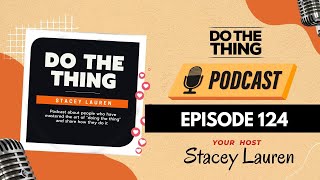
This is a podcast interview (Do the Thing podcast, Episode 124) in which host Stacey Lauren speaks with Kate Buck Jr., founder/CEO of Social Media Manager Pro. Kate recounts starting online as a community manager in 2006, transitioning to freelance social media work and founding her business, and choosing a digital-nomad lifestyle beginning in 2017. She describes selling almost all her possessions, traveling with a suitcase and backpack, and ultimately relocating to Playa del Carmen, Mexico (obtaining residency and buying a condo). Kate attributes much of her resilience and choices to lifelong personal-development work and a daily Dr. Joe Dispenza meditation practice (including the "Blessing of the Energy Centers" and visualization techniques), which she credits with helping manifest outcomes (property purchase, relationship). Key themes and advice: the value of transferable "life assets"/skills, the importance of community and accountability, learning to sell/persuade, handling feast-or-famine cycles with practical steps and visualization, and the power of making a clear decision to initiate change. Contact/resource: socialmediapro.com and social handles as Kate Buck Jr.
Questions this video answers
2006
2017
Playa del Carmen, Mexico
Dr. Joe Dispenza meditations (including Blessing of the Energy Centers and visualization practices)
socialmediapro.com
Chapters
I do really believe 100% from every part of me that everyone has the capacity to be able to do the things that they want and not to be held back by the mental baggage that's in our head that we want to push through.
Welcome to the do the Thing podcast. In each episode, we get down and personal with people who go after the things they want to make all their wildest dreams come true. Join us as we unveil and dissect a formula for what it takes to do the thing. Here is your host, Stacy Lauren.
Hey everyone. Welcome to the do the Thing podcast. This is your host, Stacy Lauren. I have a real treat in store for you guys today. Today's guest is a master of all things social media and the founder and CEO of Social Media Manager Pro. She's also a perfect example of someone doing the thing. She actually began working in the social media industry when it was all still new and somewhat unknown. Now she uses her expertise to train other up and coming influencers, agencies and social media managers on how to get the most out of these platforms. Oh, and she's done it from all over the world. I can't wait for you guys to hear how she unpeeled the onions of her life to discover what she wanted to do. And while others might put up walls and limitations, she used her optimistic mindset to follow her dreams. Doing so has allowed her to create a lifestyle that so many people could only imagine. She gets to work from wherever she feels pulled. You'll get to hear how she packed up everything she owned into only a couple of bags to travel the globe while still building an incredibly successful business. And now she lives in the home of her dreams in Mexico. Please Welcome Kate Buck Jr. To the show. Hey, Kate.
Hey, Stacy. Thanks for having me.
Yeah, thank you so much for coming on. I would love to start off and have you share about you and your background.
Sure. I started online as a community manager in 2006 and so a big part of my career has been in the online space since then. And a lot of people know me as Kate Buck Jr. And I've done, you know, been doing social media and Internet marketing for decade and a half now. And the other kind of big cool thing is that in 2017 I decided to become a full time digital nomad. So I sold off all my stuff and packed everything I could into a bag and a half, a suitcase and a backpack and traveled the world for a few years. Of course, that stopped in 2020 with the, with the pandemic. But during that time I found this little gem of a place called Playa del Carmen and decided to relocate there, bought a property, get my residency. And so now, as the locals would say, I'm 50% Mexican and 50 Mexicana. And I live there now and work my work on my digital marketing agency and live near the beach and do my Dr. Joe Dispenza meditations. That's another one of my cool things that I'm really into. So that's. That's a little bit about me and my story. Did I hit all? I think I had the highlights.
I'd love to. Well, I love so much about this, but I wanted to start off because I don't actually even know what an online community manager is. Do you mind kind of going through that a little bit?
Yeah, sure. I didn't know what one was either. Stacy When I got started, I got hired to do this job that was helping people with their passwords and managing kind of like customer support. But the other part of the job was it was for a personal development company. And I don't know if you mind, but I don't mind saying the names of. Of things is Liz Landmark Education. I was really. I'm very involved in personal development and have been almost my whole life. And so I got a job. It was also starting discussions, having conversations with people, and starting. Starting conversations, really, and managing the forms, responding to people, moderating the comments, what's approved, what's not approved, and just in general trying to help keep conversation going and dialogue going. And so I did that for two and a half years, and then that project stopped because there was this site, I don't know if you've heard of it, it's called Facebook. And it came out and people could connect and the community could connect and have conversations with each other there. And when that happened, I pivoted as well and kind of went out on my own. And so there's. There's kind of two roles. There's the social media manager, but then there's a community manager. And so the community manager inside of right now, it's discord. Or there's Facebook groups or anywhere where there's a community of people that want to have a conversation around a specific or topic or many specific topics, whatever, is there's generally a community manager who helps welcome people, who helps indoctrinate people into the culture of the group, that helps guide the conversation of the group and in general is there to support the members to get the outcome of what they came to the group for.
It's Basically, you're creating that safe space for people to be a part of a community, but then also feel safe to express how they feel about whatever that thing is they've signed up to do.
A hundred percent. Yep. And to help them feel safe. And I, I really, when I'm in, in that community manager role, then my job is to make sure that the members get what the promise of the community, whatever the community is promising that they get, they get that, those benefits as, as part of being a member. Yeah.
So before we move, move forward. Cause I do want to ask then how you started your own, your own company and getting into more of the social media side of things. But how did you end up even falling into that. That first job, that online community manager, had that been something you've been looking at or was there something before that that sort of led you to, to find that job?
Well, I found that job because I was, I knew a person that worked for the company and she knew that I was, quote, good with computers. So in 2006, there wasn't a lot of social media, or at least not what we would call it now happening. As a matter of fact, I didn't even know anything about it. I knew I had like a MySpace profile and there was like friend feed and a couple other things happening, but I got that role through a friend. Previously I had been working. It's kind of funny when I think about it, I was working as a personal assistant for some Mary Kay directors. But what's interesting about that is what was I doing? Well, they had customer emails, so I was answering emails and doing kind of customer support stuff. And then they also, Mary Kay had given them all, all the directors a platform where they could create their own website to put out information. So in high school, I had been the editor of my high school yearbook, so I fancied myself as a designer and really into layout and design and all of that. So I feel like I'm just a person that's a. I'm, I'm. My skill sets really are just. I'm an insatiable learner. There's never a time where I'm going to be so full that I've learned too much of anything. So I love learning and I'm really resourceful or problem solver. And so I love working on projects where I have to figure stuff out because it means I have to learn it and then I have to come up with a solution that doesn't already exist. So I kind of was doing the community manager thing or I Was kind of doing the Internet thing when I was working for the Mary Kay directors. But otherwise, no, it was just somebody who knew me and knew that I was sharp and facile with technology. And so they recommended me for the role. And over the course of those two and a half years, I dug in, I learned everything I could. And when that role was over, that allowed me to venture out on my own. And I. Since 2009, so this is my 14th year. And being a freelancer, being a. Being an entrepreneur, being a business owner, which, whatever word, insert your word here. All on my own, thanks to those. Thanks to those skills that got me that job. And just been kind of figuring it out along the way ever since. Kind of just like everybody else. It's all. What we've all been doing with the Internet, just figuring it out.
I hadn't really come up with this idea until recently of just how much the things that we've done in our past can be used for current. Even though it's not exactly the same thing. Like, would you have imagined that job you had or that taking on that editor role in high school for your yearbook would have helped kind of lead you into this other role and be able to be so good at it as you were taking it on?
No, I. I didn't. Even in college, I bounced around because I have so many interests. I wanted to be in journalism, I wanted to be marketing, I wanted to be in business. I was a history major for a while. Ultimately I ended up. Long story, I'll leave out deciding to actually get my degree in dance. I had been training as a professional dancer and kind of gotten away from it and made through the course of my own journey, made the decision that what I really wanted to do in life was to be a dancer. So I got my degree in D. But all of like just what you're saying. I would have never really thought that all of those interests later would come back to be the thing that I actually survive on. And it's really interesting to me now, after so many years of cultivating these skills and applying them in different ways, how just about every project that comes my way to work on, I have already worked on some piece of it or some version of it in the past. So I always have something to pull from. And I think obviously that's the kind of thing, that kind of experience that gets you really great gigs with really great companies. And that's the. Also just what happens when you get old and you've been in the same field for 15 years. But I really appreciate that because it all means, in general, I almost always have some past experience to pull from as a starting place. And when you have that, you got a place to start now you can implement something, and then you learn from what you implement, and ultimately tweak, tweak and optimize a new plan for this new project that you're working on. And then you take that experience to the next and the next and the next. And it's really, really awesome because, like.
There'S so many people that will have all of these skills and then not think that they're anything special when they're doing something new, but to already have that ability to be able to think, okay, when have I done this before? How can I use this skill in this new thing? I did a whole episode on it with this woman, Dr. Amelia Case. She's like an old coach of mine, and I was looking at the idea of lateral skills, and she called them life. She called them life assets. And I just love that idea of we're all building these life assets through everything that we're doing. And then it sort of makes things not as scary when you have something you can pull from that you've already done, even though it's not the same.
Exact thing a hundred percent. I think we're in an era where skills are really super important. I mean, I guess maybe we've always been there, but being able to sell your skills, sharpening your skills, I've seen that a lot from a lot of really smart people as well. So I'm kind of running with that. Learning a skill and being able to use it is so, so invaluable. You know, one of the most important of which is how to sell, which is something that people don't really like to do. But whether. No matter what you do in life, whether it's. Whether you run a nonprofit organization or you've got your own business or you work, you're just trying to get hired for a job. The skill of selling is. Or just even persuading your friends on what restaurant you want to go out to dinner, too. It's like the skill of being able to. Being persuasive is kind of one of those universal skills that we get to use over and over and over again. And so having the opportunity to practice it and get better at it in different ways in different projects is really beautiful thing. Yeah.
And I'm actually thinking we might need to do a whole separate episode on that, because I'm obsessed with that idea of learning how to sell not only from the idea of presenting yourself and learning how to negotiate and speak for what you want, but also in all those lot, those, those side things that come from it with handling rejection and goal setting and positive thinking and all the things that come from actually putting yourself out there in that way.
That sounds like a great episode.
Yeah, I know. Like, we'll have to put a pin in that for sure. I wanted to also talk about when you switched into your own business because. So was it scary for you when you're doing this job and then all of a sudden Facebook and all these other things come out and it basically sounds like it might have eliminated or really transitioned that job so much that you decided it was time to go on your own? What was that like for you?
Oh, yeah, it was really scary. I was, had just gotten married, I had two step kids and I was getting laid off from the best job I ever had where I had no idea if I, I had no idea this was a whole. Going to be a whole industry or a whole thing. So I was, I was really, really scared. I. Speaking from our previous conversation, I convinced the company to give me three months severance so that I could use it to transition. Christmas was coming, it was October 1st when they, when I got laid off and, and it was totally the right move for the company, but I, I asked for three months severance so that I could get through Christmas with my new family. And I was the primary breadwinner at the time because my husband was going to culinary school. And so yeah, I was freaked out, Stacy. But again, I go back to those skills that we mentioned. I knew I was resourceful, so someone gave me a tip to get on Twitter. And so I got on Twitter. I started doing Internet research for community manager, community admin, just these words that I had heard thrown around in my previous job. I started connecting with people and networking. I started learning from as many people as I possibly could about Twitter itself and how to use it, how to get better at it, how to grow a following. And I started taking side jobs just to make ends meet while I was hunting for hopefully some other company would hire me to be this community manager. And with just enough hard headed stubbornness or, and, or perseverance, whatever you want to call it. About nine months into this I realized that I had enough work that I was, had pretty much replaced my income from my previous job. I mean, not consistently. And it was certainly harder to make sure that I still had it every month. And the platforms were such in flux and the Whole thing. So. So it was a challenging time, but I did about nine months later make the decision and of course with my husband, that I would try to do this thing full time. And I've had the privilege of being able to do it full time ever since. Now, I'm not one of those people that has it all dialed in. And so I do experience that feast or famine cycle. And after having done that a few times, I know to just have extreme gratitude when I'm in the feast cycle and to store enough nets and away for the winter. And when that other cycle comes around, I just. I just again try to keep my nose to the grind, to, you know, be resourceful, to be networking and just faith that the next big client or the next big project is around the corner.
I'm also wondering, how are you able to keep up the confidence that as the famine is happening, that it's going to come through for you? I think a lot of people might think that's the time to give up, or it might just be too hard and want to quit or do something else. How are you able to get through those hard times?
I have two answers for that. One is grounded in reality in like 3D space. I've been through it enough to know that it's winter, spring, summer, fall. It never is winter forever. That gets down to. It has in the past gotten down to and gotten really close in the past where I felt like I needed to just cut bait and go get a job or, you know, whatever, or maybe even I have taken what someone would consider a job for a short time or something as a community manager instead of them hiring me as a project. Whatever. I've just done whatever it, it takes. But it's just enough to know that I always just try to hang on there until I absolutely can't. And it's kind of, you know, like when you're running, when you're starting running and they teach you this tactic that put something that you can see out in front and just tell yourself you're going to keep running until you get to that. Like, I'm just going to run till the end of the street. Okay? I'm just. I'm going to turn this corner, and then I'm just going to run until I get to the bottom of the hill. El Doctoro has a. There's a. There's a book called Bird by Bird, and there's a quote in there by El Doctoro that says something about I'm gonna totally mess it up. But it says writing a book is driving at night. You can only see as far in front of you as your headlights. But you do eventually get to the destination. And so it's little milestones that out in front, okay, I'll get a job if it gets, you know, to this place. Or I'll. I'll think about this again when it gets to this place. And something about hanging in there and not giving up the faith, I think is important. That's my answer in the physical world. I'm also, like I mentioned, super deep in the Dr. Joe Dispenza work. And that all kind of revolves around these ideas in quantum physics that thoughts create our reality. And so the real science and magic is to be able to hold space for yourself that's afraid of what's happening and do what you need to do in with the circumstances that you have and hold a really strong vision and belief in yourself and in your future and what you want to create and. And believe without a shadow of a doubt that it's. That you deserve it and that you're working towards it. To say a very difficult concept in a couple of words. And so I have that practice now and I've proven it to myself again over and over. Just, I've proven it to myself that it's never winter forever. I've also proven to myself over and over that having that strong vision of something does actually bring it into my world. I never know how long it's going to take to show up, but I do know that they do show up. And so it's. The answer is faith on both accounts. It's just kind of two implementations of what faith looks like.
I like so much about this because, like, on one side you have the, like, the serious mindset piece of what you mentioned when you use that parallel to running right? And like having these certain milestones of how you're going to hang on in certain ways. But then also that idea of it's never winter forever. It's. I think a lot of times people fall into that fear and want to give up when they think. When they think that something is going to last forever. But when you kind of take away that permanence, you know, when you make it temporary, then it sort of eases that. Eases that pain a little bit. And then on the other side, you have this practice that helps you kind of think outside yourself and be able to really hone in on what's truly going to move the needle for you.
There's that quote, this too shall pass. And I think everyone has to remember that it's true. In both the good times and the bad, there's no cycle that we're ever stuck in forever. So that's where I mentioned in the feast cycles. I also know this too shall pass at some point. I don't know when. So to have extreme gratitude and be really present and enjoy it while it's happening. I wrote a blog post called the Glory Days. Cause I decided I really wanted to anchor in the feeling of what the feast cycle is. And the more I can anchor into that feeling and visualize it, the more it hangs around. So it's all practice. So when the famine cycles come around, I can tap back into the glory days, remember what it feels and remember it's coming. It's coming around again.
Do you mind sharing more about what your work with Joe Dispenza has been and what that practice looks like for you now?
Sure. I'm happy to share that. What it looks like on the outside is Joe Dispenza, kind of conventionally is known as a meditation instructor. So coach or teacher. So it very much looks what you would expect as a daily practice. Put on my earbuds and my mask. I sit in a, you know, in a comfy place and close my eyes for an hour or so and listen to a guided meditation by Dr. Dispenza. But the truth is there's. There's so much more going on as a practice. So there's a. And there's. He's got so many different things that you could do with it. But one of the core. The core ones that we do is called Blessing of the Energy Centers. And if you want to strip away any kind of dogma from that, it's essentially what you're doing is you're. It's. You're focusing your awareness on the different energy centers inside your body. Sometimes you may have heard of them called chakras. Right. But we're trying to pull that stuff away and focus on the science. And when you do that, and you spend a couple of minutes focusing on. On your body, on. On balance, on harmony, on love, bringing health and wholeness to those different energy centers of your body over time, that practice can lead to what people think of as spontaneous remissions that are not quite so spontaneous because a person has been working on healing their body. So my practice looks a daily practice of either working on healing my body by focusing my awareness or sometimes focusing on some of these external things that we're talking about, maybe finances or relationship or travel or some other situation. Or thing that I'm trying to bring forth in my life. I have both used this tactic of the strong visualization and, and the meditations on a daily basis to. I found and purchased a condo in, in Mexico, which I know we'll, we'll talk about at some point, and that it was a direct result of my meditation work. And also it's how my partner and I met through a series of very odd circumstances where both of us had been using this visualization during meditation technique to focus on what we wanted to bring forth in a partner. And unbeknownst to both of us, we're kind of doing it separately and didn't really figure it out until after we met and kind of talking about our daily meditation practice. So that's what my work with Dispenza looks like. And I've been really deep in that. I was introduced to his work a long time ago and I had a very profound experience. But I wasn't committed to doing the work daily until just exactly two years ago I started doing the work every day. And I can say that I've been doing personal development for 20 years. And in the past two years, I've seen more transformation in myself than the other 20 years combined by committing myself to that daily practice. Yeah.
So how did you get committed two years ago? What changed for you?
I found a community of people that were doing the work every single day. And thanks to having moved to Mexico as a way to be connected with them. The mornings that you wake up and you don't want to do it, the days you don't feel good, the days you think it's not working, the days you're too busy, you have something else going on. If you have a community of people, there's at least one other person that doesn't feel that way. On some days, it's you that doesn't feel that way. And you're the encourager for the other person in the community. So that was it. I, I, I joined a community of people that were doing the meditations every day.
Amazing. Yeah. That's actually part of the do the Thing formula. It's my people and surrounding yourself with people that are doing the same thing as you, that want the same thing and that gives you that community and the connectedness to help you kind of get through stuff.
I agree strongly with that, Stacy. And I think sometimes in life we're committed to things that are different at different times. And so I've been really strong in community of Internet marketing people. I've been really Strong in community of Digital noma. Been really strong and in the community of meditation people. And so joining a community at the time when you're super focused on something I think has been, has been really key for me. So good change.
I would love to hear about the Digital Nomad, because that's been something also that a lot of people, when I ask the question, what are you yearning for? I'm expecting them to say, open a business or meet the love of my life or any of these a hundred things that they could say. But the thing that's been most common for people has been traveling. And that's been kind of surprising because I know travel is important, but I think it is that thing that a lot of people just really want to do, but it's hard to do. So I'm just really curious how that ended up coming to be. For you to be able to, like you said, like, leave with your. What you said, like a suitcase and a backpack and you sold everything else.
Yeah. Well, much like everybody, I had the dream as well. I thankfully had the job that I could do it. And so I traveled for, I was, like I mentioned earlier, I was married. And so I traveled for, to speak and go to conferences and inside of my career stuff for, oh, I don't know, a good decade before I realized that I actually had the opportunity to take my laptop and go wherever I wanted. My home base was Austin, Texas, and so I really loved it there. But I just, I got this itch to go travel and I realized I could do it. Actually, I was following. I'll give her a shout out. A friend of mine, Sheila Brown, and she, I think she goes by Sheila K. Now. I was following my friend Sheila K. And she went and moved to the Dominican Republic. And I thought, oh, my God, she can do it. I can do it too. So I, I, I just made it a goal. And back to community. I found a community of people that were doing remote working and traveling together. There's lots of them that exist now. There's Community, Remote Year, and there's Be Unsettled, and there's Wi Fi Tribe, and there's this whole thing. So I thought, okay, that'll be my training wheels. So I joined one of those groups and I went, I went to Europe with that group for four months in 2017. And after the first week, I realized I didn't really need the, the group all that much. All those fears of would I be able to navigate living in another country on my own went away. When I realized, I mean, all those resourcefulness and learning and curiosity, they help you travel the world too, and running companies and, and doing all of that. So I started in 2017 and I really haven't looked back since. I traveled all through Europe working from my laptop. I went back in 2018 and lived in Lisbon for three months. And then I, in 2019, I decided to start exploring South America and Latin American countries. And in 2020 I moved to Mexico.
Okay, I definitely want to hear that story. So this is where, when you moved to Mexico, that's when you got your condo in Playa del Carmen.
Yeah, that's where. That's where everything converges. So like I said, I went, I went to Mexico because I wanted to. I went to a Dr. Joe week long. He does a week long event. And I met a community of people that decided to stay. And there wasn't really much else going on in life in 2020. So staying in Mexico and doing our. In being in a community and working on our meditation seemed a really great idea. And while I was there, I just fell in love with the community. I realized that everything I needed was there. I can go to yoga, I can go to the. There's healthy food, easy access to healthy food, easy to travel back and forth to the United States, great weather. I had a community of friends. I could work everything a Kate, Kate needs to survive. I went salsa dancing. You know, I do speak Spanish, so I just fell in love. And then through the course of doing the meditations, you know, at some point I decided I wanted to invest in property there. So I found a picture of a condo from the Internet of that would look like something that I wanted to buy. And I put it into my meditation practice as something I strongly visualized and believed that I would hopefully someday move into. And one day I. And at the same time I started subscribing to real estate, investing overseas newsletters and blogs and doing all that research on YouTube and you know, all the things that one does. And one day I opened my email and there was a picture of a condo building that wasn't built yet, but it looked to me so close to the picture that was in, in my visualization on my vision board. So I gasped so much. So and I went and checked it out and it was beautiful and perfect and everything I ever wanted. So I did the work to save up the money and put a down payment on it and I got my residency in Mexico and just decided to go all in and do the thing.
Yeah, it's almost once you had that picture in your mind and then you got to see it in real life. Then everything sort of fell into line from there because you had this compelling vision of what you wanted.
It's really true. I read this book the other day on my plane here to Costa Rica. I read it through twice because it was a short book called the Vivid Vision by Cameron Herald. And I had never read it before, but it was about creating a three year vivid vision either for yourself or your business and how to write it. And it was such a great augment to the work already that I've been been doing. But you're right, it's when there's fear and uncertainty on making a big decision that we all kind of go to our friends and family or trusted advisors for advice. And that's good, it's good to get other perspectives and other people's advice. But we have to remember that, I think we have to remember anyway that ultimately we're the only ones that can make these kinds of decisions for ourselves. So if we're still trying to make a challenging decision, the question becomes, well, how do you really know when something's right for you? And it's just been my experience that when we know, when we know, there's some internal knowing that this is what I'm supposed to do. And if we're unsure or we're fearful, then maybe we're not ready yet. But if you kind of have to distinguish between just uncertainty, fear from uncertainty, or hesitation because it's really not a good move. But if you can decide logically that there's something that you really want to do, but you're just afraid, then you're really looking. You kind of look around for a sign. We all kind of do that. We need. There's. You hear it all the time. Like if you're looking for a sign, this is it. We're always looking for that confirmation. And so I feel for me having created that vision board of what I wanted was, was a tool that gave me the confirmation that I needed from myself. Do you know what I mean? I didn't have to call you, Stacey, and ask you, should I buy this condo? I did show it to a few people saying, what do you think? Is it the same photo? But that was just their feedback. As soon as I saw the photo, I knew that it was the one from my vision board. And that meant there really if everything lined up right, if the money was right and the deal was right, and you know, all those other factors were right, then there really wasn't. I had Looked at other buildings, there was nothing else I liked better. You know, it made the decision very easy. So I do think when you have that kind of vivid vision for yourself of what you want and you're working towards it, then when you. When you get it, when it comes to you, it makes that decision so much easier. By the same token, I think I've had times where it has come to me and I'm still questioning it. And my friends always go, aren't you the one saying, if you're looking for a sign, this is it? That I think that's a pretty clear sign, and that confirms what you already wanted to do. So we all do it. It's just human to be cautious.
And, yeah, I think you've been using the word of it being like the convergence of all these things coming into line, because you almost had to have gone through the stuff that you'd gone through. And then getting into the Joe Dispenza work and being able to clear your mind and get to this point of being able to envision the things that you want. And by the time you then saw that picture, then you see it in real life, it's almost you. You kind of went through this dance with yourself to get to that your mind was settled enough that it was kind of almost the easiest decision you had to make because it just felt right.
Yeah, prior to that, I was renting down there because I knew being there was. I knew that much. And I knew I wanted to buy something, but I wouldn't have had the guidance on the Net, wouldn't have had the. The knowingness for myself to take that next step without having created that. That vision. So maybe it. Sometimes it's. So it was just following the simple steps. Oh, I like it here. I've been other places. I don't like it as much. So if I like it here, I'm going to stay. Okay. I'm going to keep staying. Okay. Well, I'm renting a place. I mean, that feels like an interim decision or that's the decision for now. And I could have kept doing that, but at some point, what's. Maybe there's a question. What's the next right step or something for me to take here? And that's what I just kept doing, is I kept trying to figure out what's the next right step. I knew for sure I didn't want to travel anymore because I'd traveled for three, four years, pretty straight forward. So I wanted to plant roots. So I knew I wanted to find. I didn't want to be leasing and hopping around, but I knew I wanted to be there. So, yeah, it was less of a decision and more of just tapping into what do I. You have to get out of your head to know that. Get out of my head. And what feels right? Does it feel right to be here? Yes. Does it feel right to keep renting and hopping around? No. And so great. If I'm going to buy. What do I want? I don't know. Let's figure that out. Instead of waiting for you to see, instead of waiting just sitting back and waiting to see what the universe throws at you, you do. That feels fun. Doesn't feel fun.
I wanted to ask you also, you mentioned being an insatiable learner and then kind of just knowing how to figure things out a few times. And I was just wondering if you know where that came from. How did you kind of build that skill up?
I don't know. I think I feel blessed. I don't. I don't know. Maybe it's from my dance training when I was younger. I don't know the answer to that. Maybe it was just born with the. With the desire to learn. Yeah.
Can we play with that dance training for a minute? Because I like with all the time that you spent doing that, there could be something there was there times that you had to. To do that with that where you're just having to figure out what.
What to do and.
And it maybe built up that muscle for you to flex to. To kind of get into that habit.
Yeah. I mean, for sure. It's the whole thing is about. That's the whole thing about training in any sport or I guess even an instrument or singing, I guess, or whatever is. You're. You demonstrate the skill and then you get feedback from your coach. And then you have to figure out how to make those adjustments. And then you always end up being in some testing or live production environment where those skills get put to the test. I did write another blog post called Lessons Learned in Live Production. And it was all about what I learned through being on stage and being a performer for so long is. I mean, the lights are on, the curtains open, the audience is there, the music is playing. You've been practicing for all these months, and then they're still just on the fly. There's stuff that happens and decisions that you have to make. You know, somebody's late, they're in the wrong spot, the music skips, your costume doesn't get on in time. There's a multitude of things that go wrong during live production. And you train yourself to accommodate and adjust and course correct and then get back to, I've never been in a production where any we ever stopped and went, this isn't going anywhere. You know, we need to start over. You guys ignore what you just saw. So I think those things, the ability to spin plates and figure things out on the fly and you know, all of that I definitely think comes from more than a decade of being a dancer. For sure.
Yeah. I think that's so cool. It kind of leads back to that life assets thing I was talking about earlier because like, you just don't know by you doing certain things that you're doing now what that's going to lead in your future and how that's going to help you with different things. So I just, I just find that so fascinating.
I mean, for sure, dance teaches discipline. There's just such a regimen to it. I mean again, anybody that trains in anything, there's discipline is important. You know, creativity. We, we spent a lot of time in choreography classes trying to come up with new and interesting patterns and pattern recognition and even so much as like weight sharing in our modern class about doing lifts, you know, that you have to weight share. It's like it teaches you so much about how to compromise with another person or there's, there's probably tons of things that I learned that I learned from that. But I don't know where the like insatiable learner thing came from. I, I just don't know where that came from. I don't know if that was nature. Nature, right. We could talk about nature versus nurture. I don't know if that was taught, if that became a thing because I was studying ballet or if I was just born with this curiosity.
Yeah. Because that's a really special skill. Because there's some people that, you know, they can't get the things they want because they're just closed minded. Right. And they're not open to seeing that there's another way or being able to ask for help or to open their mind up. And then there's other people that when they go after something new, it's just having that insatiable. I like the way the word that you use, that insatiable quest for wanting to learn this new thing and realizing that it's okay to be a beginner at something and kind of learn what you want to learn.
Yeah. I think part of, part of what all the pieces that got put together for me is when I was 19 years old and I was Confused about what I wanted to be when I grew up, because it was that point in my life. I said where I was, I'd been a history major and a journalism major and a marketing major and a business major. And what was I interested in? I was interested in all of it equally and kind of none of it at this at the same time. And I was trying to figure that out. And I got introduced to transformation. That's when I got introduced to landmark education for the first time. And my friend said, oh, this might help you figure out what you want to be when you grow up. And through that journey, I got very early 19 years old, introduced to that idea of reality is not what we is not an is. It's. We see it through the lens of the glasses that we're wearing at the moment. And so, again, feel very lucky that I stumbled upon that and at such an early age, because I do think that that ended up shaping a lot of that curiosity. Because, you know, the key takeaway there is that it begs the question, if this is not how it is, then how is it? If this doesn't work the way that it works, how does it work? And so I think that really also kind of kicked off me having more questions than answers and just kind of really wanting to learn as much as I could. Because that onion. And you still. Yeah, 20 something years later, I'm still peeling back the layers of, of that onion. And it's the most fulfilling part of life, I think, for me, anyway. So that.
Yeah. What would be your suggestion to somebody that maybe hasn't done that work yet, and they're kind of in that situation of where you were when you were 19, what would be something you would think they would help them get some clarity?
Well, I. There's lots of different. I mean, there's. There's tons of different books and podcasts. You know, the resources these days, thanks to the Internet, are infinite. I think there's nothing better than an immersive experience to start with, to go to an event, maybe Tony Robbins, upw, or Joe Dispenza's week long, or the Landmark Forum, or, or, or, or. The idea is that you have someone else with some kind of system or process that asks you questions that you would never think to ask yourself that the answers to which guide you in a direction that Einstein says, like, you can't solve problems with the same level of consciousness that you use to create the problem. So you need someone else's brain that's thinking differently than you to ask you questions. And there's something about being at an event with the cumulative energy in the room of all the people that leads to these really peak transformational experiences where people have really profound insights. From there, it becomes having a coach or a community. You said so that you master the discipline of actually implementing the takeaways of whatever you learned in that event. But that for me, is what I would recommend to people. And I know that's not the path for everybody. Lots of people get. Have really profound insights from books that they read or podcasts they listen to, and they don't feel they need that peak event experience. But, but for me, I, I felt I did.
What would be like a couple questions you would encourage someone to ask themselves to kind of get into their own kind of truth. What would be something that you think would be helpful if they're not able to go to that immersive experience?
I forget whose question it is. I try to give credit every time I can, but I think I forget who gave me the question. There's a book about it, but it's. The question is, if I did wasn't doing things, if, if I wasn't doing it this way, how would I do it? Is the. Is the first question, if I wasn't doing life this way, how would I do it? Or if I wasn't doing. If, if, if this area, if I wasn't doing it the way I'm doing it, how would I be doing it? And that gives you the freedom to kind of create from scratch. Okay, well, I don't know if, if there's no limits and I can do anything I want in this area, what would I do? How would I do it? And then from there, because I think what happens is. So like, even when I'm doing strategies for people like in their businesses or whatever, this is the approach that I take. Because I think what happens is people start by thinking first about the limitations of why they can't do things. Okay, well, I really want to travel. Okay, well, well, I can't travel because I have kids or I, you know, my job is this, or I don't have enough money, or I, I wouldn't know where to go, or I can't speak the language or. Right, Instead of first create the vision from scratch, if I could do anything I wanted, what would I do? If I wasn't living life the way I'm living it, how would I live it? And write out that vision, and then from there take that vision just like a business would, right? And say, okay, well, in order to Fulfill this vision. What resources do I need? What resources do I have now? What things do I need to change? What things should I keep. It's all about then putting the pieces of the puzzle together. Oh, okay. Well, I don't have a job that allows me to travel right now, so I need to figure out the income piece. Okay, great. We gotta go create a plan to come up with the income piece. So again, if I wasn't living life this way is the question, how would I be living it? Create again your vision. I love how this interview is all coming together. Create your vision for it and then map out your plan to get there. And part of that plan needs to be revisiting that vision over and over and over again.
I love that question because you said a lot of people will reject when you kind of frame something in a certain way. And this is, you're already kind of framing it in a little bit of a negative way, but you're getting it to, you're meeting them at the access point to get them to open their mind up so they're not rejecting. Because they can't reject that question.
Yeah. It reminds me of whenever people ask me and I talk to them about how I've done juice fasts and juice cleanses or extreme, I guess things. Oh, I could never do that. Oh, I could never quit coffee. Oh, I could never fast for a day or three days or a week. Whatever it is, it's. Well, no, you can, everyone can. If I can do it, there's no human skill. Every skill that if any human that has done anything, it's a four minute mile. Right. Once one human can do it, it as possible for any human. Is it likely? I mean, no, but it just takes a little bit of commitment. There's no difference between me, you or anybody else. We all have the same skills. So if I can quit coffee, you can quit coffee. If I can travel the world, you can travel the world. All of that is available to all of us. It's just a matter of figuring out and I don't know why people, I mean, I guess Tony Robbins says we move, we're better at moving away from pain than towards pleasure. So we don't work as hard to move towards the things that we want. But we sure if we. As soon as fitness is a great example, if you just want to look better and it's a vanity thing, the likelihood that you're gonna get committed to a workout routine or changing your diet or whatever is low. But the minute you get diagnosed with an illness or something like that, immediately you, You. You implement because you're moving away from something bad instead of moving towards something that's. That's good. But Dr. Dispenza says, why wait? Why wait for the crisis moment? Why wait for the relationship to end or the. The job to fall apart or the death of a loved one or a health concern or crisis? Why wait for those moments to make big decisions to change your life? Make them before those things happen. Make the big decisions now. And, um. So I love that.
So good. Yeah, this is the universe moment for me because I just was talking to the. I'm writing a book right now on do the Thing, and this is like, literally something I was just talking to the editor about, was about how so many people I interviewed that went bankrupt or had cancer or something major in their life, and that was their moment to reset. I want this book for them, but I also want this book for the people that haven't had to have that huge life shift to have to start over.
Yeah, I've been talking about it recently. It's a great time of year when we're recording this in January. But I did. I wrote a blog post earlier this year about my 10 steps to starting over in life and business because I realized I have started over so many times. And I do have put all these. After all this personal development work and how much I love systems and processes. Stacy, you can imagine I put together a little system as well. And it just amazes me how many people comment and say that they want to reset or they want to reboot, but when you give them the steps, they don't. They don't take them on. And so it's. I just hope that your book and this podcast, and in general your podcast, the whole thing inspires people to actually just take. Take the smallest action towards something. Because I think those micro commitments and those micro. The positive feedback that you get from taking a micro step and getting the outcome that you wanted, it starts to snowball. So then you start being confident to take bigger steps and bigger risks over time. There's really nothing to be afraid of. There's no real death on the other side of a decision.
So good.
Imaginary death. Right.
You've already shared so many things, but I'm curious, do you have one piece of advice that you could share for the listeners on doing the thing? Like, what would be your biggest piece of advice for people on doing the thing?
So there's a lot of things that. That I could say, but I do think that the first step Is actually. Actually I'm going to lean on my. I'm actually lean on my blog post. I think the first step is the. And the most important step is that people have to make a decision. And you have to make a decision with such firm intention. It's what we were just talking about, about not waiting until the tragic thing happens. You have to make a decision in this moment that. It's almost as if that thing had happened. It's. You have to be sick and tired enough of being sick and tired that you just decide that you're gonna do the thing. And sometimes we have to, or most often if we wanna not wait for the tragedy to happen. I waited for my relationship to end. I waited for my marriage to end. I waited for my business to fail, you know, my first business to fail, et cetera, to make those decisions. But with. With your. When, if you just make the decision that you're at least done with living life or living life in this area in the way in which you have lived it in the past and that you really are ready for the change with a firm amount of energy and commitment to the future, it starts to already break you away from that, neurologically speaking. That decision starts to override past decisions. And I think people kind of, I'd like to be thinner, I'd like to travel. These are things I'd like to do. And you kind of. Kind of have to get to a place where you're a little frustrated, maybe a little angry. Gotta get a little energy into it. This is never gonna be this way ever again. Whatever it is, whatever that sounds for you. I don't mean to be putting my language on it, but it's that decision. Tr Once again, he says people ask you change your life. It took 10 years or something. No, it happened in a moment. It happened in a moment that you made a decision. And I've experienced that for myself. It's the moment that you make the decision that never again are you going to put up with being lazy or not doing my meditation every day or whatever it is, being broke anymore or not. Not going to that place or whatever it is, or unhappy marriage, whatever it is. The moment you make the decision is the moment you start to move in that direction. So it's kind of like when my friends come to me for advice. Sometimes I'm, oh, no, you're not there yet. I can tell you're not. You're not tired of this situation enough to actually do anything about it yet.
Yeah. So good. I love that I'm So glad that I still asked that question because you had given such good advice before, so I was wondering if I should still ask that. I'm glad I did. That's so good. Do you mind sharing for everyone or why don't you share where everyone can learn more about you and find the blog posts that you've been mentioning. And then also if a company or, or whoever's, like whoever you serve is interested in working with you, I'd love to have you share that as well.
Sure. Thanks for asking. I really appreciate that. Well, you can find me Kate Buck Jr. On any of the socials and all of them, and I'm the only one. So that's the best place if you want to connect with me professionally speaking. My website is socialmediapro.com and if you go to the Social Media Pro blog is where you can find some of these blog posts that I've mentioned. And I would love to connect with you guys. I. I train and coach people to start their own business online and travel and all of that and on one side of my business. And then I also, of course, like we said, work with companies that need that community management, social media as well. So I'm open to chatting with people that need support in either. In either area.
Amazing. Thank you so much for coming on. This was so good. It was really good.
Thank you. I had a lot of fun. Thanks for inviting me. Thanks for listening to the do the Thing podcast. We hope you enjoyed the show. But even more, we hope you'll be inspired to do the thing. Do you have a burning question on doing the Thing that you'd like answered? How about an inspiring do the Thing story of your own that you'd like to share? We'd love to hear all about it. Just leave us a voice message at do the Thing callcast co or email us@helloothethingpodcast.com.
More from Stacey

From 262 Women to 8 Million Media Impressions: Deborah Drummond Built a Global Women’s Movement


From Notes App to Published Author: Avery Brenna Crumrine on Turning Intention Into Action


How Stacey Lauren's Billion Dollar Impact Marketplace Will Raise Billions for Charities and Causes

What Happened When Allison Maslan of the Pinnacle Global Network Ran a Challenge with Stacey Lauren




Leaders Share How Stacey Lauren Sparks Action, Clarity, and High-Impact Collaboration

Sandi Masori Announced as Emcee | The Billion Dollar Impact Event Returns to San Diego