Episode 147 - Gregory Benedikt On How Accountability Will Ensure You Live A Story Worth Telling
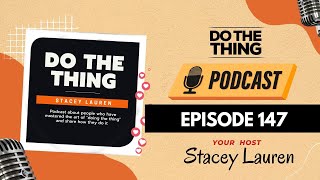
This is a transcript of Episode 147 of the Do the Thing podcast (uploaded Nov 28, 2023) — a conversation between host Stacey Lauren and guest Gregory Benedict (human potential coach and host of the Dare to Dream podcast). Central theme: accountability as a mechanism to turn dreams into action. They define commitment devices (Victor Hugo/tower example), cite an infographic of how accountability raises success probability (25% → 40% with deadline → 65% when told to someone → 95% when regularly sharing progress with a designated person), and offer practical tactics: set deadlines/commitment devices, keep promises to yourself to build self-trust, regularly share progress, surround yourself with "my people," adopt a motivating mantra (Gregory: "Live a story worth telling"), detach from outcomes and treat early attempts as first drafts, overshare goals to attract support, and avoid the "Sunday Fallacy" by picking small daily commitments. Gregory’s coaching pitch: "I help dreamers become doers" with a three-step structure — (1) Dare to Dream, (2) Make the Map, (3) Doing / Progress the Plot.
Questions this video answers
Episode 147 — "Gregory Benedikt On How Accountability Will Ensure You Live A Story Worth Telling"
November 28, 2023
Dare to Dream
"I help dreamers become doers."
April 17
Chapters
Hey, everyone. Welcome to the do the Thing podcast. This is your host, Stacy Lauren. Okay, guys. Well, I'm bringing back one of our regular experts who I've heard so many great things about over and over again in the community and from the podcast listeners. And it's just amazing when I want to explore an idea and I can bring on someone that I know is going to have valuable insight on it. I think it's great, Great to know who you can go to when you want to talk about something that's really important to you and that I hear a lot of people asking about. And he has such a great way of being able to share how he feels about things and then getting people to move into action. And so I am so excited to welcome Gregory Benedict to the show. Hey, Gregory.
Hey, Stacy. I'm so excited to be back and so appreciate the kind words from you and from people, people in your community. It fills my heart up.
Yeah. And something I didn't mention, but I thought I'd say it again, is you're also a human potential coach, and you have an amazing podcast called Dare to Dream. And I think we're so aligned on so many things that we're both doing, which is great.
We are both lovers of doing things and doing things that scare us.
And the cool thing is how we met, meeting at Toastmasters, where I had just joined, you're the president of that. And had I not gone to a Toastmasters meeting, I wouldn't have met you, and you wouldn't have been able to help the people in the community. And I think there's something really special about that. Just by me doing things that are really intimidating, I'm getting to meet people like you, and then having this opportunity for us to even talk.
I have this theory that the more you put yourself out there, the more you do the things you know you should be doing, the things that scare you. The universe just rewards you with connections, with opportunities. All these doors open, and it's all because you're having the courage to do that thing that scares you.
Yeah, I love that you said that. So, something I've been exploring lately. And you guys, this isn't what we're talking about today, but I have to go here for a minute. Is the thing, too, is when you do the things that you know you want to do, but you're scared of, what opens up for you is things that you didn't even know you wanted to do. You didn't even think it was possible. But once you start moving, that's when you start thinking of those things, and I was thinking about you with this, too, because I was thinking how you ended up even joining Toastmasters was because you had your sister's wedding that you had to speak at, and that's how you joined. And then all of the ripples that have happened from that, so that you wouldn't have even expected had you not had to give that speech.
Right. And honestly, that feels like a great segue into our conversation about accountability, because that's about as accountable as you can become when you know that you're going to give a speech in front of hundreds of people. You're not accountable to one person, you're accountable to many. And when one of the people you're accountable to is your sister, who's asked you to be the best man, you got to join Toastmasters. You got to put in the effort.
I love that. And, yeah, just so you guys know, I don't think I mentioned this in the intro. That's what I asked to talk to Gregory about today was accountability. Because that's something I've heard a lot from people, is how do I get more accountability in my life without burning myself? Because with do the Thing, we're not Hustle culture. Hustle culture. I like Hustle, but it's more peaceful. Hustle. Hustle culture is you're exhausting and you're depleting, and maybe you're not even doing the thing that's aligned with you. Do the Thing is really about finding out what lights you up and being able to follow through with that. And sometimes accountability needs to be there in the beginning until you start to get that ignition, and so until you get ignited, pretty much. Because once you're ignited, you don't need it, but you almost need an aid in the beginning to get yourself to do it. And I love that idea and even think about that. That's the ultimate accountability, is setting a date for something that's in the future that you know you need to do. You can't back out of it. And then all of a sudden, then you sort of move towards that thing that you're doing.
One of my absolute favorite examples of this, what you're describing is called a commitment device. And James Clear talks about this in Atomic Habits. He includes this story of Victor Hugo, who was the author of the Humpback of Notre Dame. And Victor Hugo had, I think, two years to write his book Procrastinated, realized that he had six months left to get the book done. So what he did is he locked himself In a tower. He sold all of his clothes except this big shawl that he could wear and essentially forced himself to not go outside because he didn't have any clothes. He locked himself in a tower and he created a commitment device to get the book done. He removed all other options and made himself extremely accountable because he literally couldn't go outside because all he had is this big blanket to wear.
It's so funny because I love that book and I don't remember that part of the story. Isn't it funny? We pick up what we pick up. And what's coming to my mind as you're talking about that. It's like when you run a half marathon or marathon or whatever, and you're putting that out there, you're paying the money, and then you have to pretty much exercise in order to do it. And then this came up recently with comedy because I just did a standup comedy performance, and there was a few people in my group that didn't end up doing the performance. And I realized you have to just decide that you're going to do it regardless if you're going to suck or not suck. And don't say, oh, if I'm good enough, I'm going to do it. You have to. Whatever that thing is you want to do, you just have to make that decision that you want to do it, and then your steps are going to automatically flow in that direction if it's something that you're meant to do.
Right. The commitment device is an action you take in the present moment that guarantees an action in the future. So signing up today for a half marathon, telling everyone you know about it so that you know you have to do the half marathon. Otherwise you got to be embarrassed and tell everyone you didn't do it. And I do that with trips. I just buy the ticket. I do it now. I book my stay ahead of time, so I can't back out of it. Because if you wait and maybe do it in the future, so many things don't end up happening.
And then you're also making me think of. I just shared this in my group the other day is I was thinking about when you go to a restaurant, if they overcharge you for something like a meal that you didn't get or a grocery store. I'm sure a lot of people have had that happen where you get overcharged. Every time you go back to that place, you're gonna question the bill. You're gonna look at the bill because you remembered being overcharged. So you're not gonna trust that place anymore until maybe you've seen it over and over again, work again. But in the beginning, it's gonna take you a while. And I think we're the same way when we set a goal for ourself and we're doing a commitment device or whatever that is. And then if we're not following through, we're gonna stop trusting ourselves. And so that's what I thought was really important, is that's how we establish trust with ourselves. Following through on the same the things that we say that we want to.
Do that is so powerful. I think that's what confidence, especially self confidence, is. It's knowing that you're going to do the things you said you're going to do, because you have a track record of doing it, of you committing to yourself, keeping that promise to yourself. And that's really where confidence starts, is that internal relationship.
So accountability. So our first thing is making sure or when we want to do something new. Like right now we're doing a start a book challenge in the do the things singles community. So something they could do at that point would be setting a date for when they want to have the book maybe finished, but not published, because that takes a little bit longer. Do you think something like that? Is there any other thoughts that you have with that idea?
I think that's a great starting point. And I have this little infographic that I want to read that talks about the power of accountability. This is amazing. I send this to everyone I work with. I send this to everyone who will listen. And first, the probability of success, if you consciously decide to achieve a goal. So if you consciously decide, I'm going to write a book. Probability of success, 25%. The probability of success, if you set a finite time frame for achieving your goal, goes from 25% to 40%. So that's saying, I'm gonna write a book and I'm gonna write it by next August, something like that. The probability of success, if you commit to someone that you'll do it 65%. So you go up from 40 to 65%. That's telling people in your life that you're gonna write a book. Tell as many people that you're gonna write a book as you can. It'll motivate you. And then the final one, the probability of success, if you regularly share your progress with a designated person. Maybe this is a coach, maybe it's your mom, maybe it's a friend. But if you're checking in with them on a consistent basis, so People in your group checking in with the group checking in with you, your probability of success is 95%. So you go from 25% just consciously deciding to do something to 95% when you regularly share that progress with someone and it's a designated person.
Oh, my God. So I'm so excited right now because, you know, I have the Start a Podcast challenge coming up April 17th. And what I'm thinking of when you're saying that is I think that's why I've been more motivated to do so many things lately is because I'm sharing it on the podcast. I'm like, oh, I just signed up for comedy, and I'm doing comedy. And of course I'm not going to back out because I shared it on my podcast. I did a challenge 75 hard, and I finished that. I signed up for Toastmasters. That was new since the podcast. And I almost think the podcast is a really good vehicle for this because you're regularly sharing that you're doing something, so then you kind of feel moved to do it, but not even from an accountability place. It's from your own internal knowing that you want to do it because you're speaking it out loud.
This resonates with me so much. It's why my personal motto is Live a story worth telling. Having a podcast or being a writer gives you the ultimate excuse to do cool things. And it's an excuse, but it's also motivation and encouragement, because you're totally right. Every interaction you have in the world, every lesson you learn, that is fuel ammunition for your podcast, even if it's a really embarrassing experience, you can talk about the lessons you learned or how to avoid it or just share vulnerably. And so having that platform, whether it's a book, podcast, being a writer, it encourages you to live an exciting life, and it also gives you an excuse to have conversations with cool people.
Yeah. And I'm feeling like this idea of you having that motto of living a story worth telling, that's your own internal accountability because you've decided that you want to live a story worth telling. I'd love to have you share what I read in your newsletter the other day, if you're open to it, because I feel like that shows how powerful the statement is to be able to say that and then to be able to live into it, too.
Absolutely. It is the ultimate motivator. And I find myself kicking myself sometimes. Complaint. I'm like, oh, man, I gotta do this thing, because this is my motto, and I want to Actually create a commitment device for that. And that commitment device is I'm going to Japan at the end of April and I'm going to get a tattoo in Japan that says live a story worth telling. And I'm doing it in Japan because Vinnie, my co host on the Dare to Dream podcast, that's his phrase too. It's kind of our phrase together. And he's going to get a tattoo of that as well. So two stories that have happened to me recently to illustrate living a story worth telling. The first was a Thursday night I went to this Toastmasters workshop. It was a free speaking workshop hosted by two people who had won the International Speaking Contest, which is the highest level you can get to at Toastmasters. And, and again, it's Thursday night. I know that most people there are going to be 65 and older. Like, ah, I don't really want to do that, but I should. The best version of myself would go to this. So I show up and it turns out that Shannon Keating, another woman from our club, she came with me. So it was super fun. I had a partner in crime for the whole thing. And so these two speakers present this beautiful presentation workshop on how to become a better speaker. And after about an hour and a half of the best, most eloquent speaking I've ever heard, they ask the audience of about 60 people. All right, so who wants to get up and tell an eight minute story in front of everyone and we'll rudely interrupt you with live coaching. And I'm sitting there and I'm starting to sweat. I'm thinking about it and Shannon leans over and she whispers to me, you better live a story worth telling because I had just given a speech about that the week before. So I'm like, ah, of course I gotta do it. So I shoot my hand up, I get up in front of everyone and literally before I say the third word of my story, I hear stop from behind me. And they interrupt me. They tell me that I needed to have more eye contact before I started my speech and really build the tension. And so I make it through this speech in front of 60 strangers I've never talked to before. And I was shaking, I was sweating, I was nervous, but I did it. I. The moment I raised my hand and went in front of the people, that's the moment in my eyes that I won, totally accepted the challenge. So that's story number one, which leads me to number two.
Yeah, I have to say too, the other thing that I'm, I'm noticing is you're surrounding yourself with my people. Right. Shannon wants the same things as you, and you're both doing things in that way. And I feel like that's something really powerful. So then you have almost, like, a little ally in your story worth telling. And I think there's something really powerful about that. When I mentioned hustle culture earlier, that's like, where you're living in a vacuum and you're kind of by yourself, but with do the thing, one of the things we embody is being able to surround yourself with people that want the same thing as you. And so that's amazing that that little nudge was the thing that got you to really get up there too.
It was so helpful because I didn't know she was going. She actually saw my name on the list of attendees and was like, you're going, let's carpool. And. And it is because of her that I did it. I don't know. I want to think that I would have gotten up and spoke if she wasn't there, but that little nudge from her guaranteed it amazing.
Okay, now the second one.
So that happens. That was Thursday night. And then two days later on Saturday, I'm at breakfast with a friend I was catching up with. And we sit down, and a couple tables over, as I'm sitting down, I make eye contact with this girl who's just beautiful. We make eye contact. It was a little bit extended eye contact. And I was like, okay, it's on. I gotta say something to her later. So we eat breakfast, and I'm just praying that she's still there when I finish up, because this was a friend I was catching up with who I hadn't seen in, like, a year. I don't. I didn't want to be rude and just ignore him. So, anyways, the meal ends. I have to ask the waitress for a receipt because it was one of those little electronic ones, and I needed a pen and paper. So I asked her for a receipt. I asked her for a pen. I'd left my phone in the car. It's just something I'm trying to do more of. And I walk over to this table where this girl is sitting with another guy sitting across from her and then another girl. And I was very nervous because there was a chance that the guy across from her was her boyfriend and I would get punched in the face. But.
I had to. I had to give it a go. And so as I walk up, the guy is telling a story, and I look at him and I say, hey, man. Really sorry. Can I interrupt for a moment and he looks at me and he's like, sure. Then I turn to her and I say, you're really cute, which probably means you have a boyfriend, but if you don't, here's my number. And really quickly she goes, I don't have a boyfriend. And then I have this big grin on my face and I slowly slide the receipt across the table and I go, great, here's my number. And then I just walk away. And again, it was one of those moments where regardless of the outcome, I felt like I had accepted the challenge, I had rose to the occasion, and I was living a story worth telling by engaging with someone in the real world, not on a dating app. It was really scary. But to make a long story short, she ended up texting me. We've been hanging out. It's been amazing, and I'm just super happy regardless of the outcome. It feels really good knowing that I did it the old fashioned way.
It's amazing because you have this thing that you're embodying and you're living by now, and then it's getting you. That's the ultimate accountability. It's getting you to embody that person of living a story worth telling, which now you're getting more and more confidence by you doing it. I like that you're really healthy about not knowing what the outcome is. And that's fine with both the speech and with her. And so not having an attachment to the outcome, but getting the confidence from the act of you doing it. And it's like, oh, my gosh, keep going there. And that's amazing.
I think separating the outcome or letting go of your attachment to the outcome is a huge piece with accountability, with all of life, because we don't get to decide how things turn out a lot of the time, but we do get to decide if we rise to the occasion if we take that first step.
How do you think someone can do that? I think that's really hard for people. What do you think that will help them be able to do that?
I think acknowledging that you taking any sort of action, at least trying, making an attempt at whatever it is that you're attempting is better than doing nothing. And the outcome doesn't matter. So if you're gonna go give a speech at Toastmasters, if you're going to start a podcast, completely let go of the outcome. Don't think that you have to give a good speech, don't think that you have to have a good podcast, maybe even aim for a bad first draft. I'VE heard that before. I've heard people say, give me your worst first draft possible and take some of that pressure off.
Okay, so I'm gonna sum up where we are right now. Cause this is really exciting. So, number one, we're talking about accountability, commitment, device. Really thinking of something that you can do to show that you've done the thing, basically, or something that you wanna do. Number two is keeping these promises to yourself. So then you trust yourself and you're building confidence that you're able to do whatever it is that you're wanting. Number three is regularly sharing what you're doing with your friends. Or you could join my podcast challenge that's starting April 17, because that is a great way to do it, but you could share it with your friends and the people around you, what you want to do. And then number four, surrounding yourself with my people. So then when you are feeling like you. You're not living up to what you want, they're not there saying, why would you do that? They're there nudging you, encouraging you to do the thing that they know you want to do. And then number five, having a mantra that you live by that you want to live your life by, because then you're feeling accountable to live the life that you're saying that you want to live. And then number six, not having an attachment to an outcome, letting just the action of you doing whatever this thing is, even if it's just the first step and it's not the ultimate goal, really just having no attachment to that. Focusing just on the action being the thing that wins for you. And then number seven is being okay, which might be combined with number six. But number seven, I love the way you worded it. Is making it a first draft so you don't feel the pressure of having it be perfect.
Yeah. And there are two things I want to say. There's one quick story I want to share to really drive home the it doesn't matter whether you win or lose. What matters is do you accept the challenge? I want to tell that quick story. And then I want to mention one more thing about my people. And I had a cappuccino today for the first time, so I'm very caffeinated. It's probably why I'm in storytelling mode. But for anyone who hasn't read the book Green lights by Matthew McConaughey, highly recommend it. And this is where this whole idea of win or lose doesn't matter. What matters is do you accept the challenge? That's where it comes from. So Matthew McConaughey is in. He's either in Africa or South America. He went to both throughout the book, and I can't remember which one he was, but he's in this small, small village far, far away. And for some reason, he told everyone that he was a boxer. He didn't want to say he's a movie star because they'd freak out and not leave him alone. So he says that he's a boxer or some sort of fighter. That's his cover story. And the village is like, oh, great. You can fight our village's strongest warrior. And he's just like, what? Oh. He gets himself in this situation where he is literally wrestling the biggest man in the village, this giant, this behemoth of a man. And to make a long story short, he ends up holding his own, like, wrestle. I mean, he definitely loses the fight, but he steps into the ring and he accepts the challenge. And he's speaking with one of the elders of the village later, and he's like, how did I do? How did I do? And they look at him and they say, it doesn't matter that you won or lost. What matters is you accepted the challenge the moment that you stepped into the ring. That's when the whole village respected you. And that has always stuck with me. And then the craziest part is he's leaving the village. He's going to the next village over, and it's 15 miles away. You have to walk through the rainforest to get there. Rainforest. So it's probably in South America. And as he's leaving, the giant who he fought comes out of nowhere. And Matthew McConaughey is like, oh, shit, I'm gonna get my ass kicked. This guy's pissed. And instead, the guy comes up to him, doesn't say anything. He grabs his hand, and they walk 15 miles to the next village hand in hand, saying nothing.
Wow.
And so it's like this unbelievable life experience happened just because Matthew McConaughey was willing to step into the arena to take that first step to accept the challenge.
Oh, my gosh.
So that I always. I always think about that. What like you talked about earlier with joining Toastmasters or doing something where there's so many unintended positive benefits, what doors are going to open up for me if I accept the challenge here. That really motivates me.
And you. You don't even know that you even want it until you're moving. I have people in the group right now that are like, I signed up in your group to date because there was a dating challenge that I had, but now I'm starting a podcast. They had no idea that that was even something they would want to do until they started moving and going through the growth that was in there. And so I think there's something so powerful about that. It's really just following through with the things that get you excited and then just keeping your mind open to be able to move through whatever those unattended positive rewards are.
You never truly know what is next or what's going to happen because of something you do now. So I love that. And then you mentioned my people, and I think that I just wanted to highlight the importance of that. That is so important. If you're surrounding yourself with people who their norm is doing the things that you want to be doing, it's so easy. You can almost hack your human biology of wanting to fit in, wanting to do what other people are doing by surrounding yourself with people who are where you want to be. I've written about this before, but it's really easy to work out every day if you surround yourself with people who can't stop talking about CrossFit or it's easy to eat healthy if all of your friends eat healthy. It's that you're the average of your five friends. And my people is so, so important. And then being in a community of people like that with accountability is an additional bonus. And so what came to mind with this is I'm part of a community called Men and Women of Discomfort. We voluntarily seek discomfort to build our character, to improve our lives, and ultimately to be ready for the storm of life when things get hard and we have to face the involuntary discomfort, the things we don't get to choose. We're ready for that because we've been practicing, we've been doing cold showers, we've been working out every day. And that community has an interesting take on accountability. So instead of holding people accountable, we say that we give everyone the opportunity to account. We provide the space for you to say, this is what I want to do. This is what I'm putting myself on the hook for. And we'll encourage you, we'll support you, we'll call you up instead of calling you out. But ultimately, it's you. You are the one who's accounting. And to some, that can feel a lot better than accountability. Having someone else hold you accountable. You're holding yourself accountable.
I love that. Call you up. I like that terminology. You're also making me think of how powerful it is to feel contribution and how that could also be a way of accountability. I think of even toastmasters by taking on a role and being able to then almost teach something in a way. And then this happened to me. I can't remember if I ever told you this story, but I was only three weeks into my podcast and someone had asked me to be an expert on a cohort she was doing for people that were just starting a podcast. And I hadn't even published it yet, but I had done 10 episodes. But because I knew more than these people that were just starting, I already got to teach them about how I was doing it. And they were so excited to get to talk to me. Cause I was just starting and I still had the nerves and all that stuff. And so I would almost frame that as accountability or not accountability. Sorry, that's the education part. But it's another form of accountability. Because you feel like you're contributing back to things and getting more fulfillment in that way.
Absolutely. Knowing that you're going to teach someone something, have to explain it to them. That is such a good way to put yourself on the hook and also make it fun. I joke around in the newsletter that was about that story of meeting this girl at the cafe. I always write a section that's what I'm learning about. And the whole what I'm learning about section for that week was about Nietzsche, the philosopher. And I spent an hour and a half on a Saturday diving deep into philosophy. And then when I got to a different part in the newsletter, I explained that the reason I was doing this is because she studied philosophy and was like, yeah, you should read this. So I had a strong reason to study philosophy on a Saturday because I wanted to be able to talk to her and about that and have that conversation.
Yeah, you're making me think. I was saying this the other day, thinking about the mom that wants to teach her son or daughter, whatever, how to cook, and they're not interested at all. Right. Until the son wants to ask a girl out and then he's going to cook for her. Now all of a sudden, he's going.
To be really interested in cooking 100%. Now he has a reason.
A reason? Yeah, that's what it is. What do you think is good for someone daily to be able to just add more accountability in their lives? Obviously everything that we've just talked about will be great, but what's a good daily practice for them?
This makes me think of something I've been talking a lot about recently, which is oversharing. Oversharing tends to have a negative connotation. At least that's how I interpret it. But I think oversharing is the best thing ever because you're letting people know what you care about. And even if the person you're talking to thinks you're a total weirdo, they're going to point you in the direction, they're going to connect you with their other weird friends who are interested in the same thing. And through oversharing, you'll not only get connected to your people, but you'll let people know what you're up to and provide opportunities for them to ask you about it. And as you overshare and you say, oh, I'm doing this and this is what I'm committing to, you're building that accountability with yourself.
I mean, this is perfectly timed because of the startup podcast challenge. This wasn't even intentional, just so you guys know. But it just makes me think how powerful that is as a mechanism to be able to do that.
So I would say that. And then one small thing that doesn't involve anyone else is really focusing on keeping those commitments to yourself. There's this thing that I call the Sunday Fallacy, where a lot of times throughout the week we have things come up that we want to do. Maybe it's reading an article that's not work related, or it's going for a run or doing something fun over the weekend. So many people say, I'll do that Sunday. They push it to Sunday because they think in their mind they'll have free time. And I call it the Sunday Fallacy because it's happened to me so many times. You get to Sunday and you look at your to do list and you realize that there's like 19 hours of things that you wanted to get done on that day, but you obviously don't have time. And so instead of pushing everything off to Sunday and then ultimately breaking that promise to yourself because you can't get everything done, just pick one small thing each day or each week that you're like, this is what I'm gonna do and I'm doing it no matter what. I don't care what gets in the way. I said, I'm gonna read on Saturday. Even if I only read one page, at least I'm keeping that commitment to myself and I'm building that trust in myself, which ultimately builds self confidence.
I'd love to hear after our conversation right now, what's the biggest thing coming alive for you that you think could really help the listeners?
That's a big question. I Think what's alive for me with the listeners is getting clear on why you're doing the things you're doing and why you want to commit to these things. It's not very fun being held accountable to things that you aren't passionate about. But if you are passionate about the things, accountability is a gift. And it's not a gift in the present moment when the person that you told about the thing is texting you, did you do it? But what's coming up for me is that if something's really exciting and fulfilling and lights you on fire in the present moment, take those actions, set up those commitment devices so that in the future, when you're feeling a little less motivated, a little less excited, you stick to the course, you stay the course because your motivation will go up and down throughout the week. There's a lot of things that can get in the way. And if you use accountability as guardrails, as the bumpers and the bowling alley to keep you on that direction towards where you want to go, I think that's a helpful way to use it. Because you know that you set it up because you were excited versus if you set up accountability with something you're just really not excited about, it's. It's not going to work as well.
I'd love to have you share with the listeners, how about you? If they want to work with you directly.
I love this because every time you ask me this question, I have changed things. I'm constantly so great iterating, hopefully improving. I think I'm improving. And what I realized yesterday after an embarrassing podcast interview where I got feedback after that, the guy was like, yeah, I have no idea what you do and who you help. You did not articulate that well. I asked like three different times and you still didn't land the plane. So my newest thing, I help dreamers become doers. Mm. So many people sadly die with their dream inside of them. They get to the end of their life and they realize that for some reason or another, usually other people's expectations, they didn't get their dream out of them and into the world. And I'm obsessed with dreams. I'm also obsessed with doing things. I have a sign on my wall that says do the work. And it's the combination of those two that really lights me up. I want to work with people who have a dream and they want to do something about it. And then I am really good as a coach at the implementation, the day to day small baby steps action items to progress the plot and so the structure that I take people through is step one, dare to dream. What is your biggest dream, your actual dream? What's the dream behind the dream? Step two is we make the map. You have to have a map of where you're going. Hopefully it's a treasure map and it leads to buried treasure at the end. And then step three is the doing part. It's progressing the plot. I would say that's where I add the most value in people's lives, is taking this big dream that they have and turning it into tangible action, steps that they can start doing consistently. I hold them accountable to it. We have a lot of fun in the process. And that is who I help dreamers and what I help them do become doers.
I think you figured out how to articulate who you help. That's pretty freaking amazing.
Much, much better than the previous iterations.
I think it's cool because you're open to evolving and then you're open to taking feedback. And then as you're helping people, you're getting more aligned with what you' wanting to do. And then hearing the one interview that we just did recently, I got excited to interview you because I heard about one of the people that you were helping on your podcast. You did a celebration interview and that was. It was all about self doubt. And that was one of my most popular do the Thing episodes, is the one with you on that. And it was because you helped this person overcome that. And so I think it's cool. The more people that you're helping, the more you're getting congruent with what you really want to do and the impact you want to have on people.
Well, I so appreciate the kind words and what's really alive for me right now that I feel like I need to share is that I spent so many years waiting for a lightning bolt moment where I would suddenly know my purpose and my passion and my mission in eight simple words. There was alliteration and it was sexy. But it's a slow process for anything. Even this sentence that I just shared, I help dreamers become doers. I'm looking at my notebook right now. I have just sentences and sentences. Nope. Written over the top of things that just. I was trying to find it and it wasn't being translated from my soul into language that I could tell people about. And so for anyone out there who is struggling to figure out what their dream is, what their purpose is, to find more meaning and fulfillment, just know that it's a slow and gradual process. There will be some moments where things come together and you feel electric and on fire. But don't give up. Don't give up. And don't think that it's going to happen just overnight. It's a process.
Thank you so much for coming on again. I really appreciate you and the time that we're able to share together and how much you've helped the community that I serve, because it really, it means a lot whenever you're able to come on and talk to everyone.
Thanks so much for having me, Stacey. I love doing podcasts with you. I love the community, and I just get so fired up when people are doing things that scare them and dreaming and getting out there and taking one step, putting one foot in front of the other, no matter how nervous they might be about it.
Thanks so much for joining you guys. We appreciate it. And, yeah, do the thing. Do the thing that gets you excited. Do the thing that gives you joy. Do the thing that maybe even might be challenging, but you want to do it anyway. So we're excited to be with you on this journey and thank you for being a part of the podcast.
More from Stacey

From 262 Women to 8 Million Media Impressions: Deborah Drummond Built a Global Women’s Movement


From Notes App to Published Author: Avery Brenna Crumrine on Turning Intention Into Action


How Stacey Lauren's Billion Dollar Impact Marketplace Will Raise Billions for Charities and Causes

What Happened When Allison Maslan of the Pinnacle Global Network Ran a Challenge with Stacey Lauren




Leaders Share How Stacey Lauren Sparks Action, Clarity, and High-Impact Collaboration

Sandi Masori Announced as Emcee | The Billion Dollar Impact Event Returns to San Diego