Episode 17 - Ross Epstein Burning Desire To Experience The Changes After The Cold War
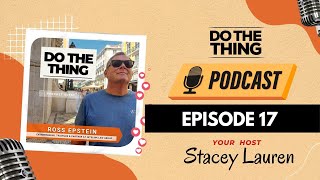
Ross Epstein left a law career in 1992 with $10,000, moved to Prague, and built a telecom business across Eastern Europe. He credits travel, preparation, and willingness to fail for his ability to take big chances. His advice: don't let other people stop you from doing it on your own.
Chapters
I do really believe 100% from every part of me that everyone has the capacity to be able to do the things that they want and not to be held back by the mental baggage that's in our head that we want to push through.
Welcome to the do the Thing podcast. In each episode, we get down and personal with people who go after the things they want to make all their wildest dreams come true. Join us as we unveil and dissect a formula for what it takes to do the thing. Here is your host, Stacy Lauren.
Hey, everyone. Welcome to the do the Thing podcast. This is Stacy Lauren. I'm so glad you guys are here today. I have Ross Epstein here, and he is the one that helped me exit my business. And it's kind of funny when you meet someone during a time that's extremely crazy and hectic and all the things that can come up during the time with emotions and all the fun stuff. And I remember there was a moment when Ross took a minute and said, hey, let's just take a chance to get to know each other so that we are both on the same page with what things are. With what things are happening. And it was really a great moment to be able to kind of calm down in the middle of chaos. And so anyway, we got to talking about a lot of things, from how he started his business to how he travels the world, and I just felt like he would be perfect to get a chance to have you guys hear from him and his wisdom on how he does the thing. So welcome, Ross, to the show.
Thank you for having me.
Yeah, I'm so excited to get a chance to chat with you and to have the people listening be able to learn from you.
Well, I hope I have something that I can add to this.
Well, why don't we start off and just tell. Yeah, just tell everyone a little bit about your story and your background.
Well, I grew up back east in the US In Philadelphia area, which is something that most people who grew up there are very proud of, especially when it comes to the sports teams. So grew up in the Philadelphia area, got educated at Princeton and law school at Boston University, but throughout those years, was able to do a fair amount of traveling, which I think is part of. Part of certainly my life experience as a young person. Having opportunities and taking them was one of those things. That was one of those many lessons learned. Starting in high school with a Latin club trip to Italy, which was amazing. And then taking the summer after high school and working in a kibbutz in Israel and And then taking a year off between college and law school and hitchhiking around Europe. And then after, with a break after I finished law school, doing a backpacker through Asia and Australia. And all these things completely change your life, give you a completely different perspective in every way. And then ultimately I settled down into what I thought was going to be my legal career as a litigator with law firm here in San Diego. And then the world changed. The Cold War ended unexpectedly. For those who are old enough to remember this happening, it seemed like it was overnight. Suddenly the Soviet empire crumbled and the whole part of the world that was up until then basically off limits to those of us in the west suddenly opened up and you could go and do business or live or do whatever. And for me, that was one of those moments in history and in my life that only happens once. So I left the practice of law, moved to Prague in 1992 to, as I describe it, get involved in the changes. I wasn't quite sure how that was going to happen, but I thought the only way I could actually do it was to go. Fortunately, I was at a time in my life when I didn't have a family. I had a student loan and I had a mortgage for a place in PB that was very rentable. I sold my car and moved to Prague. I had $10,000 in the bank and said, okay, let's see what happens. And that turned into a nine year adventure where I started a telecom business in Prague, which was the fourth or fifth thing I tried to do there. And that kind of took on a life of its own. With the Prague Warsaw ultimately focused on Poland. That's when I met my wife, who's Polish, in Warsaw. The business went through expansion, a couple rounds of financing. My wife and I married, had two kids, and then I exited from that business and came back to San Diego with a wife and two small children, with an experience that I never expected in any way. It was just one of those incredible life experiences that ended in a positive note, but not positive enough where I could retire and do the dream of just doing whatever. The exit that I had out of that business I described as a single, as opposed to the home run people hope for. So I still had to work and I had two young children and family to support. So I got back into law. Then I thought temporarily, now this is 2001, thinking that I would use the law, a small law practice, as a bridge into whatever I was going to do next. But then an opportunity came up to get involved with patent firm that was opening an office in San Diego. It was a Washington D.C. based firm and that was intriguing to me. I'd never been in the IP space before. I just come out of the telecom, Internet software world, so I understood that side of tech pretty intimately. As an entrepreneur, I knew how to science a scientific background. Having pre med in college, which gave me the confidence to approach the life sciences community here. Especially since the founding guild's medicine work. Father's a doctor, my siblings are all doctors and that became the thing. And alongside of that IP practice I've always had a corporate transactional practice which is the area that comes into play when we got together. And for the last 20 years or so that's what I've been doing. It's a mix of intellectual property and corporate transactional work and trying to take an approach to the law that's far more business first as opposed to just legal. It's one of the things that I think lawyers unfortunately don't do well is getting a business education. They may be very bright people and very technically good at being lawyers, but they don't always understand what's going on with their clients. And I think that helps. That experience I've had that life experience I've had as an entrepreneur and all the traveling gives you a different perspective. So fast forward to today. I'm with a small international law firm that fits my practice really well. Combination of intellectual property, corporate transactional work. A fair amount of that work is international, which is what I love. The conferences that I attend drive a fair amount of my travel. Just before this call, you and I were talking about a trip coming up that we're going to Europe for a Licensing Executive Society International meeting. For those of you who care to know what that is in Venice, which is kind of nice and so you get a chance to see a cool city. It's a business trip legitimately. And usually I will take the opportunity to explore somewhere nearby when I get those kinds of opportunities. And that's what my wife is going to do this time. We're going to spend some time in Croatia before and after the province.
I'm just wondering. So I mean from the time you were in high school, you really went out there and and did it. It's amazing how these micro steps that we take and I don't think, you know, taking a Latin club trip and in high school is technically micro. It is macro. But these things that we do, it's like you're almost building that flex muscle to be able to travel which then also probably even led into your being able to just kind of start over and do business, these businesses and build them.
There's no question. I mean, there's a moment, I know the moment. Even though those trips earlier were amazing, they were chaperone, of course, teenager, and they don't let you run around by yourself too much. But the trip to Israel was really the thing that I think springboarded everything because at the end of that six week adventure that summer before I went to college, I took the last week and traveled into the desert. And this was a time when Israel still controlled the Sinai Desert before they gave it back. That's how old I am. So I was able to backpack and literally hitchhike down from Eilat, which is at the very tip of the Gulf, Eilat, which is the Red Sea, basically down along the coast, and just had a week of unbelievable positive experiences with different people from all over the world hanging out, sleeping on the beach in groups, being careful of the Bedouins, sharing whatever anyone had, literally with a day pack, with a, with a, with two sheets sewed together at the bottom because it was too hot for anything else. That's what you slept in, you know, in shorts and T shirts and, and sandals. And that was, you know, that was it. And that, that whole experience springboarded everything after that. All backpack that I did in Europe and Asia, now in Australia was a direct result of that. That experience was so incredible, but I just wanted to be as many times as I could.
Yeah, so what? I love that, you know, the springboard too. I think that's incredible. What, what do you think? Do you remember what you had to overcome to be able to do that trip in the first place?
Well, the first thing is always, do you, you know, who are you going to go with? Right. Because nobody wants to go for a little extended period by themselves. Does that mean you have to live yourself? Right? And so finding other people with the time, the inclination and the money, when you have the time and the inclination of money is sometimes really hard to do. And so the first decision I had to make, well, if I can't find anybody, am I going to go on my own? And, and I, and I made that decision early on that, you know, if somebody can come along, great, but if not, I'm going and I'll figure it out. And that was probably the biggest, biggest trouble in terms of doing it because, you know, when you're on your own, it's, you know, you have to, you have to figure out how to like yourself and deal with yourself 24 by 7. And you do meet other people for sure. In fact, being on your own, if you're, if you're a social person, and fortunately I am, it forces you to be more social. So you go out and you meet people. And that just compounds the interest of assuming you've had good experiences. But of course you can meet, you can meet bad people. Unfortunately, that does happen. Most of my experiences have been very positive, so I'd be very fortunate.
Yeah, I, I remember I traveled when I was in college and did the hostel thing and how much, how amazing that is to be able to meet people all around the world. And then also it's kind of cool because it, it's like that whole friends by association. So as soon as you met someone else that was from the United States, it was like you were immediately, immediately friends with them pretty much.
Well, the affinity, definitely. Well, you have a lot of feminine, obviously, and when you meet other people from other places, people have very different opinions of your country. With Israel, it was all very positive at the time because Israel and the US have always had a very close relationship. But when I was hitchhiking through Europe a few years later, it was a very hot time in the Cold War. This was the first Reagan term. There was talk of the west deploying nuclear weapons. Long, short term, nuclear, for instance, Western Europe and Southern. So Europeans are like, you know, what do you think of Reagan's policy? That opened most of the conversations I had at the time, which was, which was really interesting. And even though I was not a big fan of Reagan, you wind up defending those policies because your nationality and patriotism kicks in. It's really interesting.
Yeah. And I'm actually, as you're talking, I'm realizing like you're traveling before, you know, when I'm thinking you had voters back then, there was no Internet or cell phones or anything like that.
So no, they know this was, this was literally hitchhiking, standing on the side of the road, singing to myself for hours. At times. Sometimes. Sometimes it was great and it happened immediately. You get picked up and sometimes you're there for hours just hoping to pray somebody will stop, you know, but that's, that's all part of it. Right. You have to have the time. The luxury of the time was having the time, not worrying about having to be any particular place, any particular time. That is, that's a rare thing in anyone's life.
Yeah. So I'm, I'm so glad you mentioned singing to yourself. So one of the things I'm doing with these interviews on the podcast is I'm, I'm uncovering a formula for how people do the thing. And I think you might have just given lead, given a little inkling of a piece of your formula. So with singing to yourself, was that, was that you keeping it fun or what was that, what was that about?
Probably just enter, as you say. I don't know about keeping it fun, but just passing the time, I think was more of it. And, and then fantasizing, you know, some of the songs you sing. Like for me with the Eagle song, you know, running down what's taking it easy. And there's a, there's a line there, which for any young, you know, 20s, you know, young, 20 something year old man who's intersectional, of course, you know, the idea of a pretty girl stopping, you know, like, remember running down the road, trying to loosen my load, seven way around my mind and that whole thing. And then there's the lyric where there's a, it's a girl, my lord, in a flatbed fort, right, Slowing down and take a look at me. It's like, oh yeah, wouldn't that be cool? So that was my hitchhiking song, personally.
Yeah, I love it. So it's funny, I, I, I went door to door. I sold books door to door in college, and that was one of my strategies was singing to myself. I would sing Hakuna Matata, you know, the Lion King, you got no worries. But I always kind of put that as making it fun. But I'm wondering if it was just kind of like what you were saying. I have to think about that more.
Well, I mean, it's passing the time, making it fun. I don't think making fun is wrong. I think that's definitely a fair way of saying it because when you're doing something that isn't necessarily present, make it as pleasant to get.
Yeah, that's true. So when you then, so now I'm going to fast forward to when you had the, the apartment or the house, the mortgage, the student loan, and then you moved to Prague. What was that decision? Like, like, how did you just say, okay, I'm, I'm doing this?
Well, it was a process. So first of all, there was the shock of the, of the changes. But so for me on that trip when I was hitchhiking around Europe, I had the, you know, one of those amazing experiences where I got a ride from West Germany through the access roads. In those days there were only three roads that went from West Germany To West Berlin through Easter, right? And you could, that was the only way you could drive there. You could take the train or you could fly. And that was it. West Berlin was really an island in the middle of East Germany and it was divided. So there was the east and the west side of Berlin. So I hitchhiked into West Berlin with these, with these, in a car with four other Germans I'll never forget. At the border checking. We handed all of our passports up to the border control guy from East Germany and he flips through all the German ones and then comes to mind the American one. And then suddenly he's interested and starts looking into the car at me to see who's there. And I'm like, oh my God, I'm going to jail, right? Because East Germany had this terrible reputation, well deserved for thing, you know, one of the worst of the Eastern bloc countries when it came to oppression. People that live there. And then unfortunately nothing happened. Then we went on and they got to West West Berlin and spent a day wandering around East Berlin with somebody I met at the hospital I was staying at the time. And again, I don't know, I don't remember exactly why or what, why we could do that. But you could get into East Germany and you could wander around relatively freely. Nobody was with me or anything, which was a bit of a surprise. Took advantage of it. And the guy I was with captured experience, fervently said it was like going from a colored TV into black and white, right? And that whole experience and the reason it said that is because it was in West Berlin was a normal hustle, bustle kind of city with traffic and noise and people on East Berlin. It was deftly quiet. The cars all looked old. There were no people on the streets, there was no noise. And one of the moments we came across this church with a bunch of kids running around in the yard with a 10 foot fence with barbed wire at the top, right? These kids, it was like obviously a school and they were on recess. And there was this teacher who looked kind of like this frazzled woman who was their teacher. And then there was this ramrod straight political person who was with them in the schoolyards, the little kids named Trace. And that whole experience was just really mind blowing. And then six years later is when the Cold War ended, right? When I had just gotten into my legal career, I thought that was it. I was thinking, be a lawyer. And when that happened, it really affected me personally because suddenly all that insanity was over. And all of those people that were on the Wrong side of that wall. Were going to have an opportunity to rejoin the west and enjoy all the things that we take for granted, right? I mean, you first seen the movies where these people from the Eastern Bloc or from Russia, they come to the west for the first time during those years and they go to a supermarket and they're just completely blown away by everything that's there on the shelves, right? And that's. That was a real thing. People don't really appreciate how real that was. And so to know that that was over and that there was going to be this transition. And my. I studied history in college, and it's always been a passion of mine. So my concentration was European history. So from my perspective, this artificial geopolitical divide is the only thing that kept those countries from, like, the Western European countries, like the United States. So I was confident, 100% sure that they would make the transition successful. It just was a question of how and how long it would take, how will they do it? All those things that no one really understood. So to be involved in that transition is what really drove the decision. And as I began thinking about it, it wasn't real until a moment when I was visiting a friend of mine who was a painting contractor here in San Diego, who was sick of dealing with developers, just felt he was getting ripped off all the time. He was first generation Norwegian, and he was talking about moving back to Norway, getting out of San Diego, now the United States, and out of the rat race that he was in. And in his apartment, he had these journals for jobs overseas. And I was just. This was during that time, as I was thinking about this, and I read through those journals and I saw positions that actually I qualified for because I'd never thought of it really as something I would do. And then when I saw that, I was like, well, maybe I can actually do this. And I began thinking more about it. I began pulling my word, my world, which was just asking people, what do you think of the idea resigning from the law firm and moving to Prague or Budapest or Warsaw, whatever? And it was fascinating to hear responses, which was really 50, 50 half people thought I was nuts because I was just getting into my career, things are going well. Why would you leave this great job and firm and career? Others were like, yeah, awesome, go for it. So it was a very divided response. And I think that. And then there was this trip that I took with my family. My dad's 60th birthday, we all went away to Aruba, I think it was. And I remember one night at Dinner polling the family. Right. As I said, I have a bunch of doctors in the family, right. My father, my brothers, my sister. There's four kids and two of us were married. I wasn't married, but one of my brothers was. My oldest brother was. My sister was. So they had their spouses there. It just went around the table and got the response from them. And it was very predictable. My parents thought it was nuts. My oldest brother thought I was nuts. My second brother and my in laws thought it was a great idea. And my sister said to me, and this thing really stayed with me, you've done a lot of crazy things before because this is obviously after all the other traveling I've done. So if you're going to do this, do it seriously. I took that really to heart, but that kind of solidified the whole thing. That was right at the end of 1991 was the next year that I left.
Yeah. So when people think it's nuts and you decide to do it anyway, what does that look like? Like in your pet. How do you get through that?
Oh, I don't care. I mean, it just doesn't, it doesn't faze me. I mean, I make a decision, it's my decision. It's my life, it's. The consequences are mine, you know, I have to reap the benefits for the consequences if they're negative. I've always been fortunate enough to be confident enough to not really care, you know, if I decide to do it, I'm going to do it. And you know, the other thing is, is I think fortunately from a family perspective, my parents were very demanding, obviously, but very loving as well. And the one thing was always clear to me that no matter what I did in this, you know, in life, in this world, it was always place I could go if I really needed to, and that was to wherever they were and they would welcome me and help me and do whatever. And that, that, that knowledge that there was always somewhere to go and somewhere safe and, and, and supportive colored everything because that gives you the confidence to know that you can go out and do stuff. And if it doesn't work out, there's always a plan B, you know?
Yeah. Yeah. I love that. I think that's, that's really, really powerful because that's just a knowing underneath everything, which then when you're making those risk assessment decisions or thinking of consequences, you have that as a, as a way of a landing, you know, in case something doesn't go the way you want it to.
Right. And then practically in my Case I had a. I'd already been through school, I had a license to practice law, I had five years of experience. So worst comes to worst, I come back with two California practice law. Not such a terrible plan B. Right. I mean, in the end, that's what happened. Even though I never expected it to be that way. But that also having that having done this after I'd already gotten into a career and one that I could come back to, that also was very comforting. And that was kind of the response to anyone who was really negative about it. Yeah.
Do you think that that's part of your risk assessment? Is worst case scenario.
Always? And how can it not be? I mean, if, you know, a rational person has to consider the worst case, at least I did.
Yeah. Okay, so number two piece of your formula. So let me know if I'm off. I'm just, I'm just guessing off of what we're talking about. But you did have that part where you were, you were in your friend's place and looking at the journals, which then gave you the idea of the jobs that were available. And then it sounds like you really educated yourself by asking people and starting to get more knowledge. So I would say that concept of educating yourself on what you're doing is also another piece.
Oh, no question. I didn't just take off. I mean, I actually spent the time I learned about how the US supports entrepreneurs abroad, which is basically zero, which was disappointing to say the least. I spent time in Washington D.C. and visited the embassies, the countries I was considering going to, to gather information. So I did, I did my homework, you know, to a degree. I mean, I didn't. Wasn't exhaustive, but it was enough to just have a, have a decent understanding of what I was getting myself into. And then it was a question of where. Right. And. And then in that. Yeah. So it was, it was driven by a number of different considerations, mostly funny, kind of fun ones, when I chose Prague as opposed to the lesson war song. But at the time, those were the three cities that were making the transformation first and most successfully. It wasn't like the entire region woke up and sunny was transformed into market economies. It took time, it took effort, it took a commitment that some coaches just weren't able to make. And even within the countries, only certain cities initially were able to do it. And that all makes sense. Financial political capitals led the way in those countries. But of course, Warsaw, Prague and Budapest are very different cities in very different countries. And then how well do you know one or the Other, right. And for me, again, coming back to the young at this point now, 30s, 30 year old, but still single guy, one of the things that was attractive about Prague, at least conceptually, was the fact that, you know, they were beautiful, had a reputation of having beautiful women, right? And then there was the beer, right? The Czechs make the best beer in the world, or at least some of the best beer in the world. City had a reputation of being incredibly beautiful. And all those things are true. So, you know, having, having lived there and experienced was very inexpensive, right? But so were the other cities in that respect. And then, and the one serious consideration, because nobody knew what the, what the Soviets were going to do at that time, because. Because even though the Cold War ended, Soviet Union had not yet disintegrated, it was still a force there. And no one was sure whether the Russians were going to come back in. So one of the considerations was proximity to the west, which ruled out Warsaw, which is way farther than east, and Prague and Budapest are very close to the west. So I thought, okay, Prague hitchhiked, I can hike out if I have to.
Yeah, this, this is really, really good. The other thing I'm trying to figure out, I'm seeing the through line between your travel and then your businesses. And so it sounds like with the travel side you were like almost becoming a part of history. So you had this like 10,000 foot view vision of how you wanted to be, and correct me if I'm wrong, but of how you wanted to be in, into the, in the world, is.
That I don't know that I ever thought about it quite that way. I did try to figure out a way that I could make a contribution to the transformation and that was something I actually consciously thought about. Maybe the only thing that's altruistic in any of this, most of it was just selfish experience, experiential opportunisticness. But in doing business there, you realize as an individual, without being in a position of power in terms of politics and business, until you grow your business to a certain size, all you can do is influence the people around you. And so my goal ultimately once the business got going, was just to do business with integrity and avoid the corruption that happens in those places. Because inevitably that's what society was before, right? The Soviet model was corrupt at its core. Everyone existed to figure out how to game the system and did things purely just for self preservation because there was no other way. And then once you turn, once you're making a transformation into a market economy, the idea is People are hopefully in our society, not everybody's this way, but most people understand that you're part of a team and you're trying to be successful as a group because that makes everybody successful. All ships rise when everyone becomes successful. And that was kind of the thing I tried to instill in the way that I did business for the company I ran. I did a lot of training of the people that worked for me, mainly because there was this debate amongst the expats, well, if we train them up, they're going to leave and they're going to make their competitors more competitive and all this stuff. And I was like, that might happen for sure. But if we invest in our people that's in it, that's going to generate loyalty as well. And so we really spent a lot of time and money on teaching people how to do business in the right ways, or at least the ways that we thought were right. And that was generally following what we take for granted here, which is the sort of thing that you did be so successful. Right. I mean, you work hard, you show up on time, you think about how what you do impacts the overall business and you're not out to screw over your colleague or your company, although they're playing people that did that and do that here too. But generally speaking, I think people are on the team and are part of the effort to be successful as a group.
Yeah, the other thing too. So I want to make sure I've got your, your formula in a way that, that I'm not missing anything. So we talked about you, the singing thing. I love that, honestly, because I think that's a huge part of how I do. The thing too, is whether it's passing timekeeping and fun or whichever it is, and then educating yourself. I'm putting compelling vision. I think you reworded it to contributing, you know, like figuring out how you can contribute into the bigger why and then also the worst case scenario situation for like a risk assessment. Do you think there's anything else that you. Between your businesses, like starting your businesses, traveling and all the things you've done that you like are kind of more of a constant with you being able to do the thing?
Well, it's interesting. I've not really thought about it in those terms, but I guess, I guess at the end of the day there's a certain level of confidence and not fearing failure because I think that's the thing that holds people back is the fear of the unknown, fear of failing. I've never really gotten caught up in that. It's always been, I'm going to go for it. If it works, great. If it doesn't, I'll figure it out. Right. I mean, that sort of confidence is, I think, a huge part of what led to pretty much everything I've done. The confidence to believe in myself that I can do the thing that I want to do. And even if it doesn't work out quite how I expect in the beginning, it'll work out in some respect. And if that doesn't, then there's always a plan B. Yeah.
Do you think that you were just born with that or was that a learned skill that you've established over time?
That's a great question. I don't know. Certainly I've been very fortunate having a lot of success early in my life. And in terms of. In school, this is something that I think it was a formula, something my parents did. I don't know what it was. And unfortunately they both really. For my own kids, really one of the most disappointing things about losing my parents early, especially my mother, was that she wasn't around to get to know my kids. And I wasn't able to use her as a resource for them directly. It was all indirect and through memory because somehow they were able to instill in four kids a desire to be successful, but not. But not so much so that it destroyed your personality. Right. And we weren't. Even though we were very close to age. There's three boys and a girl. My oldest brother is only two, three years older than I am. We were all in high school for one year together. Three boys. But we were, we weren't rivals. We weren't like, like brutal, savage sibling rivals, which can happen because we all played sports. We all had success there. We all were good. We're. We're good students. We were motivated students. Right. Not just capability, because a lot of people have the ability but never realize it. Somehow they instilled that sort of. That sort of self confidence and self worth where, you know, I wanted to do well, not to please them, but to, but to, but to be. Be proud of myself. You know what I mean?
Yeah.
And I think that's where it came from. I wasn't like. I didn't really care whether or not I was pleasing other people. Although of course I wanted to. I wanted people to think, well, of course everyone has ego, and I certainly probably bigger than I should have. But that confidence, I think, comes from that upbringing. And I'm not sure how they did it because I tried to do with my own kids and you know, I don't know if it's because of the times and what's happening with social media and everything else, and they're good. They're fine. They're good. They're great people and they're. They're interesting. People are now in their 20s, and it's wonderful. But there seems to be this under. Undercurrent of anxiety that I didn't have, my siblings didn't have, that they and all their friends seem to have. I think it's a little different. I don't know how my parents managed to avoid that.
Yeah, I'm wondering if it's what you said earlier with that, you know, just knowing you always had that safe place to go, you know, and that unconditional love, like, throughout everything.
Well, we've made that very clear to our own kids that that's the case. You know, that's. That's a big part of our relationship is knowing that there's a place they always have to go if they need to. And that. That was something very important to me to convey to them. And we have done that. I don't know what it is. I mean, there's something about the times or something about how they managed to do it. I just, you know, again, living through it. It's different than understanding strategy. Whatever they and my parents were having at the time, maybe they didn't have any strategy. They were just doing a natural. I just don't know.
Yeah, well, that's a formula. Let's get that formula.
No.
Yeah, well. So what do you think's been the hardest thing for you in regards to doing the thing?
I don't know. As I said, I've been extraordinarily lucky in what I've done. The only thing that has not happened that I would love to have happened was for financially things to have worked out so that I didn't have to work. That's always been my goal professionally, is to find a way to get to a place where money is no longer an issue and I can live the lifestyle I want without having to worry about, you know, and that's. And I'm. I'm gonna get there anywhere anyway, I hope later. Later in life than I wanted. But, you know, I. I guess that's the hardest thing was finding a way to get to where I really wanted to be, because I never really knew what I wanted to do. I never had this drive to be a lawyer or to be anything in particular. Professionally, it's been more opportunistic and I guess the hardest thing now that I talked this through was figuring out what I really wanted to do in life professionally, because I still haven't figured out. I've done the things that have made sense at the time. They've been interesting enough and satisfying enough for me to be very happy and satisfied, both in terms of the type of work I do as well as the remuneration people I have to deal with. It's all been incredibly positive, start to finish, but there's no. But there's no real passion way. Some people just love their jobs, whatever they like to do. Right. That's the one thing that I've never been able to find, but I don't regret that it just has never happened. And I've been fortunate enough to be able to try a number of different things and do a number of different things and have this incredible life. Regards. Yeah.
And isn't it unbelievable that potentially, by you not having done that yet, you're. That's what's given you the freedom and the flexibility to have the travel experience that you've had?
I guess. I guess because I didn't get. I didn't go to law school because I wanted to be Perry Mason, if anyone remembers who that is. I went to law school because I wanted to buy three more years to figure out what I wanted to do.
Yeah. Okay. You have one piece of advice for people on doing the thing. What would it be?
Don't let other people stop you from doing something you want to do. And don't be afraid to do it on your own. If nobody else will come up.
That is good. Okay. So is there anything I haven't asked you that you wish I would have asked you?
I don't know, maybe about all of my incredible high school sports successes. Like glory days. Right. That's what.
Well, so that's interesting that you brought that up because, like, do you think that that might have helped you as a foundation, you know, for what you're doing now?
Oh, definitely. No question.
I.
That's all. That was all part of the formation. No doubt. It was. Like I said, I was incredibly fortunate very early on, in many ways, academically, athletically, a lot of doors have opened. I've had those experience. You know, the recruiting experiences both come out of high school. Coming out of law school, where people actually kiss your ass because they want you. Right. That's an amazing feeling. Right. And it builds your confidence, your ego. You know, if you have that kind of success, it just. It just drives. It just gives you that much more confidence in whatever you're going to do. So no question, those things were absolutely formative.
Yeah. Yeah. So that's good. So good. I'm glad you brought it up. If people want to learn more about you, where is the best place for them to find you?
I have a LinkedIn profile, of course, which is, which is, which summarizes some of what we talked about and certainly talks to a certain extent about some of the experiences I've had. Obviously doesn't go back to the beginning of time like we did in this call and of course in my law firm. So I'm a partner at a firm called Intelink Law Group. It's a pretty interesting firm, in fact, very much in line with the way that I like to look at things. We were virtual to a large degree before the pandemic. So for us the transition was nominal. And the practice areas are very much in line with my practice. That's about three pillars. One is the intellectual property pillar, which is patents and trademarks, licensing, intellectual property litigation, patent litigation, trademark litigation, all that kind of stuff. Corporate transactional practice, which is how we met, which is anything that happens in the life cycle of a private business from startup to formations, startup formation, structuring, employ incentive plans, raising capital, mergers and acquisitions. And then we have a very powerful litigation practice. This is civil litigation in the firm with a number of other smaller practice areas that make us nearly full service, not quite so. Employment, law, creation, tax and state planning. And there's an international, significant international element which is again one of the things that I really like about it. Significant China practice of Chinese companies in inbound to the US and in Europe as well. Which is what my, My Valley is you might expect from my experience. So that makes for a very. Even though we're not gigantic, about 35 orders altogether. Nice set of skills across the group that allows us to do almost everything in those areas that we don't. We obviously have people that.
Yeah.
So finding me at the law firm is probably best. Again, a profile that's there talks a lot about what I've done, mostly from a legal perspective, but you know, also in business. So. Yeah, that's kind of it.
Yeah, that's awesome. There's one more thing and when we met for breakfast that one time, you had said something in regards to travel and I don't know if you, if you can remember, but it was something about how you make decisions in regards to traveling.
The way that we travel, my wife and I, because we have, we have a lot of, a lot in common and A lot. Very different when she is the classic artistic person and I am not. So it's like we're very different in that way, but we share a number of things, like travel. We both love to travel, and the thing that we don't like to do is stay in hotels. Right. Because you don't get to know the place you're visiting when you stay in a hotel, if you stay in an Airbnb is a wonderful thing. I think it's a wonderful thing. I think people should travel that way almost exclusively because then you stay in a neighborhood, you live in a flat for a few days, maybe a few weeks, you go venture out of the community you shop in. At least we do. We have a whole way of doing what we do because we want to understand how the people that live there lives. And it's really hard to do that from a hotel. So from a travel technique, if you will, that's all the time. I don't know if that's what we talked about, but that's definitely part of what we do.
Yeah, I love that. Because then you're really getting to know where you're living, not just from a sterile, superficial level, but from a deeper, meaningful level.
Right. Because they are. They're very sterile. Right. They're very cookie cutter. There's. They may have character and certainly boutique ones have more than the more standard ones. But, you know, you don't have. You rarely have a kitchen you don't shop in, you don't. You don't go to the grocery store. Stay in a hotel. Right. If you're staying in a flat and you're going to cook for yourself, you know, whether it's breakfast or dinner or whatever, you know, just the idea of figuring out the food in a different language. Yeah. Is. Is really a fun experience.
Yeah, I love that. Well, thank you so much for joining me. I really appreciate you taking the time to do this and I'm just excited, hear what this is going to do to impact someone and. And either do something new for the first time or get on a plane and go somewhere or whatever it ends up doing. I'm really excited that you were able to share your story.
Well, I appreciate you asking. It's definitely fun to tell.
Thanks for listening to the do the Thing podcast. We hope you enjoyed the show. But even more, we hope you'll be inspired to do the thing. Do you have a burning question on Doing the Thing that you'd like answered? How about an inspiring do the Thing story of your own that you'd like to share. We'd love to hear all about it. Just leave us a voice message at do the Thing callcast Co or email us@helloothethingpodcast.com.
More from Stacey

From 262 Women to 8 Million Media Impressions: Deborah Drummond Built a Global Women’s Movement


From Notes App to Published Author: Avery Brenna Crumrine on Turning Intention Into Action


How Stacey Lauren's Billion Dollar Impact Marketplace Will Raise Billions for Charities and Causes

What Happened When Allison Maslan of the Pinnacle Global Network Ran a Challenge with Stacey Lauren




Leaders Share How Stacey Lauren Sparks Action, Clarity, and High-Impact Collaboration

Sandi Masori Announced as Emcee | The Billion Dollar Impact Event Returns to San Diego