Episode 18 - Tomasa Velediaz Giving Heart And Fearless Mindset Drove Her To Clean Up Her Community
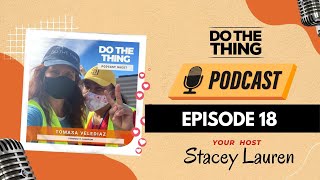
This is a transcript of Episode 18 of the Do the Thing podcast (host Stacey Lauren) featuring Tomasa (Masa) Velediaz, a longtime Linda Vista resident who organizes monthly community cleanups and distributes donated food/commodities. Tomasa immigrated from Mexico in 1984 at age 15 and has lived in Linda Vista for about 37 years. Five years ago she and other parents began a monthly street-cleaning event (held the first Sunday of each month) to teach children civic responsibility; the effort grew from as few as 2–3 volunteers to as many as ~82 on some days. The episode mixes personal history (childhood poverty shaping resilience and willingness to ask for help) with practical tactics for sustaining volunteer efforts (contacting county for supplies, partnering with community center and schools/universities, soliciting local businesses for raffle donations, phone lists/shopping-cart distribution for food). Contact point: Bayside Community Facebook page.
Chapters
I do really believe 100% from every part of me that everyone has the capacity to be able to do the things that they want and not to be held back by the mental baggage that's in our head that we want to push through.
Welcome to the do the Thing podcast. In each episode, we get down and personal with people who go after the things they want to make all their wildest dreams come true. Join us as we unveil and dissect a formula for what it takes to do the thing. Here is your host, Stacy Lauren.
Hey everyone. Welcome to the do the Thing podcast. This is Stacy Lauren. I'm so glad you guys are here today. You get to meet our next guest. She is someone that I met through. Actually one of my kids was interested in doing something with the environment and years ago I had googled and I think I ended up finding on Eventbrite that she does a monthly cleanup event for the neighborhood next to where we lived at the time. And from the time that we showed up at the event where people basically are being given everything they need to be able to clean up the streets of a neighborhood. I was just blown away by how warm she is, what an amazing community she's built within the community. Being able to just give so much both of herself and also back to the people that live there. It's just been really marvelous getting a chance to get to know her and get to see the work that she does. And so I'm really excited to introduce you guys to Tommasa. Hey, Tomasa. Hi.
How, how, how are you?
I am doing great.
Good.
Thank you. Stacy, thank you for inviting me to your program. Hi everybody. My name is Tomasa Riz and I am from Mexico. I came to this country in 1984 when I was only 15 years old. I live in the community of Linda vista for about 37 years. Five years ago, I started with another group of community members. We desire to start doing Clean up the street because we want to teach our kids the importance of having a clean community. So we start with this beautiful idea since five years ago and we still doing it once a month, the first Sunday of each month.
It's unbelievable because it's, it. See, it's like such a great way for you to be able to get people together. It's, it's like doesn't even feel like work when you're like, when you're getting a chance to do it because everyone's getting to talk, you know, clean up the streets and just have that feeling of being able to you know, give back and do something that's productive, you know, for not only the environment, but for the neighborhood too.
Yeah, it's something that I really enjoy doing it. And to see this little one, every time they see me, they always ask me, when are we going to clean up the street? So that's what made me really motivated to continue with this beautiful work. Well, it's voluntarily, but I feel like I think we can make the difference if we continue doing this and involving the little one.
Yeah. And so to me, this is just the ultimate kind of expression of doing the thing is you just basically. Basically taking this idea, because a lot of people have ideas like this, or they're either. They're either complaining about something, you know, or they have the idea to do it. But the fact that you actually did it and you're still doing it to me is just. Is just amazing. So I was just wondering if you could talk more about the process of when you got started, because I think you mentioned it started five years ago when you were wanting to do something to show the kids a way to be able to impact the environment. What actually got you to decide to actually get it done? And then what were your steps that you took to be able to do the thing?
Okay, we was a group of. That was. My band was really motivated by a religion, belief. I don't know. Have you ever heard about the Baha' I family? They used to have a youth program with the little ones and your kids. But one day the parents come together and we have this idea, why don't we start doing something? You know, something like we can teach a lesson to the kids. I said, why don't. Why don't we clean the streets? By then we was like 10 people. The leader who was by then in this group, she moved to another state and she asked, who wants to continue with this? And I said.
Then the rest of the group was, you know, they have something to do. They have the worst. They have the kids, they need to go to church. So one day we went to do the cleanup and was only three people with me. And the lady said, why don't we stop doing this? Because we don't see like people are interested on continue doing this. And I said, no, don't give up. Even two, one person can make the difference. Let's continue. Maybe next month it's going to be more people join our group. And yeah, and that happened. So. But the time passed. You know, it's been five years sometimes we have 40, 50. One day we have 82 people come together. I think when you are doing something, you don't have to give up. And I think that's what keep us over here till now. Don't give up. Continue with something that you really like it and doesn't matter if it's only one or two people, continue that really going to make the difference. Yeah.
And I think that's one of the things that I really love about it is through the times that I've gone, you're right. Sometimes when I've gone, it's been just like four people. Another time. I know you had a congresswoman there one time that was. There was another time where you had all the different people from. From the community. Gosh, I'm trying to remember. It was like, I think even a fire marshal, like there was just all kinds of people that you had gathered throughout it. And I think it's amazing because regardless whether it's like three people or whether it's like you said, like 80 people, you still give the same amount of yourself. Like, I feel it and I feel like that that community is still so solid and strong and the fact that you do it regardless of the amount of people is just. Is just really, really amazing to me.
Yeah. Yeah. Like I said, if we have to keep doing it and don't give up, especially if it's something that you really like it and doesn't matter if it's only two or three people. Continue with that word. Yeah. One day we invite our council member, Raul Santillo. He came with his staff. Jared Jacobs came one another. The union carpenter, something like that. The union carpenter came to help us, want to. We've been having a lot of people are interested or join our group, and that's really nice. You know, I think that's what motivated me to continue with this beautiful work. Like sometimes can be 10, can be 40, 52, three people, you know. Yeah.
And how do you. How have you been spreading the word? Like, how is it getting the exposure it's getting on the times that you are having all the people show up?
I have a lot of contact with like USD University that we have here in the Vista. We have contact with NASA College, with Kearney High School. We have all these contacts. So sometimes they ask me that they have volunteers, they want to join our group, and I say, sure, they're welcome. And that's how we spread the word.
So in the times when you only had a couple people go and the people were saying, oh, maybe you shouldn't do it anymore because there's just not enough interest in it. How did you keep yourself motivated during that time?
Because I feel like even if it's only one person or two, we can make the difference. And the thing is not don't give up. Maybe next month we're going to have more than this time, but doesn't matter, let's continue doing it. I know like, sometimes it's holiday, a lot of people travel and, you know, it's normal. They have a life too. And I think next month it's going to be better. You know, every month it's going to be better. And it is, you know, every, every month is different.
And then in regards to like, as I was getting started five years ago, how did you kind of like work through all those details so that you could get it started?
Well, first we started with, with nothing, with MC Hands. But little by little I got connected with the counties and they provide us with those yellow bags and those trash. How do you call those? Trash pickers.
Oh, yeah.
And then I went to, by the time I was only volunteer at Bayside Community center, and I asked them for support too. We need trash bags to continue with this word, you know, and they say, sure, what else do you need? I said, okay, we need gloves and trash kit. I mean, trash bag. And they provide me with, with all that stuff. And yeah, that's how we started with, with this group.
And then how did you come up with the idea to call the. The county? I don't know if that's a, like a obvious choice for people. It's just, oh, I'm just going to call the county. I think people would be like, whoa, that seems like really I going to talk to. I just feel like all these negatives would come up.
I think that's a good thing to know people. I have somebody I know, I have that connection that somebody who works at the county. And she said, I can give you the contact of this person. You can contact this person. So I did and worried. You know, I think that's really important to meet important people because you never know when you're going to need them.
So we haven't really had a chance to talk about this yet, but. So this podcast is actually coming from a book called do the Thing. And one of the things, the reasons why I started the podcast is because I really wanted to like, work, like interview people that are doing the thing and come up with a formula in addition to how I do the thing. I wanted to see how others do the thing. And so as you're talking, I'm realizing a big piece of your formula, which is something I do a lot, is asking for help, you know, and not. Oh, yeah, not being afraid to ask people. And I love that. I love that.
Yeah. That's something that I really like. I'm not afraid to ask for support or help. I don't lose anything, you know. You don't lose anything to ask. That's what I. I think that if you don't ask, nobody's going to know. What do you need?
Yeah. So do you think that that's like a normal thing that you do? It's almost like your risk assessment is almost like, what's the worst thing that's going to happen? You know, as I ask them and they say no. Or do you have. Is there something that you do when you're making these moves, asking for help or whatever you do to do the thing that you think about?
Well, you have to give an explanation what, what things are you doing and why are you needed, you know, and I'm not afraid. They say, no, that's fine, let's go to the next door.
Yeah. So you're comfortable handling rejection then?
Yes.
Yes.
Where did that come from? Is that something you were born with or is that something that you. You learned over time?
Probably something that I learned with the time when I was, when I was little. You know, I grew up in a country where we are a big family. I am the third child of 14 kids. You know, we have. Sometimes we have to beg for food. And so maybe that's what I learned since little. Not to be afraid or, you know, shame to us.
I'm just imagining how hard that must have been for you.
Yeah, that was really hard.
What was it like for you when you had to beg for food?
That was really embarrassed because I was little at that time, but at the same time, I feel like I need to do it because it's not only for me. I was doing it for my little siblings too.
Yeah. So you were able to kind of understand who you were doing it for. And so it helps you get through it in a way.
Yes.
Can you talk a little bit about. Because I feel like this is such an important piece in how you're doing. The thing now is for you to be able to go through that when you were younger, you know, and even though it had to be hard when you were, you know, when you were doing it, it's the thing that's made you be able to help so many people now, you know, at least I'm imagin this is a big part of it.
Yeah. I feel like that made me a stronger person. I feel like thanks to all the things that I went through, made me the person who I am now, that I'm not afraid to ask for help when.
When you need it.
Yeah, that's true, actually, that. Because in my mind, I'm thinking, wow, that must have really helped you get through handling rejection, which is probably true. But you're right. That idea of asking for help, which is kind of a big part of you doing the thing, also stemmed from that too.
Yeah.
What did you say to yourself when you were getting. I'm imagining people were saying no. You know, when you're. When you're asking for food, what did you say to yourself, you know, in the face of rejection?
When I were little, I was saying, when I grew up, I'm gonna work hard to support my. My family. That way we don't have to go through all this again. And that's why that made me come to this country so young age. I was only 15 years old when I moved here because I was looking for a better, better life for myself and for my siblings. So when I came here, they asked me that I need to go to school because I was only 15 years old. And I said, no, I'm not going to school. I came here to work because I need to pay my rent, I need to buy my food, I need to support my parents, and that's the only way I can do it, you know, working. And I didn't know, but the time.
It was illegal to work at that age, I didn't know that. I learned with the time.
I think it's really unbelievable, you know, how you were able to use such a. Such a powerful experience, and then now you're doing so much, so much good, you know, from the things that you learned then.
Yeah.
I was wondering, so out of all of the pain that you had to go through, you know, how did it help you? Or, like, what good do you see from it now?
Well, I feel like thanks to all those things I went through, made me the person who I am right now that I'm. Is not afraid of asking for help. I'm not afraid of.
Trying to work hard, you know, And I don't know. I have that in my heart. Like, if somebody needs help, I always wanted to help them because maybe because all the things that I went through.
When I was little.
Yeah, I think that's. That's beautiful. Okay, Tommasa, I think I've got more pieces of your formula. Are you ready?
Yes.
Okay. I'm gonna, I'm gonna. So we talked about asking for help. That's a big one. Number two is this has actually come up before with another person and it's your network. You know, being able to utilize your network is also really important for doing the thing. And then handling rejection is your third piece. And then your fourth piece is. Sounds like with this particularly, you had a why for wanting to do this, you. You had an intention, you know, for wanting to make this happen. And that's what it sounds like. That's what kind of kept you going. Even if there's only three people is like knowing what you wanted and why you wanted it. Do you think I'm missing anything? From what. From what you like in terms of you doing the thing, is there anything else that you think you've relied on to be able to do the thing?
Well, to my friend, to my neighborhood, to the people who believe in me and they are always willing to support me. Really, that's what really keep me going.
Yeah.
So actually that is another piece that's come up is surrounding yourself with people. That one is like, like minded. But also it sounds like support and encourage you.
Yeah, I feel like a lot of people want to do something, but they don't know how. So I really encourage people to do whatever they want and whatever they feel like it's important for them.
Yeah. So if you were going to give someone advice that says they want to do something regardless of what it is, what advice would you give them?
Well, not to give up, to follow their dreams. If this. But if it's not working, don't give up. Don't give up. Never give up.
As far as. So you. It's like, I know this is just one piece of, you know who you are and what you do. You're. There's so much more to you. I know when my company, when we had given away, we were giving away fruits and vegetables and things and I texted you to see if you, if you had anyone you wanted to give them to. And immediately you came by, you got a carload. You're. So I'm thinking this is just kind of like a natural thing that you're always doing. Is that, is that right?
Yes.
I love to be able to help my community. Long time ago, like maybe 10, 10, 15 years ago, this lady from Hawaii who lived here in Linda Vista, she was giving away bread, I remember went to pick it up bread next to your office and she gave it away to people, the bread. So one day I was outside and she saw me, she asked me if I want bread and I said sure. And then she was so tired, she said, I'm so tired, I want to go home. And I asked her, why don't you give me the bread and I give it away, then you can go home. So we did it for like two years.
The next week she brought me like the whole truck of bread to my house. I have to call people coming over. There's free bread, I have bread left. I put them in a shopping cart, drive on the streets and I give it away, the bread to people. That's something that I really love. So when you mentioned that you have fruit at your office, I said, oh my God, yes, I want to do it. I want to distribute that to my community. And I did it.
Yeah. And I just, I find that amazing because, you know, even when I'm thinking about my company and whenever we do have the fruit, you know, we'll bring it to like the different, we would bring it to the shelters and different transitional programs and obviously people in our, in our office and our employees that were out in the field and our clients and all that stuff. But I think you might have been the only one. There might have been another that I don't know about. So I'm not going to completely say this is true, but yeah, like anyone that actually like, yes. And then within like days, just able to, just like then it wasn't, it was like not in a reactive way, it was in a proactive way that you actively were able to distribute it. And that's what I find so, so unbelievable, you know, is that is literally the thing.
Yeah, well, like I said, that's one of my passion, to be able to help people. So since now I am working in a non profit organization, I'm so happy. You know, they make my life much better because I am able to help people now even more than before.
Yeah. That's amazing. I'm so glad. I'm so glad.
Yeah.
When you, so when you got like the fruit and the vegetables or the bread or whichever one it was, what was your strategy? Are you coming up with a plan or are you just. Do you just. Is it a neatly coming up with you on like who you're going to call? Like, what does that look like for you?
Well, I make a list of people, I get their numbers and when I get the fruit and the bread, I make phone calls and if I didn't have enough phone numbers, I put them in shopping carts and drive on the street or Put them in my car and go far away and give the bread away. People look to me like, why? She's giving this for free? And they asked me, why are you doing this? I said, because I want it. Because somebody gave it to me and I want to give it away. So some. Sometimes people look at me like, why? That's way too nice to be true.
Yeah, I know. It's so. It's.
It's.
It's so amazing. I mean, because you have such a giving heart and you can feel it when you need to, when you. When you're. When you're in your presence. So, yeah, it's like. I'm sure it's surprising for people that. That, like, haven't met you yet, so.
No.
When you're doing something like that. Because obviously there's probably people, you know, that are untrusting, so they're saying no, I'm assuming, like, how do you keep yourself motivated with that? Like, so if you're giving it out and there's a certain amount of people saying no, and you're like, dude, I'm doing this for you, you know, kind of thing. Like, how do you get yourself through that stuff? What powers you?
Well, I didn't. I'm not taking personal. When they say no, I don't take them personal. I said, okay, you don't want it, Maybe next door somebody will want them. Yeah. Not. Not taking so personal. If somebody say, no, that's fine. You know, it's fine.
I don't.
I don't mind. Yeah. So. But a lot of the people know me and, you know, see, like, when they need to talk to somebody, they come to me. And that made me feel special, that a lot of people that I know, when they need help, or at least somebody can listen to them, they come to me, and I feel like maybe because they trust me and they can trust me because I won't tell other people, you know.
I think it's something like, I can keep it for me, you know?
Yeah, I know. That makes sense. Yeah. Just to. For people to be able to just really feel, you know, like you're able to be that person that they can. They can confide in. I mean, I think that's a huge thing.
Yeah. And I got this thing like I can feel or see like somebody has problems. That happened to me many times when my kids went to elementary. I see people that they are not my friends, but I can see, like, they go into something really bad. So I talked to them, I approached them, and I said, are you Okay, I see, like you have something and they start crying. They say, yes, okay, come. Come over here. Let's talk. You know, and since then, they became my friend.
Yeah, it's amazing because there's so. There's so little people. Like, so few people will do that. And I love that you're not only, you know, giving of your time, giving of your abilities, but then also just in. In friendship, too.
Yeah.
Yeah. And you're just making me think, too. I remember when I met you initially, and it is funny, when we met, I don't know if you remember, I was going through a hard time. I was just getting divorced at that time, and you were the bright light in my day. So I think when hearing you talking, it's just bringing back how I felt when I was at a really low point. Just even us cleaning up trash together, like, it was just. It was really a needed experience that I. That I had. Which is why I'm so excited to have you on this podcast to. To share, because I know how much you helped me personally.
So much.
Yeah. And I just. I remember even when we went to the community center, Bayside, I hadn't even. And that was the neighborhood next to mine at the time, but I don't think I ever looked at a community center in the way that you look at yours. So I thought we could just talk a little bit about. I know we've talked about it a little bit on this, but I mean, I think everyone could also go to the community center too, in their neighborhood, if they have one, because it is a. It's a really good wealth of people and information that I don't think a lot of people realize.
Yeah.
I feel like God put us in a spot where we going to make changes. I don't know, for a reason we met each other. I remember the first time when I met you, I. I thought, what is this lady doing over here? She's not from this community, and she has that hard to help our community, you know? And that made me feel like, wow, that I admire you because you don't live here in this community and you have. You make time to come and help us. To me, that means a lot to me, and that made me continue doing this beautiful work.
For someone that maybe doesn't have a network right now and they might be isolated or maybe they don't have the most positive people in their life, what would you recommend to them to be able to expand their network and to get to know other people?
I know that a lot of people don't have access to computer or they don't know how to, how to do it. I recommend them to. When they go to church, that's a good place to ask for help because.
The community is there.
Ask for their support, you know, coming over and let's do something, something for to make changes. Don't have to do cleaning, but other things like ask for help. And when they are at church, when they are in kids school, that's another place they can spread the word.
So throughout all of this, what do you think's been the hardest thing for you in regards to like when you're doing the thing, whatever the thing may be?
Well, when I see like somebody going to something really bad and I it's not on my hand to help, sometimes I feel like my hands are tight. When you want to help somebody and you cannot do it, that's really something like can hurt me.
Yeah. It's hard when you are like wanting to help but then don't have control over, over the other side. And then in terms of the cleanup event, with the cleanup event, what do you think spend the hardest thing with, with keeping that going or getting it started.
Try to convince people like doing this for our planet, doing this for the future of our kids. Try to convince people like this is important. Like immigrant. You know, we come to this country sometimes we don't have that culture back home. And I told them, did you know this country is for volunteers. This is gonna benefit you in the future. You know, when you need a recommendation letter from somebody, that's really hard, you know, to convince people the importance of being volunteer. I think that's something really like hard for me.
People.
You've obviously done a good job with it too though. Like is there something you've done like to do that that's really worked? That's. You've seen where you've been able to get someone to see how important it is and then they've actually done it.
Yeah. This lady who lives here in this community, four years ago I was telling her she was in the process of getting her residence and I was telling her the importance of being volunteer, you know. And then after three years later, she came to me and said, oh my God, you was right. Now I need proof like letters from the community.
And I don't have any, anything to, to prove like I am a good resident, you know. And you, right, you told me before and I didn't listen to you. I said this, but it's never too late, you know.
Yeah, yeah, no, it's True. There's this concept that I, I've been really kind of living with lately is just this concept of beginning again. You know, at any moment, no matter going through, we can begin again. And I think we can do that with this too, right?
Yes. Yes. So I always tell people, you know, the importance of be volunteers, to give a little bit of your time, you know, to somebody to help a senior, to help, you know, the community, to come to clean the street, come to help us distribute food or whatever, you know, 20, 30 minutes. You don't have to stay for hours. I always tell them 10 minutes, 15 minutes, you can make the difference. A lot of people when they hear me say that, okay, I'm gonna do it. You're gonna see me next month, I said, okay.
And what would be your advice? Because this, this podcast is international. So what would be your advice to people that won't be able to cleanup event, but they want to do something in their own community? What would be something you would tell them?
Well, to try to find something that like, they really are passionate and do it. Find to. There's a lot of things they can do, you know, but always has to be something like you really love to do it. That way you're going to do it with much love if it's something that you really like.
And so once they find something they really like and they decide they want to do that, what do you think would be a good next step for them?
Organize people. Organize their friends, their family, their community.
And then after they've organized their community and their family and friends, what do you think's a good step next?
To do it?
Do the thing.
Yeah.
And what if they're scared about, like, are people gonna show up or what if I don't do something perfect or is this too much work? What do you say to that?
Don't be scared. You don't lose anything to try.
Don't be afraid to.
Maybe the first time is not going to be that success, but maybe the second time is going to be better the third time. We have to think positive because if you think negative, that's what you're going to bring.
And how can people find you either online or at the community event.
On Facebook. We have page on Facebook, Bayside Facebook.
And so if they want to learn more about you and what you're doing, they can go to Bayside community Facebook page.
Yes, correct.
Okay, perfect. I'll put a link to that in the show notes too.
And you know what? It was worth too, to incentive your. Your group Once in a while, we. I go to the businesses around Linda Vista and I ask for their support. And the people are really nice. They always contribute to my group and they always donate things. And what I do is like a raffle. By the end of the cleanup, we do a raffle and we give it away, whatever we got from the businesses around. And that I feel like that really motivate people to come more to the community cleanup.
So I want to talk about that for a minute, because I don't think that is also something that people would think about doing is. Or maybe they'd have the idea, but not actually do it. So when you go to the businesses and you ask for their help, what does that look like? So it starts with that idea of like, oh, maybe I'll go to the business. And then. And then what do you do?
And I, I. Well, I told them who I am, you know, that I'm part of this group and we are cleaning the street. Most of this charge is from their business.
We tell them we're cleaning the charge. You know, we picking up the charge comes from around here, you know, and can you support that? Sometimes they say, oh, we need to talk to the owner or we need to talk to the boss, you know, and they always say yes or no, but it's okay. We continue doing it, you know, at least once a year or every two years, we have some owners, like, they are willing to help us. Every time we ask for support, they always say yes. And they love the idea to, you know, to have somebody to clean the streets because they feel like when we have a clean community that's going to bring more people to our community to wanted to come here because nice. And it's a clean community and people are friendly too. So.
Yes. So when you're going, you're literally going door to door, like business to business. And is it just like a cold call? You're just approaching them completely cold. I mean, obviously the ones that know you, you've been there, they know who you are. But, like, if you haven't been to a business, you're just like, oh, hey, you know, this is what we're doing kind of thing.
Yeah. And they said, oh, yeah, we, we. We have seen you cleaning with some people. Thank you for doing that. And yes, some of them are, say, yes, come here. Like this salon, they do our haircut. They donate like 10 haircuts. Wow, 15 haircuts. Yeah. Like, this skateboard gave us some free passes and we ruffled all that. So, you know, the people Happy at least to get a one free haircut. That's gonna save them money.
Do you know any stats of the number of businesses you go to and then the number of people that will give? Is it a lot or is it. Do most people. It's.
Like 1, 2, 3, 4, 5, 6, 7 businesses out of how many?
Yeah, so seven businesses out of how many that you go to? I'm just curious.
Well, we got like seven businesses, but really who we get support is like about five. Five of them. Five out of seven.
Got it.
Yeah.
That's good. Well, good.
Yeah.
I really appreciate you being able to take the time and talk to the listeners about how you do the thing, and I'm just. Just really hoping this has inspired someone. Whether they, you know, live in. In San Diego and they want to come to the event that you have every month, or they're in their own city or community and they want to start their own thing. Whether it be a cleanup event or, you know, something else that can make a difference, I just. Thank you. I think by you being able to share this, it's, It's. It's done a lot, and I'm excited to see who's gonna do the thing.
Yeah. Thank you so much. I really appreciate what you doing for my community. Even you don't live here, but that's what motivates me, you know, continue doing this beautiful job because to see people like you like other people, that they don't live here, but they care about my community, you know, and I really admire people like you.
Thank you. You're so sweet. Thanks to Masa.
When I grew up, I wanted. I want to be like you.
I want to be like you.
Oh, thank you.
Thanks for listening to the do the Thing podcast. We hope you enjoyed the show. But even more, we hope you'll be inspired to do the thing. Do you have a burning question on doing the thing that you'd like answered? How about an inspiring do the Thing story of your own that you'd like to share? We'd love to hear all about it. Just leave us a voice message at do the Thing callcast co or email us@helloothethingpodcast.com.
More from Stacey

From 262 Women to 8 Million Media Impressions: Deborah Drummond Built a Global Women’s Movement


From Notes App to Published Author: Avery Brenna Crumrine on Turning Intention Into Action


How Stacey Lauren's Billion Dollar Impact Marketplace Will Raise Billions for Charities and Causes

What Happened When Allison Maslan of the Pinnacle Global Network Ran a Challenge with Stacey Lauren




Leaders Share How Stacey Lauren Sparks Action, Clarity, and High-Impact Collaboration

Sandi Masori Announced as Emcee | The Billion Dollar Impact Event Returns to San Diego