Episode 20 - Brenda Warren Hitting Rock Bottom Drove Her To Pull Herself
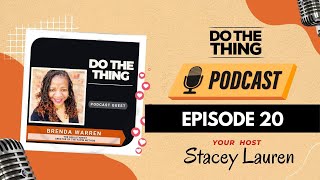
A Do the Thing podcast interview (Episode 20) in which host Stacey Lauren interviews Brenda Warren — a retired Marine, bestselling author and mental-health advocate known as "the solutionist." Brenda recounts hitting rock bottom (PTSD diagnosis in 2011, a 2013 mental breakdown) and a crisis moment when a hotline counselor persuaded her to seek purpose; she rebuilt her life through walking, social-video outreach, winning a Be On TV challenge, and launching media and coaching work. The episode emphasizes practical recovery tools: acknowledging pain, seeking help, creating a written safety protocol and a circle of support with code words/levels, daily affirmations and mirror work, journaling, accountability partnerships, and the five-step TAP IN method for transformation.
Questions this video answers
June 11, 2023.
20 years (retired Marine gunnery sergeant).
2011.
2013.
She lost 65 pounds.
Chapters
I do really believe 100% from every part of me that everyone has the capacity to be able to do the things that they want and not to be held back by the mental baggage that's in our head that we want to push through.
Welcome to the do the Thing podcast. In each episode we get down and personal with people who go after the things they want to make all their wildest dreams come true. Join us as we unveil and dissect a formula for what it takes to do the thing. Here is your host, Stacy Lauren.
Hey everyone. Welcome to the do the Thing podcast. This is Stacy Lauren. It's always fascinating to see how some people can use their life experiences, even the really bad ones, to help others in crisis. Today's guest does just that. I feel so privileged to be able to share her story with you guys. This guest has an impressive background. She served in the United States Marines for a third of her life. There she learned the value of great leadership and trusted teamwork. Now she's a best selling author, podcaster, transition coach and host of Talk to Me. She also created the Tap in method to help others remove barriers and live their best lives. Everyone goes through rough times and even some find themselves in crisis mode. This guest wants to ensure that you have the tools needed to take control and pull yourself back to safety. If you've ever felt out of control or know someone that you've wanted to help, the tactical tools this guest gives in this episode will make you feel like you can have a good support plan for anyone in need. Reclaiming your life after hitting rock bottom takes the village. I love how this guest isn't afraid to seek help from her close circle, embrace accountability and shows up for both others and herself. Her attitude of gratitude is contagious. It's truly an honor to welcome the Solutionist Brenda Warren to the show. Hi Brenda, how are you?
I'm fine. How are you?
I'm so glad you are on the show. Thanks for coming on.
I'm excited to be here. I'm ready to do the thing. I love it. I love it.
Well, to get us started, I would absolutely love it if you would share about your story.
Well, I am Brenda Warren. I'm known as the solutionist and the voice for the voiceless. I'm a retired Marine gunnery sergeant with 20 years of active service, author of a best selling book called Soul Search and get on board for transformation using the Tap in method. Well, host of a talk show, a podcaster and a transition coach. But that's not how I Started. It all started because I had a episode that put me holding a bottle of pills in a crisis center and a guy talked me off the lens and my life changed.
Wow, that's unbelievable. I just. When I hear things amazing that come from the bottom, it just gives so much hope. I think for people that are going through something like that to see that, that, that's almost like the purpose of it. You know what I mean?
Yeah. I think it's hard sometimes for people to even that have met me to believe that I ever was at rock bottom. But the truth is a lot of people start to really learn themselves when they find that they have nothing else and they have to pull their self up by their bootstraps, so to speak, to reclaim their lives. And that's how I became the solutionist. I literally had to hit rock bottom and have a complete setback to get set up to walk in my life and become unapologetically unstoppable.
Are you open to talking more about your story and what was going on at the time?
Yeah. I found myself. My 23 year marriage was ending. My kid was about to go off to college. I was diagnosed with post traumatic stress back in 2011. And I didn't tell anybody. I didn't tell my husband, my family, my friends, no one. And then I ended up having a complete mental breakdown in 2013, which required me to come off my job. And because of that, I literally was over medicated, not listened to by my doctors, and spent eight years on my couch drinking Diet Pepsi, eating Doritos, feeling sorry for myself. And one and mind you, the whole time while I was doing this, I was still helping others live their best life while my life was falling apart. So one day I thought, why don't I become my own client? And I got off that couch and started walking in my driveway, talking on Facebook and YouTube, telling people how I was going to change my life. I was 65 pounds heavier and I wanted to change. And so I began to lose the weight as I walked. People laughed at me in my neighborhood because I was walking around my car. The pandemic had hit. It was crazy, but I kept going. But even with all of that change happening, I had lost 65 pounds. I felt like I was beginning to be myself again. But it was clear that my marriage was really over. My kid was leaving, I was rock bottom. And that's when I found myself with the bottle of pills, calling the crisis hotline. And the guy on the other end of the phone told me to find something to do, because he believed I liked helping others. And I gave him my word. And that was really important for me. So once I did that, the next day I got up and this thing called the be on TV challenge popped up in my phone. I signed up for it. It actually started that day. And they asked us to do an exercise called your badass moments. So I did it and I posted it, and that video went crazy. So many people saw it, and people began to say, I'm so glad you didn't take those pills. And they began to tell me their stories. And because of those stories, that's why I became the voice for the voiceless. And then as I began to find my footing, so to speak, I became the solutionist. Because I knew I could help people find soul solutions using a mind, body, and soul approach to change their lives the same way I had changed mine. Wow.
You know, it's funny, when we. When we. Because we literally just met today, we were introduced from a common friend of ours, and just like you said, like, meeting you right before this podcast started, I would have no idea what you walked through.
I think that's the thing about our lives. We often see other people, and we see they're there, but we don't know they're then. And I always tell people that whoever you meet, it's really good to find out what was their life like before you met them, because oftentimes it's the pain behind the smile that makes the smile even possible.
Yeah, that is so. It's so true. So when you had that moment, you know, where you. You were taking the pills, you called the crisis center, what was the moment? What was that moment like? How did you make the decision to. To call? Because not to bring up doing the thing, but I do even think that's doing the thing is like realizing in a moment that you're able to. That you're able to change or at least get help.
Well, I have a safety protocol, but I realized I had not used my safety protocol. Suicidal thoughts have been something that have plagued me for a long time, and I really had struggled with it. But in that moment, I was just ready to take them. And my eye caught the corner of my safety protocol, and I thought, worst case scenario, I'll make one last ditch effort to make it right. And when I got on the call, I got this guy named David who basically talked to me for about four hours. And at the end of that call, like I said, I didn't take but one pill in that bottle, and I got up the next day. And my life has been changed ever since.
And do you remember what he said to you to get out that. Because I know you mentioned he got out of you, that you wanted to help people. And I was just wondering, do you remember how he was able to get that out of you during that painful time?
Yes. He asked me questions about the things I did. What did I do, what did I do for fun? He just actually had a conversation with me. He listened, and from that, he figured out that I was more concerned about other people than myself. And so he began to focus on that. My concern for other veterans, my concern for other people in general, and how I support people, how I show up. And he challenged me to show up for my own self the way I show up for others, and that right now I needed to get the same kind of self care to myself that I was given to other people.
So then you then. So then the next day you said you woke up and you saw that Be on TV challenge, and then you did the recording for the badass moment. Is that right?
Yes.
And then that's when you were like, okay, I'm going to be my own client. And that's when you were able to get up and start walking in your driveway.
No, I was walking prior to a BLTV challenge. I was already walking and talking on Facebook in my driveway to people. I was doing Motivation Mondays and tell Yourself Tuesdays and Wellness Wednesdays, Thankful Thursdays, Self Care Saturdays, Soul Searching Sundays. I was already doing those things because I already had a heart to help people. Like I said, I was already coaching other people, helping them live their best life. I just was not living my best life. But when I went to the Be On TV challenge that day, they had. At the end of the week, there was a prize. The grand prize winner would get coaching and all these amazing prizes. And I'm kind of competitive if I do something. So I put on a yellow sticky. I am the grand prize winner for the Be On TV challenge. By the end of the week, not only was I the grand prize winner for the Be On TV challenge, I had been asked to be on a podcast called the Brooklyn Cafe TV show. And because I went on that show, I was given my own television program, which is a whole nother part of the tale I went on there. They were so impressed with me that they asked me to just do a guest spot for the editor's desk for four shows with no strings of tasks. I said, okay, I'd love to do that. Well, the ratings were good. And I ended up staying there for six months before I started my own YouTube channel and started doing my own show called Talk to Me.
So you really were able to get out of it just from that. That being able to almost get embodied in what you were doing, essentially, like by being able. Knowing that what you're doing is helping others, but then you're also going inward into yourself. Is that. Is that right?
Well, yeah, because what happened was when people saw the Badass Moment video, they started DMing me and private messaging me. And one that stood out in particular was this lady who told me how she had been watching me walk in my driveway and how my Tell yourself Tuesdays help her get out of her bed. She said that because of me, she was feeding her kids again and enjoying her life again. And she hadn't done that in months. At the time I did that video, it was July. She hadn't been functioning since January 14th. That was the day her baby committed suicide. And because of my videos, she was functioning. Her kids got their mother back. And I thought, how dare I? And she said she was so glad that I was still here. I cried like a baby. And that's when I really became the voice for the voices, because I thought that baby didn't have the words to tell everybody he was in pain. And in addition to that, we have veterans that are constantly becoming unnecessary silences because they don't have the support or they don't feel like they matter. So from that day of having seeing her message, I said, I have to be the voice for those who no longer have a voice to raise. I have to be a voice for those afraid to speak their peace or to say that they're in pain, because too many people are becoming unnecessarily silent. And I don't want that to happen on my watch. Yeah.
And what do you think is the first step for them to be able to use their voice and to get out of that darkness?
Well, the first step is first to acknowledge that you're in pain. If you, you know, we can't change a thing that we don't acknowledge. And then you have to seek help, and you have to do whatever it takes to get the help. Because too many times when you get to that place, you feel like you're so alone and like no one will understand. And I tell people, keep raising your voice until someone listens. I often felt like I was drowning in plain sight. Those people around me so used to me being the strong one, the bright one, the one that they go to to get help, which is how I got the name the Sol Lutionist. But nobody thought that the person with all the answers may have a few questions and need them answered themselves.
Yeah, I totally hear. I totally hear what you're saying. I have a similar situation with that where sometimes the strongest person is the one that no one realizes is the one that needs help.
Yeah.
And so. So. So the first step is acknowledging your pain, and then it's seeking help, and then it's raising your voice to get the help. What's the. What's the next step?
I would say the next step is creating a safety protocol that would allow you to stay here when things get rough. What I did was I created my circle of care. I had those hard conversations with the people I love to say, hey, this is what I need to stay safe. And I need to know if you're on board with that. The reality is everyone in your inner circle right now may not be able to. They may not have the bandwidth to handle when you hit crisis mode. So I had to accept that some of my loved ones were not capable of being in my circle of support. So I have a specific circle of support. In addition to that, I have a list of numbers of people I can call. My professional counseling people, the crisis hotline, my pastor, those people that when I find myself in the dark place, who am I going to call that's going to actually be able to support me through that? And the friends that have said they would be able to hold space, place for me when I hit that spot until we can get me some professional help or the care I need. And then I also make sure on that protocol that I have affirmations that remind me that I matter, that this too shall pass, that I can do all things through Christ that strengthened me that there is nothing and I mean nothing worth me becoming an unnecessary silence. Yeah.
Thank you. This is really, really powerful for people to be able to understand this process because there's so many people that go through different moments and pain and hardship and don't have the resources or the people to be able to know what to do, you know? And I feel like this is just such a. I mean, just even the circle of support and understanding that it might not necessarily be your family, it might be people outside of that. And just people understanding that, I think is so powerful.
Yeah. Because I think the problem is we often want our loved ones to support us in ways that maybe they're not capable. Just because they love us don't mean that they can Support us when we hit one of those spaces that need some additional care because they may not have the emotional maturity to deal with it. And that's okay. That's why you look for those people that do have the ability to support you. It could be a neighbor, it can be clergy, it can be a total stranger if necessary. But the key is to find those people that are willing to, when you hit that space, to support you through it until you can get grounded again. And getting grounded is the key to making sure that you can navigate through those bumps. If you are someone that has major depression or you suffer from depression occasionally, whatever the case may be, having a safety protocol is a way to ensure your safety at all times. And you always tell people, don't get ready, stay ready. Safety protocol helps you stay ready for any event.
And then with your. When you're. When you're going to that safety protocol and you're going into that circle of support, do you have a specific thing that you're saying to them to get them to be there for you? Or are people. And then also are people saying no at all? Or are they all disagreeable?
No, there were people. When I went to have the conversation, I started the conversation saying, I am requesting you to be part of my safety, my circle of safety. And it's okay if you say no. And then I tell them what that entails for me personally and see your support will be based on your needs. None of the people that I work with all have the same circle or safety that I have. Some people may only need one or two people. Some people need three or more. For my safety circle, I have four people in mind that I know that no matter what time or day or night, I can make those phone calls, and they're not going to turn me away. Let me tell you why this is important. One of the things that happened to me, Stacy, was I called someone prior to me creating what I call my official safety circle that I thought I could come to when I was in crisis. And when I went to their house, I called them. I got there, but they were more interested in watching the television program. So the television program came up. They said, oh, I'm so glad you came to see me somewhere. And they walked me to the door, and then they shut the door in my face. And I stood there with that door closed in my face, knowing that this was the wrong person to call on this. That. And I made a promise to myself that I would never put myself in that situation again. The first time they heard me Tell somebody this story, they realized it was them. They called me to apologize. But by then, the damage was done. And I just thank God to this day that that day, instead of doing what I was feeling like doing, I got so pissed off. That's when I created my circle of safety. And then I started what I call abetted people. Hey, do you have the ability to support me when I'm in crisis? And I do have code words which I will not share on the program. However, you have to have safety words. You have to have words that would specifically help trigger your safety protocol. And I'll use this term. Let's say, for example, at one time I used the term, I am currently drowning in plain sight. They knew that meant I was serious. And I also have levels. Stacey. One thing that there's times that I'm just in what I call mild crisis. I just need a shoulder. Just be their whole space for me. Then there's other times where if I called and I gave a particular code, they knew. You need to get me some professional help. Take me to the va, check me in. Because I've hit that place where I can't do this on my own, and I need professional support. Support. It's more than my circle. So by having clear protocols on what to do and when it takes the guesswork out, takes the guesswork out of it for the people that are supporting you, it helps keep them safe and keeps you safe. And then there's no miscommunication. And I can tell you it works because I've used it when I was in mild crisis, I used it when I was in major crisis. And I also have a term when it's not that I'm in crisis at all, but I'm just in need of a listening ear. And when I need that, all I say is, today I need you to hold space. And anybody in my circle knows if I'm asking you to hold space, that means I haven't hit what I would call a quote, unquote, crisis point. But I'm in need of a serious support right now. And that has been a game changer for me to be able to go to those four people and have that done. Because now there's no miscommunication. They know exactly what I need, and they know exactly how to support me.
Yeah. And I wanted to pause for a minute and talk to the listeners because whether or not you've ever felt this way or this has ever impacted you, someone you know is going through this right now. And this is. This is Magic what Brenda's sharing right now, because by you understanding whether it's for yourself or what the other person needs, what to do and what they need and the support they need, it's. I mean, it's literally life, you know, life saving. I think this is. This is unbelievable. Thank you so much for sharing this.
You're welcome. And you know what the. What it is telling about. We don't often have these conversations, Stacey, until it's too late. And we're always doing what I call the autopsy after, where people will go, but I didn't see this. Or they said, we can't connect the dots going forward, but looking back, you can see where the person was in crisis. But we're always so afraid to ask hard questions. That's why I say if you can find a way to sit down with family and friends or the people you feel like you can trust and have these conversations before you get to crisis mode, it can help avert a lot of things. And also, we got to stop expecting people to be mind readers. When people see you as strong, they often don't see the signs. And the reason we don't see the signs is because we don't talk about it. It's not comfortable, it doesn't feel good. But I've taken the pressure off of my friends and my family by having those conversations and making it clear this is exactly what I need to be supported. It really does do a disservice to those we say. We love to expect them to be able to read our every mood, every thought, are every ups and down. Yet they can notice something quite off, but they just figure it's life and sometimes a little more than just life. Yeah.
And so how do you respond to the people that are, like, worried or nervous about being this vulnerable with whoever it is that they're going to. And then also that fear of rejection.
You know, Stacy, that fear of rejection and fear of being vulnerable, it's not going to go anywhere if you have the conversation or if you don't. The key is you have to just step out and know who you're talking to. That was the other thing for me is that that's why I gave people permission to say no. No was a complete sentence. Everybody can't hold space for you. So if you started off letting them know, I'm going to ask you to do something for me that you may or may not be able to do, but if you choose to do it, this is what I need. And then they may say yes at first, but Then when you describe what you need for support, they may not be able to do it. And I was so thankful for those people that were honest enough when I said, could you do this? And they said, yes. And then when I told them what I needed them to do, they were like, no, I can't do that. Then I was like, no harm, no foul. I found someone else. That's the key. Everybody can and won't do it. And was I afraid? Yes, but I had to do it. Afraid. Because fear will hold you in bondage more so than the other thoughts. And what I would tell people, fear. Fear is future events already ruined. So what if the first 10 people you asked said no? And I said, 11th person, someone in your circle will be able to hold space for you. And then when you find them, you use them. But here's the thing. You won't always have to use them. It's just in the event of crisis, it's like having car insurance. All of us, or if you drive, you know, and I'm in North Carolina, we're required to have car insurance. You don't have car insurance and use it every day. But if you get in an accident, it's nice to know you have it.
Thank you. That was. That was incredible. Let's talk about the affirmations, because I like that step as well. So how are you developing those affirmations? How did you get yourself to start to do them every day? Those are my. My. What I'm curious about.
Well, the first thing I had to do was I started doing mirror work. And I learned this from a video I saw on YouTube done by Lisa Nichols. And I get up in the morning and started saying what the seven things I was proud of myself for, the seven things I would forgive myself for. And then the seven things I commit to myself, I started there. So, for example, I was. You know, I would say, brenda, I forgive you for not always taking care of yourself. And then I would say, I'm proud of you for learning to make better food choices. And then I would commit to myself. I commit from this day forward to work out daily and to eat proper, healthy, nutritious foods. But I do seven different ones in each of those areas. That's where I started. And then I began to just. I'm a journaler. I love to journal. I think it's real important to get my stuff out on paper because the page has no judgment. It holds no judgment. You can put whatever you think or feel on paper. And then I began to say positive things to Myself. Which is why I love my Tell yourself Tuesday. I would say tell yourself something good. And every day, thanks. I tell myself that I am worthy of that. I am loved, that I bring the peace, I bring the joy, that I am more than a conqueror. I use Bible scriptures, I use positive phrases. I affirm those things in myself that I want to see. And then I live that because I live in an attitude of gratitude.
So how do you get yourself to do it every day? Are you holding yourself accountable or does it just feel that good? What's got you to be able to have that consistent routine?
I made a definite decision. You see, one of the things that I do, I wrote a book called Soul Search and get on board for affirmation. Excuse me. For Transformation using the Tap in method. And what the tap in method is the five step strategic plan I developed to help people get past their stuck points. We're often, you may be right wherever you are and then you want to go to where you want to go. It's that gap in between that causes us the problem. So the way I did that was number one. I transformed my mindset about the importance of affirmations. Why did I want to do them, what did I need to do and what would they do for me? Then I announced and to my, to myself, this is what I'm going to do daily. I'm going to write affirmations in my journal when I get up in the morning at 5:30 in the morning. I do it every morning consistently. And then I got accountability. I have an accountability buddy. Her name is Lisa. Lisa was able to help me have some accountability around what I said I wanted to do. The next thing I did was prepare. I bought myself some journals. I bought myself a writing desk to make it easy so when I get up in the morning, I can go right to my writing desk. My pen and my paper are sitting right there waiting for me. And then I imagine what will my life look like if I begin to make positive affirmations about myself on a daily basis. I've been doing it consistently now for two years. And then after that I end. I nurtured. I nurtured that thought about how the affirmations would change my life and fill me up in ways I had not even yet discovered. So every morning I tap in by choice and the consistency is the key. Yeah.
So I'm wondering so with how you even implemented affirmations into your life with the mirror work, with the journaling, with the, you know, imagining and then everything that you just listed Is that. That's actually a formula for doing the thing, right?
As a way to do the thing?
Yeah. I'm wondering, do you kind of follow that same thing with everything that you do? Is it like where you're. You're finding the purpose, journaling, imagining things like that? Do you think that's sort of like a. A sign of, of other things too?
Yeah, I, you know, I tell people you can, I can tap into anything. The key to tapping in is understanding that whatever I can tap into finances. And I have your spiritual life, your physical fitness, your wellness, your. Your, Your financial life, your relationships. All of that requires a shift of mindset, announcement and accountability, preparation, imagination and nurturing. You tap into those things that you feel are necessary for you to live your best life, unapologetically unstoppable. Because I want everybody to have a fully alive, fully expressed, fully fulfilled life using the tap in method. And it's possible.
Yeah. That's so good. So with accountability, you mentioned your friend Lisa that you're accountability partner. What does that look like for you?
Lisa and I meet over coffee on Saturdays and Sundays. And right now, because I'm doing a really big project, we've been meeting nightly at 6:30pm Eastern. We set that schedule up because there's a lot of big things I have coming up. And Lisa's a coach in her own right. She's a results coach. We're also friends and we're also business partners. So having that person that I can bounce ideals off of, that will keep me help to keep me focused on the things I say I commit to doing. Because the key is we each have to make definite decisions about the things we want in life. Too many of us are stuck in what we don't want and we're not focusing on what we do want.
Yeah, and it's great that you're able to look outside yourself too, and see that you are able to have someone that's able to join you on that journey.
I encourage all the ladies that I work with to get accountability partners. Because when you have someone that will help you to reinforce again what you say you want, the things that you want to tap into in your life to make your life, the best life possible in all areas of your life. I'm talking about a mind, body, soul approach to a fulfilled life. Having someone that has your vision and will hold you accountable. Accountability is not punishment. It's just simply someone that says that you've given permission to remind you of what you say you've decided you want for Your life, the tap in things that you want, they're going to bring that to your remembrance. So you stay on track. Yeah.
And so what would you recommend for someone that can't do the every night or the every Saturday, Sunday? What would be a good way for them to add that? Accountability partner?
Well, first I'll say it's not that they can't do it, they're choosing not to do it. So everything we do. Everything we do is a choice. You can choose to do it daily, weekly, monthly. You decide. That's the best part. They say each of us gets to decide at what level we want to play. You know, I tell them, you will. If someone says, I want to be, for example, let's use I want to lose weight. That's one. That's universal. A lot of people have that issue. The person that decides, I want to lose weight and I'm going to work out once a month, let's say, but I'm going to eat right. And then there's someone else who said, I'm going to work out three days a week and I want to eat right. And then there's another person says, I'm going to work out seven days a week and I'm going to eat right. Will they all get results? Absolutely. But at what rate? So when you get to decide at what level you play based on the choices you make, that's not a problem. And here's the thing, neither of those choices is wrong. It's just a choice that each of those people have decided to make.
I love that. Okay, so I want to make sure I'm getting your. Because I am like, this is so this is worth. I mean, it's gold right now, this stuff. So I have the acknowledge you're in pain, seeking help, getting the help, your circle of creating your circle of support, affirmations that you matter and then going through that whole, that whole process there. What's the next step? Oh, accountability partner. I'll add that. And then what's the next step?
You have all the pieces you need right there to tap in. When you get to that place where you have made a definite decision that you are going to reevaluate what it is you want to do and you put all those pieces in place, you have everything you need.
And then it sounds like also. And I think this is part of that affirmations part that we talked about, but that. Yeah, and I think actually this came up with the getting help with. I think his name was David, the guy in the call center. That really helped you was just like identifying that, that why, like, what is that? What is the thing that's, that's, that moves me, that lights me up, that ignites me. And it sounds like that, that's part of this too, is just finding that, finding that, that purpose, you know, finding.
Your why is always important. We always start with the why. Because when you, when you have a big enough why, when it gets tough, you'll keep going. My big enough why for why I do the tapping method and why I am passionate about coaching people, why I'm passionate about helping people turn their mess or their mission into a message for the masses. Why I'm passionate about helping women live unapologetically unstoppable is because I refuse to allow another person feel like they don't matter, that I can avoid it, that I can let each person that crosses my path know that I hear them, I see them, and I believe in them because they matter.
Yeah. And if you don't mind, I'd like to go back just a little bit more into your, your, your background with. You mentioned you were in the Marines, right?
Yes.
So something I've really been, that's been coming a lot up a lot in the interviews that I've done are having those muscles that you flex over and over again, but they come out in different ways. Like, for example, I think you might know her, Anastasia, from Ukraine. I had interviewed her and she was able to use the skills that she had gotten from her. Her business, which is like transforming companies, service like a service transformation company. Now that the war happened, she fled and basically is now using those skills that she used to help the companies and helping women like, leave Ukraine, get jobs, find shelter. And it's just, it's a, it's like a really good example, I think, of how you can use something that you've gotten from another, you know, a lateral experience. And I use my, my, my, my experience is not as, it's not as like, good as that. Mine is like literally door to door. This door to door sales job that I had in college, you know, that like, is the thing that like really shaped me because it got me to learn how to handle rejection. Had to deal with, with all those, it got me learn to talk like all these different things that, that I learned from that job. But I'm just wondering, is that, do you think the Marines is where like a lot of these, like everything that you're doing now is like built from, or was it coming from something else?
The Marines played a large part 33% of my life was spent in the Marine Corps. But it's my faith, it's my training as a Marine, it's my life experiences, all of those things combined. And absolutely, the Marine Corps taught me leadership. It taught me systems over skills, it taught me how to carry myself, how to have teamwork. There are so many skills that I use every single day because of my military training that I wouldn't trade for anything in the world.
Yeah. And I think it just shows how like everything we do in life really does come back in a way that you won't even expect it until you see it.
I always say there's nothing in life that has occurred to me that I can't use some way to the good, even the bad experiences. Because I have learned to look for the gift in everything. There was a time when I used to go, why me? But then I remember, Or I would say I discovered, why not me? Because it's those times, the challenges that shaped me to be the person I am today. And it goes back to not wanting to have one person that comes around me not feel like they matter. Because so many people are looking for their purpose and looking for someone to tell them that they're worth it. And a lot of us don't hear that. And if you will take the time to just let someone in your circle or someone you run into that they bring great value to your day, your life, your job, your business, your relationship. It can change a life. It can also save a life.
And I was wondering also, is there if. Let's say you have. Okay, let's say you had one piece of advice that you could give to people in doing the thing, what would it be?
Well, the one piece of advice I would tell everyone is to run their own race. Stop trying to be a carbon copy. Because all of us are designer originals and no one can be a better you than you.
That's so good. Okay, Brenda, is there anything that I did not ask you that you wish I asked you?
No, I would just say the last thing I would like to say though is that the thing I always leave people with is that the choices you make today will be the reality you live tomorrow. So choose wisely.
So true. And how can everyone learn all about you? And actually, I really want to get on your. On your YouTube. So yeah, if you could share all that stuff as well. And I can also put it in the show notes too.
You can find me at Brenda soulrushness It's S O U L U T T I O N I S t on Instagram brendathesolutionist.com and that's my website and Brenda Warren on Facebook, thank you.
So much for for joining me and for talking to the listeners and I just am so grateful that you were able to share this knowledge. Seriously, from like the bottom of my heart. I'm just thinking of everyone that I can share your message with. I really appreciate it.
Thank you. And don't forget tap in because it'll change your life.
Thanks for listening to the do the Thing podcast. We hope you enjoyed the show. But even more, we hope you'll be inspired to do the Thing. Do you have a burning question on Doing the Thing that you'd like answered? How about an inspiring do the Thing thing story of your own that you'd like to share? We'd love to hear all about it. Just leave us a voice message at dothing callcast co or email us at hello at do the thingpodcast. Com.
More from Stacey

From 262 Women to 8 Million Media Impressions: Deborah Drummond Built a Global Women’s Movement


From Notes App to Published Author: Avery Brenna Crumrine on Turning Intention Into Action


How Stacey Lauren's Billion Dollar Impact Marketplace Will Raise Billions for Charities and Causes

What Happened When Allison Maslan of the Pinnacle Global Network Ran a Challenge with Stacey Lauren




Leaders Share How Stacey Lauren Sparks Action, Clarity, and High-Impact Collaboration

Sandi Masori Announced as Emcee | The Billion Dollar Impact Event Returns to San Diego