Episode 255: Hector Santiesteban: The Digital Alchemy of Storytelling
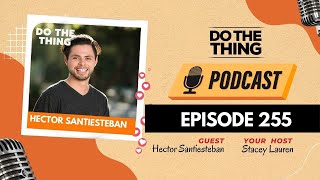
Interview (Do the Thing podcast, Episode 255) with Hector Santiesteban about his path from college direct sales to online course creation, Facebook Live content, and founding a podcast production company. Hector describes how reading and self-development led him into digital marketing, how he produced ~300 Facebook Lives early on, transitioned into podcast marketing and later full production (the company now produces ~20 shows), and now hosts three shows himself (including Modern Masculinity and Podcasting Success Secrets). He discusses using podcasting and live streams to surface suppressed ideas, men’s mental health and masculinity, the practical challenges creators face (editing, promotion, format), personal practices for fear and anxiety (meditation, mindfulness, breathwork — he reports ~350–400 breathwork sessions), and his advice to improve by 1% each day. Contact handles mentioned: search “Hector podcast” on major podcast platforms; Instagram: @hector_podcast; LinkedIn: Hector Santiesteban.
Questions this video answers
About 300 Facebook Live sessions.
Three shows that he hosts on his own.
About 20 other shows.
32 years old.
Approximately 350–400 breathwork sessions.
Chapters
Hey, everyone. Welcome to the do the Thing podcast. This is your host, Stacy Lauren. Well, guys, I am really excited because I met my next guest at a podcasters meetup that was happening here in San Diego. And it's been really cool since we met because he has already come live in the do the Thing singles community, helping me help them just kind of understand men better. So that's been great. And then he's also been on the expert panel for do the Thing with all the experts that we had talking about the audience acceleration strategies, because he also is an expert in that space. And so I was like, oh my gosh. Well, we haven't actually done a Do the Thing interview. So that's what I'm doing right now is I'm really excited to just really hear his story because he has so many different avenues of things he's doing now. And I think that's what I love about having a podcast, is how the podcast is truly this door opener to you, really kind of finding out who you are and what you really want to do in life. And so I feel like since we connect so much on that level, I'm just really excited to be able to just hear how all this started and what he's up to now and what really matters to him. So I am welcoming Hector to the show.
Hey, Hector, thanks for having me. I appreciate you bringing me on.
Yeah, thanks so much for coming on. I appreciate it. So I would love to start off and just hear your story. What has been going on with you?
Yeah, where does it start? I mean, so I grew up on the west side of LA and kind of had the pretty cushy middle class upbringing. My parents put me in more sports than I could ever imagine, and there were times where I was doing 3, 4 sports at a time. And I thought all that was normal. And I think the journey, for at least what we're talking about today, starts in college. I got my first crack at entrepreneurship or self employment or owning a business and kind of worked my way as doing direct sales through college and did that a little bit outside of college. But once I met my wife, I realized that I wasn't going to be able to spend 16 hours a day, six days a week at an office and still be the dad or the partner or the person at home that I wanted to be. And so that's when I started looking for avenues. And in I think it was 2016 or so, one of my staff members was reading 50 books. She was trying to read a book a week, basically and was doing 50 books in a year. And she challenged me and she's like, you can't do that. And I think she knew that I would kind of take her up on that challenge because I don't like to back down from things. And so I went on that mission with her. And really I didn't think I enjoyed reading before then, but really found a love, and not just for reading, but for learning and especially this self development world that kind of threw myself into over the next little bit. And that next year stumbled upon digital marketing and Internet marketing. And then the next year we found out we were having our first kid. And so I, I left that direct sales business and kind of closed up the shop at. At what was a very kind of cushy corporate sales job and dove into this online marketing thing and started to do everything under the sun to try and make money there. And, and the thing that I landed on that was working was creating courses and content around a rather really obscure niche. And I was creating YouTube videos. And it was right around the time when Facebook Live got started. And so I did, I think like 300 Facebook lives that first year that, that Zuckerberg released it and that was great. It paid for a wonderful wedding and kind of got us into a bigger house. But the industry was not going where I wanted it to be. And it kind of took a turn and there were some kind of macro issues that were causing some challenges there. And so I ended up selling the Facebook group, I sold kind of the email list and kind of transitioned that community over to somebody who was still going to be in that space and then started looking for whatever was next. And eventually, I don't know how long that process was, but eventually it landed on podcasts being the thing that I was going to throw myself into. And actually, I do remember what it was is we had one client who asked us to create the social media clips for podcasts. They had a podcast. And it was right when Instagram started doing videos. It was like the first time that Instagram allowed videos on their platform. And this podcast wanted us to create the little clips with the captions on it and the little words on top and such. And we're like, yeah, we can do that. That's easy for us. And then we had another person reach out to us and do that, you know, ask us do that. And eventually more and more of our clientele was podcasts. And so we kind of morphed into a podcast marketing agency and leaned into that for several years. And over the last Couple of years. We've vertically integrated into a full production company. So we do also the editing and all the other parts of it. But it really, for me, I thought it was something that wasn't going away. I saw where technology was headed. And even though the industry has its kind of ups and downs and there's all these sorts of headlines and news stories that are out there, that it was going to be something that was going to be around for a while. And so now I've got three shows that I host on my own, which is probably two more than is probably sane or recommended. And our production company produces about right around 20 other shows, mostly in the business, entrepreneurship, personal development space.
It's so cool how things start where you have that girl that was doing that challenge with the 50 books a year and tells you about it. And that's what gets you on this learning path of basically wanting to get all of this content with books right, which then kind of translates into what you're doing now. I'm so amazed when you connect the dots back to the things that can start something.
Well, it was right around that same time that I actually stumbled upon podcasts. And I remember when I started my first business, in order to advertise, we would pass out flyers. Instagram was just the new thing, right? To kind of give context, we would pass out paper flyers that we would get printed at Staples and then, and we would put them on people's doors of their cars, or we'd hand them out at local malls and such. And so it would be some of the most mindless work that anyone like that. I don't say anyone because I don't want a judge of it, but at least it was so mindless for me that I was looking for anything to pass the time. And I remember looking at this app that was taking up space on my phone, and it was a podcast app. And I was like, why is this here? And I was looking for things to delete, I think. And I clicked on it and I started to see there were all these shows and it really obscure, but also shows that I was like, oh, I'm into this sort of stuff. I didn't think that anybody else was into this stuff. And I can download it right on my phone and it was strangely easier and free, which is also kind of the other thing. And I remember that that year that I was reading books, whenever I wasn't reading a book, I was usually either listening to that book on on audiobook or listening to a podcast. And it's Interesting how those kind of things coincided. But I also see for us at our production company, we're really big on helping people get better at stuff and then also giving them the access to it. And I didn't appreciate it then, but that's kind of the inception of the whole thing was. Was right around the same time as the books.
Yeah. Okay. I was trying to think of what you meant by giving them the access, but you meant to where anyone can access it at any moment.
Yeah. I think that's also the other great thing about podcasts is that there is a podcast on everything. Everything and anything. Sewing and stitching and crocheting and cricketing and driving. I mean, you name something that someone could be interested in and there's likely a podcast for it and it's likely free. And that sort of thing was just never available. I mean, I grew up in the 90s, which is, we had cable TV, but even then, I can't tell you how many times where I go over to my parents house when they had satellite TV and there'd be hundreds of channels and there'd be nothing that I would. There'd be nothing on or like nothing that I would want to watch, where all of a sudden I had this on demand access to information that I enjoyed and that was meant for me was kind of the first time that I felt that that was. Was really possible.
Yeah. So there's one thing to go from wanting to learn. Right. And listening to content and reading and all that stuff, and then to actually transition to you being the voice on the other end. And so I wanted to start before we go podcasting, I wanted to talk about that transition from direct sales to you creating the courses and then where you were making money in that obscure market. How does that.
It probably goes back, you know, I'll probably. It goes back to that. I mean, I was the. In middle school, I got elected to the student council and I was responsible for making the school news broadcast. And I thought it was just going to be an easy way to ditch class. That was my motivation for. For taking that role. But it was the first time that I stumbled into content creation and I just. I loved it. I mean, I could just get lost into the flow. I didn't know it back then, but I was just. I'd get lost for hours in there and we'd look up and they'd be like, where were you? And I was like, I'm working on. They're like, it's been three. You've been gone for three classes. What do you. You can't just be in that closet all day. It was in this little closet in our computer room. And it was one of the. We were probably one of the first schools to have the imac. The old imacs that had the green cover on the back that you could kind of see. And I would just play an imovie for hours. And so that was kind of the first thing. And then also I was strangely a theater kid, but I could never fully admit that to my parents. They wanted me to be the jock and the athlete. So I also did all of the sports and I was also the football captain and I was also the baseball captain and that sort of thing. But I also really enjoyed performing. I was in the fall play in middle school. I was the lead for our middle school musical. And so I always had that probably that vain want for people to be looking at me or that center of attention sort of thing. And so that I think is always there. And as I'm trying to find ways to make it work in this online space, it's like, well, how can I utilize that? Want to talk and hear myself talk maybe and think that I have anything good to say? And then how can I actually provide value to people? How can I do that in a way that actually is helpful? And so live streaming and creating courses and creating YouTube videos and we had a really thriving Facebook group at that time. Kind of became that outlet to get both done where I could kind of tap into that perhaps vain need for me or that vain desire for me and then do it in a way that's valuable and economic and creates a return and all that sort of stuff?
Yeah. Did you find from when you were younger and you were doing all the sports? I think you mentioned the beginning, it was three to four sports. And then you're also having this desire to be in shows and theater. Was that kind of a moment where you're tapping into what you want versus what your parents wanted.
That's been a big journey. I'm 32 and I'm still consciously trying to do that. Where my mom, she's a wonderful grandmother, but there are so many times where I have to tell her, well, I'm going to parent this way. This is how we do things. And being okay with her maybe being upset. I think that that was such a big conditioning that I didn't realize that I had was a people pleasing mentality. That was a big undoing. I for sure I enjoyed sports, but if my parents weren't pushing me as hard to do those things. I don't know that I would have done them. I don't know that I would have naturally gravitated as much as I, I do. As they thought that I did when I was just trying to get my dad to tell me he loves me. It's like really what it was. But if I didn't play sports, I knew he would be severely disappointed or I knew that it would have caused a real riff in our relationship. And 7, 8, 9, 10 year old me wasn't prepared to do that. So I don't think in the moment did I feel like that. But I think every opportunity I could to do both, I would. Because if, like, if I could figure out a way to do both. And there was. What's interesting is, is my senior year of high school, I transferred schools, or as my junior year, but I transferred high schools. And so there's some weird rule that I don't think it's the same rule now, but basically you couldn't play sports if you switch schools. And so I couldn't play football that year, even if I wanted to, I couldn't play. It was against the rules. And so that was when I joined the fall production and I was like, I'm not gonna, I can't play sports. Let me join the play. There was nothing my parents could really say. And I, I, I know my mom went to my performance. I don't know if my dad went to that performance or any of those performances, which I, I won best supporting actor for in that, in that production, my dad.
Awesome.
But in the moment, I don't know that it felt that way. I think that looking back on it, it probably was that, but I wasn't conscious of it at the time.
The reason I bring it up is as I started this podcast, it was in the beginning all about doing the thing. Right? That's what I was doing is okay, do the thing. I want to help people do the thing. Get out of the mental baggage that gets them to take action on the things they want without falling into fear or imposter syndrome. And all the things that come up when you're doing something. And I think I was 10 episodes in and I realized it was so much more than doing the thing because I didn't even realize that I had that where I'm doing the thing. Even though I didn't have fear hold me back, I was held back by other people's what I thought other people wanted or needed from me and not wanting to disappoint. And so now do the thing is sort of through the podcast and me interviewing people and the challenges that transformed into really tapping into what you want internally and not because someone else is saying something. And I'm just curious for you, because you've activated your voice now through the podcast, through the lives, do you think that's helping you really become aware and that now unconscious is more conscious because you're really tapping into this other part of you?
Yeah, for sure. I think it's in the Gospel of Thomas. And I'm not a religious person. I grew up Catholic, but I'm not a religious person. But there's something in that book, if you will, that says something to the effect of the things that you keep inside you will destroy you. And the things that you bring forth from within you will be the things that save you. And I think that we all have these things at a variety of levels that we keep inside that eat us up inside. And that could be trauma, that could be resentment. That can be. I mean, name it, right? If we're holding on to it, if we're not forgiving that other person, it's affecting us far more than that lack of forgiveness is affecting them. Right. That sort of thing. And at the highest sort of level, right. Once you kind of get past that, we have these great ideas or we have these great lessons, or we have these great things that we can do. And you mentioned fear. And for so long, fear is the thing that held me back. And there are so many things that I wanted to do that I was afraid of. I was just afraid of length, insert whatever. I would find things and find reasons to be afraid and use that as the excuse or use that as the reason to not make that decision and go, well, I'm being really logical and practical, so here's the reason why not. Because there are these perfectly, I guess, reasonable reasons to not do something. But also, if that is the only lens through which you make your decisions by then you're never gonna do anything fucking cool. That's not how you do cool shit. Like, cool shit is not on. On that side of it. There's usually some risk. There's usually some. Something that can go wrong when you're doing cool stuff. And so I'm 32, and this is something I'm learning in, like, the last few months is just being willing to be okay with things like not being okay. Like, if you make a decision and things don't work out, that's okay. But I was the person that would see that decision and then think I don't want things to go wrong or I don't want to make the wrong decision, so I'm just not going to make any decision. And that was the default. And so, coming back to your question, doing the thing for me, so much of it, and doing live streams and doing the podcast and the newest show that I started is like a men's mental health show. And it's so much of it is because I've suppressed that voice for so long that allowing that to come out has been its own value. Right. Not to mention, I just got an email today from somebody who's like, dude, we weren't even talking about it. He's like, by the way, love the show. Listen. Every week it's like getting those sorts of messages when really the show was something I did mostly for me, and it seems to be the one that's resonating most with people.
So, yeah, isn't it amazing? Because you tapped into what you need the most, and by you being able to talk about the things, that's what's really helping you. And then in turn, by you doing that, you're hitting really hard with people because they are right there with you.
Yeah. It reminds me of that Marianne Williamson quote where it's like, our deepest fears is not that we are inadequate. Right. I think it's some of the effect of our deepest fear is that we are powerful beyond measure. And essentially the premise of that quote is that we think that by not shining, by not doing the thing, that we're actually helping other people because we don't want to make them less than, or we don't want to be better than. But that by doing the thing, we're actually enabling people to do their own thing. And that's what has been so freeing in this journey, is that, you know, it's actually interesting that you bring it up. The messages are coming more and more now because even yesterday I got another message where someone was like, love your videos. Love that you're talking about it, having those conversations, because people aren't having those types of conversations, or we haven't been, or the culture that I came from, the Mexican. Mexican American machismo culture, doesn't talk about mental health, especially for men. It's not a thing. And so all of that. Right. Is a benefit both for us and for the people that listen and consume it.
And I feel like anytime you could bring up a topic that there's shame around it. Right. And like you said, people suppress it and then also make someone feel like they're not alone when they're actually part of something. I remember I felt like this when I first discovered attachment styles and relationships. And I was like, oh my God. Okay.
I'm the exact crazy.
Yeah, I'm like, I'm not crazy. I'm just part of this attachment style. And there's something about that that just.
Like, you know what I liken it to? You've been to Disneyland and you know, in the Pirates of the Caribbean, there's this part where it's not a guy anymore, but it used to be a guy chasing this woman around. This whole. Do you know what I'm talking about?
Yeah, I do.
And they're just going around and around, around. That's what I like in attachment theory too, where for me that that was just me. I was just chasing someone around and around around as the avoidant was just running away and way away. Now they. It's actually not a man chasing a woman anymore. I think it's a woman chasing a woman now. It's just its own kind of interesting thing to, to go down. But whenever I think of attachment theory, that's what I'm reminded of.
Well, can you share, since you mentioned the podcast, do you mind sharing about that one and what that one's about?
So modern masculinity is the newest one that I've launched and it was really born out of my own need to find my own answers and kind of on my own search and journey in my own relationship and my own journey as a father and really as a 32 year old guy who I climbed the typical mountaintop early in my, my life and early in my career. You know, I was 24, 25 years old making way more money than any 24, 25 year old should be making. And, and I also blew and spent way more money than any 24 or 25 year old should have spent. So two things happened. Well, the first is that I got to the next phase of my life and as much success as I would have had, I felt like I was starting over again in a lot of capacities. And then the second thing that I realized was that that was not as much as that was a mountain to climb. That was not the mountain that I was. I had made all this money and I was blowing it looking for happiness and blowing it searching for happiness. And so then let's. I say, I guess the next five years or so was really a journey the other way where I really got into trying to be a good dad and trying to be a good husband. And I was spending time at home, and I was like the primary parent. And there was. It was all of this totally new journey that I was going on because my dad wasn't. I mean, he was around, but he wasn't a present father, not because he wasn't. They didn't know what that looked like. That was not a thing for them. And so all of a sudden, adding on these new skills, there wasn't a clear model to which I could embody. Yeah, I fucked up a lot. Like, I really fucked up a lot, both as a dad, as a husband, as a, you know, in all the sorts of roles, just doing what I thought was the right thing, doing what I saw doing and acting the way that I saw my uncles and grandparents or saw the other men in my life acting, not realizing that we live in a 2023 world where that doesn't work, where those mindsets, those beliefs, those patterns, those habits don't work today. Just flat out, we just can't. They don't carry over. There are some things that you can bring, but otherwise, there needs to be a new operating system through which we operate. And I didn't have that. And there was no resources. And I'm 32 and I'm a young dad is what I hear a lot. Especially kids are 4 and 5. And so all of my friends that I went to high school with, they're just having their first kid. Like, they have infants right now, and so I'm well ahead of them. And all the. The parents that are doing all the things that our kids are doing, whether they're at school or they're in jiu jitsu or all these other things. I'm way younger than all of those parents, and so I just felt. Go back to your point. Isolated and. And alone in this community, if you will. And so I did what I do best, and I started a podcast around it. I reached out to some guys that I knew. I reached out to a lot of guys that I didn't know, and I was like, hey, here's what the show's about. And I want to have these conversations, and I want to help guys like me in their 30s and 40s who are all of a sudden, they did life as a single guy, and a lot of them did life well as a single guy. But now, all of a sudden, you've got a partner, you've got kids, you've got a business, you've got all these. These extra responsibilities, that putting it all together is something that. That's what we haven't Seen. We've seen people be really successful in business, but their home life is shit. We've seen people be successful at home. They're the dad that's at every practice, and they're the great dad. But their finances aren't. Probably aren't where they. They maybe could be. Right. We haven't seen a lot of examples of everybody putting it all together. And that was my mission because I think that it's possible. And now we're 50. We just recorded our 56th episode. I think we're about to publish our 50th one. We launched in May.
Amazing.
And yeah, it's. It's. What's interesting is that's the newest one, but it's the one that I get the most feedback on.
Cause it's hitting. Yeah, it's hitting. It's hitting from a deep place. And then your other one. So the pod. I've listened to the podcasting. Actually, I think I listened to the other one too, Modern Masculinity. But the podcasting success secrets. That one. Is that one connected to your production company? Is that kind of the.
Yeah, we started that one because it was like there was a time where we. We were producing other people's shows, but we didn't have our own podcast. So we're like, oh, we should probably start our own show. And it's been great because it's been. It's a great sandbox for us and a great opportunity for us to try and test things and. And obviously to create some thought leadership. And it's been great for networking and such. But, yeah, it's not. And I think the men's mental health show Modern Masculinity, it's. It has a wider base and so it has a wider potential audience, whereas the. The podcasting one is. Is really for a much smaller group of people.
Yeah. And it's so tactical, too. I remember listening to one of the episodes and I was able to take action right away.
That one is much more actionable and nerdier, for sure.
Yeah. I'd love to also hear about the production company. So are you getting the person. That's right after they've started the podcast, then you're helping them manage it, or. What kind of phase of the journey are you? Do you work with our best.
Our best clients are the ones that have already started the show. They've got things rolling and then now they've realized that it is a lot of pieces to juggle on a week in and week out basis because they're so a Lot of people, they think that I'm going to start a podcast and I'm just going to hop on a zoom like this and we're going to have a conversation and it's like, yeah, for sure, that is part of it. But then you got to take that and you got to edit it. And if you want people to listen to it at week in, week it out, it's got to have a reasonable amount of sound quality. So it's usually worth editing. And then you've got to write some show notes and then you've got to promote it on social media. And there's all these different pieces to it that for a lot of people it can get really overwhelming. And so most of our clients are the ones where they either have a bunch of freelancers who are managing the process, they've got an audio editor, they've got someone to make the graphics, they've got someone to do the videos, they've got someone to write up all the stuff and they're playing quarterback and that's kind of a big headache to pull all those strings and then to manage all that and then to still be the talent and the host and actually run the interviews and such. And then we also work with people who have. A lot of companies will have podcasts and they'll have internal people, employees doing the podcast and they're capable of it, but it's just most of the time the podcast is not their business. They have a real core other business that they're actually doing. And so we can come in and kind of alleviate them from that straight on their resources. And those people can actually go back and work on their core competency and have the kind of the podcast handled in the background. So those are the two people that we work with the most. And then we also help people launch their shows and get started.
Yeah, I really like that, especially when you get them from the show has already started. Because I feel like there's this point in your podcast when you're first starting it that you're finding your voice and then think of someone else is in there. Sometimes it can muddy it a little where I feel like you're really able to just really tap into who you are. And then I recommend when people start is they don't edit or anything, they just do their first 20 and upload, publish, just so that they're not getting stuck at any point. And then once they get to 20 then they're like, wait, I wanna actually do something with this. Now they're in momentum and that's when they would hire someone like you. Right. Because then you're able to take what's already kind of been built. They found their voice, and then now it's able to elevate it to another place.
Yeah, I think so. Well, at least there is a journey. You're talking about finding your voice. And not only do you have to find your voice, but you've gotta get comfortable literally hearing your voice. There's all these things that, these hesitations. And I think it kind of comes down to imposter syndrome. But I remember when I started my kind of content creation journey, right when the Facebook Live was coming out, you would do it right on your phone. You couldn't kind of do it from a computer or anything. It had to be from your phone. So I would set up this tripod and I would have my phone kind of set up and I'd jimmy rig this microphone into it so that it didn't. The audio didn't sound terrible. And I would just stare at the record button for like 20 minutes. I would just find every excuse and every reason to not hit the record button. And when I really, when I look back on it, what I enjoyed about Facebook Live was that there was no editing. There was no. I mean, you recorded it and it was up and now there's also. It was kind of scary because people were on the other end. And I just started doing some more live streaming this week, and I've had two live streaming fails where there's people. I did a combined almost two hours of live streaming and there is no usable audio from it. So it's like you make these kind of mistakes and you kind of learn and then. And kind of get through it. But there is this journey of just being willing to get stuff out there. And I think that's what you're talking about is don't edit it, don't overthink it, don't question, just publish it. And that's going to get you to a place where you're just comfortable publishing. And that's the first step. Right. Which I think is really important.
Well, yeah, because so many people get stuck in like, oh, what name? And how do you like this image and this title? And it's like, no, you've got. Got to, like you said, make those decisions from you. Because literally, I've noticed this for people, when you ask someone a question about an image or this or that, everyone's got a different opinion anyway. So just go through what looks good to you and then the people will give you feedback and if you want to adjust it from there, but you don't need to ask 25 people that aren't even going to listen to your podcast what they think.
Yeah, we had one client where we launched a show and I think this is just good general feedback for a podcast or for anything. He basically was getting feedback from the wrong person. And what happened was we were starting a show and it was a show for men. And I tend to work with more guys than not just because I have a show in the men's mental health space and that's in my network and such and such. Not for any other reason than that, but the show was met. They had a very manly title. The logos and the art was super manly and it was just like it was for a 40 to 50 year old man. The problem was that all of the feedback this person was getting was from his 18 year old daughter who was telling what she thought about the art and what she thought about the music and what she thought about the content, and she was sharing what she thought it should be. And he loves his daughter and he wants to honor her opinion and all the things, as a good dad might. But the problem was is that I don't know if he got confused, but it got lost. All of a sudden things were not resonating, things were not matching up, it was not aligning and they ended up folding it because it's just, I don't think he was staying true to what he wanted to do, what the show should have been. So I think that getting feedback from the right people is also not just any feedback, but from the right people is important and perhaps any creative sort of endeavor.
Totally. Yeah. And then you get emotionally exhausted by the process. So when you can actually just be more guided by yourself and then when you put something out, that's where you're able to tell which way it goes. Pretty much.
You know, I will say that the one challenge with podcasting though, is that there are so many pieces. And so if someone just has a message and they have an idea, they're passionate about getting a message out there, which is where we find that a lot of people are when they want to start a podcast. There are so many technical pieces that are involved that if you're at a place where you don't have as much time as you have money, which is some people, it's not everybody, but there are those people who are, they want to hop in, they want to do the recording, they want to do what they do, and they want to leave all the other pieces to have someone else figure out. We've also found that for those people, having someone to think through, well, what's the premise of the show? What's the format of the show? What are the topics? What are the. To think through all of the details in the same way that. In the way that a talk show host. They're just showing up kind of reading what's on the cards. They're focused on their role. They're not necessarily as concerned about the bigger picture. As a podcast host, you're kind of responsible for everything. And that's a lot both from a creative and from a technical standpoint. So I just think for those people who, they've got a business, they've got all these other things going on, and the podcast is not the main thing that they have. They don't have 10 hours to devote to a podcast in a given month. They've got three, four. We've found that we can make that doable too. Where that's the other side of it. Whereas I've seen it, that part hold people back. Where. What mic do I use and where do I host it? And does it need video? And what about show notes? And like, there's all these little things that it could take you a lot of time to figure out on your own if you don't have what you're talking about, like some sort of guide to help you.
You mentioned earlier you used to be trapped by fear. And what was the best way that you've gotten through that?
I don't know if I've gotten through it. I'm in the middle of it. One of the things that probably has helped the most is breathwork. And that would be like an off the wall answer. But intellectually I've always. I can sense it. And I'm like, damn it, I know I'm being afraid. I know I'm not going up and talking to that girl when I was younger, or I'm not going up and making that extra sales call, or I'm not. There were these moments where I could feel myself giving into the fear. Right? It was even. I remember as a little kid not wanting to go down the dark hallway and just being like, ah, it's winning. And I know that it's winning. I just didn't know what to do about. I didn't know how to move through that. And then. So I guess the intermediate step was understanding that those feelings were okay. I thought that the brave people, the strong people, that they don't have Those feelings that they don't feel fear, experience fear, or whatever it was. And so I think that having an awareness that it's okay to feel afraid, that's not indicative of your worth. It's not indicative of your ability to get out of the situation. It's a feeling. And so that was a big part. And then being willing to not be beholden to that feeling and that for me, it started off a big journey, was meditation. Right. I think I found meditation and doing guided meditations back in, I guess probably about 10 years ago now, is when I started practicing meditating pretty regularly. And then meditation evolved into mindfulness. And it's a part of it, but it really. It kind of. Not only was it just kind of quieting your mind, but then it's also being able to skillfully navigate what your mind is doing. Right. Or really not only your mind, but being able to kind of navigate and separate your body, your somatic sensations, and being able to still give you some sort of control over it. So I hired a mindfulness coach and worked with her for a really long time to get over those anxieties or to be able to take action in spite of those anxieties. And then most recently, as things have kind of really gotten challenging at home and personally and even professionally to an extent where, like, you want to shut down and things feel overwhelming, the thing that's helped me move through that is, has been breath work. And, you know, I think over the last year or so, I've probably done close to 400 breath work sessions or so, maybe 350, I don't know, something like that. But to where it's been a daily, sometimes a multiple times a day kind of thing, because sometimes it was necessary. But then I also realized, like, some of these other skills, meditation and mindfulness, that once you get past the need to do it, you can start to bank and build in a skill that can actually be not only not like a reactive sort of thing, but something that can be proactive and actually positively beneficial. Not just getting you back to baseline.
Yeah, it's the compound of it. And then you're getting more practice where it's unconscious. Well, I'd love to hear what your biggest piece of advice is for people on doing the thing.
And so I tell my kids it's to get better every day. There's that whole, like, you said, the compound thing, right. And that 1% better every day. And one of my favorite sayings comes from Emile Kuwait. And it's like an affirmation that I'VE adopted. But he was made famous for saying, every day in every way, I'm getting better and better. And that for me, that's like life, that seems for me is life. And it's kind of like Groundhog's Day, where it's like, damn, we're gonna do this all again. It's like, yeah, we got to do it all again, but we have another chance to improve and to get a little bit better and doing the thing. I think it starts out with that, right? It's just we've got to start up with what is that 1% and then what's the next percent? And then how can you continue to do it consistently? Right. I think that's always the battle is doing it consistently and then doing it better. And when you're doing it consistently, can you focus on doing it better? And when you're not doing it consistently, can you just focus on doing it consistently? And it's like that game over and over again until we die. That's it. And then we get to do it again. If we get another crack at it, I think.
Well, please share with everyone how they can find out about you.
If you go to most podcast places and you search Hector podcast, you'll be able to find me LinkedIn, it's Hector Santhiasteb On Twitter or X Instagram, it's Hector Underscore podcast. You can find me there.
Awesome. Thanks so much for coming on. It's always so great to have you.
Yeah, this was great. Thanks for having me.
And for the listeners, do the thing, don't wait for opportunity, create it.
More from Stacey

From 262 Women to 8 Million Media Impressions: Deborah Drummond Built a Global Women’s Movement


From Notes App to Published Author: Avery Brenna Crumrine on Turning Intention Into Action


How Stacey Lauren's Billion Dollar Impact Marketplace Will Raise Billions for Charities and Causes

What Happened When Allison Maslan of the Pinnacle Global Network Ran a Challenge with Stacey Lauren




Leaders Share How Stacey Lauren Sparks Action, Clarity, and High-Impact Collaboration

Sandi Masori Announced as Emcee | The Billion Dollar Impact Event Returns to San Diego