Episode 266: Adam Gray: Mastering Digital Networking and Personal Branding
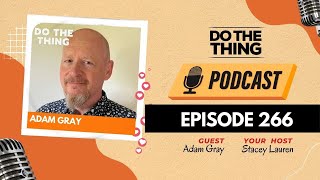
Adam Gray, co-founder of DLA Ignite, explains how to build B2B relationships through live streaming. Go live on the same day and time each week, invite engaged commenters back, and bring guests to tap their networks. Personal branding beats corporate accounts, and small repeat audiences matter more than one viral post.
Questions this video answers
May 8, 2024
DLA Ignite
Restream
Second edition: 'Techniques to Influence Buyers and Change Makers' — published by Kogan Page
linkedin.com/in/adamgray
Chapters
We are in day 10 of the do the Thing Go Live challenge. And the do the Thing community and myself have just been learning so much. It's been amazing because we've been able to bring in experts that have been able to help talk us through the art of going live and being able to do that every day and then all the benefits that could bring you and then all the other goodness that comes from that. And one of the guests I had on was Christoph Trapp, who had recommended our next guest. And I'm so excited to be able to talk to him. We were just talking offline and I almost wish we had it recording because I've already learned so much in the eight minutes that we've talked already. And so it just is a thrill to be able to have you on.
Thank you.
And so, yeah, I would love to just have you just share who you are and a little bit about you and then we can kind of dive in to everybody and their questions.
Okay. Hi, I'm, as you can see from the ticker going on down there, I'm Adam Gray. I am one of the co founders of a company called DLA Ignite and we help organizations empower their people to be more social, to activate their networks so they can have more conversations. Because certainly in the business to business space, the challenge that organizations have is they have no pipeline and they have no way of generating any more sales pipeline. And the amount of sales pipeline and revenue that you can generate is Generally in the B2B space, directly proportional to how many conversations you can have. And social is a fantastic platform for having conversations, but most organizations are not able to enable their staff to do that effectively. So that's what we do.
I think it's amazing what you do in terms of being able to help companies bring their social in terms of the magnitude of what they're doing with the business and who they're serving.
Yeah, I mean, to be honest with you, we tend not to really have much dialog with organizations around.
Their corporate social properties. I mean, we give advice on those and we help them configure those and set them up and manage them and workflows and all that kind of thing. But actually, the reality is they're pretty much worthless for most organizations. You know, the skill comes from getting the people within the organization to have more conversations. And, you know, if we work within the same company and we're each taking our own personal brand to market, you know, some people look at you and they go, actually, I would rather talk to you than Adam, and therefore you are the entry point into the organization and the ability for an individual to mobilize their own networks. Clearly I have quite a thing for where are we for guitars?
And have a lot of conversations with a lot of people about guitars, which ultimately sometimes leads to commercial conversations. And the beauty of this is that business should be fun. You should be having lots of conversations with lots of like minded people, some of whom become champions for you or customers of yours or referrers of yours or whatever. And the best way to do that is to be yourself. You've got a dog. Maybe I love dogs. In which case we have a conversation about dogs and that's how our relationship begins. And ultimately that's so much more compelling and attractive than here's our new injection molding machine. Isn't it great? Because actually nobody cares. That's not a criticism of anyone that works in injection molding. That's a criticism of what every business does. Nobody cares about it really. They're too busy trying to deal with their own problems. But when you engage someone at a human level, and that's why tools like this, that's why tools like going live are so powerful, because you get to see the person. It's not like it's a recording, it's not like it's a brochure, it's not like it's copywritten. It's people having a chat. And then you go, oh, I like that person or I don't like that person. And that's equally good. Because at the end of the day, if you don't like me from watching this live, it means that you're not gonna waste, or I'm not gonna waste two hours in the car traveling to your office to have a conversation for you to decide you don't like me. I mean, it's a win for everybody, isn't it?
Yeah, I love that. And I love that idea of you're just taking the things that you love and you're getting to talk about them with other people and that's where the connections can start.
Yeah, absolutely. And do you know the irony of this is that it's such a natural thing for people to do. You know, in the old days, you'd go to those business breakfast networking groups and you'd shake hands with people and you get to know them and they become friends of yours and ultimately they buy their products and services from you and tell their friends about your products and services. That's a very natural, very human thing. And yet we get online and we Go.
Hello, I'd like to tell you about my special product that I've got that helps address these. And it's like, why would I believe you? Why would I listen to you? Because, you know, nobody ever rocks up at a sales pitch and says we are third best, we're a little bit expensive, we don't always deliver on time. No one ever says that. Everyone tells you they're perfect, everyone tells you they're market leading, everyone tells you they're exceptional and their customer. And these are just words. And getting to know somebody means that there's something that you can understand. You can't understand the finesses of accounting packages or 3D printers or any of those other things that people might be trying to sell you. But one thing you can absolutely get is whether or not you like the person. That's the basis. If I like you, I'm much more likely a to listen to you when you speak and believe what you say. That must be a win.
So you're saying for people to feel connected, it's like letting go of all those superficial layers that people think they have.
Because if I like you, I'm going to like you when you work at company X and when you move to company Y, when you move to company Z because you're the same. And everybody thinks. No, not everybody. Many people think that when I connect with you online, I'm buying your 20 years of experience of being a market leading expert and a self starting entrepreneurial. And I'm not A, because those are just words and B, because everyone else is saying the same stuff. So what I'm connecting with is, do I like you? That's a really good basis. Everybody on the social networks, whether it's on Facebook and it's kind of like an advertised outreach or whether it's on LinkedIn and it's a connection request, everybody gets, okay, I'll accept this person. Accept them, then immediately they get a sales pitch. So I'm an IFA with 20 years experience. I'd like to talk about your investments and your retirement, please. Why would I tell you about my financial situation? I've got no idea who the hell you are. And this is the point. People think that if I say it, it must be true, but when you're the recipient, you don't believe that. So connect. Share your best ideas. Share the most helpful things you possibly can. See if you can empower the people around you because that's the superpower. And that's what digital channels like Restream or streaming and going Live and social networks enables you to do to scale those helpful things.
It's great, especially coming from someone with your experience. And you're basically just saying, just be.
You.
Because it's the only thing you've got. You know, whether you've got 500 connections on a social network or 50,000 connections on a social network, it doesn't matter. The thing to remember is that you are the only thing that all of those people have in common.
That must be a good starting point, doesn't it?
Yeah. And we were talking a little bit before we went live about kind of where the do the Thing community is, but I'll give for people watching just some context. So pretty much we just helped people start podcasts. And actually, that was one of the things I really worked on through that challenge, was getting them to show up as themselves. Even one day I just took a shower and then had my shower cap on and literally did a Facebook Live in the community, like, because I felt like they were being too perfect, you know, And I wanted to show them that it doesn't matter. And the person that needs to hear your message, whether you're a business or whether you're just coming past a divorce or something really challenging, you know, they don't care how you show up unless you're working for some beauty brand or something. And then now they're in the middle of going live on different channels. Some people never went live before. Others are just experimenting. Like I said, I hadn't gone live on LinkedIn, before Instagram, before this challenge. And so just really wondering, knowing that the newness of where they are, and they're 10 days into this challenge going live, what do you think kind of would help them in terms of where they are now?
Well, I think that there were the. There were a number of different things that we need to consider. So first of all, where are you going to go live? This is partly where your audience is and partly where the audience you would like to have is, and partly the mechanics of those different networks so that you can mobilize that audience and draw them into what it is that you're doing. So there's the technical side of things and then obviously which platform you use. So we're using restream as the streaming platform. So a mistake that people often make is they think, well, I just rock up and go live. Create an event and go live. And actually you need to have something that sits in between your computer and the social network in order to kind of do those connections for you. And the one that we're using today's Restream and that enables you to put the captions on screen and all of that fancy stuff that makes it look kind of slick and professional. So there's that. The next thing is, what's the purpose of going live? Yeah, you can rock up and just say, hi, I'm here, I'm going live. It's great. But the question is, what would encourage your audience to come back if you do that? And I think that we often obsess about how polished we make it look. Am I going to go into a studio, am I going to get makeup and lighting and all of that stuff to make me look as good as possible? Am I going to rehearse what it is I'm going to say? All of which you can do if it makes you more comfortable though it's by no means a requirement and we as a business never bother with that. The most important thing is what are you going to share that is going to make it valuable for the audience? Because there's a huge amount of content available to people. There are video streams, there are videos that they can watch, there's stuff they can read, there's interactive stuff they can go and do. Why are they going to choose yours? And if they do choose yours or stumble upon yours, why are they going to come back when you do another one? Because you know, if you're, if you're selling somebody a pair of sneakers, actually you don't need to worry about long term relationship with them. It's $50. And if they'll easily spend that, if you're looking to form a long term business relationship with somebody where you're going to be on retainer for 2, 5, 20, $100,000 a month, then clearly that's a much more in depth relationship. So how are you going to build from that first interaction to that long term relationship and where they really trust you? And the key thing that you need to do is make sure that you are providing two things to people when they tune into your stream. The first of them is value. So have I learned something when I've come to your video? Because if I have, well, that's great. It was worth my time. You know, if I, if I come for half an hour and I learn two things that I can immediately go and do, that's great. So that's the other thing is entertainment. If I turn up at your stream and it's really, really, really dull.
I'll be asleep before you finish the sentence. So, you know, content or quality or education and value and entertainment. And those are the two things. Exactly the same as when you go and see a keynote speaker, you leave. Do you remember everything they've spoken about for half an hour? No, of course you don't. You maybe remember some of it. What you will remember, though, is, oh, I really enjoyed listening to them speak because it was funny, it was entertaining, it was engaging, it was. They would seemed really sweet, whatever. The thing is that you liked, that's what we have to try to do when we go live. And the beauty of this is that.
Your perception of this is that you're going to broadcast on LinkedIn. There are 975 million people, all of whom are going to tune into your broadcast, and if you make any mistake, they're going to tear you to pieces. The reality is that you're going to go live on LinkedIn. There are 975 million people who don't even notice that you've gone live. And even if they have noticed that you've gone live, they may not be listening to what you're saying.
Really.
So for you to build an audience and have that audience actually listen when you speak, you have to earn that. It takes time, but it's worth it. And it's worth it because doing this is free. Well, it costs your time and it costs the time of the listener, but it's free to do. And how big the audience is and how engaged the audience is and how much value there is from that audience is absolutely a function of how good you make this stuff.
Yeah. It's just the matter of that consistency. Right. And then just having an idea of what you want to either learn, share or connect about.
Yeah. I mean, it's not rocket science. The first thing that you always have to do is try to win somebody's trust. And a way of winning somebody's trust is to share some of your knowledge with them. If you've got something to sell, it's reasonable to assume that you're an expert in that, otherwise you shouldn't be trying to sell it. So if you're an expert in it, then you can give some of your knowledge. The things, the mistakes that you've made and how you've got around them, give those to other people so they don't make those mistakes.
And the great thing about it is if you tell them something they don't know, they'll think, oh, that was great, they told me something I didn't know. If you tell them something they do know, they already know it. So it shows that you know what you're talking about, you can't lose. And if you think that, you've got to keep that little bit of secret sauce behind, because that's the thing that you're going to sell, people don't want to show you this because this is kind of like my secret thing, and this is my value add and this is my usp. Honestly, it's hard enough to get people to take action when they're paying you for it. There's little or no chance they're going to take action by stealing your content. So don't ever worry about that.
Yeah, so one of the ways that we do the do the thing challenges, I give people dares. So an example is I dare you. And then I have them do something like go live, right? One of the dares that I gave two days ago was to create an event. So. So to actually, like. Because before, for the first nine days, they were just going live every day, just randomly, whenever they felt like. And then now it's like, okay, now create your own event. And then, then another dare, which is like a bonus dare, is now show up to someone's event. And so I was just curious, in terms of creating the event and all of that, if you have any thoughts on advice to be able to help them, either, like, have people come or anything related to that would be great.
Yeah. So you have to create an event and you have to describe the event that you're asking people to attend in such a way that it might be of interest to them. So if you use restream as a client, for example, you can configure the event with a description of what the event is, and then you can automatically create a post in LinkedIn that follows that format. And then you can go to that event that you've created in LinkedIn and you can invite lots of people to that event, either in bulk or individually. And I think that one of the mistakes that people make, not just with going live, but with all of their marketing, is that they expect they're going to do something and the phone will start ringing and people go, oh, I saw you on that event, or I saw that thing that you published or that thing that you said, or whatever, and I would like to buy from you. And actually, that's not the way the world works. You have to work a lot harder than that to get people to spend money with you. So you create an event, you run the event, you invite loads of people that you think might be interested in coming to the event, and if those people engage with the event, you make a note of who they are and you make sure that you specifically invite them to the next event that you run. Because one of the issues is, you know, you get a thousand viewers. Well, you don't know who the thousand people are, so you can't do anything about that. But if somebody drops a like or a comment, you know exactly who they are. So you can do something about that. You can make sure that you invite them to the next event that you do. And gradually, over time, you know, when you, when you engage with their content, if somebody says something in the comments and you put it up on screen and you talk about it, that's great because you're including them in what's going on as it's going on. And that's really, that's really lovely. And yeah, over time, what will happen is that the audience size will grow and the engagement will grow and you'll get more comments. And the reason you want more comments on it is that some of the people in that person's network see that they're commenting on your life and that's the organic growth of your fame amongst their audience. And that's, that's what you want. You know, you want to engage. So the reason that you invite guests on to a live is because they connect their networks so your content goes out onto that person's network. And if somebody engages with your content, some of the people in their network see that they've engaged with your content. And if they've engaged with your content, it means they kind of quite like your content normally, which means if they like it, you want to make sure they see it as often as possible. So make sure you invite them to every event from then on. And again, it's simple. It just takes a little bit of time and thought to do it. But always.
The key is to make the event as inclusive as possible. There are obviously some things that one shouldn't address around people's belief systems. So politics and religion and addiction and stuff like that are best avoided because actually you polarize. You know, if you're a Democrat or a Republican, you tend to be one or the other. So if you talk about things that appeal to Democrats, you're instantly alienating everyone that's a Republican and vice versa. So often what you want to do is you want to avoid those things which are around people's beliefs, because you're not going to change people's beliefs normally. But you can talk about what it is that you do, share your knowledge Talk about facts, talk about interesting stuff, make it as fun as you can, make it as inclusive as you can. All of those are really positive things.
Yeah. So pretty much by you bringing on the guest, you're in essence then adding their network to your network because you can both stream on both platforms and then you're being able to connect on something that you like talking about, which then makes you more entertaining to be able to bring more people in to your fun.
Yeah. And, you know, making sure that when you've made some sort of connection with somebody, you're able to kind of maintain and develop that connection. So, you know, this is how you get in touch with me. This is how you connect to me further lives. And the nice thing about all of this is that everything you do, every person you add to your network, every person that you have created as a champion, that's going to start to consume your content, every one of those makes you more powerful as an individual. If you've got a thousand followers and you increase it to 2000 followers, if nothing else changes, you're twice as powerful that entity is. So you want to make sure that everybody that shows an interest in what it is that you're doing, you try to pull them into that kind of community that you're building and over time it grows. Remember the person with a million followers on Twitter, they began at the same place as you, with zero.
So all of this stuff is kind of, it's okay, you're not going to get a million followers today, but you don't need to. You just need to make sure that you got a couple more followers today than you had yesterday. And it means that a couple more people will see your content today than yesterday. That's a pretty good step forward, isn't it?
Yeah, because so many people, they can end up falling into that comparison thing and then say like, oh, this isn't working, I'm not going to continue. Versus the person that has a million started at however many also.
Yeah, and I think that the particularly in the business to business space, but it's also true in the business to consumer space.
What you want is an appropriate amount of interaction.
So if you've got Premium subscription to LinkedIn, you get to see who has viewed your profile and how many impressions your content receives. So I mentioned this in passing earlier. So if you have a thousand impressions of your content, that's of zero value to you because there's nothing you can do with knowing that a thousand people have viewed it. What you want to know is who the People are that have viewed it that you can't know. You can only know that from getting engagement on your content. So if 20 people have liked your content, you can look and see who the 20 people are. So I can ping you a note after you've liked my content and say, hi, Stacey, thanks for liking my post yesterday. I don't think we've ever spoken. Maybe we can have a chat at some point and maybe you'll say yes, maybe you'll say no, but maybe you'll say yes. And that's how you develop relationships and business with people. So what you want is you want enough likes that you can look at every one of them and decide whether or not that person is somebody that you want to speak to. So if you post something every single day and you get 20 likes every single day, and 10 of them are from your friends or people that work in your company, so you're not going to message them and say, hi, you're sitting on the next desk to me, so I'm not going to say, hi, do you want to have a chat? But 10 of them might be prospects. So you message all of them and say, hi, hello. Thank you. Do you want to have a chat? And two of them say, yes. Okay. That means that you've now, through your content, you've had two new conversations every single day. So a client of ours, he posted something and it went viral and he got 37,000 likes. And everyone goes, oh, that's just amazing. 30. Well, it is. It's incredibly impressive. I've never had anything that's got 37,000 likes. But it didn't do anything for him because you can't message 37,000 people. You can't even look at 37,000 people's profiles. So that didn't help him in any way at all. What does help is where you get 20 likes every single day, day after day after day, week after week, month after month. Because then there's a constant stream of people that you can wave at and go, hi, do you want to have a chat? And it really is as simple as that. And the difference between success and failure, whether we're talking about a social strategy or a strategy from doing the streaming that you do, the difference between success and failure is are you able to do this regularly? Because one post does not an influencer make. You got to do it every single day because everyone except you in the world is an idiot. Life should have taught you that. So if it's possible for them to misunderstand, misinterpret or miss what you do, they will take that opportunity. So I want to connect to you. And if I connect to you, I've built a digital bridge between me and you so you can see my content and then I'll publish every single day. So every time you log in, there's a chance you'll see me. That doesn't mean you have to read it, doesn't mean you have to consume it, but there's a chance you'll see me.
That's it. And there's nothing, there's no more complexity to it than that, really.
Yeah.
There's so much that I love about this. So my background before kind of doing do the thing is I owned a staffing company for 20 years, so purely just brick and mortar business. And I love sales. That's my background. Sales was like my best friend just from being able to like you can control it, right? Because you have, let's say you talk to a hundred people, you know, 10 people will buy every time. And so with the online role, this has only been a year that I've been doing this. It's been. That's been the hard part. That's been, I don't want to say hard for me, but just more challenging. The. The not knowing. And I love this way that you're talking about right now because that almost makes me connect the dots to how you can control it, which is by when you see people liking and commenting, you can actually, like, approach them directly. That is a form of.
Absolutely.
So I really like that idea. Yeah.
And I think that the thing about everybody should view themselves as being in sales. So this doesn't mean that you carry a sales target, but it does mean that you need to have conversations with people and sell them something. Sell them something. Sell them a concept, sell them to come to your next webinar, whatever it may be. But you need to be trying to have that conversation. And you know from your sales experience, if you put a brochure in somebody's hand and you say to them, call me if you've got any questions, they will not call you. They will never come back. And part of the reason is that you've closed the door on them, and part of the reason is that they think they have all of the information to make an informed decision and they don't. So if you have a conversation with someone, you have some degree of control over where the conversation goes, over what happens.
Yeah. I'm sorry, Andrew. Andrew's a friend of mine. He has every Friday. I do A live stream every Friday where myself and a guest co host review an album.
A music album, and just talk about it. So we do an hour of that. We've got loads of people that come in and Andrew is one of the presenters of that with me. And yeah, he can't get away from me. He's. He tries, but he can.
I love that, you guys, you see how fun this could be. You really like. What you just said is so just magical to my ears because it just shows all the possibilities that you could do with, whether it's your podcast, your lives, your business, whatever it is, as you're creating content, you could just do something that you already love and just bring on another person and have a conversation.
Yeah, and the thing is about doing the stuff that you love. You've absolutely hit the nail on the head there because you know, you're passionate about.
Baking cakes. Let's say, you know, that's what you. You really love. So if you did a podcast about baking cakes, you're telling me you're the only person in the world that loves baking cakes? No. You do. There's two of them, three of them. There's millions, hundreds of millions of people love baking cakes. So you doing a podcast about baking cakes is really engaging for those hundred million people. And the beauty of this is that you end up having a conversation about something that you love with somebody else who shares that love of the thing that you're talking about. I mean, what could be better than this? So another friend of mine that comes to the podcast, he's out in California. His name is Andrew Bennett, Andrew F. Bennett. And every week he does a podcast again with a guest, a video podcast with a guest where he builds a Lego kit. And they just talk about life and stuff as they. So they each buy the kit and they're clicking the bits together and look, I've put the chassis together now, is just absolutely fantastic to see people doing this stuff because, you know, we all love a bit of music. Thanks, Andrew. We all love a bit of Lego. And, you know, it's this that is just. It brings people together. And if you've got nothing else to talk about, you can talk about your shared passion for building. In this last week's episode, a John Deere tractor out of Lego. And in the last episode, I can't even remember what the last show I did was. But anyway, a last show I did with Andrew was Sting 10 Summoners Tales. And we share this stuff with the audience and the audience join in and they're Part of the conversation. And we all feel that we're friends. When we meet these people for the first time, we give them a hug because we know these people.
This is what the Internet was created for. And you, everyone there in the audience, all of you can do this. And.
Are you going to be scared the first time? Yeah, of course you are. It's okay. You were scared the first time you got on a bicycle. You were scared the first time you asked someone for a dance. You were scared the first time you jumped out of an airplane or whatever it is. You were scared the first time. You do it once, it'll be all right, you'll survive. You do it again and again and again and again and you just get more and more natural at it. And the more natural you are, the more you are truly yourself, the more people will love you. It's just remarkable.
Yeah. And that's what people don't realize is there's like this thing right, where you have like you're here and then. Sorry, my views difference. I'm used to being on zoom, but like you're here and then it's like people think you have to go from here to here, you know, but when you could just go right there and then you're able to move, it helps you get there so much easier. And I think that's what's really great about lives, even doing this. It's a little uncomfortable, it's new, it's different. I think you might be my first interview with someone I don't like. We just met, you know, doing it. So it's just a different experience. But I know now next time it's going to be easier because I've already done it once and so it's just that idea of just doing the thing, you know, and then, and then you've done it and then each time you build on it and can get more and more comfortable with it.
Yeah. And I think that one of the things that, you know, there are so many self limiting beliefs that people have, you know, oh, I can't. I'm not going to write a post because I'm not good at writing stuff. Yeah, yeah you are. It has to be yourself. You know, you can talk to your iPhone and it will dictate it for you and you can publish that and like anything, you know, when you've done a hundred posts, it will be better than when you've done one post because you'll have had more practice and practice makes perfect. And these ideas that I'm not worthy. Yeah, and everybody wants to be loved. Everybody feels that they are not worthy of fame. Everybody feels they haven't got anything to say that the world wants to hear. And these are fundamental challenges that every individual has to try to get over in order to be effective in the digital world. And the beauty. So one of my favorite business books.
I'm not even sure it's in print.
It was from 2000 and 2000, maybe in the 90s.
Anyway, it's called Funky Business.
Oh, wow.
And it's really cool. It's two. Two Swedish guys and they. They were talking about how the Internet enables people and the idea of the global village, where before the Internet you had to sell to your local community. Local being your street, your village, your town, your city, your country, your region, whatever. And the problem with that is that it meant that everything was homogenized because everything had to appeal to everybody. And now the beauty is that you've got an almost infinite audience. So you can say, I'm really, really good at this and this and this and this and this, but I'm really useless at these things. And the beauty of that is that the people that are going to buy from you are people that will buy the things that you're good at, not expect you to do the things you're bad at and being brave about. I'm good at these things, but I'm not good at these things. Help select an audience that you can very easily service. If what you want is somebody with long hair, I am clearly not the chap for you. But the reality is that lots of people think, well, I need to be. Who's your target market? Well, it's men between 20 and 70 and women as well, between 20. It's like anyone. No, that's not who you want because you can't service 4 billion customers. So who do you want? And, you know, if you can say, I want bald men with beards that are in their 50s that live in this region, okay, you've nailed it. And it means you can appear very attractive to that particular segment that you're going after. You can make sure that the segment you're going after appreciates the value that you can add and doesn't see as important the things that you're not good at and the beauty particularly. Well, in many industries now, geography is not a problem anymore. You're in the West Coast, I'm in England.
Doesn't matter.
Yeah.
And for many, many businesses now, the geography and the time zones actually doesn't matter in the way that it once Did.
Hey, Andrew.
Yeah, There is, there is. It's the new hairy, you know.
You know, I was thinking after I first streamed for the first time, I couldn't even sleep. I was so blown away that anyone can go on all these different things. When in history have you been able to do that where you're like anyone, it doesn't matter who you are, if you have access to being able to get on a website and stream, you can go on all these different platforms at the same time. To me, it just blows my, my insight.
It's beautiful, isn't it? And you know, the thing is that just by being yourself, you self select the audience. People that like you are people that will tune in repeatedly. People who don't like you are people that won't tune in. And people that don't like you are not people that are going to give you money and get you to do stuff anyway. And they're not people that you want to work with. So, you know, there's no downside to this, to just going on and being yourself. And that's the beauty of this. And we find that when we work with teams of clients, them going on this journey is incredibly empowering for them because the fears that you in the audience, the fears that all of you have around.
I'm not perceived as an expert, I'm not really confident doing this, I haven't got anything to give, I'm not a true expert. All of that just melts away. And that's the beauty that people blossom and really become themselves and develop confidence and have their own value ratified to them really quickly. And it's a beautiful thing. Beautiful thing.
What do you think is the best way to help someone through that? Where they have that imposter syndrome or the feeling that they're not good enough? Do you have a good strategy for that person?
Well, there comes a point where they have to take a leap of faith. They have to try something. You could be the best author in the world, but if you don't publish it, if it just sits on your hard drive and you never get to know that you could be the best presenter. And loads of presenters and co hosts and guests that we've worked with across all of our different live streams that we do, loads of them join and they're terrified. They're terrified the first time, then at the end of it you say you're going to come back again and they go, yeah, I'd love to. And part of the reason is that they've got the buzz, the nerves of Doing it like when you stand up on stage to sing a song or you run in the race at school or whatever it is. And part of it is the fact that the audience tend to be really supportive. You know, the audience tend to say, oh, you did a great job there. And the reason that audiences normally behave that way is when you go to a music venue and you sit in the audience, what do you want? Do you want the band to be really good and relaxed and great, or do you want them to be terrified and make loads of mistakes? You want it to be great, don't you? All of your audiences, they all want you to be good. It's like the. You. The problem is when you're standing on the stage for a virtual stage like this, or on the stage, you think that the audience are there with daggers and at the first sign of weakness, they're going to pounce on you and cut you to pieces. And actually, nothing could be further from the truth. They all want you to do well. They all want you to relax. They all want you to enjoy yourself, because the more you enjoy yourself, the more they'll enjoy themselves. And kind of reframing this for people, you know, you can begin small. You don't have to go on and do a stream for an hour. Do it for 10 minutes. Yeah, do it for 10 minutes about something that you're really confident about, you know, your dog. The fact that the view from your window when you walk through the woods is beautiful. The fact that there's always fish jumping in the lake at the bottom of your road, or the fact that there's always an accident on this corner where two taxis drive into each other. Whatever it is, go out there and talk about it and go, look at this. This is really interesting thing. I see this happening all the time, and people will engage with that. And then when you've done it once, you go, oh, yeah. So Facebook users said 10 minutes is about people's attention span. No, it isn't. Because we've been doing this for 41 minutes and you're still here. No, but I think that's really important. I think that if you make it entertaining, clearly, clearly, we all remember back to our school days, that boring teacher. Well, now I'd like to tell you about what happened in the First World war. Actually, yeah, 10 minutes. 10 minutes is good. But if you make it exciting, if you yourself go to a party, you meet someone for the first time, you don't look at your watch and go, we've been talking for 10 minutes now. So I don't need to stay any longer. And I wasn't being facetious when I said that Facebook, I wasn't facetious there. But the point is that, you know, we hear all of those things. And I think Gary V. Said this beautifully when he said, somebody said to him about, well, kids have got really short attention spans now. He said, no, they haven't. Just watched one of them playing Call of Duty, you know, they're on it for six hours straight. That's not short attention span. What you need to do is you need to make it entertaining for people and if you can, make them feel included. But start small. Yeah. You know, do a 10 minute feed to start with and see. See what happens.
Yeah, I love that. And I would love your help with the dare and we can make it your official dare. So some of the dares I told you about, the one which is creating an event, there was another one which was just go alive while you're on a walk, just, just showing people that you don't need to be trapped, you know, into a space. And then another one was like, talk about what your goals are. But I love a fun one. I love this like Lego building her Legos idea and then the guitar and talking about the different albums and like that kind of thing. Do you have any thoughts on what a good I dare you go live and do this would be?
Yeah, yeah. So. So, because I imagine that most of your followers for this dare will be people that are not regular users of this, these tools. This will be their first dipping their toe in the water. So what I would say is a good starting point is to pick something that you are really confident about. So maybe you're a singer, maybe you like walking, maybe you know a lot about archeology or birds, maybe anything. Maybe you cook or you repair cars or you're a painter or whatever it is and try to include people in that. And the beauty of that is that you know enough about it that if people ask you questions, you're not going to be tripped up by them. If you come into my world and I ask you questions, I can trip you up. If I come into your world, I ask questions. I can't trip you up. And so anything at all. And the nice thing about that is you're including me in your passion, whatever that is.
Yeah.
So the lego1 on LinkedIn, the guy's called Andrew F. Bennett, so he's, he's well worth connecting to on LinkedIn. And his Lego journey is a brilliant one and he's A lovely tap as well.
Yeah, that's great. I'm gonna definitely look that up. I'm excited about Bad Dare and then you gave me an idea for another one as we're talking. Because it's kind of like what I'm doing with you. Right. I'm learning about this as I'm teaching it. And so I think something too, like maybe what do you want to learn about? And then bringing someone on about that too.
Yeah. And you know that I think that one of the interesting things about how the human mind works is so for the album show that I do on a Friday with people like Andrew from the album show, often people bring albums and they go, right, this is the album that I want to do next week. And it may be an album that I've never listened to before. So I spend a whole week listening to the album and researching it and kind of picking it to pieces and seeing whether or not I think it's a good album. And even though I might have listened to it 50 times during the course of the week, we get on the live stream and I'm listening to it and it's like I'm hearing it for the first time again. And I'm hearing stuff that I've not heard before. And I think that one of the nice things about this environment is that you've got feedback from lots of people, you've got comments that helping you reshape this stuff. And it's just absolutely lovely that every interaction you have is an opportunity to. To learn stuff.
Yeah, yeah. And you're making me think too. Like, you could even go to a movie, like all the movies that are rave right now, and just bringing someone on to talk about that. Whatever you feel like, you said you're knowledgeable about because that's going to flex the muscle. So then you can start to get more practice bringing people in, talking and opening that space up for connection.
Yeah. And with the movie thing, you know, you can go to the movie theater, you can watch the movie, you can come out and you go, I've just come out after having watched the Barbie movie. It was really good. I really enjoyed it. It was real escapism, you know, whatever you feel about it, don't give the plot away. I mean, although you can give it away to me if you want.
But, you know, don't give the plot away. Say, I really loved it. I thought that the performance from this one and this one were absolutely fantastic. The sets were amazing, thought the effects were amazing. I highly recommend you go and go and see it. Why not?
Oh, here we go. Sorry, I'm still playing around with this thing.
Yeah.
Yeah, that's really good. And even a book, right? You could read a book and then bring like, kind of like. I've done a book club before in my community. And that technically could be a live kind of stream where.
Yeah.
Talking about it. And they're engaging in that way. That might be fun too.
Absolutely. Anything that helps you bond with people, you know, it's all valuable. And. And that's. That's the beauty of this. And for many people, during COVID and lockdown and everything, this was a godsend because, you know, you're basically imprisoned in your own house, and yet you can talk to anyone, anywhere in the world. And I think that many people suffered as a result of lockdown. Many people made loads of new friends as a result of lockdown. And I think that, like all these things, we have these tools at our disposal and it's up to us to make the best possible use of these. And for some of them, it's a personal thing. I want to meet more people that. Whatever it is, and sometimes it's a business imperative. I need to create new opportunities with new companies that I can sell to because we need more revenue and some of it might be learning. Great. And these platforms are here and they're really well established now. And the beauty of this is that. And this is another moat for everybody in the audience. The beauty of this is you think everyone else is there and they're not. Get on it today. You'll be one of the first still.
You know, there's. There's millions, in some cases billions of people on the social networks and very, very few of them are doing a good job. So there's an opportunity for you. Go out there, be yourself. Don't be shy about that. Be yourself. Strengths and weaknesses. That's where the win comes.
So just to kind of recap a few things in terms of building your audience, having people come to your lives and repeatedly come, one would be to make sure that they've learned something, providing some kind of value. So then they feel like they've walked away and had a tangible thing that they can put into action. And then entertainment, making it fun and entertaining. I do think it does help. I love having you guys here interacting with us. It makes it more fun, I think, for everyone. And knowing too, like, that what we're saying. Like, there was one comment that said, I feel less scared now. Right. Like, that's to me, like the whole. I Mean, I could.
That's a win. I'm thrilled that somebody feels that way.
Yeah, yeah. Like that to me is like, okay, we're here for a reason, you know, and so good. And so. Yeah, so entertainment, that's great. And then winning someone's trust and then, yeah, the entertainment we're talking about, the Lego thing. So just that those ideas now are rippling in my head of like, oh my gosh, what else could you do? And then in terms of growing your audience and having more people come to your lives, we talked about like kind of going back through and seeing who liked your posts and then being able to reach out to them directly and engaging them that way, especially when you have future events. And do you have any other, any other thoughts for people to, like, have people show up when they're doing things like this?
Yeah, the. The other thing is regularity.
You know, so all of the live streams that we do, we do, I do four a week in various guises every single week.
And they're always at the same time on the same day. Always.
And the reason is that if you, if you do it every other week. Oh, is it your live stream? This? Oh, I forgot, forgot it was your live stream this week. Did it happen all the time? And you know it'll happen all the time because it happens for you too. You forget to put the bins out because, oh, is it last week I put them out? No, it's like, it's not rocket science and still we get it wrong. So you have to spoon feed people. So you need to make sure that you're doing the same thing at the same time on the same day. The same thing is you. The day and the time must be sacrosanct. That doesn't mean you can't change it. You know, you just start off doing it at 3 o' clock in the afternoon and no one comes. So do it at 5 o' clock in the afternoon or 10 o' clock in the morning, that's fine. But once you've got your niche, you need to make sure that you do it regularly. You need to make sure that you invite people regularly. You need to make sure that you don't give people the opportunity to forget. And the more entertaining you make it, the more when they see the invite for it pop up, they'll say, oh, yeah, I don't want to miss that because I really enjoy that. And that's because you are. It's a big ask of people. You know, if, if we've been online for an hour and there are a thousand people that have watched this. That's a thousand hours of people's time, which is.
25 weeks, half a year, half a man year of people's time watching this live stream. Okay? That's a big ask. And that's why if you think you need to rehearse something or think you need to prep something, or think you need to write your script out or consider what points you're going to talk about or prep it or whatever you need to do, it's worth doing it, because it's a big ask. And if you just rock up and go, well, I haven't had time to prepare anything. That's just rude because I'm asking 50 people to give up an hour of their time or whatever the number is, because I couldn't be bothered to spend two hours doing preparation. That's not acceptable. And your audience won't see it as acceptable either.
And so I love this. So in terms of preparation, what do you think would be the best way to get your mind working in that way? And in terms of ideas?
So if you've never had training to be a newsreader, forget reading it, because if you read it, what will happen is it will sound like this, because that's how everybody reads. So what you need to do is because you're going to be talking about topics that you know certainly in the early days. So you need to make sure that you've got three or four points that you want to talk about. So, you know, to begin with, first I'm going to talk about this thing. I'm going to talk about Funky Business because it's happening. And then when I've spoken about Funky, Funky Business, then I'm going to talk about my book, because actually my book's. Then I'm going to talk about a book that I wrote with my business partner. And, you know, and actually I'm going to. I'm going to segue from one to the other, and I'm going to talk about each one for as long as I'm comfortable talking about it. And there might be. For each of those, there might be three or four points that I want to make, and that's okay. And I'm going to talk around the points rather than read the stuff I've written, because that never works. Like, you know, when you. When you shoot a profile photo for one of your social networks and you stand up and you go.
You know, if you're not. If you haven't been trained to do modeling, you'll look dreadful. Much better to get a photo of you talking to somebody or smiling or laughing at something because it makes it look much more like you. So if you haven't been trained on reading an auto cue and had loads of experience, just talk around something that you know, piece of cake.
Yeah. And I'd love to hear about your book if you don't mind sharing that as well. For people on.
Well, to be honest with you, people don't want to buy this anyway. So I wrote this. This was the first ever globally published book on social media strategy published by Pearson, the world's largest publisher. That's a long time ago now. This was 1992, I don't know, 2015. So my business partner wrote this.
Which is like the secret of social selling, but that's quite old now as well. We wrote this together. It's all about the confluence of sales and marketing in a large enterprise. And then my business partner did a reworking of his book, Social Selling. Now, anyone that wants to learn how to use social for generating sales, this is a really good book for them to read as a starting point. But if you connect to me on LinkedIn, I'm LinkedIn.com forward/in forward slash. Adamgray not difficult. You'll see that we, I and the people in my business and my community talk about this kind of stuff all the time and we give loads and loads of advice and help to people and you can engage with that content if you want to, or you can just sit there and lurk and consume the content. That's also fine.
Yeah, read them all. Well, I'm genuinely impressed at your staying power. If you've read them all and thank you.
I would. I was gonna ask you.
It's going somewhere with that. That's my comedy trick. I do stand up comedy and it's like you're supposed to say when you forget what you're gonna say. I was going somewhere that. And then it's supposed to come out of your brain. Well, I'm excited. When we do the dare that you've given, which is like the Lego cooking dare, whichever one that's going to be. Well, I'll have to share pictures with you so you can see.
Yeah, and that's, that's, that's the other thing. When you publish something, people that you genuinely think would be interested in it, you can tag them in it or you can send it to them as a message. You know, remember that.
People forget other people really, really quickly. So, you know, three days from now, none of you People in the audience will have a clue who I am. So what you always need to do is if there's somebody that you think, oh, this person will benefit from this, or this will make them laugh, or they'll enjoy this, you can either tag them in any post that you do, or you can message it to them, I saw this and thought of you, and send it to them. Because actually, there's no overhead. It's not like you're pitching. You're just being friendly and keeping someone in the loop.
Okay, I'd love to hear what your number one piece of advice is for the people on doing the thing. In terms of what we're talking about, we could just kind of make it broad.
So there are a number of kind of things that people need to do. You need to create a profile that makes you look different to everybody else. On Facebook, there's 2.4 billion people. So doesn't matter what you think you're number one at, you ain't. So you have to be yourself. That's the only unique thing you've got. All of the things that we've spoken about, but all of the things about creating value, making it entertaining, engaging your audience, making sure that you're getting the right audience there by inviting them, and all of that stuff, all of that's really, really crucial. The key thing is your barriers are going to be your own barriers. It's really easy to talk about this stuff. It's really difficult to do this stuff, and it's certainly really difficult to do this stuff, to say, I'm going to post something every single day for the rest of my life. That's what I'm going to do, because actually, that's what it's going to take. So, you know, for the last six years, not a day has gone past when I haven't posted something on LinkedIn. Not a single day. And that's part and parcel of. Of wanting to establish yourself in whichever sphere you want to be in in terms of your. Your expertise. And the first thing that you're going to have to overcome is you all have to believe that you have something to say that the world wants to hear. And very few people genuinely believe that. So when you look at yourself in the mirror, you need to kind of say to yourself, you know, you're okay. That's a good starting point. And the more you genuinely believe that, the easier it will become for you to do stuff. And it's all about taking action always.
Oh, my gosh, Adam, this was really incredible. I like.
Nugget after nugget. I'm just so incredibly, just honored to have you come on here and just really appreciate the time that you spent.
Thank you. Thank you very much for asking me. And it's a pleasure to be on here. And thank you to everyone in the audience for all of your comments, particularly to you, Randy, for having read all of the books. That's great. So I shall make sure that when I have a drink tonight, I know that you've paid for that. I'm kidding.
But, no, it's. Yeah. So this is what it's called, second edition. Techniques to influence buyers and change makers. You can get it from Amazon. I don't believe they've sold out, although they're down to the last few copies in the UK until there's another print run. It's published by Kogan Page, so well worth a read as a starting point. And like I said, if you connect to myself and my business partner, Tim Hughes, and any one of our partner resellers, we share loads and loads of valuable insights or what we'd like to think are valuable insights for people. Thank you. Loads of valuable insights. And we do that every single day so you can consume that content as much as you want. What we want is for everybody in the world to be empowered to do this stuff. That's our goal.
Yeah, and I love that idea of that weekly show. So it's same day, same time, and just kind of coming up with whatever that is and what you want to talk about or who you want to bring on.
That'S so powerful.
You're not finding it on Amazon.
So if you look up Timothy Hughes on LinkedIn, there will be a link to it on his profile on LinkedIn.
Okay, cool. That's great. Well, thank you so much. And yeah, definitely follow Adam on LinkedIn as well. Who found it. Yeah, good.
Yes.
Great. Well, thank you so much and thanks, you guys for being here. Really, really, really, really appreciate you joining. And definitely a big thanks to you, Adam, for joining us as well and sharing all of your wisdom.
Thank you very much indeed. And thank you to everyone else and I hope to see you around on the. On the World Wide Web.
All right. And do the thing. Don't wait for opportunity, create it.
More from Stacey

From 262 Women to 8 Million Media Impressions: Deborah Drummond Built a Global Women’s Movement


From Notes App to Published Author: Avery Brenna Crumrine on Turning Intention Into Action


How Stacey Lauren's Billion Dollar Impact Marketplace Will Raise Billions for Charities and Causes

What Happened When Allison Maslan of the Pinnacle Global Network Ran a Challenge with Stacey Lauren




Leaders Share How Stacey Lauren Sparks Action, Clarity, and High-Impact Collaboration

Sandi Masori Announced as Emcee | The Billion Dollar Impact Event Returns to San Diego