Episode 27 - Josh Grillo Avoids Shiny Object Syndrome, Embraces His Mistakes, And Fine-Tunes
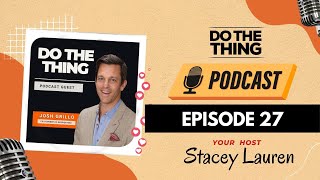
This is a transcript of Episode 27 of the Do the Thing podcast (host Stacey Lauren) featuring guest Josh Grillo. Josh, a San Diego–based entrepreneur and founder of Resident360, recounts his path from media sales to starting Getty Advertising (~2003) and later Resident360 (circa 2010). He discusses major setbacks — notably the 2008 market crash that left him with under $2,000 and a later loss of a ‘whale’ client via a 30‑day cancellation — and how those crises forced focus, led to rapid client acquisition (he cites adding roughly 100–150 clients within a year), and ultimately strengthened his business. Key themes: embracing mistakes, avoiding shiny‑object syndrome by focusing and fine‑tuning one core business, cultivating mindset (daily gratitude, written affirmations, meditation, and playing recorded affirmations while stretching), and designing a lifestyle that supports sailing and surfing. Personal details: age 47, two children (about 8 and 10), relocated to San Diego in 2000. He describes a long boat/sailing journey (now owns a 45' Beneteau purchased in Puerto Vallarta) and promotes resident360.com and a weekly newsletter.
Questions this video answers
June 18, 2023
47 years old
Two children — ages about 8 and 10
2000
Getty Advertising
Chapters
I do really believe 100% from every part of me that everyone has the capacity to be able to do the things that they want and not to be held back by the mental baggage that's in our head that we want to push through.
Welcome to the do the Thing podcast. In each episode, we get down and personal with people who go after the things they want to make all their wildest dreams come true. Join us as we unveil and dissect a formula for what it takes to do the thing. Here is your host, Stacy Lauren.
Hey everyone. Welcome to the do the Thing podcast. This is your host, Stacy Lauren. Connecting with like minded people is one of the best ways to follow your dreams. Today's guest is in the same mastermind as me and our encounters are always energy filled, inspiring, and quite entertaining. This guest has an impressive history of Doing the thing. Nothing seems to stop him from going after what he wants in life. He's so creative and has the remarkable ability to see things visually. The ideas that pop into his head are truly awe inspiring and he's so giving too. During one of the meetings, he didn't have any problem to present to the group. So he spent his entire turn giving us tactical advice and gave us nugget after nugget of things we could do in our businesses. I love how he defines mistakes where other people might run away and hide forever. He makes the best out of a bad situation, even the embarrassing ones. And after hitting some really rough patches, he dusted himself off, got back on his feet and continued dreaming. His sheer determination paid off in a big way. It's so cool to be a part of other people's successes. And watching him do the Thing has made me realize that that anyone can do what they put their mind to do. It's my honor to welcome Josh Grillo. Hey Josh. Welcome to the show.
Hey. Hey. How are you doing?
I am doing great. This is so cool because I've literally had so many people from our mastermind on. So I'm so excited to just be able to have the listeners hear from the people who have helped me do the thing over the years and be able to have you share your story.
Awesome. Well, I am happy and excited to be here because you're an awesome individual. So I always like talking to you. So anything I can share to help others would be fantastic.
Aw, that's awesome. Well, why don't you start off and tell everyone a little bit about your background and your story.
Sure thing. So my name is Josh Gurlo. Let's see, I am 47 years old, got two kids, 8 year old, 10 year old and I have been in business now since 2000. Based out of San Diego, California. Moved here in 2000 and ever since then I've spent a ton of time on the water. I do a lot of surfing, a lot of fishing, a lot of sailing. It's kind of my background. I'm also, I like to consider myself somewhat of a creator. I'm kind of creator, but I'm not. I'm very, very into marketing, making things look good, into branding, brand development. And I'm on my third company now which is resin360 which I've had now since 20.
So typically, you know, you'll find me out usually out in San Diego Bay or surfing down at Blacks Beach.
I love that. So would you say, you know, to be able to start into business is such a huge thing for a lot of people, right? There's so much that gets involved in that. So I guess my first question is, were you into surfing before you started into business or did business happen before surfing?
You know what, I think they both kind of went hand in hand. I actually grew up on the east coast and I went to college down in North Carolina, right along the water. But one thing I always did is I had a journal and every job that I worked at and I always had these kind of like fun jobs in college. So I was like either a bartender, I was like a bellhop. But what I would do is I would always be writing business plans in these journals and just whatever, just the most random stuff. Stuff, right, like, oh, I'm going to create a restaurant that sells burritos or I'm going to create a school that teaches this. Or I would just come up with all these random ideas and I just would literally lay them out in this journal. Then I actually start sketching logos out and what I think it might be. And it was just idea from idea from idea to idea. And you know, I think it wasn't really until.
I had a bad run in, I'm gonna say a bad run in. But I had a really big learning lesson with a, an employer that I just kind of left and ended up starting my own thing with another, another business partner of mine and just went for it. But again, I was, I was young at the time. Let's see, I was probably, I think I was like 27, 20, about 27 when I, when I had started my first company.
So you, this started from a bad experience with a company that you were working at and then you're like, well, forget this. If I'm going to do this, I'm going to do it on my own.
Yeah, that's exactly right. So it kind of like I was also into sales, right? So I was doing these journals back in college, got out of the college, started working for a couple of different companies, moved to San Diego. When I got to San Diego, I got a job working in media and really just kind of learn the ropes of how media works. Local television, local radio stations. And you know, I was doing a lot of sales for NBC, cbs, Fox Television on different types of programs that we had that were running on those different stations across the country. And I just, after a while, you know, I kind of had the thought process like, you know what, I can do this and I can do it better than what my company's doing. And also since I was selling it, I just, I didn't. The commission on it.
Got a little screwy and eventually I basically left and with another former employee, we said, you know what, let's go ahead and start our own thing. Let's try to do this ourselves because we think we can and let's see what happens. And we did. We started a company called Getty Advertising. And that was back in, I think it was 2003. And actually that company was. Ended up being a pretty large company. We were on, we had programs going in over 70 television markets across, across the US at one given point in time. And again, I was young, you know, and when you're young like that, you just make a ton of mistakes. And the one thing I always remember is I just had a great deal, amount of drive and hustle. And what I mean by that is I was just, I was doing every parts of that, all aspects of that business I was doing from the accounting, from the, you know, building the websites to creating a team offshore and to, you know, meaning the phone systems, to calling new leads to every single job that you can think of that revolves around a business, especially one in television at that time. I was doing and then also trying to build a very small team with it to support what I was doing. And you know, when you're young like that, you just. I learned so much through that experience. But, you know, I, it was, it was just, it was a crazy, super exciting, fun times.
Your whole mind is expanding as you're learning all this new stuff.
I wanted really not knowing anything. Well, I would take that back. I knew about the television industry and how that worked and for specifically what I was doing. But I Didn't know business, I didn't know anything about business. Right. And those are the mechanics that you learn, right? Invoicing agreements, agreement language. How you should bill, how you shouldn't bill, what type of terms should you bill on? Right. What makes you money, what doesn't make you money, how not to lose money. So all those little lessons come just from that very first company. And there were a lot of them, but we did really, really, really good. I was super fortunate for that to be my first kind of foray into business. But the one thing is, Stacy, is this. I had a nice cushion, so I had made some, I would say a lot of money, but I made some decent money as a young 20 year old selling a lot of television. So I had a nice savings account and I said, you know what? I can start a company and I can coast for probably almost a year without taking a paycheck. And you know what? It literally was nine months before I took my first paycheck. So it was literally nine months of hustling with this business, getting it off the ground, getting it going before I literally wrote that first paycheck.
Yeah, that's definitely some.
Some belief that what you're doing is going to work.
I had no other alternative.
Yeah, yeah. So it sounds like you also put your ego aside because you're in a, you're in a way of just learning completely.
Yeah, absolutely. Well, I think the ego part of it, I was, I did a lot during the, with Getty Advertising and what we were doing with television. I did a lot of presenting. So I was always big into presenting. So I was flying a lot around to different TV stations across the country and I'd be the guy that would come in and do a pitch in front of 50, 60, 70 businesses in the TV station studios and I'd bring in the weatherman and the local 6 o' clock news anchors to help sell what I was trying to sell. So I love that part of it. I mean, I was always, and I'm still to this day, I like to consider myself a presenter. But I guess that was kind of the ego part of it. But then as soon as I get on the plane and flew back to San Diego, that's a whole different story. Yeah.
What do you mean by that?
Well, because then, then it's, then it's the business side of it, right? So you're out there doing that and it's fun, you're doing your song and dance, but then it's like when you get back, it's reality. Hits. It's like, okay, I got to build what I just. What I just sold. I got to figure out how to invoice what I just sold, and I got to figure out how to collect the money for what I just sold. And all the. Everything in between that. Right. Which we all know. There's. There's a lot of little in betweens.
Yeah. So how did you get yourself to figure all that out?
Honestly, just.
Going at it, I think just over time, figuring out what I was failing at, what we were doing well at, I think a lot of it. Even today, I still learn so much about agreements, and agreements are pretty much the hallmark of almost every business. There's some sort of handshake or written agreement and then how payment terms work in that. But I've learned so much about, really, how to structure agreements that get signed, how to get paid, preferably first versus last. And then what does that payment cycle look like? Right. So you don't go broke on the process. And that takes a long. At least for me, that takes a long time to learn that stuff. And you don't learn it unless you're actually doing a lot of agreements and collecting a lot of money and invoicing a lot of people and figuring out where those holes are. So I think it's just. Just, you know, you just going through the motions. You're just doing it, doing it, doing it. Finding out what works, what doesn't work, changing your approach, and just. That's how you do it. Learn over time.
Yeah. And I think you said it earlier, too, being okay, making mistakes, so giving yourself that permission, you know, to be able to. To go through that learning process, too.
Oh, you have to. You know, especially starting any business, it's like you just prepare yourself to fail, you know, and just keep failing and keep failing and keep failing. Right. Because, you know, through all those failures, that's how you learn. All right. You don't learn from the successes. I mean, the success just comes after so many failures. It's literally fail, fail, fail, fail, fail. Oh, success, finally. Right?
Yeah.
And that's. I mean, that's. That's kind of how it is.
I.
My company now resident360, and we're a branding and digital marketing agency and multifamily. I remember it's been years now. I think it was probably about five or six years ago, probably more. 6. We had a really big client. I like to call them a whale client. Right. Everybody usually has a whale client. That one client that makes up a large percentage of your billing and that's, I would say, probably the number one role in business. Never have just one of anything, right? So it's like having one whale client, oh, that's setting yourself up for failure. And I knew it. My business partner knew it. And we always said to ourselves, you know, this guy ever leaves us, this is going to cause us some problems. And lo and behold, I'm sitting in Hawaii, right, hanging out with the family in Hawaii on vacation. And I get the email, it's the 30 day cancellation that he was leaving us. He's bringing all the marketing in house. And when you have a whale client, and that was a pretty big client for us, you just, you almost go in shock. I mean, literally, I was just like, oh, my goodness, now what? And you kind of go in panic mode and thinking, oh, my God, how am I going to, what are we going to do? What are we going to do? Right? And you start making foolish remarks and just weird stuff happens. And then once you let it all settle and it's like, how are you going to get out of this? And I remember it's like I thought the world was literally falling when that client left, but I also felt like my back was against the wall. So what did we do? Me and my business partner, we turned around within, like less than 12 months, probably picked up close to 100, 150 new clients. And we saved our asses. I mean, literally saved our asses within a year. But that was just because we had our backs against the wall, right? It's like you go down fighting. That's how it was. I was like, literally, I am going down. Literally, I'm going down fighting, right? He's gone. That's okay. I will literally pick up the pieces and see what I can do. And, you know, that's obviously, you know, like, I wrote a couple books in my niche, so that's when I literally was writing the book, doing all kinds of crazy, you know, content marketing to get leads. And guess what? It all worked. I mean, it literally all worked.
Yeah, it's amazing that the thing that you were most scared of and terrified of at the time ended up being the thing that catapulted you to another level.
Oh, absolutely, Absolutely. You know what? And that's what we needed. We needed that swift kick in the ass, right? Because we were too comfortable. I mean, we knew it. Like, I knew it just like, it's gonna happen, right? There's just no way that, you know, we have this guy on forever. You know, it's just, it's clients Right. Clients come and they go, you know, and that's just kind of how it is. You gotta accept that we just got a little too comfortable and when we did, you know what happens. So. But that's okay, man. We made it.
Yeah. So how did you. I think this is a good way of doing the thing is kind of that email comes or the whatever happens where you heard you lost the client. But like, how did you get yourself to really do the thing and not get paralyzed by it?
Well, I remember I was sitting on the beach in Kona in Hawaii, and I was reading Tim Ferriss book, the Four Hour Work Week.
Nice.
Remember this? Right. I'm sitting there and I'm kind of panicking, but I'm reading this book and then my brain starts thinking. I was like, well, maybe I should just start another company, right? Maybe I should just do something else, right? It's like shiny, shiny object syndrome. Stacy. Right. I'm thinking like, oh, I can just start something else and I'll be able to get this money back quicker. Right? Obviously that never, ever, ever happens. It's rare that that happens. But you know what? I just gave it some time. I literally gave it some time. I didn't react. It's 24 hours, 48 hours. Let me process this. Let me not make any rash judgments and just freak out. Let me literally process what's happening and then regroup. And that's what we did. We processed and we regrouped. Basically just went at it. I mean, just went at it hard. And part of that was back in 2008. I don't know me jump backwards, but back in 2000, was it 2008? Yeah, 2008, when the market crashed, the housing market crashed. So my business, my television business crashed with it. I mean, it was ugly. I mean, we had a, you know, we had a nice multimillion dollar company that within us within less than a year, we lost it all. I mean, it was down to. I mean, it was. It was. The money was so minimal that is like this didn't even make sense to have this company anymore. And it happened. It seemed like it almost happened overnight because everybody that was advertising on tv, they basically stopped advertising on tv. And that was my whole business. So I got absolutely crushed in that. And I didn't, you know, I didn't have a family at the time. I had a girlfriend, which is my wife now. But I remember sitting and I'm like, I'm sitting in my chair in my house, remember, living over in north park. And I'm like, this is crazy. I don't even have enough money to pay for my property tax. And I look at my bank account. This is 2008, 2009. Ish. I was like, I got literally like less than $2,000 in my bank account. I was like, how in the world did I ever get to this point? I just literally have a million dollar company, right? I had houses, everything, right? Tons of money. Literally, I'm down to $2,000 left in my bank account. And I couldn't believe it. And I started meeting with bankruptcy attorneys too. And I was like, I gotta figure something out here. Cause I owned all a bunch of. And.
It was that moment, right? And it was like my wife was like, my now wife. She's like, well, let me just help. I'll pay for the property tax. I'm like, okay, fantastic. That's great. But I remember sitting there looking at that $2,000 in the bank account. I said, this is probably the lowest point in my life. I've never ever had this little money. And I said, I will never, ever, ever have this happen to me again. And I literally wrote that down. How I felt during that day, that evening. And I think I had a few drinks too, which just made it all even worse. But I wrote it down on the papers and I pledged myself that I will never, ever, ever get to a point this low again. And I have it. And I always remember that too. I will literally go down fighting to the very, very, very, very, very end if I need to. And I think.
Talking about the client and doing the thing is that was in my mind, literally, that was playing in the back of my mind. I was like, I will not lose this company. I will literally go out and crush it now. And that's what I did. It just put me into overdrive. A real learning lesson for myself. Because I've seen this with a lot of entrepreneurs, a lot of business owners is shiny object syndrome is so real, it's not even funny. I remember when I started, not my first company, get advertising, but resident360. I always had it. I was always looking stuff. Okay, what else can I do? What else can I start? What else can I start, you know, versus saying, wait a minute here, I already have something. This is it, right? What happens if I literally put my head down and just grind at this, right? What happens after five years? What happens after 10 years, right? What happens at 20 years? And I remember, I don't. I can't remember who was. Who it was. I was listening to some podcast Guy was being interviewed, he's like, look, man, I've had this business for 20 years and it's just, you know, it's doing some astronomical amount of money. He's like, you know what? I would have never got here if I stopped at the 10 year mark or the 7 year mark. I put my head down, this is all I focused on, and that's it. There's nothing else but this. And here's where I am today. And I was like, you know what? That really resonated with me, Stacy, because I've had lots of opportunities over the last 10 years to do other things. And believe me, I literally have been so close to starting other stuff. And I kept reminding myself, like, you know what? Don't do it. Just stick with what you got, man. Like, literally just stick with what you got. Fine tune it. Fine tune it. Fine tune it to get it to where you want it to be. Right? To get it to, you know, where you're able to live the lifestyle that you want, Josh. You know, regardless of it's, you know, if I wanted to sell the company or if I wanted to, you know, have. Have a great source of freedom, right? So that's what I did. I've literally kept my head down, right. And not started other stuff or even really looked at stuff for that matter for a very, very, very, very long period of time. And I got to tell you, it was. So it's been really extremely hard because I've seen a lot of people do a lot of really cool stuff, but I said, no, that's okay. I'm going to stick with it. I'm going to fine tune it. I'm going to fine tune it. I'm going to fine tune it to get it to where I want it to be. So that's what I've done. Yeah.
And it's amazing because you've done that. If we could go to this for a minute, is it's now allowed you to do other really cool stuff.
Yep, that's absolutely right. You know, I mean, I. Depending, you know, I think a lot of it is. It's all about the individual and how they define success for themselves. And, you know, what does success look like? There's a lot of people that are super driven by money and objects and whatever materialistic things, which is. Which is totally fine. Right. There's other people that are driven by, you know, having, you know, the largest business or whatever, you know, whatever. Whatever drives you. That's all fine and somewhat personal. You know, for me, I like Freedom. I mean, that's why I was in business. That's why I started in business. I do have a lot of drive and a lot of passion, but I've realized that, you know, part of success for me is really being able to spend a lot of time doing the things that I enjoy and doing. And spending as little amount of time on the things that I absolutely hate and despise. So. And that's. So that's really what I try to do, you know, I mean, I love sailing, right? I love being on sailboats. So, you know, I try to spend a lot of time being on sailboats and learning about sailboats and. And doing lots of things involved around the water. Same thing with surfing. That's why I spend so much time surfing, because I'm trying to improve. Right? I'm 47 years old, but I still surf three, four, or five days a week, and I've been doing that for 20 years now. So having that freedom, for me especially, is super important also, you know, I got two young kids. I take them to school every single day. I see them every single day. I hang out with them every single day, right? My wife, she stays at home. I see her all the time. So we have a really, really, really nice lifestyle, which, you know, this resident360 has completely allowed us to have. I'm super grateful for it. Right. I'll never forget. I mean, it's. But it. But it is. You know, I put a lot into this company, and I still put a lot into this company, but, you know, it's. I'm just grateful that I've been able to get to this point. And part of that is I have just really incredible people that work for me. I mean, I've got fantastic people working in all aspects of the business, especially in the areas that I don't want to touch. Right? And that's the beautiful thing, right? It's like when we started this company in 2010, I remember sitting in my house with a whiteboard saying, gosh, we got to do all this work. Would it be nice if we had a team that could do it all for us? And it's taken a long time to get to that point, but we have that team, right? And we've had it now for several years. But it is, you know, for me, that's one of the most beautiful things about businesses. You know, if you. You set it up the way you want, regardless, if you're a fantastic delegator, leader, whatever you are, you know, it's. You know, me, I Like marketing. So I keep the marketing part close to my heart. My business partner, he likes finance, so he keeps the numbers close to him. But everything else, we have people that do that stuff, and it really provides us a sense of freedom. And also, I just feel really good about where we're at with the company and also who I have working for me, which I think with any companies these days, you gotta have great employees. Right. That's what's gonna get you to the next level, is hiring the best people that you can afford.
Yeah. And I know that's been. It's been such an amazing process, even seeing that go through and how your team has really envelopes, you know, even through Covid and everything like that.
And you've heard all the highs and lows of my team because you're in the same mastermind as I am. So. Yeah, you know, and it takes some. You know, it takes some finessing to get the right chemistry. I mean, it really does. I mean, it's. It's when you're. When you're building small companies or you have a small company. When I say small company, I'm saying anywhere between 10 to 20, 25, 30 employees. You know, it's really. Everybody's got to have the right chemistry. It's really, really, really, really important. You know, part of that, when you're looking to hire people, and obviously you want to hire the best person you can for the job, but you also got to think about how are they going to relate with the other people that work for you? Are they going to get along or not? Because I can tell you, if for whatever reason, they don't get along with somebody can cause a lot of friction and a lot of headaches.
Okay, so I'm dissecting your formula for doing the thing with business. So let me go through that, and we'll see how I'm doing, if that's okay. Okay, so I feel like this. And tell me if anything's off track, but, yeah, number one, I'm thinking, like, just letting down that ego and really being able to be open and listening and learning through to people through podcasts, through books, people in the mastermind, things like that. I think that's definitely been a piece from what it sounds like. Number two is being okay, making mistakes. So you've, like, really reframed failure in a positive way, which I think helps prevent that fear that most people have. And then I think the third one is that grind. Being able to put your.
Your.
Your head down in the blinders, and then the fourth one, I would say would be the dreaming. I'm not sure if you're still doing that journal thing, but that's freaking cool that, like, you were doing that for the dreaming in the journal for a while, and then that's what your business is now, you know, is creating logos and all that for people on a different level.
But.
Yeah. What do you think?
I think you're pretty. Pretty on. I think something I probably should mention that I haven't talked about, you know, for me, a lot has been mindset. Probably the biggest thing, because, you know, I told you about, you know, what happened in, what, 2008, when I kind of pretty much lost the company, you know, I had to get my mind straight. I really did. And that took probably a solid year to get my mind straight because I was just. I just grinded down and kind of gotten this point of like, why is this all happening to me? Why is this happening to me? Why is this happening to me? Right. Kind of feeling sorry for myself. And then that's when I kind of, like, really started stumbling upon, you know, just.
Stuff that got me excited out there, you know, Napoleon Hill and started getting all into Frank Kern stuff and J. Abraham and, man, Brian Tracy, and I would just. Tony Robbins and I would. I surrounded myself with them. And I still do to this day. I mean, I have. I can't even. I mean, it's been years now, but, you know, every single morning, I get the exact same ritual. You know, wake up, I do my, you know, what I'm grateful for. I write it all down. Usually three things I'm grateful for. Then I write out my affirmations, and then I basically do a meditation. And then I also have voice. This is kind of geeky, but I also recorded my affirmations. And then I play them, play them over headphones to myself while I actually stretch. So I do that. I've been doing that every single morning now for a heck. It's probably been seven or eight years, every single morning. So that it's kind of like one of the things that's really, I think, kind of keeping me straight. And, you know, I've also. I'm a real positive person. I don't like negativity at all. I'm not a negative person, and I believe in being positive. So most of the people that I talk with, most people I surround myself with and everybody in my team, you know, I look for the best out of people and get the best out of them. And that's been one of the things I've been. Why I've been. Why I've been really successful is I've been able to surround myself with good people and get the best out of those people. And that's what's worked really well. People usually, when they work for me, they really, really like working for me because they see how passionate I am and how excited I get about stuff. And I'm not a micromanager or anything like that. I'm the guy that's gonna pump you up to do your best. Right. But I am just, as you said, I am a dreamer. Right. I think big, and I have lots of ideas and lots of cool things. And people. People gravitate towards that. Right. So that. That's really, you know, been a part of my doing the thing, I think.
Yeah, that's great. Okay. So in the morning, I love this routine. So how did you. How did you get that cemented in to do that in the morning?
You know what? I think that I. I don't. You know, I don't really know. I think somebody. I heard something, somebody saying about, oh, you need to write down your affirmations. And then I think maybe the Five Minute Journal came out. When that originally came out, I was like, oh, this is cool. I got to get this. So actually, I think the Five Minute Journal is what got me going on the grateful part, the affirmations. I had always done those, but then. So I got the Five Minute Journal, and I started doing that, and then I just stopped ordering, and then I just started doing it on my own, on paper. Then I mixed it with the affirmation. So that was kind of like my. My one, two punch. But again, I don't. I'm not sure what really kind of got me going into that, but I felt like it had a big effect on me. So I never, like. It's just part of my. Part of my makeup now, right. When I don't do it, I feel bad. I feel guilty when I don't do it in the morning, so I try to do it.
Yeah, I think. I think that's great.
So.
Okay. I wanted to also talk about the boat.
Because I've been part of that journey, and I'd love you to share just kind of your boat story, if you don't mind, because I do think this is doing the thing, especially the new. The new one. You just. Scott, too.
Yeah, sure, sure. So. Well, so I kind of grew up. Well, so my name is Joshua Slocum is my middle name. And Joshua Slocum, he's super super famous. He's one of the only guys to single handedly sail around the world, right? He's like the first guy that did it single handedly around the world. He's got a book out and everything like that. Now. I was named after him. Now my dad wasn't like a big sailor or anything like that, but he did sail. I always grew up having, I grew up having boats. I came to San Diego and I remember I was driving down Harbor Island, I was like, I saw the boat out for sale, I was like, oh my God, I love that, but I'm going to go buy it. And I had money so I went and wrote a check right then for that boat and I bought it and I figured it out, actually crashed it. The very first day I took it out, jstream ran, I literally ran it right into the, right out of the channel, into the reef and had to call the insurance company, had to take it to LA and fix it. So actually crashed it twice. And after that I sold the darn thing and I was like, never again. Then I got married and my wife was like, oh, we should buy a sailboat. I was like, really? So I used to have a couple of those things and I was like, sure, get on Craigslist. She sends me a link, she's like how about this one? I said let me go look at it, go look at it. I was like, this is perfect. Wrote a check for it. Then on the spot, bought that boat and crashed that like three times. Learned a lot. We had a really good time on that boat and that was like a little 25 foot Catalina. We were sailing around San Diego but again we had a couple bad crashes with it because it was kind of hard to steer. It had like a tiller handle steering. So we sold that boat and then we basically like a couple years later we're like, you know what, we should look at getting another boat again. So then we went and looked at a 35 foot Beneteau, a newer one and we bought that boat. And then that boat was really awesome for us. So.
We spent, basically would spend every weekend on that boat. We'd stay on the boat, we'd take it to Catalina island, all over, we just anchor all over the place and we did a ton, a ton of sailing. We were huge in a sailing. We do a lot of fishing and sailing. That was kind of our big thing. But we're, you know, my wife's family got into it. Her parents that live near us, they both got into sailing as well. So we're all going together. It's kind of this family thing. And we just realized that this boat is just way too small for us for having two growing kids. So then we're like, well maybe let's look at a bigger boat. Let's look at possibly going and getting something where we can go down south and we can travel in so we can go down deep into Baja and Mexico and, and stay down there for a while if we choose. So that's what we, that's what we landed on. Now we, we have this nice, a 45, 45 foot Beneteau Shannis. Three bedroom, two bath. It's a beautiful sailing boat. And we just got this boat actually flew down to Puerto Vallarta. Bought it from in Puerto Vallarta from a guy who from that lived in Malibu who sailed it down to Puerto Vallarta and has been living on it down there. And then we just got it brought up here like about four weeks ago. So you know, our plan is to basically sell it all over San Diego, Southern California, Catalina. Then ideally my idea would be to sell it, get it all the way down into deep into Baja and mainland Mexico. And my dream is to be just anchored up at one of the nice surf spots down there and just surfing with my wife and two kids on board and dog and everybody's hanging out and hopefully I've got a really strong Internet connection. I can still make phone calls and conduct things the way I want to conduct them. But yeah, that's kind of the dream.
You know what's amazing too about that is that it'd be so easy for you having crashed those first two boats multiple times.
Like get stuck in that, like oh, I'm not good at this or blah blah, blah, you know, and then this whole experience that you guys are having now and all of these things wouldn't even be happening, you know.
That's exactly right. I never thought I'd get another boat after I like literally the little 25 foot one way. We had so many incidents with that boat around the docks. Oh this was I think back and I was scared when I think back about it. But again it was like this is not going to stop me from getting another boat. And lo and behold, and the funny thing is like it's every boat you buy. It was like, oh man, I should have went bigger, right? So it's always kind of saying, oh it should have went bigger. And I'm on a 45 foot boat right now. And at first, you know, to me it seemed like it was huge. But now that I've been on it, I'm like, oh, you know what? This is big, but it isn't that big. I mean, it's big, but it's not, like. To me, it's not, like, crazy, crazy big, but it's fun. I mean, it's really, really enjoyable. And we, like, you know, we like being on the water. And for us, you know, it's like, we don't have a house on the water. Our house is, you know, out towards the mountains. But, you know, we have now have a boat that's literally in the water. So for us, it's really the best of both worlds. It's a great place to come down. It's like having an apartment right in the water.
Yeah, I love it. I think I'm looking at your formula again, and I'm looking at it compared to the boat now, and I feel like it's pretty similar, you know, with being okay with making mistakes and, you know, having that reframing for failure. You're probably learning a lot, you know, and listening to people, the mindset thing.
Absolutely. Absolutely. You're 100% on that.
Yeah. That's amazing. I. I'm like. I'm loving it, actually. Did you. I don't know if you heard my boat story, but I. I had gotten it. It was a little, minor crash, but I. I haven't really been comfortable driving one again, so I'm like, oh, now I gotta go get on a boat.
You know, you should. You gotta overcome that stuff. I mean, honestly, I like. Yeah, I just. Oh, man. I've had some. I've had some accidents, so. But you know what the thing is, it's gonna happen, right? I mean, sometimes stuff is just gonna happen, and, like, for me, it's just like, okay, I'll just. Don't freak out. Don't panic. I mean, that's been. The thing for me is, like, all right, just don't freak out. Just don't panic. We'll figure it out, you know, Figure it out. So.
Yeah. And that's such a life thing. That's such a freaking life thing. I love that.
So good. Do you attach. Do you. Do you feel like you go to surfing in that way, too? Or is it kind of like. Is that formula, follow the same path? If you think about it?
Yeah. I mean, surfing, for me, has kind of been like a. I've gone through so many stages with surfing, to be honest with you. Right. It used to be just pure, pure excitement, love. Now it's. It's. It's for me, it's, it's a getaway. I like going because it's me. I'm alone with my, my thoughts in my head, you know, I have to be in the ocean. It's also like a form of fitness for me. Right. Because, you know, a lot of people go to the gym and I always say, you know, that's kind of like my gym. I don't go to the gym, but I do surf quite a bit and it keeps me, it's what keeps me in shape. But, you know, I don't know, I just love it. Yeah, I guess so. I guess it is that way because I've always had my, I've had my love hate relationship with surfing because, you know, just like anything else, you kind of get bored with it, you get tired of it. But then, you know, you don't go for a while. You're like, what am I doing? What the heck am I doing to myself? Right? Just go and get out there, you know, and, and, and that's what I do. I just do it. Keep going.
Yeah. That's awesome. Okay, so throughout all your experiences, what do you think's been the hardest thing for you?
Well, I think one of the hardest things for me was back when, when I had lost it all with, with my first company. Oh my God. That was like. I just, I mean, I still get shivers when I think about it right now, talking to you about it. Right? Because it was, it was such a low point for me because I was always kind of a guy that always like, you know, I was always good with money, right. And I always consider myself smart with money. I always had money, right. I just had money. I was always working or doing something, but I always had money. And when I got to that point where I didn't have any, it was really, really, really scary. I mean, it was just scary. And I didn't know what to do. I was floundering, right. I didn't know what to do for business. I was just floundering and I was kind of soul searching. And it was a very, very, very, very tough part of my life and that I just, I had to overcome. But it's made me mentally tough. So. And I think it's from, basically from a personal level and from a business level that's made me mentally tough because like I said earlier, I will never go back to that point in time ever, ever, ever again. I know I won't. Right. It's literally like, I know when you hit rock bottom, that was my rock bottom. Right. I hit it and I turned around and came back up. So for me, that's got to be it.
Okay, you have one piece of advice to give to the listeners about doing the thing. What would it be?
I would say my piece, My piece of advice would be find out what success means to you and do it. So whatever you, you know what, whatever you, whatever your definition of success is for you personally, whatever that may be, literally write it down, put it on the wall and do that. Go for it.
Yeah. It's so powerful, right? Because I don't think people realize just how different everyone's interpretation is of it. And until you understand what it means to you is, you know, there's. There's no way to get what you want, you know.
That's exactly right. I mean, it's, It's. I always think about, you know, again, because obviously both basically live in business, right? Business all the time, right? But it's like I always think about business. And, you know, I have, I have. I possess so much drive and. But it's. I always like, okay, well, you know, do I really want to go, you know, is it. Is it. Do I want to go and just hustle my face off and, you know, do 60, 70, 80, 90 hours a week to get my company doing X or do. I'd rather not do that and have extra, you know, have all this time, what I can do and spend time with my kids and do this? So it's like those are all things that are going to go through your mind, right? I mean, they still go through my mind, but I know for me what I want and the way that I live and the lifestyle, I know what makes that happen, Right. I just know, right? And that's basically my, you know, my term of success, right? That's just a big thing, right? You have a company, right? You know, when you go into business and you've been in business for a while, you get to reach a point, you're like, okay, well, don't want to sell my company or do I want, you know, have a lifestyle, business, Right. I mean, those are two different tracks that you can take, right? So again, it's really just defining, you know, what, you know, what does success for me, for you, I mean, it's kind of almost like, what do you want out of life? Right?
Yeah, it's true. I remember I actually did that exercise for my business. Gosh, it's been a few years, but it was a survey just saying, what does success mean to you? And honestly, every single person had A different answer. So it is amazing how everyone's got a different interpretation.
It's. You know what? It's really tough, too. It's really tough because if you got to strip, it's like almost. You got to strip back the layers right now. You know, I'm older now, so I know what it is for me. But, you know, if you would ask my younger self, it'd be a completely different answer. For sure. Sure. You know, and if you strip out all the, you know, all the outside voices and stuff like that. Right. And, you know, everything else that's out there right now, which. That can, you know, shape the way you feel and think. You know, it's. Once you get down to it, it is. It's a. It's a tough thing to answer. But I think as time goes on and the more experience you have, the more experience you get with what you're doing and the way you live your life and you live. You live your lifestyle, it starts to really form itself for you.
It's so true. And then if people want to learn more about you and what you're up to, do you have a place they can see what's. What's happening?
Well, you know, I typically, I'm not really out there on the. Out there on the social spheres all that much, but, you know, anybody can obviously email me at any time. I don't care. Joshesonant360.com or just go to my website, resident360.com you can join our newsletter there. I do put that out every Wednesday, but again, that's. That's a little bit more focused on the business that I am in. You can connect with me on LinkedIn as well. I'm there, Josh Grillo, and I'd be happy to talk with you there.
Yeah. And I think the newsletter is actually kind of cool for people to get on regardless, just because it gets your mind firing in all these different ways with how you put it together.
Yeah. You know, it's kind of funny with that newsletter thing. I've been doing it so long, like three years straight, I believe. And it's like, it's one of those things that is a grind, but it's like, you do it, you do it, you do it, you do it. You build the habit. You keep doing it, you keep doing it. And then you have this voice say, oh, nobody's even reading this. Right? But then all of a sudden you get the email from somebody says, oh, I really like this news, or it was really good. So then you keep Doing it more and more and more and more, you know, then you go back to the same thing. It's like, oh, nobody's reading this. Then you get a couple of months, hey, this was such a great tip that you gave. Then you do it more and more and more, and finally, over time, you start saying, wow, you know, it actually has given your company a lot of benefits, so keep doing it.
Yeah, yeah, I know. I love it so. Well, you are. You are awesome. Thank you so much for coming on and chatting with me. And it's been fun because it's like we've known each other for years, but I got to learn more about you, which is cool.
Yeah, absolutely. Absolutely. That's been fantastic, Stacey. And, you know, you're an incredible person. Always passionate, always positive. Right. Always just, you know, happy, which is what I. What I love. I mean, you're always so excited for life, which is just. Just, you know, great to see.
Oh, well, thank you.
Thanks for listening to the do the Thing podcast. We hope you enjoyed the show. But even more, we hope you'll be inspired to do the Thing. Do you have a burning question on Doing the Thing that you'd like answered? How about an inspiring do the Thing story of your own that you'd like to share? We'd love to hear all about it. Just leave us a voice message at do the thing.callcast co or email us@helloothethingpodcast.com.
More from Stacey

From 262 Women to 8 Million Media Impressions: Deborah Drummond Built a Global Women’s Movement


From Notes App to Published Author: Avery Brenna Crumrine on Turning Intention Into Action


How Stacey Lauren's Billion Dollar Impact Marketplace Will Raise Billions for Charities and Causes

What Happened When Allison Maslan of the Pinnacle Global Network Ran a Challenge with Stacey Lauren




Leaders Share How Stacey Lauren Sparks Action, Clarity, and High-Impact Collaboration

Sandi Masori Announced as Emcee | The Billion Dollar Impact Event Returns to San Diego