Episode 284: Deirdre Tshien: Find Out How To Turn Your Content Into Gold with These Expert Tips
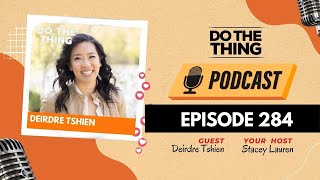
This is a live YouTube interview (Episode 284) where Stacey Lauren speaks with Deirdre Tshien about turning long-form audio/video into high-performing content that generates leads and clients. Deirdre explains her product Capsho (rebuilt as Capture Next Gen), her podcasting experience, and teaches the "Honey Trap" method: a pull-content 4-post sequence (awareness, elaboration, community, action), a push-content "Say Me" lead-magnet sequence, and evergreen/SEO repurposing. She also describes Capture Next Gen’s beta access via Capture Club and founding-member pricing.
Chapters
All right. Hey, you guys, I am so excited. We have a very special guest today, and you are going to love her. We did a podcast episode. I feel like it was last year.
And yeah, it was definitely last year. I feel like it was about five years ago, but it was probably only five months ago.
I know, right? I know. And it was amazing because you gave so, so many. Just gold nugget after gold nugget. I remember after, I was just like, what just happened when. Because what happens is. And I'll introduce. You guys know who she is, but I'll have you introduce yourself, too. And what you do, just for anyone that maybe didn't see the event promoted, but you're seeing so many people with the world that you're in and the level that you're at, that you're getting to see what works, what doesn't work, what needs to happen, and then what would be nice to have. And so you're almost like this 10,000 foot view of it all, but then you're also on the front line. So I feel like that's why everything you say ends up being like, whoa. Because you're coming from this hugely wealth of everything place.
Oh, thank you. Yeah, I, I, I know exactly what you mean. I went through so just, I wouldn't call it a funny story. It's actually not funny at all. But with anyone who might know who I am, I actually have my own podcast. We actually rebranded it at the beginning of this year, so it was called Grow My Podcast Show. So, so all through last year that all we were talking about was how do we grow our podcast? And it was literally strategy after strategy after strategy. And at the end of the year, I sat back at it and I looked at all these episodes that were amazing, and we spoke to amazing experts and amazing guests, but I honestly struggled myself to implement 80% of the stuff that I was learning myself. And so it's funny when you say we were on the front, because that's exactly what we were doing. We were on the front line. And I, I realized that if I was being overwhelmed by all of the things that we could do, imagine what everyone else listening to this is feeling. And so I actually rebranded the podcast this year to win the content and game because I wanted to be, yeah, really specific about, okay, we're in it to win. We're not just here to learn a lot of stuff and maybe implement something, maybe not. We're like, no, if we're gonna win, that means focused, and it means implementation. So how the podcast is now structured is we actually dedicate three full episodes to a particular strategy. And of those three, we actually as capture. We actually talk about how we've implemented the strategy that. Yeah.
So I realized this too. I made a decision last week that was ridiculous and I didn't even know why I did it. And now I realize what it was is it put me to the fire to be able to move my program right now isn't automated. And it made me automate it.
Yes.
Guaranteed something. And I'm like, that's maybe what happened. And so. Right. You're doing this. But it's almost like a extra sense of accountability that now you.
Yes.
Podcast.
Yes, 100%. That's right. Anyway, so I wanted to tell that story because you. You mentioned kind of. So you're like, yeah, right. You're kind of in the fire of both. And I'm like, oh yeah. Let me tell you about how much we're in the fire at all levels. So yes. Hope that's helpful. Anyone as well, listening who might be watching or listening to this, who might think who might be in a similar boat where you're learning all this stuff, but you're either struggling to implement it or maybe your audience is struggling to implement it. Yeah, just sometimes we just need that reset and that's okay. Yeah.
Let's just say hi to everybody that is here. Julie, good to see you. I'm so glad. Julie just started a brand new podcast. It's Hidden Gifts of Loss where she's interviewing people who have lost major people in their lives. But then there's hidden gifts from it and it's been amazing to see her find her voice, start her podcast. And she's sort of also starting a community through that with the people that she's interviewing from the podcast and then the people that are listening or have a space to join. And so it's great. So brand new podcaster. And then Kimmy's here. Hey, Kimmy. Hey, Minnie. Hi, Paul. Hi, Lala. Lala said she's on another podcast, Watch Every Play. And Jana's here and Sarah and Mary Ellen and Fern. So good to see you guys. I'm glad you're here. So, yeah, I think Fern, you're wanting to start a podcast. Sarah has a podcast, Lala has a brand new podcast, Paul has a podcast.
Okay, great.
Yeah, I'd love to see. Oh, good. Minnie said she loves this because she's also branding her podcast. I'd love to see you guys also comment. Cause Deidra knows, so she knows so much about podcasting. So if you have any questions specifically about that too, and we're not getting to it, make sure you ask it because we'll leave some time open for that. But I'd love to have you share just more about you, who you are, what you're doing, where you're at now and all the things. Yeah.
Oh, my gosh. It's open. Like, just. Gosh, you're opening. Opening Pandora's box, Stacey. All right, okay. So where do I start? So, for anyone who doesn't know me, I'm the CEO and co founder of a software tool essentially called Capsho C A P S H O. Is that my shirt? And basically what we do is you would upload your audio or video file and then we basically, in short, repurpose it for you. So it's completely AI powered. And I'll actually talk about in the context of next gen. So anyone who might have tried capture before you probably would have tried the version that was either capture 1.0 or 2.0. And literally the last few months, we completely have been rebuilding the whole platform from the ground up. So the story behind that. And I'll start from kind of my podcasting journey and into next gen. But I had my own coaching business in. Oh, gosh. Well, started 2020. That's right when Covid hit. And that was actually when I started my first podcast. So at the time, I was actually helping to coach e commerce businesses with their digital marketing. And I remember a mentor of mine was like, you've got to start publishing. You've got to. And the podcast, he's a huge fan of podcasts. And I. So I was like, okay, well, I'll just start this. I'll just do this thing called PODC casting. And so that's what I did. But what I didn't realize at the time was that the content creation part of it is literally just the beginning. I used to think it was the hit publishing. It's out there and it's. Yeah, it'll just do its thing and it'll just get the visibility and build that audience that you want. And it's actually like, oh, gosh, okay. It doesn't really quite work that way. You have to actually market the content that you're creating. And so that was a whole journey that my team and I went through to the point where we burnt out trying to do all the things. Because again, at the time was like, Gary Vee was really big and he was like, condo domination. You've got to be everywhere and be every day and multiple times a day. And so we're like, okay, so we're literally creating multiple reels a day, multiple TikToks, because we didn't quite believe in just blind repurposing in the sense of just create the one thing and put it everywhere. We wanted to be quite intentional for the platform that we were going to be on as well. So you can imagine when I say my team and I burnt out, we were completely burnt out. So that kind of started the process of thinking a lot more intelligently, hence, intelligently lazy, which is why Monty, our sloth, is here to remind us to be intelligently lazy. But that was the process of us trying to figure out how do we be intelligently lazy about this. And I, in my old corporate career, like, gosh, 10 years ago, I was actually knew about AI. I was in charge of exploring that technology for use cases in the bank that I was working for. And. And when I started thinking about this particular problem, I was like, this is the perfect use case for AI. And so that's kind of how it came about. And we launched July 2022 with our very, very initial capture. And all it did back then was show notes for podcasts and some light social media Captions. And then ChatGPT launched in November 2022 and the whole hype of AI just exploded. Which was, on the one hand it was like, oh my gosh, what's going to happen? But on the other hand, once you just work through, okay, well, who is it that we're serving and what is it that we're doing? And then you start to carve out your own place in the market. We were actually quite thankful because now we didn't have to educate anyone on AI. Everyone knew what it was. It was just literally like, if you're looking to use it this, then come and try capture. But that actually brought on capture 2.0, because at the time we were like, okay, well now anyone can create content, right? It's. I called it the content vomit. We're just all content vomiting on the Internet because it's so easy to now. And so the purpose of capture 2.0, when we launched that in, gosh, I think it was April of 2023, it was really about how do we help people create customized assets, like be able to have flexibility around structure and things like that so that it doesn't just look like regurgitated AI stuff. Now we all go through a journey and it was a good, I think at the time it was the right problem. To solve for, but it was probably not long term, the right thing. And how this, sort of how I realized this was because we had a ton of people who would try capture, get really, really excited about the prospect of being able to. They were like, oh my gosh, now we can be everywhere all at once at the same time. And we were like, sure, okay. We'd gone through that process of trying to do that and we knew that it wasn't quite. But we just wanted other people to be excited about the possibilities. And we were probably doing everyone a disservice because we'd been through that ourselves. We were like, that's actually not probably the best way to be thinking about it. You really want to be intentional about the platforms that you're on and you want to really focus. And that became a really, really big theme for me towards the end of last year where I was like, okay, we have actually just built a platform that is actually overwhelming people more than helping them. And so again, we took that step back and we were like, how can we build something that genuinely helps people get the result that they're after? So let's not just create content for content's sake. Let's not just use AI because it's efficient and fast. And let's actually what is the result that people want to get? And for some people it is. It might just be like, hey, I just want to be consistent at publishing and posting and all the way up to no, I'm consistent. I actually want to get clients, I actually want to get leads. I actually want to. And so that's kind of what Capture Next Gen is built for. It was rebuilt from the ground up because we just had to. I'm going to be honest, our old platform was pretty buggy because we were just, we were trying to release things so quickly. And if anyone knows anything about software, the quicker that you try to go, the messier the code is that it gets built on. Which means that there is just way more risks. As in, it's not even a risk, it's like a guarantee that things are going to break. And so being first time software founders, we didn't realize this until we went through it and we're like, oh, okay, this is actually a thing we have to look out for. So we literally just decided to basically rebuild completely from the ground up. And we have a way better system process with our dev team to make sure that we're building it with clean code all the way through. And basically that also gave us the opportunity to be like okay, well, we want this version of capture to be way more intelligent. That is the basis of what it is. And that's why when I called it, I started calling it Next Gen and my coach was like, oh, you shouldn't call it that. I was like, why? He's like, you're setting the wrong expectation. As in you're seeing expectations that are too high to your point, Stacy, about holding ourselves accountable for things. I was like, but I want to be held accountable to building something that is Next Gen. I like that is truly intelligent and things like that. So basically, in short, what Next gen is really here to help people with is to create content that actually gets results. And so for us and our audience, which are entrepreneurs, coaches, consultants, service providers, that is creating content that gets them clients, at least leads. Leads slash clients. And actually creates the action that people wants to take. So that's the core of it. Which means that we actually have built in strategies that I will. I'm super happy to share and teach people about because it's so simple that it's kind of going to blow your mind around like how kind of simple it gets to be to use social media in the way that gets us. It's ridiculous. So I can share some of that with you? Yeah, awesome. So we built some of those strategies in. It's a completely self learning platform. So the more that people use it to edit inside the platform, the more it actually just learns automatically and applies things like tone of voice, how you like to structure your content, things like that. It now if you're a guest or your speaker, you can actually use Captcho to repurpose that content, not just if you're a host of your own podcast. There's some really, really cool things that are happening in Next Gen. But any question, I'm going to pause.
There because I know that you're really.
Like but I want to jump in and then we can get into maybe even the honey trap method and how we've figured out with some great experts to help how we use social media and platforms to actually grow our podcast and get leads and clients.
Yeah, I know we want all of it. I'm going to ask you guys. So who wants to see something that's so simple it will blow your mind? Because I love. Okay, Wendy and hi Nicole. And so yeah, feel free to let us know. Say I am game if you guys want to see it.
See.
Okay, good. We are seeing the me's.
Yes. Awesome.
Okay, you're ready for it Died.
Okay, cool. I'm going to Share my screen, because I usually like to sketch this out, even though, just fair warning, my handwriting is terrible, so you're going to have to bear with me. So maybe just create your own notes as well, and I'll just tell you what to write down in case you can't read my writing. All right, So I call this the honey trap method. And so, in short, what it is, is it's like there's going to be a few phases to this where we start. And I think you mentioned, Stacy, almost everyone on here has a podcast or is about to launch a podcast. And so I call this the content event. And now I say content event, because when you think about anytime we publish anything, whether that is a podcast episode, whether it's even a YouTube video, whether it's even us going live now, right? These are all events, and they're all content events because you're creating content every time you hit publish or go live. And the purpose for us as entrepreneurs for our content events needs to be, even if it's not right now, but it needs to be to lead to a bridge funnel. And that bridge funnel is either, depending on where you are in your business, it could be just to a lead magnet. I know some people who maybe don't even have an offer. They don't really have anything that they're selling yet. And I just tell them, that's cool. Just create a lead magnet and just start building your list and nurture that list. Because at the time when you do have something that you want to sell, that you want to monetize, at least you have an audience there waiting for it. If you're a little bit more advanced and let's say you're doing workshops or masterclasses or challenges or anything, like you have other things that you use to convert people into becoming a paying client, then those are also perfect bridge funnels. Right? So just think of this as either building a list or getting people to come to something that you're converting. Does that make sense? Sense, Stacy? I think I think it does. Yeah. Awesome.
Yeah.
Okay, cool. And then on either side of the content event is then what I call push content and pull content. So I call this push content. And the easy way to think about it is that you're pushing people to your content event. And then at the end of your content event, I then have what I call pull content. And the easy way to think about this is that you're pulling content from your content event. And the great thing is, as well, is that you're actually pulling People, back to your content event. So this is kind of like the honeychar. And I'll go through what these are and then I'll complete it with the last element. So with the push content. Now, the great thing about the push content is that it's. And this is probably actually going to start with the pool content and then I'm going to go to push content. So bear with me. Okay? The pull content is, I would say, at a minimum, what everyone should be doing. And I actually learned this strategy from Katie Brinkley. Do you know Katie Stacy at all? Okay. I've got introduced to her. She's amazing. So Katie Brinkley is a social media strategist. She's also a podcast strategist. Actually she does it all, but her marketing brain is actually amazing. And so I learned about. She calls it the four post social media strategy. And this is why I tell you, Stacey, it gets to be so simple what we do with our content. So four posts, okay? And this is in the poor content for posts that you're actually repurposing your content event. So remember, this could be a podcast, it could be a YouTube video, it can be alive, it could be a speaker. Maybe you were on a virtual summit, maybe you were even on stage and you have the recording. It could be you being a guest on another podcast, literally any of that content event. You can do this for social media strategy. Now, the whole point of the four post social media strategy is to get someone in your audience, in your social media audience from aware about a problem, about a particular topic to actually taking action. And it is genius in the way it works. It actually works because I implement this and this works. All right, so I'll talk you through the four posts. Is that cool, Stacy?
Yeah.
If I do that, I want to.
Give you guys just. If it's okay, a quick example. So with what Deidre just said, with being aware. So Facebook redid their. Well, let me tell you first, my boyfriend got me this three screen monitor last year and I have yet to use it because hardware for me is clunky and hard. And I'm like, I don't know why I need this. It works the way it is, right until this Facebook integration changed. And now I can no longer see everything in one screen. Like on Restream, if I was going to stream in multiple groups, I actually have to look in each group individually. So now I now have a problem that I'm aware of. And so had I not already bought me this three screen thing, I'd be now on this quest to find stuff to fix it. But I already have it. So you mean that's the problem now that I'm like, I would need to.
Yeah, yeah, pretty. Yeah, exactly. Totally correct. And I'll break it down to you in terms of how this actually works on social media, because the genius thing about this is that to your point, this strategy not only takes people through the actual journey that like you said, exactly like you said, yeah, I'm aware of a problem and now I want to solve for it, but it actually plays into how it is that social media platforms like us to create content and therefore will actually get us more reach and more visibility. And so this strategy, Katie's four post social media strategy, actually marries the two, which is why I call her an absolute genius. So basically, and how that works is. Okay, so if we think about that, the first post, she calls it the awareness post. And so the awareness post is really about bringing to light a problem, to your point, Stacy. But it does it in a way that isn't just like, hey, who's having this problem? Or it's like if you think about the different platforms, right, they all like different things. So on Facebook, hands down, even for me, when I do these posts, the posts that get the most reach and engagement, what Katie calls the unpopular opinion post. And so all it is is one statement. And on those purple backgrounds, it's just literally big text, big font, and it's boom, right? And so people, when they're scrolling on Facebook, no wonder it stops the scroll. It's just in your face, what it is that you're saying. And the unpopular opinion is all about bringing to light a particular problem or topic that people either may not have been aware of or more likely than not, they actually have thoughts about. And this is great because this is actually what gets the comment. This is actually why it gets the engagement, right? When you think about lukewarm type posts, people are like, oh, this is nice. And they might like it and stuff, but it doesn't actually incentivize anyone to potentially comment on it. Whereas when it's an opinion and you're throwing something out there that's, oh, gosh, what's an example? Totally random, not something that I've done, but it's like, AI is here to take our jobs. Agree, disagree. It's kind of a bit jarring. And some people are like, oh my God, yes, AI is taking, is taken. My job is going to take my job. And some people are like, no, no, no, it's just a tool and it's just there that people have opinions on things like that and so actually creates a ton of engagement. Now, you would only create an unpopular opinion about a problem or topic that you actually want to talk about. Okay, so I'll get into this. But if what it is that you're. Where you're leading your people to does not have anything to do with AI or taking jobs and like that, then that is not the right example for you. Right. But if I had done a podcast episode, for example, where I had a guest on that did talk about that, and the end action I want people to take is to listen to that podcast episode, then that may be a good place to start because then you have people who are raising the hands who care about that topic. And that's important because you want the right audience. Right. You want the right people, a following with you, engaging with you, but ultimately taking the action that you want them to take. Is that making sense, Stacy?
100%. This is awesome. And in the find your voice challenge we did, I'm trying to remember exactly, Lore Libe came and she went through this content magnetic content workshop. And yeah, people do. What's something about your industry you don't agree with? And so it was. Yes, thank. Yes. But my thing is we're still not taking it out. Yes. Yeah, but it's great because you're creating this awareness of it. So my thing.
Let me try.
I get it completely. Yes. I teach how to get started through a Facebook group. So I'm again, how to validate products, how to validate funnels. So my kind of anti. Thing is stop building this funnel before they come. Right. Or stop watching all the things and actually do the thing or something like that. So is that kind of an example or what would be something I would.
Yeah. I would even get even more specific, like granular than that and just be like, it could be like, Facebook groups are dead. Oh, agree or disagree. Like, Right. Yeah. Because that's jarring. And it doesn't have to be if you think that Facebook groups are dead, by the way, but the sentiment of it is just. You just want people to raise their hands and comment to be like, no, Facebook groups aren't dead, or Facebook groups are dead, or whatever it is. It doesn't have to be your opinion necessarily, because then that's where the next post comes in, which I will get to. So that's on Facebook, for example. Yeah. And anyway, just to round it out, because I want to be able to be as complete as possible in this. But on LinkedIn, polls do really well as the awareness post. So we always leverage polls on LinkedIn and the unpopular opinion posts on Facebook and reels, which we're not heavy on Instagram, I'm not going to lie. But we've had clients who've experimented with reels with the polls on there as well. So, yeah, so that's a. That's just post number one, the awareness post, then post number two. So what happens is, is the awareness one is getting all these people who actually care about this topic to essentially raise their hands and be like, yeah, I care. I don't care. And as we know how kind of the social media algorithms work is that when the algorithm notices that people are engaging with their content, then they will likely serve up more of that same content, which is kind of why this is pretty genius. So the second post then is what Katie calls the elaboration post. And so this is now where you give value. So it can either be, well, either you can give value by way of you're teaching something about that topic, or you're just elaborating more on the problem that you raised in the awareness post. So for you, Stacy, your awareness post might be like, facebook groups are dead. And then. But your second elaboration post will actually now give your opinion. And you might be like, yeah, we hear all the time that Facebook groups are dead, but for XYZ reasons, they're not. And they're still. I use it in this way to validate my funnels and my. Et cetera, et cetera, et cetera, but you see how it's tying. So people have raised their hands and been like, yeah, I think they care about this topic. And then you've given your opinion now about what it is that you think and how you. What you think about the problem, essentially, or how you can help with that.
Yeah, people are raising their hand saying.
Yes, yeah, yeah, yeah, exactly. So that's the second post. Okay, so we've got post number one, awareness post number two, elaboration. And then post number three is then what Katie calls the community post. And this is now where, again, in the same theme. So we're still talking about Facebook groups, let's say. But this is where you now either share something about your life, you could share something about a case study. You could share social proof. You could also, if it's more of like a. What I do quite a bit here is when I have a guest on my podcast, I'll share about how I met them and the things that we have in common that are still linked to the topic. So for you, Stacy, because you're. You talk about Facebook groups, I think it would make sense to either do one of the first two, which is like how you grew your business through Facebook groups, or maybe you share something about what a client's done or if you're thinking specifically about not growing your business. But let's say it is validating a funnel through Facebook groups because like the more granular, again the more specific you can get, the better. Then it would be like this is the funnel that made me X, Y, Z. And it was all through validating through the Facebook and you would go through that story.
Right.
And so people get an insight into, oh wow, I didn't even know this about Stacy. Some people use a community post. It might not even be business focus centered. It might be like Facebook groups. I'm trying to. This example may not work, but I'm just going to go with it. But Facebook groups save me so much time that I can now go and spend the time that I saved with Facebook groups to go to my, my daughter's soccer practice training. Or you're just now opening up your own life to build that community. Does that make sense?
It does. And I'm even thinking, and I don't know if this is it, but this is so fun that pumping ass. Yes. My Facebook group is my accountability. Kind of what we were talking about earlier. Right. That's how I actually am held accountable to do the thing is because people are seeing that I'm doing it and there's a deadline there. So I don't know if that would.
Yes. Yeah, for sure. Yeah, that could totally work. And what I love about this post is like when you start thinking about, okay, well I actually want to create a post that brings my community in and you can actually tag people in that post. Right. And so you think about it, when you're tagging them, people are compelled then to engage on it and maybe share it if it's a really great post and really valuable for their audience as well. And this is how you're starting to build your audience and you'll get more visibility through social media. So anyway, this is my most favorite post and it does get a little bit of used to to writing, but it is amazing at how well it performs. So that's post number three. Post number three is the community post. Is that cool? Are we following? Yeah. Awesome.
Let me know to you guys if you can in the comments. And then. Oh, Wendy said. What was this post called? It Was community.
Community. Yep. So the third one's called the community post.
And then when she just said, do you mean like shorts? But it sounds like it doesn't even have to be a short.
It's just. It doesn't. Yeah. Yep. It depends on the platform that you're on. So this is the great thing about this strategy, is that it's platform agnostic. You would just tailor the. The medium of the content based on the platform. So if you're doing it on YouTube, for example, then, yeah, it would just. It would most likely be shorts that you would do this for this full post with. If it's on Instagram, it might be a mix of stories and carousels and image. For example, if it's Facebook, I pretty much just do. The awareness is going to be the big text thing and the rest is going to be just text and image pretty much is what I do. Yeah. So it really depends on the platform. And then the fourth post is the action post. So you can see by now everyone's kind of followed you through on your journey. So, Stacy, in your example, it's like Facebook groups are dead. Agree or disagree, here's what I think about Facebook groups and how I use it, and here's a great result that my client got, or here's the result of when I discovered Facebook groups in this way. And then it's like, hey, if you want to learn more about how you can use Facebook groups to validate your funnel or whatever, come and listen to my podcast episode or come to this workshop or come to do this thing.
Right.
And so that's kind of what that action post is. People have followed you through that journey, and it actually makes sense why they. They're seeing these posts. And the thing is that each of these posts play into the social media algorithm as well. So it's kind of like a win, win, win on. On all fronts for you.
Yeah. I just love that it's intentional and that there's a strategy and it's not just.
Yeah.
I mean, I think so many people are doing that. Right. Where you just throw stuff up against the wall and you're like, why is it not working? Yes. Yes, Actually. At least until you hear something like this. Right. And you see a system for it, there's no way to actually know.
Yeah.
Work. But when you're actually able to do this system and then know it's going in front of the right people, I mean, that's.
I love that it's. Yeah. A hundred percent. So that's. Yeah. So that is the four post. And the great thing is that this strategy we actually built into Capture Next gen. So that. Yeah. So basically, yeah, you get it drafted for you. You get your awareness post, you actually get options. You get three options of awareness posts for each of the platforms drafted for you. You get an elaboration post, the community post, because AI can't read your mind and doesn't know your memories. It'll give you prompts. It'll be like, hey, you could talk about this, you could talk about this, you could talk about this. And then you would have to actually write it out yourself. But it actually helps, gives you the thought status. And then it actually writes the action post for you as well.
So I was not expecting you to say that. I'm just telling you that was dope. So. Good, because I just. So I'm sure you're going to go through this next, but I'm imagining you just upload your stuff in there and then it's like, here you go, here's your thing.
Yeah. Yep. Yes, exactly. I might actually. So we're actually in beta with it. I'll see if I can bring it up. Bringing up examples that I can show you. Okay.
You just comment about what I was saying in the beginning with gold nugget after gold nugget and how this is so definitely our podcast episode was different. And so it's a whole nother wealth of a. Of, I think 45 minutes of content from Deidre. So definitely check that out too, because. And then obviously her podcast and signing up for all her things. But yeah, there's just so much that I. Yeah, I just. I'm so glad you're here and you're going through this with us.
Yeah, it's absolutely my pleasure. Okay, so this is the ugly version. So in beta, I'm just letting one know. So this is super ugly version. But when you. So basically this is for one of our podcast episodes. You can see it literally does awareness tip. Community action post for like the three. So we've got LinkedIn, we've got Instagram, we've got Facebook. And then it's got the YouTube title description and the podcast title descriptions. But I'll just focus on the social media stuff. So let's say Facebook awareness post. If we go into that. Now, these are a little bit wordy, so where. And this is where the editing comes in. But building a successful business requires far more sacrifice and obsession than work. Life balance in the early stages. Agree or disagree. Like you can see, it literally gives you. And we would just edit these to make them shorter, but it gives you the starting points and it gives you options. Right. So you can be like, oh, actually, this is the thing that. Copying successful competitors is actually the thing that I want to really hone in on. And so that's what you would. You would choose. And then it would. And then it creates the. The tip post, which is like, this is what I spoke about. And this. This one was. I had Jay Cran from Kajabi as a guest. So this is kind of what we spoke about. And this is the. The value that I can. That he added to my audience. So that's one of. And then the community post is more about thought starters. It's like I did one. You reflect on challenges that you face transitioning from. You can share the story of this, or you can highlight valuable lessons. So it gives you ideas to then craft your community post. And then it gives you the action post, which is, we just did this podcast episode. If you want to comment, send link below and I'll share the full episode with you type thing. So that's. Yeah. So it actually will draft each of the four posts for you. Wow. Yeah. So anyway, so that is. We're only partway through. Do we have time, Stacy, do you want me to go through the push content?
Yeah, that'd be great as well.
Okay, cool. And if there are any questions, just interrupt me.
I just want to put in the comments. If you have any questions, comments, takeaways, whatever you want to share at this point, go ahead. And while we're waiting, I'll have you continue on and then we can wait.
For the next one. Yeah. Awesome. Awesome. Okay, cool. So the push content. The reason why I start with the pull content is because that's a really, really great way to just get consistent in going. How do we use social media to drive a particular action? The push content is a little bit more advanced, so I'll just preface that. So, people, if you. I always tell our captivians, just get really consistent at doing the pull content first. And then once we're in that rhythm, then let's look at the push content. But I'll take you through it so that you kind of know where we're heading. So the push content actually has three. Three elements to it. I call it the Samee strategy. And it was funny, Stacy, at the beginning, when I think you asked a question, you were like, people put in something. I forgot you said a phrase. And then people were putting in me. And so you're like, oh, I see. The me's coming through. This is kind of what that is, right? It's like say me. So again, you're getting people to raise their hands, but you're doing it in a kind of different way. So there's three I'll just call them posts for ease to this. The first post is I actually do call it say me. And what you're getting people to say me to is to a lead magnet. Now, I don't do this for every content event, by the way, so I'll pick and choose. I do, for example, YouTube Live Masterclass. Each month I'll do this say me free post strategy for that. Because the first post, which is say me is actually all about a lead magnet. So for example, what's one that I did? I. Oh, okay, I'll talk about Katie. So I did a live masterclass with Katie where she shared her four post social media strategy. And before that I did a post that was like currently creating a guide of the highest performing types of posts for each platform. It wasn't that wordy, but something to effect who wants it, right? So you're kind of seeding that. There's. You're seeding a particular lead magnet. It's a very specific thing. Now the great thing is with that. So that's the first, first post is that people will be like, me, me, me. You're literally getting people to say me and then you can actually start to engage them in conversation, whether that's in the comments or in the DMs to be like, awesome. Here it is.
Here.
Here's the lead magnet. So you can see your building a list. And this is why it's a little bit advanced, because there's a little bit more mechanism to it. But you're building a list and you're actually getting engagement on social media, which means that you're building your followers as well. And so basically I'll be like, here it is. And by the way, we're actually going to go through this in more detail. This event, do you want to register for it or do you want the details or do you want the whatever? Right. So you're starting to get people to know about and care about your content event. Okay. Because we're trying to push people to your content event. And your lead magnet, by the way, in the same post has to be relevant to the content event, to the topic. Otherwise it just doesn't make sense. Right. And so that's the first post. Is that making sense, Stacy?
Yeah. Okay.
Awesome, awesome. Okay, cool. Now the second Post is off the back of that is why should people care about the lead magnet? So these three posts, all about the lead magnet still. Okay. But it is leading to your content event. But if you can get people to care about the topic of the lead magnet, then they're going to care about your content event. Right. Do you see that? That linkage. So, so that the second post is like, why should people even care about knowing what types of posts work really well on each platform?
Right.
And that's what you talk about in the second post. And then it's the same thing. Hey, I'm actually working on a guide like your call to action. Let me know if you want it.
Right.
So again, you're getting people to say me, who wants it? Okay, so that's the second post and the third post, which is, I would say hard, especially if it's not something that you talk about. But I try to, if I have a guest on, I try to get them to give me some of this content. Is it around a social proof? Right. So if you can get someone saying, oh my gosh, I learned about this particular type of post and now my engagement or my followers or my audio or whatever it is, has a hundred times, 100 fold increase or whatever, that's like you actually want to share the social proof. And again, the same thing. I actually created a lead, like a guide on this. Who wants it, say me.
Right?
And the whole thing, the whole purpose of this is to push people to your content event. Is that making sense, Stacy?
Oh, yeah.
Yeah. Awesome. Okay, so I say it's a little bit more advanced, so focus on the pool content first and then go into the push content. Yeah.
I'm taking notes on my phone because there's some of it I want to do today.
Yeah. Oh, great. Okay, awesome. Awesome. Any. Any questions about, about that? I know, I raced through it. Now the push content, we just, we, we will be building into next gen. We just haven't done it yet, but it is, it will be built in. Yeah.
Yeah, I think we're good. You're.
We're good.
Yeah.
Okay, cool. Okay, so then just for completeness, the last part to the honey trap method is what I call the evergreen content. So this is where my handwriting gets really messy and evergreen. Because as we all know, if we're thinking about social media, and by the way, all of these, I call them posts, but they can also be emails.
Right?
So think. Yeah. Anyway, so they're posts, emails, but regardless, there's a life to them generally, which is Quite limited, like 24, 72 hours at best for really well performing posts. But we all know that there's a very, very limited life to social media and even to emails. And so that's where the evergreening comes in, which is really where you're setting your content up for search. So we're talking blog posts, we're talking even leveraging platforms like YouTube and Pinterest and starting to go from curiosity based things, which is what the push and pull content is about, to more statement based. Just we're really optimizing for search instead. So that's. So I just was short here. Just go. It's your blogs, it's YouTube, things like that. And so this, I put, this is also probably more advanced because there is a little bit that goes into optimizing for SEO. But again, everything. This is why I'm so. I talk about focus so much. It's like I want to give you the full picture of where we're heading. But anyone who's just like, I just focus on one thing and I would say focus here. Well, actually you should really be focusing here first. But assuming that that's kind of. You've got a cadence around that, then you really want to be focusing here, number one, here number two, and then here number three. And the whole point of this is you pull. You just get people to your bridge funnel at this point. Yeah.
So right now. So if my podcast is the content event, is that right?
Yep.
Is my Facebook group, right? Is that.
Yes. Yep. Yeah. So on your podcast episodes, do you lead people to your Facebook group, right?
Yeah, I even lean redirect. So it takes some.
Yeah, yes. Yeah, yeah, yeah, that's right. And because you collect emails through the, the. I'm assuming you do the thing when people. Yeah, amazing. Yep, I would. Yep, that's exactly what I would use as a bridge funnel. Okay, cool. Yeah. So that's the honey trap method on a page.
That's unbelievable. So what's your plan then? Because you mentioned the beta. So people want to see sign up. What. What does that look like for you? And.
Yes. Okay, cool. Yeah, so thanks for asking. So basically, yes, Capture Next gen is currently in beta. You saw a little bit of the ugly version of what it looks like right now. And basically to get access to it right now, which has the full content, the, the full pro social media strategy in it, we actually have. It's. It's only for people who are part of Capture Club and Capture Club, basically it gives you the strategy of the honey trap method. And I Do literally weekly trainings where I go deep into one componen it. So last week for example we actually went deep into community post and we'll.
Yeah.
Anyway we'll be doing that week on week and then straight after the training we actually do a hackathon where we people in the club will come on with us and we will, we'll have working time. So 20 to 30 minutes of. Let's just. It's like silence. We're all in the same room, we'll do it and then we'll workshop it. So then we'll actually do it with you. As in. Yeah, so it's very hands on. So Capture Club is at a ridiculous. Let me tell you. So basically you get the strategy, you get the training, you get the hackathon like the support and you get access to the software that Capture Club is going to become 497amonth. Right now it's 99amonth which anyone who joins right now because it's founding members, you will be grandfathered in at $99 a month even when we launch the software fully and all of that. So it's incredibly insane. So that is the only way actually that you can get access to Capture next gen beta right now. Otherwise we will be looking to launch it probably at the end of June, beginning of July and then that's when you get to the software which will start at $99 a month for that. So if people want to join. I don't know if anyone wants to join Capture Club but if you can, if you did then you can head over to club.capshare.com and sign up for it there.
Link in there too.
So it's Club capture dot com.
Okay, cool. That's amazing.
Yeah.
And I like to speak to founding members too. It's so cool to be in the beginning of something to to see something get co create. Because you're co creating it, right?
I'm a map. Yeah. Literally. Yes. Yeah, yeah, we're doing that right now. We've gotten some feedback from people and we're like yeah, our dev team are on it and we're working that in and it is truly co creation.
Yeah, it's great because so many people this is kind of what I my whole thing. Right. But don't do the funnel before you do it. You're not just building it in this vacuum which is what a lot of times people do when they're doing software or anything program and it's like okay, here it is, it's finished. Now sign up. You're like, okay, it's halfway finished or whatever. Yeah. It's beta and I'm going to give you this little thing. And on top of that, I'm going to be doing these weekly training to help you with the parts that aren't built yet. Yeah. An audience accelerator. You can probably say. Yeah, you're doing, Stacy.
I love it.
It's not software. I'm not doing anything as crazy as you, but it's just. I have lots of stuff done, but then I'm overcompensating with one. Yes. And then.
Yes.
So, yeah, it's good. I love that. I think that's where we're.
Oh, we totally vibe on that. Yeah.
Yeah.
So good.
So much for. Yeah. Coming on and sharing your insights. And I. I'm so excited about this strategy and really just kind of listening back to this episode and diving in. I just, I think there's so much. And I speak to this in my program too, but when you're able to call out your person. Right. And it comes from not just, hey, join my thing, but it comes from you working them through this dance, getting to know each other, but then also what's going to bring out their heart. Right. And yes. And I feel like that's what this strategy does.
100%. Yeah. Yeah, for sure. And I'm really excited because with Next Gen, where basically this strategy is what will get built into it in some. For example, even on the lead magnet side, Next Gen you're going to be. Will actually create lead magnets for you. It's got a ton of stuff. We have video clipping as well coming. So for people who do leverage shorts or reels for Instagram, things like Next Gen will actually help with that very, very soon. So there's so much to look forward to and I'm just. I'm just really, really thankful and grateful, I think, for the community that has people like you, Stacy, who has gave us a go and believe in what it is that we do. And I continue to be on this journey with us.
Well, thank you so much for being here. I really appreciate you sharing your time and everything.
Yeah.
Is amazing.
Thank you. Thank you for having me and thanks to everyone who joined and participated and hopefully you learned something.
And thank you guys for being here and do the thing. Don't wait for opportunity, create it.
More from Stacey

From 262 Women to 8 Million Media Impressions: Deborah Drummond Built a Global Women’s Movement


From Notes App to Published Author: Avery Brenna Crumrine on Turning Intention Into Action


How Stacey Lauren's Billion Dollar Impact Marketplace Will Raise Billions for Charities and Causes

What Happened When Allison Maslan of the Pinnacle Global Network Ran a Challenge with Stacey Lauren




Leaders Share How Stacey Lauren Sparks Action, Clarity, and High-Impact Collaboration

Sandi Masori Announced as Emcee | The Billion Dollar Impact Event Returns to San Diego