Episode 297: Julie Trainer: Transforming Grief into Strength
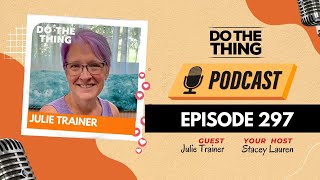
A recorded conversation (YouTube Episode 297) between Stacey Lauren (host; founder of the “do the thing” communities) and Julie Trainer (host of the podcast Hidden Gifts of Loss). Julie recounts life-altering bereavement during 2020 (mother’s pancreatic cancer, then father’s death), explains how storytelling and journaling helped her heal, and describes creating a Facebook community and podcast to offer a safe space for people to share grief and transformation. The episode also explains how Stacey’s Find Your Voice 17-day challenge (do the thing framework, I’M GAME) supports community formation, and seeds practical next steps (journaling group, anthology, podcast appearances).
Chapters
Hey, everyone. All right, so for those of you that don't know me, my name is Stacy Lauren, and I run the do the thing communities, and I also help people build online communities. My mission in life is to help people create a safe space with something that they really care about and their purpose and what they want to do in the world and who they want to be in the world, and then be able to create. Create a gathering place for people to have conversations around this beautiful thing that's important to you. And so I'm so excited because I'm getting to talk to my friend Julie Trainor today, who is the podcast host of Hidden Gifts of Loss, and she also has a brand new community that she is building through the do the Thing network. And so I'm really excited to talk to her because we're going to talk about her community and her goals for it and going to talk about her new community, and you guys get to be part of this conversation. So. Hey, Julie.
Hey, Stacy. I'm so happy to be here. Thank you so much for having me.
So good. Yeah, I know. I'm so excited to do this with you because we've really only been in each other's world for a few months, right?
Yeah.
Doesn't it seem so crazy? And yes, it's amazing. And so you joined the do the thing community through the find your voice challenge. And I'd love to kind of talk about that, because as we're building your community and you're wanting to have people in there really use their voice. Right. There's this connection point that we've realized between find your voice and being able to use it in the community. And so maybe we can start with just why you even joined originally, and then we can take it from there.
Yeah, sure. Well, let's see. How far back should I go? Well, okay. So my life changed in a huge way in 2020 when my mom was diagnosed with pancreatic cancer at the beginning of the pandemic. And I went out to Los Angeles to take care of her, and I had 10 weeks with her, and Covid happened in the background of all of it. So it was a really challenging time. It was my first time doing death, and then a year later, my dad died too. And so it was just this crazy whirlwind and all with COVID going on in the background. And I just knew that I was a different person after that. I didn't know in what way, but I knew that I just. I could no longer tolerate things like my corporate job. It was just, I have to do something with this. There was nobody that really helped me through it. I mean, I had my daughter, but I wished that I'd had a guide, an end of life doula, even hospice, more than we had because of COVID So I thought at the end of it all, I did have an end of life doula. This wonderful woman, Roxanne, and she and I would talk for an hour every Sunday, and she would just validate my feelings and just let me tell my stories. And she would always say, your stories are amazing. All the things that happened that you went through and the way you tell the story, she's like, you have to share this in some way. So I had in my mind that, well, maybe I should do a podcast. But then at the same time, my introvert side was like, who's gonna listen to your podcast, Right? Why would anybody come on? And I had also journaled my way through that experience too. And I knew that it was a book. And Roxanne kept telling me it was a book, and I'm like, okay, it's still about 50 Google Docs, but it is a book. And a very small piece of it was submitted to a contest, so we shall see what happen. But anyway, because talking about it helped me so much, I wanted to create a space for people to be able to share similar stories and experiences. And what came to me was that even though I went through this loss, there were what I call hidden gifts. There were people that showed up unexpectedly to help. There were transformations within myself, like forgiveness towards my father and more compassion for my mother and her ocd and just really getting that sense that tomorrow isn't promised and that we just really have to embrace the people we love and embrace right now, because it's really all we have. So one of the transformations I went through was I did hypnosis program, and I lost a bunch of weight. So that was super cool because I had gained a bunch of weight in that year of all that death. Anyway, so then one night, I'm on Facebook, and all of a sudden I see you, Stacy, talking about find you'd voice. And it was instant. It was this instant heart connection. That's why we're always like, we know. There's this deeper reason why we met, right? It was immediately, I'm like, okay, I'm in. I know that I need to find my voice because I knew that I had things in me that I hadn't been able to express in a bigger way and in a way that could help other people. And that was kind of at the heart of it was, I want to help other people who are going through what I went through. So that's what happened.
It just shows how powerful someone just making a suggestion, right. Of being able to share your story, and then you being able to then figure out, how am I going to share this story? And then overcoming those thoughts in your head, like, who's going to listen or who's going to read it or who's going to anything. Right. And really tapping into the purpose of it, which is finding your voice first so that you can feel safe enough to be able to put yourself out there in a way that is scary, right?
Yeah, it was. And the way that you do the program with the dares is so effective. And the dare that really connected us was when you said, if you were going to write a book, what would it be about? And then it. And this is so funny, because it was like, I've got to do my dares. It was midnight. I already got in bed, I'm in my pajamas. My hair is a mess. And I was just like, no, I got to do my dares, especially this one. So I started talking about my book, and I started telling the story about my mom. And then the next day, I looked and you had commented, and you said, oh, my God, please start a podcast. And I was like, what? That's so cool. And the thing about it is, is not only was I in a safe space, but I felt seen.
And that was huge. There was something in that that validated how I was feeling, what I wanted to do, and really strengthened my belief in myself in that. Yeah, you know what? Somebody else who doesn't even know me is seeing me and seeing that my message does have the potential to help somebody. So that was huge.
So amazing. Because I'm realizing what you said earlier about you didn't have a guide, right. And then you sort of got the guide with the doula and being able to help you. And then I then was your guide with helping you find your voice. And now you're wanting to now be other people's guides in helping them have a safe space to share their stories.
Yes. Yeah, a hundred percent. And when I joined the audience accelerator part, I didn't even think that I wanted to have a community. You were like, you're going to build this community on Facebook. I'm like, really? I am so. And so then I gradually started to do it, and then I started to see it grow, and then I started going into other groups that I knew My memoir writing group. And those writers, those memoir writers, they're my people, too. And then I posted in there. I did one post, and I hadn't done one in a forever, I don't know if ever, because this is called the Alumni Cafe. It's for after the class. And I got this huge response from people, and then a bunch of them came on my podcast, and I have more of them booked that are gonna come on my podcast. And I was like, wow. And I'm honored when people share these stories with me because they're sharing something so deeply personal from their heart, and I'm able to provide the space to receive that and for them to express that. And one of the women told me she never had the opportunity to tell the story of losing her husband from beginning to end. And she told me what a gift that was that I gave her. And it's like, wow, that's exactly what I wanted. And now look, it's actually happening.
I'm.
Yeah. Really powerful. Well, it's amazing.
Yeah. So you're able to do that now with your podcast, where you're giving people that safe space to be able to share their story. And now you're just doing it on a bigger scale. Right. Where now you're doing it one to many in your community, where you're creating the safe space for them to be able to share their stories with each other, which is now going to be able to create the connection and the bonds and make friendships with the people that are in there, too. So it's really just an extension of the podcast in the way of being able to connect with others. Yeah.
Yeah, that's a really good description. Exactly. And I'm starting to see people participate in the group now, and they're forming the connections with each other. One woman suggested that, why don't you give us a prompt to help us open up and talk about our loss? So I was like, that's brilliant. So I did. I started doing that. And that's bringing out. One woman wrote a story about a coworker that she was really close to and that she lost and shared a memory of that. And another one shared a video of her late husband walking on the shore and sharing his philosophy. And it's just really. It's so beautiful, and it shows me that it's really needed.
Yeah.
I don't think there's a lot of spaces where you're invited to share your grief and loss and how that transformed you. It's not the topic that most people go out to dinner with friends and start off with, well, let me tell you about this death. Yeah. And I was that person for a really, really long time. But that's what healed me was being able to share.
Wow. That really just hit. That's what healed you by being able to share because you're feeling seen in what that experience is like.
Yeah, yeah, exactly. Yeah.
So I would love us to talk about because if you're watching this right now, you are in the beginning of Julie's community and she is forming this gathering place for you. If you're watching this after, which we don't know what that looks like yet, but I'm just gonna say you could be watching this after. But for those of you that are watching it now, you are a founding member of the Hidden Gifts of Loss community, which is really just a beautiful way to be a part of something that is evolving as it goes. And you're going to be a part of this co creation process and really designing what it is going to be for people. And how does that feel, giving someone a space to be able to do that through this Hidden Gifts of Loss?
I mean it just, it feels amazing, honestly. I just feel so honored and it feels bigger than me. It feels almost like a calling really, that there's points along the way where I was like, I don't know, I'm not ready, I don't know what I'm doing, I don't know what this is going to look like. But then through find your voice and through knowing you, it's like you've given me permission to not know what's going to happen and so that to be okay and to just show up and see what happens. And so it's just, I feel like I'm being kind of spiritually led through all of this. And yeah, I just feel honored and I feel grateful and excited to see what all of us are going to create together and what, what that's going to look like and even maybe from this experience of helping somebody else have a voice, then they might even go out and help somebody else find their voice and it just becomes this thing that just spreads and changes the world. Right. Hopefully. I mean, changes it 1% at a time. And yeah.
So with so many people online, it's hard for people to really know where to go, where they're able to have that sense of safety. And so I'd love you to share what it feels like because you're part of this process, right? You're creating a community built on the do the thing framework, which is basically, it means that your community is a safe space for people. So in order for them to. To really see what's possible, right, they need to almost see it happening real time so that they're able to bring it back into your community. So as it grows, it's built on this framework and foundation of trust and love and support. And so that's why it's really important the founding members especially see what this looks like. And so I'd love to maybe have you share what it feels like to be in that experience in the communities that you've been in with me with find your voice with audience accelerator, with the collaboration network, and how that feels and how that is able to help you use your voice more too.
Wow. Yeah, that's such a good question. It's such a big question.
So, I mean, yeah, find your voice was unlike anything I've ever experienced. From the very start, I felt so supported and truly in a safe space because like you said, there's a lot of people online and there's things that you sign up for and, and you sign up for it and you can tell it's just this formulaic thing that somebody has put out. And when I signed up, you mess me directly. And I was so blown away by that. I'm like, oh, my God, she's real. And so from the very beginning, I felt embraced and seen and safe. And then I also started to see the other people, because part of the dares is that we post in the small private Facebook group and in response to these dares. And at first I was really nervous to do it. I didn't want to be really on camera. I typed out probably the first couple of them, but then I thought, you know what? I have to challenge myself. I should try this. But I didn't go live. I recorded myself and then I uploaded it. So that was a little bit of a safety net. And then eventually I did get to the point where I went live and I even hear myself now that I don't sound nervous when I do it. So when that challenge was over and then you were creating a new challenge, I wasn't even sure really if I was ready because like I said before, I was like, I don't know if I want to create a community. What would I even create a community for? But then through the support of everybody and through watching other people go about creating their communities and to see that people were confused and they weren't sure what direction they wanted to take, and they weren't sure how their community Maybe would fit into the framework. Our wonderful guy that has horses, just love him. And so watching everybody else gave me permission to not do it perfect, to just do it messy. Right. And, I mean, I really did start the podcast. And one of the wonderful things about being in community was that we all started going on each other's podcasts. Podcasts. So immediately I had a warm audience of people that said, yes, I'll go on your podcast, and you can go on my podcast. And that made it not scary. And even though these are people that I'm just meeting, I mean, with many of them, I feel this connection as if we're old friends. When they come on, it's like, oh, we're just hanging out in my living room having a glass of wine together. And, yeah. So it's just been amazing.
Yeah, it's so interesting because as I've been helping people build their own communities, I was trying to teach this process. Right. And show them how to create the safe space. But what has come out of it is that they actually just need to go through a true do the thing, find your voice challenge in order for them to see it. And then the space is created in the way that I have the videos framed. Right. Put the do the thing formula into each piece, which really opens up the vulnerability and allows people to be themselves, to be imperfect, to just show up as who they are. And so that's why this is going to be so amazing for your community, is because the people that choose to want this more intimate experience with you and with the find your voice challenge, as a founding member of your community, they're going to set the framework for them to share their story. But then also by them sharing their story, allowing other people to share their stories, because they're going to feel safe, they're going to feel seen, they're going to feel heard. And it's pretty much just by being in this challenge, it's going to extend over.
Yeah, it really does. Can you say the I'm game and what those stand for?
Yeah.
I love. Because I love that. That's the framework, right? That's your formula. Yeah.
Thank you. So, pretty much I set out on this quest. I was writing a book, which is funny. That's how we connect, too, right. And I was researching my book. It's actually interesting. We both started our community. I said we were similar, but I didn't realize it was that much. Even that part of the story is the same. I was researching my book, and then I couldn't remember my memories. Pretty Much of how things were hard for me because in order to really have a good book, my book strategist said, you have to come up with your struggle story. So I was like, okay, might as well interview people and get their story and really start to identify what got them successful. And I wanted to find these patterns of success. And so what came from that was after 80 episodes, all of a sudden, six pieces emerged, six patterns with every single person. And it's kind of fun. If you listen to the podcast, you'll hear me dissecting it real time. And then I put those patterns on index cards on my table, and all of a sudden, I literally saw the acronym I'm game appear. At first I saw game, and then I ended up tweaking a few things. And that's where I realized I game was there. And the I is identify the why. And what that does is we hear people, Simon Sinek talks about that. That's an important thing. But it's whenever you're wanting to have a new goal, and even if we're talking about just getting over grief, right? And being able to see the hidden gifts of grief, that is a goal on itself. And so you're identifying, why does that matter to me? Why is it important? Right? And then the M is mindset, which there's two really important pieces to mindset. And actually there might be a third one that I'm adding soon. We could talk about that. But there's one piece which is the dare that I give, which is, what are your excuses and how will you overcome them? And so everything that we do, whenever it's new, there's always going to be a challenge or a struggle or something that's going to come up where we're not going to want to do it anymore, or it's going to get in the way, or life gets in the way of our goals. Let's be real, right? And so I already have them pre determine what they're going to do to be able to overcome those excuses while you're still excited. Because then when you're in the moment and you're burning energy and you're like, I can't do this. I don't want to do this. I don't have time. You're like, wait, I already thought of what I was going to do. And then it's easier to come up with it. Yeah, yeah. And then the second piece is fun. Fun is a mindset. That's why I love the dares. Anytime I can make something fun or create fun from Something that normally might not be fun. Always down to do it. The third piece I'm experimenting with is the word experiment. People really are adapting that word a lot now. It's given up to you. Communities are being built because I have the wealth experiment going and it's been actually have a dating experiment podcast too. I love that word because there's a freedom about it that there's no attachment to an outcome. So that might be a third piece that I'm adapting. As a general rule. What in your life could you just call an experiment? So it gives you the freedom. Yeah, yeah, yeah. And then the G in game is goals. And so that's where I do the dares. And so for anyone that hasn't been a part of this before, it's basically just a micro thing. It's nothing too crazy. It's just. And I have these comfort circles that I explained through the challenge to show you how to extend over your comfort zone. But it's basically just something that I dare you. And so with the find your voice challenge, the dares are really just self reflection dares that help you get to know yourself better. And because you're doing it in the community, you're getting to know each other and you're becoming friends so much faster because of the way that you're able to share who you are.
Yeah, yeah. It just really brings a community to life. Yeah.
Okay. And then Jenny Wright, she actually, she's part of my world now, and she said when she saw what I was doing, she was like, oh, your dares have intimacy. Because that's what it is, right? It's like you could be total strangers at the beginning of find your voice. And then by the end of the 17 days, you could literally be best friends with someone because you're getting to know them in such a beautiful way.
Yeah, totally. Yeah. And if you podcast swap, then you really get to know them.
It's true. It's so true.
Yeah.
And then the A in game is accountability. And that's where just even especially being in a group with other people, being able to show up for each other, it is almost like I kind of have to show up because Mary just showed up and I don't want to let her down. And so there's this fun little thing where you really care about the other person, so it makes you want to show up more. So yeah, that's so true. And then the M in game is my people. And this is my favorite one because so many people don't know this fact. And this is what I'm really passionate about. Helping people understand. And why I love helping people build, too, is because we all have these goals, and we have people in our life that are supportive, that we love, and our friends and our family and all that stuff. But sometimes if you have a goal that they've never had and they don't know what it is, they have no idea how to even support you because they have never had that goal in their life. And so they might try to be supportive, but they don't know what you're doing. And so with them saying, why do you want to do that? Or what is that for? That could technically normally get someone to stop what they're doing and think that they're crazy for wanting to do this new thing, but instead, that there's my people. And so if you're feeling that, then you're like, wait, am I around other people that have this goal, too? And if you don't, that's when you need to get around my people.
Yeah, completely. If I would have started my podcast kind of in a vacuum, I don't think it would have gone anywhere. But as it is now, since March, I think I've. I think I have 15 episodes or something like that, and then I don't even know how many I have booked. I have maybe 10 booked or something.
That's so exciting. It's so cool. And I talked about you last night because I was doing the Modern Prairie. I did a challenge for their community, and with Laura Carney, it was amazing. And we just had the celebration, and you got to come as a guest one of the weeks, which was so great, and it was so fun because we gave your. Your podcast as a bonus stare for them to come on your podcast. And so many of them, this is the biggest thing on their bucket list that has terrified them is coming on your podcast. And it's amazing, right, that just a few months ago you were terrified to do your podcast, and now you're the one that's creating the terrifying thing for people who knew.
Right. I mean, that's amazing that I get to be that for them. And then they're going to transcend that fear, and then who knows what they're going to go on to do after that? Because it's going to give them some confidence.
Yeah. And it's like, because you said it earlier, you're giving someone the space to be able to share their story on your podcast, and they're getting to remember the person that was in their life that now they're having hidden gifts because of that. And so what that does, then when they're able to share that story, it releases something. It is the healing. Right? This is the ultimate healing.
It really is. It really, really is. For me to have been able to share my story and now to be doing something very deliberate, that is another way that I'm honoring my mom and dad. But, yeah, I know. Me and Laura Carney talked about this when she was on my podcast, too, about how she wrote the book My Father's List, and she did her father's bucket list 13 years after he died, I think. And there was like, 50 items. So. And our interview ended up being an hour and a half, and I couldn't edit anything out of it because it was all. So she said, I see your parents right behind you. They're right there supporting you. And I was just like, whoa. And it's like, ever since writing this book and everything, she's. I see that. I see that now. That's a gift I didn't really have before. It was the coolest thing. Casita.
Yeah. You know what really coming alive is that it is true. It's because we have all of these feelings and thoughts and things that are trapped sometimes in our head that we're wanting to get out. But when it gets released, you do get closer to the hidden gifts because it comes out of you now. It has a space to live.
Yeah. Because I think a lot of times with grief and loss, it can get stuck in you. I mean, I've talked to people who. They were stuck for 10 years, and then something happened that triggered me. And then I went, oh, my gosh. This is about my mom, one of the women that came on podcast. It was Christmas. And then all of a sudden, Christmas, she's like, why do I have such a hard time with Christmas every year? And then she realized. And so then she was able to release that, and then it changed for her after that. Wow. Yeah.
That's when you're able to notice the synchronicities more because you're no longer stuck in your head thinking of all the things that can come up. Right. With everything that happened. Yeah.
Yeah. You're just in flow.
Yeah. And then the last letter is the E, and that one has two parts to it. So there's educate, which part one is Learning from people. So it's listening to podcasts, watching videos, going through one of my programs, going through whatever you're going to do in the future, and learning from people things, all that stuff. But the second part is my favorite. And what I love about a community is you're educating others. And so there's nothing that I love more than when someone asks me in their community to share something. I know. I feel so seen by that and by having this space where you're going to help people feel like they can be themselves, share their stories, now they're going to be able to educate others on something they know. And isn't that exciting?
Yeah. Wow. Yeah. Really? That's amazing. So many things come out of this that I hadn't even really thought of before. And then when we talk, it's just this illumination. It's like, wow, there's that. And they all come back to the hidden gifts, right? All these things were things. Things that now they're showing up, now they're revealed, but they were these little hidden gifts that like, oh, my gosh. Yeah, it can provide that. And then all of that feels in some way, it's like my mom channeling through me, too, because she was a very giving person who just always wanted to help and just be there for everyone. And this is a funny thing about hidden gifts, too, that I'll just throw out that she also was a little bit of an organized hoarder. And she had all these bins in the garage, and most of what was in them were gifts either for other people or gifts that she got from other people that she was holding onto. And she would put a little piece of tape on the bottom of each thing and say who it was from and what year, which was so funny to me. And so she was so cute. And then I asked her one time, what is it about Christmas that you love so much? And she said, I love to give. And then after she died and we went through 60 years worth of these spins, right. I just had this huge garage sale, and all the people that came to the garage sale, they went away so happy. We were practically giving stuff away. And I thought that's what she wanted. And so even though she didn't know ultimately who these gifts went to, through me, I was able to give those gifts and make all these people happy with their amazing.
Oh, my gosh. I know. I feel like all the stuff that you're doing, it's on the underlying of everything that's happening here. And so I would love to talk about. Why do you think it's important that one of your founding members of your community join us for the find your voice challenge and be able to come in this more intimate space so they can see what a safe Space in a community looks like with people that are open to sharing who they are, what they want, sharing their stories.
Wow, that's such a good question. So it changed my life in so many ways. Just so many fundamental ways. I am different from find your voice. I'm stronger and more confident and I have this whole community of people that I didn't even know before that I really feel like they're my friends. It's a gift that you can give yourself and that you deserve. And I don't like the word should, but I'm saying you should give yourself this gift because it's stepping into the unknown. But the unknown is such a safe space. And where else does that happen? You're just stepping into the arms of the angels and they're just gonna lift you up. I'm not trying to wax religious here, but it's like, really, I almost can't put it into words, but if I could offer that to somebody, that would be such a huge gift for me. For you, but also for me, because like I said, I almost can't put it into words, but it's just changed my life in so many ways and it would change other people's lives in a different way. I don't know what the thing is gonna be for you. I don't know what the thing you wanna do is, but whatever your thing is, this will help you get rid of any blocks that you might have around that, and it will, in a very supportive way, help you do the thing. And it feels so good to do the thing that you've maybe always wanted to do, but maybe you just didn't think you could or you just never even told anybody that was the thing you wanted to do. And this is going to awaken that and just help you be yourself in a much fuller way. And I think a lot of times when you're coming out of grief, you kind of don't know what the next thing is going to be. And even if you don't, you might discover it. You might discover something that you didn't even know that you had in you. So it's just. It's magical.
And it's like you're comfortable being yourself because you're seeing other people being themselves. And I think that creates this space of just everyone being real with each other. Right. Which isn't that normal nowadays for people to just take off the mask? Right. And show who they are?
Yeah, for sure. I mean, especially online. I mean, a lot of people that you see through your feed, they're Projecting. It's like they're boasting, oh, I have this big thing, and you're gonna make a million dollars overnight. You see that? And you're just like, no, no, no. Next. But that's not what this is. So, yeah, this is a gem. This is something really rare that you can find true community online. And, I mean, I just feel like it was divine intervention, you know, that I just happened to be scrolling that night, because some people, you'll see them over and over and over again. I had never seen you, and I was just in instantly, like, oh, my God. So you guys just even to meet Stacy is an amazing part of find your voice too, because she is this connector. She's just got this wave. You've got this way of just connecting people with each other, and it's beautiful. It's really beautiful.
Thank you.
I'm so thankful.
And you mentioned earlier how our emotions, our stories, all these things can get stuck in us. Right. And I didn't actually connect this to this before this conversation, so thank you for this. But I used to be. When I went through my own journey, I went through a lot of books that I read, Body Keeps the Score, Personality Isn't Permanent, and all the things that happen to us when we keep things inside of us. And so I'm just realizing what a huge piece of find your voice is with being able to just get all that out of our body. We even do a venting voice note that no one has to share, but it's teaching people to just let all that stuff out and free it. Right. Which is part of the healing process.
Yeah. Yeah, completely. I can see how this just really. It just really fits in with what I'm trying to create in the hind gifts of loss. It's just all of that. It's all of that that can help in so many ways. Yeah. Yeah.
And so you mentioned earlier, too, you're really connecting with the memoir group of writers and how a lot of people from there are joining your community in some different places with writers, because, yeah, even the Modern Prairie, their writers, they really connected with what you were saying. And I think what that is is if you're someone that's writing a memoir, you have gone through some kind of loss for you to want to write a memoir. And it could be a death, it could be a estrangement, it could be any kind of identity, relationship. Yeah.
A job, even. Yeah.
But I think that's why it's connecting so much, because that's the other common piece is if people are connecting with what you're doing. They're there because they went through that. Now they're wanting to do something with it.
Yeah, exactly. And that's kind of the classic memoir formula. It's my memoir teacher, she talked about the skywriting. So it's like, there's what happened, but then there's why does it matter? So it's like memoirs. What happened? What did you go through? Who are you now? And why it matters is the piece that everybody can relate to. We can all relate to losing somebody or losing something important to us and how we feel about that. And there's many ways you could go with it. You could be bitter, you could shut down. But people in my community have taken it and transformed it in some way. And so, yeah, I think with the. Especially the writers of memoir, they really do connect. This is what I love about my podcast. Everybody who comes on my podcast basically tells me a mini memoir, because that's kind of what my podcast is too. It's like, what happened? How did it change you and who are you now? And that is a message of hope, really, because you can just be lost. I mean, there's different kinds of loss. Right. I call it a life altering loss, a life altering death. That was. My mom was the first one for me. I never really. I lost my grandparents. And that could be very significant for somebody who was raised by their grandparents. Right. My grandparents were people I saw maybe every other summer. I loved them, but it wasn't a life altering death for me. Right. But when you go through something that's life altering, I mean, God forbid, the loss of a child, I mean, you can just be lost for a long time. But once you go through a transformation, that's the healing message that you get to share with other people who are in that place of just, oh, my God, I can't even get out of bed because this hurts so bad. Then when you read somebody else's memoir, and I did a lot of that kind of reading too, and seeking when I was healing, it's like, whoa, she went through that and now look what she's doing. Then I could get through it too, somehow. So putting those messages out there is the healing. That's the healing gift.
So true. I didn't actually connect that together until this. So thank you so much that you do. That just always lands in such an amazing way. I'd love to also talk about the bonus that you're giving people who are joining the find your voice challenge from your community. We talked about this the other Day. And I was really excited. It's going to evolve as it goes, but just kind of the seedling of the idea.
Yeah, it's definitely going to evolve as it goes because it is a seedling right now. But the thing that I really want to create, because journaling is what helped me so much to get through that whole experience of taking care of my mom. And I wrote everything down every single day, just partly because it helped me to get it out, but partly because I didn't want to forget, because I'm like, these are the seeds of a book. I need to remember these things. I want to do some kind of a journaling group. Right. Where there's prompts, which is what I've started. I've started putting these prompts in there. And I. I don't exactly know what it's going to become, but this is one of my ideas that I just love. So out of this and out of the podcast episodes and maybe out of a journaling group, I have fantasy, which now I know you can do anything you want. I would love to put together an anthology book, ultimately, of these stories of finding the hidden gifts. So from people who come on my podcast and from people in the journaling group, which, yeah, like I said, is a seedling right now, but those are two of the directions that I see this going. And maybe even a book, a kind of a companion book to journal, a beautiful journal with prompts in it that you can record those. Those little gems and memories of your person.
Yeah. And so for anyone that joins find your voice, most likely the bonus you'll get will be something that's the beginning seed of what Julie's wanting to create, which will just be a probably a separate journaling group where you maybe meet on Zoom a few times a week or something just to kind of see what this is. Would that be something that might feel good to you? Is that.
Yeah, yeah, yeah. I like, we always co create. Stacy, you were saying I help you see things. That you do. You help me see things too.
Yeah, yeah, yeah. I think that'd be a cool starting point. So anyone that joined find your voice then gets access to these zooms where you're gonna share connection in a more meaningful way than just face to face online.
Yeah, that's really great. That's really great. Yeah. People who join would be in the big find you'd voice too. But then I believe we'll have a separate accountability kind of a group within the community where we can talk about, oh, I don't know what Was that dare like, for you, those kind of things?
Totally. Yeah. So that's the way that this is going to be really exciting for the people in the community, because especially as your founding members, the people that choose to join, they're going to get to know each other automatically through being in the find your voice challenge and do the thing. But you're going to also have your own separate group with just the people that are in the hidden gifts of loss, where you'll be able to have more intimate interaction and get to know each other other in a really deep, meaningful way.
Yeah. Very cool.
And it's just 17 days, so it's a good way to just kind of get that connection. Because I think everyone can do something for 17 days.
Yeah, exactly. And it actually went by so fast that when it was over, I'm like, oh, my God, I have to. What's the next thing?
Yeah, okay, so let's imagine. So your founding members come and they're like, okay, that sounds great. I'm in. They do find your voice. They see that they get the private space with you too, to be able to have more intimate connection with just your group. And then now they're coming into the hidden gifts of loss. Right. And they know what a safe space looks like. They know that it is okay to share your voice in a group and share your story and share your struggles and say, what's on your mind? What does that look like now for you?
Just, I mean, really amazing if I am able to provide that. And what came out of it for me was then that I started this group. So, I don't know, this could plant the seed for somebody else to start a group specific to something that's really dear to their heart. I mean, so that would be the ultimate kind of next level thing if somebody else feels inspired to do that because of this. It's just this almost generational thing, right. That goes from Stacy to me to my group to who knows what the next thing. And it's just, if it helps, I always feel like, gosh, if it even helped one person, just help one person who was stuck in their grief and feeling like they don't have a voice. But it's totally worth it.
We were talking earlier about before we recorded, I was telling you about my sister and her company, that she was quitting her job because she wasn't happy with some things that were going on there. And as she was quitting, the owner was like, why are you quitting? We really like you. We think you're a valued employee. And she had said, pretty much, I have nothing to lose, so I'm going to just tell her everything that's been going on. And so she told her all of the stuff that she was holding in because she didn't feel safe to share it. And all of a sudden, now she has a safe space, but she didn't before. And so there's this other layer of your community now where it's almost like we want people to know that it's safe so they're able to share the story, so they're able to. To help support each other. Because that's the worst thing is when you put yourself out there and then someone's ridiculing you.
Right.
Especially when you're thinking of normal online spaces or you're getting a heckling person. But your community is going to be built on this safety of connection and support. And especially for the people that are seeing it in the find your voice challenge, it's going to be able to come back into yours, which will then give other people the freedom to be able to be open and vulnerable. Because it's a private group, you're able to kick people out if they're not abiding to the rules of the group, and you're really providing that way for everyone to be able to be in it together.
Yeah. And I feel like it'll probably grow the community as well. We'll be able to reach more people that would benefit from being in that space.
Did you ever feel like you were in a space where you didn't feel like you could say what was on your mind or use your voice, or did it ever not land in a way that you thought?
That's a good question. I'm trying to think off the top of my head. I mean.
I can say that I wasn't somebody who posted a lot on Facebook, which is one of the things where I was like, oh, I don't know if I want to have a group because I'm kind of a private person, but in my own private Facebook, my personal page, not really. But that's probably why I didn't post very much, because sometimes you'll see a thread and somebody will say something, and then somebody else will take it completely out of context. And the next thing, you have this whole debate going on. And I have had that happen, I think, on some personal posts, and it's like, wait, that's not what this was even about. This was about my dog. And now it's about. I don't know. Yeah, people's rights? I don't know. But yeah, so that's really the answer to that question. But have you ever felt it with.
A company or maybe in a. Any of the. The communities even in with the company?
Oh my gosh. With my corporate job, yeah. It was so micromanaged where I worked that they didn't really want your individuality, they didn't want your expertise. They wanted everybody to basically be a robot. And there was a very specific demographic that was able to move up in the company. And if you weren't in that demographic then, and I saw it over and over and over, it wasn't something I made up then it just wasn't going to happen. No matter how good what you did was, you weren't going to get that recognition and that validation. You just needed to fit in. And I'm not that kind of person. I'm an artistic person. I'd like to be able to be creative and feel like I have the freedom to really express myself. And so, you know, there's things that you just have to keep quiet. Even if you feel some kind of way about what somebody's doing that if you were to take that to management, it's just going to backfire on you and that kind of. So yeah, I was in that environment for 10 years and it was really soul crushing actually.
What do you think would have happened if someone new came in and they actually said, hey, you guys, I see that this has been not the best for us to be in this work environment together. And we're going to have a challenge called find your voice where we're going to help you get to know each other in a better way and then we can could take that into the rest of the company.
Wow. Wow. That would have been really powerful, actually. That would be amazing. I never even thought of find your voice in that kind of a setting, but wow, that would be really, really cool. I don't know if my workplace would have even been open to it, but I'm sure that there are maybe smaller organizations that definitely would be. I think we had 400 people in our department, so. But wow. Yeah, that would have been a really, really cool challenge to do. That would have been amazing.
Yeah, I share that because I think a lot of people, they haven't seen community, the communities like do the thing has been able to create. And so when we think of community, a lot of times we think of companies. And so this is something I'll probably eventually be doing for companies because I had a business for 20 years and I Was like, oh my gosh, if I had find your voice back then and I could have helped people just get to know each other better through just that challenge, I think it would have created a much more intimate work experience. And so that's what we're doing for your community by bringing find your voice in is we're making it where people are already going to be friends when they go in there and they're already going to know how to support each other. They're going to know who they are, but anyway, they're going to be able to. Yeah. Just be in such a more connection. And so does that make sense? How powerful?
Yeah, yeah, really does. And really true community, not just the idea of community, not just lip service about community. I mean it really can be authentic, heart centered community because of the framework that find you'd voice provides. It's just unlike anything else out there that I've ever been a part of. And yeah, what you said, if I would have had it back then, man, I wish I would have had it 20 years ago. Right?
Yeah, I know. It's almost like we needed to have it at the time that we have it though. Yeah, yeah, I know.
Yeah, exactly. I mean, everything happens in the perfect order when it's supposed to happen. So.
Yeah. Because it's like it doesn't land the same when it's at a point when you're not ready for it type of thing.
Yeah, that. Absolutely. And if we didn't go through the things that we went through, you wouldn't have even probably created it if you had come out of the company that you sold and everything. And everything that you went through that. Yeah, yeah.
So let's talk to your person who is your community member. They're your founding member of the hidden gifts of loss. Why would you like them to join us on this experience?
So I would love to get to know you better and I know that that will happen through find your voice. I would love for you to just take a leap of faith. It's 17 days. It's $47 to join the challenge. You have nothing to lose. Stacy's sister. You have nothing to lose. And it's just really coming from my heart that I want to share this because of what it did for me. And I know I can relate to where many of you are in the community having gone through a really life altering loss. And. And I think that if you're ready for the next thing and you're looking for, how can I just connect with people and really feel supported Then that's what find you'd voice is. And it's a hidden gift that I really want to offer you and that I really want to support you in offering to yourself.
Well, thank you so much for doing this with me. I'm so glad that we are in each other's worlds and we get to meet in person soon.
I'm so excited. I know she's doing a TEDx talk, and I'm going out to California, so I'll get to see my family and I'll get to know, meet Stacy in person. And hey, that's real community. I mean, you meet people online, how often do you then go end up meeting them in person? It's actually going to be the first time for me that that happened. Now that I think about it, it's so great.
And yeah, and you're meeting other people from the community too. And, yeah, funny you're even staying with one of them. It's also. It's like, it just shows how powerful our connections are.
Yeah, we're going to be roommates. And she was on my podcast and I was on her. And she's a hairdresser. And I was a hairdresser for 30 years. It's like, yeah, very cool. Thank you so much. Thank you for what you do, and thanks for having me on. It really means a lot.
Thank you. And for anyone that is maybe listening and not part of Julie's community yet, in case this ends up going on my podcast, do you want to share what your community is and how they can get on there?
Yeah. So it's just called the Hidden Gifts of Loss community on Facebook. And there's a couple of little questions when you join, and that's where you can find me. And my podcast is on Spotify. It's going on the other platforms very soon, but right now it's on Spotify. And it's also called the Hidden Gifts of Loss. And yeah, take a listen and you can check it out. And many of the members of the community have come on my podcast, and that is something that I extend to everybody who's in the community and even people who aren't. If you have a story to share about how loss transformed you, I would love to hear it. I could sit all day and just listen to people's stories. It's what I love to do. So.
So, yeah, I'm glad you said that because that reminded me of what I was so excited about with your community is if you have a story to share, they're going to be able to share it with you on the podcast. Right. And then when they're in the community, then they get to be in conversation with each other. So it really is just this beautiful extension. Yeah.
And I always highlight the people who've been on the podcast. I'll usually put a little clip and I'll announce when I publish it. So then you kind of get recognized in the community and that's really fun too. And then people listen to your episode and then, and then they get to know you a little better and it's just this whole cool trickle effect. It's very fun.
Thank you so much. All right. You're welcome. Thanks for joining. And do the thing. Don't wait for opportunity. Create it. And hey guys, have you checked out my Facebook group yet? It's Doth.
And I have a brand new group that I started recently which is do the Thing collaboration dot com.
More from Stacey

From 262 Women to 8 Million Media Impressions: Deborah Drummond Built a Global Women’s Movement


From Notes App to Published Author: Avery Brenna Crumrine on Turning Intention Into Action


How Stacey Lauren's Billion Dollar Impact Marketplace Will Raise Billions for Charities and Causes

What Happened When Allison Maslan of the Pinnacle Global Network Ran a Challenge with Stacey Lauren




Leaders Share How Stacey Lauren Sparks Action, Clarity, and High-Impact Collaboration

Sandi Masori Announced as Emcee | The Billion Dollar Impact Event Returns to San Diego