Episode 3 - Adam Webber On Being So Critical Of Yourself And Give Yourself Time To Be A Beginner
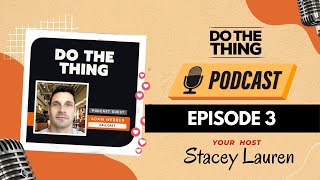
This is Episode 3 of the Do the Thing podcast (May 19, 2023) — an interview between host Stacey Lauren and Adam Webber (creator of the Callcast podcasting app). They cover Adam's personal background (dyslexia, app development), the genesis of Callcast (designing a phone-call-based, lightweight podcasting workflow during COVID), and his extreme self-challenge to record 365 conversations to overcome fear and iterate the product. Major themes: overcoming perfectionism and fear, giving yourself permission to be a beginner, asking for help and community/accountability, and starting simply to learn by doing. The episode closes with practical encouragement ("put yourself out there — don't let fear get in your way") and contact pointers for Callcast.
Chapters
I do really believe 100% from every part of me that everyone has the capacity to be able to do the things that they want and not to be held back by the mental baggage that's in our head that we want to push through.
Welcome to the do the Thing podcast. In each episode, we get down and personal with people who go after the things they want to make all their wildest dreams come true. Join us as we unveil and dissect a formula for what it takes to do the thing. Here is your host, Stacy Lauren.
So, hey, everyone. I have Adam Weber here today and I am super excited because he is the one that created the app that I'm using right now for this podcast. And it's been an amazing opportunity for me to be able to talk to him directly and kind of get thoughts on the podcast and get to see what his higher level visions are for Paul cast in general. And I thought it'd be great to bring him on and share his wisdom with you guys. And I haven't really had a chance yet to even talk to him about how this all started other than the current situation that I'm using it for. So I'm really excited to dive in and get to know. Get to know him better. Hey, Adam.
Hi, Stacy. Thank you so much for having me on. And I just wanted to say, you know that saying in life gives you what you need when you need it, as long as you're paying attention. Those little nudges. I just so you know, I've been telling myself, I need to record another podcast. I need to record another podcast. But sometimes it's like the gym where if you haven't been for a while or you haven't been doing the thing for a while, it gets harder and harder to start again. So the nudge that you gave me by saying, hey, will you hop on and record a podcast with me on my show.
Is getting me to do this thing again, which I so desperately wanted to do, but it's difficult. So thank you for giving me the nudge and the opportunity to join you.
Yeah, isn't that funny? It's like you're the one that's been helping me and now I'm helping you.
That's the best ways of life when you know it's symbiotic.
Exactly. Well, cool. I'm so excited to have you on here. You are just a plethora of wisdom and motivation and inspiration, and I've been really grateful for you. We've only known each other, what, like, maybe three weeks. But in those three weeks, I really feel like I've gotten to know you. And it's been exciting to just have this opportunity to use something that you've created and also given me a way to do something that I've really wanted to do.
I appreciate that so much. And just so you know, one of my favorite things, and I think it's a really interesting.
Note or something to take note of. There's certain people who reach out to me over the callcast contact form and they say, hey, I want to start a podcast. Or I've been thinking about starting a podcast. Can I have a meeting with you? And you were one of those people. And there is something to say about people who are not shy or scared or don't let things get in their way about asking for help or just reaching out for a meeting. And in life. So for me, I fall on the other opposite side of that spectrum where I can be really afraid to reach out if I need help with somebody or, you know, it's embarrassing to say, I don't know how to do this. Can you talk to me about it? And. But yet, through working on this side of Cold Cast, where I could be the one helping people, the people who do reach out to me, and then they just jump in with both feet and saying, okay, what can I learn? What can you teach me? How does this work? To watch those people get the tools quicker and the knowledge upload quicker to learn how to do the thing that they've been wanting to do. It's a really rewarding and amazing experience to be on this side of the equation and be that person. So you are one of those people who is willing to reach out and say, hey, what can I learn? What can you teach me? I want to learn about this.
I love those people that are curious and willing to put themselves out there. So I wanted to give you that.
Yeah. So I love that. Yeah, I love that so much, Adam, because I actually haven't had this. This specific part of the formula down yet. Quite succinctly, as you just put it, I've been having, like, education and learning as one of the formula pieces for doing the thing, but asking for help, I think that is a huge piece of being able to do the thing, you know, and not being too ego driven, you know, to realize that, you know, sometimes you do need help and being able to reach out and trying to get it. I think that's. That's really. That's really good point for sure.
Yeah. I like that you bring up the ego, because the ego can be there to protect us. Right. And make sure that we don't get hurt, but in doing so, can limit us in ways where. When, only when we put ourselves out there and become vulnerable, are the opportunities for the reward of, you know, learning something new and evolving into, you know, a greater experience, like, you know, you putting yourself out there. And that's why, you know, I started off by saying, have been so difficult for me to do a podcast again, because it. You got to put yourself out there, right? You got to ask somebody, hey, will you come on my show? Can I talk to you and ask you questions? And it's just, you know, putting yourself out in the front line for everyone to see and witness all the, you know, the beauties and warts that come with it. And so it can be really challenging to do that. And so. But yet, as maybe we'll get into. When I first launched Call Cast, in order for me to.
Really convince myself that I needed to put it out into the world, I had to create a challenge for myself. And that challenge was, okay, I'm going to record 365 podcasts with a new person every single day of the year, and that's going to make me do it. I have to, you know, and for me, when I set out for challenges or goals or resolutions, like, that was a New Year's resolution. That one, it was. I had to be extreme or something that would, you know, make me feel like it was worthwhile pursuing. When you do put yourself out, the ability to talk to a new person each day and learn about their life and ask them, you know, my subject matter was on fear because I felt that was what was holding me back. And when I got to explore that with a new person each day of the year, it was the most rewarding experience I could possibly have had. You know, getting to listen to other people's journeys and stories and what was holding them back from living the life they wanted and what they were doing in order to overcome that fear.
Yeah, so that's incredible. So you had fear, and then you're like, well, let me do a podcast about fear. Which by then interviewing the people and being able to hear those stories, that helped you overcome the fear you were having.
Yeah, so my fear.
Is.
And I think, you know, it was about being judged. It was about something not working and failing. So releasing Call Cast into the world, here I am, you know, working on this technology and getting caught in that mindset of, oh, it needs one more feature or I need to do One more thing to perfect it before I can release this technology out into the world. But by saying, you know what? I'm going to do two things at once. I'm going to challenge myself to use the software, to use the product itself, and I'm going to use it every single day, and I'm going to talk to a new person every single day. I was forcing myself to put that product out into the world every single day and use it. And it did two things. It made me learn about the technology that I was creating better than I ever could because I'm now a user of the experience. So what's working? What's not working, what can I improve on? What can I fix? And it was also making me say, you know, I had to draw a line in the sand and say, I'm officially going to launch this thing and I'm going to use it every day so I can understand the ins and the outs.
Yeah, that's phenomenal. I mean, there's no better way to learn what, what needs to be worked on by actually doing something every single day. I would love to hear, I'd love to, like, hear more about the Callcast story. I'm sure the listeners would love to hear where, where the idea even came from and, you know, how you decided to, to get going on it.
Yeah. So it's a kind of a multi layered story where the, the genesis of my story is. I grew up extremely dyslexic. So reading and writing in anything to do with the traditional classroom was so difficult and just so painful for me to go through. I just, you know, could not bear sitting in a class all day and having, you know, being lectured to. It was. It was just really challenging. And I felt so different from all the other kids who seemed to just be able to learn and pick things up so easily from textbooks. However, I found that I learned best and I was always fascinated to hear other people's stories, like what made them tick, what made them them. What were they interested in the world. And that's where I felt most engaged and most alive. So that was one piece of the ingredient of knowing that I learned best from talking to people and meeting people and hearing their stories. Going to school each day, my mom would drive me, and anywhere, anytime my mom was in the car driving, I'd be listening to NPR because that's what she wanted to listen to. And I just love the programming on NPR where they would be talking and, you know, all, you know, you hear these amazing stories of people all over the world and what they're going through and the challenges they're having and what I, you know, new ideas that they were exploring. And so just kind of this world of, you know, storytelling was. Was magical to me. And so that was another piece of the ingredient. And then I did end up really loving technology because, you know, I was always so embarrassed by my writing with a pen and paper because I would spell everything wrong. But then when the computer came along and you could start typing things in and it would fix your spelling for you, it was amazing. And then I saw the power of when the iPhone first came out. You know, all the features inside of an iPhone were absolutely incredible, with the camera and the GPS and the motion tracking and just all these different input, sensory input things that you could utilize.
I love taking advantage of those things and seeing what kind of how could I merge technology and the real world together to create experiences. And so I ended up moving to the west coast and working and starting a app development company where I would work with other people to help other founders build their ideas.
And so I just loved working with people that early stage of getting an idea and testing it in the world and finding customers and working with those people to help, you know, see if your solution, you know, helps them out. So I would work with what's called the lean startup methodology, where you get ideas and you rapidly build it and test it and.
Kind of, you know, it's just a great framework to work with people on building entrepreneurial ideas and companies through. Through technology. So I did that for a while, but every year, I would also always make sure that I had a personal project that I could work on as kind of R and D or just kind of work on my own creative ideas. And when Covid hit, it was that opportunity to kind of work through callcast. And I know my dad was wanting to create a podcast at one point in time, and I tried to show him, you know, here's how we can create one using the software that was available. And he just got too frustrated and gave up.
And so. And this is, you know, since then, there's been a lot of stuff come to market that makes podcasting easier and easier. But at that point in time, there was not a really, you know, one stop shop that would help you do everything from recording to publishing, you know, and all the other steps in between. So I wanted to quickly set out, like, if I could, you know, reduce this to the simplest form, which would be a phone call, could I make a podcast out of a phone call? And so that's where the idea, you know, the genesis of that idea kind of emerged out of. So it was a combination of, you know, and it was also a space that I absolutely loved, you know, the conversation, the meeting people.
But I'm also, you know, an introvert, and so meeting people can be scary and uncomfortable, but when you have the excuse to do it through. Hey, can I ask you questions through the lens of a podcast? That became a great opportunity to build out.
A podcasting platform.
I actually just. I just did an interview the other day with someone that. She's a. Like, a spectacular investigative reporter, like, Emmys and all that stuff. And she had told me that a lot of reporters are shy and introverted, and with the same thing that you were saying with the podcasters, with that lens of the reporter, it kind of gets you open to be able to talk to people. And then I had basically said I had the same concept because my background is sales, and I was extremely shy. I actually. My mom at one point had told me that people had asked her if I even talked. Like that was how shy I was. And through sales, I almost learned to communicate. So it's amazing that you're basically saying the same thing, how these parallels and these different. In these different industries come through, and we could build skills through that. Through that lens, essentially.
I love that. Yeah, that's. So when did you. Because I would never imagine that from you. Just from meeting you and hearing, you know, what you're working on with your book, this podcast, and all the other stuff that you've done that you were a shy person at one point in time.
Yeah, it's interesting.
It's.
Through sales, it's nice, right, because you kind of learned how to talk to people. You sort of had a reason, and you also weren't. At least for me, I wasn't scared of rejection because, like, well, one of my jobs was going door to door. So I knew if I went to 30 doors, I would sell a certain amount. So I knew they weren't rejecting me, they were just rejecting the product. And that concept of rejection, you know, I think is. Is where sometimes the shyness can come from, you know, and once you. Once you can overcome that fear of rejection, then I think that's when the world kind of opens up to you in so many ways.
Do you think that was a skill that you had to learn, or do you think you were born kind of already with that kind of layer built in?
Yeah, that's a great. That's a great question.
I think it was Learned, I think, through different jobs, you know, I realized that everything was numbers, you know, and you just had to see enough people, you know, to be able to.
Get the sale.
And then that sort of applied to other areas in life. That's why the book was originally going to be a sales book. But then I had other parallels.
In my life that I dated for a while. I, like, learned that, like, okay, rejection is not. It's the same thing as sales. Right? It was like all these different, like, parallels in my life that essentially came down to sales. And that's when I was like, I would talk to friends that, you know, like, wouldn't go out and meet people, you know, go on dates or whatever, because they were scared of being rejected. And that's when I was trying to explain to them, like, it's just them practicing that muscle of being able to meet people and not taking it personally. So anyway, I realized that it was. It was so much more than sales. It was that concept of just building the muscle of being able to handle rejection through. Through numbers. If that makes sense.
Yeah, it does. And it's. It's, to me, a really interesting step in the. If the idea is to be able to just jump and do the thing.
There'S so many times where we're letting that fear of rejection get in our way. And so building that muscle or being aware of that thing that's holding you back in order to just do the thing is such an important step to be. To be mindful of.
Yeah, no, it definitely is. So how did you go from this idea? It sounds like you had so much background in.
The why of wanting to create Callcast and then even having your dad be interested in something similar and you working for that app development company. And how did you actually.
Feel like you were ready to, like, I want to say, jump off the cliff, but I think you know what I mean, you know, and actually, like, do it.
So the interesting part, I think was always, you know, I've always loved building things or having ideas and being able to test them out. And so Callcast is not the first, you know, foray into let me try and build something and launch it. But what it really is is the first time to really build something, launch it, and then it's another matter to continue to revise it and continue to go back to it and try and improve it and just continue to build it out.
And so, interestingly enough, it coincided with COVID hitting. And so it really was an opportunity and time to just be like, you know what? There is a reason where right now I feel like more than ever, it is so important for people to be able to connect and have conversations and be able to learn from each other and hear each other's voices in this kind of longer form opportunity that podcast lends itself to. And so just kind of that. That belief that I really am passionate. It's, you know, probably the first project that I've built and released and worked on that really spoke to having purpose and this vision and purpose of the importance of what it is that we're trying to do accomplish and the people that we can work with along the way and just get to know along the way. It just felt very meaningful. So the alignment was there, and so really right now, and as you know, we're still very early days in trying to build this out and work on it. And I think, as you've seen, or as you will continue to see, software is going to continue to change and evolve and improve as we continue to build it out and adapt and find ways to make it easier, better.
But hopefully I'd love to really, you know, build it around communal aspects and make it where it's not just you recording a podcast, but there is a community element to what we're going to build out. And, you know, there is a calling that we all have, and hopefully through podcasts and meeting people and connecting with people, we can all become more attuned and tap into that calling.
Yeah, and it's the amazing part for me has been just the ease of use, you know, and whether I'm in my car or, you know, I'm sitting at my computer, I can. I can get it. Get it going. And that's what I really like about it, is it literally is like letting me do the thing. And that's where you've been so great, because I even got a different microphone in the beginning, and it was like, more money. And you're like, just start. Like, just. Just start where you can, you know, don't go crazy, you know, in the beginning and get it going. And I, like, love that concept just because it's so easy to get caught up in all those details and then you're almost paralyzed by it.
Yeah, I agree with that wholeheartedly. I think our first challenge in doing the thing is giving ourselves permission to just start something so much of the time that we always worry, like, everything needs to be perfect before I start, or from episode one or whatever it might be that I'm about to start. And it, whatever it is, you know, a month from now, if you just start it a month from now, two months from now, three months from now, whatever it is you're doing is going to be so different from day one. The most important thing is the sooner you start, the sooner you get to a place where you can learn the lessons you need to learn in order to improve upon what you're doing. And so for you, just kind of watching where you. What you're doing and what you've done here, by just jumping in and saying, you know what, I'm going to take all of that away and just peel off all the stress and expectations that everything needs to be perfect or whatever, and just get into it and start doing it and learn. Like, what's it like to invite someone on my show? What's it like to hit record? What's it like to, you know, just be a good host or welcoming host or make somebody feel comfortable? Like, those are all skills that you just don't start developing until you just jump in. So remove all the things that cause friction and slow you down and find the easiest path forward. And then, you know, month two, month three, month four, you can fine tune and improve as you go. But, you know, again, you know, back to what you said, a numbers game. It's about getting the numbers stacked behind you. So you've come, you're already on your journey. Recorded now 20 episodes, 30 episodes. And, you know, and that being said, also, I'd love to throw in, you know, the other thing that happens by doing the thing is your world opens up, it expands, and you end up being granted new opportunities and experiences where someone will learn about what you're doing and like, oh, wow. I love the concept for your podcast and I love that you're doing this and I love that you're writing a book simultaneously and one fuels the other. Would you like to be a speaker at my event? Right. Those opportunities don't come forth until you actually jump in and start doing the thing.
Yeah, that is so true. It really is. It's so easy to get caught up in knowing everything ahead of time and exactly how something's going to go. And that's been. The fun thing about this has been, is.
Even my understanding of what this podcast was about evolved. Because originally it was really just about me getting to be able to write this book and finish it. And it's just evolved so much into, like, truly being able to share these stories of just amazing people that are just doing the thing in so many different ways. And then maybe one of the secrets to their Ability to do the thing will then resonate with somebody, and, you know, it's going to get them to do something that they never dreamed of.
I love that. That's what it's all about.
Yep. So good. Well, tell me, like, what has been the hardest thing for you during this process?
Let's see. The hardest thing. There's a few points along the way that are the hardest thing. One was just launching it, right? Like, it's not hard to build technology in this day and age. There's so many tools out there, and it's wild. Like, just where we are in terms of. There's so much available to us that, you know, 20 years ago, you'd have to be a giant company in order to be able to leverage and grow and scale, you know, what we're able to do now, like, where we are now, because, you know, these companies have come along that have created frameworks and, you know, databases and servers and stuff that we can now very easily build stuff and for not much money and be able to just test things out and launch things into the world.
So.
It'S really cool to be able to live in a time where we are able to prototype and build something and launch it. But for me, you know, the hardest points have come where it's scary to launch something into the world, Whether it's a book or a podcast or, you know, name it, you name it. Anytime you know you have some kind of creative.
Thing that you want to put forth that represents you, it feels scary. It feels scary to be judged or critiqued or what if it doesn't work? Or what happens if people are relying on me and I let them down. There's all those kind of elements that. That can stack up and get in your way, but once you start doing it, you remove that hurdle and it gets easier. So the first one was just launching it as opposed to always perfecting it.
That's my first, hardest hurdle that I had. You know, for a lot of us, it can be the inner critic that is the perfectionist. And removing that element, I would say, is number one. And then number two is once you do launch, it's. You always want to be farther than where you are today. You know, it's like, oh, God, there's not enough hours in the day. And I want to be able to do xyz and I want to develop xyz and I want to do more, faster, and just, you know, but so not being able to, I guess being a very, very small team has been a challenge where you Just want to be able to supply everybody with all the tools possible and, and make the best experience possible. But.
You know, good things come in pieces, so you got to, you know, work your way there.
So as you're, as you're talking, I am sort of noting down what I'm thinking is your formula. Do you mind if I share with you?
So I've got your big why. So in terms of doing the thing. So big formula for. Or your formula for doing the thing is having a big why? I'm kind of reversing what you said about the inner critic perfectionism to keeping it simple. And then I'm feeling like the challenge you did, the 365 day challenge, it was either accountability or community. So I'm thinking those could be merged together. And then you mentioned asking for help, and I know you said that in terms of me, but I'm thinking you're kind of in that range too. But I'd love to hear what you think. So those are kind of the key things that I'm thinking you've used for doing the thing. And if I'm off track or if I miss something, please let me know.
Yeah, have a big why. I love that. That really resonates and taps into.
Something deep. And I think it's important for all of us to really pay attention to what are the things that make us feel most alive. Like what sparks something in me and gets me excited because that's when, when you find those things, that's when you'll do your best work. That's when you'll be really motivated and find purpose. And.
Yeah, that's great. The accountability 100%. I think if I hadn't told myself I need to record every single day with a new person.
It becomes easy to then miss a day here, miss a day there, miss a day here, and then all of a sudden you give yourself permission to stop counting. And then all of a sudden you haven't followed through or you haven't pushed yourself forward. So there was no getting out of. I need to find a new person, record, edit, publish, every single day with a new person. And could I do it all within an hour? Right? Like, have I made a solution simple enough to fulfill that kind of promise I wanted to make? Which is like a lightweight podcasting solution, right? Like nothing that's like pro tools, heavy, NPR style recording, but just lightweight on the move.
You know, under an hour. Like people who already have jobs are professional, but they want to, you know, like what your user case actually was one of the things that I was thinking about. Right. People who write books or want to write a book and want to be able to explore ideas and just be able to record it was high up on my left list of thinking of, you know, great use case scenarios for this kind of lightweight podcasting solution.
And then asking for help. That's a constant challenge for me that I still need to work on or improve on. But I think it is a key.
A key piece of the recipe for. And I just. I learned it through observing, you know, the people that reach out to me through the app. I see them.
Are the ones who start working and putting things together faster. Like, if you're willing to reach out or take the risk and, you know, ask people what they know and then, you know, apply it. I see them accelerating with their podcasts a lot faster.
Yeah, that's. That's really good. So I'm. As you're talking, I'm realizing I'm missing a big one. And this is kind of funny because this is what was bottlenecking me for a while, and you helped me get through it. I kind of. When I started this podcast, I had, you know, as, you know, I'd exited my business that I'd had for 20 years, and I never would have considered myself ego at all. But I realized when I exited that I kind of was a little. Little, because you count on all, you know, I had 60 employees that were constantly, like, needing my attention and direction. And when that ended, it was just this weird empty bliss, you know, abyss of, like, nothingness. And I'm making it sound terrible. It wasn't that bad, but it. Well, it kind of was. But anyway, so then when I started something new, I'm like, oh, whatever. I got this. I built this company, you know, and I'm going through that. And like, I did the first episode or the second episode, and I'm like, I am a terrible interviewer. And then I think I even said something like that to you. And I haven't done self talk like that since really my twenties, honestly. And so. But I like. It just comes up again when you're starting something brand new. And I hadn't actually considered that that was going to be a thing for me because even though I had run this business, my other jobs before that were like sales and sales management and different kinds of positions, but they're all kind of doing the same thing with the same principles, whereas doing this has been totally different, you know, than anything I've ever done. And so that. That judgment happens. So, yeah, I wanted to. Two things, if you don't mind. One is let's flip judgment around as a part of that formula, because there's something in there that we need to, like, dissect a little bit more. And then the other thing, if you remember or if you can just almost share again what you had told me when I texted you, saying, like, I don't think I'm an interviewer. I like doing this podcast, but. And the people are great.
Remind me, what did I say?
So you had said, and you can add on to this if you like. I don't remember word for word, but it was basically like.
Almost like this. Oh, I should record. I should, like, play the recording. I think you even sent me a voice note. Man, if I was really that prepared, I would have done that. Actually, you know what? We're going to do it. Do you mind?
No, I'd be happy to hear it.
Is that okay? Okay, cool. We'll see if it comes out.
Hey, got your message. Absolutely. You can start as many podcasts as you want. That's one of the pro features, the one podcast we do.
Okay, I don't think that's it. Okay, one second.
I'll get there on the free plan as much as you want. But then when you want to have multiple shows, that's where we upgrade people to a paid membership. But you could buy just the cheapest plan and still get unlimited shows. Good little advertisement there for callcast.
And as far as the editing. Yeah, happy to delve into that more. Talk about it, think about it, and feel it out. And lastly, about you worrying about host. That's absolutely ridiculous. You're going to be an amazing host. It sounds like you're way too hard on yourself. That was like, your first. Your first or second interview. It's really funny. I once heard a podcast with, like, some of the greats and legendary podcasts, like this American Life with Ira Glass, and he actually had a tape of himself at the very beginning learning about podcasting, like, going out, talking to people, and it sends cringes up and down his spine, I think he said. And there's a few other early, early, early podcasters.
Yeah. So, I mean, it was amazing because it went from. I went from like, being just so critical to just, like, being like, okay, I'm literally practicing this new skill. Why? How am I going to be amazing at it already? You know? And it almost like restarted just doing the thing again. And that's the biggest thing that I realized was I've done the thing. But a Lot of times it's kind of the same thing. So it seemed like I kept doing a new thing, you know, but it was still those same principles since it was like, still sales and business related, whereas podcasts, like, you're putting yourself out there, you're interviewing and things like that. So it's been able. I've been able to, like, almost like, see how to do a new thing just through even this. This process. And then the way you worded that, I thought was really, really good. And it could be applied to so many other things. That's why I'm sharing it. Not just doing a podcast because not everyone wants to do one. This isn't selling, doing a podcast, although you should, but. But it's that concept of just not being critical of yourself. So what is that? Because you mentioned that a few times too. We should flip that into the opposite of being. Being judged.
Yeah. You know what? So in surfing, when you're a beginner at something, Beginner at surfing, they call you a kook. I see a profile picture here. You have. You're paddleboarding there, right?
Yeah.
It's making me think it's like. It is if you give yourself permission to be that kook, that complete beginner. And the thing that I love about surfing is it is so obvious who is new, who is a beginner. Like, you have to pay your dues. You have to get pummeled by the wave and. And just look like an idiot out there, right? You have to, like, be so clueless. And the ocean will show you. Like, it's this powerful force that's always changing in nature, and it will show you just how clueless you are until. Unless you put in the time. But there's only one way to get good at it, right? You have to go through the punishment. You have to look like a complete idiot and beginner. And it's obvious to everyone, the people on shore who are sitting there watching you as you're. As they're, you know, enjoying the sun on the beach and all the other surfers in the lineup. And it can be very embarrassing, but the reward is so enriching. And if you can just get to a place where you're just observing yourself and just saying, you know what? I'm okay looking like an idiot. I just want to learn one little thing each day or be mindful each day of one little thing that I can take away, and it's the feeling of being in the ocean or being in the water or, you know, just all. There's all these Things that make it so valuable and so rewarding that it doesn't matter if I look like an idiot. And if you can get to that stage with whatever it is that you're doing, a few months down the line, you're like, whoa, I am learning something new. I'm getting this. I see myself improving. I see myself getting better. It's so worthwhile. Just that embarrassing feeling at the beginning to finally get to something if you can stick with it through all the pain and embarrassment and just that awkwardness of being a complete beginner. And the more we become adults, the longer we are in our adult life, the farther we are, typically from having to challenge ourselves with being a complete beginner at something. And we tend to stick to things that we're good at. Like, I'm good at something, I'm good at this, and therefore I'll stick with it because I always want to look good. But when you go off into life and challenge yourself and say, I'm going to pick up a new hobby or a new this or new that, and you just go off and do it, and then you stick with it and watch yourself day by day improve, it is the most rewarding experience. Because I feel like the older we get, we forget what it's like to learn a new skill, a new craft, a new something that.
Has, like, it. Looking through the lens of a beginner eyes, it has like, all the magic in the world that when you become good at something later in life, you forget what it was like to have to go through and learn something from the. From the beginning points.
Yeah, that's. There's so much in what you just said. I just got a few different epiphanies as you were talking. But the biggest thing that stands out from what you said is just giving yourself permission to be a beginner.
Yeah. And to me, it's a lens that, you know, just for you, like, find the things that you're getting from that experience. Right. So, like, for me, back to surfing, it was like a way to be away from technology, away from all the world and all the things that were going on on land. Complete different experience, going down into the ocean, feeling the water, feeling the, you know, all these elements. And so when I was learning to surf, it was willing to go through all that embarrassment of looking like an idiot in front of all these people who had surfed their whole lives and just say, you know what? For me, I'm finding so much meaning in this, and it's so enriching. And it was fascinating to look through beginner eye sets because, you know, as you're an older person, you, you know, I might be working on, you know, something with my business, but then going and doing something with a beginner, you know, through I'm doing something else, like in the water and surfing. I'm now able to frame other problems I'm having in life through a different set of lenses and get epiphanies or ideas or new strategic thinking because I'm doing it through a beginner's mindset. And so I'm able to connect dots that wouldn't be there. So I highly recommend anybody who, you know, you want to do something new and doing the thing.
And if it is something that is so foreign to you and so scary, it is so worth doing. And just giving yourself that permission to be a beginner and doing it through beginner eye sets, beginner eyes and lenses, and the notes and framing in which you'll see things with that beginner mindset. There's so much value in that. There's so much value because that's where, honestly, you bring new things to the table that people who have been doing it forever miss because they're. They're so, you know, you get into a routine or you get accustomed to something, you stop picking up on the little elements of things, or you forget the magic. Right. If I've been doing it for so long, you forget to appreciate the feelings of water, sun. You know, it's like all the things that you get by doing going down into the ocean, you might forget because you. You've done it so long that now you're looking to other things that are your new challenges. So there's so much value in that beginner mindset, beginner lens, beginner eyes that do the thing, jump in and do it and. And, yeah, like, just don't worry about what the world is going to say to you or. Or judge you or critique you. None of that matters.
Yeah, that's incredible. And that's a new man. You gave me two new products today that I haven't had before that asking for help in the beginner mindset. I'm so excited. Adam, that's great. That's so great. So if you had one piece of advice, you've given so much good stuff, but I'm like, okay, let's narrow it down to one piece of advice on doing the thing for the listeners. What would be your best piece of advice?
My best piece of advice, because it applies personally to me, is put yourself out there. Don't let Fear get in your way. Just do it. Just put yourself out there. I think your podcast, your book, the thing that you're focused on is the thing you've got to just do the thing. You got to put yourself out there. Unless you put yourself out there, you're never going to have that larger, bigger opportunity and experience. So step one.
Don'T let fear get in your way. Just do it.
Yeah. Is there anything that I did not ask you that you wish I did ask you?
No. I appreciate you bringing me on to record. I think this is the. You are the very first person to use coldcast to bring me on to record on this platform. So I treasure that for having me do this exercise with you. It's so important to, you know, get out of my own way and not be on this platform recording and learning about what can I, you know, So I approach it with judgmental eyes like, oh, God, what do I need to make better here? What, what's working, what's not working? And all these things. And so it's so valuable for me to just, you know, be involved and be having this, these touch points and this ability to podcast with you and get to have this experience. It's, it's, you know, I'm very, very, very appreciative that you make me do it. It's, it's, you know, like I said at the beginning, to open us up. It's, you know, the world will give you what you need when you need it, if you're open to it. And so that's what you, you've done today.
Well, you have, you have helped me immensely and I really appreciate you. And.
Yeah, just knowing you the last month, it's been great. I would love to have you share where people could find out about you.
Wonderful. Sorry, you're probably going to hear some dogs barking in the background here. They're getting so excited. It's time for their walk.
Callcast CO C A L L C A S T CO I pop up in a little chat bubble if you go to the website or adamallcast co and I really invite, you know, as we've spoken about today here, if you find your. One of those people that are, you know, sometimes it's difficult for you to reach out and ask for help or just ask, you know, hey, what's this all about? I'm curious. I invite you to take that leap, that first step, and just kind of branch out and extend yourself because there are people like me and I'm sure like you in this world that are willing to, you know, hey, I'm willing to share whatever I know with anybody, and if I can be of help, I'm. I'm there.
That's awesome. And that's been. I mean, that's been. The thing that's really been helping me is having you to be able to. I don't know, you just. You've been really inspiring. So I appreciate it a lot.
Stacey, thank you so much. I really appreciate it as well.
All right, well, have a good day. Thanks for coming on.
All right, I'll talk to you later.
Thanks for listening to the do the Thing podcast. We hope you enjoyed the show. But even more, we hope hope you'll be inspired to do the Thing. Do you have a burning question on Doing the Thing that you'd like answered? How about an inspiring do the Thing story of your own that you'd like to share? We'd love to hear all about it. Just leave us a voice message at do the Thing callcast co or email us@helloothing podcast.com.
More from Stacey

From 262 Women to 8 Million Media Impressions: Deborah Drummond Built a Global Women’s Movement


From Notes App to Published Author: Avery Brenna Crumrine on Turning Intention Into Action


How Stacey Lauren's Billion Dollar Impact Marketplace Will Raise Billions for Charities and Causes

What Happened When Allison Maslan of the Pinnacle Global Network Ran a Challenge with Stacey Lauren




Leaders Share How Stacey Lauren Sparks Action, Clarity, and High-Impact Collaboration

Sandi Masori Announced as Emcee | The Billion Dollar Impact Event Returns to San Diego