Episode 30 - Izzy Grandic Explains How Curiosity Drove Her To Start Conversations On Taboo Topics
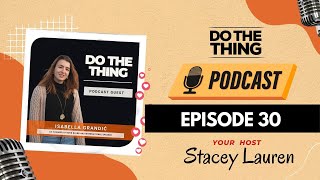
A Do the Thing podcast episode where host Stacey Lauren interviews Izzy Grandic about her background (Knowledge Society/TKS, maternal health research in Nigeria), her public speaking (including a 20,000-person event), and the origin, design, inclusivity, production challenges, and launch of Boob Blurb — a 133-question card game to start conversations about taboo women's health topics. The episode also includes practical conversation-facilitation advice and purchase info (boobblurb.com with promo code 'izzysfriend').
Chapters
I do really believe 100% from every part of me that everyone has the capacity to be able to do the things that they want and not to be held back by the mental baggage that's in our head that we want to push through.
Welcome to the do the Thing podcast. In each episode, we get down and personal with people who go after the things they want to make all their wildest dreams come true. Join us as we unveil and dissect a formula for what it takes to do the thing. Here is your host, Stacy Lauren.
Hey, everyone. Welcome to the do the Thing podcast. This is your host, Stacy Lauren. I have an amazingly inspiring guest in store for you today. She proves that age isn't a factor when setting out to follow your dreams and do the thing. We first met a few years ago when she was only 16 years old. She flew down to San Diego to help my good friend with her software business. We connected and she blew me away with everything she was able to accomplish at such a young age. She was the program success manager of the Knowledge Society and the director of a research project geared towards ending maternal mortality in Nigeria. She's even an experienced international public speaker. On this episode, we got the opportunity to talk about how she spoke in front of 20,000 people. Currently she's a college student in North Carolina and the co founder of Boob Blurb, a conversation starter for Taboo women's health topics. Today's interview is sure to blow your mind and open your eyes. Please welcome Izzy to the show. Hi, how are you? I am good. How are you?
Doing super well. So nice to hear your voice and see you again.
I know you too. I'm so, I'm so. I'm so excited. It's so funny when you know someone from, you know, a few years ago and then you get to see what you're doing now. And it's so related to when we had first met. It's to have the opportunity to get to talk to you more about what you're doing.
Thank you so much. I'm happy to be here. Good.
I'd love you to start off and just share a little bit about your story and your background.
Yeah. So right now I run a card company. It's called Boo Blurb. It's a women's health game about starting taboo conversations. But I really started getting interested in startups, getting interested in innovation a few years ago when I was 15 in the Toronto public school system, kind of. I felt like my education was halted and limited. So I spent a lot of time Looking outside, I found this cool program at the time called the Knowledge Society tks which is a STEM sort of class on the weekend. And I signed up for it. You get to interview to get in. And I loved it. I loved the program. I loved being exposed to things like AI and cellular agriculture. And eventually I got really grasped on this topic of creating new forms of foods that didn't come from animals. I started my own blog. I worked on different projects like editing bacteria in my basement. I eventually became sort of a public speaker, a youth based image in that space. I worked in in Amsterdam that following summer building the first alternative protein show in Europe. And then after that I got hired by the program, worked as a program success manager. And sort of along the way I did some maternal health and maternal mortality reduction policy in Nigeria. I led a research initiative there. And out of all of that sparked these two sort of sides. One was education. How much our own education about ourselves, our bodies and also what is possible in the world. Whether that is looking at blockchain, the future of ownership and NFTs and money, or for me it was looking at these new climate technologies or what women's health technologies in the sphere of maternal health. So I found education really fascinating. And then I was also transitioning to this idea or just the influence of being a woman in a male dominated industry, whether that was business or technology. I was kind of at this like intersection of it all. I was meeting some really amazing women like you, Stacy, like Christina, who you were talking about earlier, and just wonderful, wonderful people. And I thought I really love this idea of working in innovation and women's empowerment. And eventually that kind of morphed naturally into this idea of a conversation starter for taboo topics, topics that create that glass ceiling that we see in the world for women trying to get into executive positions. But also topics that keep women out of the workforce when they get pregnant or have children or you know, all these like societal things and also health based things that I can totally dive into it all later, but that's sort of where I am right now.
Yeah, and it's. I cannot wait to talk to you more about Boo blurb and everything that you're doing there because that is so exciting to me on so many levels. But I do want to, I do want to talk about before that first because you said so many unbelievable things in your background. So did it all start then with the knowledge society and that sort of stemmed everything else or were you already doing a lot of stuff from before?
I would say that before I was in the program. I had a lot of the mental tools. I was super ambitious. I could conceive an idea. I would conceive of an idea, and I would go for it wholeheartedly. I came up with all sorts of things ever since I was young, for ways to entertain or to give presents to my friends. And oftentimes they were just in the form of a surprise party. I loved just understanding who I was. You know, trying to build a birthday or whatever, some. Some surprise event for understanding what they would expect, and then making sure that I wouldn't do any of those things, and also building into their interests, like what they talked about, things that they really wanted to. I love just paying attention to what they. What they. What really drives them and what makes them passionate. Then I would just build events around that. So I'd say I had this principle of having a goal and understanding who that goal was, serving and creating things and experiences for that. But I think the environments that I was in didn't really help me take that to the next level. And I think TKS really helped me unlock a lot of these natural things, like my natural curiosity or my drive or my passion that I can find in things. So I would say that, yes, it was a really, really big, pivotal point for me, But I would say that a lot of the reasons why I was able to carve an interesting path for myself were sort of determined before that point.
Yeah. And where do you think that came from?
I think there's a lot of factors, but one of the biggest ones was my upbringing, especially growing up. And I grew up in a very diverse neighborhood. Both my parents came to Canada as immigrants, and I had a phenomenal public education. But also, having a phenomenal public education means that I was never, you know, I was in a classroom with 30 kids, like, cramped up in the summer kind of thing, and I had to explore a lot and be resourceful. My parents really did give me everything they could have, and I think I got to see a lot of their effort that they put in me. Even though maybe, you know, people that grew up with different, like, levels of financial stability and different levels of resource accessibility, I definitely didn't. I definitely saw what other people had, and I tried to be grateful for what I did have, and I also tried to maximize what I did. And so I think growing up with those sort of boundaries, I would, you know, get a $10 bill, and I would try to optimize it much more than another kid. And I remember because my brother played a lot of soccer so we spent a lot of our, you know, extra income and money and resources and time spending it in the US sort of Michigan, Ohio, kind of like right all bright by the border. And I found it like such a game to try to find the best deals for the price. You know, my mom would give me some money to go, you know, to the store or maybe to Starbucks or something and I would just save it and I want to save up. And so I think it's sort of this combination of seeing, you know, living in a first gen household, going to a lot of like public service education and I did a lot of like public camps and that kind of thing. But then also I had this mindset of trying to make the most of what I had and taking the resources and really extracting out of them.
Yeah, I love that like scrappy, resourceful kind of upbringing has really helped you with everything you're doing. It sounds like.
Totally.
Yeah, that's. That is so awesome. So. So what? Because I mean, I know when I had first met you, I remember like you had, you mentioned it in the beginning, but like even public school speaking, because you've spoken in front of. How many people have you spoken in front of Now?
I don't have the total number, but the highest I've ever spoken in front of I think was 20,000.
So.
Okay, I'm like.
How talk more about that because that is like, I don't even, I can't even comprehend that. What is that like for you?
Honestly, even looking back? For me, it's. It's sort of a fever dream. It's something that. It was such a formative part of my childhood, sort of. It was just kind of, it was a big transformation, I would say. And I think it shocked a lot of people around me, shocked a lot of people just to see someone go down such an unconceivable path. But basically I started a blog on Medium. It's still up, I still write on it sort of content has shifted and the frequency shifted and the style. But you know, I had a blog and I kind of set this online presence about being curious about how the future is going to be shaped. And I had opinions about it and so I wrote about them. And like no other 15 or 16 year old was really doing it to the frequency and extremity that I was. And it sort of started to get noticed. So I remember In March of 2019, I was invited to speak at a conference in British Columbia, Vancouver, British Columbia, across the country of Canada. I mean, it's basically the same distance from Toronto to Europe as it is from Toronto to Vancouver. And I worked in an illuminated job with the city of Toronto as a sort of lifeguard. I mean, not important, but anyway, I was like, this is so cool. Who knew that someone would want to hear what I had to say? You know, it kind of like I had childhood dreams of wanting to be an actress, but, you know, that sort of dwindled off for the time. Someone was like, you can't do that, blah, blah. And I was like, this is amazing. I want to spend my savings on this. Like I said, I didn't really spend my money. I didn't. My mom would give me so much money and that kind of thing. I would like, really try to stretch it all. And so I decided I was going to go to this conference in British Columbia, literally empty my bank account. I think I had maybe $15 left in there. And I was like, wow. I just like spent it all on housing and this expensive plane ticket. I think it was all like 800 bucks. Like, you know, that was my net worth at the time. And I went to this conference and I was just rejuvenated. I was talking to some wonderful people. One of. One of the people I met was Christina Houghton from PwC. She's just one of the most influential people on my life so far. She gave me so much advice. She gave me such a boat of confidence that I really hold like, close to my heart. And I got to speak in front of an audience for the first time. And people really resonated with my message of being this young, ambitious, sort of out of the box person. And I think that really set me up because, you know, now I had a tape, I had me speaking somewhere, I had people that I met, people that now connected me with people, and that sort of set the stage for tons and tons of other events that I would do. I think I've done over 30 speeches and events, some really spectacular ones, some really local and grassroots ones. So I've had some really cool public speaking experiences, some that have taken me internationally into other really interesting cities. And it's something that it's sort of shut down with COVID But it was a phenomenal part of my life and I definitely want to get back into it with a good message to share. And I'm sort of crafting that right now and seeing what the next level of depth to my opinions, what I want to share with the world is.
Yeah, I love that. So I think that had met Christina, you said her name is Christina Houghton.
Yeah.
Yeah. So that helped you. Whatever she did then helped you almost flex your muscle to get into public speaking, and then you're then continuing to do it. So it almost is like a natural thing for you now.
Yeah, I mean, I love the process of having a thesis, something you want to share. And oftentimes for me, it was either to do with alternative protein, so this, you know, different ways that we can produce meat or to produce dairy or, you know, those kind of animal products or even. I got interested in other forms of innovations there. And then eventually that shifted to maternal health and different policies and women's health. But it all kind of centered around this idea of knowing what it was that I wanted to share. And often that was just what the future looks like in my eyes, a positive, optimistic future. And then it was, well, what's the story that I want to tell this in? And I always like to start with something that is kind of interesting or provocative. And it's not about. Here's a graph. Like, let's talk about this graph. It is about what does this future do for people? What is the justice that it serves? And that whole crafting creative process is definitely something that makes my blood just flow. And it just. It's so. It warms me up. So, yeah, it's definitely been.
Do you remember what did she say to you that impacted you so much? Or how.
How that. How that happen? Yeah, so actually, I did the panel. So it was sort of a panel talk. And after that, we were invited to this mixer that PwC was hosting in this big tower in Vancouver. I remember walking in and talking to some, you know, other PwC executives and telling them what I was interested. I specifically remember this one person I talked to, and he was like, well, tell me, like, something, you know, what makes you, like, what makes you tick. Like, why. Why is this issue important to you? Because at the time, I was really passionate about sustainability. And I sort of told him about this time where I edited bacteria in my basement just because I wanted to see how CRISPR works and see because it's such a tool that can be used in agriculture and technology there. And he was like, you have to talk to this woman. Her name is Christina. She runs a lot of interesting healthcare and Biotech Innovations at PwC. And he sort of introduced me to her, and I think it was the way that she was so receptive to my passion. And I talk with a lot of passion, and I talk with a lot of smile and energy. And she kind of took that, bottled it, and Allowed me to really expand and explore, if that makes sense. It kind of felt like she was really respecting my energy. At the time I was 15. I don't know how many people could respect a 15 year old. One that was sort of just weirdly curious, kind of odd. And that conversation I had with her was wonderful. And I remember leaving and I was like, this is my favorite conversation I've had this week. And you know, it's made this $800 investment really worth it. But then it came a year, or was it a year? It was, yeah, almost. Almost a year. And a bit later, it was during COVID where I reached out to her again and I wanted to just catch up. And she was so quick to respond to my email, like, she's a very, very busy woman. She responded so quickly and she told me about different plans that she had. And it felt very intimate for her to share sort of new, premature ideas that she had for herself. And it was really amazing for me to see someone pursuing her passion. Even though she could have continued down a very strict sort of corporate setup trajectory, but she still had this wonderful personality. And she felt really, I felt really accepted with all the things that I wanted to do. And then at the time it was maternal health policy. So I don't know if it was something that she necessarily said, but more about how kind she was towards me and how I felt around her.
Yeah, that is. I'm so glad that you brought this up because it sounds like what she really did was she helped show you that your voice was heard even as.
A 15 year old.
And then you're like, oh, okay, wow. I actually can impact now, which then almost more validation to keep going forward.
Mm, totally.
Yeah.
Nail on the head. That's awesome.
Yeah, that's. That's really awesome. Okay, so what do you think? Gosh, there's so much in this that I'm like, it's like, I want a bottle. I want to bottle it up. What do you think? Like, where did. Where does that motivation. So the motivation comes from you being able to share your beliefs are. It sounds like, right. But like, where. Where do you think, where do you think that comes from, that just passion and the motivation that you have?
That is a phenomenal question because ever since I can remember, I've always been abnormally loud, I would say, or opinionated. But I think I still have a respectful approach. I like to share, but I also like to listen. I like to tell stories, but I also like to hear stories. And where exactly that comes from. I'M not sure. It might come from the fact that I'm the first born of a first gen, a first gen family where English was my first language, but not necessarily my parents or wasn't my parents. So I felt like I had almost this responsibility of being a voice in certain scenarios. And I almost had this extra confidence because I wanted to help. I wanted to sort of be this like translation person for them. And I think that training of being the person to break the ice, being the person to ask for help, maybe when we're in a grocery store or when we are trying to do something with other people, like, I love coordinating, I love organizing. And I think that being that, like, firstborn child in this immigrant family really shaped me in that way. But where that passion exactly came from, I think part of it stems from these moments I had in grade schools, particularly around grade six, grade seven, where I was exposed to science. And at that point I had never really thought about science, something I was interested in. I was really good at math. I wasn't as good as English at English and writing, which is funny because now I love writing. Excuse me, I love writing. And it's something that like, really makes me excited. And storytelling. But anyway, not the point. In grade six, seven, I had this wonderful science teacher who's originally from the uk and she was sort of this wonderful woman who just talked so passionately about science. And it was this combination, I think, of having a great educator, but also the subject in front of me that all of a sudden started to explain the way the world worked. And for some reason it just hit me at the right time and I did this. She introduced me to things, specifically the science competition that we did together, me and this other group of three women or three girls at the time. And I don't know, I think it was just this combination. And I was sort of outspoken. And then I found something that really made me passionate. And then I started being passionate about this thing. And then I think I got a lot of positive reinforcement. And it might have been that people found it really entertaining. I think my parents found it really amusing that I was so excited about these things. I think they would rather me want to talk about science and study and do that kind of thing rather than, you know, there's other things that kids can do that are much worse. So I think I got that positive reinforcement. And by the time, you know, that was when I was 12, 13, by the time I was 15, I started to really find something that was sort of unconventional and it wasn't in the textbooks that even people in high school got to learn. It wasn't even the textbook that people in university got to learn. This is like innovative curriculum that I was trying to self teach myself. And part of the reason I took a gap year from high school, I did a whole year self taught. And I think that I just got really good reinforcement. I think I got really lucky with people supporting my education in this sort of strained way that I wanted to approach it.
Yeah. And it sounds like you were also the voice for your parents. And then you're constantly being put into these new environments and new situations that you're having to problem solve. And so that consistent reinforcement of having to like I keep using the word muscle. Sorry. But that's kind of what it is, right? Of just keep doing these things. You know, it's. It's built in you now where it's just. It's more natural.
Is that.
Do you think that's sounds right?
That does sound right. And I think it brings about. Because I have always liked to be a voice for other people too. Maybe it's that I have a lower activation energy to speak or to speak up for someone. But I know like ever since I was a kid, I would see someone shy or someone that maybe there's something that hinders them from wanting to engage or fear or something. And I always like to be the person to include them. And this is so true. I love including people and I. And I really get upset when other people exclude people and don't allow everyone a seat at the table. So to say. So I think that all kind of stems from a similar spot.
Yeah. And not to get sidetracked, but I want to ask you about that too because I think that's really amazing. Having people feel included versus excluded. What do you normally do to make them feel included?
I am by no means an expert, but one strategy that I love to do is kind of pausing the conversation. And there's often voices and my voice is one of them that can be loud and articulate. And it's easy for me to add something to the conversation. But I like to pause and ask people who maybe don't want to interrupt or don't. You know, sometimes it can become this race in a conversation, like getting in the queue to speak next or having different hand signals or sort of like starting to speak. You know, like there's different cues in a conversation. I think some people are less comfortable with those sort of brash, quick introductions and ways to get in. And sometimes I'll Just like, be that person to. It'll be like, I'm about to say something, but instead of me talking, I'll be like, hey, can we, like, bring in this person's perspective? Or in school, it would look like including someone at my lunch table or being someone to say hey, like, you know, kind of being the first person to say hi and being the first person to ask about their day. I think that's been the most important way that I've contributed. But there's definitely ways that I could be significantly better, more cognizant, understand how I contribute to this dynamic of creating a dichotomy between people and something that I really want to get better at. But it's also something that I've emphasized a lot in my life philosophy. Yeah, that's.
That's incredible. I love that. I think that's so. Yeah, it's so huge. So it also sounds like.
And I don't know if it's that.
You'Re not afraid to take risks, but when you were speaking out, especially on your blogs and you're doing these new concepts and sharing your ideas, in a way, it is like, that's a risk, right? Anytime you're putting yourself out there, what was was that like? Like, was that any kind of fear around that? Or how did you go ahead and how did you feel comfortable enough to just. To do that?
That's a great question. I'm not sure if my amygdala is just smaller than average. I'm not sure. Like, there's definitely things that I fear. So it's not that I don't experience fear, but for some reason, writing something on the Internet was not very fearful to me. And maybe it was because I didn't think that anyone would read it, and I didn't really. The platform that I started writing on Medium was. It was just kind of. It was. I didn't know anyone that else that wrote on it really in my friend circle or in my life circle. So when my mentor introduced it to me, so a mentor from the knowledge side of TCAs, that was the program that was like, hey, you should just do this writing. And I really respected both of the directors of the program, and I still do. They came from such interesting backgrounds. The first time I really had an educator, a teacher that really inspired me. My science teachers have been really interesting and in some ways inspiring, but they were inspiring in the way that I wanted to emulate their life philosophy and their career paths in a way that a teacher has never done beyond the subject scope if that makes sense. And so these, the two directors of tcast, one was a founder that recently exited to a big company and the other one was a McKinsey consultant. They were giving me this advice. They were like, yeah, you should just like write about what you're learning. You're reading these research papers, like, put it into context and write about it. You might as well give it a shot. And I really liked writing. I like taking notes. And so I thought, you know, what do I have to lose? I'm just going to. It's like I'm writing like super provocative or political or I'm putting like bad things on the Internet. Like I'm just writing what I think about different research papers or trying to simplify scientific language. And I just, I don't know, I didn't really have a fear associated with it. The only fear that I could like logically put into play was the fear of losing time or not being able to manage things. But I found school wasn't too difficult for me. It might have been like my, my public school, it wasn't super rigorous or anything like that. So I just kind of did it. Got good advice and I'm so glad I followed it.
Yeah, I love that. That's so awesome. So cool. Okay, now it's time for us to get into Boob blurb. Yay. So, so excited. When I saw your post about what you were doing for so many reasons. So first, why don't you go. I know you gave high level of what it is, but let's go more a little bit deeper in terms of why you started. I mean, you mentioned earlier in terms of innovation and empowerment and the lens that you had for women and things like that. But just get more into depth in terms of why you started and how's it going and all the good stuff.
Awesome. Boob blurb is a conversation starter. There are 133 questions in the game and some of them are very specific. It's about a scenario, it's about a specific topic, it's about your experience. Like if you could interview an organ in your body, what would you interview and what would you ask it? That's a really weird way of talking about what parts of your body you want to understand more. But that is the goal of that question. So there's a lot of those questions. There's a lot of topics that when you draw that card, it's about creating a space for it. Whether that is sex, whether that is birth control, whether that is abortion, like creating that space and to me, it became really important to do that when back in 2020, during the start of the pandemic, I started reading this book. It was called in the Flow. It was all about understanding your hormonal pattern and sort of the natural mechanisms of your body and how that contributes to menstrual cycles. I just became a fascinating. I turned my bathroom into my own little personal self awareness laboratory where I would analyze like different parts of myself, like my body fluid, or I tried to do different tests to measure my hormones sort of at home. Tests like ovulation stress, which most people used to get pregnant. But I was literally just using to turn my body into a little science experiment on my own on my spreadsheets. It was, it was sort of an interesting phase of mine where I was really reading a lot and I was trying to understand my mental cycle. And I wanted to give that to other people. I wanted to give people the gift of awareness. So I started this group where I nailed up some of these tactics that I was learning and also sent them that book I really liked, or different things, like a diva cup, which I now, like, have learned to grow and love. And we would go on to, you know, I would send them these boxes and then we get on the phone and people would start talking about the boxes and things that I sent. But all of a sudden we'd go from talking about diva cups to talking about things far away from diva cups, but still in this realm of wow, like I wish we had more space to talk about, for instance, consent, or talking about our periods. We started just, you know, one small thing like talking about this taboo form of menstrual management sparked this broader conversation. All of a sudden, these zoom calls that were scheduled for 20, 30 minutes were going on for three, four hours. And I thought, there's something really, there's something really important here. There's something that I missed out during my childhood and also right now, something that I'm missing at the moment, which is having these genuine conversations. And yes, I'm having some of them. I'm the one that's missing. But I still feel like there's not enough in my life. And that's where I became really hyper focused on expanding where these conversations could happen and ensuring that they do. And that is what Googler is to me. It is a tool to let other people experience what I experienced. Talking to tens and hundreds at this point of amazing, amazing people. People who have stories, whether they are a woman or not or somewhere on the gender spectrum, or they're people that have surrounded by amazing women or females or whatever, everyone has a story, and everyone has an important story to share about taboo topics, topics that we've shoved under. And so that's a little bit of that background and that motivation behind the game. But I'll pause there if you want me to dig into a specific piece or you think I missed something?
Yeah. Well, first I just wanted to say I love what you're doing.
Thank you.
It's so funny because when I first saw what you were doing and when I saw the post, I was like, oh, my gosh. And then I had this flashback to when you were in San Diego visiting and we were taking that ride with the Uber. And I remember, and this wasn't a taboo topic, but it was conversation starters. You had this list of questions that, that you had with you, and then you were asking the Uber driver these questions. And I still remember this guy was like, practically crying with happiness because you opening him up to like, levels that he hadn't ever really even considered, you know, in terms of his future. And you got him to just spin up, I mean, you know, and really kind of look at. Anyway, it was an amazing experience. And it was just when I. When I realized that was what you were doing, I'm like, oh, my gosh, this is like, so perfect. I was wondering, is that. Was that. Because that's something you had had back then. Is that something you sort of kept up? Is that part of what this was, is seeing how easy it was to connect with someone when you have a conversation starter to get past a superficial level?
Yes. And, you know, it's funny now that I remember it. So this was. I was in San Diego about a month and a bit after I discovered or really started discovering a game called We're Not Really Strangers, which is a conversation starter for relationships. Whether that's friendships or romantic relationships, it's all about asking questions that kind of go beyond the surface. I got the game and I really, really enjoyed it. I played it with a lot of people. I found it really effective in deepening my relationships with people. So when I was in. In San Diego, on the beach in La Jolla, for some reason I felt really excited about this idea of creating conversation starter, and I started thinking of more questions. I'd run through the game a few times, so I kind of knew every single card. And I thought there was something still surface level about it. It was sort of a safe way to start conversations. And I wanted to create a list of my own. And I still have this list and I still use this list, but it actually originated sitting on the, on the pier in San Diego and riding by the ocean. I just kind of like let my brain go. And I wrote, I think it was about 100 questions in like a span of 15 minutes. And I was like, wow, I really have a weird way of framing things and talking about things. And you know, sometimes I want to know about people's passion, but instead of asking, hey, like, what's your passion? I find a weird way to do it. Or maybe talking about, for example, in that sort of theme, what is the last thing that you got lost and thought about? I think it's a. I don't know. I just, I like framing the world in that way. So it's really funny and great to reflect on thinking of how actually formative that trip to San Diego was. And I totally forgot about the Uber driver thing. And then you mentioned it in the email. I was like, oh my gosh. Yeah, I remember that conversation. I remember feeling really, really happy with it and how quickly a 20 minute drive can turn into someone sharing such intimate, vulnerable, but empowering details about their life story. And I think a lot of that has been foundational subconsciously to this work that I'm trying to create and this trajectory that I'm trying to build in the sphere of women's health, disadvantaged groups, minorities, all of that kind of thing. And it's just really exciting and it's really, really cool to remember. And it's very nostalgic.
Yeah, it's unbelievable. When I was remembering that drive and then I realized what you were doing and I'm like, oh my gosh, this is so perfect. And then, since then, I did get kind of, I'm really into conversation starter cards. I got these like dating cards and my boyfriend and I do them and it's, it's kind of a great way for us to be able to just, you know, open those conversations and go deeper, you know. And then even since then, when I meet up with friends at parties and stuff, we'll sometimes create our own questions. And so I do agree, like, they create the safe space. And so that's what I love about food blurb is because you're basically creating that space, but also talking about things that people aren't used to talking about. Actually just had a erotic blueprint coach on with me. Like I think she was two weeks ago. And it was funny because I'm 49 and I'm like sitting there going, okay, I'm so uncomfortable. This, like sex conversation with you and talking about these things. But I love the fact that you're so young and you're starting it now because so many people don't. Don't talk enough about. About these topics. And I love that you're giving them kind of like a framework or a blueprint to be able to have those conversations now.
Thank you. I really appreciate it. I think one of the most important things is vocabulary and letting topics become more embedded in everyday language or at least awareness. So things like an iud. Not a lot of people know what an IUD is. And in my experience, when we played Boobler or I'll just ramble on about women's health and different forms of birth control, and people will be really surprised that, you know, I'm mentioning things like in vitro fertilization, IUDs, talking about estrogen and progesterone. And so part of the other reason why building a game that's sort of more specific than I found other conversation starters and focusing in on these topics is because a lot of stories can emerge from just saying a single word. And maybe that's even that you don't know what this word or this thing means, but it sounds scientific. And maybe talk about how that word just sounds weird or how it's foreign. And yet when you. Maybe it sparks someone to do a Google search, and that Google search sparks them to talk to someone, or they bring it up in a conversation later. And so a lot of it, to me, is planting the seeds for future conversations as well, because each conversation you have that is difficult or that is awkward makes the next one easier. And I remember recently I heard a quote and it was something like, the more difficult conversations you have in your life, the higher quality your life is. And I thought that was really interesting. I really amazing. Because I found that I've gotten better and better having open and honest discussions, whether it's related to my body or other sensitive topics or even if it's just bringing up my feelings or a past experience with someone that's really intimate or close to me. And so I totally love that quote and love this idea of setting a foundation for people.
Yeah. And it's funny, I have this card sitting. I don't even know when I wrote this, but I have this, like, index card that's handwritten with my writing on it. And it says, having hard conversations. And it just says, practice communicating when it's easy, so that when it's hard, you'll be able to. I feel like this really helps you practice you know, like going deeper and being able to talk about topics that don't normally talk about. So it's really, It's.
I think it's.
It's such a great. It's such a great concept.
Thank you.
So what do you think has been. Like, how has it been going? When did you. When did you start? And what's. What's it looking like for you in terms of, like, how did you get over the fact that you were starting this business and, you know, all that stuff in terms of doing the thing, you know, with doing this business?
Honestly, a lot of it sort of rolled naturally, if that makes sense. So essentially, in 2020, February, March ish of 2020, I started a research project in maternal health. And the primary question was, how do we reduce maternal mortality? And let me down a really, really descriptive and probably, you know, it's. It's a lot. It's a lot of details, but basically I worked on reducing bleeding after birth using a specific medication in a targeted geography. And we spent two years putting that together, putting out research, and eventually we donated all of our materials to a local nonprofit in the government in Jigawa, Nigeria. During that time, I was exposed to A, a lot of doctors, B, a lot of women, see a lot of pregnant people, D, a lot of really passionate feminists. And along that way, I had like hundreds of conversations and interviews to sort of build this research project. But then I started talking to people about this research project that I was doing. That's what part of, you know, part of part of that open discussions. And another part of it was that other thing I was talking about with building self awareness, sending my friends these little knickknacks, taboo knickknacks, and having those conversations. Basically, one day I was sitting in my bedroom. I was two months before leaving for college for school in the US And I thought, I think there's something I want to do about starting conversations. I love building this maternal health curriculum, and I love having these combos. So I was thinking, and eventually for some reason I was like, let me just think of a name for this. Like, what would be something fun? And I spent a few hours really just on my thesaurus trying to find different ways to embody what I was looking for. And that's how booblerb came to be that name. The name is really how I started. And I think it was. I don't remember some of the other ones that I had. I know they were weird and funky, but boob blurb really stood out to me. A, for the obliteration B for the way that the sounds work. They were like very, very strong. I went ahead and bought the domain. I was kind of doing like a really backwards process in that I was sort of focused on the name and the like the sort of grab factor of it. And then I made a little website where people could Download these prompts. 27 thought provoking prompts, what I called it. I shared it with my Twitter. I shared it on a few of the group chats that I was in. And all of a sudden a few people started messaging me saying, wow, I loved those questions. I had a really profound conversation with my mom or my sister or my best friend or myself. I had an amazing journaling session. People were starting to say these kind of things. And I thought maybe there's something here that I had the opportunity to create. And that's where I really got thinking. This is now May 2021 to last about literally like a year ago. And that's when I started to go in my little phase of, well, what can I turn this into? What do I want this to become? And I kind of decided that I want it to be a physical thing because we were at this phase of the pandemic where everyone was zoom fatigued and it was really hard to host these online events. And I wanted something that was tangible, that I could hold in my hands. So I decided, I'm going to make a card game. I'm going to do it. I'm going to do it from scratch, finish. I thought it would take two or three months. I thought, how hard could it be to make a card game? Turns out it takes much longer than that and it is much a much larger investment. But I reached out to a YouTuber that I liked because I thought, I'll make the product and then we can do some distribution using a YouTube platform that I really enjoy. And I watched a lot of videos that had these conversations. So I reached out to Haley Sunny. She's my top pick. I really loved her YouTube channel. I've watched it for years. And I especially loved her women's health topics and her. She called it TMI girl talk. Sort of like a big sister conversation that a lot of us, I mean, I am the big sister, you know, I never got to have those, those conversations. I reached out to her and all of a sudden she started getting back to me and I was like, wow, like she's so busy, you know, she believes something. He is here. And we start to have these conversations and all of a sudden we started to move forward, we started to find a supplier. And I built a lot of designs, spent so many hours obsessing over exactly what hex coat of blue I wanted to do for this game. I wanted to do blue because it was the opposite of pink. And I wanted him to be strong, and I wanted him to be a little quirky. I spent hours on Pinterest, and it was a lot of just following my gut, following what I wanted this brand to look like, what I wanted these cards to say. And honestly, making a question was the easiest part. And making funky challenges was kind of like second nature, because like you said earlier, when I was having these conversations, and I kind of have this natural intuition for that kind of thing. And then I was just putting it on paper, and we spent a lot of months building it, working with the supplier. We got some samples shipped to us. I would review those samples, and I would start to nitpick. Then it was all about the details about the material of the box and do I like the way these cards bend and sit in my hands and what do I think about the way that the font rests on the material? And so I just became super critical of everything that I just worked on building. And I spent hours and hours adjusting it. Even it was just a little bit of a pixel on the measurements of these cards. I spent hours just looking at them, making sure that what we got was something I was proud of, something that I built and wanted to share with the world. And, you know, there was other challenges. Our factory had a fire, which set us back a few months. We had issues with some of the materials, and there was like a Covid issue with the factory being closed and boats and shipping and all sorts of stuff. And eventually we got all the products in the warehouse, and we had. We ordered customers some tissue paper. We ordered a couple other things, and then I was ready. And this was a few weeks ago that all of a sudden I was like, wow, it's all coming together in this last sort of random week in April. Let me put together, finalize the website, make it good to go, make it so that people can order it. And all of a sudden, blueblur was out in the world. Haley posted a video on her YouTube channel answering some of the questions. We have a digital pack which is free with 10 questions. Then we have the conversation starter card game, which I was really worried that I wasn't going to deliver people with value value of, you know, for what they're paying for. But what I realized, I played the game over 100 times with so many different people. And I have never gone through even 10% of the deck in one game. And what that tells me is that these cards have topics and questions that are so rich and create such powerful stories that it's hard to move on from a card. So I think that buying the game, you really could have like a lifetime of conversations. And I'm really excited to get this in people's arms and hands and in their conversations rooms, at the dinner tables, in their schools, in their dorm rooms. So that's sort of been the journey. I just gave you a lot of information. I'll stop there. I could go on.
But yeah, I think it's amazing because I don't think people realize, you know, when you were talking about how critical you were of everything between the color and the way it felt and what's on there, and just so many things that you said on there, it just shows the passion that you've had behind it.
Thank you.
How did you not get, with all of that? How did you not get so stuck in that analysis? Paralysis. How were you able to keep moving forward through. Through all of that?
Wow, what a. What a heavy hitting question. Because there's definitely points where I thought, this is going really slow, or why do we keep. Why did the factory have to go on fire? You know, like, what? That's such a weird thing to happen and so random. But I think ultimately I had a prototype and it wasn't perfect by any means. It. I changed almost every aspect. I changed something about it, whether it was like the color of the box or under the lid, the dimensions. I changed so much of this prototype, but it was still functioning prototype where I could play boobler with other people. And I think it was the games that I played before the game was out that kept me motivated because I knew there was something there and I knew that these are conversations that were worth having. And the way I craft my social media and what I see, it's all very indicative of the fact that topics are too stigmatized, things are too taboo, and these stigmas, these taboos stop amazing companies, amazing product innovations from getting to the market. So I would read things about venture capitalists wanting to invest in, like, say, femtech or invest in new innovative birth controls or something like that. And then always at some point in these articles or in these analysis, they would write, but it's. It's hard to bring these products to market because menopause is stigmatized or sexual health for people in their 30s is stigmatized, or women or girls just getting into their periods is stigmatized, and so how could we give them a new cool period panty or whatever it is? And I thought that there's like a fundamental cultural hindrance that's happening from these products that I'm reading about and I'm really, really excited about. Like, there's, you know, smart tech tampons that are really cool next gen Jane, and different things. And so these two sort of sides to myself. One, of the content that I was consuming, innovation I was excited about. And then also seeing this cultural barrier, and then two, having a working prototype that I would play and I would get really genuine compliments and also amazing super critical and helpful feedback on it just excited me. And even when I had moments of, wow, I'm getting lost in the details, or there was one time where I got a sample and I opened it and I cried because so much was wrong with it in my eyes. But I had someone there with me and they were like, wow, this is so cool. What are you even talking about? I don't see any of these flaws that you're seeing. And then it helped me calm down to have other people look at it and take me out of those weeds and play the game with me, share their amazing and vulnerable stories for me to realize there's something here and it will never be perfect. I will always be the biggest critic of this product, and I will always have the most anxiety or worries about it not being as good as it could be. But I think it's just a process of improvement and knowing that I have games and I bought them and people can buy them right now on the website. And when I sell out, I can also create a new version of it. I can iterate. I can take people's feedback. And I think I'm just not. I'm not afraid anymore of being receptive to those responses and making something that's even better than what I have right now.
Yeah, so that. That was a really great way to explain because I think I got a lot of pieces of your formula, your do the thing formula through that. So the first one was that compelling vision, you know, of why you wanted to put this out in the world. And then it sounds like you really had the right people around you because it would have been easy for you to get some sucked dry, you know, if you had people next to you saying, why do you want to sell those anyway? Or want them, you know, like, it's like you really had, like, people around you that were supporting and encouraging and that Is a piece of the formula is surrounding yourself with like minded people. And then the fact that you were still playing the game, you know, got you to be really invested with what the product was going to be able to do also. So what do you think was the thing that got your like kept you like the mindset? You mentioned anxiety and a couple other things. Like what helped. You did mention the part of okay, this isn't permanent. So maybe that was a thing is realizing, you know, that it's not like this is like the end all be all, you can make adjustments. So it sounds like that helped you. Is there anything else that you think helped overcome that? Those feelings?
Yeah. So one of my biggest fears sort of delve into that anxiousness was creating something that wasn't inclusive, creating something where people felt that my product actually wasn't contributing to the justice of people or to creating a healthcare system that favored everyone and improved health outcomes. Because when you look at it, the reality is that every single disease, women are diagnosed later. So for cancers, I believe it's on average four years later. The stage at which you get diagnosed with cancer really does contribute to your survival rate. And there's tons and tons of other examples. I did a presentation on that and it's on the Internet somewhere and I can definitely share that link. But I think when it came to all that, I really didn't want to create something that actually furthered this divide, this gender divide, and just excluded people like trans women or excluded people of different genders. So it became really important to me to make sure my language was really inclusive. And I think because language is a raw material, it is something that is ever evolving and it's hard to have it perfect. When I started this product in May of 2021, language has still changed so much and I've had to adjust it a lot. And something that really helped was I exposed the game to different people. People of different sexualities, people of different genders, people of different life experiences and backgrounds, financial backgrounds, different geographical backgrounds. And what I realized was that each card of my game was not going to be all encompassing. Each card of my game, everyone is not going to relate to at an individual level. But as I played with people, I realized that each card can still open up a door for someone, even, let's say the card. There's one card that is. Have you ever stuck your fingers in your vagina? Of course, if you don't have a vagina, you could have never had that experience. But does that teach? Does that remind you of Something else. Does it remind you of a movie that you watched that talked about vaginas and stigmatization? Or does maybe you talk about how that question makes you feel? Or maybe you can replace it for whatever genitals you have or try to flip those experiences. And I realized that while each card doesn't have to. While each card might not represent everyone's experience, there is a card, multiple cards, more than half the cards in the game, that people can respond to. And that, to me, became really important because all of a sudden, my anxiety or my fear that I had of actually doing something that was the antithesis of what I intended and the vision that I had, I realized that it was possible. I was kind of. I. I didn't have to have as much of a fear that I did have a fear of sort of being wrong in this way. And I think cancel culture. I think the political polarization that we have in the world on social media specifically, I think it all played to that fear. And I think having people around me, that helped me realize, oh, my gosh, it's not. It's not as. It's not as scary as I thought it would be, or it's not as worrisome as I thought it would be. I think that helped. And then ultimately, I am one of the customers of my game. Like, this is something. If someone else had built it, I would have hopped on that bandwagon so quickly. And also that I was surrounded by customers. Customer. I don't love that word. I think that they're just sort of friends or supporters or whatever. I don't know what word to use exactly. I don't like the word users either. But anyway, the fact that I was surrounded by people who were inspired by this product, who wanted to support this product of all sorts of ages, I think that's another thing. I didn't want it just to be for young age. I wanted it to be for anyone. There's cards for anyone. I think that really helped, and it grounded me in why I was building and that it truly was important and that it was wanted in the world.
Yeah, that's.
I might have digressed, but that's exactly.
What I wanted to hear. Yeah. So good. Yeah. I think it shows everyone, you know, just how when you're invested in what you're doing, how that actually helps you through the motivation of when things aren't going perfectly, you know?
Yeah.
So what do you think has been the absolute hardest thing for you?
Oh, there's been a. There's been a few that have been really hard. I think one has been. Okay. One of the ones that comes to mind is I didn't realize how hard sales were and how hard it is to convert and track and build marketing funnels. I had done some marketing work in my previous job as a program success manager at tks. I built a lot of our search ads, I built a lot of our analytics infrastructure for marketing. But I was never the person that was solely responsible for the marketing of the program. I did a lot of tasks here and there and I did a lot of our program success. I'm a product person through and through. I love having a design for something and I think that stepping into something else like sales, it's been like the hardest exam of my life. And it's funny because I launched Bubler right around the times that I had my exams and I was studying for chemistry and I took a. I had a language exam and that and all sorts of stuff. And I thought this is a piece of cake compared to the ambiguity of the real world trying to sell a vision and knowing what words to use or knowing that it's hard to exactly ab test something or to create a message that resonates with specific people and people of different backgrounds, but that could all benefit from the same product. So it really felt like such a difficult exam in a really motivating way. But it's. It's certainly been hard, but it hasn't been. It hasn't drowned me by any means, if that makes sense. I can elaborate, but that's sort of the first thing that comes to mind. I totally think about other things that have been really difficult and there's been. There's some mods.
Yeah. Yeah. I'm just wondering what the best way that you were able to push forward through that.
I think the people like you mentioned earlier, I've been around such support, supported people. Part of it is that they are people that want the game. And so I'm directly supported by the people who purchase the game and share it with their friends and tell me a story. To me, that is the most heartfelt thing. That is the biggest gift that I've ever received. Just someone buying something that I created because I think it has value and then them experiencing that and reciprocating what exactly about it was valuable. It's just the kindest thing. And it's not like I was hunting from kindness from building this game, but I've been approached with kindness and it's just created this loop of purpose for me. So even when I Hit a hard day or when I feel overwhelmed. And I'm just entering this new world of adulting. I just finished my first year of university. I just moved to Minneapolis. I'm doing a new internship project here. There's a lot that's going on, and yet I feel grounded still because there are people that have enjoyed the things that I've created in the world.
Well, yeah, I'm just thinking, like, on top of everything that you said, of what you're giving people, it's like by talking about their bodies and all the various things that are on these cards, you're opening up these conversations and actually people are through without even. I don't know if it's intentional or whatever, but they're going to start loving their bodies, you know, where so many people, you know, because they're not thinking about it or looking or whatever, but it's like you're actually opening up that door for them to love themselves.
Yeah. Nail on the head. Totally.
I love it. Okay, so you have one piece of advice for the listeners on doing the thing. What do you. What would you say? It would be your best piece of advice?
I would say to start with something tangible and really commit to it. So in my instance, it was buying the domain boob blurb.com and just having a tangible goal. A tangible goal was I want a website out and I want people to be able to download these 27, you know, arbitrary amount of questions. I want them to download it and I want to see how it goes. And I think when you start with something tangible in an experimental sense of. Look, I'm not trying to. When I started, I was like, I want to complete, completely rewrite the rhetoric of how we talk about our bodies and sex and puberty. It was. I want people to download from booblord.com, 27 interesting questions. They can have a cool conversation at a coffee shop, at the dinner table with their best friend, with theirselves, with themselves in a notebook. And that was really the spiral of how I've ended up here. And I hope that things only go upwards and I can only inspire more people and create more value for the world. But, yeah, I would. I would definitely start with that tangible, small, small first step.
Yeah, I love that.
That's great.
And is there anything that I didn't ask you that you wish I asked you?
Ooh. I mean, I was just thinking as I was. I sort of sat in silence for a little bit. I wish we talked a little bit more about having good conversations and some of the principles that I have, because I think silence is a really big part of that. Being not being afraid to sit in a second of silence. Maybe that. I could totally talk about it if you want.
Oh, please. I would love it more than you know.
Okay, let's talk about it. Having good conversations I think the number one thing that I've learned from running Boob Blurb is that when people ask me whether it's in a lot of the critical sort of questions I have, I get is, what are you doing to make the game inclusive? What do you do? What do you say to someone who maybe doesn't relate to a card? I think the number one thing I've realized in reflecting on those questions and also playing with people who might not relate to every single card is that people tend to dismiss it. They say, oh, I can't relate to that, or I don't have a good answer to that. But I think another really important part to playing Boo Blurb is listening to if you can't relate to that card, you will still get value from listening to someone. If anything, I get way more value playing the game with listening than talking. And sure, I can give a lot of value by talking and sharing my story and being vulnerable. But I think one of the big things with I run a conversation starter. I sell people ways to start conversations. But I've learned that it's even more important to realize that maybe you starting that conversation doesn't mean that you have to talk the whole time or that you have to be the primary sharer. Sometimes it's about giving other people that space. It is basically a mechanism to create a spot for something to form and to happen. And to do that, you need silence, you need awkwardness, you need a little bit of sort of sometimes it's attention that really helps flourish a conversation. So maybe it's you share an opinion that someone doesn't agree with, but then instead of arguing about it, you understand where they're coming from and how that influences their opinion. Then you can share where you're coming from. And all of a sudden, instead of tackling attention and making it tensor, you're instead creating some slack and understanding where both people are coming from and trying to live in a reality that's not so black and white. So I think that's the first thing. Having great intentions to listen and realizing that when you have a conversation start like boobler, it's not only about can you talk about things? It's can you listen about things and can you create that vulnerability and space in your head. And the second part is silence. How important it is to pause and to think. And instead of just saying, sometimes it's great to say what's on your mind sometimes. That's some of the points of the question. Some of them are just some of the cards are about what's the first thing that comes to mind. Like what is the first word that you would describe your butt with? You know, like it's kind of a weird thing. But what is the first thing that comes to mind? Or what happened to this point in the conversation? What is the sentence or story that you can come up with? And that's the intention of some cards, like really evoking a spontaneous response. But a lot of the other cards are broader or they're more ambitious, I would say, in their scope. And it's important to also take a second back. And then I say the last principle that I like to play games like Boobler with or even when I'm trying to facilitate a discussion is trying to ask follow up questions and really trying to ask it to people who maybe need that push or that guidance to explore. And I'll give an example. I was playing the game the other day with a friend and she was sort of describing this experience, this eating experience that she had and weight loss experience and how she's trying to revert from that. And I asked a follow up question that I think was really meaningful in sharing something vulnerable, but not in an intimidating way. And I think it's really important to acknowledge that we all have the power to help help others get more empathy and also to help others find a space that is safe to share something. Sometimes it's just getting a thing off your chest and getting advice or whatever it is. I think question asking is really, really powerful and it should be the default response rather than just saying oh yeah, that was cool what you said, or oh, I had a really similar experience and elaborating on that. I think the tool of asking follow up questions and including people's voices, especially if they haven't been heard, I think it's all very spectacular. So that's what I would sort of start talking about and start giving advice on conversations and running a game in a taboo setting like Boob Blurb allows.
Yeah, like what would be. Do you mind sharing just some examples of good follow up questions?
I think the number one feature of a good follow up question is it often takes a detail of what was said and it elaborates on that. So for instance, let's say someone is staring about the first time they put in a tampon, and they talk about calling their mom, and they kind of like, brush over that detail of calling their mom. One thing that I might ask is, could you talk more about your mom's reaction? Like, how did. How did she react? And how did that make you feel? Because then you're diving into an element of the story that maybe that person. No one's ever asked that specific thing, and maybe that person has never reflected on it, but then they realized, wow, like, my mom was really anxious or was really upset with me for doing this thing, because maybe she holds certain beliefs about this product or beliefs about womanhood or beliefs about identity. And then realizing how that in other ways has influenced someone. And so I think asking that question of, oh, how did your mom react? Kind of like flipping the way that things are normally approached, I think is really helpful in that, taking the perspective other than your own. Because as humans, it's very easy for us to stick to our ego and experience life the way we see it. But when you ask questions that relate to something else that's not directly in your worldview, or maybe a detail that's really easy to gloss over, I think it gives the other person, the person telling the story or the person sharing the experience, it gives them something interesting to meditate on, and it gives them a new lens in which to view their experience and to analyze their experience and to even frame future experiences or conversations. So I would say that would be my piece of advice. The detail, especially if it's of a different lens or perspective, you could even ask, what do you think it feels like to be a tampon? I mean, it's kind of out there, and it's kind of, like, very personified, But I think it's something that still would, say, spark discussion and super imaginative, too. Yeah.
And do you also. Do you have suggestions on helping somebody listen better, Especially when they know they're going to be interacting also, you know, and answering questions?
So when I think of that, I think about this experience that I had when I was visiting my high school over my gap year. And I promise I'll come back to listening in a second. But I was visiting my high school, my gap year, and I was 16, working this amazing job. I was really, really happy, living very unconventionally. I think I had just come back from. After San Diego, I went to San Francisco, and I just come back from that trip. I went to visit my old drama teacher. He was one of the most influential people in my life. It was the first time I ever did comedy, and I was awful at it. I'm still bad at comedy. But he really got me outside of my comfort zone in school, which was very uncommon because I kind of felt very in my comfort zone in the classroom, especially traditionally, with, like, a textbook and studying for tests. So I came up to him, and he acknowledged how different I was, how outspoken and how unconventional my path was, and how he felt a lot of pride in that because he knew that I had kind of had this spark. And he taught me when I was 14. I was 16, so it was two years later. But he also sat and he said, look, I'm retiring soon. I want to be a coach for people. I want to be a leadership coach, and I want to give you some advice. Would you want to take it? I was like, yes, I would love to take it. And he said, I remember this when you were. When you were in my drama class, because you are good at speaking. You often listen to speak rather than listen to hear. You're getting better, but you're not there yet. And I remember taking that, and I thought, wow, this is one of the most valuable gifts someone has ever given me, which is this simple mantra, which is to listen to hear, not listen to speak. And I'm not sure exactly why that was so influential, because I definitely been given the feedback and the advice to try to listen more, to lower down my voice or, you know, make space. But that was really important to me. And so maybe that those words resonate with somebody else. But I think a few principles that follow from that are, it's okay if you forget your question. It's okay if you forget you lose your train of thought. It's actually just more important to listen to what someone is talking about than to drive the conversation. I think as someone who is natural, I'm naturally very imaginative, and I naturally come up with plans. So when I have an idea for where a conversation will go or question, I tend. My natural instinct is to stick to that. And being like, okay, this is the next thing. Like, I'm going to plan how this conversation will go. So I think what it came down to is losing that need for control, losing that need to sort of be that architect in that conversation and instead just allow myself to listen. Not to speak, but to hear. And it became really hard. One thing that I found that was helpful is having a notepad so that if there's something that I really, really became curious about, I would just write it down. And so instead of focusing on remembering that thing I would just focus on hearing, and then I would kind of come back to that piece of paper, and sometimes I wouldn't even write the whole question. Sometimes it would just be like that. Sometimes a word will trigger a question that you want to ask. Sometimes I just write that word down. But overall, I would say losing that desire to be the architect of a conversation and then also realizing that it's just much more important to listen to hear rather than listen to speak.
Yeah. And hearing you talk, it almost sounds like you were able to give your permission to not be perfect in the conversation, too. Like what you were saying with the cards. It's like, it's okay if you forget, you know, what the question was. It's like that open, you know, that. That just that open conversation and not worrying so much about what you're saying being perfect.
Totally. And I think one thing that I'm thinking, I'm sitting in a cafe right now, kind of sitting in a funky way. I sort of get comfortable really quickly in different places, and I'm not sure exactly what influenced that, but I'm kind of like in a crisscross, applesauce sort of stance. I think one of the things that I've practiced over the years is trying to get comfortable in a position while being respectful and polite in those ways, not just lounging over inappropriately, but in the ways that I've gotten comfortable. And I try not to be very stiff. I think that's also helped me relax, and that relaxation helps me loosen my tendency to be very type A and to let me take that step back and not need to have so much control.
Yeah. I love it. I'm actually so excited about your cards because I just. So many, like, even more so after talking to you because there's so much in them. Like, it's this conversation. It's listening. It's, you know, imperfect conversations, but, like, teaching people how to create a space and being there, you know, like you said, sitting in silence and being able to be okay with that, not feeling like you have to cover some kind of void. It's just kind of falling into the uncomfortable, but then eventually working through it so it is comfortable and natural.
I just.
It's exciting. It's so exciting. Thank you.
Oh, I'm so excited. I think yours is on route.
Oh, good. Awesome. That's so cool. Well, will you share on that note? Share where everyone can get a game? Yeah.
So you can go to boob blurb.com that's b o o b b l u r b dot com, you can get a game and if you use the code Izzy's friend I z z ys friend, you can get 10% off. Oh, cool. Oh, that's awesome.
Well, very cool. Thank you so much for coming on. I really appreciate your time. You gave such unbelievable advice, and I'm so glad to. I'm so excited to hear your full story, too. It was awesome.
Thank you so much. It's been so great talking to you, Stacey. I'm really glad we could find this time to connect, and I'm so excited for you to get Boob Blurb and I definitely want to hear what you think. Yay. Yay.
Thanks for listening to the do the Thing podcast. We hope you enjoyed the show. But even more, we hope you'll be inspired to do the Thing. Do you have a burning question on Doing the Thing that you'd like answered? How about an inspiring do the Thing story of your own that you'd like to share? We'd love to hear all about it. Just leave us a voice message at dothothing callcast. Co or email us at hello at dothingpodcast. Com.
More from Stacey

From 262 Women to 8 Million Media Impressions: Deborah Drummond Built a Global Women’s Movement


From Notes App to Published Author: Avery Brenna Crumrine on Turning Intention Into Action


How Stacey Lauren's Billion Dollar Impact Marketplace Will Raise Billions for Charities and Causes

What Happened When Allison Maslan of the Pinnacle Global Network Ran a Challenge with Stacey Lauren




Leaders Share How Stacey Lauren Sparks Action, Clarity, and High-Impact Collaboration

Sandi Masori Announced as Emcee | The Billion Dollar Impact Event Returns to San Diego