Episode 35 - Scott Cartwright Is A Highly-Disciplined Entrepreneur Who Embraces Obstacles
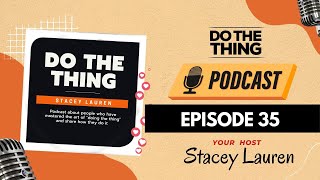
This content was created by Stacey Lauren. This content was uploaded by Stacey Lauren. This is a YouTube video titled "Episode 35 - Scott Cartwright Is A Highly-Disciplined Entrepreneur Who Embraces Obstacles" created on June 26, 2023. It features a conversation between Stacey Lauren and Scott Cartwright on the "Do the Thing" podcast. They discuss Scott's disciplined approach to entrepreneurship, his experiences in the Navy, and his strategies for overcoming obstacles and achieving goals.
Chapters
I do really believe 100% from every part of me that everyone has the capacity to be able to do the things that they want and not to be held back by the mental baggage that's in our head that we want to push through.
Welcome to the do the Thing podcast. In each episode, we get down and personal with people who go after the things they want to make all their wildest dreams come true. Join us as we unveil and dissect a formula for what it takes to do the thing. Here is your host, Stacy Lauren.
Hey, everyone. Welcome to the do the Thing podcast. This is your host, Stacy Lauren. So this is exciting.
You guys are going to get to meet someone very special to me. We met last year, and we are in a.
This isn't going very well. You don't know what we are at this point. Not to mention it.
We are in a relationship.
And it's amazing.
It is amazing.
So good.
And I have been asking him to come on this podcast now, I think. What, since it started, right?
Yeah. Yeah. But I'm too private, and.
Yes. And so you have been resistant, and I don't know how I got you to change your mind.
Well, I just decided to do the thing, you know.
Oh, I love it. I love it. So, yeah, so just a little bit about him because just want to make sure. And then I'll have him talk about his background. But, yeah, I think it's really cool. He actually speaks or knows four languages. One of them is sign language, which I think is really amazing. Was a pilot in the Navy, is an entrepreneur, opened several businesses and then sold one last year, and he's now starting a new one, and he's also helping others start their businesses as well. So without further ado, I'm introducing Scott Cartwright to the show. Hi, Scott.
Hello. Hello. I'm glad to be here.
I am, like, beyond excited to be talking to you right now.
Even though.
I know you're coming over in an hour, which is funny.
I shouldn't have made you wait so late. But. No, it's. It's like one of those things where I was just like, well, what am I gonna say? What. What's gonna be interesting that I have to say to people? You know, you always underestimate what you've done and how it might help other people, but I'm glad to be here at that. And, you know, I think the obstacle is the way, and so I was resistant to doing it, and I figured that you just need to. You just need to go where the obstacle is. Go where the resistance is. So I'm glad, I really am glad to be here.
Oh, good. I'm so glad you said that because I think that actually is the reason why so many people will not do the thing, you know, is because they're underestimating something about themselves. Why don't you start off and tell everyone a little bit about you and your story?
Yeah. So without going on too long, I think the highlights of my life are that during college I got the fortune to spend a year in Madrid to learn Spanish and explore the cultures. So that was great. Junior year in Spain and then after college I joined the Navy where I learned how to fly planes and flew off of aircraft carriers and six month deployments and all those fun Navy things, officer and a gentleman type thing, you know, boot camp type type stuff. I got to travel the world doing that and finished up my time in the Navy living in London for four years, which was great as well. Then after that I started to do a couple things. I started a diabetes business and then I wound up going to work at a hospital, being a program manager for an international program that we have got my master's degree in public health and policy and health management and policy is my degree. And after that I started a couple of other companies, a supplement company as well as a health education company. And then I started a skincare brand. I didn't know anything really about skincare, but I saw that there was a need for this type of product after having done some research. And so I started the brand. It grew. I had the brand for four years, four or five years. And then I wound up selling it to a private equity company. And then I wound up acquiring a skincare manufacturing company. So that's my new, my new venture. So we make skincare, hair care, body care and pet care products for entrepreneurs who are looking to start or grow their current skincare brands.
Yeah. And I think it's so amazing because you've already done it with your brand. So as you're helping them grow and build, you have a, you're in that unique position where you, you know what it takes to do it and succeed at it. So then you're able to help them do it as well.
Yeah, no, I think that's the, that was what kind of drew me to it because after I sold my company, I was looking into a couple other things. One of them was, was a seaweed processing or manufacturing facility. And another one was dry goods company for people that were worried about diabetes and blood sugar. But I kept on Being pulled back into. Into skincare, because I kind of knew it and people were asking me questions about it, and I realized that there seemed to really be a need for that, a need for that out there. And so I really do, you know, I know how it feels to start it, and I know how it feels to be, you know, wondering what you do next and how do you find a manufacturer and how do you set this up online and on amaz. And when I talk to our new clients, they seem to really get the sense that, you know, I've been there and I've done that and that I'm here to help.
Yeah, that is so cool. Have you noticed any common thing with the people that are. That you're working with? Like any common traits that they have in common? Because, I mean, if they're coming to you, they're doing the thing themselves. I was just wondering.
You mean traits in terms of what they're. What they may be struggling with?
Actually, yeah.
I was going to say struggling with, but also in terms of the positives of them. But let's talk about struggle first, because I like that.
Yeah, so they just seem to struggle with not knowing what to do. They need a little bit of hand holding because it can be overwhelming. And just in this particular situation, they're reaching out to manufacturers and they're huge companies and people are not getting back to them. And when they do get back to them, there's high minimum orders that they have to place and they're charging them a lot of money to create their product.
And they don't really know what the. They're just intimidated, I think, is the struggle, and they're not getting the level of support that they need. You know, you start out at anything, you just need a little bit of help. And so we help do that. And then in terms of the positive traits, I think it's just that they're going for it. You know, they have a. They have a great idea and they just make the decision that this is something that I'm going to do. I don't know how it's going to turn out, but I know that this is important. I know that I want to help people. And a lot of them are trying to scratch their own itch, which I think is really important. It kind of helps to. To know what you're talking about and to know the product that you're really trying to create. If it's product focused, which it doesn't necessarily have to be, but when you can kind of scratch your own, itch then it makes things a lot easier because you have the problem that you're trying to solve and you can really communicate that problem to others. To others. That you're trying to get your product in a way that makes them understand that you are in it, that you know what their real issue is and that you're. That you're trying to come up with a solution for them.
Yeah. So do you mean, like, got your own itch? Like, I have really, really, really dry skin and I haven't found anything that works for me. And then I'm creating a product that basically solves that. Is that what you mean by that?
Exactly, exactly. You have a problem and then you create something for you that's great and exactly what you want. And then. Oh, by the way, I think other people would, would benefit from this. And then. And then you kind of release it to the world.
Yeah, I like that because then they're like, really directly connected to what it is.
Yeah, they're really, they're. They're really connected because they, they know what their problem is. They know they've tried a million solutions out there that haven't worked for them or have been just off or needed something else or whatever, and then they create that specific thing. And then usually when that happens, it works out well, because most of the time people are creating products for people that they, they just think it's a problem for someone and they come up with a product that they think is good, but they're not actually the customer. You know, they're not scratching their own itch. Yeah.
So when they come to you, they are really looking for help. And then because you've already been there and done that, you're able to help them. Is there anything else that you think they could do that would help them be successful? Because I'm actually thinking, and I wasn't even thinking of this initially when we first talked about having you on, but I'm just like, gosh, you've had such a. You have such a cool view right now of people right at the beginning of them doing the thing where they're kind of putting things on the line to make it happen. And I'm just kind of wondering if you have thoughts on what would make them go from starting it to then being successful.
Yeah, I think one of the main things is to just know. Know what you're trying to do and know that you are going to succeed at it. At least believe that you're going to succeed at it. Because if you know you're going to launch a skincare company or skincare brand and you contact one or two manufacturers but neither of them get back to you. You, you would not stop at that point. If you knew something was going to happen, you would keep at it. So you may have to contact five or 10 manufacturers and just stick at it and somebody will get back to you.
And it may not even be manufacturing, but you know what I mean, you just have to, you have to just keep going as if you know that you will succeed at it because One of those 10 manufacturers is going to get back to you. Probably more than 1, 1 in 10. But just, you know, it's kind of like a numbers game as well. So I think you just have to know it and act as if something. Because when you know something is going to happen, then you behave differently than you do. If you don't think it's going to happen, if you don't think it's going to happen, then you contact one or two and they don't get back to you and they're like, oh, well, you know, I'm just quitting because I didn't think this was going to actually happen. If you know it's going to happen and you reach out to two and they don't contact you again, contact you back, then you're going to reach out to a third and then a fourth and then a fifth and a sixth until someone does reach out to you because you know it's going to happen. So you know in order for it to happen you have to have a manufacturer and you're just going to keep contacting manufacturers until you find one that you're going to work with. Yeah.
So what are your suggestions? For someone to have that frame of mind of knowing, of knowing it's going to happen. Do you do anything in your own life that that helps you practice? That, that muscle of kind of creating that almost like that self confidence in yourself?
Yeah, I don't know. I think it's all mixed in there together because I do do some things. I mean, I meditate for 20 minutes every day in the morning and I don't know if I can point to any of these things specifically that helped me do this. But they're all tied in, I'm sure, and they've worked for me. So I just, I keep doing it, but I meditate after I medit do my kind of.
My intentions. I write those down by hand every day. It's the same thing that I write down. Probably takes me three or four minutes every day. I have A little card that I write all my intentions on, same thing. So I just hand write them out. I write down the things that I'm grateful for.
And then I write down my affirmation. And so I do those things every day. And then right in front of my desk I have my vision board that keeps me motivated, has on it all the things that I know I'm going to have and achieve in life. And then after that then I get to hustling. You know, I try not to talk about it, I try to be about it. And all those things are great. But you can't just write down your intentions and look at your vision board and then all these things fall in your lap. You have to do the thing, as they say.
And the thing, the thing looks a lot like work.
And a lot of people aren't willing to put in that work. But once you decide and once you know something is going to happen and then you do the work, I think great things happen.
Yeah. And do you have a good strategy for going after the work?
For going after the work? For doing the work. So I started this new thing that I'm really liking.
It is.
Because in the past I've always had a to do list. And so my to do is get my oil changed and buy this thing off of Amazon and reach out to this contact about selling my product or getting a new customer and all these things. Then I just look at the list and I pick something, you know, schedule the kids doctor's appointment and I do that and then I do go get the oil change. And so there's really no real structure to it. But what I've started to do recently is to quadrant my to do's. So I it's four quadrants and if you imagine the x and Y axis on the Y axis I think that's why the one that goes from top to bottom, it's urgency at the top, that's the urgency axis. So it's high urgency at the top, low urgency at the bottom. And on the X axis, the one that goes from left to right, it is impact. And so I messed that up. It is actually impact.
On the y axis up and top. So high impact at the top, low impact at the bottom. On the left and right axis it's urgency, high urgency on the left, low urgency on the right. So that makes four quadrants if you just draw a big cross. And so I quadrant things into high urgency, high impact or low urgency, low impact, those different things. And so what I do now is I put everything in one of those quadrants. So I needed to, I'm looking at my list now, reach out to a formulator to get us, get her to add us to her Rolodex. And so that's high impact, that's going to have a huge impact on the business if we get her. And it's urgent because I'm trying to grow the business as quickly as possible.
So and then for an example of something in the low impact, low urgency, it's I needed to schedule a doctor's appointment, my annual physical. And so that's in the low impact, low urgency quadrant. And so what I do first of all is I always do the high impact, high urgency things first. And so those things are if you just did one of those things in a day, then you'd feel good about it and you could take the rest of the day off if you wanted to, that kind of thing. And so I've started to just make sure that I get everything in the high impact, high urgency quadrant, upper left, done first before I move on to any of the other quadrants where in the past I could wake up and the first thing in the morning I would do would be schedule doctor's appointment, which did not need to be done necessarily then. And by doing that you get all of your really important things done first. And then the things that can wait that you can do when you're eating lunch or when you have lower energy at 2 o' clock in the afternoon when you don't feel like reaching out to the formulator to get in her Rolodex and then that this doesn't happen, you get those things done first, knock them out and it seems to be going pretty well. I'm feeling good about it.
Yeah. I like the simplicity of it. And then I also like that a lot of times if you have a to do list and you don't complete everything.
It might be frustrating, you know. Whereas with this, you know, as long as I hit my high impact, I'm feeling good about it.
Yeah. And you really only have to do one, one thing and you feel good about getting that one thing done. So I think anybody can get one thing done a day and over the course of a week or two weeks or a month, you get 30 really high impact things done and you feel great about it. Yeah.
Are you doing it the night before or the same day?
Yeah. No. So I do everything the night before because I try to decrease this thing called decision fatigue. Part of my night, my nighttime routine is to, I read back over my Intentions that I wrote down in the morning, that morning. So I read back over that. And then I write out my urgency things in my quadrants. I work on my schedule. I. I have a question that. What great thing happened to me today?
And I like to. I always finish my day thinking about. Thinking about that because. Because great things happen all the time and you just have to focus on them because there's plenty of bad out there, but there's plenty of good out there as well. And so I focus on the good things and I just need to remind myself what great thing happened to me today. And so that. And then at the end of it, so that the next morning when I sit down to work, I just open my book and then I start at the quadrants and it's off to the races.
Yeah, I love that. And it actually reminds me of one of my. One of my favorite things that you do with me. If I'm ever. I don't want to say I'm complaining.
But telling you something hard or whatever, you'll. You'll ask me what's good about this. You know, it gets me just completely. Just to reframe whatever the situation is.
Yeah. Because there's always going to be something good about it. You have to dig for a little bit, but it's just what you focus on. You know, you could think about anything. You could think a million different thoughts, and those thoughts affect how you feel and affect your actions and. And all that. And so if you just pick the right things to think about what's. What's good about this.
At least for me, it's made a big difference.
Yeah. And for someone that doesn't know what you mean by intentions, can you. Do you mind sharing an example? It doesn't have to be an actual one, but like, what would be an example of something you would write?
So I write down or an intention is just something that I know is going to happen. And so one of them, I could just say it is like, I have the intention of living my dream day every day. And so I. And by my dream day, I mean I do whatever I want to do when I want to do it with, who I want to do about it, do it with. And I'm not worried about money.
As a part of that. And. And so I write that every day so that it just gets ingrained in my body and my person and my being. And what I think happens is that when you write it and you know it, you believe it. I live my day. I mean, I live my dream. Day, every day you make decisions that you might not know you're making. So subconscious decisions that you're going to make. Like, one of the intentions I have is being very healthy. And so I'll just. When I take a break from work, I was like, oh, I should jump on the bike right now, and so I'll do that. And it's probably because I'm trying to stay aligned with my intentions, aligned with what I believe, aligned with what I wrote down. And so I don't have to necessarily schedule a time to exercise. I just have told myself that I'm a healthy person. And I know that healthy people exercise a certain way and I know that healthy people take breaks and I know that healthy people eat certain things. And so when it comes time to do those actions, I don't lie to myself. I know that I'm not a liar. And so I just act in that manner. And I think it just makes me make these subtle subconscious decisions that I don't know that I would make otherwise.
I'm so glad that you brought this up because this has been one of the things that I admire so much about you is the self discipline that you have, you know, to do things. And I never really connect. I was always, I'm always asking you, you know, trying to figure out what it is that really has you so able to keep up with everything that you say that you're going to do. You really are doing it. And I do think that's probably a big piece. Is that that intention of saying it and then you're following, following through?
Yeah. And I don't really know where that comes from and how I would recommend people to do it. I think it has something to do with personal integrity and, and a lot to do with self discipline. But I, I think I've always been that way. If I say something or make a decision about something, I don't want to let myself down because I think that's the worst person that you could let yourself down. You always need to be able to depend on yourself because it affects so many things. So I would make a decision. Like a couple years ago I decided not to eat for 14 days.
And so then I just didn't eat for. Well, I didn't eat for 10 days. I don't weigh much and I started to look like a skeletor walking around and. Because I don't have any body fat or anything. So people were looking at me like, you need to stop what you're doing because.
Good for you.
So, but, but so I did it for 10 days and I could have gone the 14 days, but it probably wasn't healthy. Like a lot of people do things like that for, for health reasons and they do it and they lose £15 and all these other things. But I couldn't afford to lose 15 pounds. And so I stopped doing it because I had proved to myself that I really could do it. But I just decided. And so once I make a decision about something, I very rarely, rarely change it. But this is an action decision. You know, I could have a thought about something that I, an opinion on, something that I, in the face of more information or evidence that I could change. But, you know, I decided I was going to give up, give up carbs. And the same bad thing happened to me health wise. So those kind of things don't work well for me. But I kind of just, I think I make a decision and then I put my head down and I get after it and I do it for myself. But I do have to, I do have to practice that. You know, I do have to flex that muscle like you said before, because it's easy to.
Get out of shape with that kind of thing. So the not eating for 14 days, that's just, okay, I need to flex, flex that muscle. And so I flexed it and then I felt that, I feel, I felt good about it afterwards, saying, you know, it's just a, it's just a willpower thing. You know, it's just you make a decision and then you do it.
Yeah. So it's almost like when you're doing a challenge like that, you're, you're giving yourself the ability to flex that willpower muscle. So then you're able to do even more things that you want to do because you've been using the muscle basically with whatever challenge you're doing or with whatever you're doing in life, essentially.
Yeah, no, I think that's it exactly. You just, it's just to make a decision and know that you're going to be able to follow that, that decision and that nothing really bad is going to happen to you after. So if I challenge myself for something like that, don't eat for 14 days and then I make a business decision like every day I need to call somebody. I decided that I'm going to call two potential new clients a day, then that feels like nothing compared to the decision of not eating for 14 days. And so you just do that. It's like, that's not easy. Whereas if you haven't flexed that muscle or done Some really hard challenge or whatever, be challenging to someone, then the decision to call two people a day is a hard. Is a hard decision. But that was. It's easier for me to do those type of things after I've done some. I start saying crazy challenge. I mean, some people do a lot crazier challenges, but to me, it's all about the decision. And then once you decide that, you know that you're going to do it.
Yeah, and I love, I love that concept. Just because you never know what you're going to do. Like, even if you tell yourself, I'm going to drink five cups of water a day, you know, or I'm not going to have any sweets today or whatever it is, it's just by that one simple act and then you following through with it, then you're building the muscle. So then after that's, after that's achieved, then you could do something even harder, basically. And I didn't actually think of it in that way until you were, you were explaining this.
Yeah. And you always have to remember that you can always begin again. You know, you, you can make a decision to do something and I'm not going to eat for 10 days, and then you make it two days or one day and then you have to eat something. Well, then you're not the worst person on the planet, you know, just make another decision. Okay, begin again. And maybe this time you just decide that you're going to not eat for four days. Just try to double it to four days, and then you might make it to three days. Well, that's a day more than you had done before. Or you might make it to two days. It's just not like, okay, well, just forget this thing. And then you go around thinking that you can't make decisions and that you let yourself down and all, that you always have the option to begin again and that none of this stuff is life or death.
I love that you brought up begin again. That's so good. I love it. That's been really a great concept for me, as you know.
I love it Again, and, and incremental. I mean, maybe, you know, like I said, you don't have to do 10 days. Just try to do a day and then try to improve on that day. You know, I always talk about, I just tell people, you know, you know, I say, do you know how you eat an elephant one bite at a time, you don't look at the whole elephant and like, oh, my God, I gotta eat that. Yeah, you gotta eat it. But just, it's Just one spoon at a time. Eventually you'll get. You'll get through the elephant.
Yeah, I love that. So, okay, so you. I wanted to. While we're on this topic before we move on. So here's an example. As you know, I have a virtual peloton friend that I ride with, and I was scheduled to ride with her yesterday, and then she couldn't make it, and I'm like, already, you know, ready to go. And then she told me she couldn't make it, and I did not. I did not ride. And then today, you know, she's like, oh, I can ride. And so we rode today. So with you, you don't need that. From what I've seen, you're able to just get on there and ride. And I was just wondering, so in addition to what you said about having that personal integrity and then also what we've been talking about with the willpower being a muscle and then that embodiment practice that you're doing with your intentions, is there anything else that gets you just to. To do that?
I'm curious real quick before I answer. When she couldn't ride yesterday and you did, why did you not ride? Because she couldn't ride.
I just, like, got stuck on my computer and just gave myself 5 million excuses.
I see. Yeah. Yeah. So.
So for me, what. What I think it is is that I.
As I mentioned before, I would not want to let myself down. And I know, and I've always told myself that I'm a healthy person. And so I want to act congruent with what I know that I am and what I say that I am and what I've written down. And so I know that a healthy person is going to ride that bike. And I am a healthy person. So I will ride the bike. You know, if A, B, C, or whatever that is math is, you know, so I'm just gonna. I'm just gonna do it because I want to stay congruent with what I believe to be true.
And after you do it for a while. And I love. I love things like that. I love riding the bike, and I love being healthy.
And if there are times that I don't want to do it, I'll tell myself that I'm doing what the purpose is. You know, I'm just trying to be. I'm doing it for my future self. I'm doing it for my kids who are going to need me to take care of their kids when they get older. I want to live a good, healthy life and be fit When I'm old. And so I'm on the bike not wanting to be there or, and cursing the kids because I'm doing this for them. But you know, I'm staying motivated as well at the same time, you know. So I think it's a combination of things.
But to start and very rarely that I not want to do it. It's just a matter of knowing that.
Knowing how healthy people behave and knowing that I'm a healthy person so I'm going to behave that way.
Yeah, yeah, that's really good. That actually gives me so much more insight into. Because, you know, I've been asking you this for a while because everyone I know, it had. There has to be some level of accountability with people and I just haven't seen that with you. So it's just been, it's been something I've really admired.
Yeah, I think it's a personal integrity and self discipline. I just know that, that I need to.
Be in integrity, you know, with myself and I don't want to. And I don't want to let myself down.
And the other thing I've heard you say is I get to do this. So you just have a different like frame I think too, when you're approaching things like that.
Yeah, no, I try to look at it at things as, as a blessing, you know, and, and I get to do this like, you know, like riding the bike, for example. Some people can't ride a bike. Some people only have one leg or no legs or who knows what it is, you know. And so I do look at it as a blessing that I get to do things that other people don't want to do. Even in, even in a bad situation, you know, people can't, people are complaining or upset about having to go, I don't know, pick their kids up from school. And then I just tell myself, and I believe it, that I fortunate and grateful that I get to go pick my kids up from school at 2:50 or 3:00 clock when everybody else is at work or they don't have kids and they wish they had kids or God forbid something tragic happened to their kids and they would give anything to go pick them up for school or anything like that, you know. So I always try to be positive about it and look on the good, look on the bright side and find what's good in it.
Yeah, I love that. Okay, so I wanted to also talk just a little bit about the Navy because I can't even imagine what that had to take to like fly planes, you know. When you were doing that, how did you, how did you get the guts to even, to even do that?
Yeah, for me.
I think that the biggest challenge of the Navy was probably at the beginning where it's aviation officer candidate school. So where you go from just being a civilian and then for 16 weeks they turn you into an officer in the Navy. So you start out not knowing anything. You have a drill instructor, they're yelling at you. I mean, I think we started 40 people in the class and we got down to 16 or 18 because people just dropped, they dropped out because they couldn't do it or take it or whatever. And for me, it was the same that I brought up before I knew that I was going to finished that program. And so quitting was never an option. No matter how hard it gets, you just put one foot in front of the other. And if, you know, if you know you're going to finish something, then you know that you can't quit because that's the opposite of finishing it. Right? So you just do it and you do it and you wake up the next day and you do it again and you try to get through, through one day after that, then it's flight training and.
You don't always have a good flight. You're not always going to have a good day. You could.
You do some things and you get it down. Like you practice flying something and then they take an engine off or kill an engine and you have to do an emergency to save yourself in a plane and all these procedures. And so you do some things or navigation flight where you fly from Atlanta to Nashville and back using some, some visual references, something like that, and you could, you could easily not do it well, and you get back and then you, you don't pass that flight and then you have to do some remedial training and you feel like an idiot because other people are passing and you aren't. So that type of stuff happens. Um, but then you just go through it and plenty of people quit that process as well. But again, if you know that you're going to finish it, then you just do whatever you have to take and you, you learn your lesson and you, you move on. They did learn some really great things in the Navy, though. Like you're flying, flying off an aircraft care, and you have an emergency and had to go and land a plane in Kuwait one time. And so these type of things make me pretty calm under normal pressure because when you're on the deck of an aircraft carrier, you launch off an aircraft carrier, flying around in the Persian Gulf and landing the aircraft carrier and dealing with emergencies and all those things. Anything that happens in a normal civilian way world is not really that.
Stress inducing, you know, So I usually can stay pretty calm under. Under normal situations. And then I also can compartmentalize, which is. Which is not necessarily the best thing, but it works for the Navy and it seems to work for me. I could kind of keep things in separate boxes and not let things spill over into other. Into other boxes. But. But those are the. And I think another great thing I learned from the Navy that. I don't know, I was like that before maybe. So it's attention to detail. I'm really big on that. And so I try to just pay attention to the details and to punctuation marks and to remembering people's names and to things like that. So. So it probably. You would have to tell me. It probably makes me a little bit of a weirdo and challenging at times.
But I think overall it served me well.
Yeah. It's funny that you mentioned the punctuation. I was just telling my daughter that she was making you a little. We have that we fit. And she was making your little me.
Your little me with your profile on there. And she had your first letter of your name as a lowercase. And I'm like, no, he definitely is going to want it uppercase.
I think in English we capitalize proper names.
I know. I think I laughed at you one time because I saw you do it in Venmo and I'm like, what do you like? Because you were like having to retype it or something because, you know, it automatically sometimes does it with the lowercase. And I was like, why do you care? It's Venmo.
And I said, the way you do anything is the way you do everything. Oh, yeah. So.
I can't help myself.
Yeah, it's. It's good. I mean, I think it's part of who you are, you know?
And now you're showing how crazy I am to all of your listeners.
Always good.
I know.
I love it.
I know.
It's not.
It's. I think it's. It's good because it's what I didn't even realize before. And I'm really. I think it's through know, like being us being together and having that positive influence all the time. Right. And then also by doing these interviews and the podcast and just a lot of experiences I've had in the last few years. It is true. It's the way, the way you do. Say it again. The way you do anything is the way that you do everything.
Yeah, I think the way you do anything is the way you do everything. Yeah.
Yeah. I'm really starting to see it now because I didn't understand those parallels in life as much as I get it now. You know, like, even when I talk about that book job that I did in college where I sold bookstore to door, I didn't realize how just the simplest thing that I learned in there is really what got me to where I am now. And same thing you're talking about with the Navy. It's just all these little things that you don't think is much. It's so huge with the. As you're flexing those muscles with these different character skills that we're building through our lives. I wanted to ask you also when you said there's times that you feel like an idiot, and not you specifically, but when they. I don't know if you remember exactly how you worded it, but I love that frame in terms of. I think that happens to so many people right where they are like, oh, this. You know, I didn't do this well, or whatever. Like, how did. How do you keep pushing forward in those times? Is it really just because you have that idea that you're going to finish it or how do you know that you're capable of finishing it?
I guess, yeah. I think it's.
I think in those situations, I just know, like I said, I know that I'm going to complete this task. And so I let myself. You let yourself feel like an idiot for a minute. You know, it's like, okay, you can feel. You're allowed to feel like an idiot, allowed to feel your feelings. But then after that, whatever you did or messed up or didn't do, right. It just shows you where you need to focus. And so I just put my attention on that. And I never. I never doubt.
Because I don't think that that's very useful. And so I just. I would just, you know, you pick yourself up, you dust yourself off, and then you get back after it. And you realize, you know, for me, in some situations, it must admit that I needed to get back in the simulator and practice that some more in order to pass it. And so. And so that's what I would do. And so there's always a little lesson to be learned in those situations. You know, I often tell myself, don't wish it was easier. Wish you were better. And so you could get mad. Oh, that test is too hard.
But that takes. That leaves you Powerless, you know, you don't have any control over the test. What you do have control over is your preparation for that test. So I would always wish that I was better or do things to be better. And usually when you look, go back and do like that, then you're empowered to go and do something. You know, I can control the study and I can control how much I learn, and then go back and. And take it again because it's not always going to be easy and it's not always going to be perfect, and things aren't always going to go your way, but when they don't go your way, there's to be learned in that and something that you can do to make that situation better.
Yeah. It's funny you said that. I just talked about this on another interview that I just added to my risk assessment. When I'm doing something new, and if I'm scared to do it, I'll. I'll ask myself, well, if I do fail, what am I going to learn from it? You know, what I'm doing. It's funny, I must have gotten it from you. I didn't realize.
Maybe, maybe that I don't know. But. Yeah. What are you going to learn? Yeah, always learn something.
Yeah, I like it. Because then it's not as you're not failing at that point. You're. You're just learning. Just educate for yourself.
You're just learning. Yeah. You're. You're eliminating options and, and trying new things.
Yeah. And so then I wanted to go into the. When you opened up the skincare brands, the one that you sold last year, you know, I was also wondering, because you had said you didn't have experience with it and it was new and all that, so how did you get the guts to do that? I'm just. The guts is keep coming. I've never used guts on the podcast before. Just so you know, I might have said something on Chrissy's that had guts related, but not the word guts specifically.
How did I. How did I get the guts to do it?
Yeah.
I think I had confidence in my marketing ability. So I really love the process and the build of it, and I was just looking for something to put my energy behind, and so I settled on skincare. People spend a lot of money on skincare, and it's a huge industry. But like I said, I didn't know anything about it, but I knew that.
I knew that I knew how to market something. And then I also. I cheated because I did the research ahead of time to figure out what people were looking for that did not exist. So my product was a vitamin E oil based product. And when I did my research, I found that a lot of people that were buying vitamin C, there was a lot of vitamin C products out there, but no vitamin E products. And so the people that wound, people that were buying the vitamin C product actually were looking for vitamin E, didn't find anything and bought C. And so what I said, well, people are looking for vitamin E based products and there are no vitamin E based products out there. Then I'm going to create a vitamin E product and put it in front of them. And I think that's why it did well. So I didn't just go into this because this is just because the way my brain works and because of my marketing, the things I've learned in marketing. I didn't go out there and say I'm going to create a vitamin D product, create that and then try to make people buy it. I went out there, did the research, found out that E was the E was needed and people were looking for it. And then I went and created E and then it made sense that people wanted to buy it because they were already looking for it and there was no other, no other solution or option out there for them.
Yeah, and I love this concept because this is something that keeps coming up in the interviews is this piece of the formula is. It sounds like you just did, you had no ego when you went into this. You just pretty much were like, I'm going to see what's the best for me to be able to do and succeed at this. And then you were flexible and you were able to mold along the way as you started to discover through the research.
Yeah, yeah. You know, because they talk about entrepreneurs, you know, jumping and then building the parachute as you fall. And so that's the way you have to go in. You go in because you don't, you don't know what business you're in until you get in it and start it. And so I knew that I wanted to do something in skincare and then I started to research and then I found the vitamin E was the thing. But like I said, I didn't go into it starting, I didn't go into it all figured out at the beginning and trying to create something and make people buy it. I was flexible like you said, flexible in, in, in the product. And then once you're in it, then you let people, you let your customers kind of help you figure out what you should do next. So after I did the vitamin E oil. People were asking, oh, do you have a cleanser? Because we would love that. I was like, no, but I can make one. So when you hear. You hear something enough, then you, you, at least for me, for this product, for the product line, then I created a cleanser because people were asking for, and then a scrub and then a moisturizer and all that. So I, I just.
I did what people were. I gave people what they were asking for.
Yeah. That is so good. You mentioned at the beginning of the podcast that the obstacle is away. So when you're. When you're actually go through that a little bit more, because I wanted to talk about how you push through that when you're faced with something that's hard and then you're able to, like, jump in.
Yeah. And so that the obstacle is away is a fairly new thing for me. Maybe I've done it in the past, but just hadn't really realized and didn't have any words around it. But.
You know, you always need to go where the resistance is because, you know, everything you want in life is just outside of your comfort zone. And so you. When you get up to the edge of that comfort zone, there's some resistance there, and you don't want to go, but all the greatness in life is right there. Just. You just got to get through it. And so that the obstacle is the way. It's like a thing from stoicism, which I think is great, and it really helped me articulate how I feel about it. But if something is. You feel that there's a block right there.
Then that's where you should go. I'll just read this thing.
Just to let listeners know a little bit more about the obstacles, the way it is that the impediment to action advances action. What stands in the way becomes the way. So it's really great when you think about it, because if you're stuck. If you're stuck with something, obviously you're not moving, and the only way you're going to get unstuck is to break through that thing. That's the way, you know, that's. That's. That's what's going to help you advance and get through things. So I always try to. I always try to. To keep that in mind these days. And I act on it all the time, you know, like, because I still have my. Still trying to flex my muscle, and I'm not perfect in all these areas. There'll be somebody that I want to reach out to, and I will be like, oh, I'll reach out to them tomorrow. And as soon as I hear myself saying I'll do it tomor, I'll be like, well, there's something there. And so you need to sit down and email them now, because if somebody said, hey, call me, I'm gonna give you a million dollars, you would call them right away. You're not gonna say, oh, I'll call them tomorrow, you know, or oh, I'll email them tomorrow. So there's something there. Why? It's just telling me like it's one o' clock in the afternoon and I'm telling myself, oh, you can do that tomorrow. I'm like, so you're resisting it for whatever reason. So as soon as I notice myself doing that, I just sit down right away and I send that email out or I make that phone call.
Because I want to advance. And I know that the only way to advance is to do, to do something. So that's what I've been playing with lately.
And one good thing it does, in addition to advancing things, is it just takes that off of your mind. You know, you have this, your, your mind can only worry about, think about so much stuff at one time and it's kind of like a burden to take that off because, like, because, you know, because so for all night I'm thinking about reaching out to that person and then all the next morning, whatever the resistance was, it's not going to go away. And then, so if I just sit down and do it then, then I don't have to worry about it. I could, I can free up that, that mental space. And even if it's at night, sometimes I'll, like, if it's an email, as soon as I feel it, I'll sit down, I'll write the email out and then I'll just schedule it to go the next morning. So I know that it's going to go. It's already written, it's done, and I let Gmail send it out on whatever schedule that I, that I decide. But at least I get it off my, off my mental plate.
Yeah, I love that. And you know what you're making me think of too? It's like going back to those muscles being flexed, you know, and how by you continuing to do these things like where if you don't want to do it or if you're feeling resistance, you're, it's getting easier maybe even as you do it, because you've, you've kind of reprogrammed yourself in a way.
Yeah, definitely. And so then I don't even, I don't even think about it nowadays. If I just feel it and I just sit down and do it and then, then it's done and I just. And there's really no reason not to do it because, you know, it's not like if the outcome is bad, it's not like anybody's going to take away your birthday or anything like that. Right. It's going to be totally fine. The only thing you can, the only thing that can happen is something good. Nothing bad is going to happen from reaching out to this person that you're resisting reaching out to. You know, it could be something good. And so I did, I was at a conference last week or week before last. I was like, oh, I should talk to that person. I'm like, oh, no, but whatever. No, but if they. And I said, oh, you're resisting. Just walk this. Go do it. And so it's one of those things also where you give yourself. I don't remember who it was that said it, but you have like three seconds to do something when you, when you feel it. Otherwise your brain is going to talk you out of it. So I do that. So as soon as I feel the resistance, go talk to them. Oh no. And I was like, no, go talk to them now and then. So you just go right then. Otherwise you're going to get yourself, you're going to stall and then procrastinate. Then you're not going to do it, make excuses and whatnot. So I feel the resistance. I gave myself three seconds and then I went and did it. I did not take three seconds because you know what I mean, I waited longer than three seconds. It wasn't going to happen. So I just do it immediately. Yeah.
Well, now I'm just thinking about when you asked for my phone number.
I didn't ask you though. Right. I had to do it through somebody else.
Yeah, but you still did it.
I did it.
You're funny.
Hedging my bets.
What's that?
So I was hedging my bets, asked for a friend in case she, in case her friend said, nah, no, she's not gonna, no, don't do that.
But then you reached out to me though. You did.
Oh, yeah, yeah, yeah. Definitely. Yeah.
Was that a three second thing?
That was a. That was. No, I don't think there was much resistance at that point. Okay. It was, it was. I was pretty much. For sure.
That's good. I love it. So, yeah. This is also making me think of something you've told Me before, which I don't, I don't think I've seen them. But the comfort zone, challenges and things like that. And it's all about those, like, constantly doing things that are hard, so then it's more comfortable, you know, when you do them. And then I'm just reminded that authentic relating thing that we just went to last weekend where they had us do that physical challenge and we did that, whatever that squat arm move was.
Yeah, yeah. So just to get in a habit of, the first thing you're talking about is to make yourself uncomfortable because all this stuff is really uncomfortable until you build the muscle. So one of the to be uncomfortable is to just look at, like when you're walking down the street, just to look at a stranger in the eye, just maintain eye contact with them until they look away. You're not allowed to look away. And so you should try it. Your listeners should try because it is uncomfortable. But then after you do it a bit, then it's not so bad. And then another one is like, next time you go to Starbucks or McDonald's, just ask them for a 5% discount. You can say, hey, can I have a 5% discount? Because no one is ever going to ask for that, you know, and it's 5%. It's not any money. And, and they may or may not say yes, but that really helps you build, build the muscle. And then one of the last ones that kind of a little bit crazier is to just lie down in the middle of the floor at the subway. You know, just lie down for 30 seconds. And it could be at the subway, it could be at a McDonald's, it could be anywhere, just where people are. Just lay down. And you're not going to die. No one's going to kill you. It's going to be super uncomfortable. But. And then you just get up in order after that.
And it sounds crazy and it is a little bit crazy, but after you do things like that, then you realize, okay, that was. So you're asking for a girl's phone number or guy's phone number or asking somebody for their business card or telling somebody you'd like to feel partner with them so that you can make their skincare products or whatever. Seems pretty, pretty easy after that. It's nowhere near as uncomfortable as lying down in the middle of the floor at a Starbucks for 30 minutes.
I love it. So good. So, okay, here's your big, your big moment, Scott, Are you ready?
My big moment.
What is the number one piece of advice you have for People on doing the thing.
The number one thing to doing the thing is I would say knowing the outcome, knowing that it's going to happen. If you know it's going to happen, then.
It doesn't matter how you get there, and you keep trying different ways. If you know you're going to get to Miami by three months from now and you start to drive a car and the car conks out or runs out of gas, then you start to hitchhike. And if that doesn't work, then you try to find a train, or you try to find a bicycle, or you find an airplane or you find a skateboard or you any of those things. Right. Because you know, you know that you're going to be in Miami in three months from now or two weeks from now or whatever. So you behave differently when you know it. And so I think the first thing to doing the thing is knowing really, really believing and knowing the outcome. And then practical things from then come from something that's sitting here on my desk that says, set goals, set deadlines, stay focused and work hard. If you do those things, set your goals, set your deadlines, stay focused, and things will unfold very nicely.
Yeah, that is good. Okay, so I had a question about that because I love what you said about the outcome. But then I've also heard that whole concept of not being attached to an outcome. So I'm just wondering how, like, what's that differentiation with those two?
Yeah, I think I do it whereby I'm not necessarily attached to the outcome because I do believe that, because then things start to get a little bit off kilter. I'm not attached to getting to Miami. So if I don't get to Miami, then I know that I can either begin again, or I know that Miami may not have been the place for me, so I'm not attached to it. But I know that I'm going to get there. So I believe that I'm going to get there, and I tell myself that I'm going to get there. So I think it's a slight. It's a slight difference because I know I'll get there. But if for whatever reason I don't get there, anything could happen. I'm not going to beat myself up because of it. You know, sometimes things are beyond your control, so I'm not gonna be. I'm not gonna beat myself up. But I do know I have to believe that I'm gonna get there in order to keep doing all the things that I'm doing.
Yeah. And then I like the way that you worded it too. And because then you're behaving in a way that you're like, embodying that. That. That essentially.
Yeah, yeah. I mean, you have to. You have to believe it. Believe it as if it has no other choice but to happen. And then who knows what could happen.
That you don't make it then, like I said, then you could either start again or not, or know that you're not going to achieve it. But it's. But you're not going to. You're not attached to it. Yeah.
Yeah. So is there anything that I didn't ask you that you wish I asked you?
Oh.
Oh, wow. Anything that I would have wanted to share? I think I shared a lot.
I. Yeah, no, I don't think you. I think we. I think we covered a lot. I think we went long, too.
But you know what? I'll say. Life is good and.
Yeah, no, this was better than I thought it would be.
Oh, okay. Since you just said that. Sorry, there's one more thing. You said this the other day, and I love this. I wanted to have this on the episode too. My happiness is expensive. You heard that from somewhere? And do you mind just explaining what that was?
Oh, wow. Yeah. My happiness is expensive.
So.
What people do is they let others.
Get their happiness or steal their happiness for cheap. You know, someone can do something to you that's insignificant. You'll be just fine. You'll be a perfectly happy person then living your life, and then someone will come and cut you off, or someone will not say hi to you or not hold the door for you or whatever at the store. And then that changes your mood and that steals your happiness. And they did something so insignificant that it shouldn't. So I. So my happiness is expensive. It's not cheap. If you're going to take my happiness, you're going to have to pay a lot for it. You're going to have to do something really, really, really, really, really bad to me so that you can have my happiness. Otherwise I'm not giving it to you. So I just think it's always best to.
Make your happiness expensive. You know, make it challenging for others to steal it. To steal it from you. To take it from you.
Yeah, and I love. I love that concept because I think it helps you do the thing better when you have that frame of mind. Because if you're going to let something insignificant, you know, ruin your mood or change your mindset, then it's really going to inhibit you from being able to.
Do the Thing, right? Yeah. I mean, because it's the same concept like you said, with people telling you no, you know they're going to tell you no. How many no's did Sarah Blakely get? No. No, no, no. What? No. And then. Okay, let's see. And then boom. Look at her. And so if she let her dream, her dreams were expensive. Right. She wasn't going to let a simple no steal her dream take her dream and so she just kept at it. Her dream was expensive and now she's expensive.
Yeah.
I know.
She's really expensive right about now. Yeah. Yeah.
Okay. And so one of the other things I've been loving giving the opportunity for the listeners on this podcast is what I'm. What it sounds like this is doing is people are getting more encouraged to like start a business and so giving them the resources. So if they have an idea they could go ahead and know what to do to start it. So I'd love you to share kind of a little bit about your website or how they could reach out. I don't think you're taking new clients now but at least how they could reach out to get on the list if they did want to start a skincare brand and what that looks like.
Yeah, no. So we are starting to take new clients again. We had done a lot of hand holding before and we just wanted to make sure that we took care of everybody properly but everyone is moving along nicely. So we're, we're starting to take new clients again. But the company and the website is. The company is Novian Skincare Manufacturing. N as in Nancy O V is in Victor I A N Novian website is novianskincare.com and so if any of your listeners are looking to start skincare brands or want to add to skincare brand that they already had add products to that that's kind of like we specialized in low order minimum order quantities and low or no formulation fees and we just kind of help you get, get your skincare, hair care, body care and or pet care product off the ground in a really friendly and accommodating way. I mean I was there, I know how it is, I know all the challenges and we can actually talk and talk whenever you want, email whenever you want and we kind of walk you through the whole, the whole process. So thank you Stacy for giving me the opportunity to talk about that.
Yeah, well thanks so much for joining me today on here. It has been amazing.
Of course I called you Stacy. I never have said that before. Where have I?
No, I don't think so.
You're so funny. I can't believe I got you on Source.
I call you Source. Source is what I call you. You too, I said. Stacy. I'm trying to be all official. Stacy. Lauren.
Well, I'm so glad that you gave me the opportunity to come. I hope what I said was of use to someone, one person maybe. But I really do think that these podcasts that you're doing are great, and I want to congratulate you on Doing the Thing, because I know that you're a little bit hesitant about starting up this podcast, but it seems like it's going great. You have had some great interviews on there. You have a cool new microphone now that makes you look like you really know what you're doing. And that only comes from. From doing the thing right. You do it and then you realize what you need and what you don't need. So congratulations to you and yeah, it's been a privilege.
Thank you.
Thanks for listening to the do the Thing podcast. We hope you enjoyed the show. But even more, we hope you'll be inspired to do the Thing. Do you have a burning question on Doing the Thing that you'd like answered? How about an inspiring do the Thing story of your own that you'd like to share? We'd love to hear all about it. Just leave us a voice message at do the Thing callcast co or email us@helloothethingpodcast.com.
More from Stacey

From 262 Women to 8 Million Media Impressions: Deborah Drummond Built a Global Women’s Movement


From Notes App to Published Author: Avery Brenna Crumrine on Turning Intention Into Action


How Stacey Lauren's Billion Dollar Impact Marketplace Will Raise Billions for Charities and Causes

What Happened When Allison Maslan of the Pinnacle Global Network Ran a Challenge with Stacey Lauren




Leaders Share How Stacey Lauren Sparks Action, Clarity, and High-Impact Collaboration

Sandi Masori Announced as Emcee | The Billion Dollar Impact Event Returns to San Diego