Episode 40 - Izzy Grandic and Hailey Sani Are Entrepreneurs Who Believe In Challenging Conversations
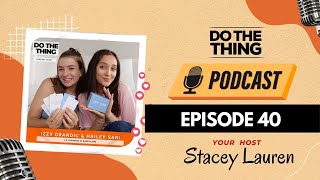
This YouTube podcast episode (host: Stacey Lauren) features founders Izzy Grandic and Hailey Sani discussing their card game Boo Blurb — a physical deck (133 cards) of provocative prompts designed to spark deep conversations about bodies, women’s health, sexuality, and other taboo topics. The guests describe the game’s origin (Izzy’s initial printable deck and outreach to Hailey), game structure (expert / wild / open-topic cards), recommended settings (dinner parties, YouTube series, journaling), hosting tips (lead by example, respect boundaries, follow-ups), and the broader social purpose: restoring face-to-face vulnerability after digital-era isolation and enabling intergenerational knowledge transfer. The episode emphasizes practical hosting advice, ways to invite and warm up participants, and the value of physical, in-person connection.
Questions this video answers
133 cards.
Stacey Lauren.
Izzy Grandic and Hailey Sani.
July 1, 2023.
Boo Blurb: "Boob Blurb" on social platforms; Hailey: @HaleySunny; Izzy: Izzy (I Z Y) Grandich / website IsabellaGrandich.
Chapters
I do really believe 100% from every part of me that everyone has the capacity to be able to do the things that they want and not to be held back by the mental baggage that's in our head that we want to push through.
Welcome to the do the Thing podcast. In each episode, we get down and personal with people who go after the things they want to make all their wildest dreams come true. Join us as we unveil and dissect a formula for what it takes to do the thing. Here is your host, Stacy Lauren.
Hey, everyone. Welcome to the do the Thing podcast. This is your host, Stacy Lauren. So you guys have a really special treat today. I brought on the founders of Boo Blurb. It's a really up and coming card game that it's like conversation prompts and it really sets the stage for opening up conversations and talking about taboo topics. And it's such an amazing way to bring people together and to connect. And I wanted to bring them on because I had one of the founders on a few weeks ago and we had a really great conversation in terms of being able to just communicate with people and really set the space for deep connections and having hard conversations. And so I was like, I really feel like I want to bring you both on, talk more about the game, be able to just kind of talk about where we are now and even society with, like, having conversations, whether it be taboo or even regular ones, and getting deeper because I realized through these interviews that a piece of the formula that keeps coming up is surrounding yourself with like minded people. And the more we can do things like this, the more we can surround ourselves with people and to help us reach the goals that we want. So I am so excited to introduce Haley and Izzy to the show.
Hi.
Thank you so much for having us. Like, I feel like Izzy already, like, got first dibs and I'm like, now I'm a part of it. I'm very excited.
Thank you.
Oh, I know. It was funny because when she first did her interview, we were deciding if we should have you both on the first one. And then she had. I had like a really big memory that I wanted to talk about on the. On the first episode. But then after she came on, I'm like, wait, now we have to have Hailey?
I know. I actually just watched her episode and like, every time I hear Izzy talk, I'm always like, blown away by how good she is. It's just like articulating herself. So that was kind of like, I guess, just listening to her and, you know, I Feel like our unique missions, our unique upbringings is also such an important part of why it just makes sense for us to come together for Boob Blurb. So I'm just excited to kind of add on to the convers conversation and talk to you, Stacy.
Yeah, I'm so glad. I'm so glad you guys are here and you're open to doing this. So why don't we start off and have you guys just talk a little bit about your background.
Yeah, sure.
So I'll go ahead. My name is Haley Sunny. I'm a digital content creator and I've been doing this for a while now. My main platform is YouTube actually, and I started in 2012 when this was just a hobby for a preteen girl who was just trying to figure out life and what she enjoyed. And I, you know, I've always been super passionate about just kind of speaking what's on my mind. Like Izzy, like I was also a very loud child growing up, so YouTube definitely was like an outlet for me to get everything that I'm thinking out into the world. And I didn't really think much of it when I started. Kind of similar to how you were, Izzy, when you started your blog. I was kind of on the same boat where I was like, I mean, I'm passionate about this and this makes me happy, but let's see if other people are going to be as passionate about it. It's kind of like this risk that you take and fast forward 10 years to now, it's my full time job and it's something that brings a lot of purpose to my life, sharing bits and pieces with this community that I fostered over the years. So yeah, that's a little bit of what I do. And then in the recent year or so, I also am now a part of Boob Blurb, which like you said, you said it perfectly. It's a conversation starting card game to really break down these taboo topics that us women face on our day to day lives.
So awesome.
I love, yeah, I love the way that you just verbalized all of that because I think it's so true when you're. And I don't know if you really said this specifically, but I want to speak to it to see if this is if this is true. But when you have that loud voice and a lot of people aren't at that same level as you, it's got to feel different, you know, and then to have a place where you have that voice and people are really resonating with what you're saying, I mean, there's got to be some sort of sense of just belonging in that way, 100%.
I think a lot of the times, Izzy, like, please do jump in if you've ever felt like this. Like, people would kind of label me because I was loud, and I like taking on that leader position. Even, like, in elementary school, middle, like, I would be kind of labeled as bossy. And it made me feel insecure about having this loud voice. And I think I was lucky enough to not let that get to me and kind of, you know, interpret it in my own way, kind of use it as, like, motivation to be like, I'm not bossy. I just. I just have a mission, and I'm passionate about it. Can you relate, Izzy?
Yeah. And I think bossy is such an interesting term, because if a guy was labeled bossy, we don't see it as much of an insult. And so it's like, we've developed this, that when a girl is being assertive or loud or trying to make her path and pave her way, all of a sudden she's bossy, and it's an insult, because how can we even fathom having a woman and a boss? So it's even interesting. Like, I've been called bossy so many times or, you know, a number of other words. And my name's Isabella, and people would just say, like, isabossy or like, whatever. Like, they would use that B word at the end of my name. And so I totally relate to. But also, I think it's been one of my biggest assets, like you mentioned, having that, like, confidence in myself.
Yeah, I love that.
Because a lot of times people will get labeled that, and then they'll try to change themselves and just by really falling into it. And that's how now you're making your mark, is by using your voice and then helping others use their voice, too.
Yeah, exactly. Yeah.
So, Izzy, why don't you and I know we went deep in the other episodes. You guys have to check that out. It's her name. Izzy Grandic. Did I say your last grand ditch? Grand ditch.
Okay.
And so definitely check that out. But I'd love to have you for the people that haven't listened to that one yet, Just share who you are and what you're all about.
Yeah, I can just do a quick, brief overview. I started writing blogs when I was 15 about different emerging technologies and ways that we can build a society that are better. It was sort of like my little nerdy pursuit. I'd read research papers and use fun analogies and draw pictures and sort of put it into media forms. And from that, that sort of spiraled into a bit of a speaking career thing where I would talk at corporate conferences. And a lot of them were like IKEA or Microsoft or PwC. And I would bring up these sort of frameworks that I was looking at the world in to build sustainability or to build equity for women, for instance. And from that I worked and organized the first alternative protein show in Amsterdam and. Or in Europe. Took place in Amsterdam. And then I got a job at a startup. So I took a gap year. I helped scale this education startup. And that was an amazing experience. I worked two years as a program success manager. I built a lot of our internal products, I built a lot of our curriculum. I did lots of work with education. And the part that I was most excited about is I started this group of passionate women in stem. And it was a space for them to connect, to be vulnerable, to develop confidence. Because what I realized, being a woman in stem, being a woman in business, just doing a lot of these, like, very unconventional things for my age, for my gender, et cetera, I realized that there are a lot of other high potential people, high potential women, but they're sort of squandered by their insecurities. And so that project, which is called Boss Ladies, was one of my favorite things. And then from there, I sort of started to get more interested in how we can have communities to connect with women at the same time. I loved YouTube, I loved the Internet. And so that's kind of how I was familiar with Haley. And then Boob Blurb sort of became born of a phase where I made a little website called boob blurb.com and people could download some question prompts. And I reached out to Haley and then we've sort of been in this, like, partnership and building this product ever since.
Yeah.
And I think it's amazing.
It's funny, I don't think you talked about or don't remember it, the Boss Ladies on the last one.
So that's.
This is my first time hearing about that.
Oh, cool.
Yeah, I can remember. There's so many things to talk about. I know.
Yeah. The reason why.
Yeah, the reason why I'm excited is. And I just said it with. With Haley, but I think it's true. And I just, I feel like you guys have to be.
Because you're.
You're 18 and 21, right? Is 18.
Yeah.
And so I'm just imagining, like, just how. With. How with this force of power you guys have behind you that I witnessed how different it had to feel, you know, like, growing up and, like, feeling. And again, I'm totally projecting right now, so don't. So feel free to change this if it's not true. But building a community of vets, of these women in stem, you know, who probably have that unique and a different sort of vibe, you know, and then just creating that sense of community within that organization, I mean, it had to be. And then creating that vulnerable space, it had to be really inspiring for all of them to actually feel like they felt like part of a group 100%.
It's. It's. It's the reason I got really interested in building these communities through vulnerability, because it was the thing that worked the best. Like, I could put together a list of resources and send them that, or I could even bring in an amazing guest speaker, like someone that heads IKEA's innovation. And the thing that got people most excited and catalyzed the most friendships and the most belonging was coming together. We would have, like, an office space, and I would say, what do you guys think about periods? And, like, that was the thing that worked the best. And so that's how I learned. Like, it's these conversations. It's like saying the P word or saying whatever. Like, all these words that we have deemed so, like, we've, like, set them aside and said, oh, no, like, don't touch that word or don't touch that concept. And it's when I, like, open that box and then people got rolling. Like, they have opinions and they want to talk about these things.
Yeah. And what I found, too, is it just makes things so much more fun when you can just open up these conversations and not being scared to talk about certain things. And if people are not into it, then they're just not your people, you know, kind of thing. There's so much I want to talk about, so I want to try to. To time it well. So let's think. Let's talk about the game first and, like, what it is, and then let's say you want to play it with friends. I know. Izzy, on the last one you mentioned you can even do it as a prompt for yourself, which I love that idea. But, yeah, just kind of talk about that a little bit more, and then we'll kind of. We'll go from there.
Haley, do you want to do the rundown to begin?
Yes, I actually. I'd love to jump in and talk about how we kind of first came about and, like, how we decided to Take this to the next step. One of my best performing series on my YouTube channel was this series called TMI Girl Talk, where, like you guys said, like, creating these safe spaces where women can get vulnerable, especially about these topics that are so common. Like, 50% of the world has a period every single month, but then we call it the P word. And then, like, you know, we're hiding our pads and tampons at school. So to me, I always just kind of had this rebellious, I guess that bossy side of me, like, taking over, being like, you know what? I really don't what this is about. And I kind of want to go against the current, like, let's fix this. So I have this series on my channel that honestly is one of the reasons that I think I feel so close to my community. They would just send in anonymous questions where they would just get really personal about things that they're facing. And it's also kind of like my way, I guess, whenever I answer these questions and get super, like, they're very provocative and intimate and juicy, and it really feels like a sleepover whenever I'm filming these videos. And, you know, it was just kind of a YouTube series for me. And then one day, Izzy actually emailed me and she gave me. She gave me her little brief rundown of everything she'd done. And I was obviously blown away because I was like, how does she have time for this? You know, she's a teenager. I just loved it. And she basically kind of introduced, well, her subject line for her email was a way to spice up your Girl Talk series. And I was like, okay, hold up. Like, my Girl Talk series is as spicy as. As it gets. Like, what does she have that could take this up a notch? So, great subject line, Izzy.
I think that really made everything come together.
I love that.
Cool.
Yeah, it was just the best. And then I read through her email, and at the time, she kind of had like, a beta version of Boobler Boo was very much, you know, it was alive. Like, she had that domain, and it was kind of like a mini virtual deck that you could print out and kind of play with your friends. Not very, you know, not as developed as it is right now, obviously, and.
But.
But the.
The seed was there, and I really saw that seed, you know, coming to fruition, and I saw a lot of potential behind it. And I remember, you know, right away, like, printing out the game and kind of looking at the cards and being like, wait, this is almost like a very well structured and even, like, more intimate version of What I already do on my YouTube channel. So we really saw our missions align and we hopped on a call and everything kind of just snowballed after that. Right now we, we've officially launched and Boo Blurb is this card game of 133 cards, all provocative questions, scenarios, wild cards, open topics where our goal is really to create those environments where people can feel comfortable talking about the things that they face. And those things that you look up at 3am and you clear your search history after. Even when you're on your own, it's almost like sometimes you get shy of talking about or having these thoughts go on through your own head. And we really think that reversing that can create this big wave of change.
For females. And we always like to say with boobs or not because it's our, you know, it's really important to us to be inclusive with this game.
So yeah, that's kind of like the brief gist, I guess, of Boob Blurb.
Yeah, I love how you guys came together. That's so great that you're kind of like on these parallel paths and then that are just both doing such amazing things and then to be able to then bring it together with these different skill sets, I think it's unbelievable.
Yeah. I would say, as important as it is, like you said to do your thing and surround yourself with like minded people. Even though our missions aligned, our backgrounds were very different and our skill sets were very different. And I think when it comes to creating a powerful partnership, it really is about finding those people that are going to compliment what you have. I actually was doing this interview with someone last week and she made this really valuable point saying you're either a starter or you're a finisher. And it kind of like tickled my brain in a sense where it kind of makes you like choose particularly who you want around you, who's gonna be the person that's gonna take your mission to the next level. So we're very alike in that sense. But I also think that we're very. We're very different, which is why every like, I've never had a dull conversation with Izzy. She always brings something new and valuable to the table.
Yeah, I really appreciate that. Thanks, Haley. I also think the point is super valuable in that we can be very like minded and we should be very like minded in our missions. But I think it's really important to not only surround yourself by people that agree with you, but also people that disagree with you and people that bring something new to the table. And I think one thing that I love about Boo Blurb is we're all human. And that's kind of like the uniting force of the game. It's that we have processes that go in our bodies. And like, sure, not everyone menstruates, but everyone's gone to the bathroom or everyone's had body hair on them. And like, those are still things that are relatable experiences. And so I think Booblood, because it's really taking on our bodies, ourselves, our experiences in the world. So everyone can relate to at least some element of the game and we can have these conversations that unite ourselves. But at the same time, the questions are designed to let people open up and share their perspectives. Share perspectives that you wouldn't just share in like a speed dating or just like catching up to someone or answering a question like, how are you? And I think that's what makes the game really important is that yes, you can connect with people and you realize that we are really similar and that there's like minded people all around us in one way or another, but also starting to understand and empathize with people who come from different perspectives and just learning to respect those perspectives as well.
Yeah, I'm so glad you brought that up. So let's say people are like, okay, yeah, I definitely want this game, whether it's this one or another one that has conversation prompts or some kind of like space opener game. So we'll just kind of say, like, I'm ready to connect with like minded people. I want to go deeper than how are you? Where are you from? Where'd you get to school? You know, and really create that space of just vulnerability. How do I. So here I am, I'm ordering the game. How do I, how do I. Who am I inviting? How do I invite them? Let's kind of go through that. And then what's the setup look like?
Great question. I think one thing I'll start and then I'll popcorn it to Hayley. You can play the game in a lot of different ways, and I think that's what makes it really valuable is there's 133 cards and yet I've played it over 100 times. And the maximum I've gone through in a game is like 25, because there's such rich questions and they're very different questions. So let's say you were planning something and again we mentioned you can use Google as a journaling prompt. You can play it with your significant other, you can play it with your best friend, but let's say you're putting together a dinner party event with your close girlfriends. I think that we could set that scene maybe and go through the elements of making that a really successful boot blurb event. What do you think, Haley? That's perfect.
Oh, sorry, I'm answering.
Oh, no, you're good. I mean, we need your approval too.
I agree. I think it's usually when girlfriends all come over. And also I feel like it's in our human DNA to create. We crave vulnerability and we crave these deep connections. Especially because we live in a time and age where it's really hard to have these face to face human interactions that kind of like a situation where you leave and you look back and you think, wow, that was really powerful. And I feel super connected to everyone there. As important as social media is, and we've seen so many of great outcomes come out of it, I think one of the negatives is it's kind of taken away from that face to face time that we have with people in the real world. So personally, for me, anytime a friend says it's board game night or it's card game night, I get so much more excited than if they were saying, like, you know, we're just gonna be chilling. People are gonna end up going on their phones. You know, like when there is a purpose there, like something that we're all gonna come to do together, it's almost like it's exciting. So when people do show up at that dinner party, it's almost like they've kind of taking that initial step, maybe on their own, of bringing that guard down a little bit. So I think announcing and letting them know, like, guys, it's gonna get juicy, we're gonna get vulnerable. It kind of like gets people excited and prepared in a way and it's always really important to us. With Boob Blurb, I think when you are playing, you do pick up on these little social cues where, you know, some of the questions are they are a little provocative, they are a little intimate. So people do maybe shy away from them. Our goal never is to like break people out of that uncomfortability. Like we totally are there to respect people's boundaries every time we've played. But I think that if you are the person where you don't feel that way and it's easier for you to be a little bit more vulnerable people when you take that initial step. Especially because, you know, we kind of like, it's our game. So whenever we're playing, we kind of like to take on that role, like we put on that hat and we're like, we're going to meet, make this, like we're going to guide people through this. Because it's not a common thing where, you know, you don't just randomly go up to someone and say, what part of your body hair would you want to grow out? You know, they are, they kind of do hit you in the face sometimes, these questions in the best way possible. So I think whenever you kind of give a little bit of yourself into the game and you take that barrier down a little bit more, it kind of in a way empowers the people around you and like lets them know, hey, like she just did this, like she just got pretty deep. So I think that's like a green light for some people to be like, I can do this too. That's why I like to always be the first one to pull out a card because, you know, I've had experience doing this on my channel. I've, you know, I've talking about my body hair and my period to probably like millions of people on the Internet. So a group of 10 usually isn't that challenging for me. But, but it's totally normal for it to be for someone else. So I love just taking on that position. And it's also just such a beautiful thing when maybe like the first few cards, the answers are a little bit more brief, it's a little bit more fast paced. People are giving their one word answers but like Izzy said, they're just so rich. There's just so many directions that you can take and the conversation just, you just peel off a layer within everyone with every round which, and then at the end of it, like a few hours have gone by like you've barely touched the deck at this point. There's just such a beautiful energy in the house. So yeah, for maybe people 21 and over, a glass of wine can do the trick of getting them a little bit more comfortable. You know, if it's a dinner table setting.
And yeah, just showing up in comfy clothes, good snacks, great drinks, good energy. Yeah, I feel like that's the ultimate recipe for a boob blurb night.
I completely agree. And I think there's something that I've noticed a few times when I've played. There's almost like a magic to the way the deck is shuffled in that there will always be a person who draws a card and you can just see it on their face. That card felt so timely like, like I remember one game where I played, someone had Just started their period for the first time in, like, a year, and they'd been trying to get it without being on the pill. And they were like, oh, my God. Like, this timing is so phenomenal. Like, I. You know, if you. If I pulled out this card five days earlier, I wouldn't have really had a profound answer. And so there's also something really beautiful about shuffling the deck and just drawing it and seeing that some people will have a question or card that really resonates with them. And it just, like Hayley said, like, the energy is great, and it just. I don't know, it pulls everything together. That's what makes the game worth playing over and over again. For me, just seeing people have these epiphanies, reading these questions and sharing their answers and having that space to be vulnerable.
Yeah.
And what's really coming to my mind as you guys are talking is it's almost like the more vulnerable each person is, the more it gives everyone permission to be more vulnerable.
Yes.
Yeah. I really like that.
And then what's cool is, like, let's say they. The same group of people come over in a few weeks. You now have this, like, deeper connection. And even if you're not playing the game and you're just getting together, I'm imagining that it's like a different. It's almost like a different context of the relationship now where you all just know each other on another level.
Oh, yeah. I definitely have felt after effects, like, I brought the game when I recently went to go study abroad in London, and I was going to live in this small flat with girls I'd never met before. And, you know, we were still trying to break those barriers of getting comfortable with each other. And I remember, like, the first week, I was like, hey, I know we don't really know each other that well, but I actually. I have this card game, and I would love to play with you guys. And those first few cards definitely were a little awkward. And then as the night went on, we just started getting more and more comfortable with it. And then the next day, it's almost like I was living with different girls now. Like, they really just, like, peeled off this layer. And that's what I think is so valuable about these card games. It's almost like the shortcut to fostering these, like, deeper, more meaningful connections with people. Because when you're talking about things that are super personal to you and you're kind of doing it in a spontaneous way, it's hard to just, you know, sit down with someone without any Prompts and like, just, you know, click your fingers and be like, okay, let's get deep. Like, okay, tell me about everything. Like, I feel like that's a little bit more difficult to achieve. That's why I think card games are such a powerful tool in order to be able to do that.
Yeah, I totally, I totally agree. I am like obsessed with these conversation prompts because it just gives like a. A framework, almost like a blueprint for vulnerability.
Yeah.
And then is each person. Are they. Is each person picking their own card or is it one card going around the. The table?
Great question. So in the game instructions, and it's kind of up to. You can switch up the rules. There's not that many rules, but the way we sort of designed it is for the year, the expert cards, which is sort of the more pointed questions. Whoever draws the card answers it. And then for the wild cards, it'll specify. It'll say, everyone do this or just you do that. And then for the open topic cards, that's meant to be. Anyone contributes, like, it might say, in vitro fertilization. What does that mean? And maybe no one knows what in vitro fertilization means. Well, what does it sound like? Like, does that worry? Like, kind of sounds like kind of sci fi. Ish. Or maybe someone Googles and they're like, oh, like this is how you get sort of like test tube babies or like how you can grow embryos outside of the uterus and it can help with fertility. And so it's sort of those open topics allow these conversations to get going and anyone can sort of contribute there.
A lot of the time what ends up happening is someone could even pull out a you're the expert card, where it's only supposed to, you know, technically be the person who drew the card answering the question, but it'll be something that's very relevant to someone else in the group's life at that specific moment, so they can't help but want to share their personal experience. Or it'll, you know, it'll be something like, you know, what's a kissing hack that you use? And maybe someone doesn't have a lot of those hacks and other people in the group will like, contribute and be like, well, actually, like this. You know, this is what I like to experiment with. And like, just even if the question is meant for one person, it very easily, like, sparks something that. And like, everyone ends up kind of giving their.
Little piece to add onto it, which is something that I love.
Completely agree. Yeah.
It's funny you said that, too. Because that's what I really like about talking about, being open with, being able.
To talk about this.
Because it's almost like you're. Because I'm obsessed with Mastermind and brainstorming and things like that. And it's almost like by you sharing these concepts and what you know, it's like you're creating this think tank for all of these things to just give you more education and experience. Just by learning from other people.
Yeah, 100%. Especially because our focus is women's health, sexual health. And these are things that I feel like we have so much intergenerational, like, accumulated knowledge on these things. Like, everyone has some kind of, you know, a way to make their period feel lighter or what they do when they get really bad cramps. And none of it is textbook. It's very much just, like, something that worked out for you that maybe you learned from your mom or your grandma. But a lot of the time, I feel like the knowledge gets blocked off and maybe just stays in the family if the family is, you know, at a point where they have a dynamic where they can comfortably talk about these things. But if not, it's almost like we don't give the room for these conversations to kind of, like, go out into the world just because we've created these taboos and stigmas. And we can probably sit here and talk all day about why these stigmas and taboos, like, exist in the first place. But. But it definitely puts us at a disadvantage. So that's why I think creating, like, a game that focuses on getting people kind of, like a tool to get people to transfer that accumulated knowledge from maybe your family to the next and that friend group to the next friend group just makes it easier for the entire demographic in general.
So. And that's why I think the YouTube series, like, as he said, there's so many different ways to play the game. And that's why I personally love playing it in the format of a series. Right. It's just usually me, or in the future, we want to, like, have guests on, but we're kind of just talking about it and then broadcasting it to anybody who might be Googling this question in the privacy of their own space. And then the communities that form in the comment section of these videos is just so valuable.
Yeah. I think there's so many different ways to take the tool and, like, kind of implement it into your life, how it makes sense for you.
What I also love with, like, the intergenerational knowledge transfer is sometimes you'll play or someone will tell you something and you'll hold onto that piece of information and maybe you play with a new audience and now you can also share that new piece of knowledge. Like, I've just shared things that I've learned from friends that have worked for me. And so it's really nice. Like not only are you sharing from one family to the next, but you can even increase that chain.
Yeah.
And I'm loving this because this is really, this is exactly what happened to me when I started learning about these topics just in general is it started where I went to a. I went to a retreat in Colorado and it was all about learning how to like tap into your flow state. And we did these Jeffersonian style dinners. I don't know if you guys have ever heard of those, but they're basically like question prompts. Just like five. And then at the dinner table you're going through what the questions are. And one night it was on sex and sex topics and pretty much. And a lot of it was like, did you talk about sex when you were growing up? You know, and everyone at the table, like all of these people that are like really focused on personal growth and self development and high achieving and all this stuff, no one had had that conversation at home. And so it's. You're so this. When you're, when you're talking about knowledge being blocked off, you know, and then this intersection of knowledge transfer, that's exactly what this is. Maybe, maybe families aren't talking about it because it's just uncomfortable and taboo and whatever. But like once you kind of create the space for people to talk about it, oh my gosh, there's so much more in there to learn from each other. And moving on one more minute is with that topic is I remember having a conversation with some people. I went to Balboa park in San Diego and we're basically just talking about. I was kind of interested in doing a series for a while and I ended up not deciding not to do it, but it was on sex and stocks because I was liking talking about both topics, the stock market and sex, and just both in the same conversation and as I was talking to people about it. But I learned more like I got a podcast referral that I later got really interested in and then a video series. And it's like by, by opening these conversations and the way you guys are doing it, it's such a fun way. And to create a space like that with people that you're going to have in your life too and be more Vulnerable with. You're just, you're just adding to that, which I really like.
Yeah, 100%. I think it's always that one, the first initial step, like just breaking the barrier and then once even, even if it's sometimes like a slight little crack because we're like holding on to so much that we kind of just you know, want to share with the people around us. We have this, like I said this, it's in our DNA where we want to connect with people. Like we, you know, based off of our evolution and our ancestry, it's really important to us as the human race to kind of come together in communities. So I think once we even like the slightest crack, it just like lets all this beautiful information flow out of you. And that's why I think Google Earth is such a tool for that. I 100% agree.
Yeah. And let's talk more about if you are with people that are totally new to this concept of just vulnerability in general and you are getting the one word answers. And Izzy, we kind of touched on follow up questions in the last episode, but I thought we could dive in a little bit deeper because. And just so for the listeners, just so you guys know, it's like this is, this is life. It's not just this game we're talking about just conversations in general. This is like just a tool to be able to open up the conversation. And so that's why I think this is a really great example of how to do that because it's, it's kind of that, it's like that blueprint to creating space and creating good conversations. So anyway, I thought we could just talk more about just like if you are getting one worded answers and you want more detail, what would be the best strategy for that? As like the game host, essentially?
I think so. I know we touched on follow up questions and I think really you can either inquire more or you can move on or you can. There's a. When I worked in my last company, we had an office and it was sort of like a crammed space. And there was one woman I worked with, her name's Jen. Love her dearly. She's such a great mentor of mine. But she had a quote on her desk that said move your desk. And I remember asking her like, why move your desk? That's such an interesting quote. I also don't understand the implication. And she was saying how you can sit in a classroom and you can complain about the person in front of you blocking your view, but you can also just Move your desk and just make that room yourself. And I always thought that was such a powerful thing to have there in that. You can try to ask people to change all they want, but at the end of the day, it kind of goes back to what Haley was saying is if you have to take that first step, and especially since both of us have sort of been gifted in a way with, like, our loudness or we have, like, a high bias towards action, we should leverage that as much as we can. And so if you have the confidence to elaborate on an answer or to share something that's really vulnerable, someone might not. Not be there yet, and they might not have that spark, but you can start that spark, and maybe they'll catch onto your fire. Maybe they'll sort of. You just can't. You can't just. You have to sort of lead the way, you know, in. In a sense. And so I think that's like, the thing that comes down. Down to it is you can inquire, you can sort of, like, let it be and see what happens, or you can try to do something yourself or just try to show them that it's okay and it's safe. And oftentimes, if you share something that's really vulnerable, people will respond really well. And then that person who was maybe neglecting or trying to being a little bit more conservational with what they share, they might realize, like, oh, my God, like, these friends, like, they're so safe, like, they're responding so kindly, and, like, my thing is, like, half as scary as what that person just shared. So, yeah, that's my little framework.
Yeah. I think it's so important to understand that why people are really scared to be vulnerable in the first place. Usually if people are scared to. And I've played the game in scenarios like this where it's been very much one worded, and no one is really getting to that deep level that I've experienced playing the game other times, especially if it's a group of people that don't really know each other that well, and me and Izzy, we could be the ones that use our voice as leverage and try to get them to feel more comfort. But it gets to a point sometimes where you kind of realize that there's a reason this person has this boundary about talking about these things. And a lot of the time it's because of maybe past trauma that they'd gone through. Maybe they didn't grow up in a household where any of this stuff was spoken. So it just puts them in such a state of uncomfortability, that they don't really know how to navigate those emotions in a scenario like this, even if it's the. The safest, kindest, most accepting.
Zone that they possibly could be doing this in, because it's just new territory to them. It just comes with that fear of opening up. And I think the best way to kind of get someone to be. I mean, we're not pushing anyone. We're also very much respecting people's boundaries, which is very important. But I think when you maybe outside of the game context, if you make time.
To get to know this person on a level where you kind of maybe understand what makes them. What makes it so hard for them to open up in the first place. Maybe it's something that they experienced with their parents, or maybe it's because they never had the resources growing up to really know about their bodies. And it could be something as simple as, hey, like, I read this book, like in the Flow, and I want you, you know, I feel like you would love it. And then giving them, I guess, whatever it is that they wish that they had in their life that they didn't have access to, kind of like being that friend that's there for them, then maybe next time when you are in a card game situation or just how you were saying, Stacy, just being vulnerable in life in general, I think it just makes it one step easier. And it does definitely come with time. We really have, have. We don't expect people. It's really hard to be vulnerable because we live in this world that kind of makes emotions synonymous with being weak.
Being sensitive isn't really looked as being a superpower, but rather something that, you know is gonna take away from you in life. It's gonna make life harder to live. And I. It took me as someone who grew up in a household where, you know, I kind of heard the same things from my parents. Like both Izzy and I, like our parents are from overseas, they're foreigner, they're immigrants in hers in Canada, mine in the US So I think like, emotions and being tough and being strong were things that were very much important and like, I mean, speaking for myself at least, like very much pushed on me that, that it took me a minute to kind of grasp the idea that my emotions don't have to be something that's scary to express. It's actually something that makes me human. And feeling like human in this world that we live in that's so fast paced and crazy and hectic right now is as hard as it is. So if My body comes with these superpowers that's, you know, almost like notifications to myself of how I'm doing, where I want to go, like how I'm feeling, like I'm not going to just block them off. And it's really something that you understand with time and with inner reflection, which I think, I guess, like, in the context of the game, that's why some of these cards are really good prompts for when you're journaling. Maybe you're not at that level yet where you can open up to somebody else, but you need to get comfortable with yourself first before you can go ahead and do that with other people, which is sometimes there's cards that I don't feel comfortable talking about other people. So I guess I give myself the practice of being able to do that in my own comfort, like just writing into a diary that no one's going to end up seeing.
So, yeah, I think we have to respect people that maybe are giving those short answers, especially as the games creators were like, wait, you don't like the question?
You don't have anything to say about it?
I guess that's just kind of unique to our perspective, though. But really it's because I feel like we live in this world that's kind of made emotions a hard thing for people to comfortably deal with. So we just kind of meet people where they are and kind of guide them, navigate them wherever we can.
I think those are all beautiful points. And just to tie another ribbon onto it, I think the group environment sometimes isn't the best for everyone, especially if they're just like coming from that background of emotions are hard. You know, emotions are shunned upon or I. They didn't really have that space to talk. Sometimes it's following up with them after maybe just taking them out to a coffee and just talking about things that doesn't relate to the game at all, but letting them know that they are seen. Because I think ultimately that's a really big fear factor for people. It's that they'll say something and then they'll like, embarrass themselves indefinitely and people won't want to be acquainted with them or friends with them. It's like our tribe instinct and needing to be approved by people and so just being there for someone, just showing up and letting them know that, like, even, you know, whatever they said, like, you still want to be friends with them and you still want to be there for them.
Yeah, yeah.
And it's just this. Just what you guys just said is like Literally what I'm so excited about with bringing you on, because it's like I said, it's so much. It's. The game is amazing. And I'm like, so happy because it's a tool and it's a resource and it's like a blueprint for conversations with. But it's so much more like now you've just rippled it to so many other areas to be able to let people know they're safe to talk to you. You create the space that just creates vulnerability. And then the other thing we kind of touched on, I don't think we use the word permission, but you're basically giving them permission to be however they are, which I think is. It's beautiful. And so you guys are. So here's the thing that I'm also really excited to talk about is being 18 and 21, you both grew up in the age of digital communication. And especially with just we went through what we went through with COVID and all that stuff. I think that just that social interactions have been something that's been a challenge just for the world. And I was just wondering if you guys could speak a little bit to that and in ways that you've been able to combat that in your own lives.
I actually, I was talking about this with Izzy the other day, but I feel like our generation, specifically, like Gen Z were kind of that buffer between like our parents who didn't really grow up with a lot of technology, like, based off of like what my parents were saying. Like, they barely had TVs in their house growing up. Like, technology wasn't like what took up their life. And then when we look at the generation that's coming after us, you see literally 2 year olds that cr. They don't have their iPad in front of them when they're eating their baby carrots. Like, it really. I feel like just watching that is a little bit scary because we're kind of in that middle zone where I remember going outside to go play with my friends when I was younger. But then also now when I hang out with my friends, I do have moments where I look around and I'm like, everyone's on their phone. This is kind of scary. And we kind of touched like on how there are so many beneficial things that come with. With the digital communication age and social media. But I think that overall it's really important to guard that human connection, which is as much as we can have FaceTime and we can have all these different technologies that kind of try to imitate what it would be like if you were just sitting next to someone and hanging out with them, it's a lot easier to just sit next to them instead of having to do it through your phone. So I think that's why we feel such a responsibility, or at least I do. And you'll hear a lot of people in our generation actually kind of criticize the people that raised them and say, I'm never doing that with my kid. I think that there is such a focus on. We've kind of seen, like, the younger siblings and we've seen the younger cousins who are like iPad kids, like, sitting really weird. And we're like, what is going on? So I. I think that based off of that, and Gen Z is very, very, like, responsible in that sense. I want to say I've definitely heard quite often, like, I'm not going to do that with my kids. I think, like, the human connection aspect of it is way more valuable, and it would be a way greater of a loss than any benefit that would come out of taking the digital communication age to the next stage.
Yeah. And sort of adding on there. I think the way that we've built all these programs and apps and things, they're very short form. So, like, I was, you know, I text people and I realized, like, oh, I don't really send big messages anymore. I just kind of like, send a sentence and send another sentence and I'm a big double texter. But it's interesting to, like, reflect on that and also reflect on the game thinking that, wow, like, we've gotten. Our attention span is decreasing a lot. Like Twitter, you only have so many characters. Like, you know, you can only write so much in your Instagram post or a minute, whatever. Like, all these things, we've, like, shortened our attention spans and we've also, I think, reduced our capacity sometimes to elaborate and, like, go on long walks and be verbose with people. It's all of a sudden, like, you check out when it's an hour in, and it's so. It's really relevant to something like having these deep conversations, because you're not going to have a deep conversation in, like, 12 sentences. But that's how, like, a lot of our interactions are on our phones. And so. So I think it's really important to, like Haley said, protect that human connection instinct. And I think our phones, our computers, our Internet access has been really, really beneficial. And I think that's made this sort of movement for reducing taboos and connecting people and advocating for, say, women's rights. I think it's made that really fertile ground. But at the same time, I think we also, the reason why we went physical first was with this product and we do, we want to make it as accessible and bring it onto the Internet because it's such a great tool. But we've made it physical because we do believe in that human connection and bringing people together, putting our phones away and sitting down and having a real conversation and just connecting.
And to add onto that point, I was having a conversation with someone the other day and they mentioned how what's really, I guess something that's lacking with all the information that we're consuming today is yes, one, it's very fast pace, it's way more about quantity than quality. But I guess, and this wasn't even something that I like thought about prior, but the way that our brains really sit with information is once, you know, you can imagine like maybe a few decades ago people sitting in a circle telling a story. And once that story's been told, you kind of just give yourself a few minutes to just sit with it and you allow yourself to kind of like really take it and process it in your brain. And that's how something kind of leaves an impact on the way that you think maybe your values, if it's something that you're gaining from it, it kind of like needs that time to marinate. But Nowadays, like with TikTok, like you said, our attention span is so short that we never even really give ourselves the time and space to kind of sit with information and like truly take it in. Which is another reason why I think boob blurb is important. Because it's, it's a physical game. And yes, we do want to take it onto digital platforms, but throughout that process of designing how it's going to look like when it's on our phones or you know, on our screens, we still want to be able to guard that like physical face to face feel that you get from the game. So yeah, I think one of our goals is to make sure that we still give the people that are playing the game enough time to kind of process everything that they just heard from people answering their questions.
Yeah, and I love the fact that it's a physical product because it's like forcing people to be together, which I think is, is forcing isn't the right word. But like, you know, like you're, it's, it's really, it's really encouraging people to sit together and to have these conversations in real life, which I think is, is so important. And actually what that Reminds me of. I just had this conversation the other day with someone who was telling me that they had just met someone in real life. I guess they work together at the same company, but because everything's on zoom, they haven't even met face to face. And I'm imagining that's happening all over right now, even with schools.
Right.
That were online and now they're going back into real life and then jobs and things like that. And I was just wondering. I'd love to kind of talk more a little bit about that, just in terms of just generating sparking conversations for people that might have been isolated for the last few years, if you guys have thoughts on that.
Yeah. Something that I actually recently found out. I guess it's a part of the psychological study that scientists have been doing is like, youth. That was. That went through the. That went through Covid, right. In that very.
Specific time of transitioning from a preteen to a teenager, where in the past two years, their faces have really evolved and changed because of puberty, because they're growing. And throughout this entire, entire time, they've had masks on, so they haven't been able to, you know, like, just showcase who they are. And now with, you know, the mask mandates coming down and everything, they have this fear of just even looking people in the eyes and just, like, looking people in the face. And we talked about how the past two years of COVID now that we're kind of getting back into this normal zone, or as normal as it can.
Be.
We, like, this happens to everyone where people kind of feel like they've lost their social skills. I remember the first social interaction I went to post Covid that was bigger than just my little bubble, and I felt awkward. I didn't know. And as someone who I consider myself very social, it was just like a weird zone to be in for me because I just. Like when I would. When I was talking to people, like, it was weird, the sentences flowing out of me, and I would be thinking extra hard. Because we've been isolated for so long, we feel like we've spent a lot of time in our heads. And I would just get very heady and, like, in my. Just stuck in my mind when I was, you know, supposed to just be there interacting with other people and, like, the external world. I felt like I turned everything internal. But then. And something that. I guess vulnerability is really the key to everything, because I was at one of these social gatherings and someone was like, oh, my God. Do you feel like this is exhausting? Do you feel like, it's really hard for you to just be open to people. And almost like, I don't even know how to interact anymore. And it's like once that person took that step, step into admitting to me, like, what was going through their head, and I could relate, that took so much weight off my shoulders because I was like, oh, my God, thank God. Like, I'm not the only one here. Like, I thought, like, something weird happens to me the past few years where I don't even know how to be me anymore. But yeah, I think it's those steps of just. Just kind of ripping the bandage off and just being like, this is how I'm feeling. Like, is this how you're feeling? Chances are, a lot of the time the other person probably also wants to get something off their chest. They also have something to say, but they're just afraid. So I think it's just doing that first move, taking the chances. And I mean, it really helped me in that scenario.
Yeah, I like that because you're taking ownership for how you're feeling. And then we talked earlier about the emotionless society that a lot of us then. And you're. You're now creating the space for. For feelings, which, I mean, that's. Like you said, vulnerability is the answer.
To a lot of that stuff.
So you were talking earlier about that. Social skills and things. So I just. I definitely wanted. Since you're both so good at this area, I definitely wanted to just talk a little bit about that more, if you don't mind.
Just social skills in general.
Yeah, like, ways that people. I mean, so one step would be being open and vulnerable with how you're feeling and just, let's say people. And I'm thinking of the people that haven't been going to school, they've been online and now in real life, or companies that haven't seen each other and now they're back to work or going to an event maybe, and they're never seeing each other because it's always remote. Or maybe they're just someone that's, like, isolated and nothing's in person and they want to sign up for an event that looks good. You know, how do you. What do you. What advice would you give to them to be able to kind of find their people and be able to open that space of just conversation, essentially.
That's a great question. And I think maybe because we're transitioning out of a digital first society environment because of COVID but also we're kind of at this very, like, right moment with Technology, I think starting there, even, like, I know I have a few friends that are really into crypto. Crypto and they sort of been following, like, the Vcon or the. What's the nft? Denver. I'm so bad at this.
Eth.
Denver. There we go. And they, like, found a lot of great people through Twitter and, like, through these, like, hashtags and communities. And I had a few friends that were like, oh, my God, Izzy. Like, I just had the best weekend of my life. Like, I finally feel like I have a pack. And, like, that's really exciting. And so I think that's one thing to be mindful of, is that, yes, we're, like, trying to transition out into this world, but sometimes, like, let's just use the tools. Like, Zoom is a great tool. We are doing this on Zoom right now. FaceTime is great. Instagram is great. Twitter is great. Like, they can all be great. And I think just like, all things, like, moderation is key and you can become addicted to stuff. But also, these are amazing tools. Like, never before in the world have we been able to so quickly connect with people across the face of the planet, even in other cities. Before, we were confined to our community, and now you can find that community elsewhere. And also our urban environments are getting bigger and bigger. And all of a sudden, like, there's 10 million people that live in Los Angeles. There's, like, 8 million people that live in Toronto. Like, you are sure to find at least a few people that you'll enjoy. And so you might as well leverage the tools that we have and try to find those sort of pockets within the world. And then when you get into the world, I think a few, like, quick things is make sure you have. Or try your best to have eye contact. I know eye contact is a really tricky thing sometimes. Listen really carefully to people. One of the best pieces of advice I've ever gotten was listen to hear, not listen to speak. And I think if you sort of have. If you know people's initial interests and you're open to listening to them and hearing them out, I'm sure you can find some really amazing connections with people.
I agree. And I also think you can kind of figure out what works for you. I think maybe there's something that you're personally interested in, you might not have the right people around you that are also interested in the same thing. But like you said, Izzy, like, we have the Internet and we can use that as a tool. Maybe you join, like, a Discord group, group chat about cooking, and, like, New recipes. Like, that's what's really beneficial about the Internet. I think maybe you don't have someone in your very close area, like in your neighborhood that are as passionate about something as you are, but someone thousands of miles away could be on your level of that. And it's so easy to be able to connect with them. But also, some people just don't like building those connections online. And in that case, there are also physical spaces where that's possible for you. Like, maybe you can sign up for your. For a cooking class or something like that based off of whatever your interest is. Like, I just moved to New York, and even though I said I'm social, it's hard to, like, build that friend group when you are alone in the city. So what I've been looking towards is like, finding different classes that maybe I could take. And it's not particularly because, like, I'm super. I want to be a pro at taking this class or whatever it is. Like, there's like a salsa dancing class, like, across the street from me, and I always walk by it and I'm just always, like, looking in. I see people dancing in there. And it's not that I'm trying to be like a pro dancer anytime soon, but I'm interested in it. It could be fun. It's a little bit out of my comfort zone, and I think just it would be a great place to meet people. So I think it's just kind of scouting what is around you that kind of of could be the space where you could reach out to people. And also, like, it's not supposed to be easy. And sometimes when you kind of just remind yourself that it's almost like takes a little bit of the pressure off of you getting out of your comfort zone. There's a reason, you know, there's a reason it's uncomfortable. But I think when you do step out of that comfort zone, that's really the perfect point of growth.
So. And also, like, it always gets easier. Like, after the first time, it's only going to get better. Like, it's only going to get easier for you to talk to people. And a lot of the time it's kind of just like having those little pep talks in your head with yourself when you're in these situations to be like, it's fine, you know what? It's fine. And usually we just kind of think that people care way more than they probably do. Maybe you said something that you thought wasn't the best thing to say, or it came off a little Awkward or weird. Chances are, like, I like to think of it like in a reverse perspective, where if somebody else said something a little bit weird or like awkward around me, I probably would think of it for one second and then just move on. Because everyone is kind of really focused. Everyone's living in their own inner world, so they're probably going to forget. Like, everything sticks to you more than it does to other people, I feel like. And it's really not the end of the world. I think it really does get easier with every try.
Yeah, it's such a good point. I think we hear ourselves sometimes and then can be critical of things that we do and it means nothing to the other person ourselves. And if it does mean something to them, again, then they're not your person, you know, exactly. Type thing. So what do you think with the salsa? I love that you brought that up. I was just talking to a friend about salsa yesterday and she was telling me that there's these, like, salsa conferences all over the world. I don't know if I'm using the right word, but. And literally it's like this whole thing and I'm like, I would have never imagined that with salsa. And it's like that with anything. Right? Like, I was talking to. I did an interview with someone yesterday who signed up for this Vespa class. And they're doing the little. Little scooter motorcycle, you know, and even them, they're doing events all over the world. Anyway, it's just like, it's fascinating to me how these little tribes, these like micro tribes are out there. But if you're going to a salsa class or a cooking class, how do you go up to someone and be able to just engage in conversation?
Honestly, this is like a life hack. A lot of my friends do this. But when you're in an environment where, let's say you don't know anyone, like, you showed up on your own, you have no. I like to, like sometimes when I go places with a friend, I like to call them like my emotional support friend. It's like that friend that you're like, hey, like, can you help me, like, get mingle with this community? You know, like someone that you bring along? But that's not the case all the time. Sometimes, you know, people aren't down. You're the only one that's interested, or you just don't have anyone to kind of bring along with you. And this is like the first time you're like, dipping your toes in this new scene. So if I show up alone, I am not afraid. I feel like we feel such pressure to kind of make it look like we have everything under control and we know exactly what's going on and kind of putting on that tough suit. But sometimes I go in and I go, oh, my God. For example, every time I go to a workout class, I would pretend I know where the studio is and I know exactly what I'm doing. Because when you go to a class like that, it almost feels like everyone around you knows what you're doing, so you don't want to look like the odd one out. But I just kind of gave up on that. I was like, why am I putting so much pressure on myself? And now I'll go in and I'll be like, hey, like, it's my first time here. I have no idea where to go. Like, you think you could help me in the right direction? Like, where are the lockers? Like, where should I. Like, especially, like, in a Soul Cycle studio, it's like, everyone is a big Soul Cycle fanatic in there. So I would just get so intimidated walking in there alone, not knowing what to do, because I guess this fear that they're going to look down on you or they're going to make fun of you, which I came to terms with, that doesn't even really matter. They're going to forget who I am, probably after the class. But besides that, whenever I'm in a situation like that now, like, for example, if I went to the salsa class, maybe I'll go up to someone and I'll go, hey, where'd you get those shoes? Like, where'd you get those dancing shoes? Like, I just started this, and I have. I have no idea.
What the right thing to get is. Like, what branch should I be looking at? You know, I feel like there's something niche like that that you could kind of find with anything, like, whether it be cooking. You could go up to someone and be like, is this your first cooking class? Because it's my first cooking class, and I have no idea what's going on. And I feel like it's again, like, we keep coming back to this motif of vulnerability. Like, it just keeps coming up as a theme, because it really is. When you kind of let someone know, like, hey, I have my guard down.
Down. It's.
It's almost like not in our instincts to kind of. You're not gonna step on someone that just let them. That just let you know, like, they're new to this or they don't know what's going on. They just Kind of showed you they have their guard down. It's not like they're gonna be mean or brutal towards you. And if they are, you don't want to be friends with them in the first place. You're not trying to, like, foster that kind of community around your friendships around you. So I guess that's my little life hack. Sometimes I'll go up to people and I'll compliment something that I genuinely think is cute or it's nice, and it always sparks up some kind of conversation. Like, something like, that's so cute. Where'd you get it? Oh, my God. I got it here. Oh, like, is that close by here? I don't really know. Like, I just moved here, and it's kind of like the snowball of those mini, like, sparks that sometimes end up turning into a fire.
And I think spark is just the perfect word. And it even comes down to it reminds me. Basically reminds me of a quote that you can never edit a blank draft. And because I love writing a lot, it's really meaningful because you have to get some words on the page, and then you can start editing. Because if you have a blank draft, you're just drafting, not editing. And our boo blurb cards, there's a start card and an end card. And it really reminds me of the word spark because the start card is this flower, and it has the seeds of the, like, little bulbs of the flower. And to me, that's like, what a conversation starter. Or, like, looking at someone and trying to compliment them. Or maybe you overheard the conversation that they were having. You say, hey, like, that is really interesting. Or do you do this too? And so having that initial, like, seeds of the flower, and then the end card of the boob blurb game is this, like, sprouted, beautiful little bouquet. And I don't know, I just think it's such a beautiful little verb to use. And I. I think it's exactly, like, spot on.
Oh, my gosh, you guys, this was, like, unbelievable having you both on. I cannot thank you enough for taking the time and doing this and sharing your wisdom with the audience.
Thank you. Thank you so much for having us. It was such an honor.
Yeah.
And please share where they can find out about you both your individual stuff, and then also Google blurb, too.
So.
Go for it. Haley.
Boob blurb on every platform. It's just OOB blurb. And then if you want to tag along to My personal journey is just at Haley Sunny on every platform, and.
Then mine is Izzy I Z Y Grandich on every platform as well. And then my website's Isabella Grandich.
And.
Haley, are you still doing those talks on YouTube?
Oh yeah. They're only getting better. She was right. They do just end up getting spicier and spicy.
Is that a separate from your from your hashtag or is that the same this? I'm showing my anti technology right now.
It's on. I'm on Instagram. Haleysunni. It's H A I L E Y S A N I. And then my YouTube channel is just YouTube.comhaleysunny Got it.
Okay, cool.
Well, you guys are so awesome. Thank you so much. I just feel like we really touched on this piece of the formula with connecting with like minded people and being able to create spaces of uncomfortable conversations that become more authentic and by becoming more vulnerable. So I'm loving, I'm loving where this went today. So thank you so much.
Thank you, thank you, thank you. Space for us.
Thank you so much.
Stacey.
Thanks for listening to the do the Thing podcast. We hope you enjoyed the show. But even more, we hope you'll be inspired to do the thing. Do you have a burning question on doing the thing that you'd like answered? How about an inspiring do the Thing story of your own that you'd like to share? We'd to love, love to hear all about it. Just leave us a voice message at dothothing callcast. Co or email us at hello at dothothingpodcast. Com.
More from Stacey

From 262 Women to 8 Million Media Impressions: Deborah Drummond Built a Global Women’s Movement


From Notes App to Published Author: Avery Brenna Crumrine on Turning Intention Into Action


How Stacey Lauren's Billion Dollar Impact Marketplace Will Raise Billions for Charities and Causes

What Happened When Allison Maslan of the Pinnacle Global Network Ran a Challenge with Stacey Lauren




Leaders Share How Stacey Lauren Sparks Action, Clarity, and High-Impact Collaboration

Sandi Masori Announced as Emcee | The Billion Dollar Impact Event Returns to San Diego